
Where Guilt is Due
What if you’re just a clone of someone else?
Words Rica Mae Labbao
Photos courtesy of WHYNoT and The Necessary Theatre
October 16, 2026
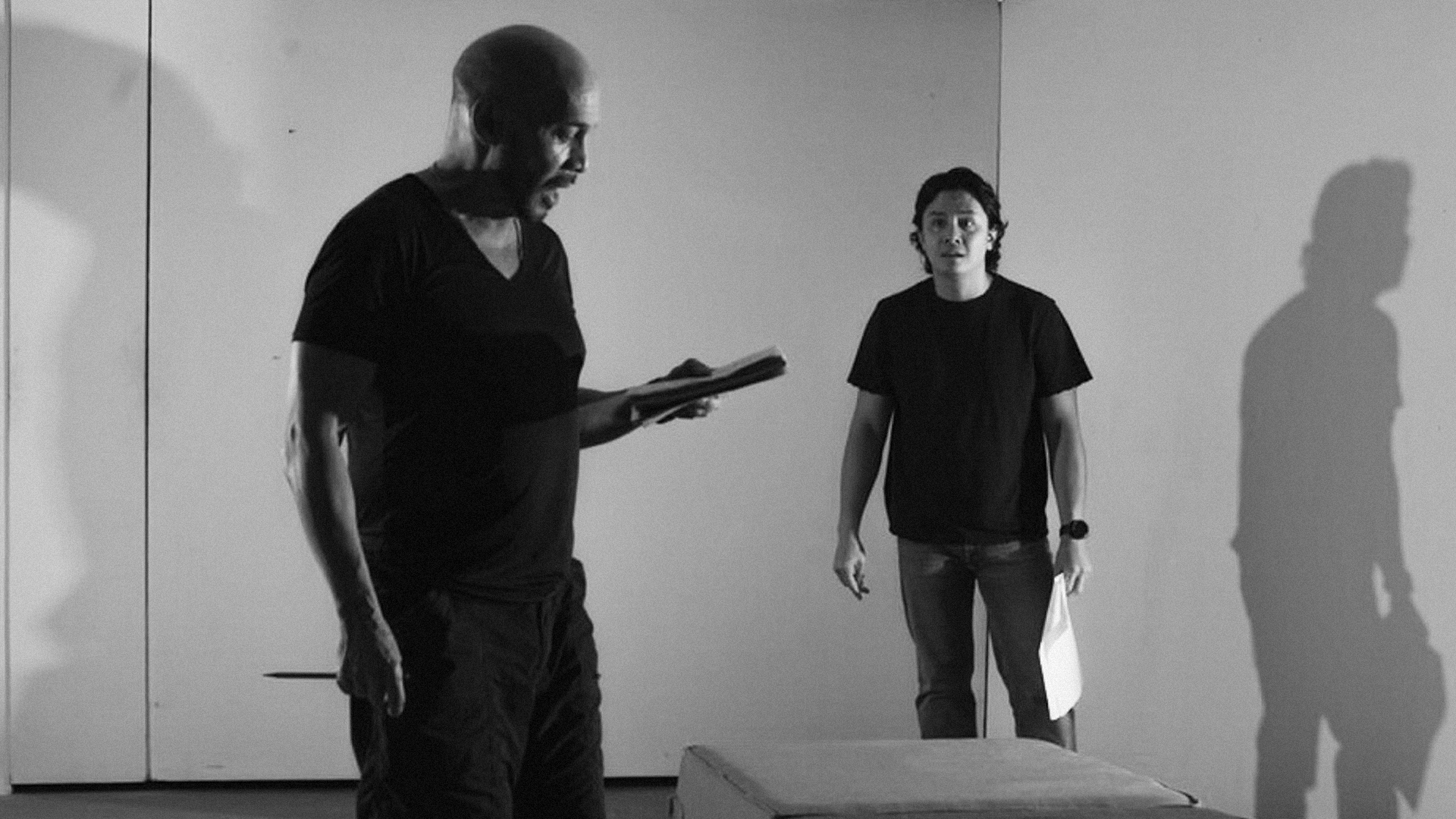
What’s more intense than knowing that you are a clone? To ask how many are there.
Because twins are okay. Triplets are still fine. But a number…is too much.
In Caryl Churchill’s ‘A Number’, the storyplot revolves around a father and his “biological” sons who tackles the reality of their relationship and the taboo topic of cloning. JC Santos, in his directorial debut, gave life to the provoking curiosities of this story together with Bart Guingona as Salter and JC himself as the three sons.
As the play continuously confronts the conflict, it asks us the questions we are all afraid to answer. Why do the children need to bear the weight of the father’s decision? Why is it always that we think parents can always be forgivable for the things they do, cannot do, and fail to do?
The Abandonment of a Child
Who puts up a child for adoption because he doesn’t seem perfect?
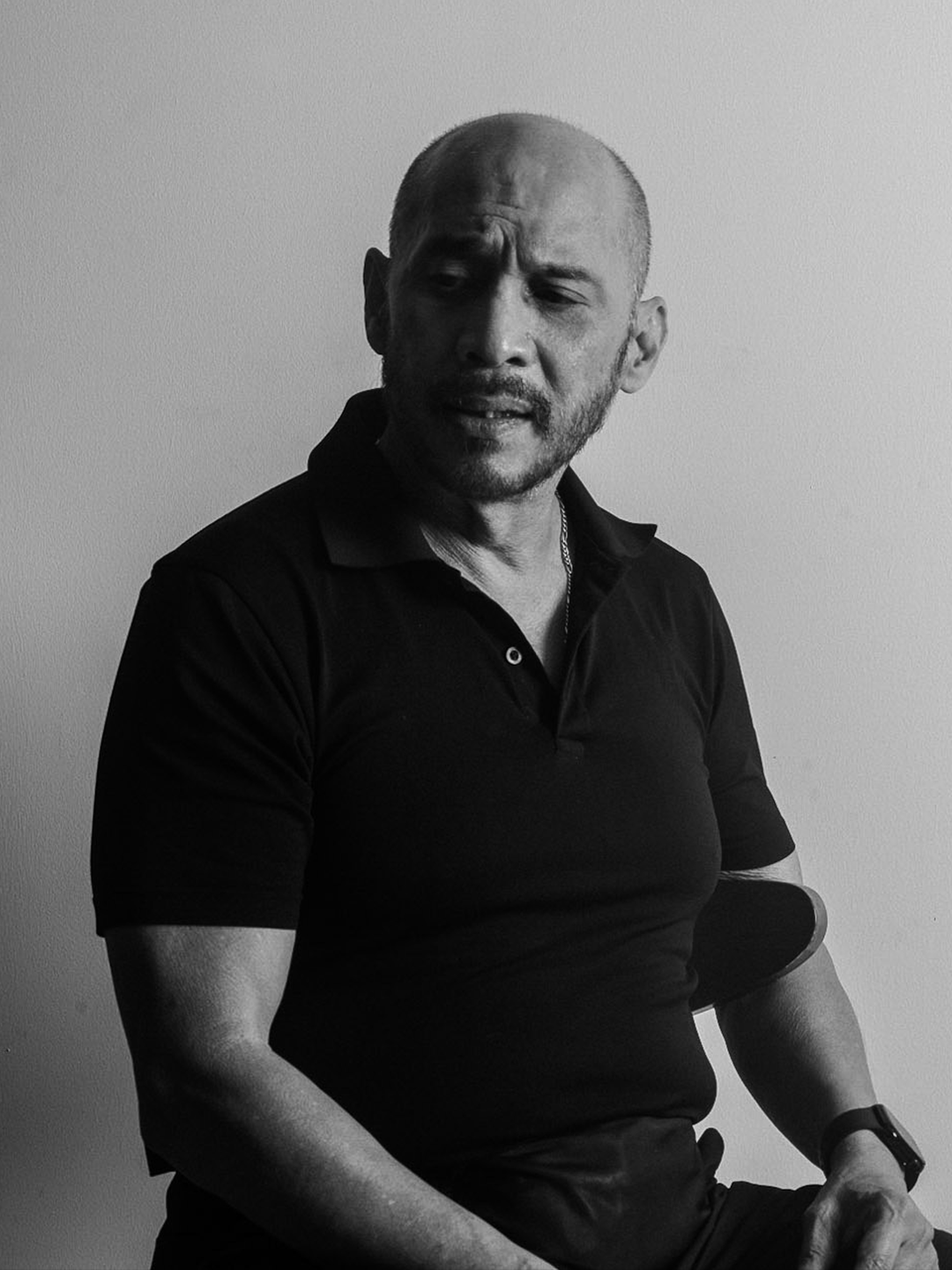
Actor Bart Guingona as Salter
If parenting looks like this, then we see children as an object we can dismiss whenever it fails to amuse us. For years, Salter believed he became a “good” father to Bernard 1, the original, before eventually abandoning him.
But no, it was all in his head. During those seemingly pleasant memories of a father and a child lies a confused memory—he was never there for his child, at least mentally and emotionally. Yet, the situation asks so much of Bernard.
More than trying to accept that he is cloned, the reason behind the cloning is also something hard to swallow, not to mention that ugly childhood and painful abandonment. Then what, meet the cloned “favorite” version of you and don’t think of vengeance?
Whose decision was it again? Yes, the father.
The Death of the Favorite
In an intense feeling of vengeance, Bernard 1 murders Bernard 2, the favorite perfect son of Salter.
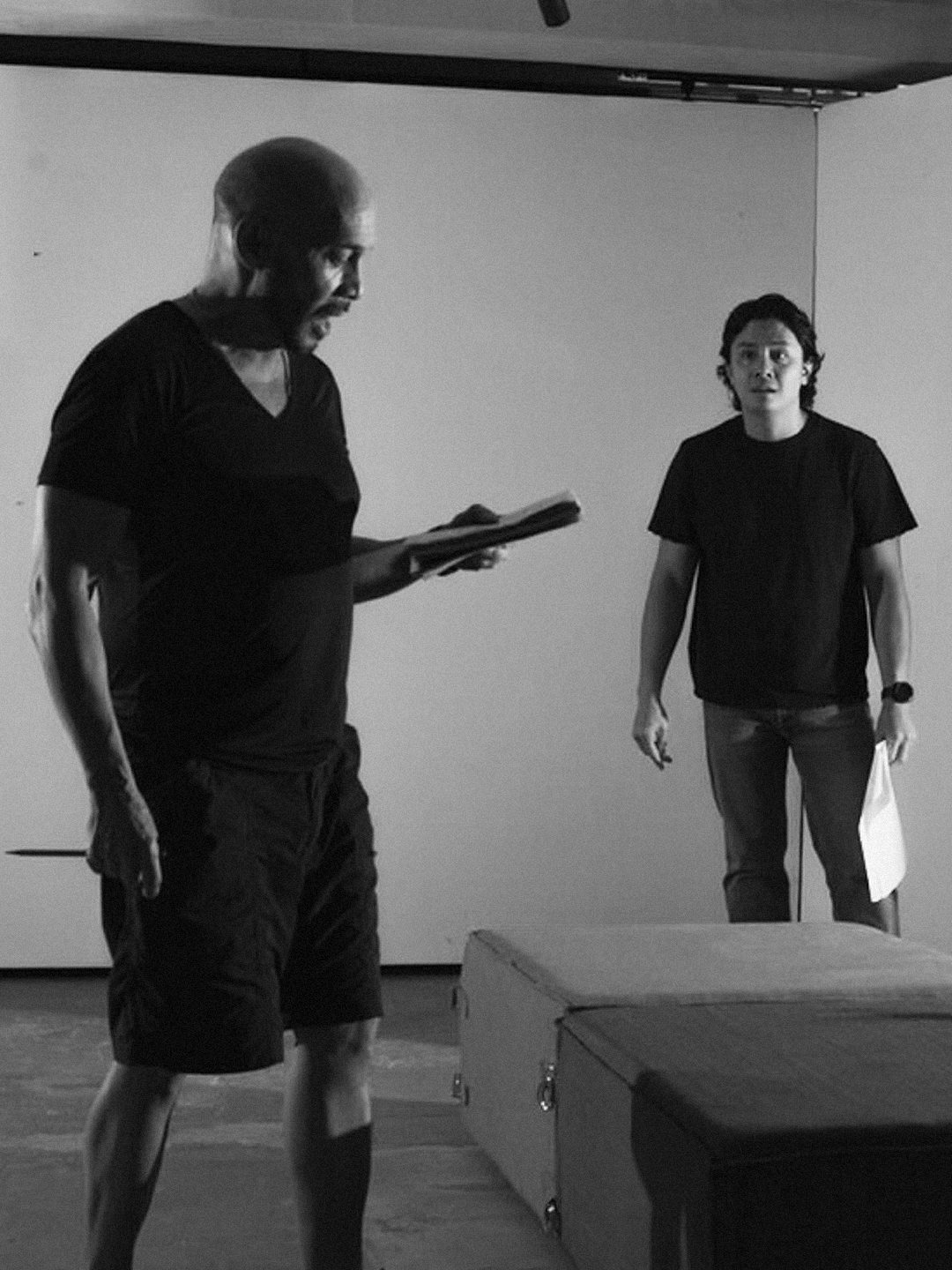
Actors Bart Guingona and JC Santos
Before everything else, let’s go back to the reason why Bernard 2 even existed. After his wife died, Salter came up with a decision to clone his son and revamp his parenting experience with a new son that is just like his original son. He succeeded, at some point, and then he left four-year-old Bernard 1 to start anew.
So he became a father, a real one, to Bernard 2. Played with him, read him bedtime stories, and treated him like a perfect son that he is. Salter’s words, not mine, Bernard 2 felt perfect because of the look at his eyes. Something he can’t see with Bernard 1.
As the original son got face-to-face with that reality, sibling rivalry arises. One who never felt loved, got abused, and encountered identity issues meets a planned version of himself who experienced all the positive things he desperately craved for.
After that, a tragedy is indeed waiting to happen. One son dies by murder, the other dies by too much pain inflicted. In the end, both sons lost their lives to pay what they never owed.
But who started all of this again? Still the father.
When One is Different from the Others
At the last scene, when the first two sons were already gone, Salter met another son. Michael Black, the second clone out of twenty. The stray one.

Director and Actor JC Santos as the three sons
Meeting this content and happy teacher is oddly different for Salter. He doesn’t like the sparkles in Michael’s eyes, the positivity he carries, and the life he lived differently from his brothers. He can’t accept it.
To him, he should carry the same weight of circumstances that pulled down the other two. He should also feel the same amount of resentment, anger, or at least hate that the other two felt. And he must not become happy because that’s not how the other two lived like.
It never satisfied Salter that one “genetic identity” of his son strayed from the life he thought they must live. This goes woeful among the life he is expected to live naturally because of his same DNA with the others and the life he lived because of the different nurturing environment he grew up with.
So we ask again, if the parent made a decision that altered not just one life, why is it that the children bear the hardships it brought while the one who started it surfed through the conflict mainly thinking about getting money after winning a lawsuit.
Beyond that, in the society that we live where it is taught upon us that we must always think highly of our parents and understand them, ‘A Number’ opens a lingering question about memory and our relationship to our parents.
When A Play Disturbs As It Lingers
This play further appealed not just mentally but visually and sonically too. Miguel Uy and Frankie Lalunio relived the disturbing yet somehow comforting of cloning through the physical presence and sounds of cloning. From making the set an extension of the themes that you see to looking inwardly and finding the familiarity of imagining through the things you hear.

Director and Actor JC Santos as the three sons
“With Miguel and I, I think the thread of the question of familiarity still runs. People do not normally see things in the micro or the macro-technology enables us to do so, a kind of playing-god-and yet the texture his visuals create are still familiar and recognizable,” Frankie shared when asked about their creative process.
With the help of the glass panels that reflects the theme of cloning, the overall experience of trying to visibly capture the essence of the play. Also with the intimate organization of the set design, the disturbing and moving change of emotions by the characters are emphasized.
As Miguel describes it: “In this collaboration I learned that one must not just think of the audience's experience but also how the actors interact with not just the set but also the audience as well.”
In the end, ‘A Number’ succeeds in tapping on the questionable realities we believe in. On the things we believed were right to do, on the actions we thought must be done, and the promises we never wanted to break.
In this case, we can never tell how right or wrong the father and the sons were but it opens our eyes that something so cruel can unfold because of a single thing.
“We are a country that constantly speaks about family, but we should also ask what happens when our devotion to family becomes a way of excusing harmful behavior.” — JC Santos.
Don’t miss out and watch ‘A Number’ at WHYNoT Activity Space from October 9 to 18 only. Get your tickets via Ticket2Me or at the box office at the reception.