
In ‘1001 Nights’, Ballet Philippines Moves the Myth
Ballet Philippines navigates the 1001 Nights as a lavish choreography of myth, where an electrifying ensemble transforms the Arabian tales into a world that moves beyond words.
Words Randolf Maala-Resueño
Photos courtesy of Ballet Philippines
October 17, 2026
Before the first pirouette begins, there is a woman who knows exactly what stories can do.
Scheherazade enters the world of 1001 Nights with ‘death’ already written into her future. King Shahriyar has turned heartbreak into cruelty, making a ritual of marrying women and ordering their executions by morning. She offers him something stranger than resistance: another story. Then another, then another.
For 1,001 nights, she keeps him listening.
Ballet Philippines takes that premise and turns it into something larger than a retelling of the Arabian Nights. In 1001 Nights, storytelling becomes choreography, scenery, music, costume, and grandiosity. The company’s opening production for its 57th season is ultimately about the transformative power of narrative, but its most persuasive argument is made without words.
The set design speaks in return for the dialogue—and speaks beautifully, indeed.
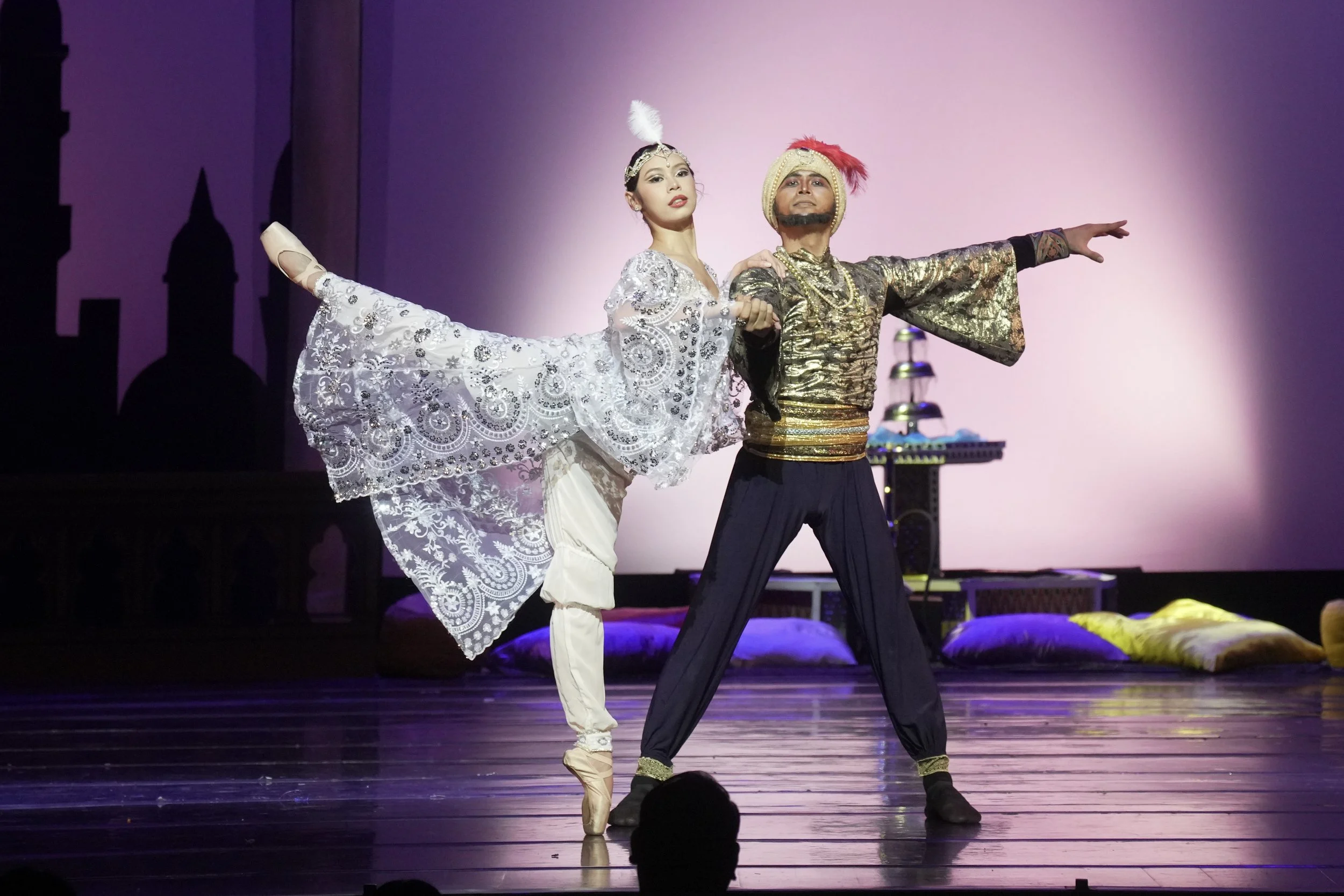
It gives the stage a palpable sense of the Arabian landscape, constructing a world that feels at once architectural and mythical. Palaces, courtyards, mysterious wells, caves, and enchanted spaces do more than establish location. They give physical form to the stories Scheherazade tells, thus carrying the mythology on its back.
This contained the visual world for three principal tales.
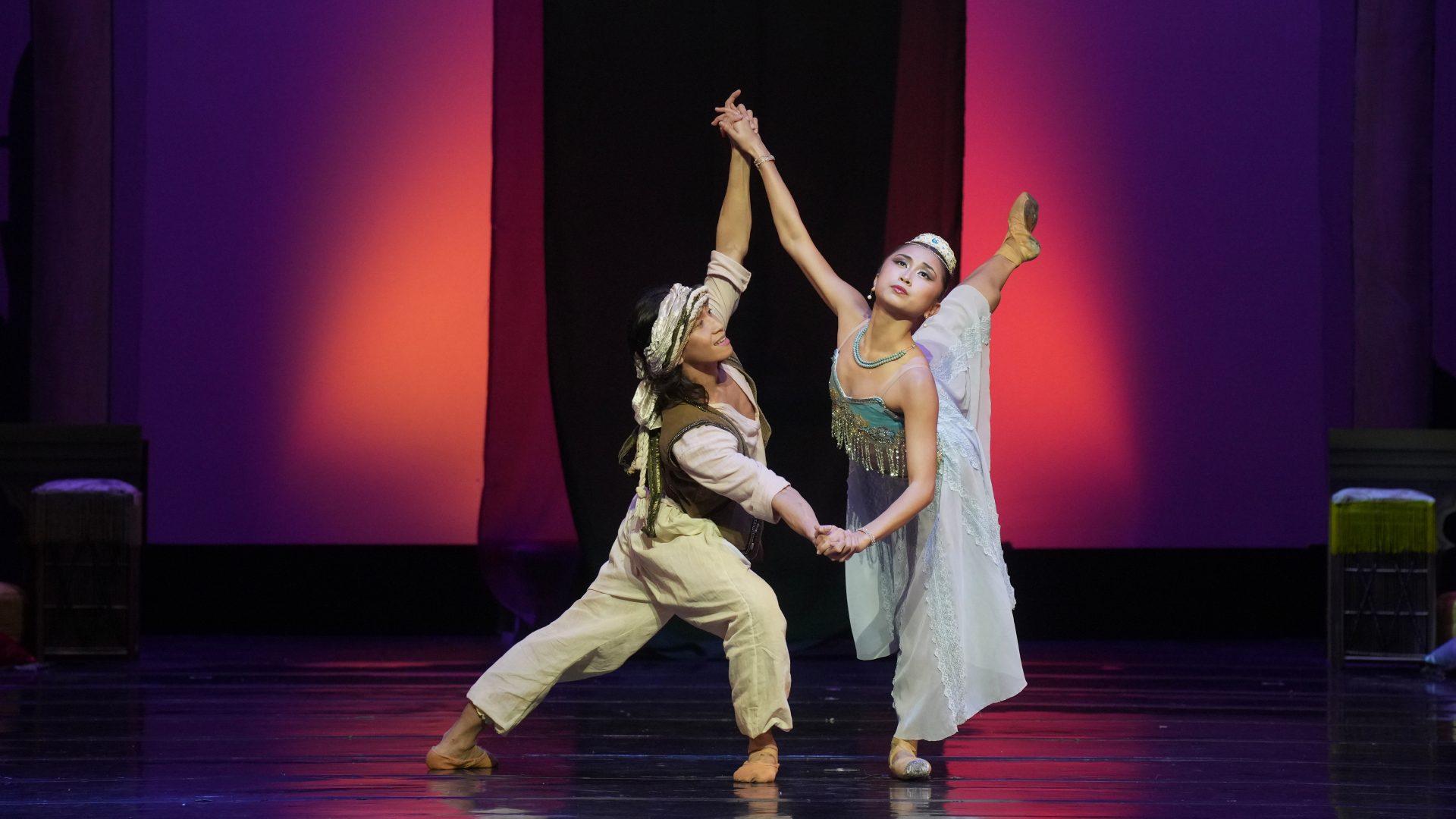
The first act turns toward Aladdin and Princess Budur, where romance and enchantment soften the production’s edges. The second sails into Sinbad the Sailor, bringing adventure and danger into the kingdom through bodies that seem constantly pulled toward the next horizon.Then comes Ali Baba and the Forty Thieves, emerging as one of its most energetic numbers, bringing cunning and urgency into the penultimate chapter.
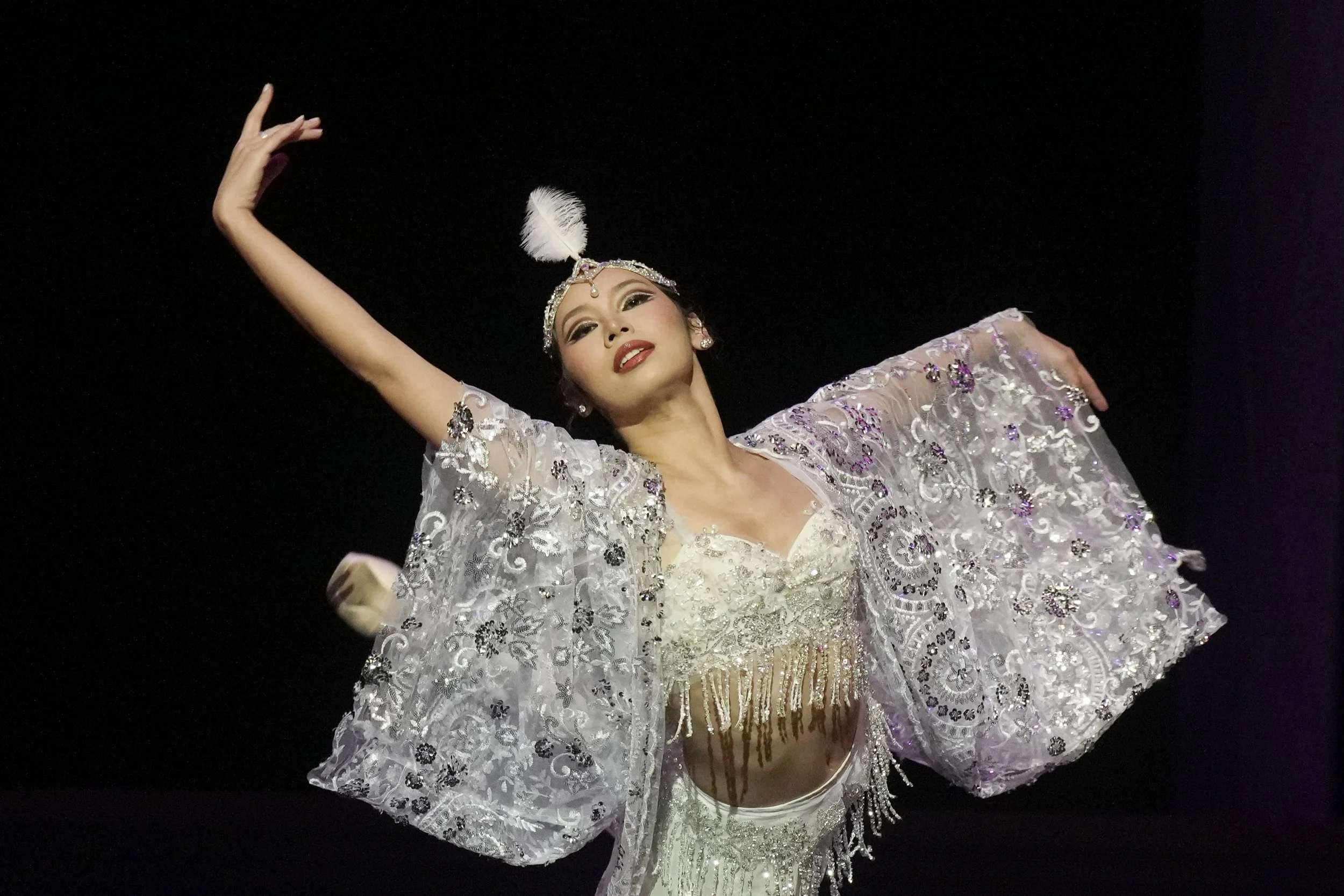
Threading through these stories is the larger drama between Scheherazade and Shahriyar, with the King and his lover helping narrate and frame the fantastical episodes. Their presence keeps the sprawling mythology from becoming entirely episodic. Each story becomes another night bought for Scheherazade, another opportunity for Shahriyar to encounter lives beyond his own.
The production does not always move between these worlds seamlessly. At times, one tale ends and another arrives with the connective tissue still showing. The transitions can feel abrupt, as though the ballet occasionally needs a moment to remember which dream it is entering next.
But where the narrative hesitates, the movement compensates. Creative director Mikhail Martynyuk’s choreography gives each episode its own physical vocabulary while maintaining the classical foundation beneath the façade.
The principals are terrific. Their technique is assured, their lines clean, their performances giving recognizable faces to characters who could otherwise remain trapped inside familiar archetypes.
Yet for me, the ensemble numbers are where 1001 Nights truly catches fire.
There is something thrilling about watching an entire company move as one organism. Formations expand and collapse. Pirouettes ripple across the stage. The ballet dance enters and disappears with almost cinematic timing. The choreography gathers scale without surrendering precision, making the ensemble the machinery of the stage itself.
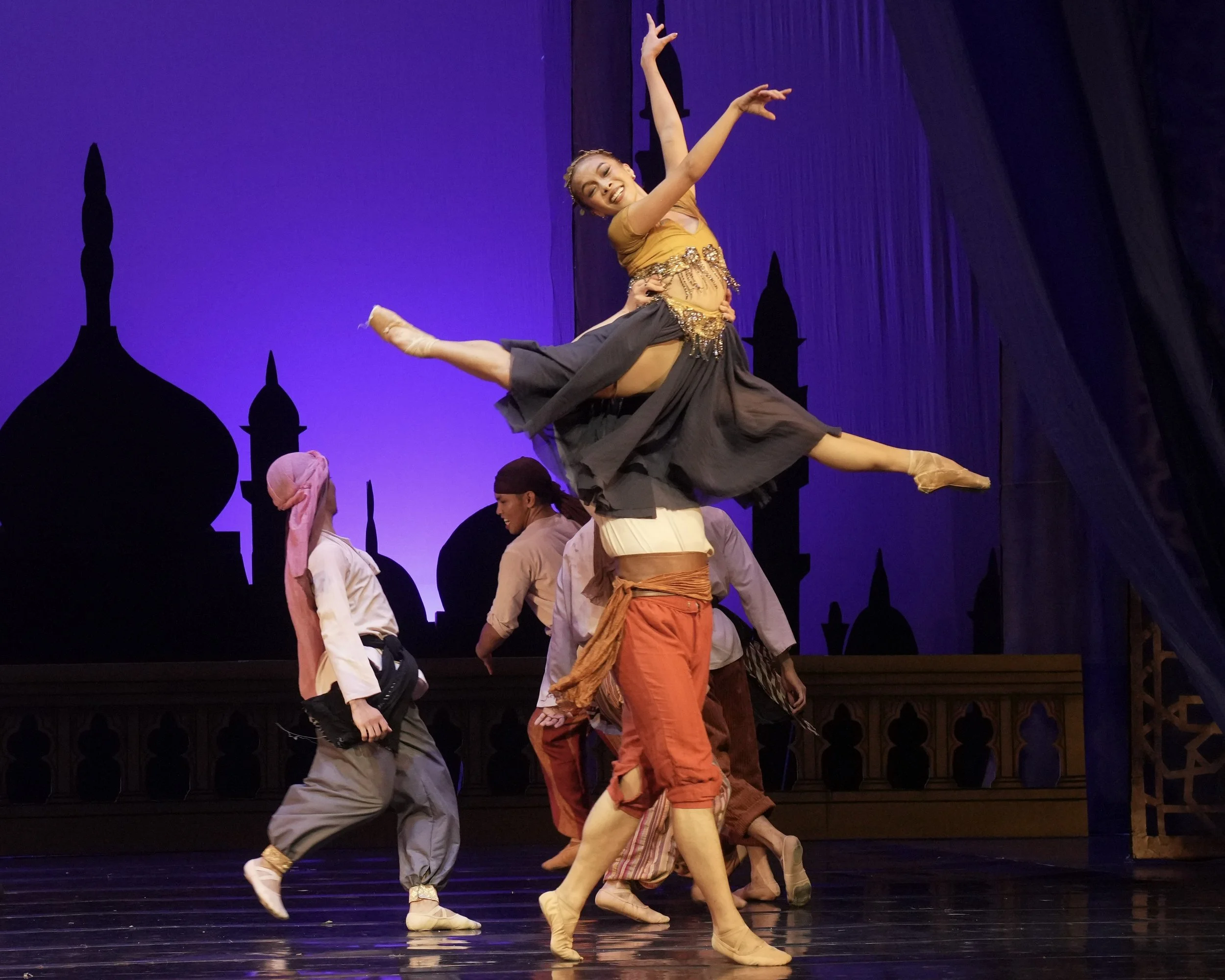
This is where Ballet Philippines looks most formidable. A single dancer can dazzle. An entire company can build a civilization. And 1001 Nights is at its best when Ballet Philippines uses that collective strength to make the stage feel inhabited. It gave the ensemble its pulse.
The company has long occupied a foundational place in Philippine dance, but this production makes a convincing case for its stature among the country’s and region’s finest ballet collectives. 1001 Nights is ambitious in scale, technically disciplined, and unafraid of spectacle. More importantly, it understands that spectacle only works when artistry is underneath it.
Because for all its grand landscapes and fantastical characters, the emotional center of 1001 Nights remains surprisingly intimate. It is the King listening. Scheherazade continues. It is a story being told to someone who has forgotten how to see beyond himself.
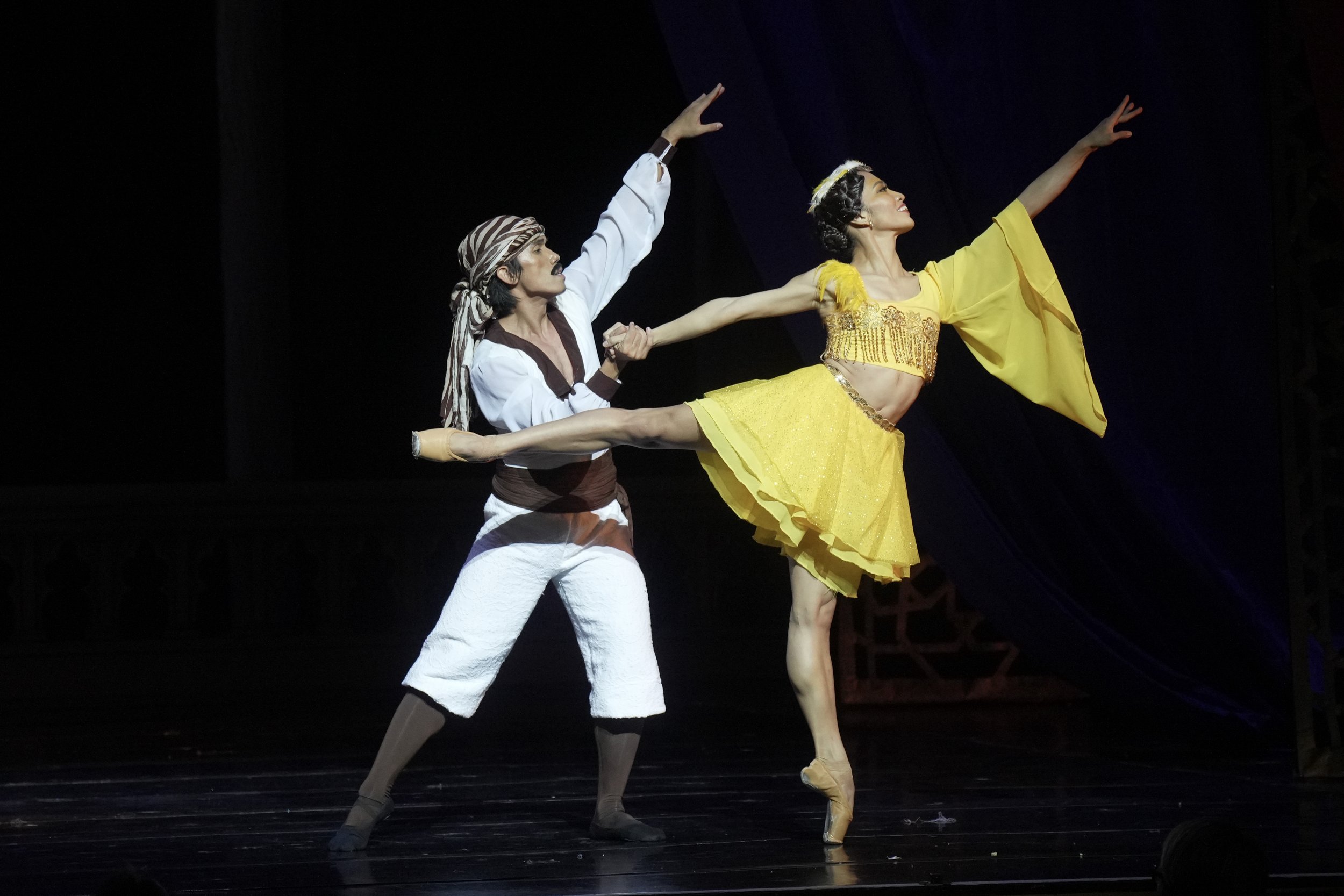
It is a lovely idea for a ballet because dance has always been particularly good at making interior things visible. Desire as gesture. Fear becomes woeful. Love yields from proximity. Power, now, puts a backbone to the deserved–a transformation of movement.
To transport us, frighten us, enchant us and make another story imaginable.
Its transitions may occasionally reveal the seams between one tale and the next, but the production’s visual and choreographic language is strong enough to keep pulling us forward. Like Scheherazade, it knows that the promise of another chapter can be its own kind of magic.
And perhaps that is the most fitting achievement of Ballet Philippines’ 1001 Nights. It turns Arabian nights into a living argument for storytelling itself. A woman tells–or rather a pliéa–a story to save her life. A king listens long enough to change. And an entire company takes those ancient tales and makes them move again.
By the final bow, Ballet Philippines has staged, and built, a thousand nights.