
The Horror of Repetition in Mag-Iina
Mag-Iina (The Mothering) confronts the haunting repetition of violence, family dysfunction, and political power, using psychological horror to reveal how the cycles we inherit can become impossible to escape.
Words Betty Uy Regala
Photos courtesy of Giancarlo Abrahan
August 25, 2026
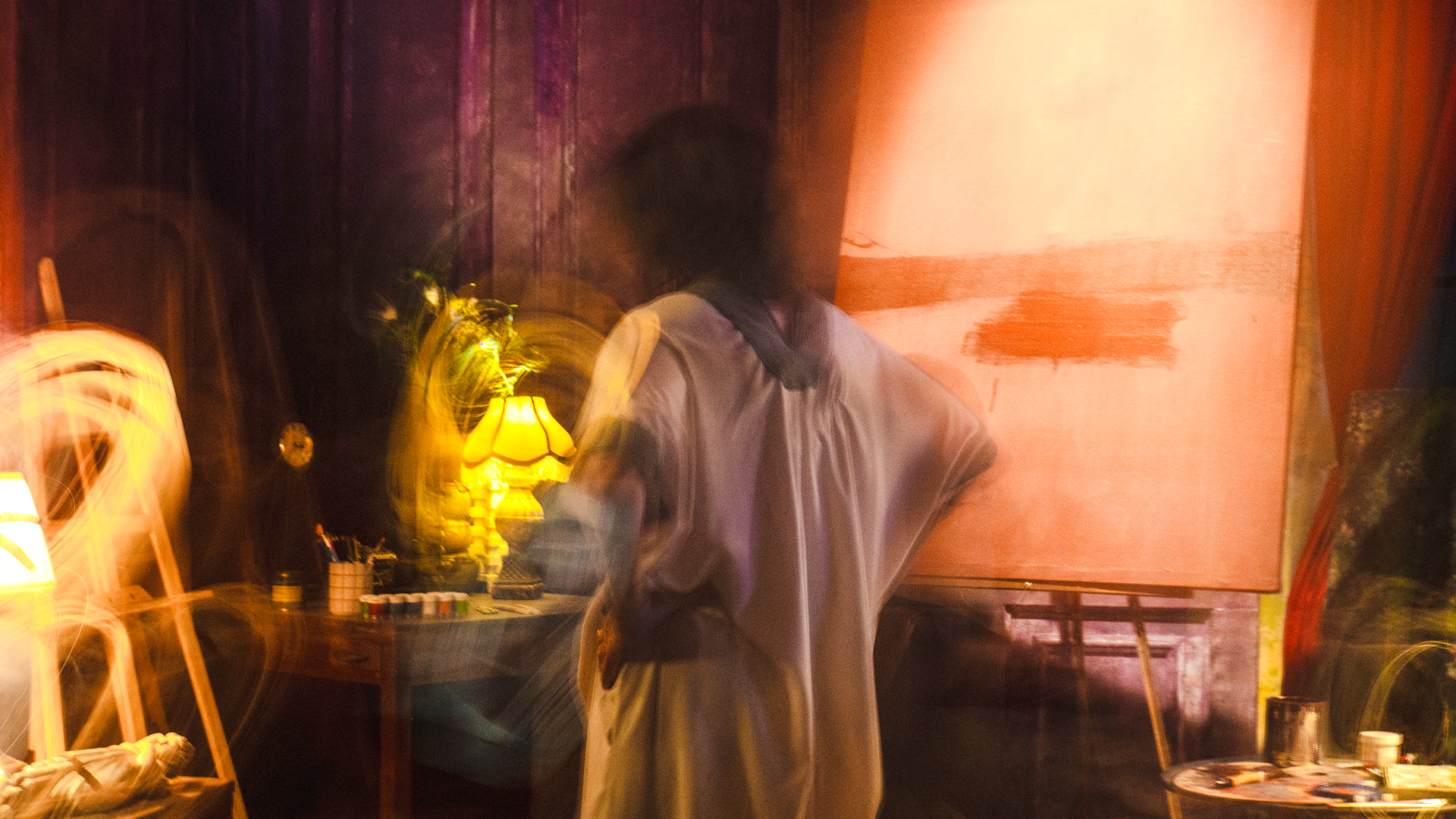
Actress Jackie Lou Blanco for Mag-Iina
There are two levels to Mag-Iina (The Mothering), the 2026 Cinemalaya big winner, which bagged six awards in the full-length film category of the annual film festival. In addition to its innate qualities, I believe it was its overall uniqueness that made it stand out from the other eight full-length feature films in competition.
The psychological horror film received Best Film; Best Director for Giancarlo Abrahan; Best Screenplay for Guelan Varela-Luarca; Best Performance by an Actor in a Supporting Role for Lucas Andalio, which he shared with another child actor, KD Omalin, who won it for Hand of God; Best Original Musical Score for David Yuhico; and Best Production Design for Katrish Aristoki.
In his speech during the awards ceremony, Abrahan mentioned the common feedback on Mag-Iina, which was based on the stage play script of Varela-Luarca’s Corridors—it nauseated and disgusted viewers.
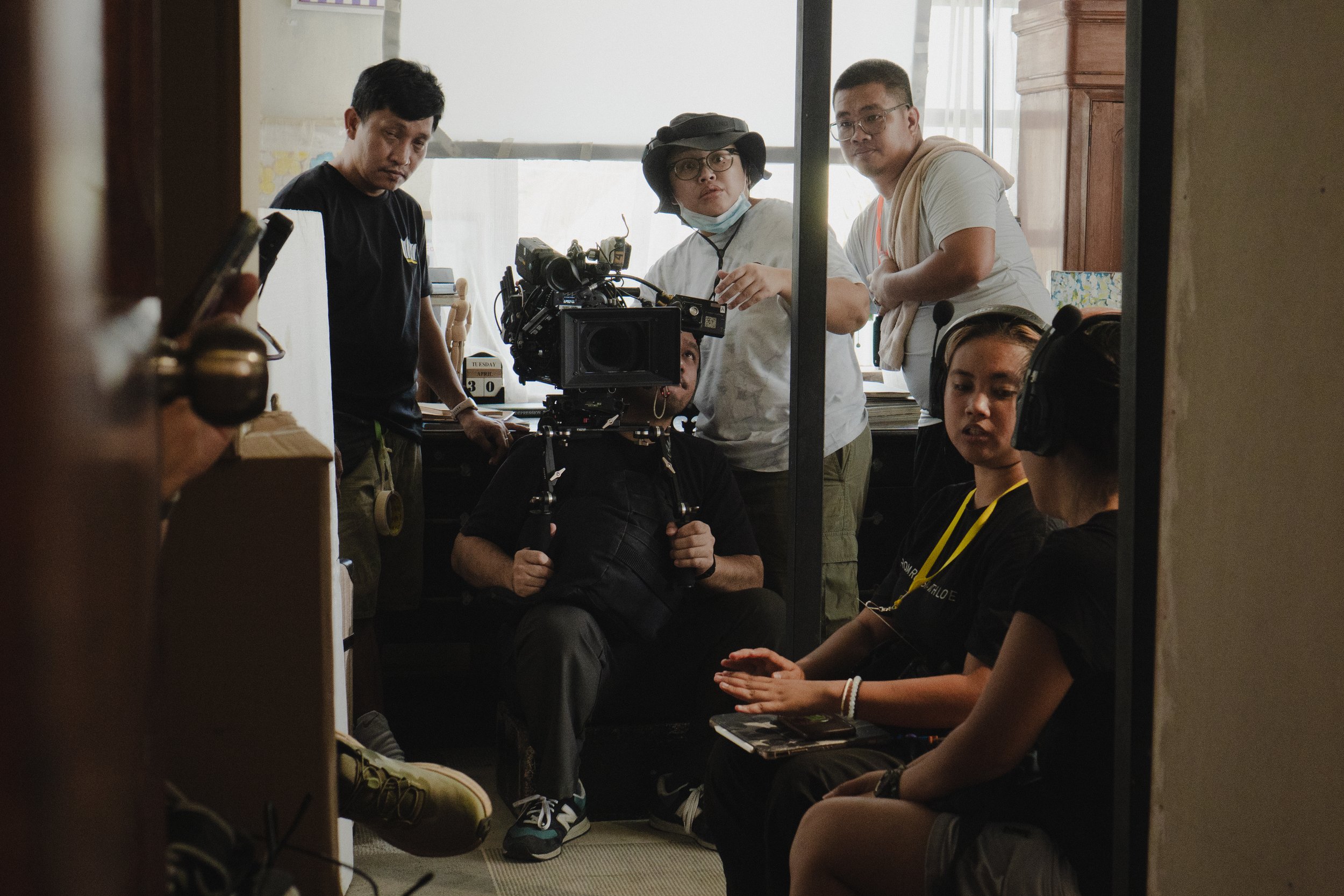
Behind the scenes of the filming for Mag-Iina
“But what is truly nauseating, what is truly disgusting are the things that keep happening in real life. The same names, over and over again, of those who hold power. Political dynasties,” he said. He added: “Siblings in the Senate, relatives occupying different positions, the same family clans holding different seats of power. This endless rotation of husband, child, sibling. Could there be anything more incestuous than that?”
Abrahan also touched on a trending topic on Philippine cinema: “They say Filipino films are incredibly predictable, but the truth is, the names in Philippine politics are far more repetitive.”
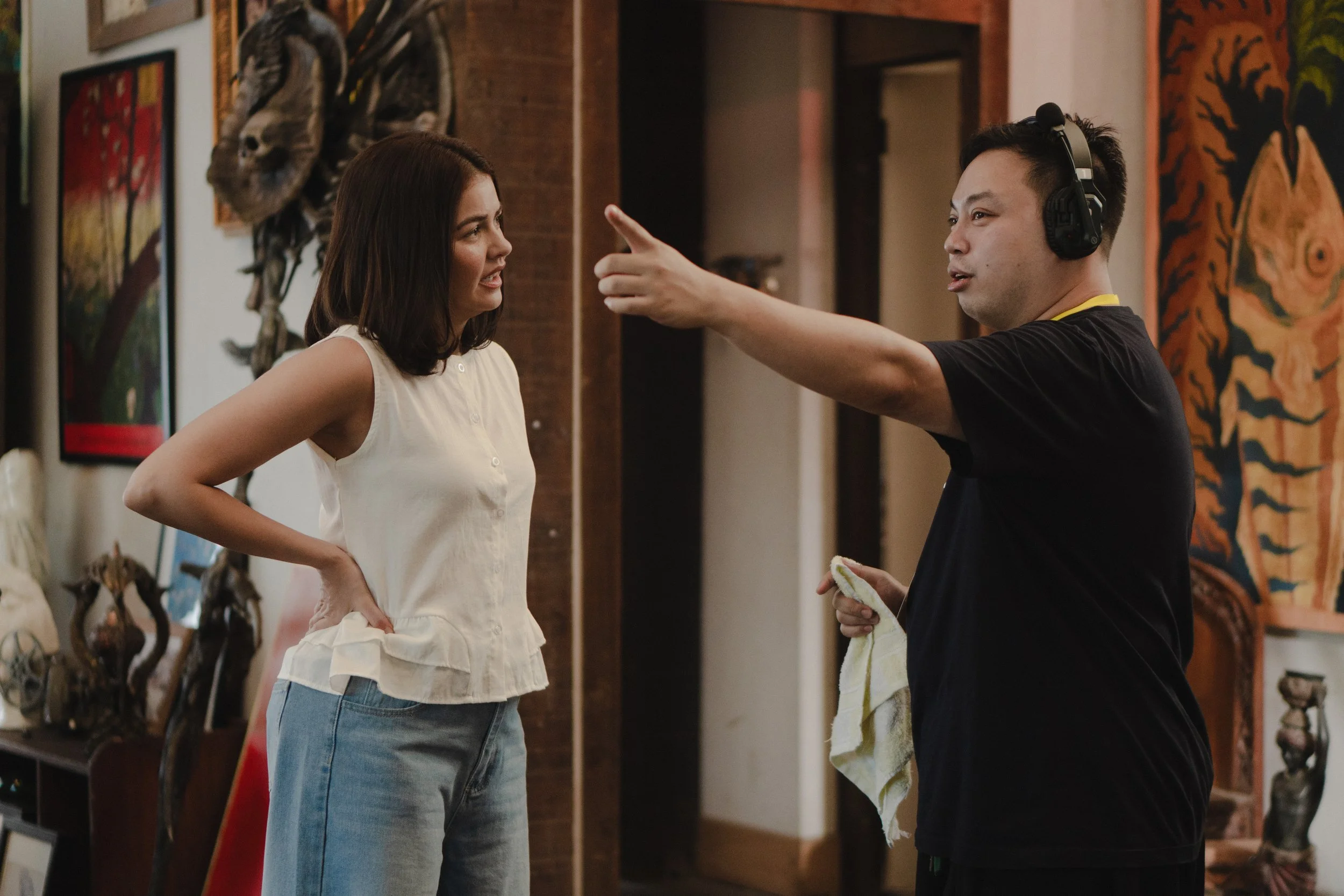
Behind the scenes of the filming for Mag-Iina
Varela-Luarca described Corridors, which was submitted to the Hunter College in 2024 as a partial fulfillment of requirements for his Master of Fine Arts degree in Playwriting, as “an allegory on Filipino evil.” The script is available online, and I referred to it often for areas I needed clarification on.
As allegories go, the text is the first level or the surface of the story, and the subtext is the second level, which contains the underlying message.
For the initial layer and the initial scene, which was a dream sequence, a young Anj (Alejandra Cortez) was running through the Abreu ancestral house in search of her father (Bart Guingona). Anj is short for Angelina. A piano arrangement of Nicanor Abelardo’s Pahimakas,played only by her father, guided her in looking for him.
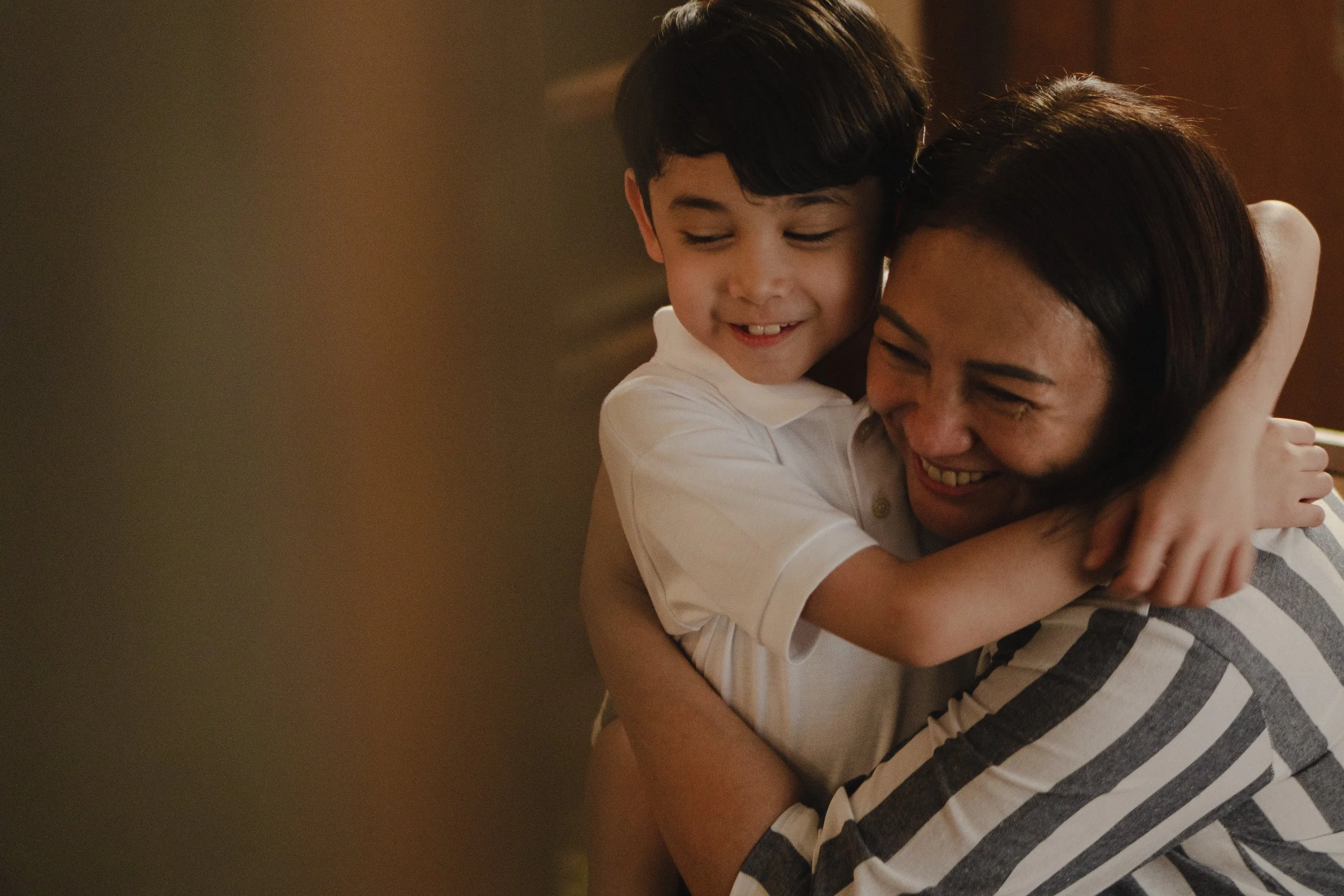
Actors Lucas Andalio and Cherry Pie Picache for Mag-Iina
Her father was a music teacher in the family-owned music school. Adult Anj (Janine Gutierrez) woke up from the dream and had her first encounter with her Aunt Ysobel’s (Cherry Pie Picache) adopted son, who was re-named Yñigo Abreu III (Lucas Andalio). Yñigo was the name of Anj’s departed father, and from that additional reading, I learned that their abuelo was the first Yñigo.
The dream and possibly prior dreams of her dead father may have compelled Anj to return to the Philippines after 21 years of living in New York. This, however, was not clearly relayed in the film. The first dream and succeeding dream segments seemed like something brought on by being in the house itself, and not as the driving impetus for overriding more than two decades of estrangement with the family.
Coming from the first level that is our lived experience, family members usually come back from their migrated country to be with their dying relative in the latter’s last waking hours, and extend their stay until the burial and 40th day. They do not typically come back 37 days later after a family member’s death.
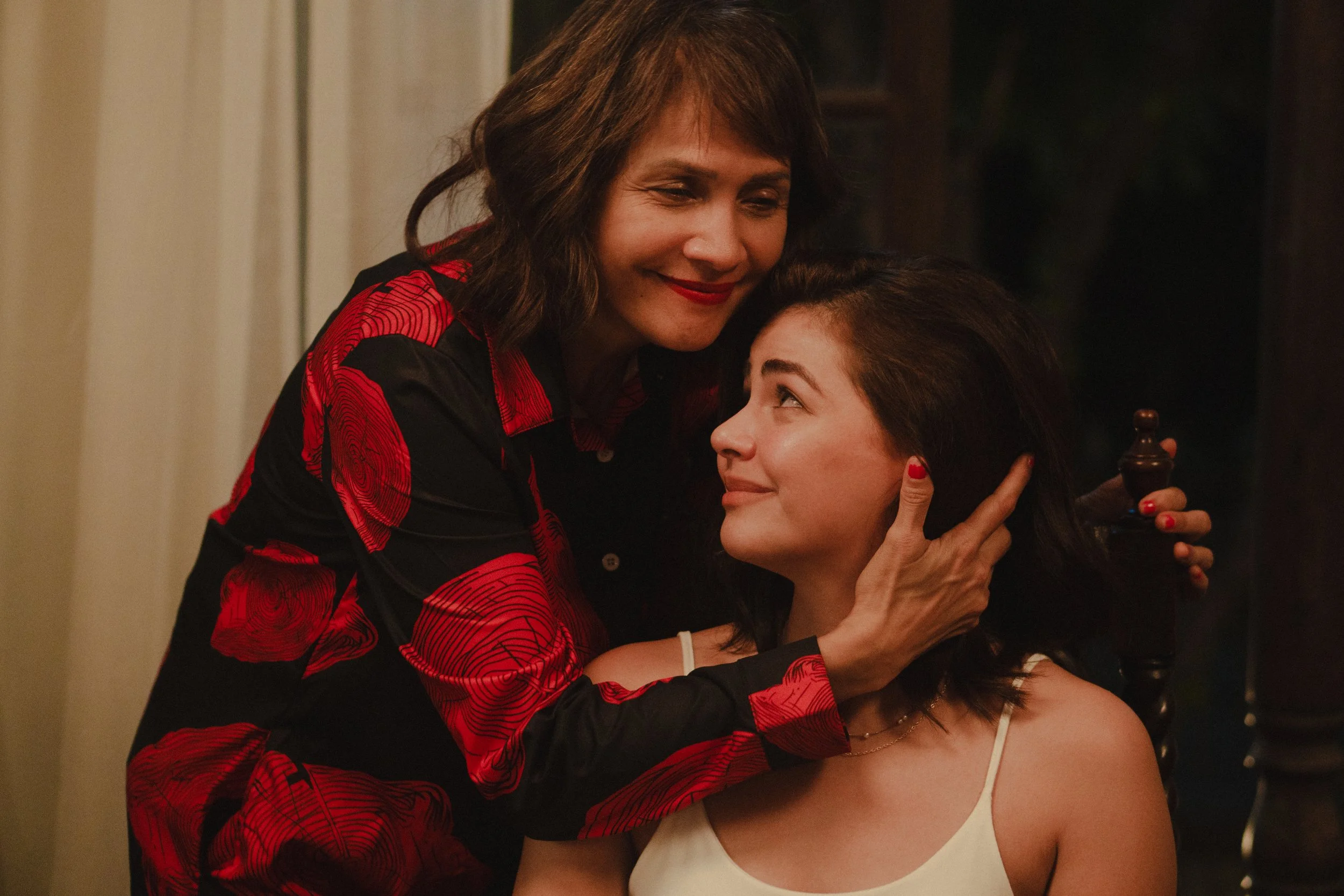
Actors Agot Isidro and Janine Gutierrez for Mag-Iina
But in this film, the protagonist arrived at the Abreu mansion three days before the 40th day to complete a cycle. And in the stage play script, during the encounter of Mita (Agot Isidro) and the help Katte (Ness Roque), who was “channeling” her dead husband in the bedroom, Mita said: “So you reach out to our daughter because you know it was cruel to have sent her away.” But I don’t recall this line in the film. Even if it was uttered in the scene, one line is not enough to prove that the dream or series of dreams actually drove the return of Anj.
Aside from the unclear catalyst of Anj’s arrival, another issue I have is the portrayal of the lead character, which demanded a weighty interpretation. After all, Anj was a young divorcee at 36 years old, who also left another man in New York and seemingly pulled back to a family in a country she refused to visit for 21 years.
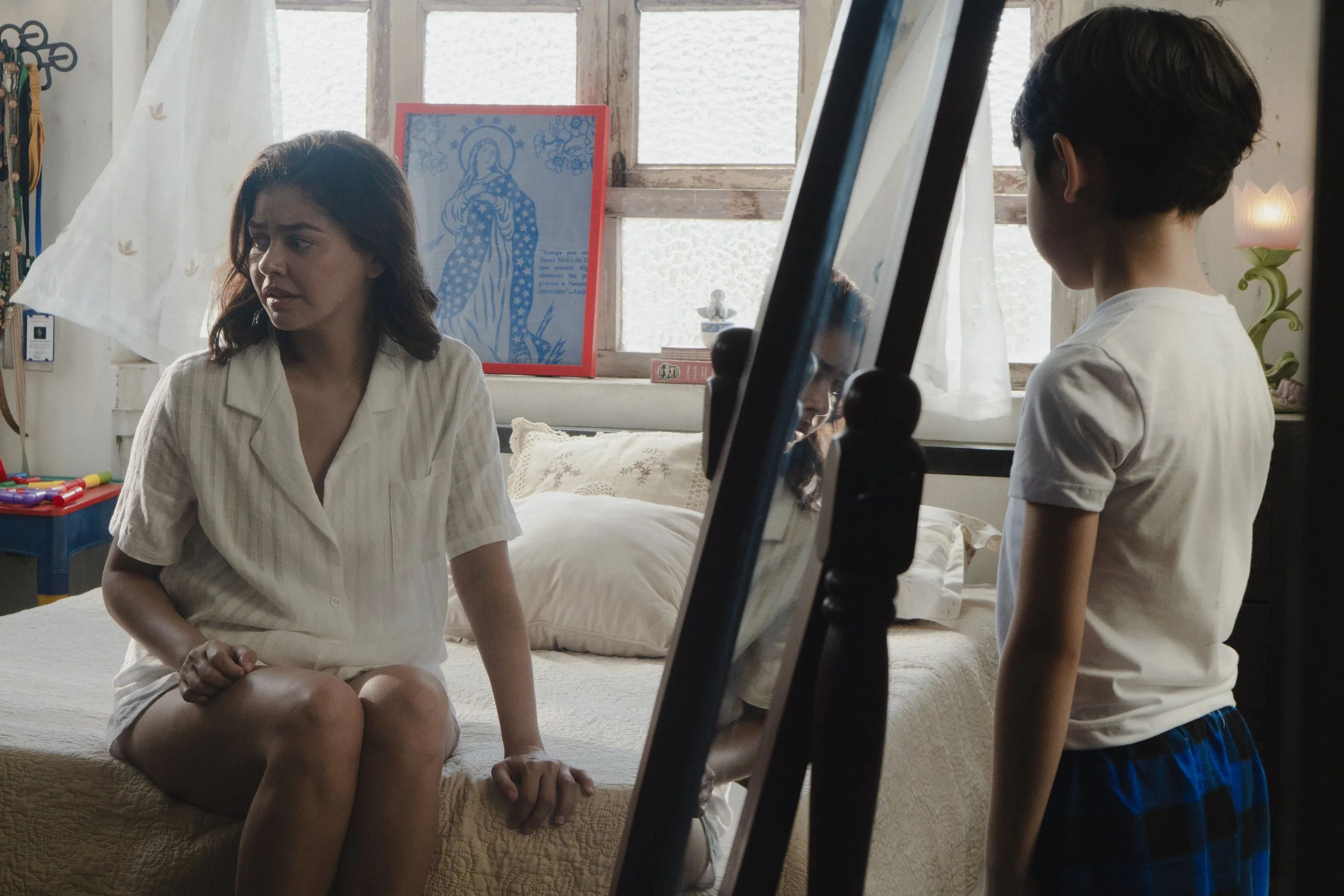
Actors Janine Gutierrez and Lucas Andalio for Mag-Iina
What audiences received was a light portrayal of a balikbayan from a de buena familia, carrying on as per usual, unburdened by and oblivious to the baggage of her own past.
This information on Anj was revealed by the family matriarch Angela (Jackie Lou Blanco) during a family dinner where she entered the scene, carrying the urn of her son’s ashes. This was one of the high points of the film. Blanco embodied the essence of the matriarch, and her performance, and that of Picache’s, Roque’s, and Andalio’s throughout the film were muy delicioso. Picache deftly accomplished being a menace on their muchacha Katte, who was the narrator.
The matriarch first pointed out her granddaughter’s hypocrisy, then her daughter (Ysobel) in another scene, but failed to confess her own.
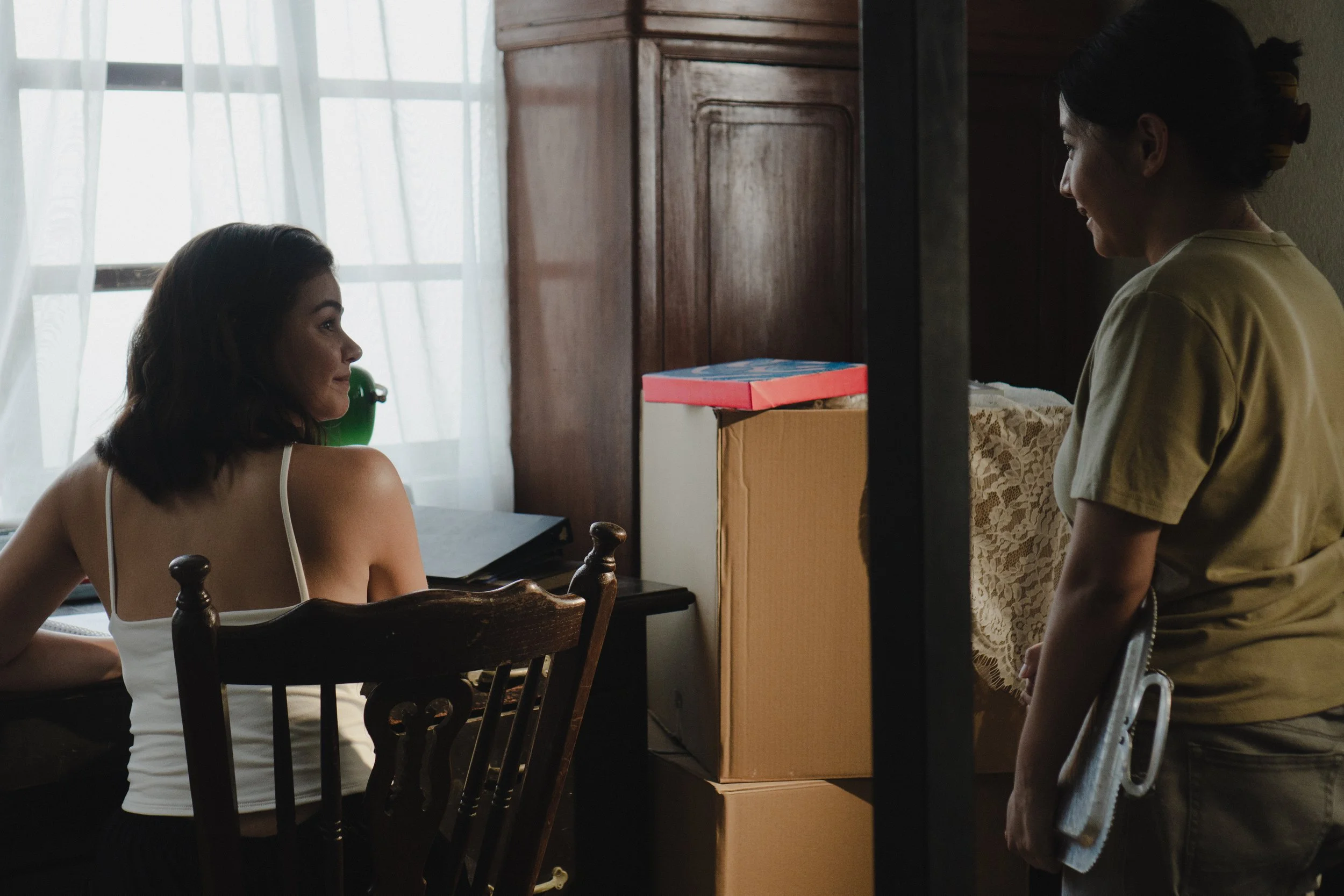
Actors Janine Gutierrez and Ness Roque for Mag-Iina
As for the chrysalis, it lacked the proper build up before its appearance. My two companions and I were taken by surprise by its presentation. Sure, there were images of the wooden spindle wheel turning in the dream and melding into the waking sequences, and the painting which highlighted it, but the burden was left to the audience members to make the necessary connections.
A minor item that jars with the look and feel of the house was a contemporized version of Edvard Munch’s The Scream. Abuela Angela was a National Artist of Spanish lineage who did figurative paintings. I don’t think she would consider hanging a contemporary piece of art in her house unless there were other pieces like it to show her or the family’s eclectic taste.
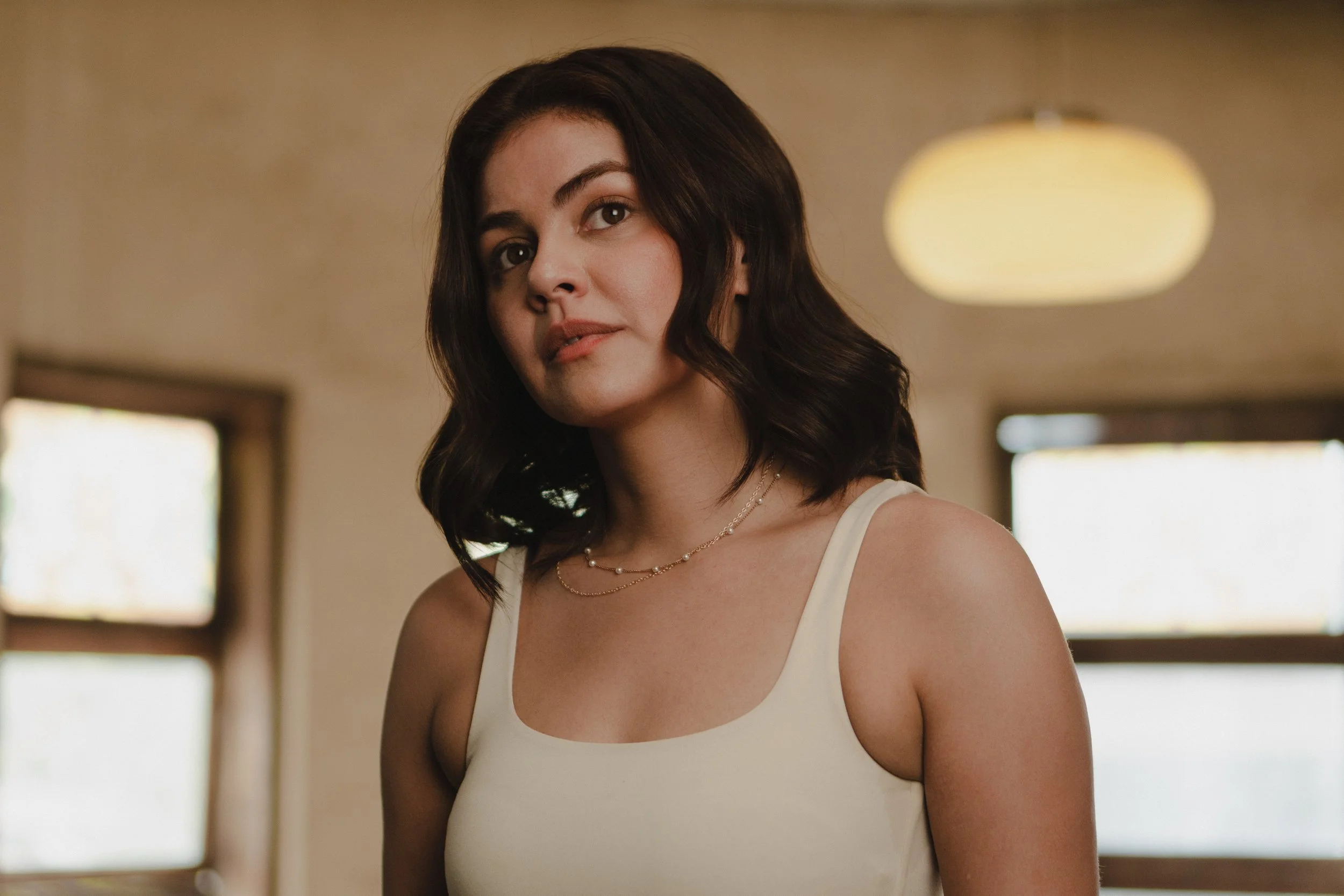
Actress Janine Gutierrez for Mag-Iina
By and large, the audience members, including my two elderly companions, who are first-time viewers of Cinemalaya films, understood that Mag-Iina had a message beyond the first level narrative, which has interjections of bloodwine, sexual violence, and physical violence.
Over merienda cena, after watching the film in the Red Carpet Cinema in Shangri-La Mall, one of my senior friends observed that most of the scenes took place in the house, which denotes a physical limitation on the characters living within its walls. After what happened to the protagonist, the Eagles’ song Hotel California came to mind as well: You can check out any time you like, but you can never leave. It also somehow sheds light to the last scene, a deviation from the stage play script, which could likewise be a hallucination of Katte.
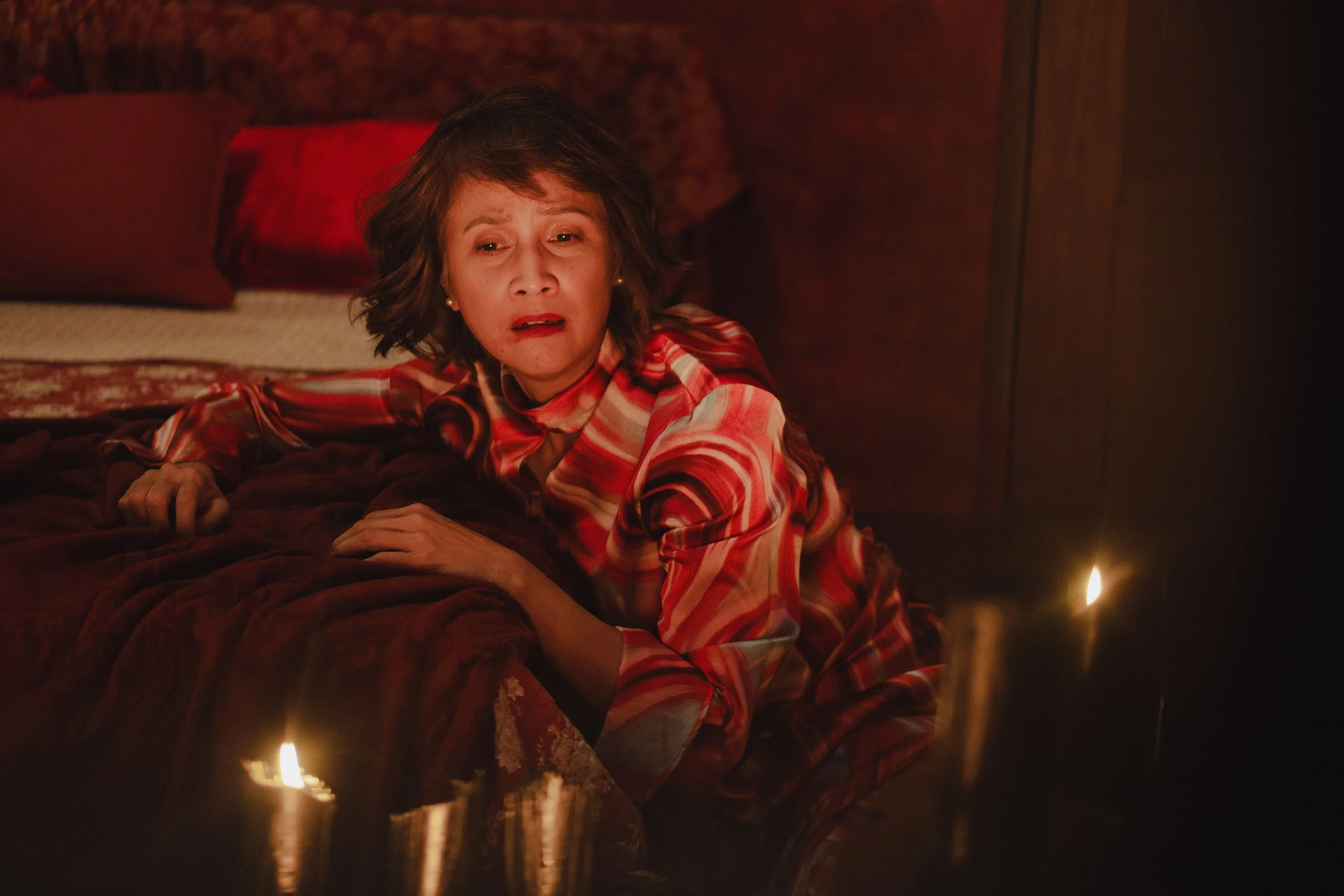
Actress Agot Isidro for Mag-Iina
My other elderly friend pointed out that the bloodwine from one breast of the matriarch could be a representation of decadence while the milk from her other breast could be a symbol for nourishment. But the dead Yñigo and the child Yñigo both preferred the bloodwine.
Notwithstanding my reservations, Mag-Iina (The Mothering) left an impact on both levels. Its multilayered message was clear and eloquently summed up by Abrahan’s acceptance speech. He encouraged viewers to not become numb to what is happening in the country, which repeats family names in a spinning wheel of a wooden spindle every election.