
Eating Fresh
A lavish buffet becomes a meditation on celebration, privilege, and the meaning of sharing food in the Philippines.
Words Betty Uy Regala
Photos courtesy of Solaire
July 12, 2026
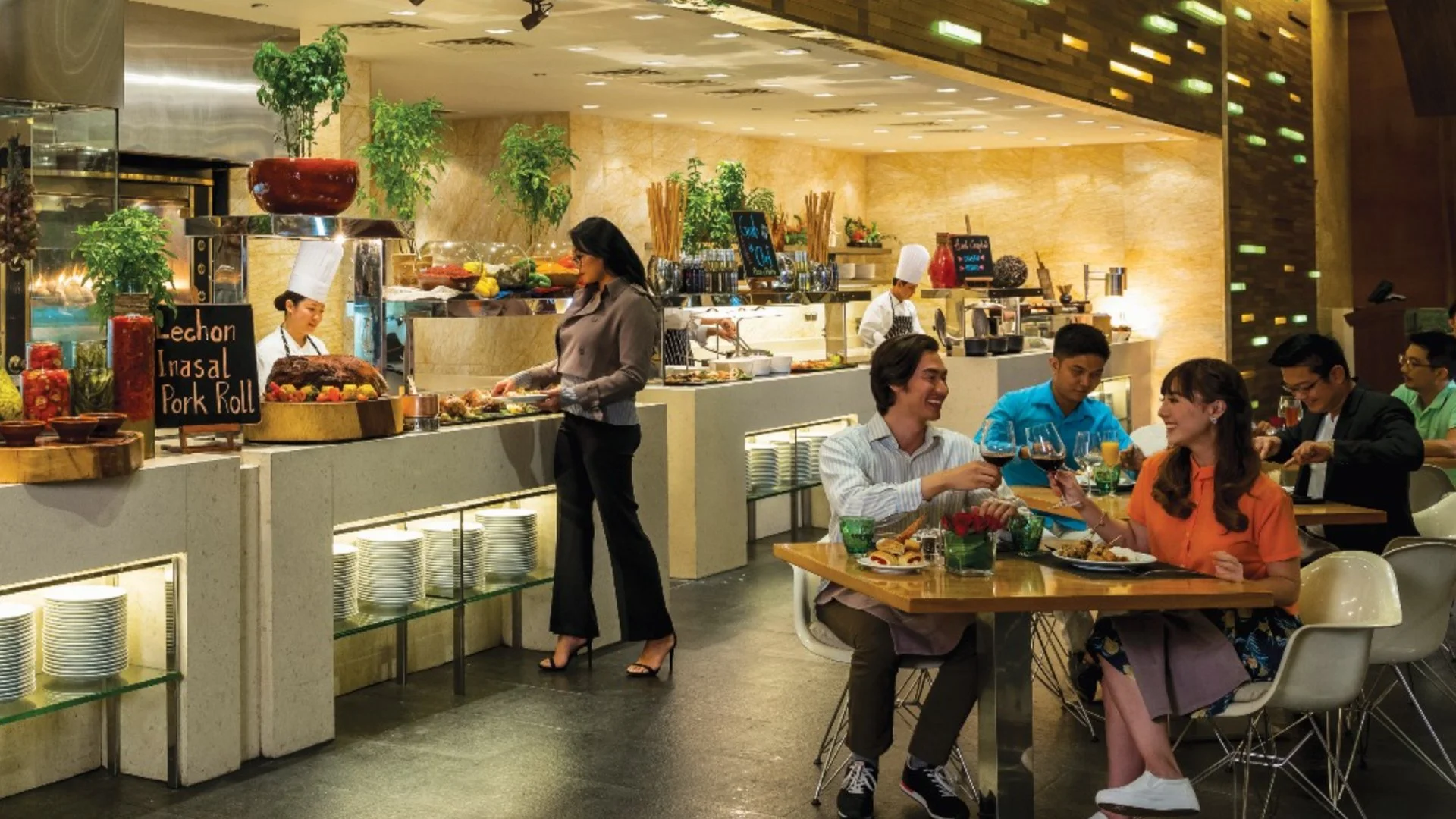
Celebrations, since the time of our indigenous ancestors, have always involved food, whether for a large gathering, an offering, or both. Eating, by and large, is a communal activity for the greater majority of contemporary Filipinos. Hence, when we see an individual eating by her/him/themself in public, people often find it odd rather than empowering that the person is on their own.
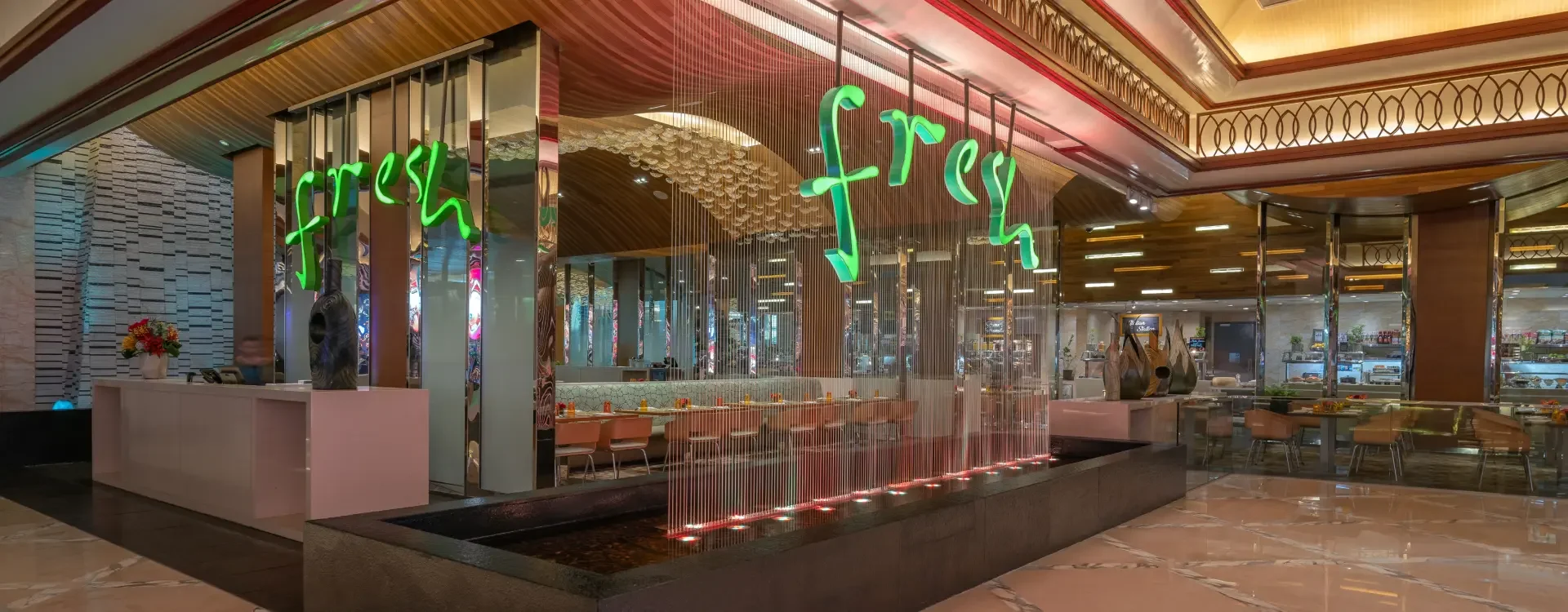
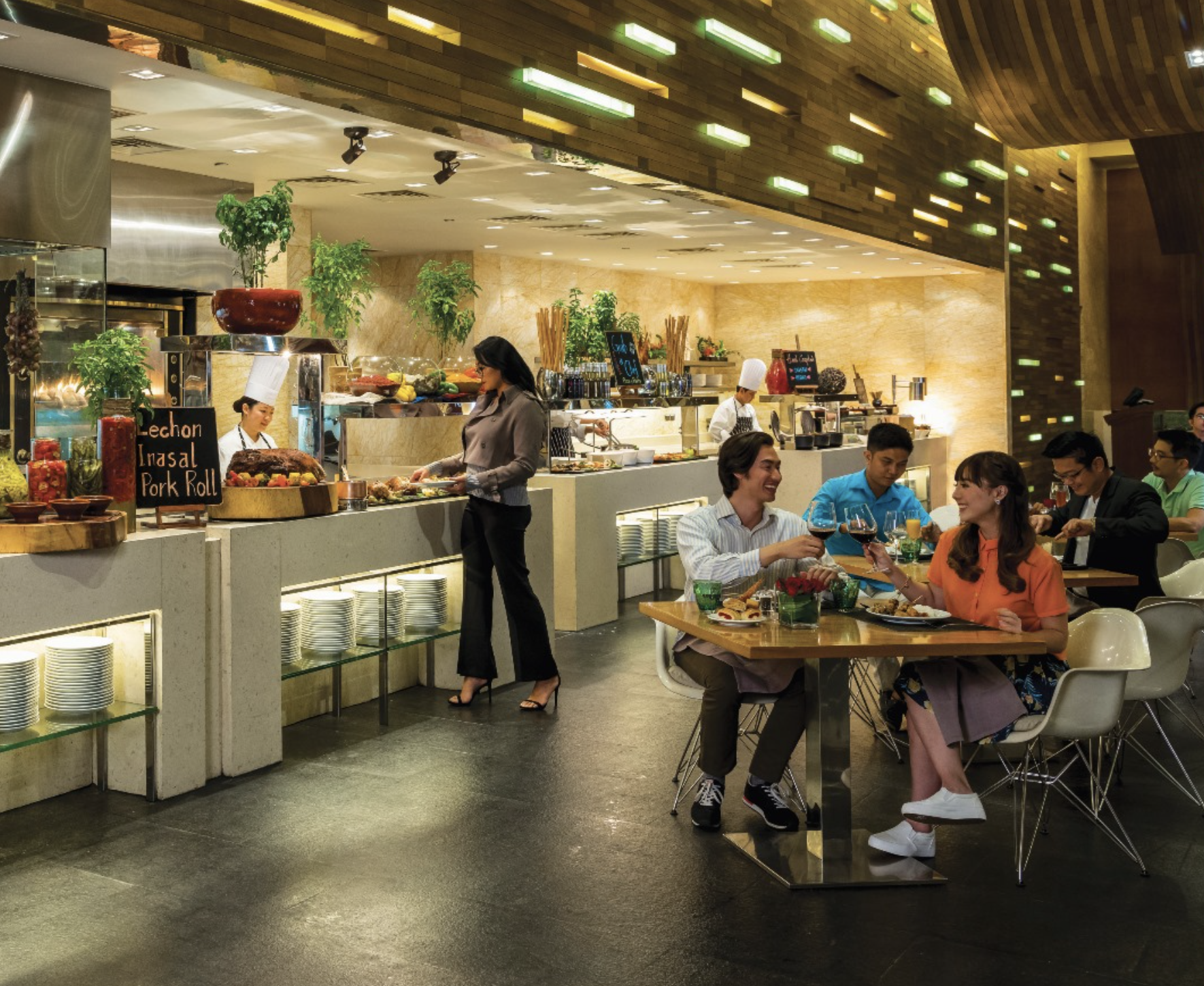
In our case, the celebration that involved an unlimited amount of food via buffet spreads was an intimate affair. It was just my husband and I in attendance. To mark our civil wedding anniversary earlier this year, we decided to try the Fresh International Buffet at Solaire Resort Entertainment City in Parañaque. Reservations are required via email.
We usually spent our anniversary weekend lunch at Spiral in Sofitel Philippine Plaza Manila, but since it permanently closed in 2024, we had not ventured into other buffet restaurants.
For the Cordillera’s Kankana-ey group, a wedding anniversary and other celebratory occasions are observed through the sacred thanksgiving practice of Cañao, an offering to their supreme deity, Kabunyan. I witnessed a Cañao up close in Baguio as a young writer in my early 20s during a week-long national literary workshop. The group sacrificed a native pig. I was a vegetarian back then, so the experience was difficult for me.
Down south in the Zamboanga Peninsula, the Subanens, for their part, hold a Buklog led by their chiefs, or the Timuay, and their spiritual leaders, or the Balyan. An elevated wooden platform serves as the venue where the offerings, chanting, and dancing take place. Like the Cañao, the Buklog is a thanksgiving ritual performed to mark life's milestones.
Our colonized selves have lost the spiritual and ritualistic aspects of these practices after 381 years of Spanish and American rule. Only the food offering remains, as we still serve lechon during special occasions while Western prayers of thanksgiving are said at the beginning of a feast.
Apart from the cultural and spiritual facets of celebrations that have evolved (or devolved) into the present, buffet restaurants in upscale hotels like Solaire also raise social concerns in the context of the Philippines, where 17.5 million people are poor. The figure comes from the 2024 Philippine Statistics Authority (PSA) statistical indicators report on Philippine development.
The 2025 Global Hunger Index (GHI) likewise ranks the country 66th out of 123 countries. With a score of 13.4, the Philippines is considered to have a moderate level of hunger.
Given these national and international data, conspicuous consumption and—at least for the biblically quoting folks, like a Philippine senator—gluttony are two matters that come to mind. The Saturday lunch rate at the time was a prohibitive PhP3,499+ per person, or PhP6,988+ for the two of us. For us, however, it was more about getting value for our hard-earned money through the wide selection of quality food offered across the restaurant’s various stations.
Fresh is located along the strip of restaurants on the same level as Solaire’s casino area. Judging from the layout and the two lobby drop-offs—the VIP and the Main—the casino is the main attraction, while the restaurants and high-end shops behind it are the opening acts.
We arrived well before the lunch period, so we walked back and forth between the restaurant and the casinos. I jokingly suggested to my husband that we try the slot machines to while away the time, but we would not have known what to do with ourselves in that environment. The most gambling I have ever done consisted of friendly card games like Tong-its and Pusoy Dos with one-peso bets.
The buffet setup compels one to eat beyond the usual level of satiety because we want to get our money’s worth and because there are so many stations to visit. This, in turn, brings up the health issue of being overweight. In an article published on its website, the World Health Organization (WHO) revealed that: "Nearly 1 in 10 children and almost 4 in 10 adults in the Philippines are now classified as overweight and obese, a level considered high by global standards."
My husband and I can confirm this data from the WHO simply by stepping on the weighing scale and looking at ourselves in the mirror.
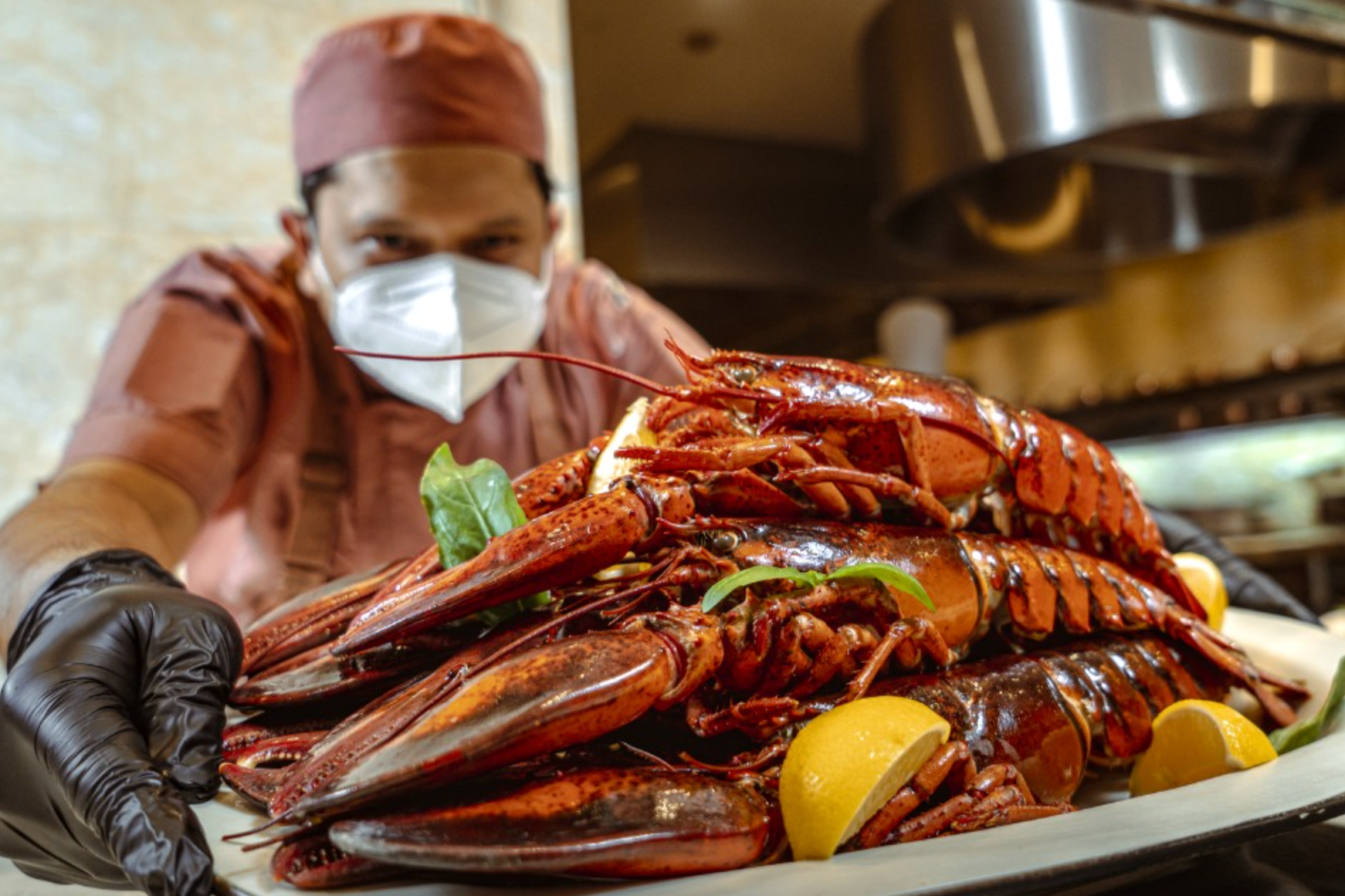
For buffet noobs, one strategy is to prioritize the premium food items, such as the lobster station and its many iterations. Fresh also has a menu on its website—which we failed to review beforehand—that lists its "bestsellers": imported Boston lobster, also known as the American lobster; beef bulalo; sisig; four-cheese pizza with truffle oil; roast beef; Kani salad and California maki; and the Solaire chocolate cake.
I skipped the pasta and pizza, so I have no gustatory memory of the four-cheese pizza with truffle oil. Instead, after consuming lobster soup, lobster thermidor, and other variations of the shellfish, I went straight to the Japanese station for the sashimi.
I had some California maki but forwent the Kani salad and the other salads. As a meat eater, my husband most probably had the roast beef. We also sampled some dumplings from the Chinese section.
Another useful tip is to observe where a line forms. If the food appeals to you, then it is probably worth joining the queue to experience it for yourself.
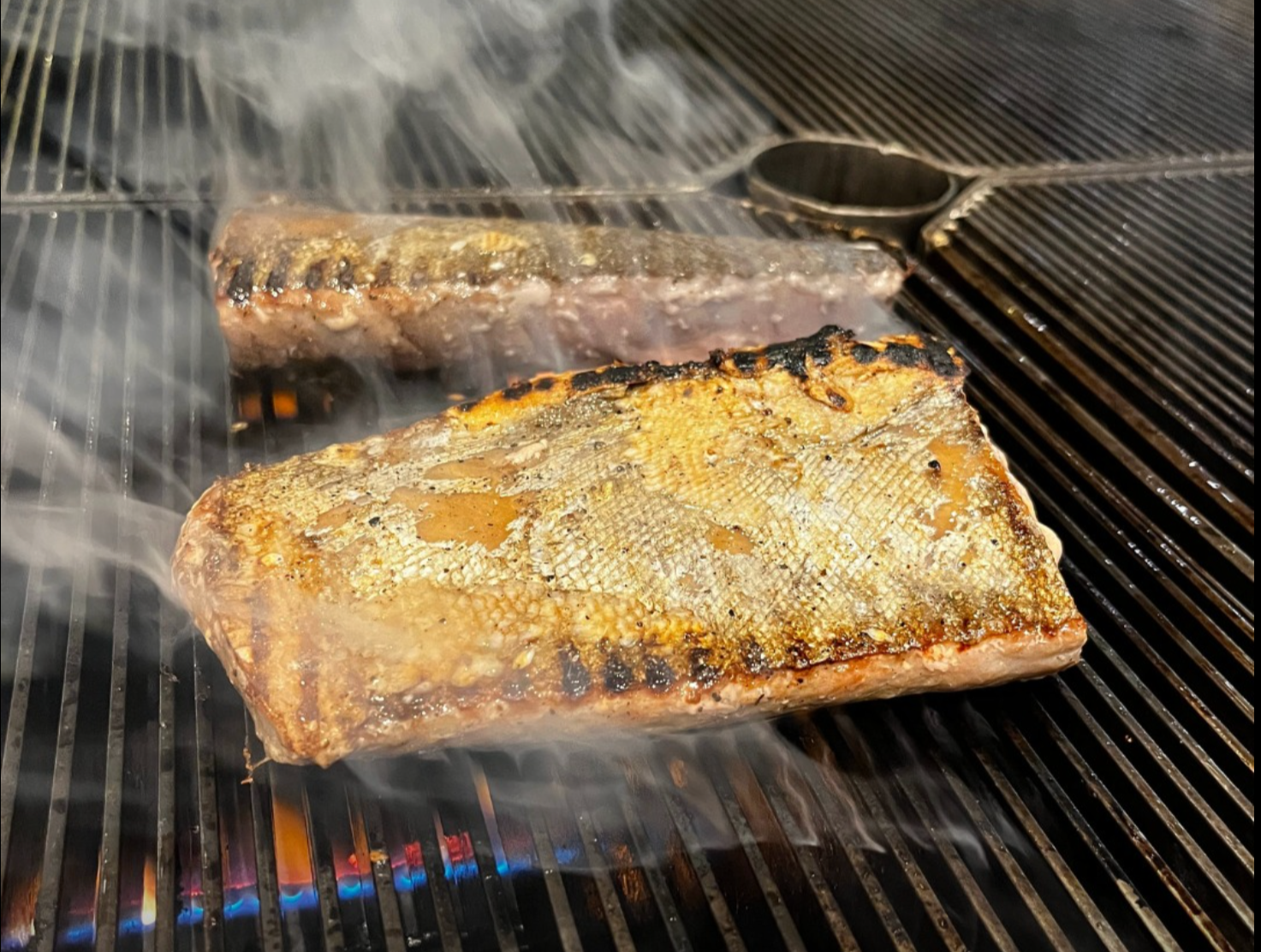
As part of our research, we watched many videos on YouTube. I somehow missed the part where the vloggers tried the Solaire chocolate cake because most of them focused on the lobsters and other premium meats. I almost passed on a slice of what turned out to be a true-to-claim "decadently divine" flourless chocolate cake in the dessert section. Thankfully, I did not. It was
the best chocolate cake I have ever had in my life.
The Solaire Signature Cake is also available at Solaire’s The Patisserie for PhP2,900 for a whole cake or PhP295 per slice.
There were many families dining that Saturday afternoon. To our immediate left sat a family of three—a mother, a father, and their son, who was on the heavy side. To our right was a group of balikbayans who spoke loudly enough for us to overhear that they were from the United States. Fortunately, they transferred to another table shortly after being seated.
On one hand, our palates fondly remember that celebratory lunch at the restaurant where we had what felt like the world's best food. We even found it a bit challenging to return to our usual meals after Fresh because everything paled in comparison.
On the other hand, the simple act of eating to mark a milestone in our lives—and what and where we chose to eat—touches on the cultural, spiritual, and social dimensions of living in the Philippines. Even if the justification was a once-a-year celebration, I still find it difficult to reconcile being in a place overflowing with the freshest food while there are Filipinos visibly hungry on the streets as we drove home.