Locking Eyes at MoCAF 2026: Decoding Some Favorites through the Viewer’s Gaze
Held last July 3 to 5, MoCAF 2026 was packed with bright lights and heavy crowds. But beyond the busy gallery booths, we look at some art enthusiasts who locked their eyes onto single art pieces and found a quiet, deeply personal reflection of their own lives staring right back at them.
Words Mariel Ann Breanna Puli
July 11, 2026
Have you ever walked into a crowded room full of noise, only to stop completely still because a single beautiful thing caught your eye?
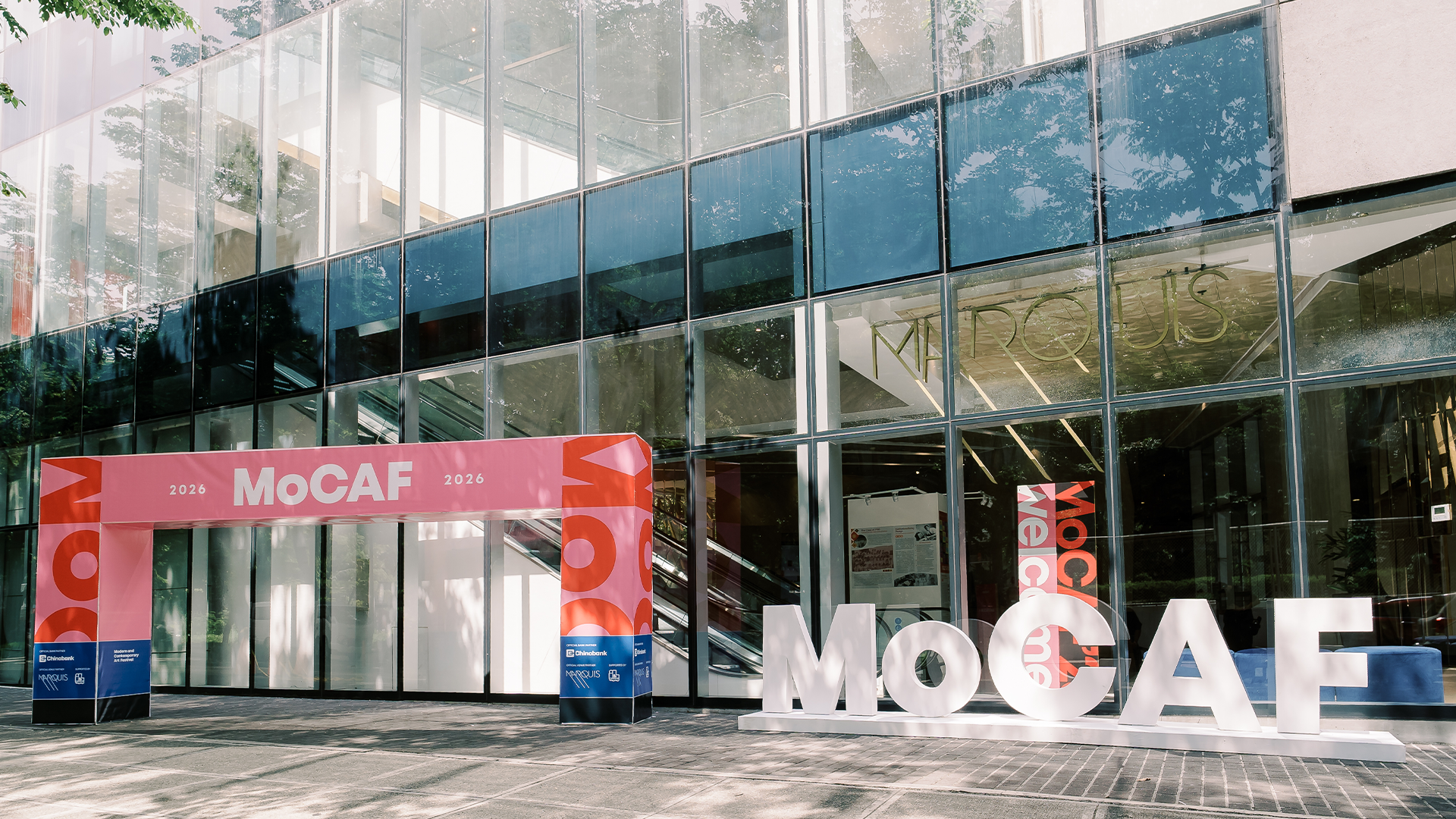
This is what happened over the weekend at the Marquis Events Place in BGC. MoCAF 2026 was packed. People were talking, lights were bright, and there was so much to look at.
But if you watch closely, you’ll see small moments where the world just stopped for someone. A person would stand in front of a canvas, and suddenly, it was just them and the artwork.
We stroll around the floor, looking for those quiet and intimate moments. We asked a few art enthusiasts what kept them from walking away.
The Pitch Black Art of Astrid Castillo-Almario
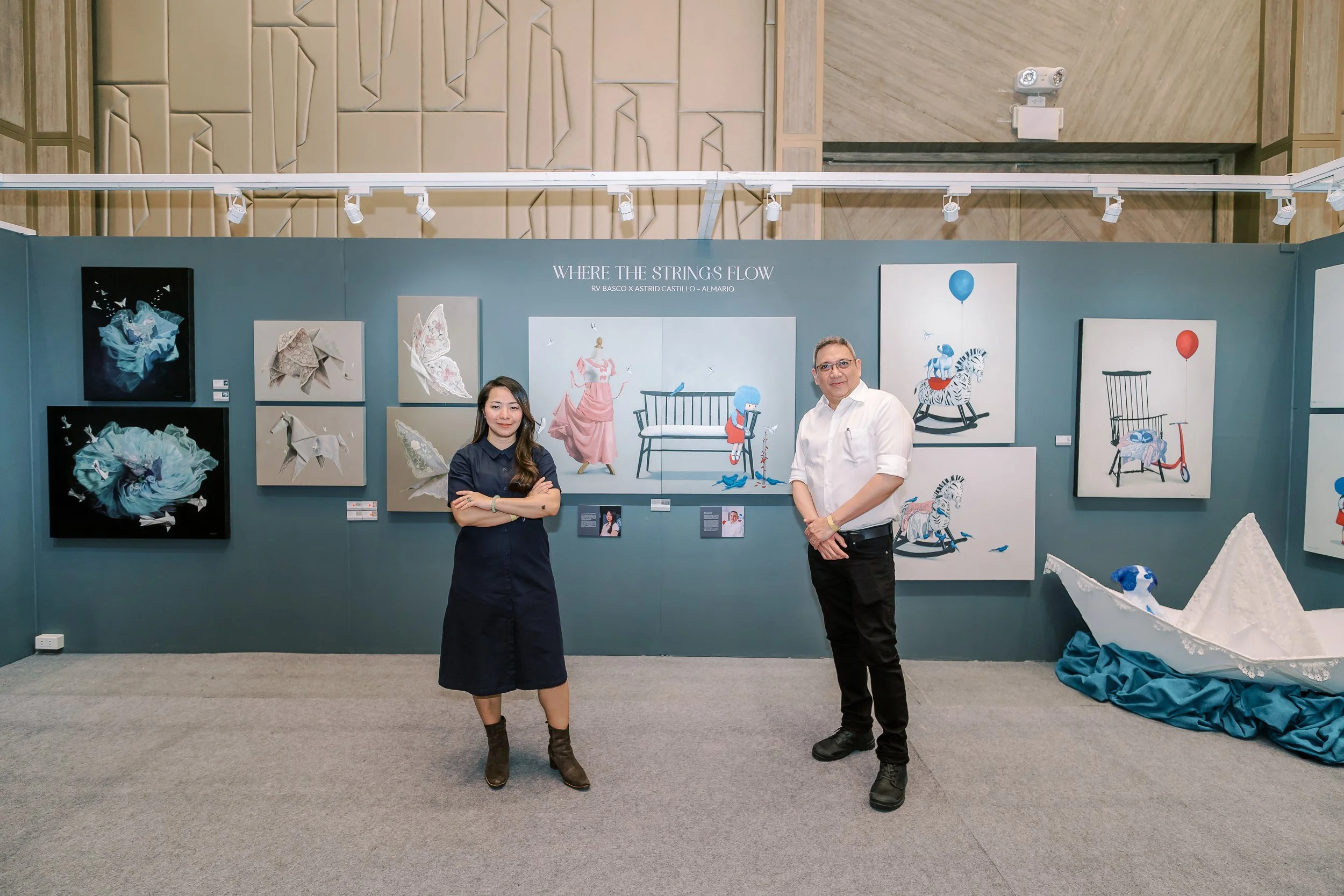
Spotted: Cyruz, deeply captivated by Astrid Castillo-Almario’s work under “Where the Strings Flow” by RV Basco x Astrid Castillo-Almario
While walking through the collection under “Where the Strings Flow” by RV Basco and Astrid Castillo-Almario, Cyruz found himself completely transfixed by Astrid’s specific paintings. He was captivated by her signature technique: her deliberate choice to set hyper-realistic figures against an incredibly deep, pitch black backdrop.
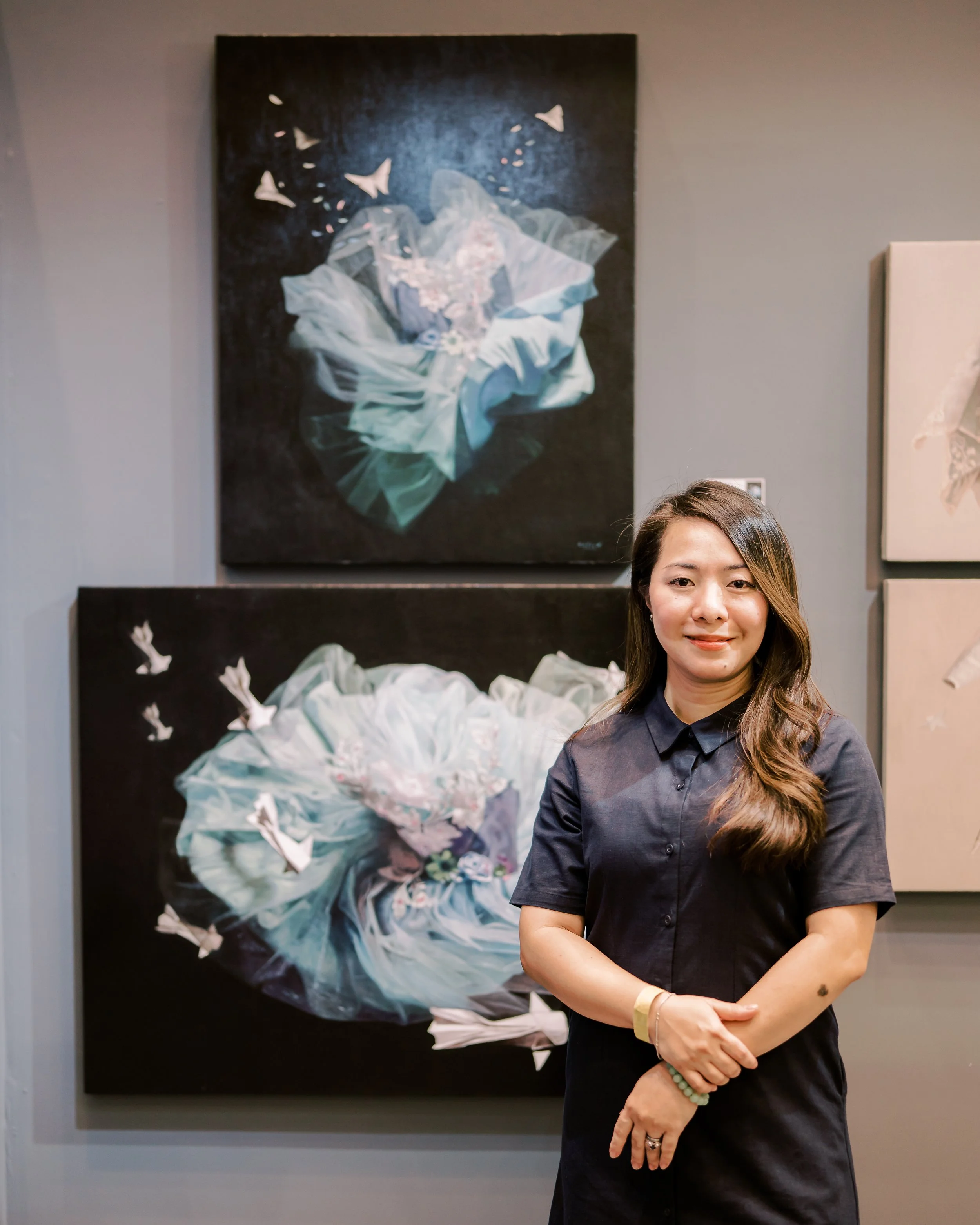
By manually varnishing the background to a high-gloss, endless dark finish, the artist makes the sharp details of the clothing practically leap off the canvas.
“So far, ang favorite ko is kay Astrid Castillo Almario. Tapos ‘yung art forms niya are these. The reason why I want her art piece is ‘yung usage of techniques niya. And gusto ko ‘yung pagka-black ‘nung background niya. Ang kwento sa’kin, bina-barnis daw niya ‘yun so that ‘yung art form is that. And the way ‘yung detail ng clothing, ‘yung realism is one of a kind.”
He found himself wondering about the invisible months behind the frame, realizing that true beauty demands patience.
“Yung realism ay ando’n, ang galing. I’m very curious, you know one day, I want to have a chat with the artist herself—what was going on with her mind? What was the thought process? How many months niyang tinapos ‘yung art form? I was told, 3 to 6 months daw niya ginawa ‘yun. So, I’m like, okay, I understand you don’t rush quality art.”
For Cyruz, looking at the canvas became an intimate mirror of his own creative soul, a reminder of the unspoken bond that links all creators.
“Sa family namin, ako ‘yung artist. As an artist, when you’re speaking the same language, whether ‘yung tao, let’s say malayo pa siya and ikaw aspiring, it’s like you’re seeing this third eye. When you talk to another artist or sa isang architect, maiintindihan mo ‘yung term na ‘yun eh—third eye. So when you see that, you’d be like I’m amazed kasi ito ‘yung capability ng isang artist. And if a person can do that, you can actually do that. You just have to put the work, like she did.”
For him, an aspiring artist should double his effort to get to Astrid’s level. And it’s a beautiful, vulnerable thing when art humbles you, striking a chord against your own creative pride.
“So when I see that, and nakikita ko ‘yung details niya, I’m like . . . if given the time na mabigyan ako ng maraming time, gagawin mo rin ‘yan. And you have to understand, mga artist, egotistical din ‘yang mga ‘yan e. More than they care to admit. Ma-pride din sila. They just don’t say it. At that time, tinitingnan ko ‘yung work ni Astrid. I’m like, I don’t know—how I wish I can do that,” Cyruz admitted.
A Massive Menagerie of Norman Dreo’s “Dibujo x Machina”
Spotted: David, looking at “Dibujo x Machina” by Norman Dreo
Sometimes our minds are loud, so we look for things that match the noise inside us. David was standing in front of a massive art piece by Norman Dreo. It was huge, busy, and full of different things happening all at once.
“I’ve seen his works before because I’ve gone through a lot of different art fairs na rin. Although his always stands out, kasi firstly, ang laki, so this talagang eye-catching to say the least. And then it’s essentially a mural—contrasted with everything that’s around the simple, like what’s work here and there. Talagang what I like about it is this is a personal liking of mine.”
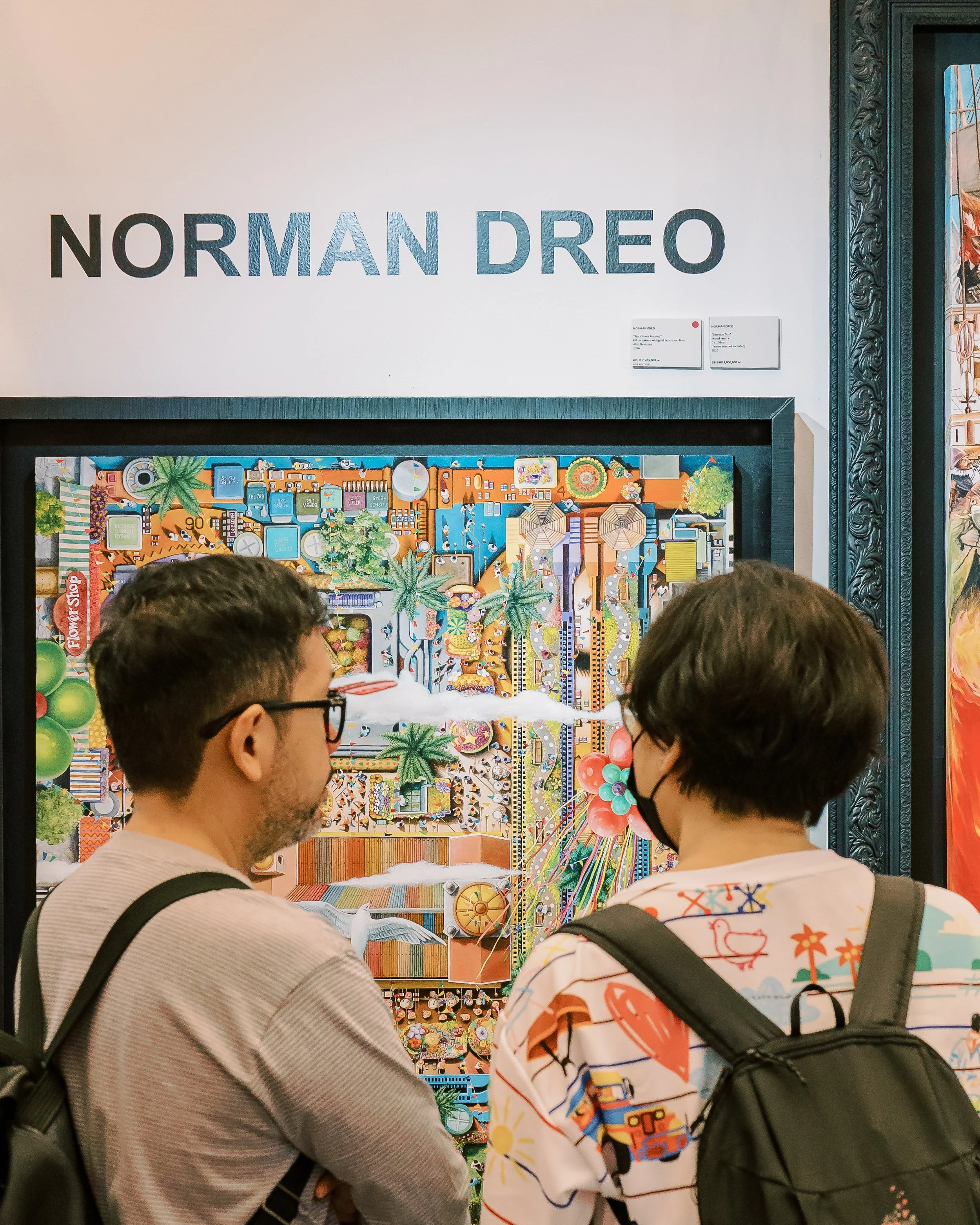
Most people look away when something is too crowded, but David liked that it made his brain slow down to figure it out.
“”I like it when a work is very busy na ang daming ganap in a piece and yet however, there is a method to the madness kumbaga, like there are bits and pieces and then they all make sense as a cohesive whole. But for me personally, it’s just that I really like art works that are just, may mga reference here and there to like all sorts of different things. So, it’s a menagerie of different things pero somehow, it all make sense and I really like that it does,” he explained.
As he stood there, reading the long description beside it, David realized he loved the challenge of a piece that didn’t give away its answers too easily.
“I think in this case, there is an overarching theme. There is a message evident sa title . . . but I get where he’s coming at, but he’s using the multiplicity of images presented to really just expound on what point he’s trying to make. For me personally, I like when there’s a lot of examples to explain one thing, kasi it gives my brain a lot of things to think about, which is very stimulating sa akin. I really, really like works that give me that sense of okay, kailangan kong mag-isip a lot for it.”
Raco Ruiz’ Dopa: Reminding People of Their Uniqueness
Spotted: Bea, fascinated by Dopa—a cartoon Dalmatian character created by Raco Ruiz for Art Toys Exhibition
Over Ruiz’ booth, things felt a bit lighter, like being a kid again. This section featured rows of Dopa, a signature Dalmatian character created by artist Raco Ruiz.
For this showcase, the artist turned his dog’s character into a blank toy platform, inviting a collective of creators to use the sculpture as their literal canvas.
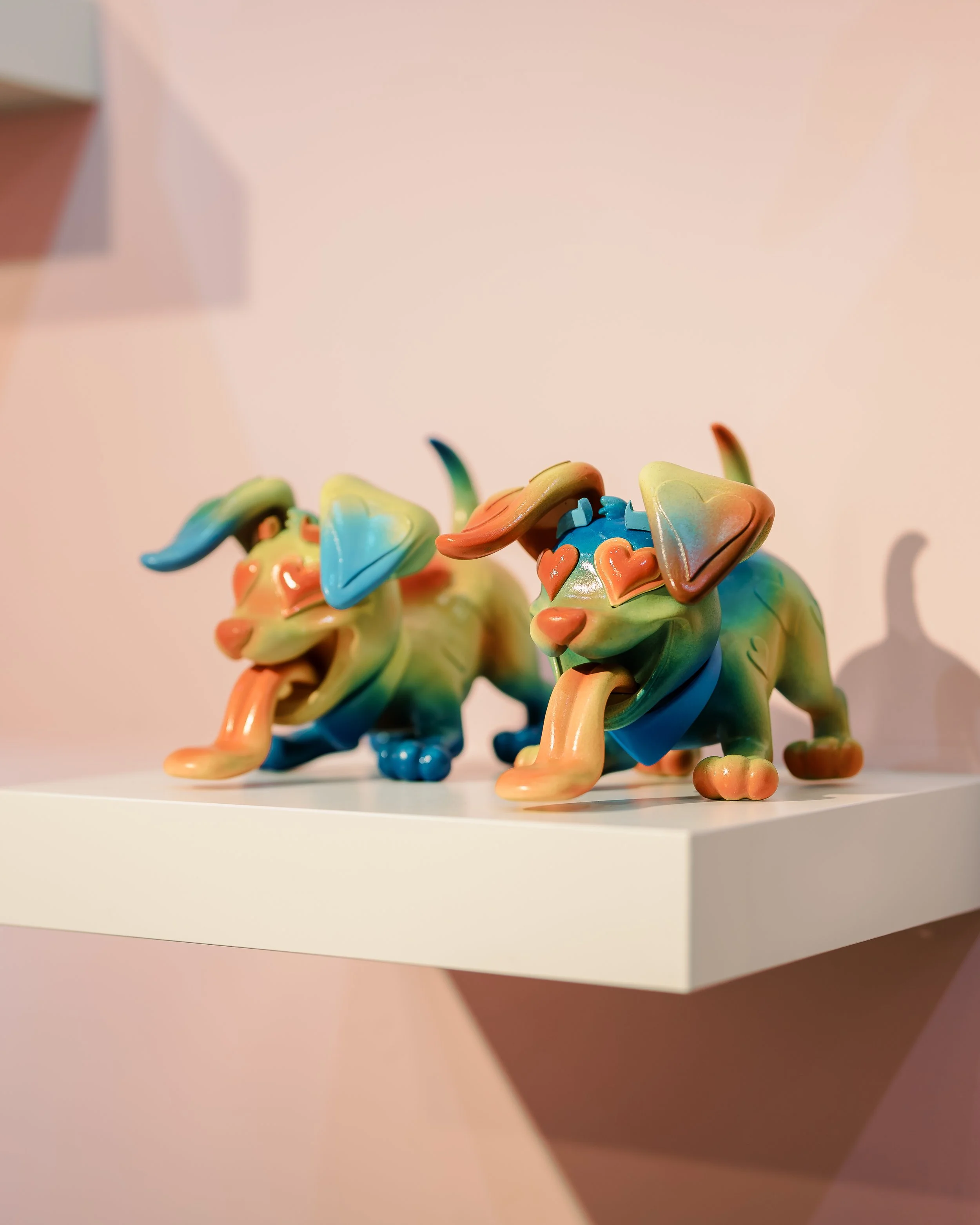
Among them was Bea, an artist who traveled all the way from Tarlac to show her own customized piece.
“That’s very interesting for me because out of all the beautiful and amazing artworks here, like you have so much beautiful artworks from different parts of the world and also the Philippines, but with Art Toys, they made their art toys, the dogs—Dopa—their canvas. So, that’s what makes it more interesting this year. This is actually my third year now in MoCAF. So far, that one has been a big eye candy for me.”
Seeing all these different artists put their own lives onto the exact same toy shape made her think about who she is.
“I think with what Art Toys is doing, it resonates to me as an artist, like no matter how challenging the artwork is, like you know, this time, a lot of art toys are coming in, you will have something different in this world, and then that reminds me of your individuality and your uniqueness as a person,” Bea explained.
“I am both Kapampangan and Bisaya. I find that very unique, so for me, I find it very important. Despite the many challenges in the world, you have to be true to yourself. Show yourself.”
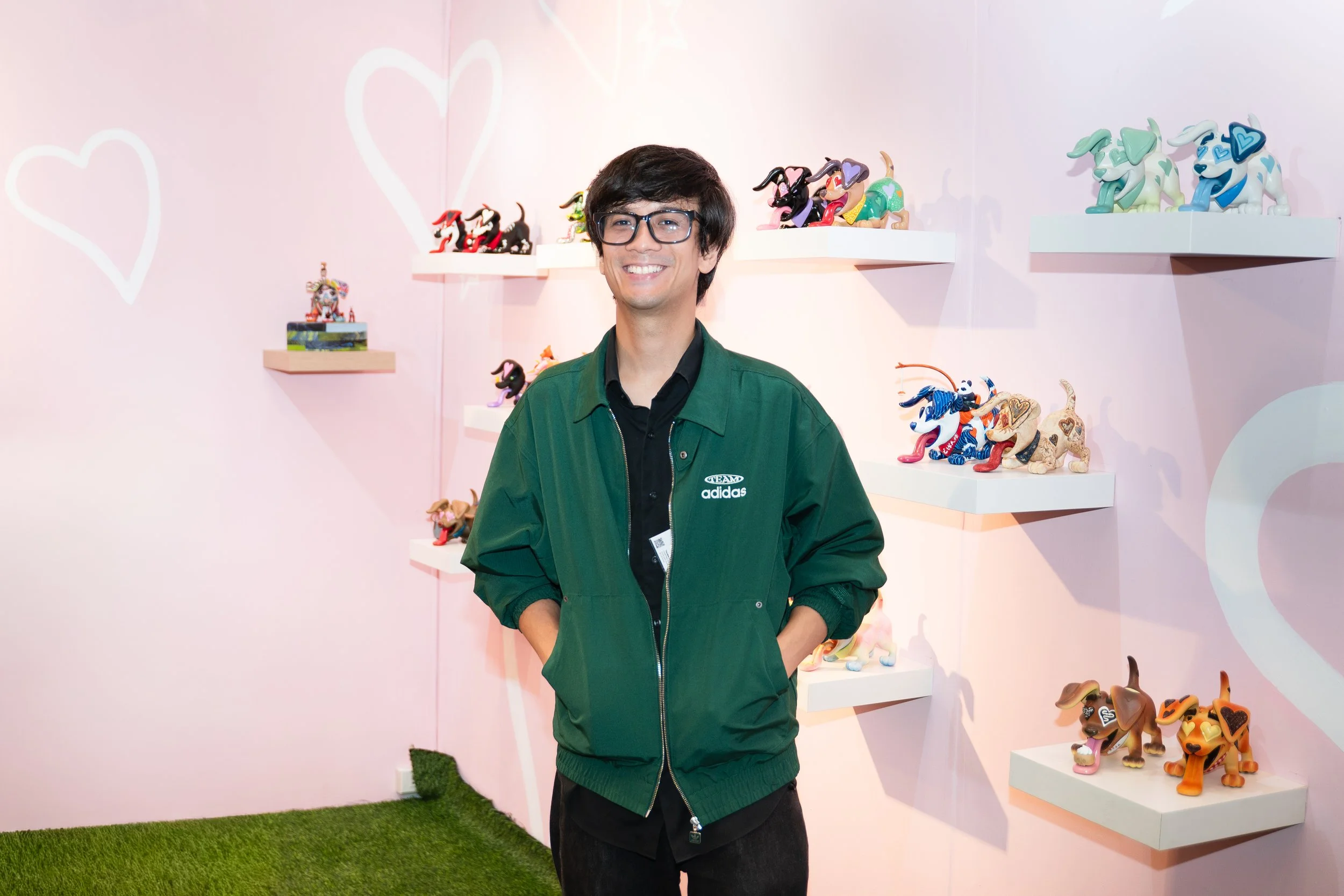
“You have to show your Kapampangan and Bisaya side in this amazing populated art world. So, that’s how it resonates [with] my life,” she added.
Bea was mesmerized by a painting of Dopa that Raco Ruiz did. She loved it so much she tried to buy it, but she was just a few minutes too late.
“I heard it was sold yesterday. It was a very beautiful painting by acrylic. It represents on his reaction from all the artists na nag-combine, as me, one of them, do’n sa mga art toys na ginawa niya, which is for me rin, that was really beautiful. And dami namin, but we really had all of our personalities from that show. So, I really congratulate Art Toys and Raco for an amazing show.”
Caught in the “Blue Waves of Philippine Islands” Current by R.A.M.
Spotted: Belle, viewing the specific glass sculpture “Blue Waves of Philippines Islands” inside the “Horizons & Memories” special exhibition by R.A.M. (Ramon, Anna, and Michael Orlina)
Upon walking inside the special exhibition, the crowd is instantly met with the legacy of R.A.M.’s “Horizons & Memories.”
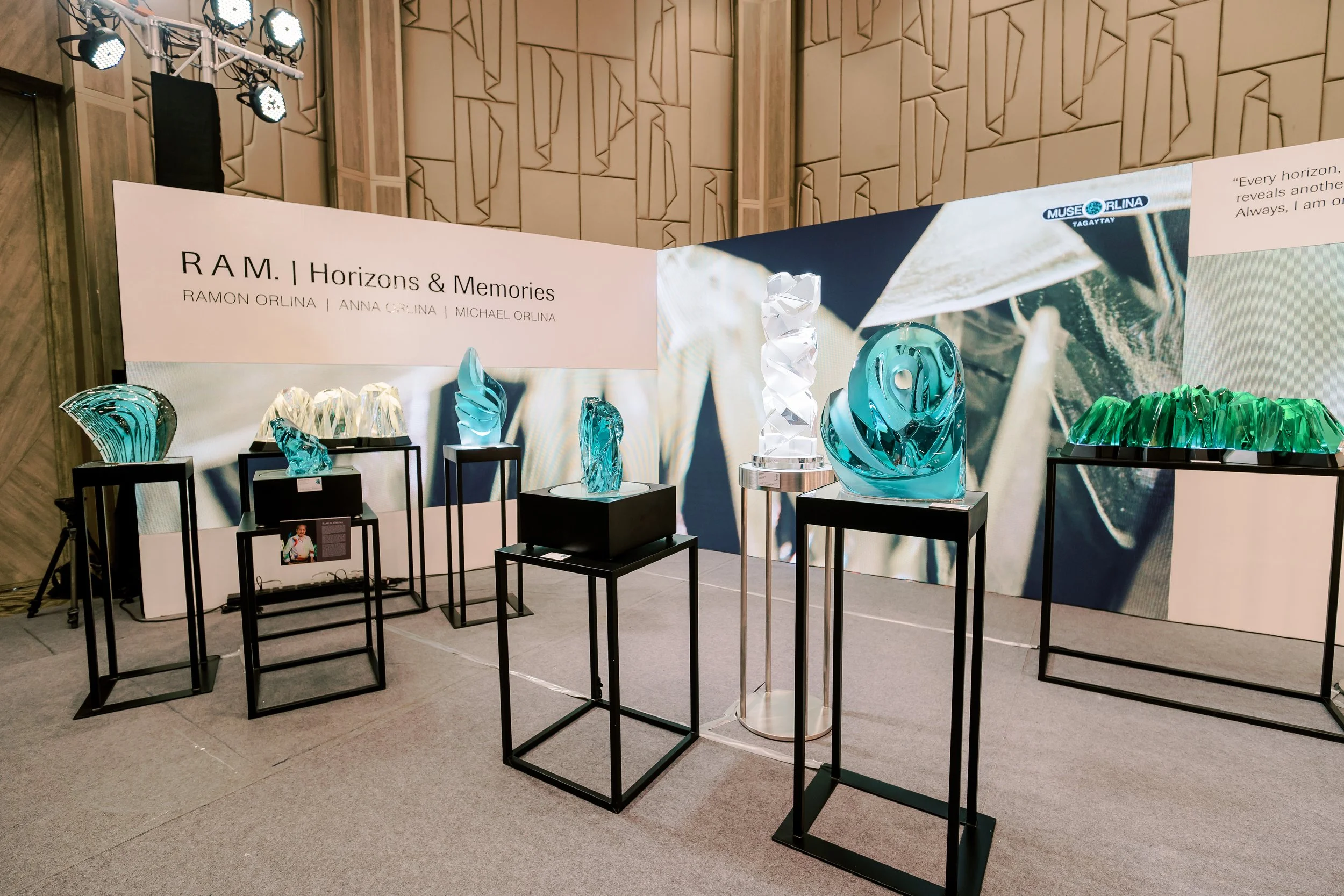
It is always a fascination to watch how the iconic, sharp chiseled cuts of Ramon Orlina seamlessly transition into the creative hands of his children, Michael and Anna, who continue to push the family’s celebrated glass heritage forward with their own fluid shapes and vibrant colors.
Amidst the bustling crowd, Belle stood completely still, entirely captivated by one of the showcase’s true showstoppers—a mesmerizing glass piece that perfectly mimics the rhythm of moving water.
“Yung favorite art piece ko rito ay itong gawa nina R.A.M., ‘yung ‘Horizons & Memories’ kasi it’s very diverse. You know na kahit tatlong artists sila, coming from one family, very distinct pa rin ‘yung pagkakagawa nila ng artworks. Like for example, ‘yung si Ramon—makikita natin na very sharp ‘yung kanyang pagkakagawa. While his son, Michael—very creative, very innovational, na kahit nagmana siya sa father niya, in-adapt niya ‘yung style ng father niya in his sculptures. Mas ginawa niyang modern ‘yung kanya. While ‘yung kay Anna—sa kanilang lahat, sa kanya ‘yung pinaka-very distinct kasi iba-iba ‘yung kulay. Tapos, ‘yung mga sculptures na ginagawa niya, it is not something na you see on a regular basis,” Belle observed.
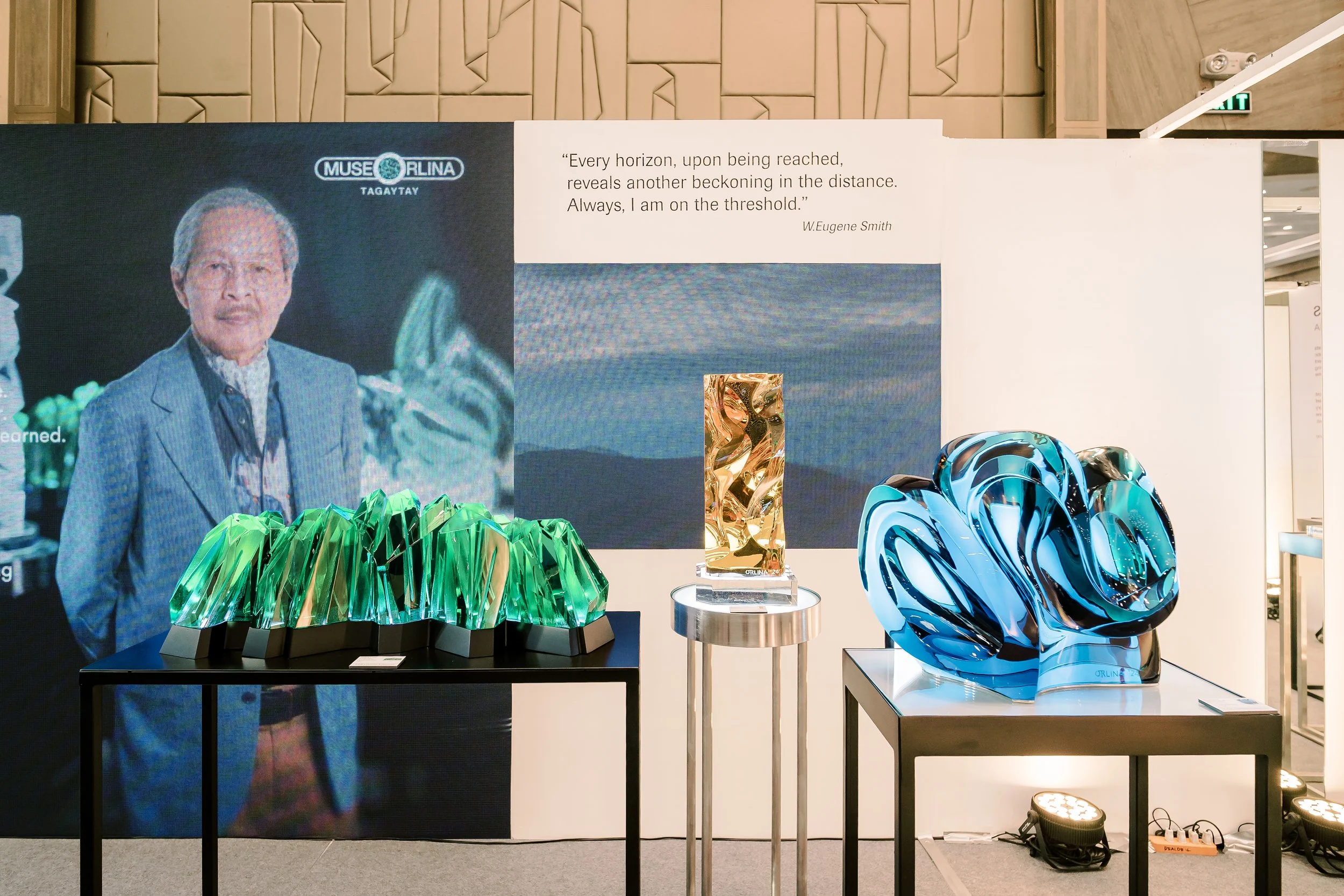
Belle added that she was most captivated by the blue glass sculpture, “Blue Waves of Philippine Islands,” because it perfectly mirrored the ocean surrounding our country. For her, it felt like a powerful reminder of home and the essential things we have to protect as Filipinos.
“I think it symbolizes our political truth when it comes to our heritage, na ito ‘yung symbol ng ating pagkakakilanlan sa Pilipinas. And so, ito rin ‘yung physical representation natin sa sculpture na the fact na ginawa siyang inspiration, it means something na pinaglalaban pa rin natin siya. Hindi siya nawawala at meron pa rin itong symbolism kahit sa modern times.”
But as she kept looking, the heavy thoughts about the country turned into something gentle about herself.
“It feels personal to me because growth comes in waves, hence, the ‘Blue Waves of Philippine Islands.’ While also, it resonates with the crowd because again we’re talking about the heritage; we’re talking about the political truth, and the truth is something that is still being in contention with the political challenges that we are still facing right now,” she reflected.
What MoCAF 2026 Made Us Feel: A Place to Stand Still with Yourself
When you walk out of MoCAF and back into the busy streets, you realize that an art festival isn’t just about the paintings or art pieces displayed. It is about the people looking at them.
It leaves you feeling a bit warmer, a bit more connected to everyone else. The truth is, we all have different lives.
Cyruz is trying to find patience to make good things. David is trying to find order in the noise. Bea is trying to remember her roots. And Belle is just trying to grow through the waves.
We go to these beautiful events thinking we are looking at art, but really, we are just looking for ourselves. And as we wait for next year’s MoCAF show, we get to carry that quiet feeling back home to us.