
Between Duty and Dreams
Notes on Dulaang UP’s Ang Kaliitan ng Kasalukuyan.
Words Jen Chuaunsu
Photos courtesy of Dulaang UP
March 31, 2026
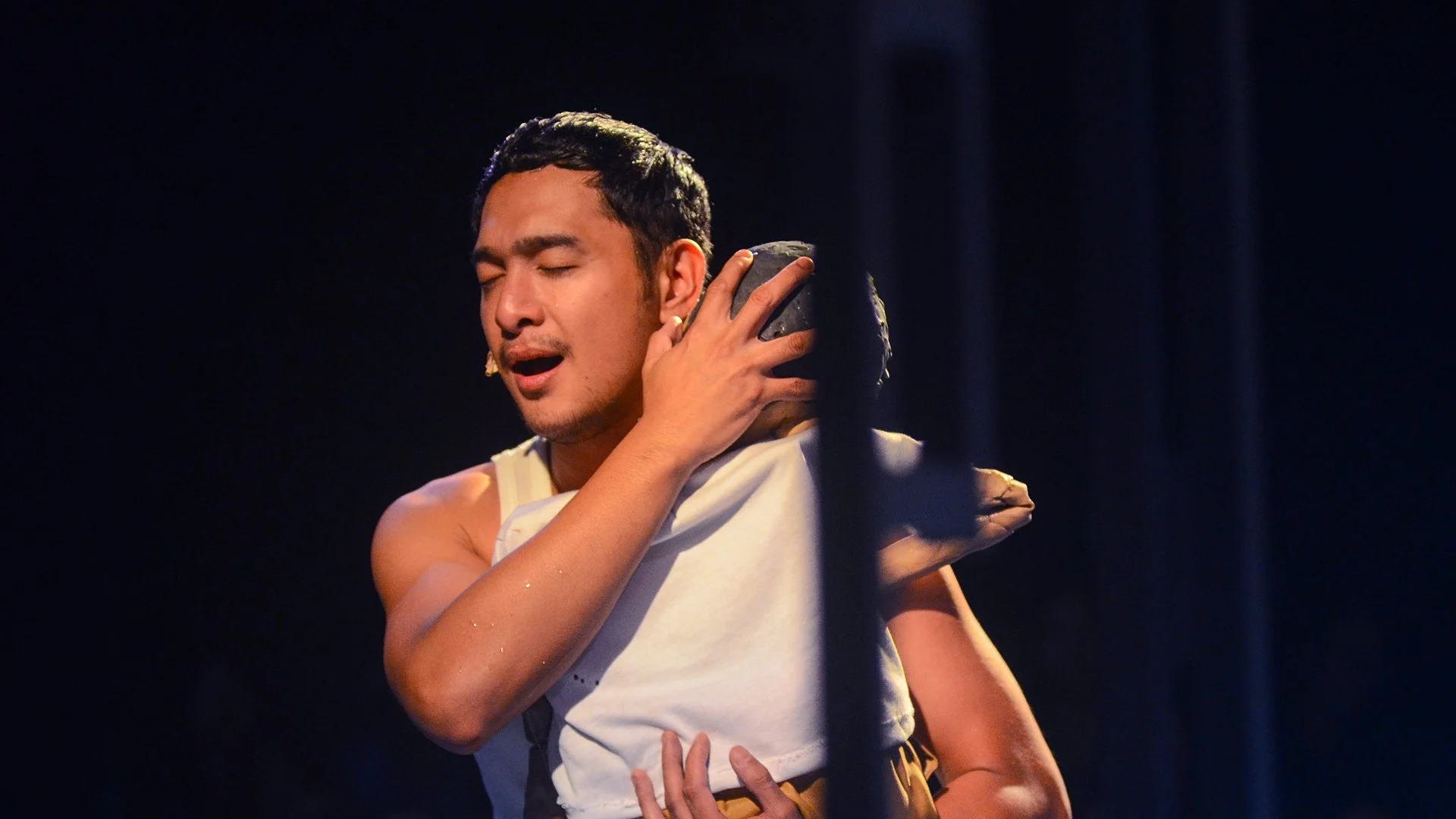
The OFW story is a familiar one to all Filipinos. Often seen as modern-day heroes, Overseas Filipino Workers’ remittances bolster our country’s economy and raise their families’ living standards. The musical play Ang Kaliitan ng Kasalukuyan, written and directed by Arlo Deguzman, shows the darker side of the OFW dream. It makes you feel the sacrifices OFWs make—losing their youth and their dreams to provide for their families—and the toll it takes on their psyche as they are split between two countries. The play is not perfect, but its sincerity shines through in tackling the personal pain OFWs go through.
Ang Kaliitan ng Kasalukuyan ran from 12 to 29 March 2026 at IBG-KAL Theater, University of the Philippines.
Setting the Context
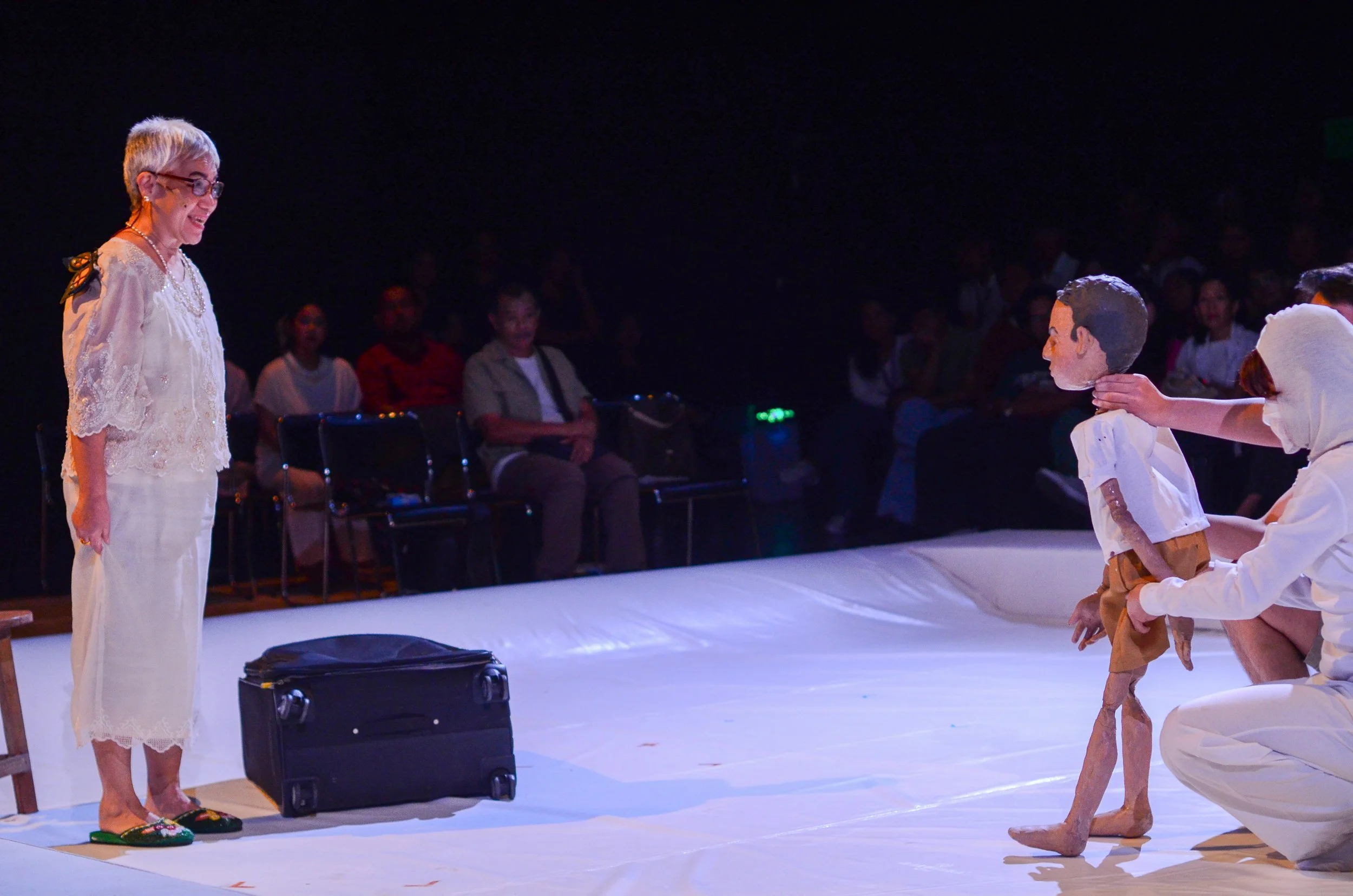
The set is simple yet striking—a long white stage with raised sides that resembles a sloping shallow pool, and a high wall at the back onto which videos and images are projected. Off to one side are chairs where the actors sit in full view of the audience.
The play begins with videos of past government administrations, from Gloria Macapagal Arroyo to Rodrigo Duterte. The play is set in 2001 during Arroyo’s presidency. Much like a history lesson, various man-made and natural disasters, from extrajudicial killings to Bagyong Ondoy, flash across the wall. It is an interesting opening, but perhaps the clips could have provided more insight into the economic realities behind the OFW phenomenon—low wages, lack of jobs, and the generational cycle of poverty—so as to be more relevant to the story.
A Homecoming
The protagonist, Bulan (portrayed by Sandino Martin), comes home after 20 years of working in Dubai as an AVP writer and director. He is met at the airport by his parents. As they welcome him back, he expresses his desire to leave his job, return to the Philippines, and pursue his dream of writing for himself. His parents are against this, of course. They still rely on him, even though his years of hard work have already made their lives more comfortable. Bulan is torn between supporting his family financially and following his heart.
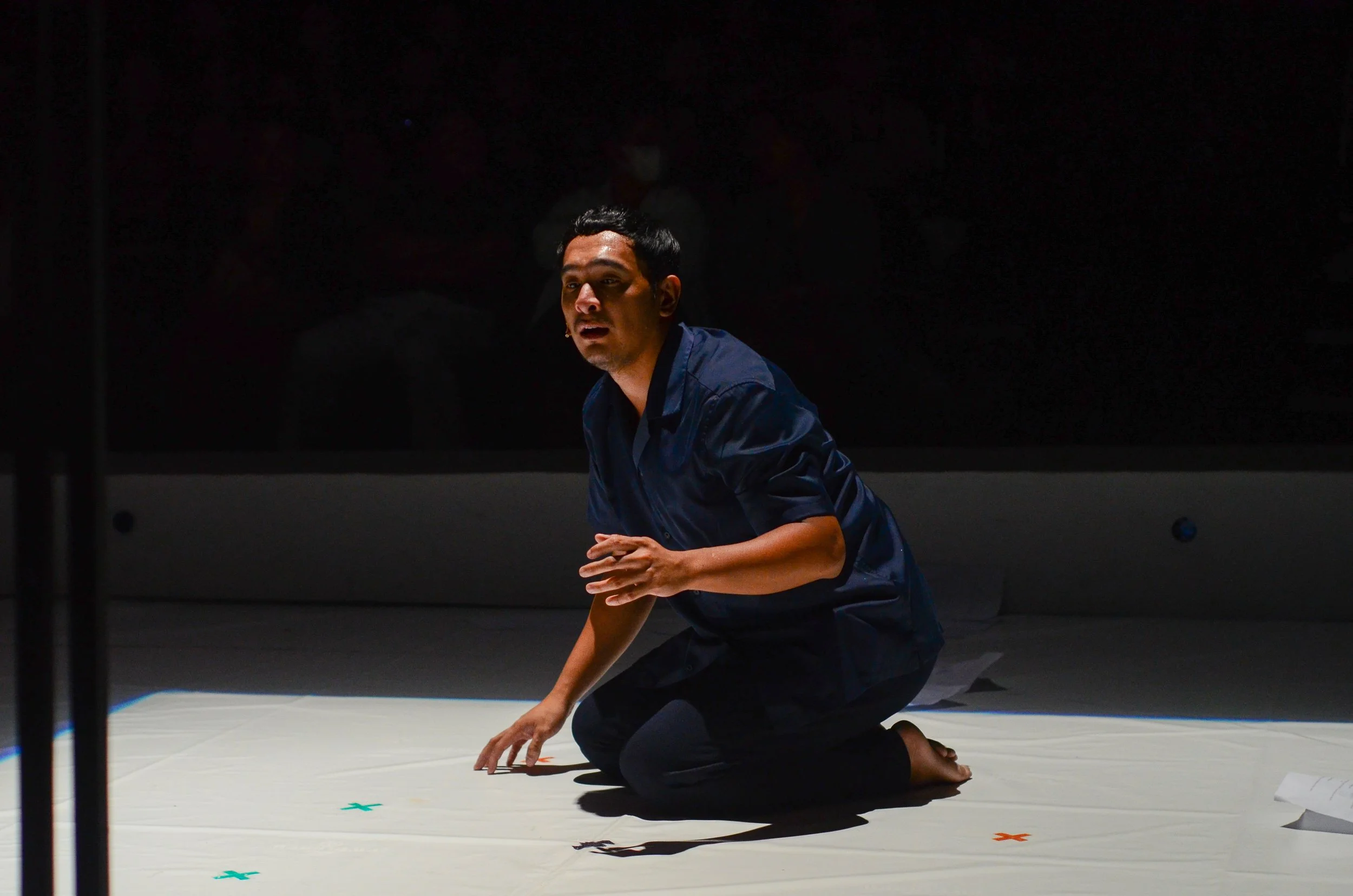
As the play progresses, we learn more about the sacrifices Bulan has made. When he eventually returns to Dubai, the emptiness he feels after his homecoming grows louder in the silence of his lonely existence.
In Transit
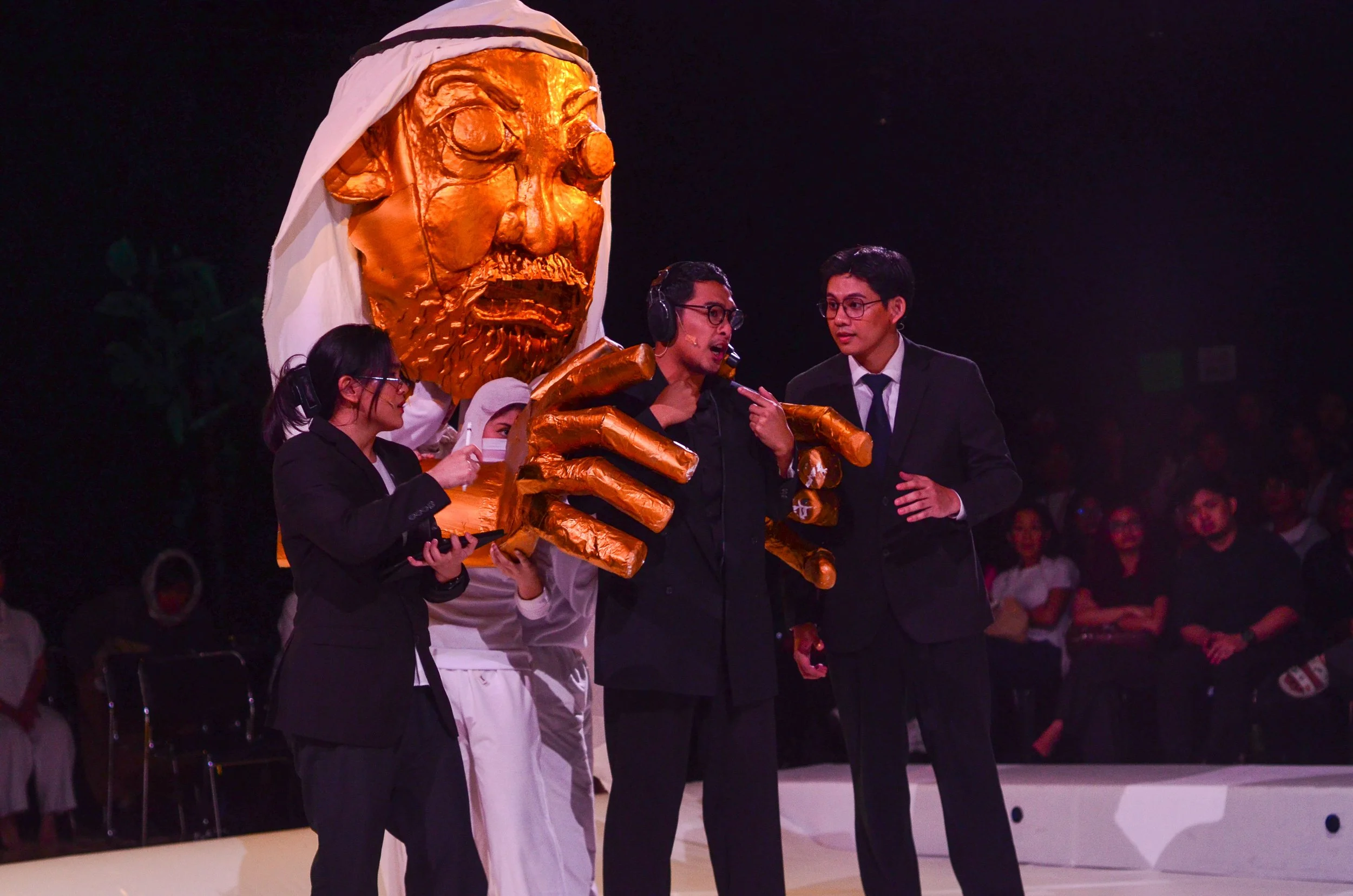
The ensemble carries suitcases of various colors and sizes. These props transform into tables, chairs, refrigerators, even the skyscrapers of Dubai. They are whimsical and delightful. As a metaphor, the suitcases are particularly effective, symbolizing OFWs who are forever in transit, never fully belonging anywhere.
Puppets and dolls are also used. In one particularly touching scene, Bulan learns that his Lola Saling has died while he was abroad. He remembers a childhood memory of clinging to his lola during a brownout. The scene depicts how simple life used to be, as he yearns for the past. Instead of casting a child actor, a puppet is used to portray young Bulan. While inventive, this choice distracts from an already moving and emotional scene.
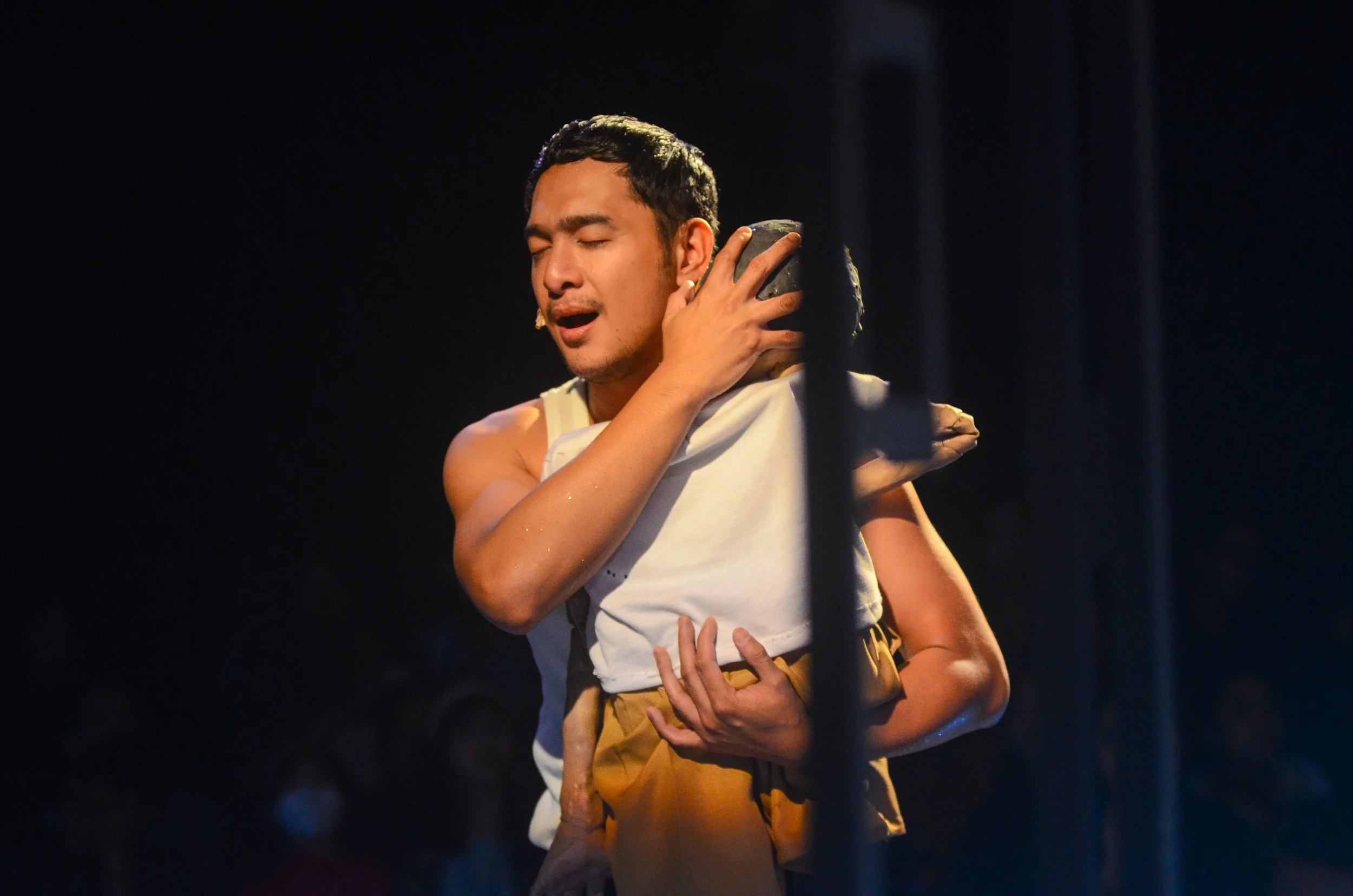
The puppet reappears towards the end, when Bulan, in a moment of catharsis, embraces it, soothing, in a sense, his inner child. The idea seems good, but a wooden puppet still feels like a lesser substitute for a real child.
There is also a scene when Bulan returns to Dubai. A small doll, like a mini version of himself, sits atop his suitcase and accompanies him to his apartment. Alone and with no one to talk to, Bulan addresses the doll as if it were a confidant. This device allows us to delve into his conflicting thoughts while highlighting his utter isolation.
The Filipino Diaspora
While Bulan’s personal and familial dilemmas are thoroughly explored, there is a layer in the story which pertains to activism. How can one write about the Philippines after being away for so long? Is there reason to hope for progress, or should we accept our country’s stunted development and just move on? These questions are raised by Bulan’s uncle and stay in Bulan’s mind. However, the subplot on activism feels underdeveloped—verbalized by characters, but not shown. It remains unclear how it strongly connects to Bulan’s story.
Storytelling Through Song
As a musical, the play weaves songs seamlessly into its scenes. These songs express Bulan’s conflicting emotions, and the lyrics are thoughtful. But the melodies tend to sound similar, making it difficult for any one song to stand out.
The Hard Questions
Perhaps the best scene is when Bulan reunites with his sister (portrayed by Tess Jamias) in the desert. Their casual conversation deepens into a debate about their future, bringing rarely discussed issues to the surface. Difficult questions are asked: How long must they continue working for the family? Isn’t 20 years enough? Is it selfish to think about oneself and imagine a life of one’s own? There are no easy answers, but the act of asking these questions matters.
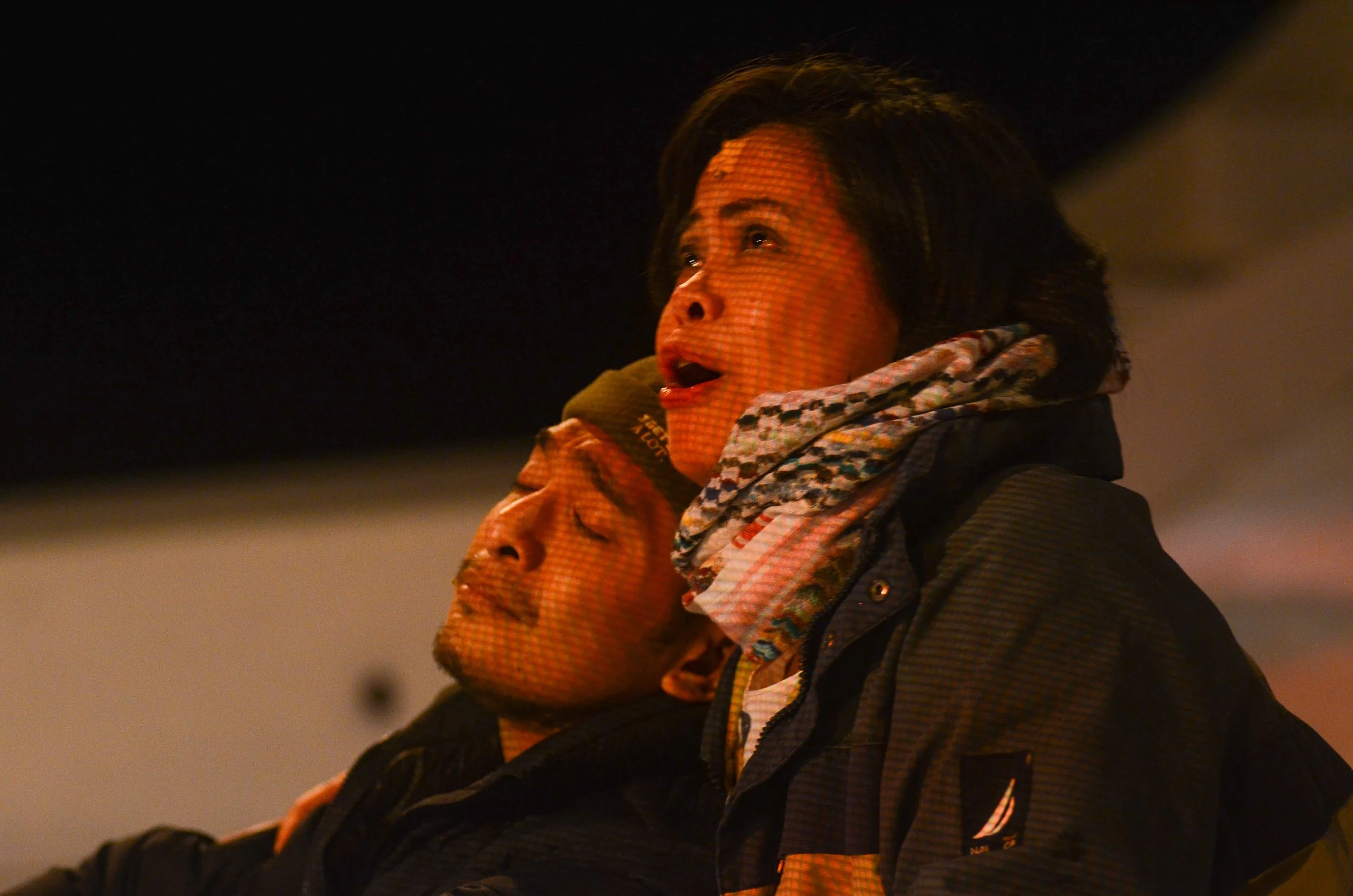
The scene illuminates the cycle of OFW parents raising their children to become OFWs as well, often to secure their own retirement. It is an obligation that many Filipino families accept without question. This scene feels like the heart of the play.
A Beginning at the End
Near the end, there is a visually stunning moment when Bulan speaks of the sea, and water begins to flow from the white wall into the pool. The water seems to signify rebirth—a new beginning. The ending is ambiguous. While memorable, it leaves the audience uncertain about how to feel.
The play may not be perfect, but it feels authentic. Dedicated to OFWs around the world, its sentiment pierces through. The play is truly empathetic towards OFWs, giving the audience a glimpse into the inner turmoil faced by our modern-day heroes.