
Craft, Leadership, and the Women of Tiño
Behind every garment is a network of hands, and behind that are women who lead with clarity and care.
Words Gerie Marie Consolacion
Photos courtesy of Tiño Suits, Gerie Marie Consolacion, and Mian Centeno
March 31, 2026
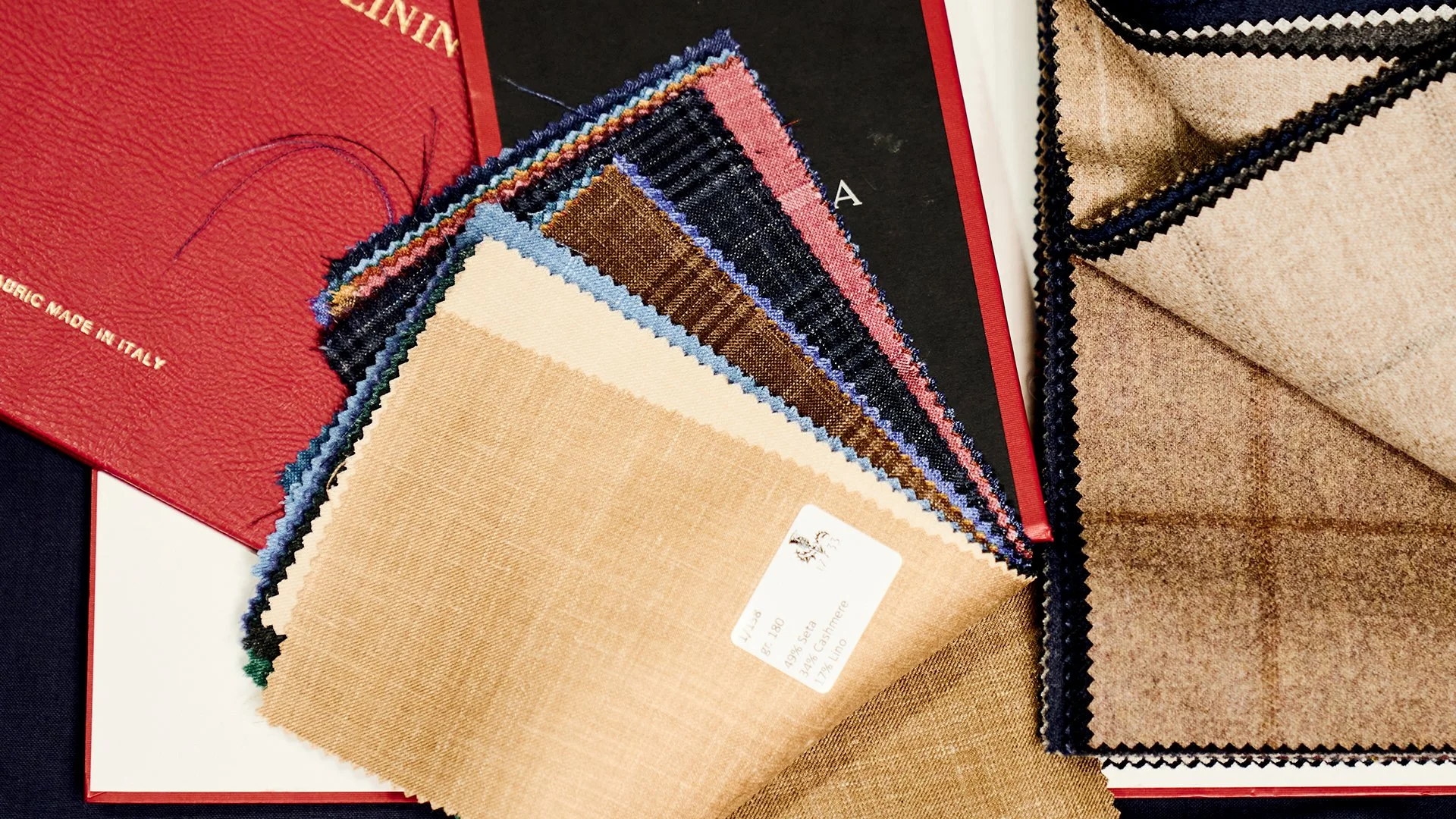
In an age shaped by the speed and disposability of fast fashion, the Tiño Group—home to Tiño Suits and Olpiana Andres moves at a different pace. Here, time slows down. Every stitch is deliberate, every garment a quiet conversation between maker and wearer.
Under the leadership of CEO Eilene Ramirez and COO Hannah Torres, the group is not simply a fashion brand. It is a tailoring house one that believes clothing can carry memory, intention, and identity. In their world, a suit is never just a suit. It is a story, shaped by human hands.
The Architect of Continuity and Memory
For Eilene Ramirez, tailoring was never something she “discovered.” It was always there, woven into the background of her childhood.
She remembers it not with nostalgia, but with clarity: the steady rhythm of workrooms, patterns laid across tables, fittings quietly unfolding. Her father, Master Tailor Nap Arienza, had trained in Italy and spent decades refining his craft. From him, she absorbed something more valuable than technique, she learned patience, discipline, and an eye for what right truly looks like.
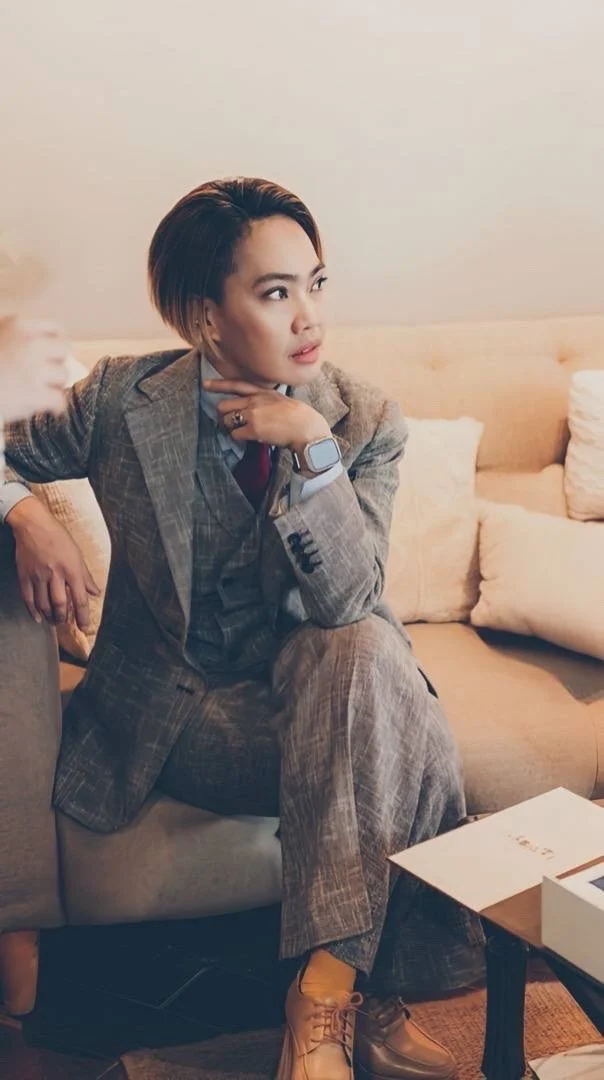
Eilene Ramirez | Photo by Tiño Group
There was no grand moment of decision that led her into the industry. Instead, there was a quiet realization: without structure, even the most extraordinary craftsmanship can disappear.
“I didn’t enter the industry out of ambition,” she shares. “It came from a very personal place of wanting to carry something forward.”
When she founded Tiño in 2012, it was not to build a name for herself, but to build a foundation for something greater. To ensure her father’s work could be seen, understood, and sustained. What she was creating was not just a business, but a space where craft could live on.
Eilene often describes her role as that of an architect. She thinks in terms of systems, of continuity—how people, ideas, and traditions can come together and evolve without losing their essence. Her work is not about preserving the past in glass, but about allowing it to breathe and grow.
Photo by Gerie Marie Consolacion
This same thinking led to the creation of Olpiana Andres. She saw a gap, women were rarely given the same depth of attention in bespoke tailoring. So she built something new from the ground up, ensuring that women could experience the same level of care, structure, and intention.
What began as preservation has become something more: a way of reshaping how people engage with clothing itself.
The systems of execution and logic
If Eilene is the architect, Hannah Torres is the one who brings the structure to life.
With a background in the global luxury space, including her time at LVMH, Hannah understands what it takes to build something that lasts. She has seen how world-class organizations operate—not just through creativity, but through systems that support it.
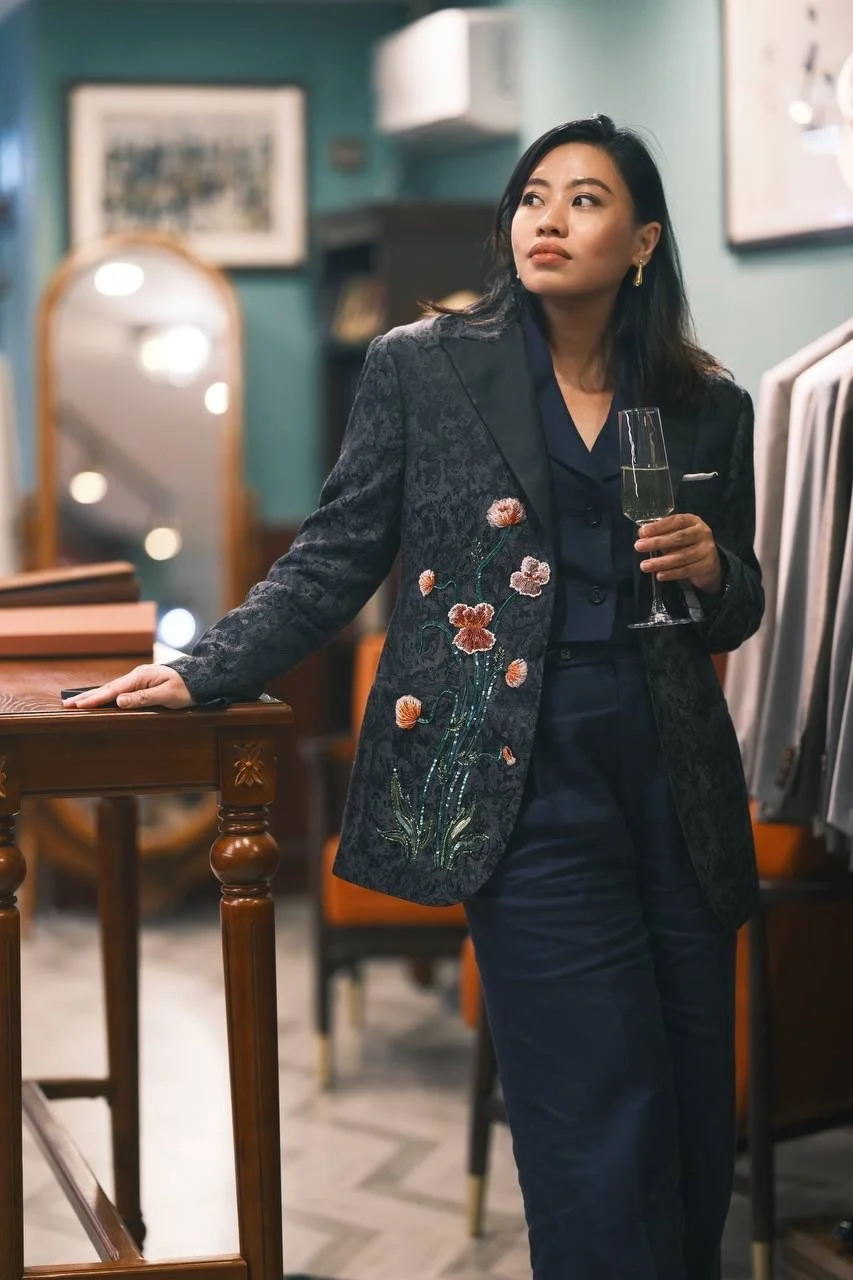
Hannah Torres | Photo by Tiño Group
When she stepped into the Tiño Group, she recognized something rare: extraordinary craftsmanship already existed. What it needed was a framework strong enough to carry it forward.
Her partnership with Eilene feels almost instinctive. They describe it as sharing the same “programming logic,” a way of thinking where every decision connects to a larger chain of outcomes. It allows them to move with both precision and trust, translating ideas into reality without losing their intention along the way.
Despite their roles, neither believes in distance. They stay close to the work, immersed in the details, grounded in the realities of the atelier. This proximity keeps everything honest. It ensures that no system, no matter how efficient, ever loses sight of the hands that bring it to life.
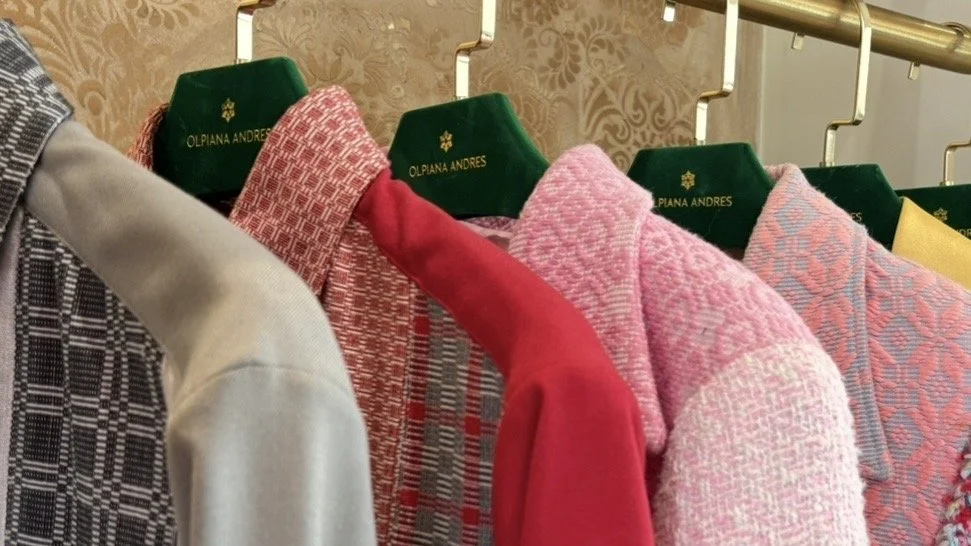
Photo by Gerie Marie Consolacion
For Hannah, the work is deeply purposeful. It is about building something sustainable—not just as a business, but as an ecosystem where Filipino craftsmanship can truly thrive.
Leadership as stewardship
In an industry long shaped by hierarchy and tradition, Eilene and Hannah lead differently. They do not position themselves as the center of the craft, but as its stewards, protecting it, strengthening it, and creating the conditions for it to endure.
“Leadership is really stewardship,” Eilene says. “It’s about protecting the discipline of the craft while building the environment where people can continue to grow.”
There is a quiet rigor to how they lead. Expectations are high. Standards are clear. But beneath that structure is a strong sense of purpose—one that reminds everyone why the work matters.
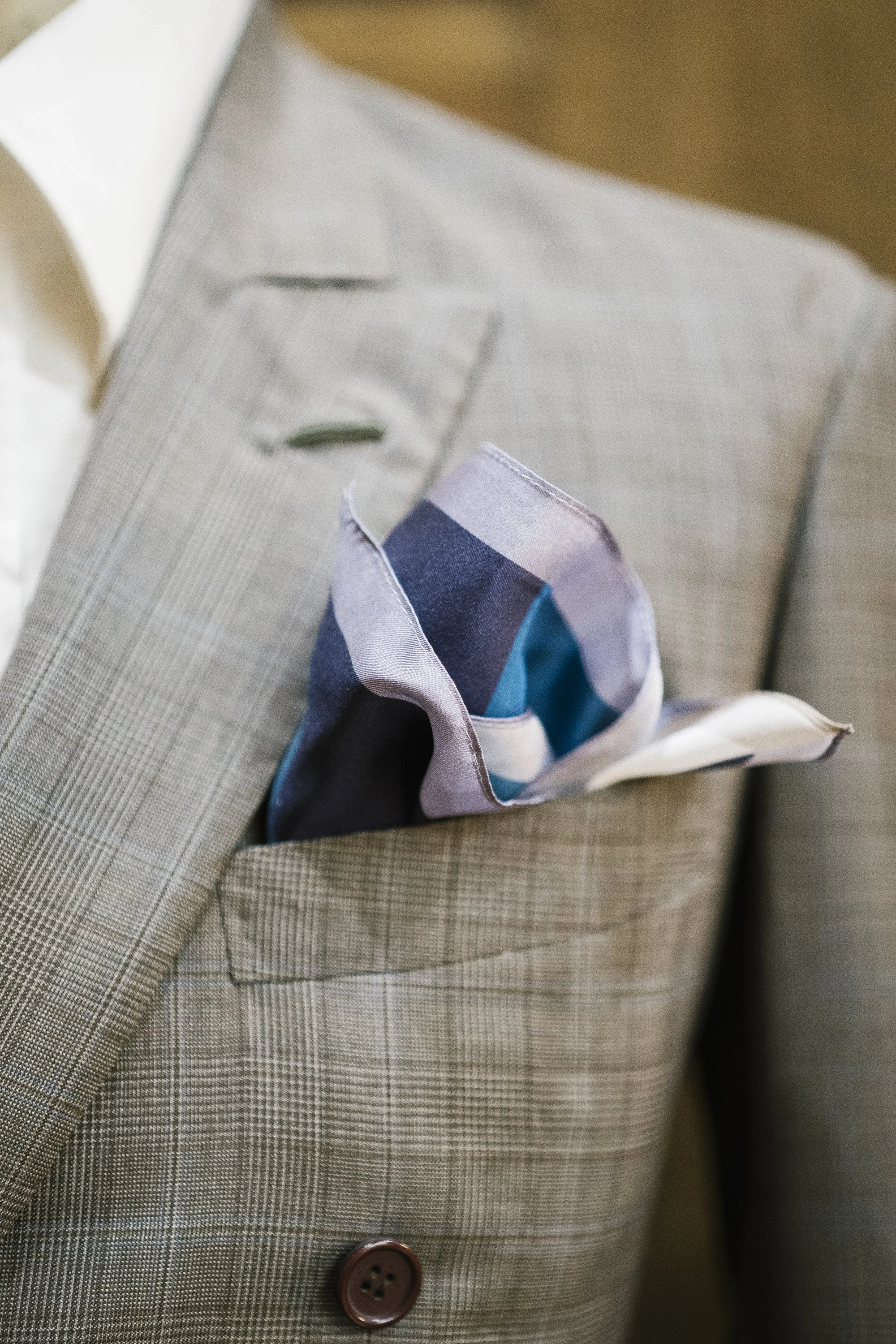
Photo by Tiño Group
They are also intentional about how they speak about Filipino craftsmanship. For them, it is not about nationalism or sentimentality. The work stands on its own merit—exceptional, thoughtful, and world-class.
At the same time, they are deeply aware of the fragility of the ecosystem. They know that many artisans struggle to sustain their craft, often forced to leave it behind for more stable livelihoods. Leadership, for them, means changing that reality—ensuring that the people behind the work are not only seen, but valued and fairly rewarded.
Within the team, they foster a culture rooted in shared responsibility. No garment is the work of a single person. It is always collective—a balance of skill, trust, and mutual respect.
The human heart of the atelier
Inside the atelier, the culture is felt as much as it is seen.
For artisans like Hazel Dizon, the experience has been transformative. Trust is given freely, and growth is encouraged, not forced. Challenges are approached with support, not pressure, allowing individuals to rise into their roles with confidence.
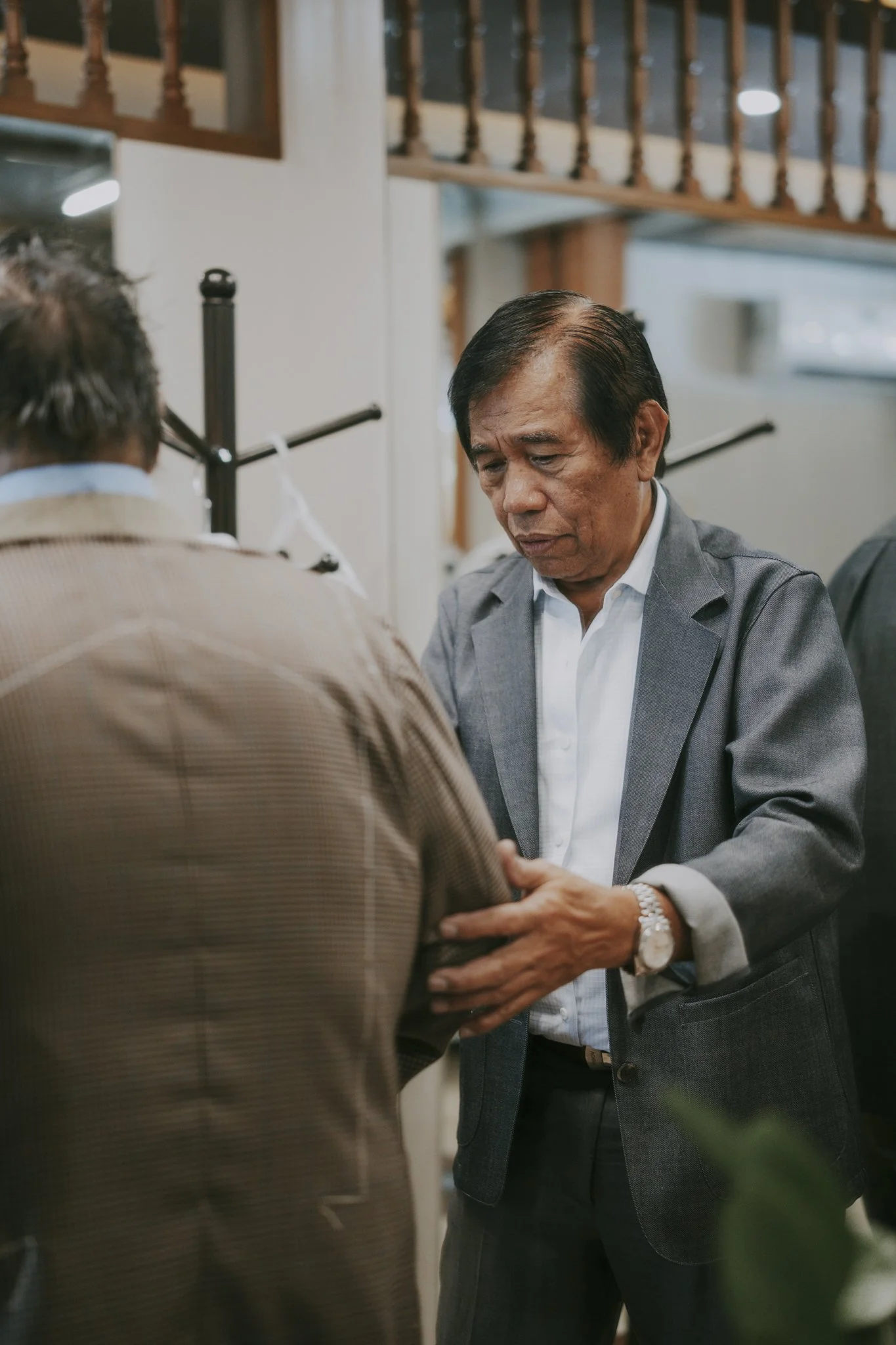
Master Tailor Nap Arienza | Photo by Tiño Group
Before joining Tiño, Dizon believed that true couture-level craftsmanship existed only abroad. But working alongside master tailors changed her perspective. She saw firsthand that the same level of excellence exists here in the Philippines quietly, consistently, and often without recognition.
That realization carries weight. It restores dignity to the work.
At Tiño, the artisans are not hidden behind the brand—they are brought forward, acknowledged as the heart of everything.
The garments themselves reflect this philosophy. They embrace what the group calls “humane imperfections,” the subtle, irreplaceable marks of the human hand. These are not flaws, but signatures. They are what give each piece its life.
Bespoke tailoring, in this sense, is deeply relational. It begins with listening—understanding the client not just in measurements, but in movement, lifestyle, and identity. From there, the process becomes a dialogue, one that continues until the garment feels not just fitted, but right.
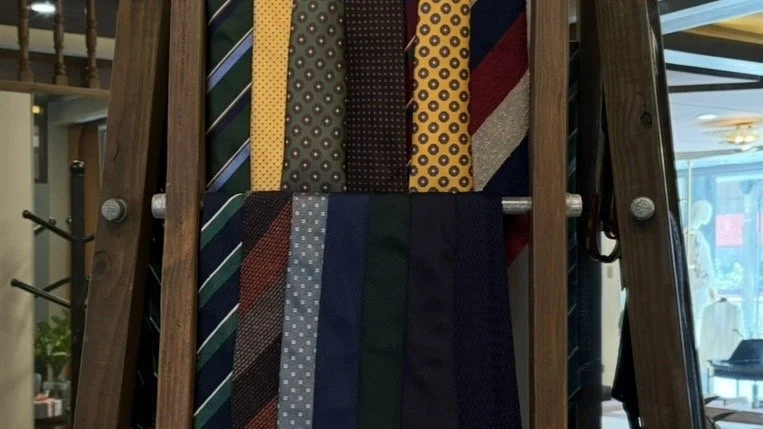
Photo by Gerie Marie Consolacion
Reverence and recognition
Isabel Pablo of Tiño Group, the Philippines is, in her words, “undermarketed and overpenetrated at the same time,” a tension that has diluted its cultural identity. For her, craftsmanship must be respected, even revered, starting with Filipinos who must recognize and uphold the value of their own work. Working with Eilene and Hannah has been deeply affirming and almost cathartic, anchored in a shared belief in the worth of Filipino craft.
That belief shows in how the team chooses to put the artists behind the work front and center, restoring dignity without defaulting to support local narratives. Instead, they lead with the idea that the work is inherently exceptional, thoughtful, and world-class. As they often remind each other, Filipino craftsmanship is not lacking in quality, only in recognition. A story about Baguio weavers leaving their looms for farming helped ground [the team] in responsibility, reinforcing the need to ensure artisans are seen, valued, and properly rewarded.
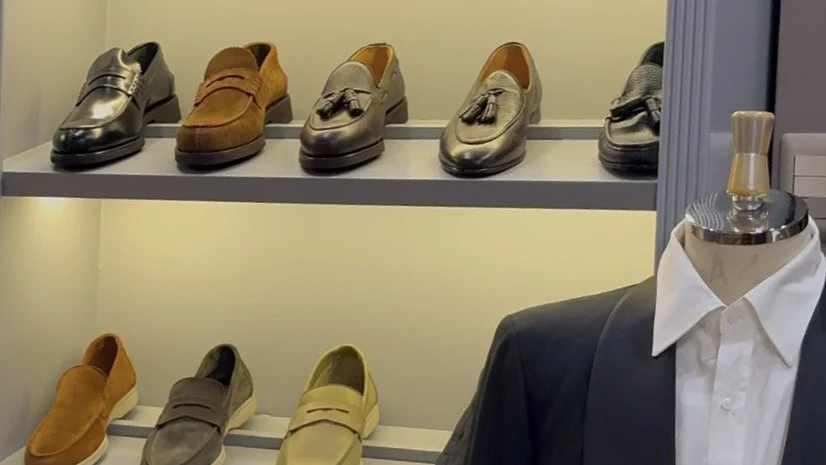
Photo by Mian Centeno
At the helm, Eilene and Hannah lead with clarity, discipline, and consistency. They are systems-driven and exacting, where timelines and outputs are taken seriously, but never at the expense of purpose.
What sets them apart is how they balance this structure with purpose, so the team isn’t just productive—it’s doing meaningful work, and doing it well.
A future built on collaboration
Looking ahead, the Tiño Group does not see growth as a competition. They see it as a shared movement. They believe the future of Filipino tailoring depends on collective progress, on more houses emerging, more artisans being supported, and more knowledge being passed on.
Their work already extends beyond borders. They collaborate with craftsmen from Japan, Italy, China, and Thailand, embracing the idea that mastery is never static. It grows through exchange, through openness, through a willingness to learn.
And yet, at its core, their identity remains deeply Filipino.
It shows in their hospitality in the way clients are welcomed, in the warmth of the atelier, and in the sense that everyone who walks in becomes part of the process. There is an ease, a generosity of spirit, that cannot be replicated elsewhere.
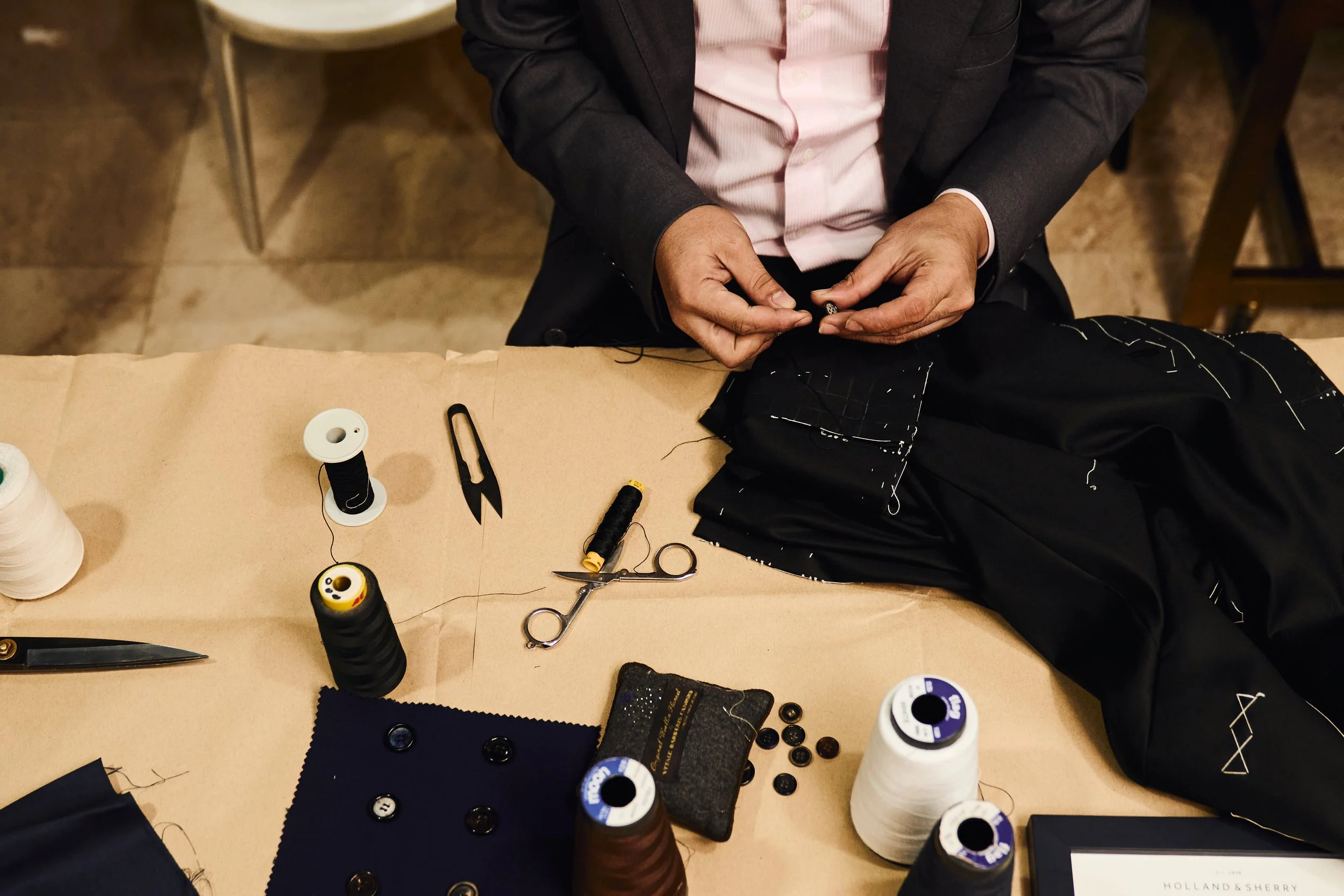
Photo by Tiño Group
In the end, the Tiño Group’s vision is simple, but profound: to remain a true house of craftsmanship. Not just creating garments, but building a foundation where the craft and the people behind it can continue to grow.
Because at the heart of everything they do is a belief that feels increasingly rare: craftsmanship is, above all, human.
The work that endures
In the end, what the Tiño Group is building cannot be measured solely by garments produced or clients served. It lives in the quieter, more enduring spaces—in the discipline of the hands, in the trust between artisan and wearer, and in the belief that craft still matters in a world that often forgets.
There is something deeply human in the way they work. Every piece carries not just structure, but intention. Every process holds room for care. And every person behind it is part of something larger than themselves.
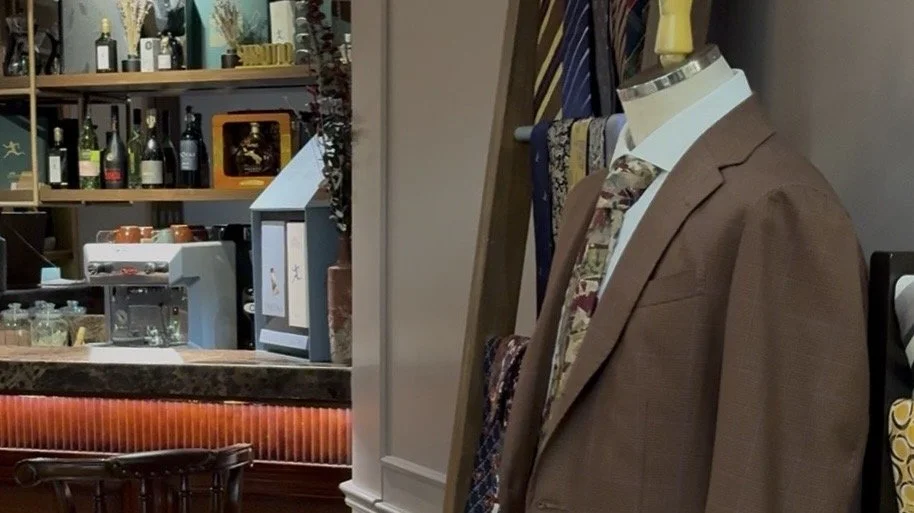
Photo by Mian Centeno
This is what sets them apart. Not just the precision of their tailoring, but the way they choose to lead—with thoughtfulness, with responsibility, and with a steady commitment to the people and traditions they carry forward.
As the industry continues to move faster, the Tiño Group remains grounded in something quieter, yet far more lasting. They are not chasing relevance. They are building permanence. And perhaps that is the most powerful thing of all.
Because in the hands of those who truly understand it, craftsmanship is never just about making something well. It is about making something that endures.
As the CEO Eilene Ramirez puts it, “We are not just creating garments. We are carrying a responsibility—to the craft, to the people behind it, and to the stories that will live on long after the work is done.”