
5 Ways Maria Callas Would Absolutely Humble Modern Influencer Culture
Master Class turns opera into an exquisitely dressed public takedown of performance-for-performance’s-sake
Words Bernadette Soriano
Photos Courtesy of Myra Ho
May 29, 2026
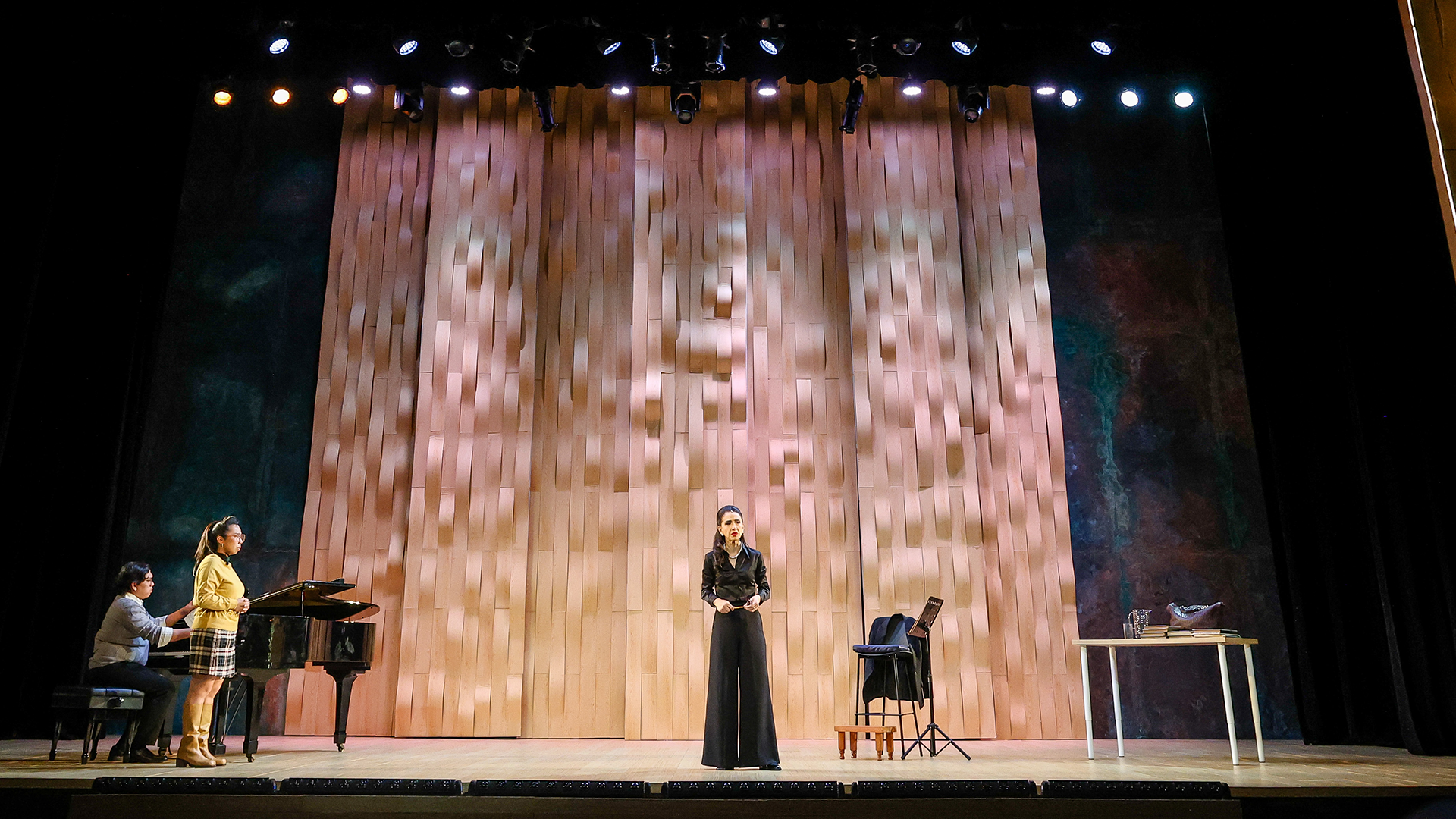
The internet continues to sustain the illusion that visibility is a contemporary invention, despite the reality that human beings have long staged themselves for observation whenever perception itself became an available audience.
Scrolling through any platform today and what emerges is less a coherent culture than a self-replicating ecology of performance, where every subject functions simultaneously as star, strategist, and exhausted backstage laborer attempting to convert artificial lighting into the appearance of natural truth.
TikTok aestheticizes vulnerability into currency, Instagram compresses aspiration into consumability, and authenticity itself has already been absorbed into production logic rather than remaining outside it.
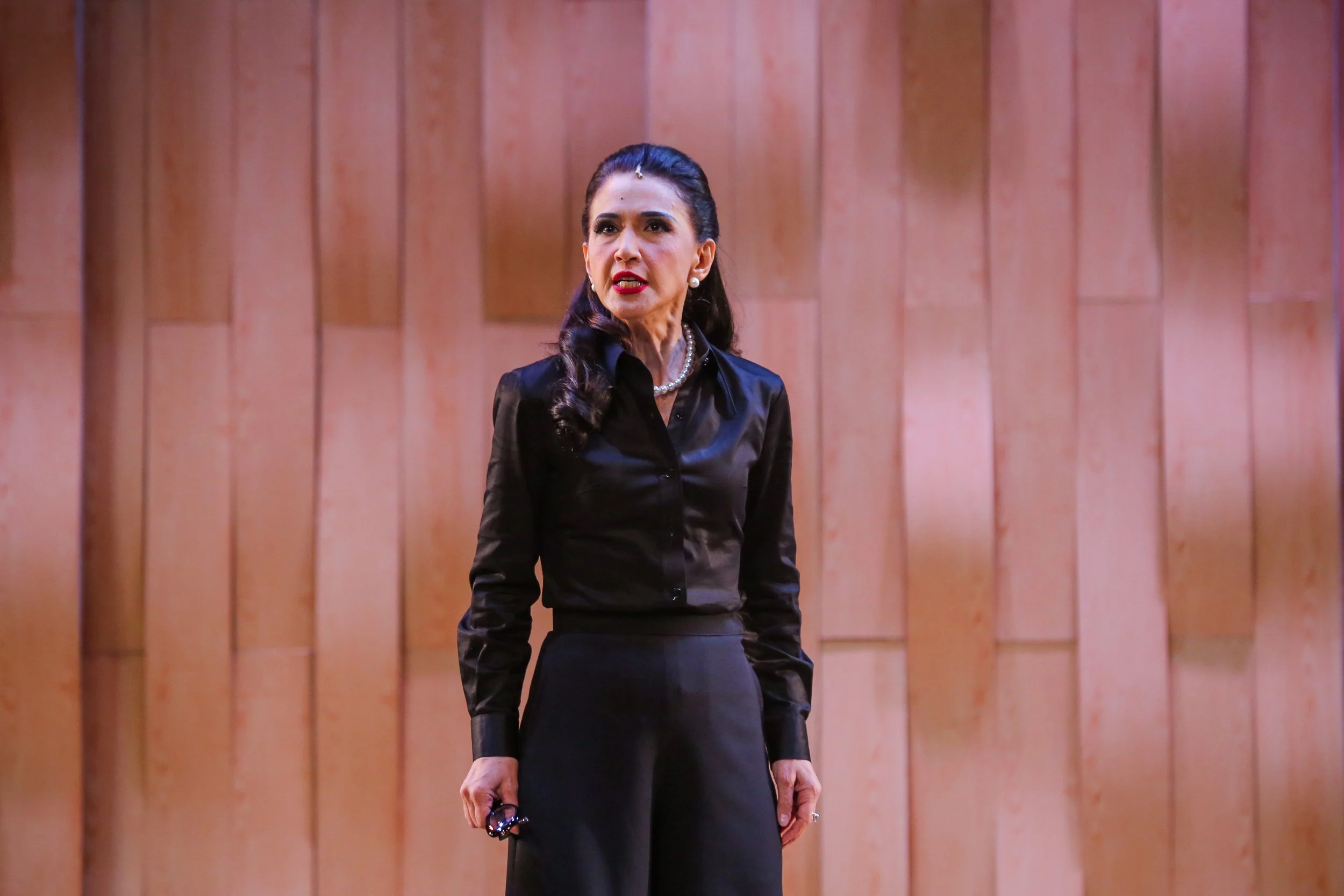
Maria Callas, one suspects, would have dismantled the entire apparatus before intermission could properly begin. Not because she rejected performance, but because she understood that true performance is inherently extractive, demanding a psychic expenditure of nerve, ego, and dignity that rarely returns intact once the curtain falls.
Which is precisely why Philippine Opera Company’s Master Class, directed by Jaime del Mundo and led by Menchu Lauchengco-Yulo as Callas herself, arrives with such contemporary acuity, operating simultaneously as a study of ambition, ego, and artistic disintegration, and as a subtler interrogation of visibility itself—that is, of what it means to remain continuously observed while still being required to transcend the very conditions of that observation.
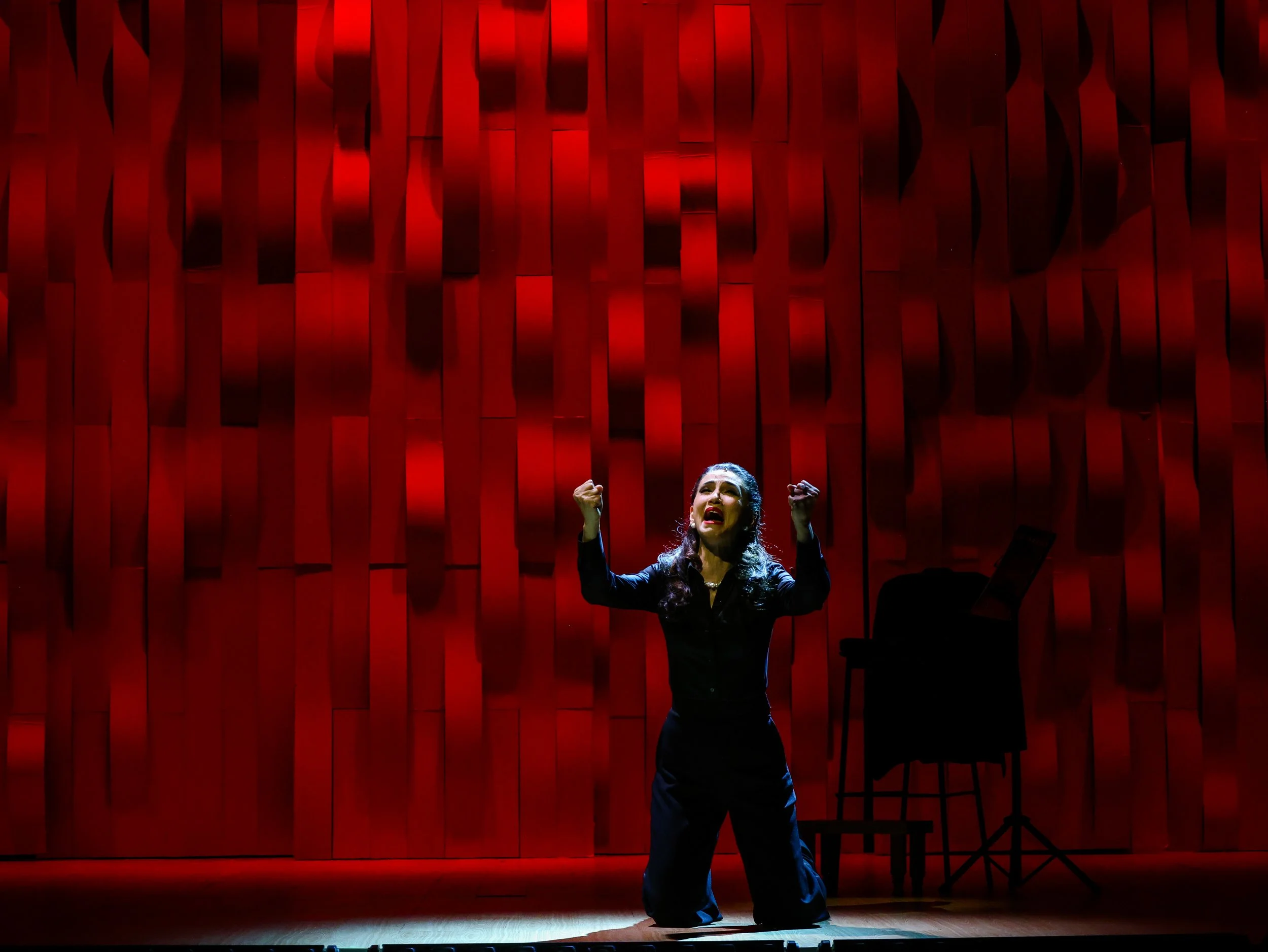
Naturally, it’s marvelous for no one weaponized glamour, intellect, tragedy, and sheer operatic command quite like the woman history crowned as “La Divina”, which brings us to the inevitable question: how exactly would she fare against today’s influencer industrial complex?
Here are five reasons Maria Callas would absolutely send influencer culture home in tears before intermission.
1. Callas Would Think “Personal Branding” Sounds Emotionally Malnourished
Modern influencer culture remains hopelessly besotted with the polished self: the optimized self, the curated self, the self transformed into an endlessly renewable lifestyle campaign complete with strategically deployed imperfections designed to test well with engagement metrics.
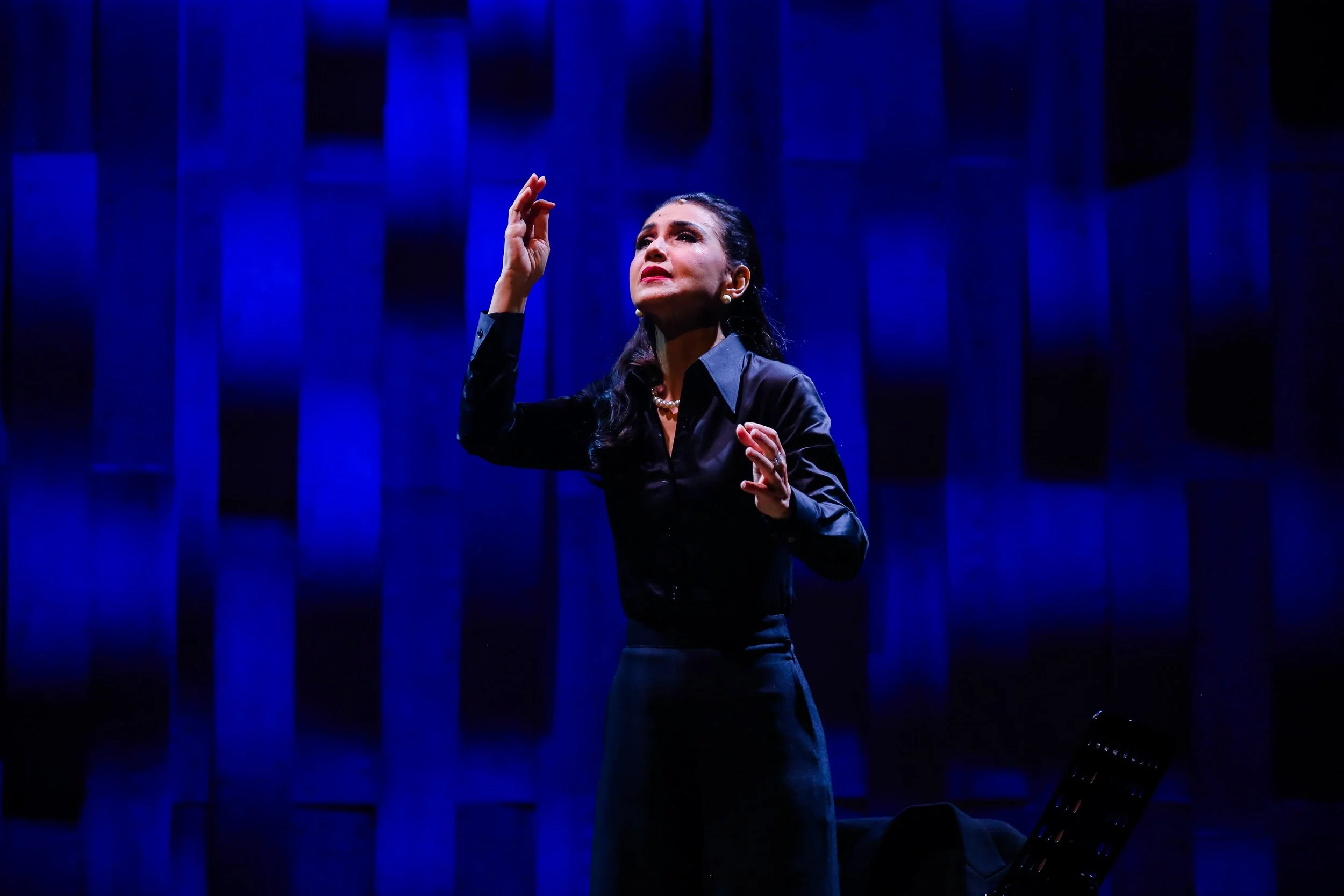
Callas, meanwhile, demands transformation bordering on possession.
“An opera begins long before the curtain goes up and ends long after it has come down,” she says early in the production, the line thereafter hanging over the theater like vintage perfume trapped inside velvet drapery.
For Callas, artistry does not simply switch on once the audience settles into their seats. It seeps into posture, appetite, heartbreak, discipline, loneliness. It takes over the self entirely and starts rearranging the furniture while it’s there.
Which consequently renders Alexandra Bernas’ Sophie de Palma such a slyly newfangled creation.
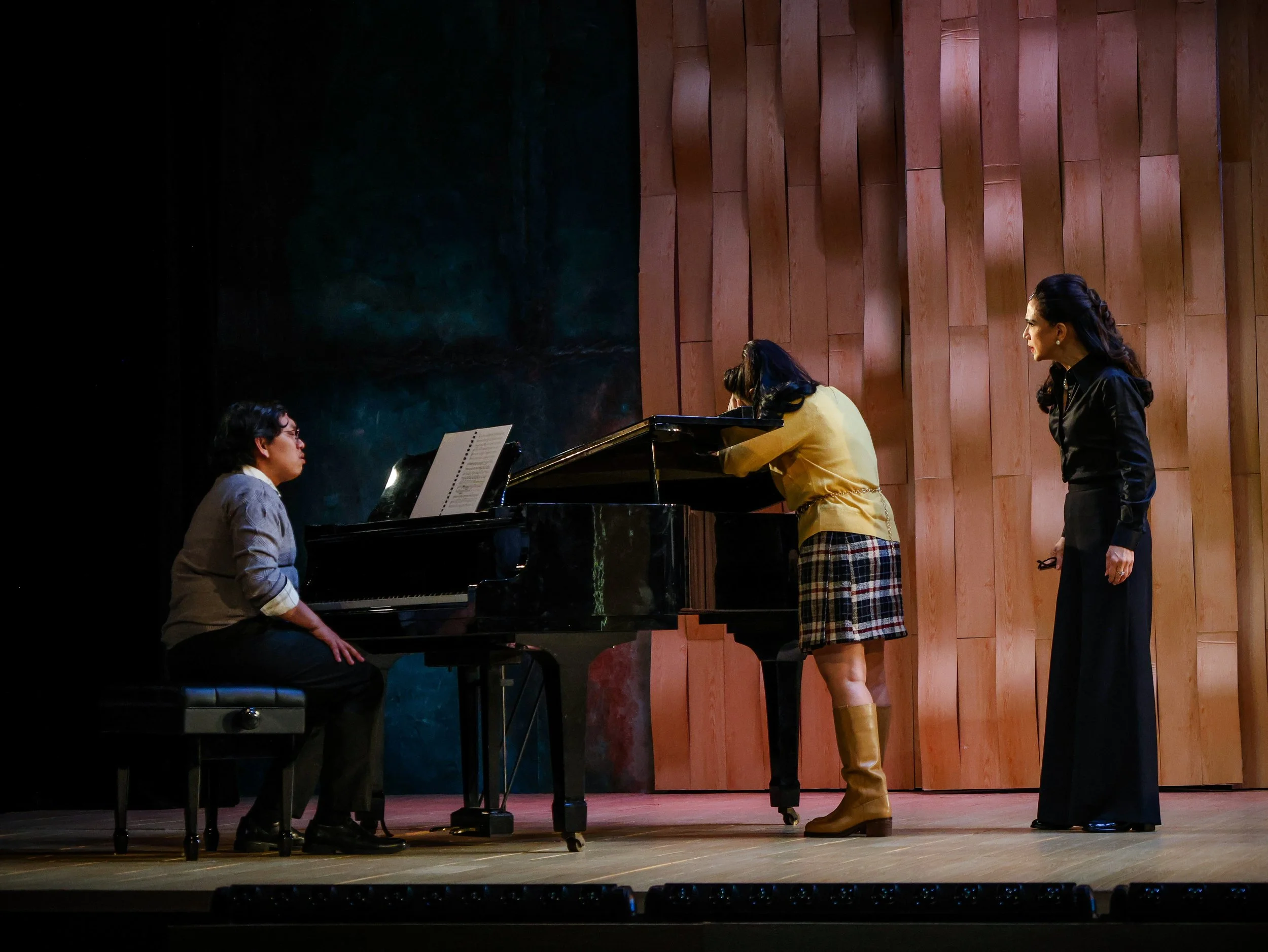
Bernas plays Sophie with immaculate composure: technically faultless, aesthetically pristine, emotionally sealed tighter than a couture handbag nobody actually uses.
She possesses precisely the sort of lacquered femininity contemporary online culture rewards almost immediately, insofar as platforms now tend to privilege polish over interiority and photogenic restraint over emotional mess.
Callas clocks the limitation almost immediately because performers of her caliber tend to sniff out emotional insulation the way sharks sniff out blood in seawater.
Technique, she insists repeatedly, can only carry a performer so far before the drywall starts showing through the paint job.

Beautiful surfaces eventually turn sclerotic whenever nothing genuinely unruly survives underneath them.
Or, phrased less delicately, Callas would probably hear the phrase “personal branding,” stare into the middle distance for a beat, and ask where, exactly, the actual person wandered off to.
2. She Treats Discipline Like a Contact Sport
The internet, for both psychological and algorithmic reasons, remains deeply enamored with the fantasy of effortlessness.
Everybody wants the soft life now: beauty without labor, success without visible strain, talent arriving fully assembled like flat-pack furniture somehow built itself overnight.
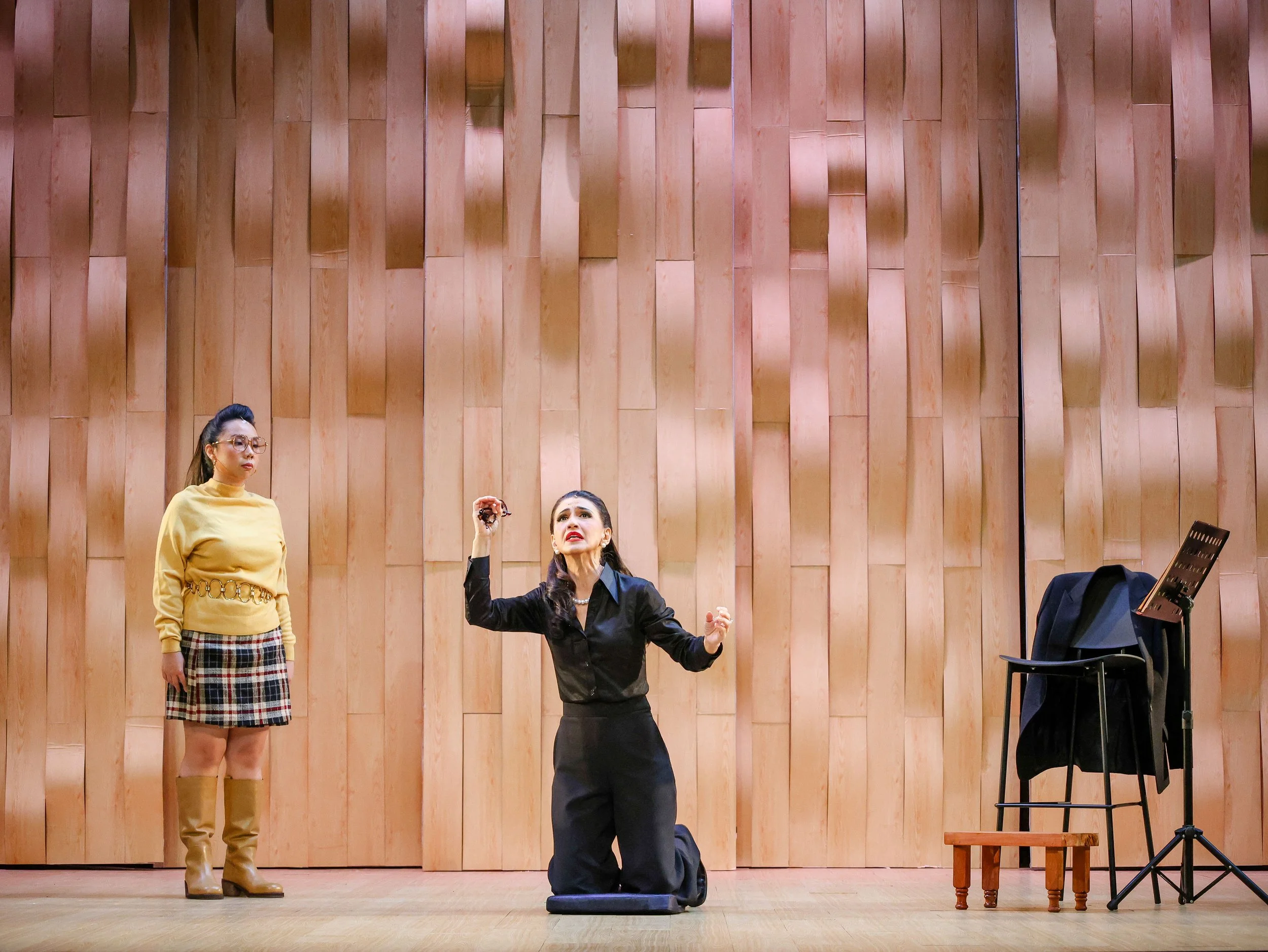
Callas would sooner crawl over broken glass in couture heels.
Menchu portrays her here with terrifying exactitude: daunting, severe, occasionally volcanic, though never cruel merely for sport.
Her sharpness always arrives tethered to conviction, the result being a woman who genuinely believes mediocrity constitutes a tragic squandering of human potential rather than merely an aesthetic inconvenience.
“I would not kill my enemies, but I will make them get down on their knees. I will, I can, I must.”
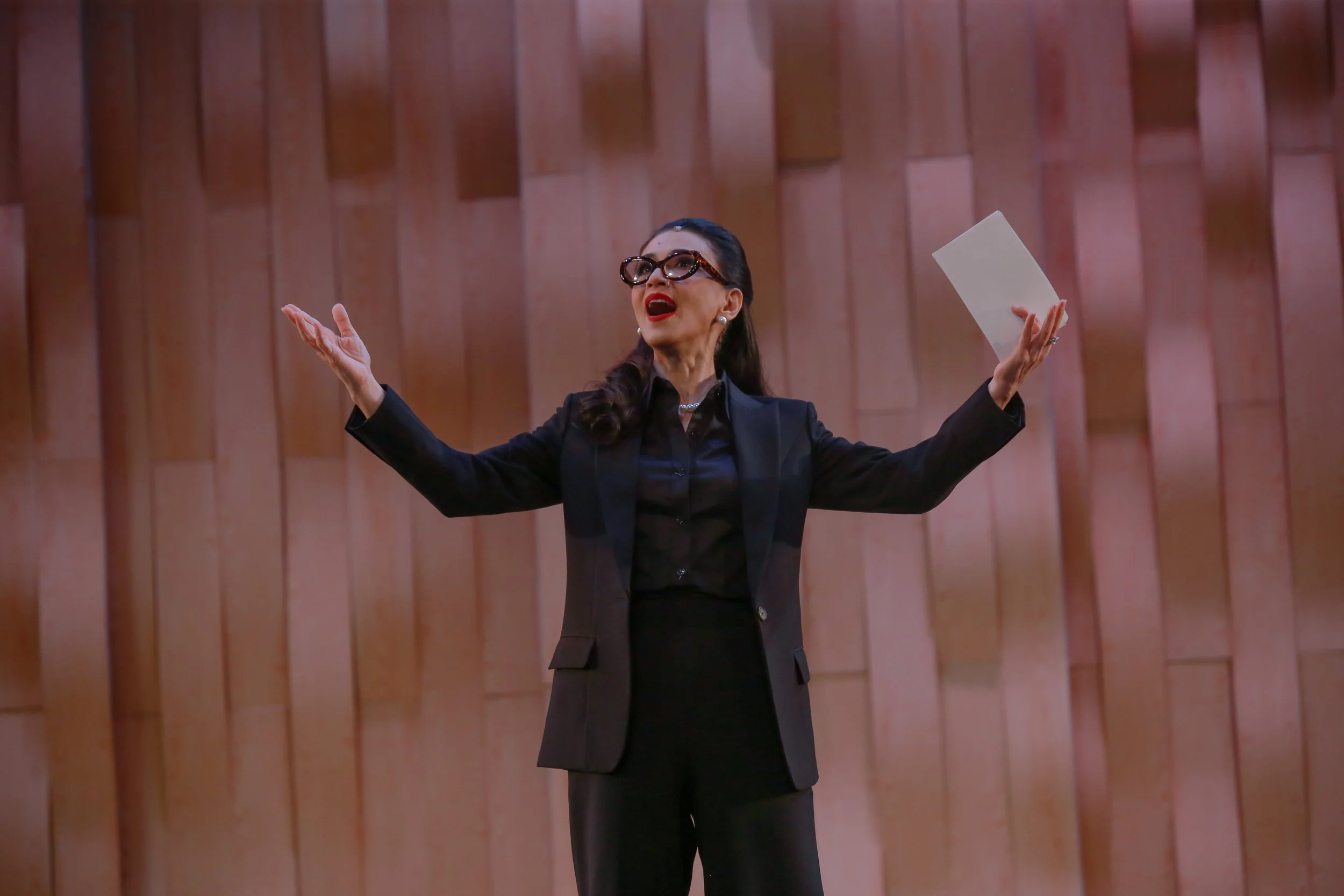
The real Callas once said that, whereupon the entire emotional architecture ofstaged dissection suddenly snaps into focus.
Greatness, within this world, requires friction. Art should bruise somewhere.
This becomes especially compelling in scenes involving Arman Ferrer’s Anthony Candolino, who initially breezes in carrying the relaxed swagger of someone long accustomed to admiration arriving ahead of introductions.
Ferrer, wisely enough, allows little fissures of panic to gradually bleed through the bravado, thereby creating something painfully recognizable: a talented man slowly cottoning on to the fact that charisma cannot indefinitely paper over emotional shallowness.
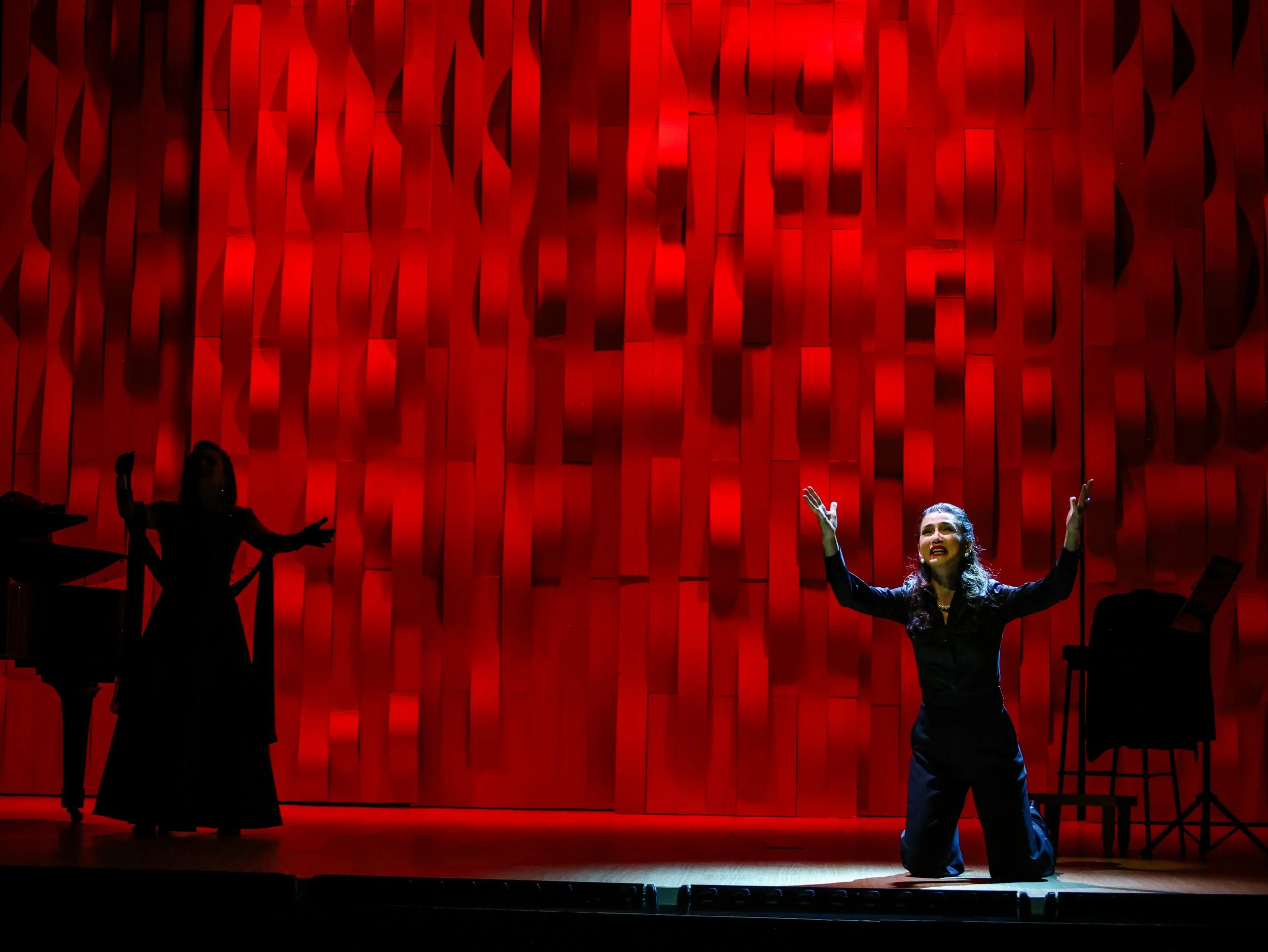
Anthony sings beautifully, yes, though Callas demands something considerably messier and infinitely harder to fake.
She wants interiority. Stakes. Ruin, preferably accompanied by excellent breath support and at least one near-spiritual crisis simmering beneath the vibrato.
Because within this tour de force that talent does not signify the finish line so much as it buys you a ticket into a far scarier room.
3. She Would Absolutely Loathe Relatability Culture
Influencers survive by seeming accessible. Relatable. Approachable enough to resemble your internet best friend who somehow also owns six designer handbags and permanently flattering lighting.
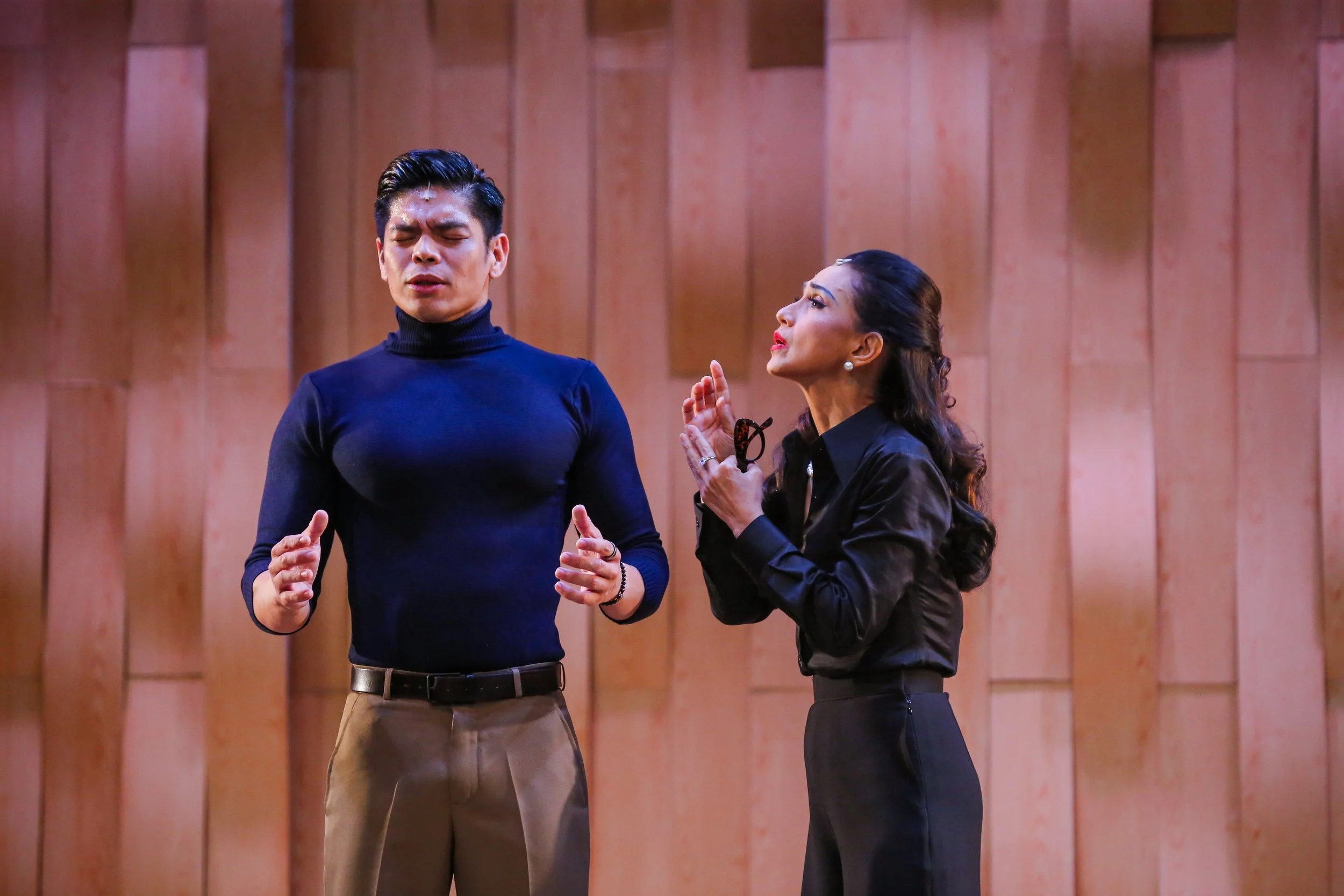
Callas, meanwhile, cannot be bothered with approachability whatsoever.
And Menchu understands this down to the bone.
Her performance luxuriates in theatricality, sharpness, excess—all the qualities contemporary branding consultants routinely advise women to tone down lest they come across as “difficult,” “unlikable,” or insufficiently market-friendly.
Menchu never sands Callas down into digestible empowerment rhetoric or commercially sanitized inspiration.
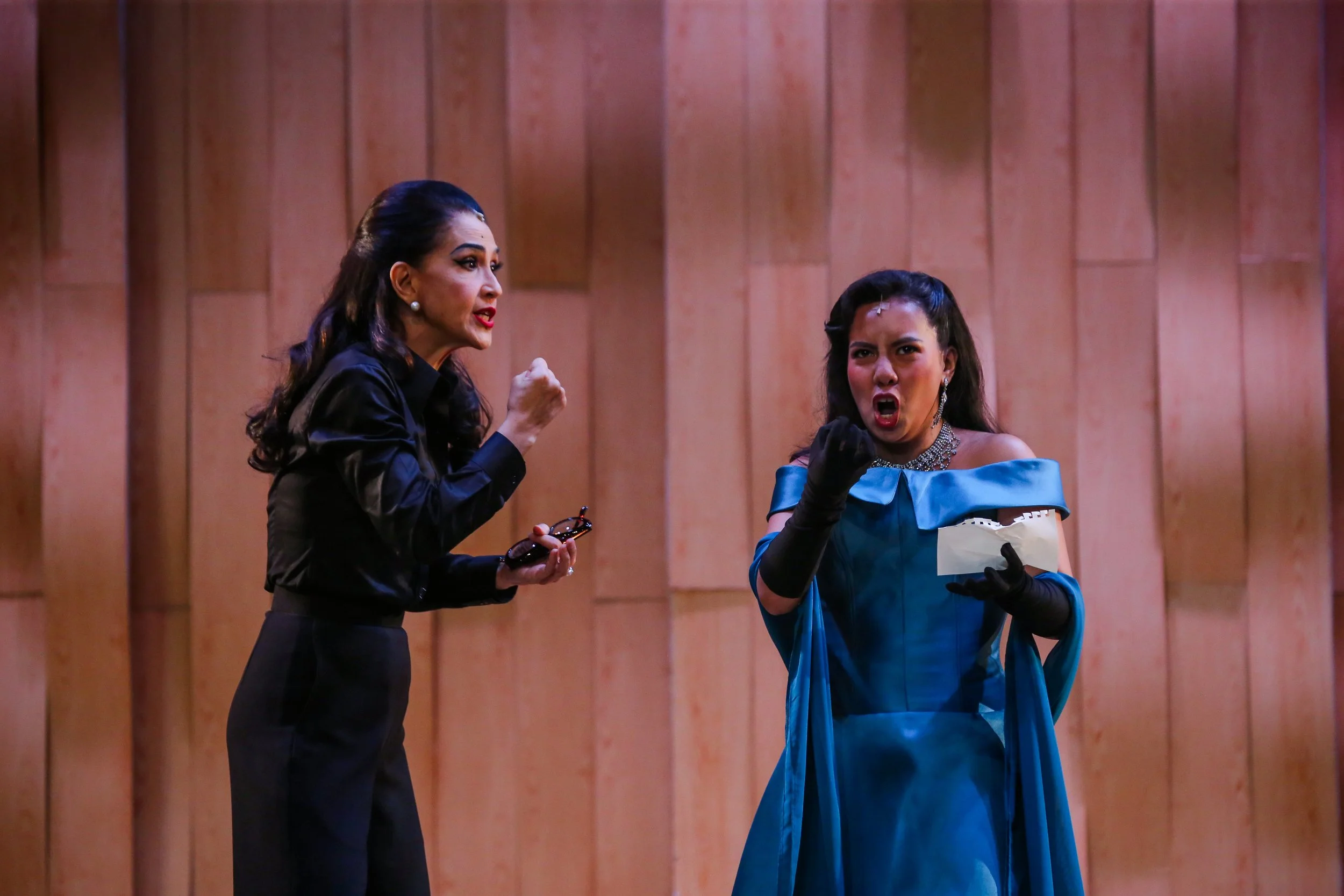
Instead, she allows her to remain magnificent, exhausting, emotionally intimidating, and occasionally impossible in precisely the way larger-than-life artists often are.
Which, in turn, makes Angeli Benipayo’s Sharon Graham particularly heartbreaking.
Benipayo plays Sharon with frantic charm and needle-sharp comedic timing, though trembling beneath the humor is something painfully recognizable: the terror of humiliating oneself publicly.
Sharon feels spiritually raised by comment sections, perpetually aware that embarrassment now travels at broadband speed and hangs around online forever like a bad tattoo.
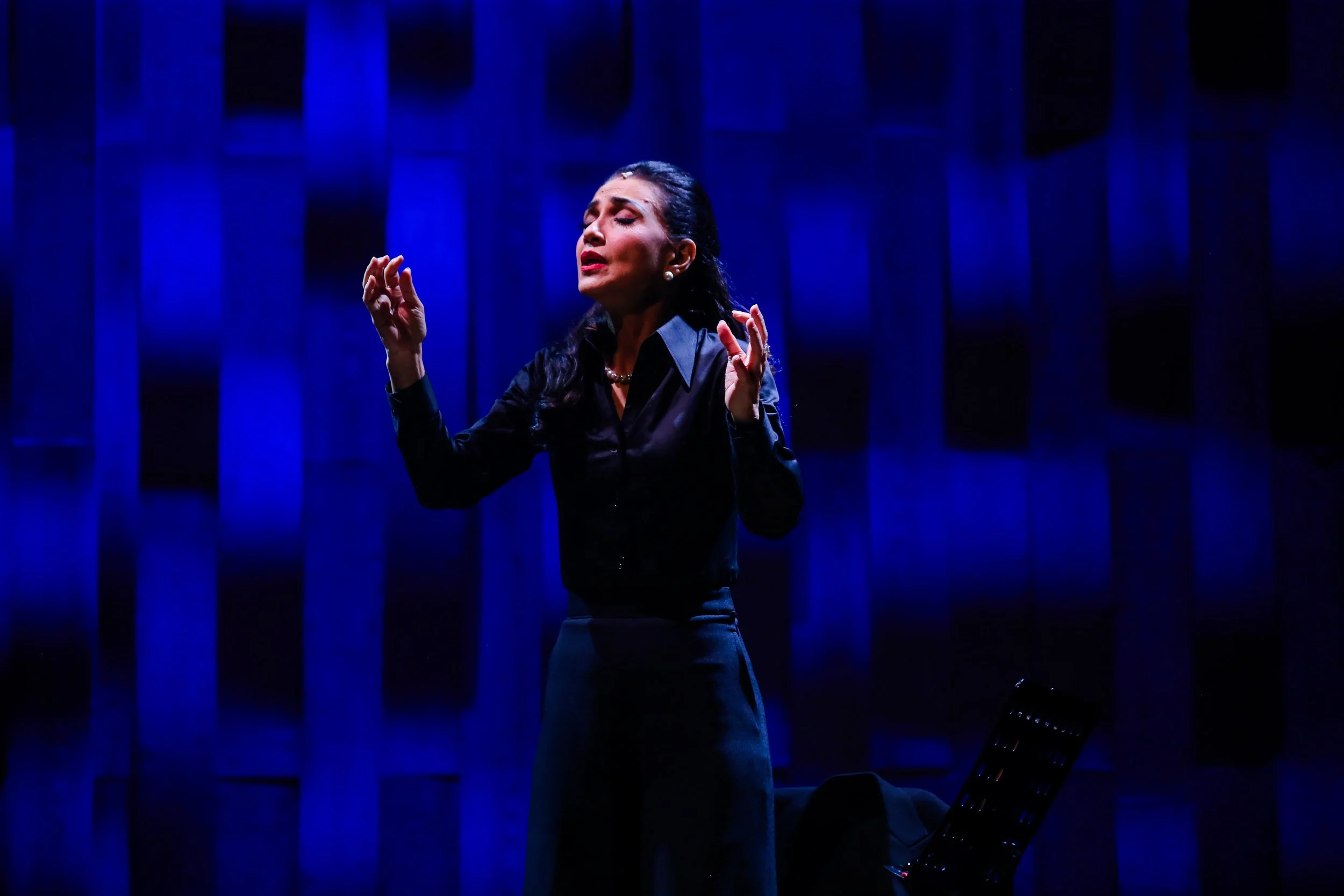
Callas offers her no comforting platitudes whatsoever because Callas, who possesses neither the patience nor constitutional interest for emotionally upholstered affirmation culture, fundamentally believes artistry sometimes requires making a spectacular fool of yourself before transcendence finally kicks the door in.
No “trust the process.”
No “you’re enough.”
No motivational quote graphics floating around Pinterest in beige serif fonts.
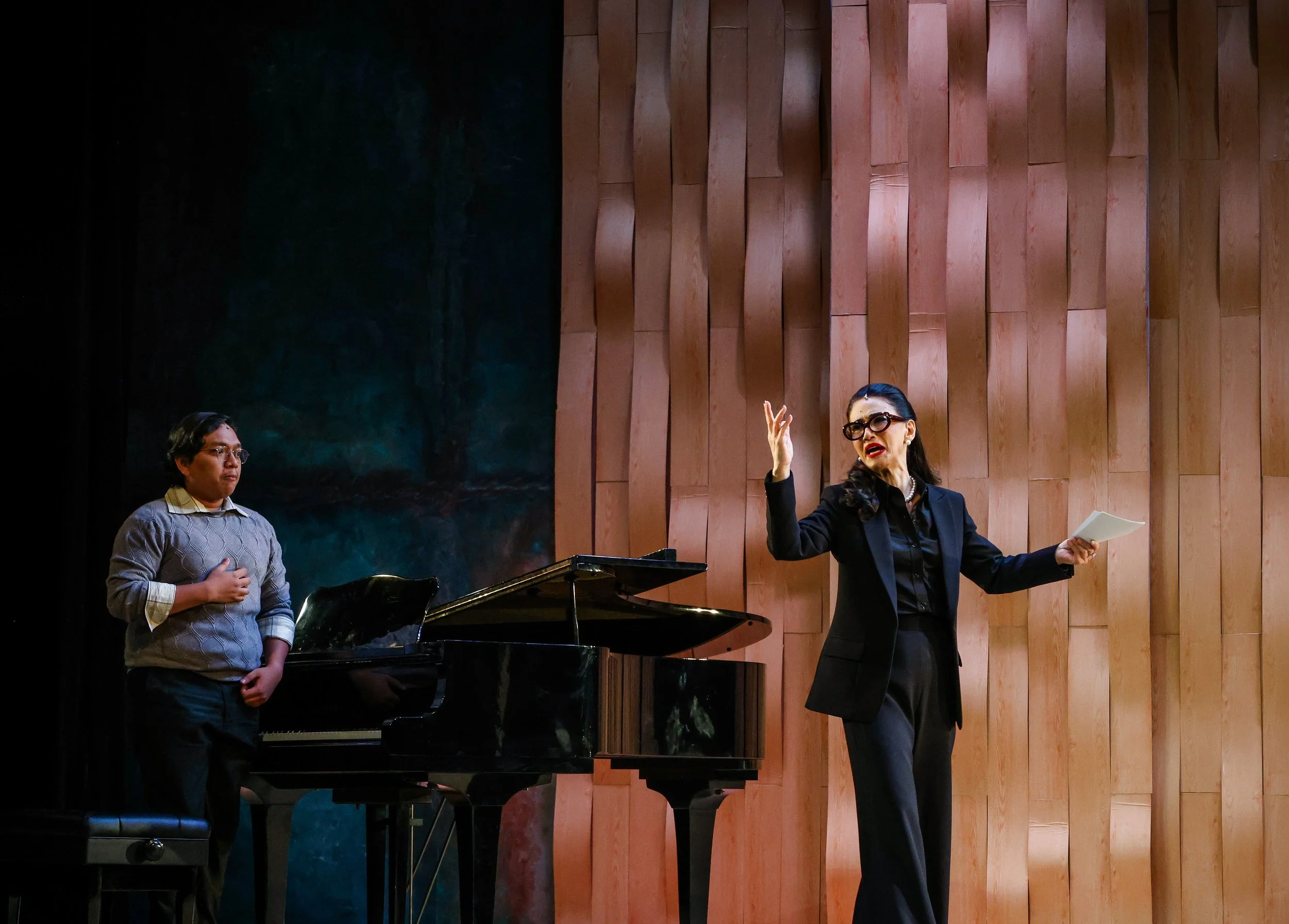
What she offers instead is considerably harsher and, paradoxically enough, far more humane: the insistence that genuine artistry frequently demands surviving humiliation without losing your nerve halfway through.
The internet says maintain the image.
Callas practically lights the image on fire to see what crawls out of the wreckage.
4. She Understands Fame Is a Miserable Little Houseguest
One of the production’s quietest devastations lies in how clearly it understands that Maria Callas already possesses everything contemporary fame culture keeps promising will finally complete a person: beauty, admiration, relevance, legacy, obsessive public fascination, the sort of mythologized desirability influencers spend entire careers trying to gin up through strategic visibility and expensive lighting setups.

And still she seems lonely enough to echo.
Again and again, Master Class circles the emotional cost hidden beneath glamour’s lacquered veneer: heartbreak, exhaustion, sacrifice, and the peculiar alienation accompanying the experience of becoming iconic while remaining painfully human underneath the mythology.
That awareness grants Louie Angelo Oca’s Manny Weinstock unexpected emotional heft.
Manny does not worship Callas in the simplistic sense because proximity has already cured him of illusion. Oca plays him with restrained tenderness, embodying the weary patience of somebody who has spent enough time orbiting brilliance to recognize the burnout quietly simmering beneath the diamonds.
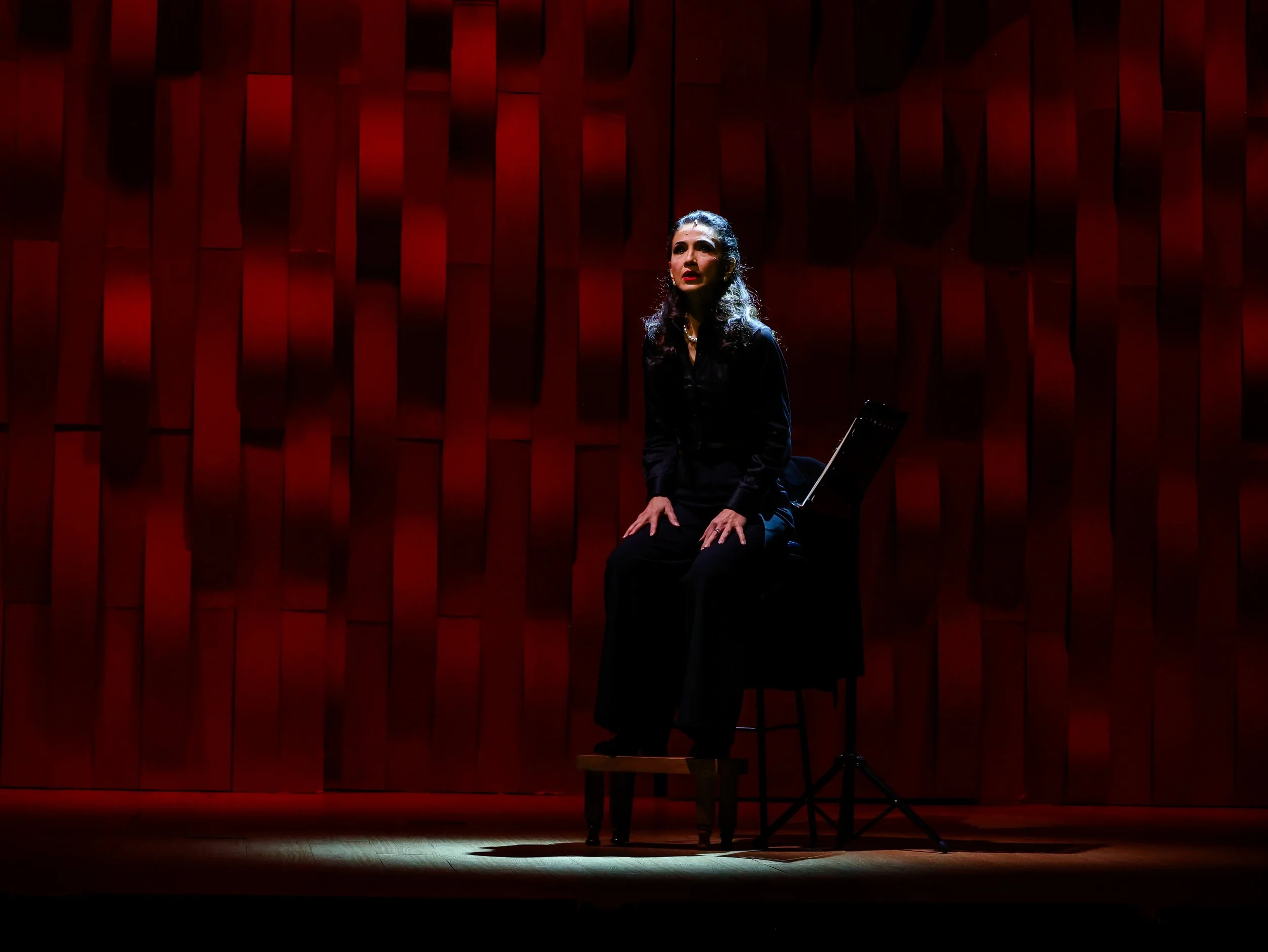
And honestly, the dynamic feels alarmingly current.
Audiences adore personas. The people standing closest to those personas usually inherit the emotional debris afterward—tale as old as time, or at least as old as celebrity culture.
5. She Would Destroy Glow-Up Culture Before Curtain Call
Glow-up culture loves framing transformation as liberation: better hair, better wardrobe, better body, better branding, better life.
The theatrical marvel's artistic reckoning, however, understands transformation as something considerably thornier.
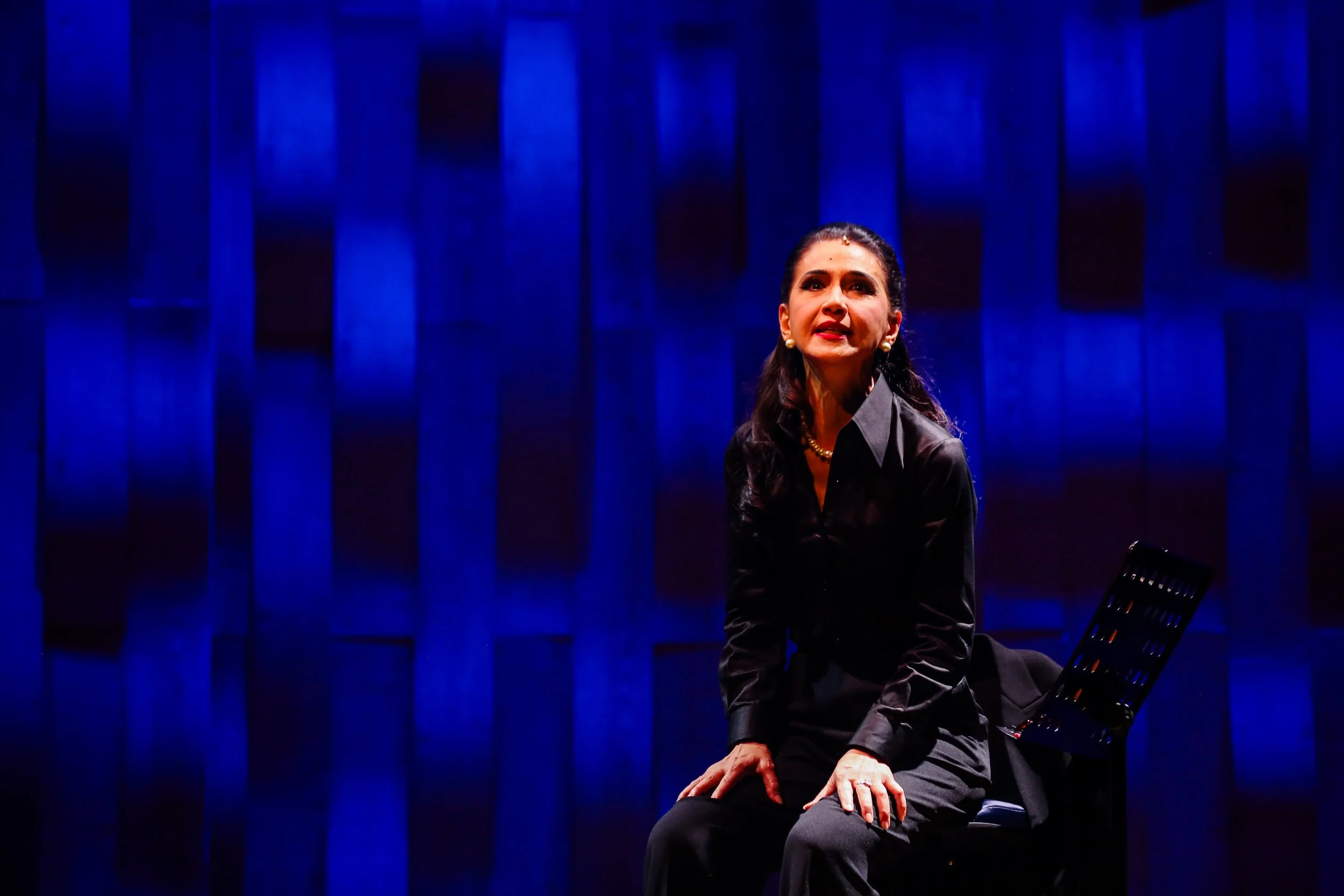
Seductive, certainly, though exhausting enough to leave scorch marks afterward.
The genius of Menchu’s performance is housed in how she so vividly reveals the strain lurking beneath Callas’ grandeur.
Beneath the diamonds, wit, theatrical flourishes, and razor-edged observations stands a woman trapped inside the pressure of remaining extraordinary indefinitely, which may in fact constitute the loneliest performance imaginable.
And that, perhaps more than anything else, is why the production feels startlingly contemporary despite revolving around opera rather than algorithms.
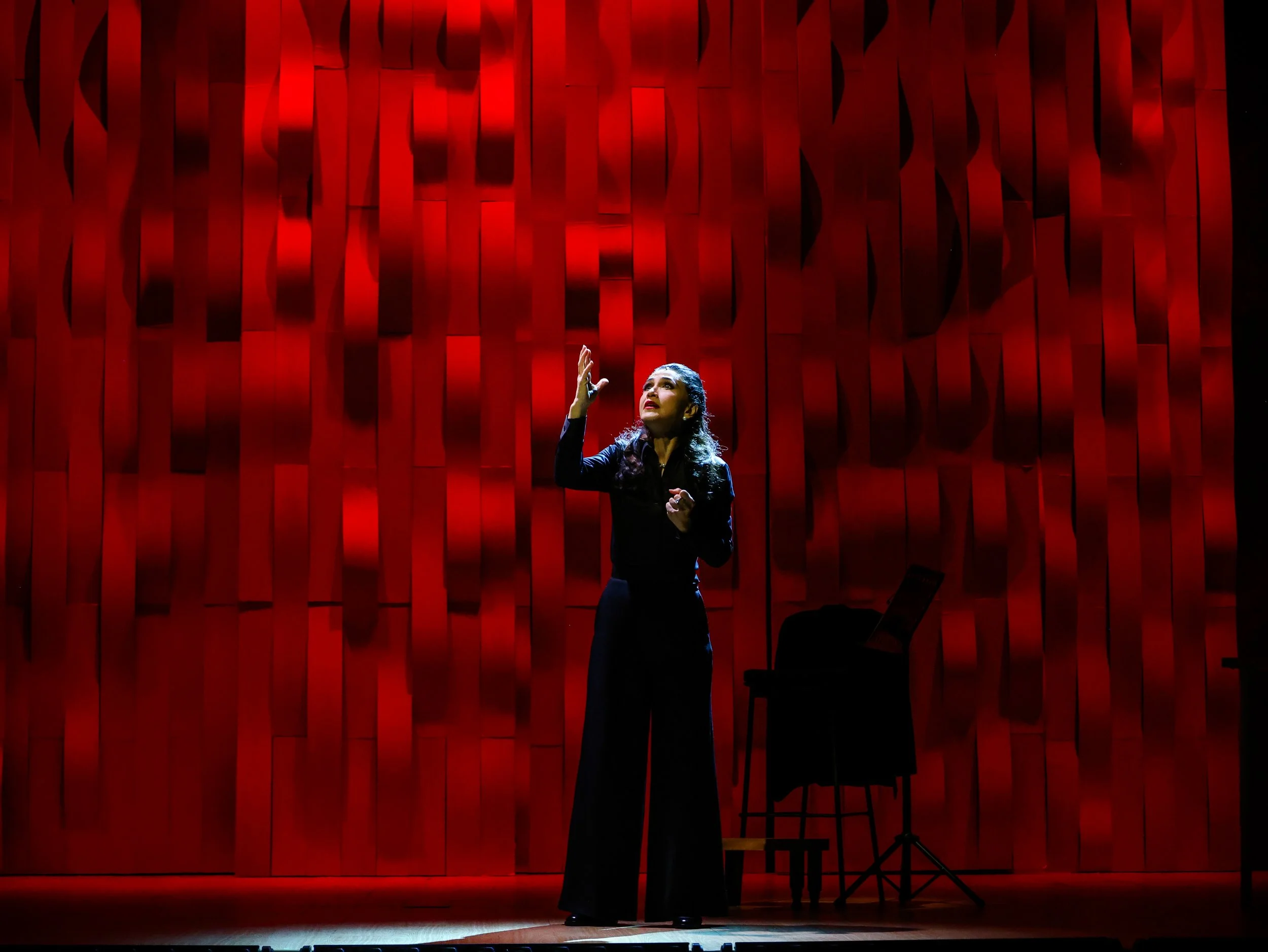
Opera and influencer culture, for all appearing aesthetically incompatible at first glance, ultimately share the same bloodstream: spectacle, reinvention, desirability, performance, and the endless public appetite for personalities luminous enough to consume themselves in real time.
Opera simply possesses the decency to fess up about the suffering upfront, whereas the internet generally buries it beneath affiliate links, filtered vulnerability, and “get ready with me” videos filmed in suspiciously expensive bathrooms.
By the production’s final moments, the applause still reverberates throughout the theater, the glamour remains immaculate, and Callas continues standing there in all her devastating magnificence.
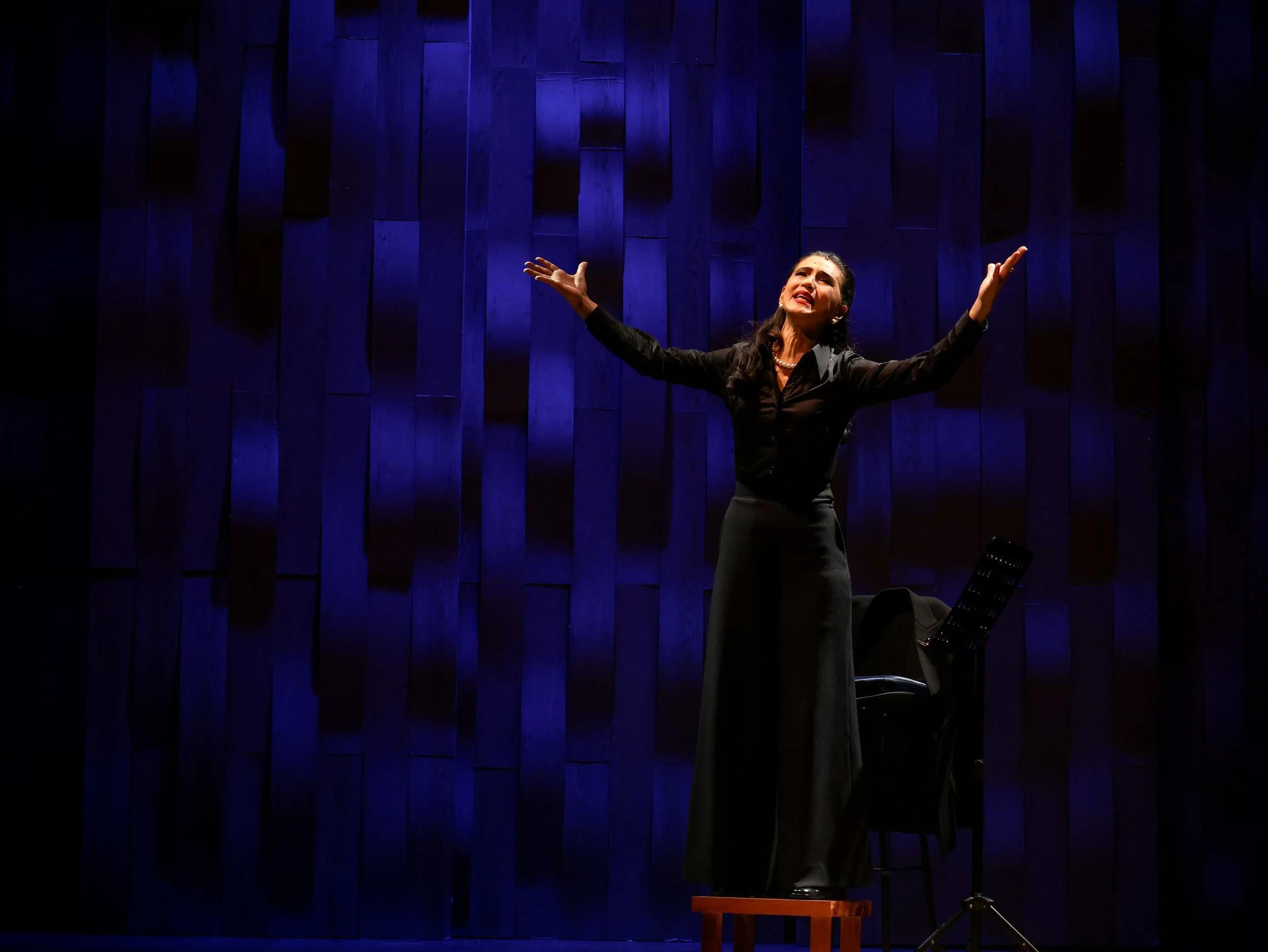
Yet lurking quietly beneath the splendor is something deeply unsettling: she may have perfected herself so thoroughly that almost nothing escaped untouched.
And perhaps that, more than the voice or the mythology or the diamonds, remains the reason she continues haunting audiences now.
Not because she performed perfectly—
—but because she understood the cost of performance down to the bone marrow and strode into the spotlight anyway, like a woman fully aware the ship might sink yet nevertheless determined to belt out the aria before it did.
The Philippine Opera Company’s Master Class runs from May 15 to May 30 at the Carlos P. Romulo Auditorium, RCBC Plaza, Makati.