
Witnessing History: The Past and Modernity in the Art of Almer Moneda
In vivid contrasts, Almer Moneda bridges Old Manila’s past and the present.
Words Mara Fabella
Photos courtesy of Almer Moneda
March 07, 2026
Robert Rauschenberg once stated, “The artist’s job is to be a witness to his time in history.” He was an artist of the modern period, literally using the objects around his immediate environment as his own way to stand witness. Witnessing modernity through found objects was Rauschenberg’s signature, yet in itself, also a contradiction. Because reflecting on one’s present, to an extent, involves looking to objects of a certain past. This past can, in turn, unravel more about our present than perhaps we even realize. They reveal new interconnected threads about ourselves, our shared memories, and the way history, no matter how seemingly distant, is very much alive.
Many artists today echo the sentiments of Rauschenberg and this fixation on histories. Reviving Philippine history is one of the inspirations behind Almer Moneda’s work. Moneda is a contemporary artist that works with images of Old Manila. Market scenes, wide streets lined with vintage cars, calesas en route, and men and women in their stately barongs and baro’t saya. These are images of antiquity, refinement, and nostalgia for a bygone era one may revisit mostly through old photos. “What inspires me to create is memory, especially collective memory. I am deeply drawn to moments, places, and everyday scenes that people may have forgotten, yet still feel strangely familiar,”says the artist. Moneda’s art reminds us of how Old Manila is not just a faint memory passed down from our grandparents, but one we can share as well and subsequently pass down as threads that continue to evolve.
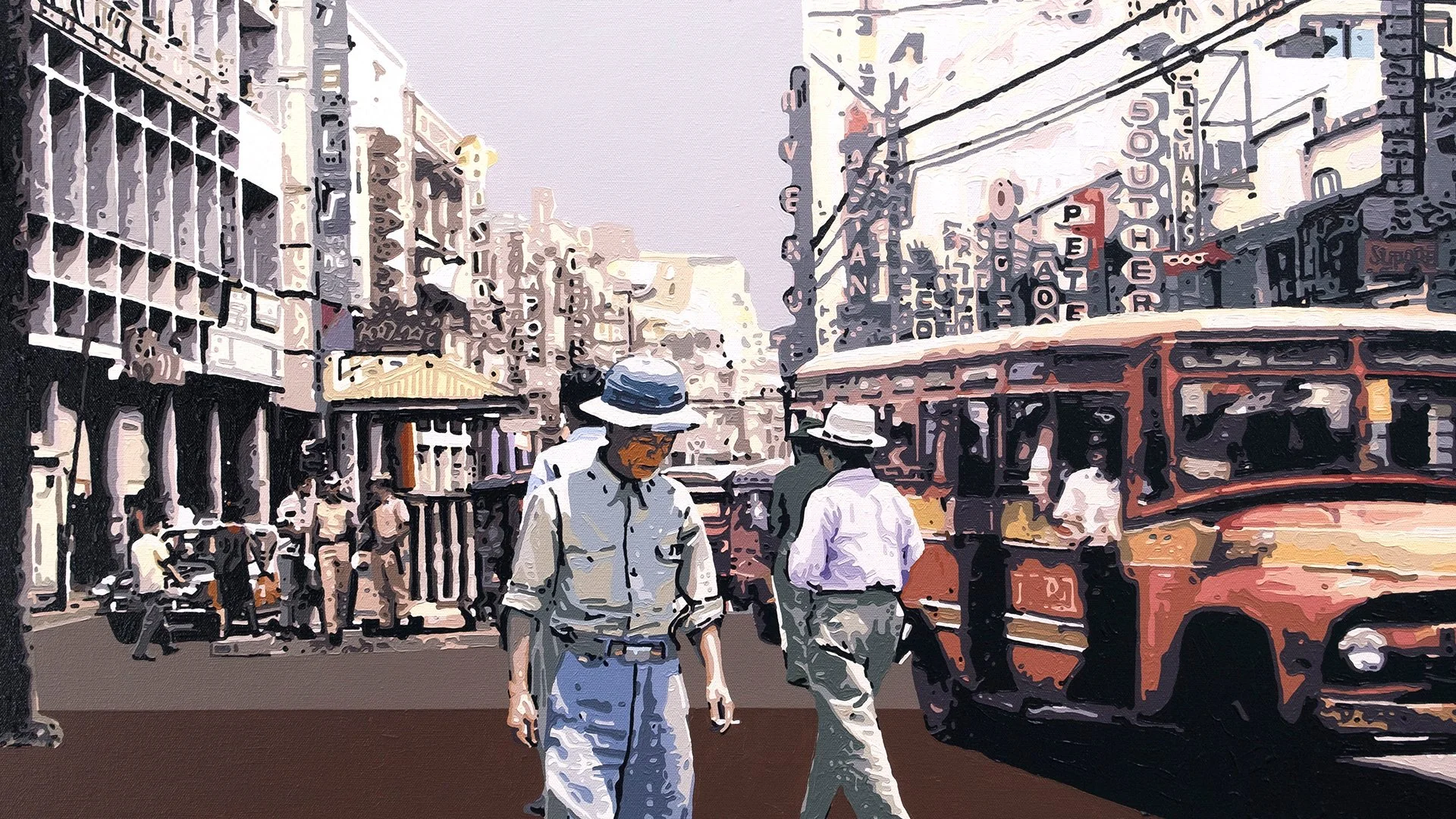
We can see this evolution in Moneda’s works, as he takes images of Old Manila and interprets them through his own unique artistic lens. He paints his subjects in striking achromatic detail, evoking the multi-layered graphic intricacy of serigraphy. Black and white shapes construct faces of women selling wares or classic buildings from an early pre-modern era. Yet the added layer that elevates Moneda’s works from reproduction to tribute, from passive viewer to Rauschenberg’s witness, is his use of contrast. His black and white figures are situated against vivid backdrops of color. Flat planes of oranges, blues, yellows, and purples, stand in stark contrast to his vintage subjects, reimagining what it means to create an image of history. Modern sentiments meet a nostalgia for the past. In Moneda’s paintings, we observe the way polar opposites, both visually and in history, meet and find common ground. “I think of it as creating a bridge between eras. The nostalgia and historical elements remain, but they’re filtered through a contemporary lens.”
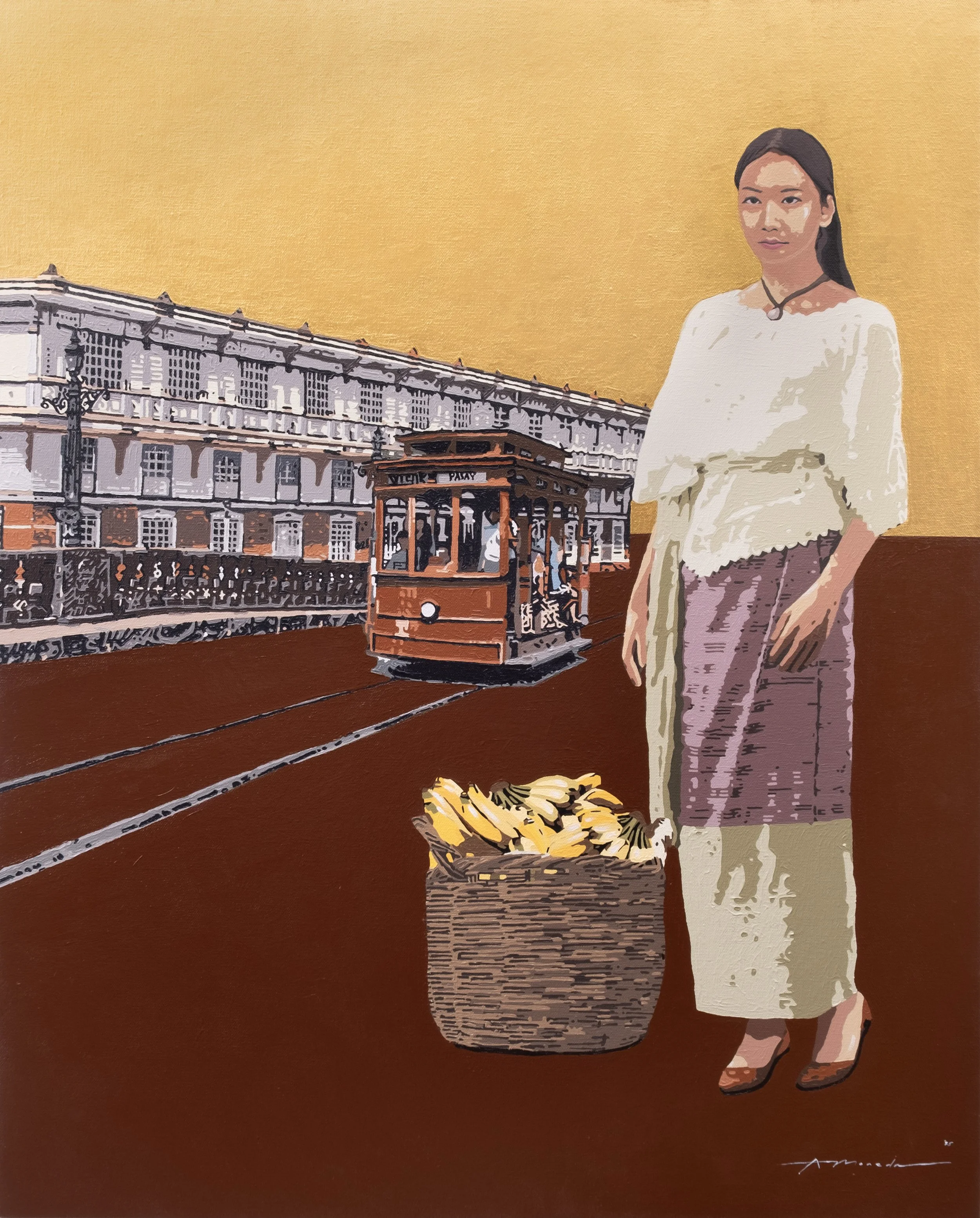
Mayumi by Almer Moneda
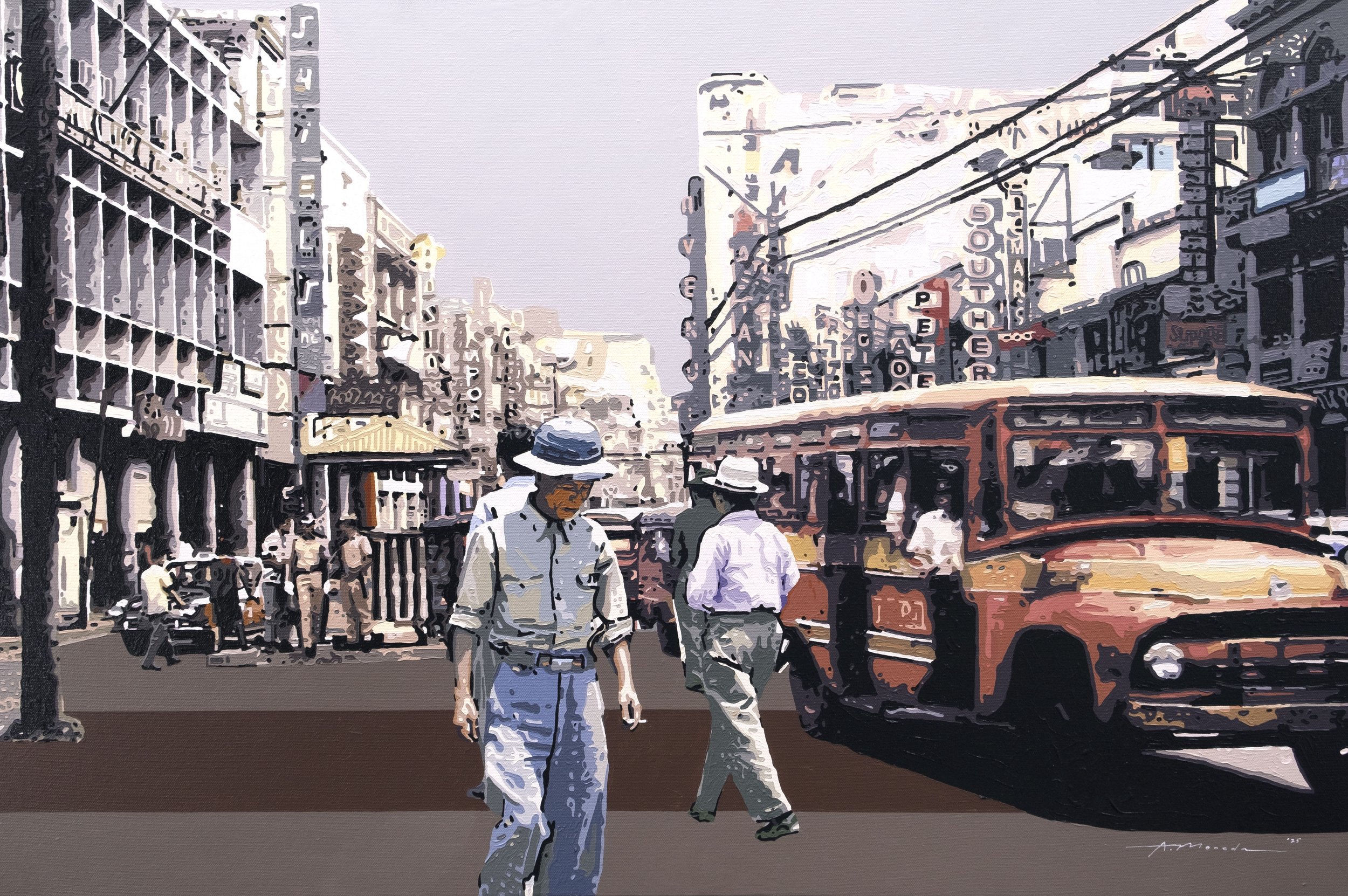
Sunlit Streets and Jeepneys by Almer Moneda
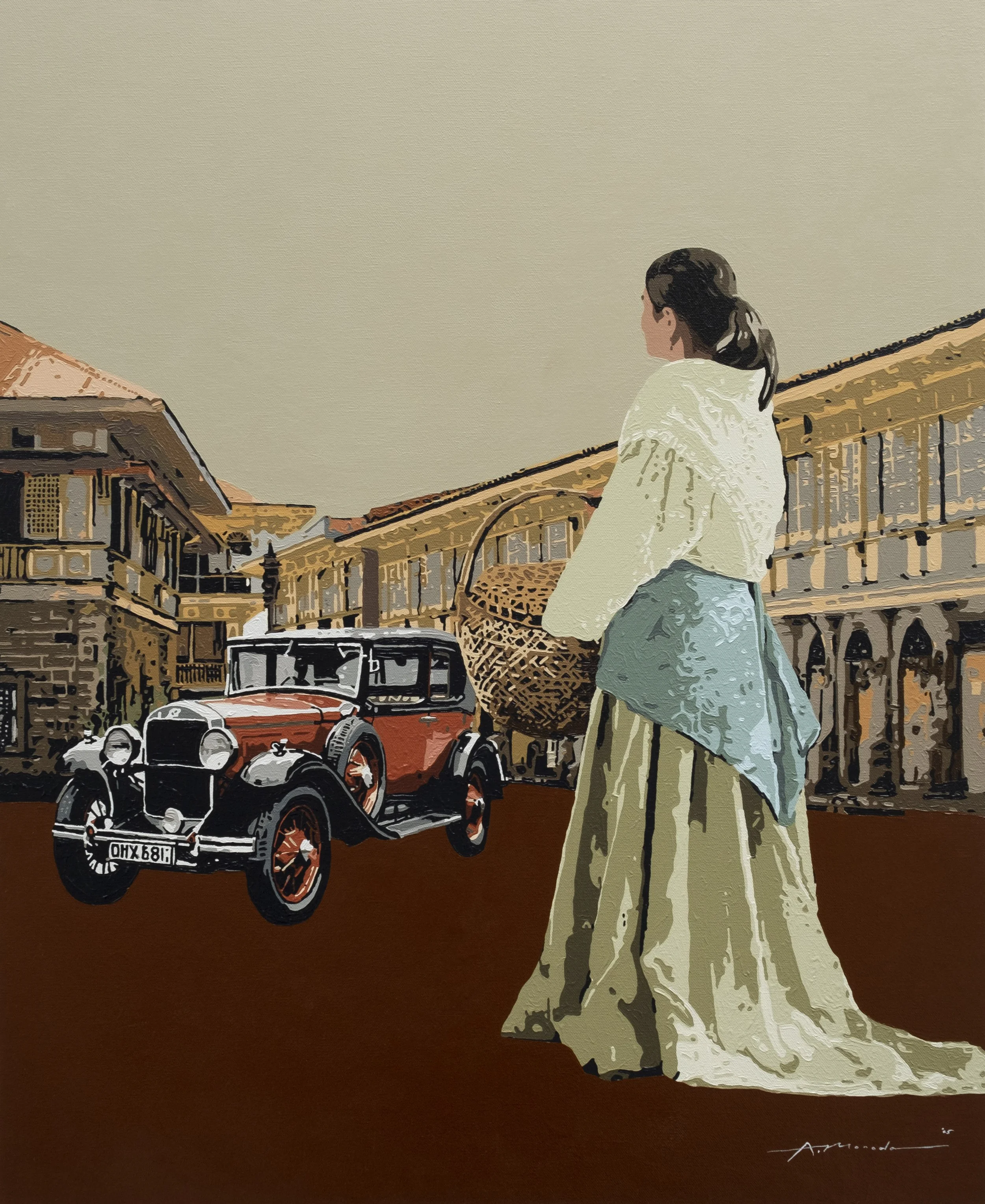
A Stroll Through Time by Almer Moneda
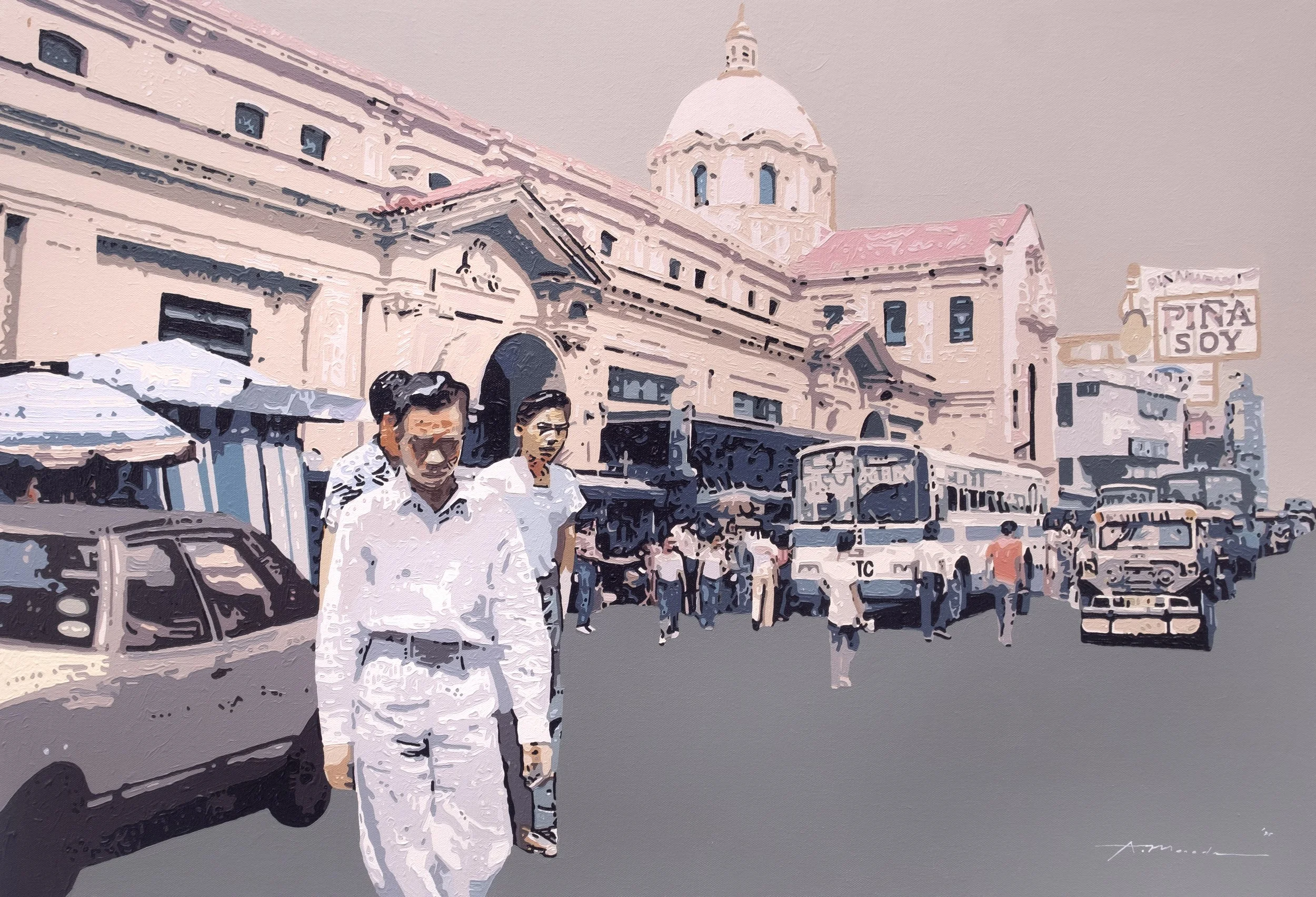
Hakbang Sa Dambana by Almer Moneda