
Up in Flames, Down in History
Before the match is struck and the effigy goes up in flames, there is the work of making: the politics, the people, and the purpose already written into its brief life.
Words Bernadette Soriano
Art by Tristan Talon
September 21, 2026
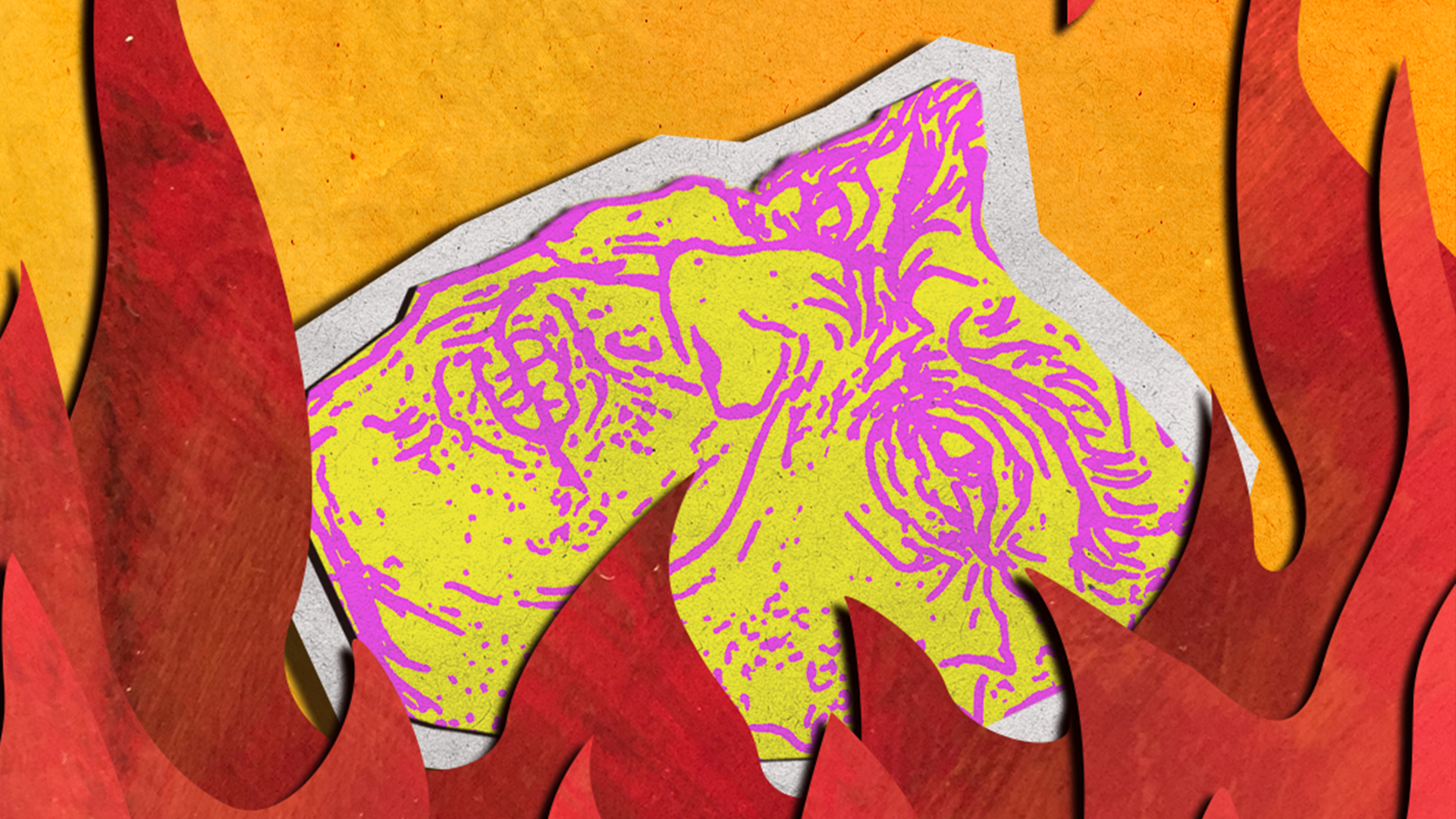
Art by Tristan Talon | Photos courtesy of Tambisan sa Sining
An effigy is strange by design.
Into the streets it goes, into photographs it passes, and into flame it returns—its worth residing in the wake of its utterance over the length of its stay.
For in every caricature consigned to flame lies the people’s dissent; in every figure borne through the streets, the nation’s grievance; in every ash left behind, our history that refuses erasure.
Glenn Gonzales, visual artist, cultural worker, and activist from Tambisan sa Sining, locates the artwork’s afterlife precisely where its physical form comes undone.
Its undoing, in other words, is part of the work.
In an exclusive interview with Art+ Magazine, Gonzales traces the currents beneath Tambisan’s protest art, where creative expression and political dissent converge—and where the artwork begins to mean more than what is seen.
The Spark Before The Fire
Forged in 1979 as a caroling troupe, Tambisan sa Sining evolved across generations into a multidisciplinary vanguard, spanning theater, visual arts, media, and literature.
Its aesthetic language shifted in lockstep with the very hands that mold it: workers, youth, women, and middle-class artists bound in a cultural praxis wherein oppression is neither held at the remove of detached contemplation nor parsed from some high perch, rather given flesh by those made to endure it.
In Gonzales’ telling, this has made the work “mas comprehensive,” in that the making of protest art has itself become more participatory, drawing into its production those whose realities it seeks to instantiate in form.
Much as the image may travel well beyond the street that first gave it purchase, its meaning must remain moored to the ground from which it arose.
From Mayo Uno (Labor Day) to the State of the Nation Address (SONA), Tambisan’s protest art has made its way into international circuits of solidarity, carrying the work past the confines of the moment’s passing urges.
Still, before the image can reach the world, it must first reach home.
“Kausapin talaga ’yung mamamayan na paano ba nila iintindihin din ‘yung art dito muna sa bansa natin.”
That imperative carries into the way the effigy is rendered.
“Kailangan exaggerated ’yung lines, lalo na ’yung mukha, mata, expression,” Gonzales explains—the figure may be deliberately outsized, but the exaggeration is hardly for show.
A caricature is chosen insofar as its form can make the underlying contradiction legible to the people who encounter it.
Before a form is fixed, the work first takes the moment’s measure. “We always do an assessment kung ano ’yung kalakasan, ano ’yung weaknesses nung art form na ginagawa namin,” Gonzales explained, zeroing in the collective’s continual evaluation of its work lest its politics become alienating to those it seeks to reach.
Then comes the armature: “Gumagamit kami ng kawayan, lumang kahoy, alambre, galvanized iron wire”—a skeletal frame built for the strides of the street. Chicken wire, cardboard, newspapers, and plastic strapping coax volume from the bare bones; paper and gawgaw smooth the roughwork into skin.
Eyes, mouths, and features are exaggerated to travel across the thoroughfare, then survive the shrinkage of a circulating photograph.
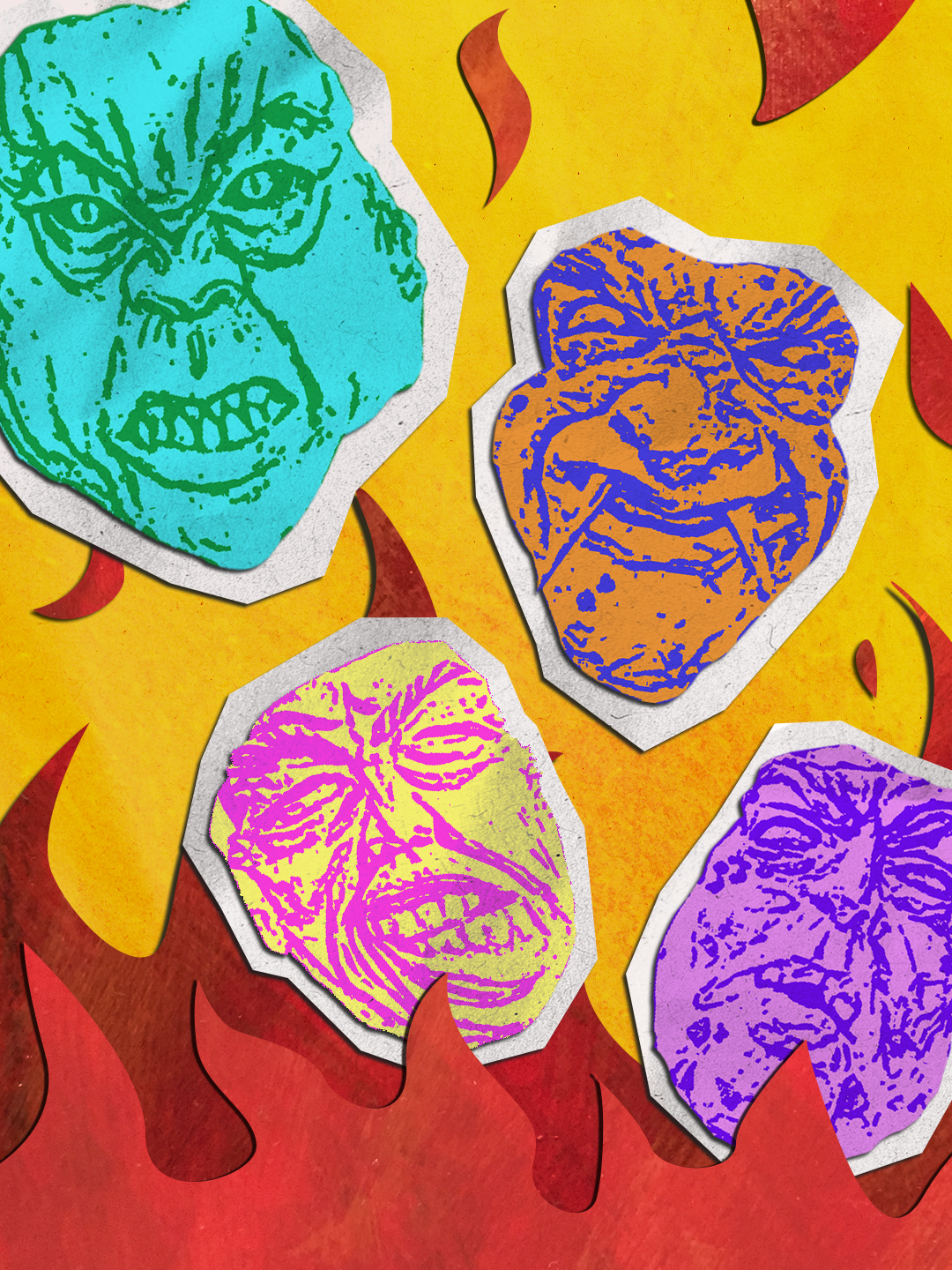
Art by Tristan Talon | Photos courtesy of Tambisan sa Sining
The process, then, is not simply to make something striking and set it aflame; in the measure that it is meant to last, it must read the moment, know the people, and give the image enough fire of its own to outlive the flames that would consume it.
The Street Is the First Gallery
Tambisan’s murals and effigies may eventually find their way into museums and institutional exhibitions, but Gonzales draws a line between the gallery and the street—not quite as one matters more than the other, but as it is in the latter that the work first finds its footing.
On the street, the work meets people in the middle of the day’s daily fray—workers, students, and passersby moving along their ordinary routes. Within an institution, the encounter takes another tack, gathering professionals, art students, and the wider circles that keep the art world in motion.
Crossing between the two entails its own species of care: works “mula sa malalaking mural, backdrop paintings, hanggang sa effigy” are shored up before they cross that threshold, their provisional skins of “kawayan, kargada paper, katsa, at elastomeric paint” secured, surfaces guarded, and frames cinched tight enough to bear the work’s passage from pavement into archival keeping.
While the politics and form stay put, the encounter shifts with the ground beneath it, a realization that would eventually turn back on Gonzales himself: studio training had taught him to fuss over a work, to keep it pristine, and, above all, to ward off the scratches and marks of handling.
Because an effigy asks for almost the opposite: to be exposed, handled, and eventually surrendered to the mercy of the very public it addresses.
The mass movement, Gonzales recalls, taught him to “unlearn” the impulse toward “personal attachment” to his art—to make something, then slacken his hold just as the public began to make it theirs.
Then comes the sentence that perhaps most clearly explains the peculiar life of protest art:
“Kasi ’yung ginagawa kong sining ay hindi ko siya pagmamay-ari. Pagmamay-ari siya ng masa.”
The artwork belongs to the masses.
That process reshapes the artist, too. Gonzales sees collective production as a give-and-take of craft, with artists bringing all manner of skills to the table only to have them traded, tested, and reworked together—his studio-art background one piece of know-how among many.
Art by Tristan Talon | Photos courtesy of Tambisan sa Sining
“Shared learning siya sa bawat isa sa amin.”
What Deserves to Burn?
If an effigy is an argument rendered visible, then what could its subject be, if not the product of a political calculation as much as an artistic one?
For Tambisan, Gonzales explains, design takes its cue from Philippine society; its themes born of whatever the political moment has brought to the fore.
Labor Day, for instance, foregrounded international struggles tied to Palestine, Cuba, and Venezuela alongside the campaign for a ₱1,200 living wage, while other designs have tracked the country’s more immediate fault lines—from electricity and Meralco to semiconductors, and military operations.
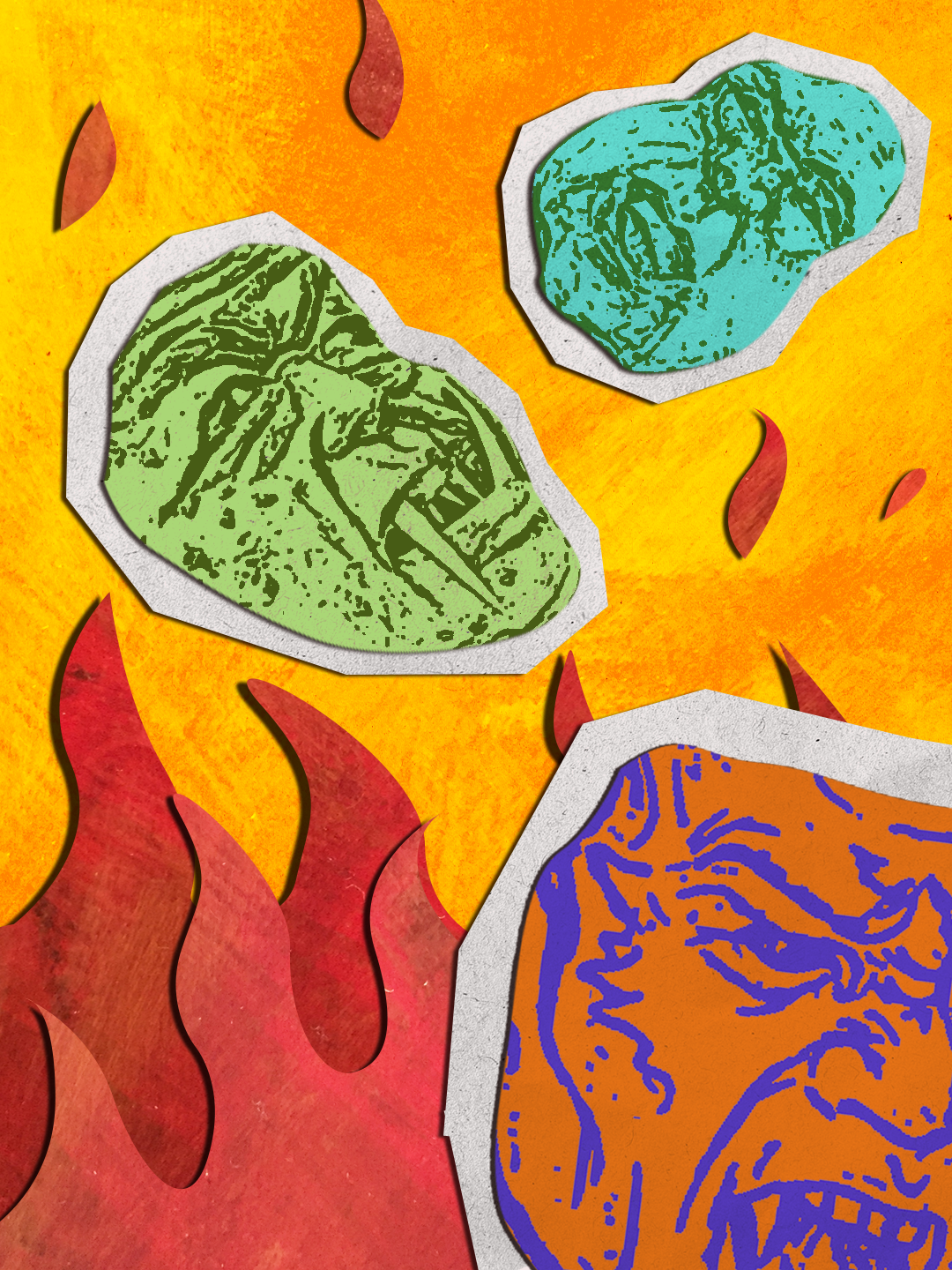
One figure may assume the grotesqueness of a monster or dinosaur; another, the more literal hierarchy of a puppet master at one end of the strings and his subject at the other; the point is not to make something only by reason of “ang astig nito, ang cool nung design na ’to,” but to find the form most capable of carrying the dissent farthest.
The collective takes its bearings from what he calls the “kompas” of politics, charting its course to basic sectors and the issues pressing them most; designs can therefore turn overnight, while placards, streamers, and performance elements take shape in the very churn of a protest.
“’Yung root cause kasi ng problema—’yung korapsyon, pagiging puppet sa dayuhan, at kahirapan—’yon at ’yon pa rin naman ’yung pinagmumulan nung mga pang-araw-araw na isyu,” Gonzales said.
Even artificial intelligence enters the conversation, with the question veering from whether artists can spot machine-made images apart to whom the technology gets to call the shots with.
Art by Tristan Talon | Photos courtesy of Tambisan sa Sining
“Dapat nagsisilbi siya sa interes ng masa at kanino ba dapat nagsisilbi ang AI at dapat hindi naman niya winawasak 'yung kalikasan eh. Kasi alam naman natin na AI talaga ay kaya niyang wasakin 'yung kalikasan sa pagkuha ng hektar-hektaryang lupa.”
The Art Ends. The Struggle Doesn't.
There is a strange beauty to the effigy: its destruction does not undo the work so much as bring it to where it was always headed, giving the image its final word.
What sustains Tambisan, Gonzales maintains, is less any artwork’s afterlife than the lived realities that compel it into being: “’yung mismong pakikibaka ng mamamayan,” and the artists’ continued “paglubog natin sa mga sektor” that lends the work its heft.
So long as workers remain denied a living wage, farmers dispossessed of land, and people subjected to repression, protest art retains its relevance as a necessity; what keeps Tambisan alive, Gonzales says, lies beyond the artist or organization alone, in “’yung mismong lakas at panawagan ng masang aming pinaglilingkuran”—the force of the people whose struggles give the work its reason to persist.
And that may be the effigy’s paradoxical hinge: made for the flame, yet destined for memory. Paper blackens, the frame caves in; beyond the smoke, the image lingers—the afterlife of the people’s anger.
“Hangga't nariyan sila na gumigising at lumalaban araw-araw, magpapatuloy rin ang Tambisan sa Sining sa paglikha ng sining na naglilingkod sa bayan.”