
Too Polished To Wound Us
A glossy rock opera about faith, betrayal, and spectacle arrives in Manila but in a country where Passion plays spill into the streets and public figures are already treated like saints and sinners in real time, it is the betrayer, not the messiah, who feels most human.
Words Gerie Marie Consolacion
Photos from GMG Productions
May 22, 2026
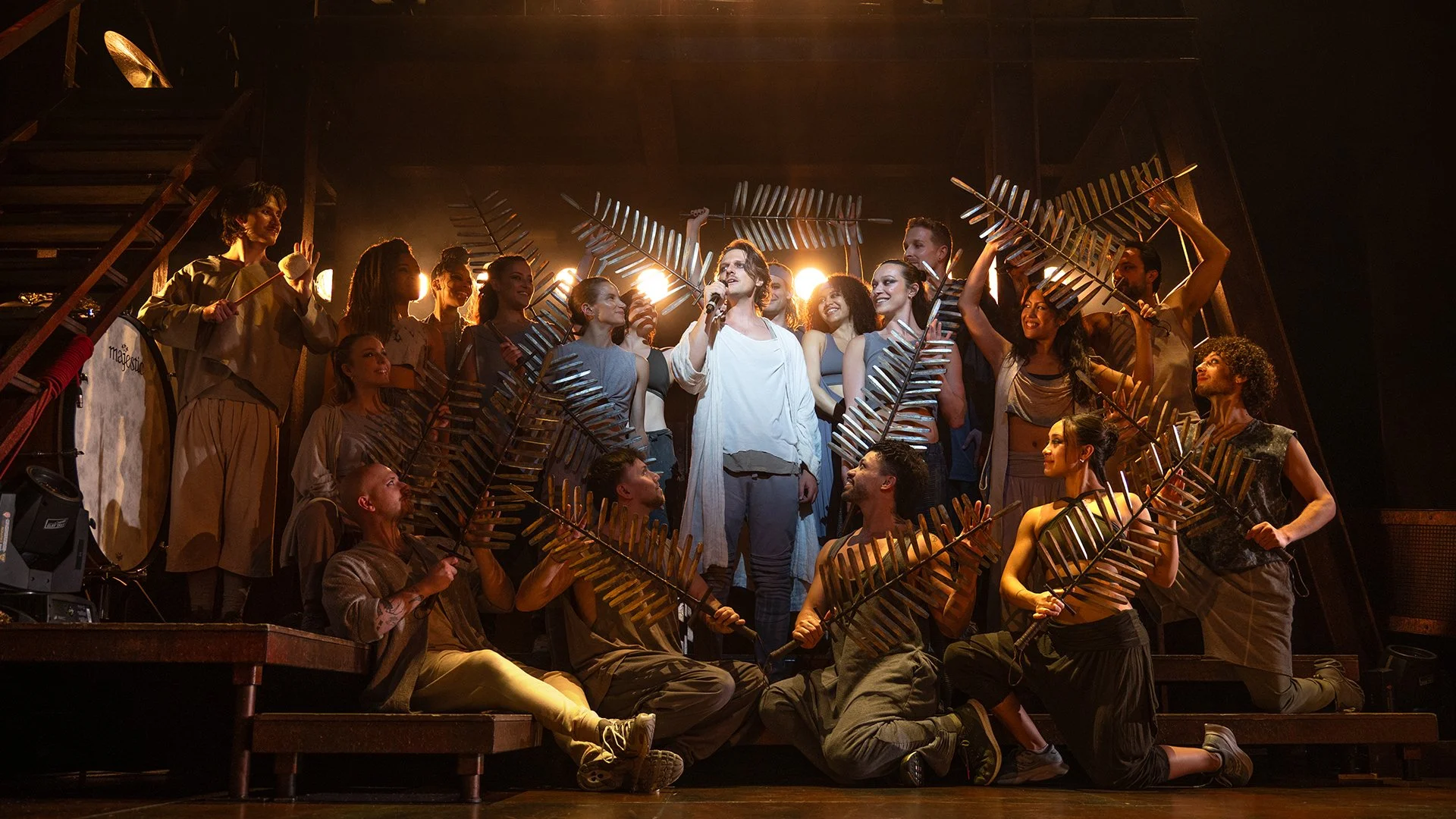
Jesus Christ Superstar arrives in Manila like it already knows it will not be dangerous here. Steel scaffolds, electric guitars, smoke, light cutting through haze like a rehearsed revelation.
Joshua Bess enters as Jesus under a wash of gold, hair catching the light, a figure half rock frontman, half devotional image, glitter clinging to him like something applied rather than suffered. Surprisingly, the audience does not react like something is being revealed to them. It reacts like something is being repeated back to them.
And it makes you wonder how a single Facebook post can still ignite outrage in a deeply religious country, while a full-scale stage production like this arrives and barely causes a ripple.
A story the country has already staged
The Philippines has long stopped needing this story explained. Filipinos already performed it.
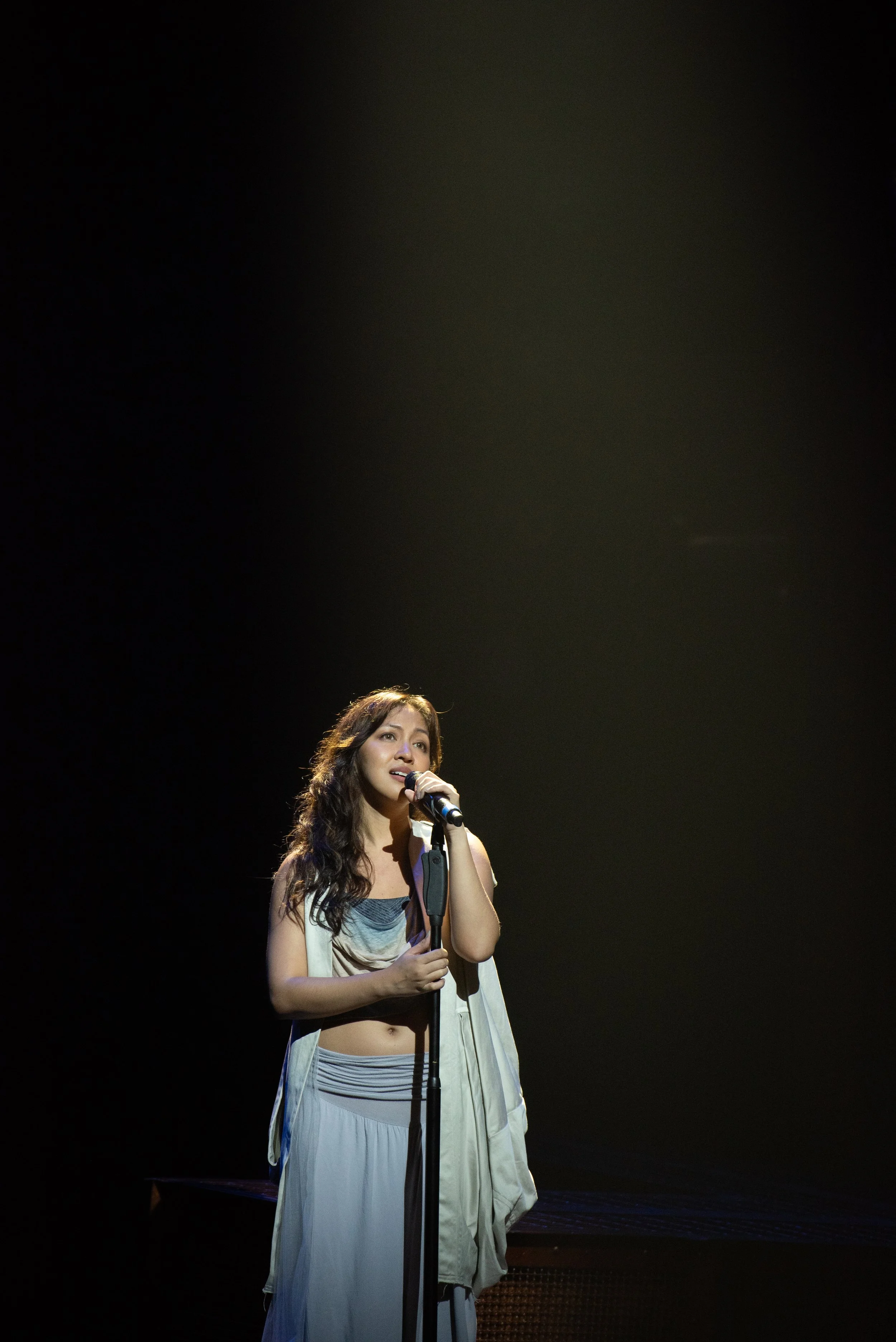
Gab Pangilinan as Mary Magdalene | Photo by Vitt Salvador
Every Holy Week the country becomes its own staging of the Passion, penitents dragging crosses through streets while crowds gather with phones raised, suffering turned into ritual, ritual turned into spectacle, spectacle turned into memory. In Pampanga the reenactments go further, bodies nailed to wood in acts that blur devotion and theater until the difference stops mattering.
This is not a place where the Passion feels distant or abstract, but one where it has become habitual.
Which makes the arrival of a Western rock opera about Jesus feel less like provocation and more like déjà vu. The country has already absorbed this language.
Boy Camara did it in 1971 at the CCP the same year the Broadway production opened. Basti Artadi turned Jesus into a rock figure in 2000, collapsing the distance between concert stage and crucifixion.
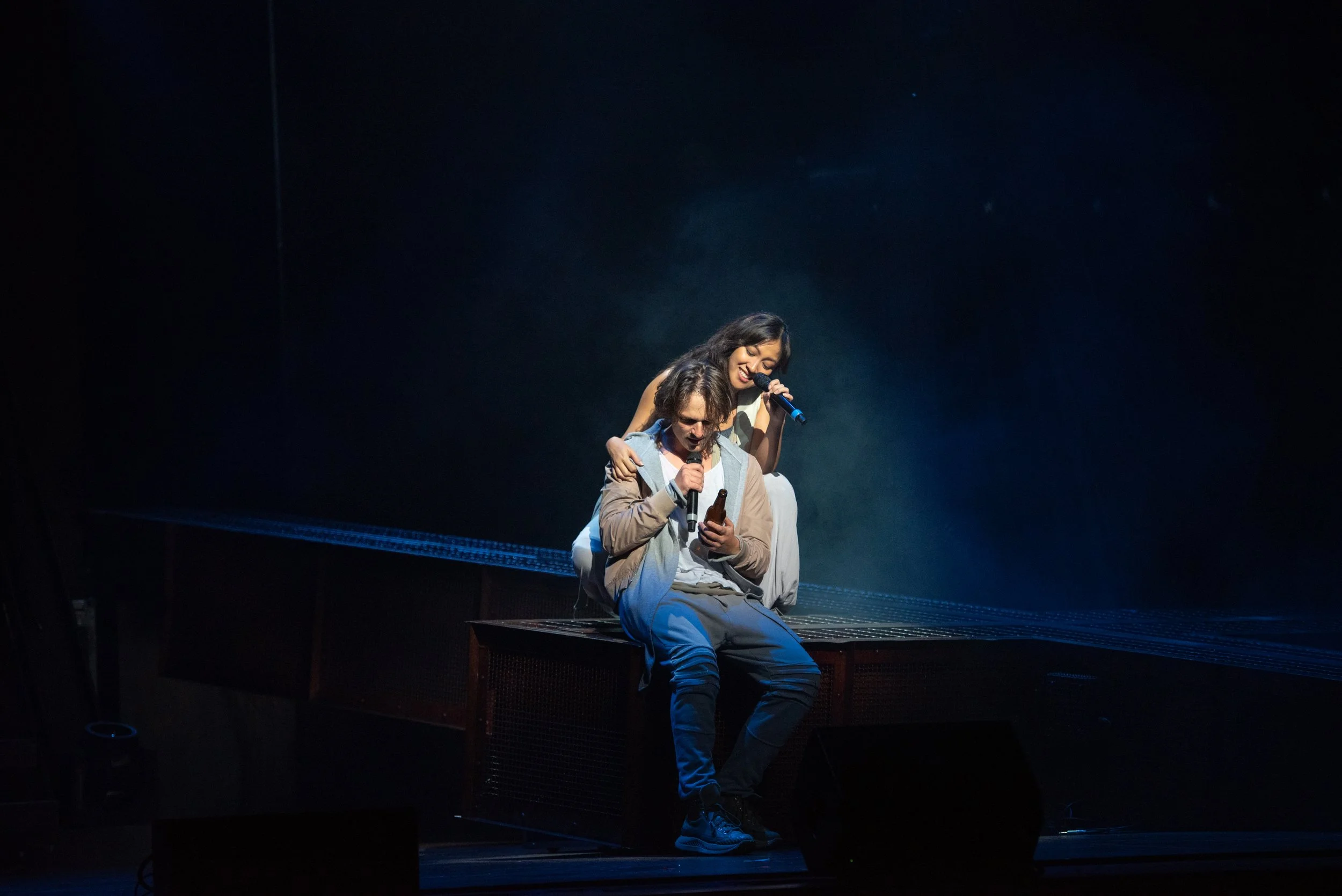
Gab Pangilinan as Mary Magdalene and Joshua Bess as Jesus Christ | Photo by Vitt Salvador
Even the Senakulo has been quietly rewritten over decades by the grammar of this musical, the conflicted Judas, the stylized Herod, the humanized Christ who feels less like doctrine and more like character. By now, the Philippines is not receiving this work, rather, recognizing it.
Judas and the pressure of awareness
Javon King’s Judas is where the production finally tightens. He enters like pressure building in a room that refuses to acknowledge it, his voice carrying urgency that the rest of the stage does not match.
There is a sense that he is the only one reacting to what is actually happening rather than what is supposed to be happening. He watches Jesus turn into something larger than a man, something closer to an idea that has already begun to escape control.
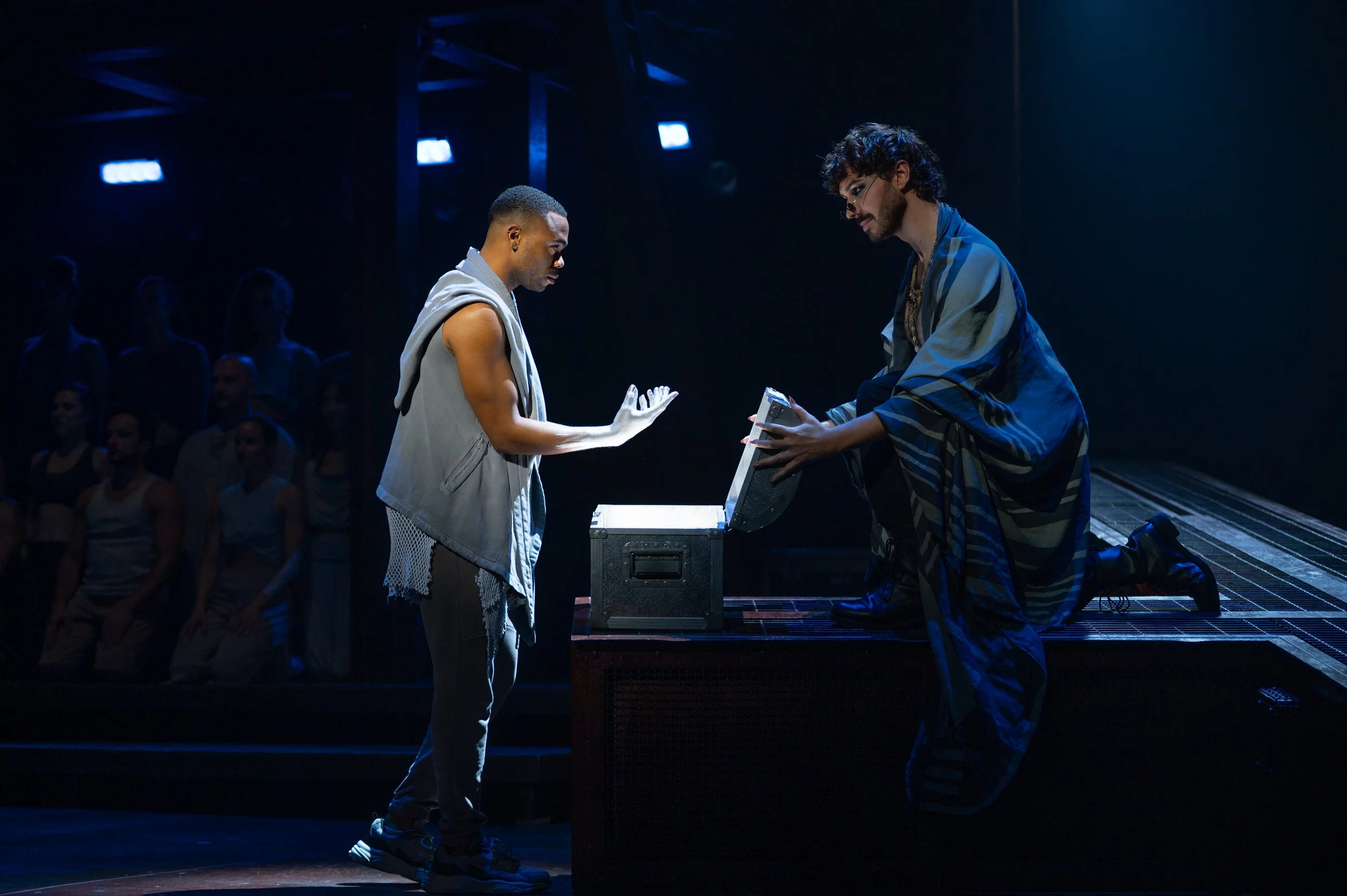
Javon King as Judas and Grant Hodges as Caiaphas | Photo by Vitt Salvador
It is not betrayal that defines him here but awareness, the kind that arrives too early to be useful and too late to be ignored.
What makes it sharper in Manila is how familiar awareness feels. The country knows what it means to turn people into symbols and then argue over the symbols instead of the people.
Politicians become moral archetypes, celebrities become moral authorities, movements become identities that outgrow the humans inside them. Crowds decide first and understand later. Judas reads this process like a warning no one else onstage is interested in hearing.
A Jesus rendered as image
Against him, Jesus becomes something more distant than divine. Joshua Bess plays him with softness, restraint, a kind of careful vulnerability that never quite breaks into urgency.
The production frames him constantly as an image, lit like a figure meant to be looked at rather than collided with, glitter and fabric and light doing as much work as performance. It creates a strange imbalance where Jesus feels less like the center of gravity and more like something being projected.
The disconnect between them becomes structural. Scenes do not always meet in the same emotional register.
Judas operates in friction, in urgency, in collapse. Jesus often exists in stillness, in suggestion, in carefully held distance.
Instead of confrontation there is separation, as if the story is unfolding in two different tonal realities that only occasionally intersect. The effect is not tension but drift, and slowly the narrative gravity shifts away from its supposed subject.
Every time Judas enters, the show sharpens. Every time he leaves, it loosens.
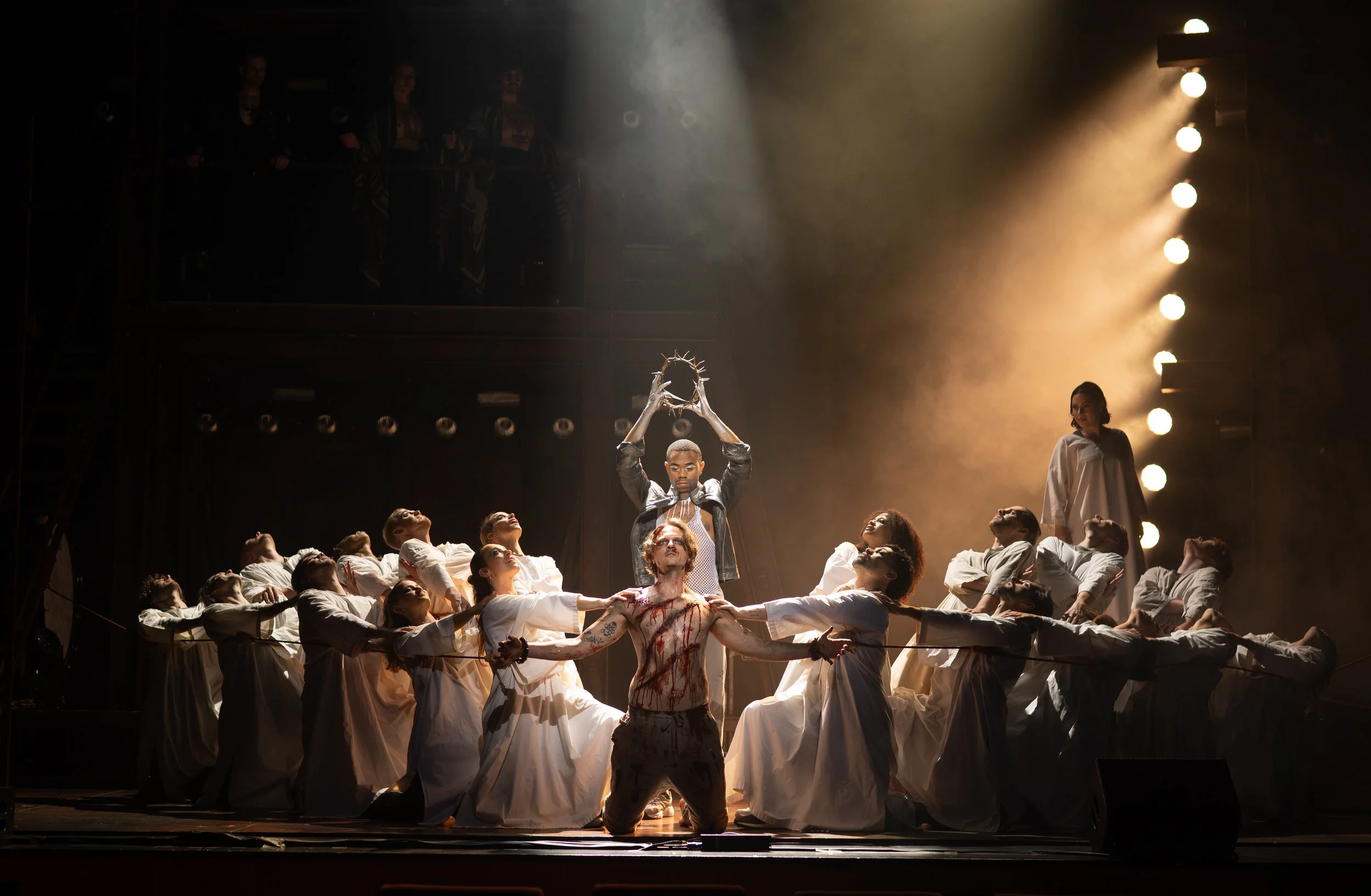
Joshua Bess, Javon King, and the Jesus Chris Superstar International Tour Company | Photo by Vitt Salvador
By the time “Superstar” arrives, the transformation is complete without ever being declared. Judas is no longer the counterpoint to Jesus. He is the only presence still reacting to him as a human being rather than a symbol. The betrayal becomes less an act and more an outcome already decided by the scale of what Jesus has become in the eyes of everyone else.
Camp, laughter, and comfort
Erich Schleck’s Herod arrives in glitter and excess, heels and brocade and theatrical indulgence that the audience meets with laughter rather than discomfort. It is played as camp, received as entertainment, absorbed without resistance.

Jesus Christ Superstar International Tour Company | Photo by Vitt Salvador
The moment is meant to unsettle, but it lands like permission to relax, as if irreverence itself has already been domesticated by familiarity. The Philippines has seen too many versions of sacred performance to be easily shaken by another one.
Drew McOnie’s choreography comes closest to saying something unfiltered. The ensemble moves like a single body that cannot decide whether it is worshipping or consuming, collapsing into waves of devotion that turn into violence without warning.

Joshua Bess, Gab Pangilinan, and the Jesus Chris Superstar International Tour Company | Photo by Vitt Salvador
It resembles crowds in real life more than crowds in scripture, the logic of gatherings that form quickly and dissolve just as quickly into judgment. There is something recognizably contemporary in it, something that echoes rallies, fandoms, online mobs, public gatherings where emotion outruns thought.
What the production refuses to say
And still the production holds back from fully naming what it is already showing.
The scaffolding suggests power but avoids direct accusation. The crowd suggests society but avoids specificity. The story suggests the present but refuses to commit to it. It circles meaning without closing on it, as if afraid of what would happen if it actually pointed at the room it is being performed in.
What remains is a show that is technically impressive, musically strong, visually controlled, and emotionally uneven at its center.
A Jesus rendered more as image than presence, a Judas rendered more as presence than symbol, and a production that cannot quite decide which of them it trusts to carry the weight of the story.
In the end, it is Judas who stays behind in the body of the audience, not as betrayer but as the only one who seemed to understand what kind of machine the story had already become.
And maybe that is what feels most Filipino about it. Not the faith, not the spectacle, but the familiarity with watching a human being turn into something larger than himself, and the quiet violence of what happens after.