The Philippines’ 10 New National Artists, and the Women Who Almost Weren’t There
Malacañang has named its first batch of National Artists since 2022. Only two of the ten are women, and the list of who still isn’t on it.
Words Gerie Marie Consolacion
Art by Tristan Talon
September 12, 2026
Art by Tristan Talon
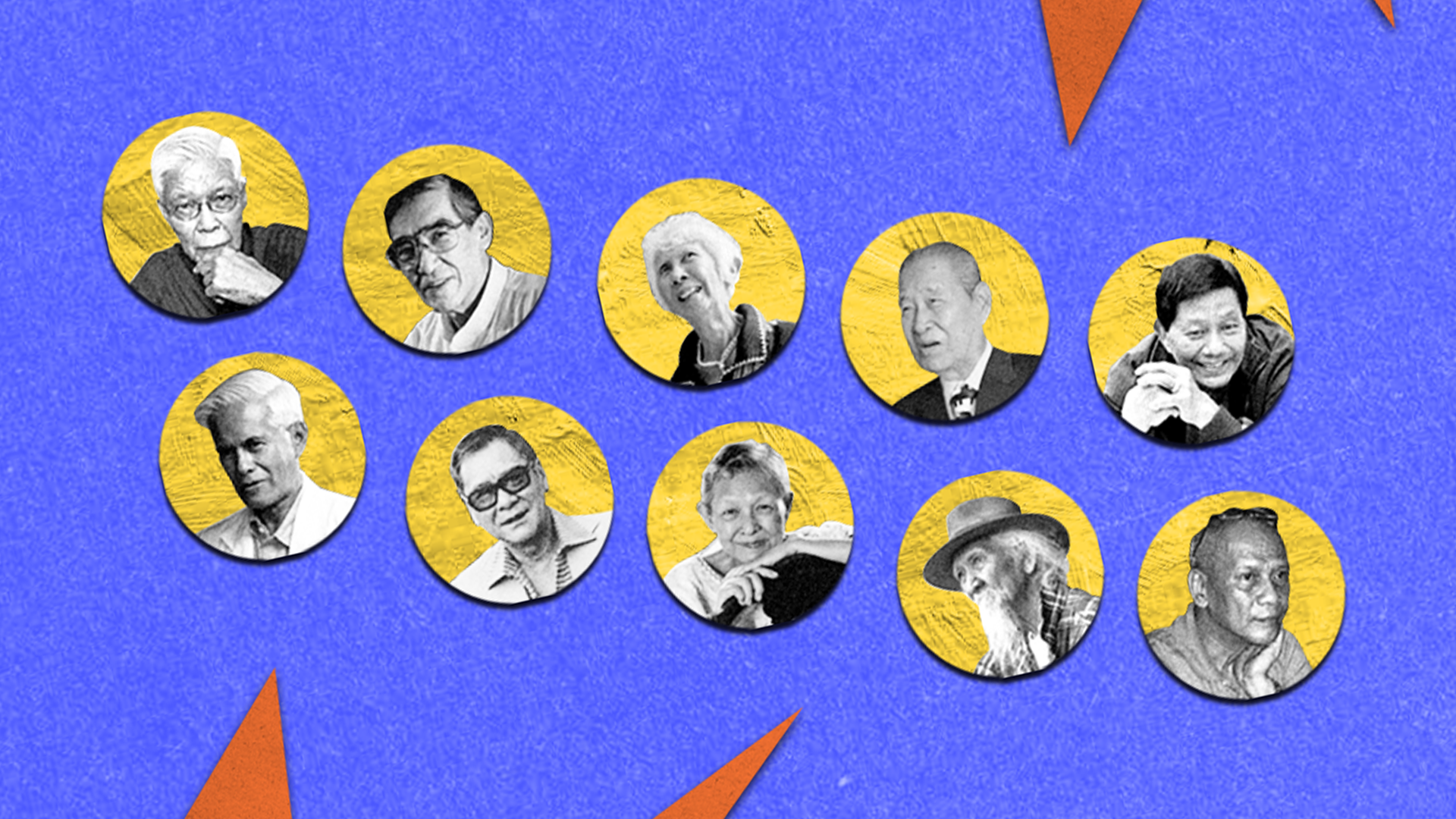
Ten new names now sit atop the country’s highest cultural honor. Malacañang confirmed the latest batch of National Artists in a Palace communiqué, formalized through Proclamation No. 1414, addressed to the Cultural Center of the Philippines (CCP) president and CEO Kaye Tinga.
It is the first conferment since 2022, ending a four year wait that had artists, historians, and culture workers wondering who, and whose politics, would make the cut this time.
The honorees span nearly every discipline the award recognizes.
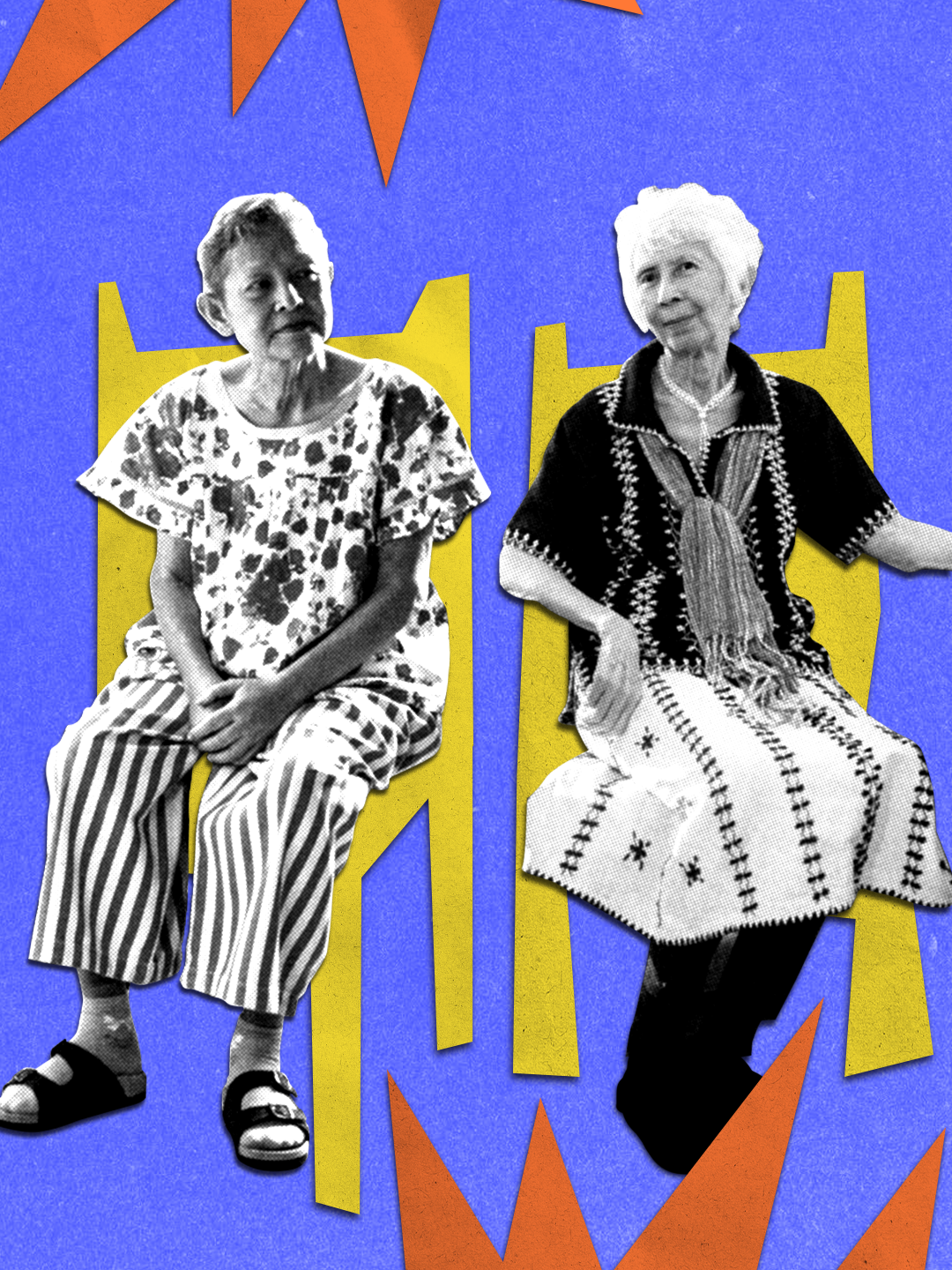
Of the ten laureates, only two are women: Patis Tesoro and Imelda Cajipe Endaya. Their stories, one of reviving a nearly lost textile tradition, the other of building an entire feminist visual language from scratch, deserve more than the passing mention they got in the Palace communiqué.
Meet the Woman Who Refused to Let Piña Die
Maria Beatriz “Patis” Pamintuan Tesoro was born in 1950 in Iloilo, the daughter of a dressmaker in a household where wearing a Filipino national dress was simply part of daily life. She had wanted to become a painter and studied art education but marriage at eighteen and the demands of raising a family pushed that dream aside for years before fashion pulled her back into art.
Her breakthrough came in 1972, when an embroidered voile blouse she designed, inspired unexpectedly by a cigarette advertisement, turned heads in Manila’s fashion scene. From there she built a career devoted almost entirely to reviving what much of the country had begun to treat as costume rather than couture: piña, jusi, abacá, and the baro’t saya.
Tesoro is widely credited with pulling the piña weaving industry back from the brink through her advocacy and her founding of the Katutubong Filipino Foundation, which supports traditional artisans and tribal weaving communities.
Now in her mid seventies and still working out of a home studio in Laguna, Tesoro has spent more than five decades turning what could have been a dying craft into both everyday wear and haute couture, from barongs with contemporary prints for younger wearers to panuelos worn over simple black dresses to gowns shown as far afield as Madrid.
Painting the Filipino Woman Back Into History
Born in Manila in 1949, Imelda Cajipe Endaya trained at the University of the Philippines and by 1979 had already won a gold medal in printmaking from the Art Association of the Philippines. But she is remembered less for individual prizes than for the movement she helped start.
In 1987, Cajipe Endaya co-founded Kasibulan, a collective of women artists that became a central force in Philippine feminist art, and served as its first president. Her own canvases, often large scale mixed media works layered with crochet, lace, textiles, and found domestic objects like flatirons and suitcases, took direct aim at authoritarian violence and the position of women within it.
Her 1983 painting “Pasyong Bayan” was a direct response to human rights abuses under martial rule, and much of her subsequent work returned again and again to migration, reproductive rights, and the unpaid, often invisible labor of Filipino women, including overseas workers.
Beyond the canvas, she initiated Pananaw, the Philippine Journal of Visual Arts, serving as its first editor, and curated the traveling exhibition “Who Owns Women’s Bodies?,” which moved from the United States to the Philippines, Thailand, and Japan.
Her honors include the CCP’s Centennial Honors for the Arts and the NCCA Ani ng Dangal award, and her work now sits in the collections of the Bangko Sentral ng Pilipinas, the Philippine National Art Gallery, and the National Gallery of Singapore, among others.
Six Decades of Careers Behind the Two Names Above
Art by Tristan Talon
The remaining eight honorees round out a class that, taken together, spans nearly every corner of Philippine cultural production, and most of them built their reputations long before this recognition arrived.
Architect Gabriel Formoso, who died before this proclamation, designed roughly eighty buildings and more than 150 residences across a four decade career and was counted among the first hundred licensed architects in the country. His Bangko Sentral ng Pilipinas complex, completed in 1970, became familiar to millions of Filipinos simply from appearing on the old 100 peso bill, and he was already on a shortlist for the honor as far back as 2003.
Fellow honoree Rafael “Nonoy” Froilan built his career in a very different medium, as the country’s best known male ballet dancer. As a pioneering principal artist of Ballet Philippines from the early 1970s onward, Froilan elevated the standing of male dancers in a field long organized around the ballerina, later becoming a choreographer and a longtime faculty member of the Philippine High School for the Arts, and he had already received the CCP’s own Gawad Para sa Sining honor in 2020.
In film, scriptwriter Armando “Bing” Lao, who died in 2024, was widely regarded as the intellectual architect of Philippine independent cinema. He wrote or shaped the screenplays behind films that reached Cannes, including Brillante Mendoza’s ‘Serbis’ and ‘Kinatay,’ and founded the Found Story screenwriting workshop, through which he mentored more than forty batches of filmmakers over the years.
In literature, Gregorio Brillantes, who died in 2025, was one of the most influential voices in Philippine English fiction, best remembered for the short story ‘The Apollo Centennial,’ considered a pathbreaking work of Filipino science fiction, and for ‘Faith, Love, Time, and Dr. Lazaro,’ a story that became required university reading.
Nicanor Tiongson brings scholarship as much as artistry to the list. A former dean of the University of the Philippines College of Mass Communication and one time CCP artistic director, he edited the ten volume CCP Encyclopedia of Philippine Art and wrote pioneering studies of Philippine theater and film, including the four volume Urian Anthology.
Music and stagecraft round out the group. Composer Alfredo Buenaventura, born in 1929, was among the few Filipino composers to write full length operas, works such as ‘Mariang Makiling,’ ‘Diego Silang,’ and ‘Prinsesa Urduha’ that fused Western classical forms with Filipino folk melody and legend.
Lighting designer Teodoro “Teddy” Hilado, who served as the Cultural Center of the Philippines’ technical director in its earliest years and later ran the Folk Arts Theater, is remembered by peers as the father of lighting design in Philippine theater, known for a style so understated that audiences often noticed his work only when someone else’s went wrong.
Finally, painter Nunelucio Alvarado, working out of Negros Occidental since the 1980s, built his reputation on unflinching, boldly colored depictions of sakadas, the seasonal sugarcane workers whose exploitation defined the province’s plantation economy, becoming a founding figure of the socially engaged Black Artists of Asia and Pamilya Pintura collectives in Bacolod.
The Ones Still Waiting and the Backlog of the Deserving
Art by Tristan Talon
Every conferment of the National Artist award revives the same argument in literary and art circles: who’s missing?
This year, one name comes up more insistently than most. Lualhati Bautista, the novelist, screenwriter, and feminist icon, died in February 2023 at 77, having never received the honor.
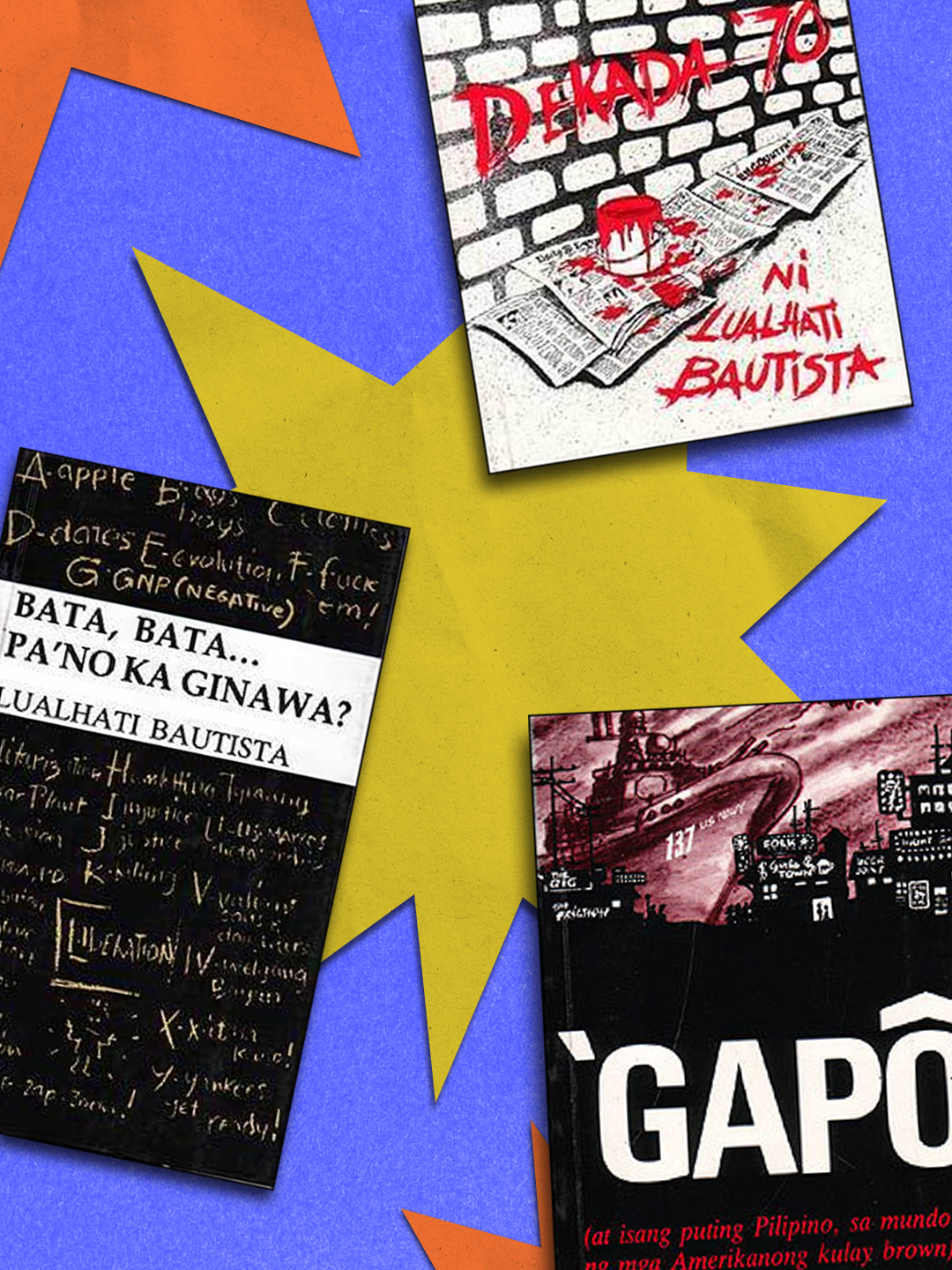
Bautista’s body of work is difficult to overstate. Her 1983 novel ‘Dekada ‘70,’ which won the Carlos Palanca Memorial Award’s grand prize, remains a fixture on Filipino literature syllabi decades later, a portrait of a middle class Manila family, and specifically of a mother’s political awakening, across the worst years of martial law.
She also won Palanca grand prizes for ‘GAPÔ’ in 1980 and ‘Bata, Bata... Pa’no Ka Ginawa?’ in 1984, along with prizes for her short fiction. Vilma Santos brought two of her most enduring characters to the screen, Amanda in ‘Dekada '70’ and Lea in ‘Bata, Bata,’ while Nora Aunor starred in Bautista’s screenplay ‘Bulaklak sa City Jail.’
In 1986 she was named a National Fellow for Fiction by the UP Institute of Creative Writing, and in 2020 she received the Gawad CCP Para sa Sining, the CCP’s own highest individual honor, one rung below National Artist itself.
What made Bautista’s fiction distinct was its refusal to separate the political from the domestic. Her women were not symbols. They were mothers, wives, detainees, and activists navigating authoritarianism from inside their own households, at a time when few Filipino novelists, and even fewer women, were writing that story from a woman’s point of view.
In 2022, Penguin Classics reached out to publish ‘Dekada ‘70’ internationally, putting her alongside Rizal and Nick Joaquin as one of the few Filipino authors on that imprint’s list. That Bautista died without the National Artist title is, to many in the literary community, one of the award’s clearest blind spots, whether because of her politics, her gender, her genre of popular fiction and screenwriting rather than what gatekeepers considered serious literature, or simply bad timing with selection cycles that never lined up.
She is not the only name that keeps surfacing in these conversations. Actress Vilma Santos, the woman who brought Bautista’s Amanda to life on screen in ‘Dekada ‘70,’ carries her own decades-old case for the honor.
Santos began acting at nine years old and has spent more than sixty years in Philippine cinema, taking on roles across genres from the komiks superhero Darna to the martial law drama ‘Sister Stella L.’ to the labor migration story ‘Anak,’ and is widely considered the most awarded actress in the country’s history.
In 2024, the actors’ group Aktor, led by Dingdong Dantes, formally submitted her nomination for National Artist for Film and Broadcast Arts to the NCCA, backed by dozens of fan organizations and endorsements, and the nomination remains under the commission’s review process. Santos, herself a former mayor, governor, and congresswoman, has kept a careful distance from campaigning for the title, saying only that it is a difficult thing to comment on or assume.
That two women so closely tied to the same landmark story, one who wrote it and one who performed it, remain outside the Order of National Artists says something about how the award treats work built around women’s interior lives, however widely that work has been read, watched, and taught.
Bautista and Santos are not the only names that keep resurfacing in these conversations. Culture workers have also long pushed for recognition of other prolific but never conferred figures across disciplines, a reminder that the list of the deserving is always longer than the list of the chosen, and that a four year gap between conferments only widens that backlog further.
An Award That Has Never Been Above Politics

Art by Tristan Talon
It would be naive to treat the National Artist award as a purely artistic judgment, insulated from the country’s politics. It never has been. Everything, in the end, runs through politics: who gets named, who gets left off, and who gets to decide.
The clearest case remains 2009, when President Gloria Macapagal Arroyo added four names, director Carlo J. Caparas, theater artist Cecile Guidote-Alvarez, fashion designer Jose “Pitoy” Moreno, and architect Francisco Mañosa, to a shortlist the CCP and NCCA’s selection panel had not recommended, while quietly dropping composer Ramon Santos, who had made the panel’s cut.
Sitting National Artists and cultural workers petitioned the Supreme Court to block the conferment, arguing it was less a recognition of artistic merit than a reward for loyalty to the administration. The Court agreed. In 2013 it voided all four proclamations, ruling that Arroyo’s disregard of the NCCA and CCP’s own guidelines amounted to grave abuse of discretion.
That episode hardened what many artists already suspected, that the award, however rigorous its screening committees, ultimately passes through the hands of a sitting president, who retains the power to add or subtract names from what the panel recommends.
The National Artist title is conferred by presidential proclamation, not simply awarded by peers. That single structural fact means every batch of honorees, this one included, can be read two ways at once: as a professional community’s honest reckoning with who shaped Philippine culture, and as a document that any administration could, in theory, bend toward its own image.
None of this is to say the 2025 honorees are undeserving. By every account, Formoso, Froilan, Tesoro, Lao, Brillantes, Tiongson, Buenaventura, Hilado, Cajipe Endaya, and Alvarado earned their citations through long, well documented careers.
But recognizing that an award is political does not require accusing its winners of anything. It only means asking, as artists and critics have asked since long before this proclamation, whether the process behind the honor is as transparent, and as fair to the Lualhati Bautistas of Philippine culture, as the ceremony that follows it.