
The Geography of the Body
Ames Yavuz presents artists redefining the body through emotion, migration, memory, and shared human experiences.
Words Mian Centeno
Photos courtesy of Ames Yavuz
July 31, 2026
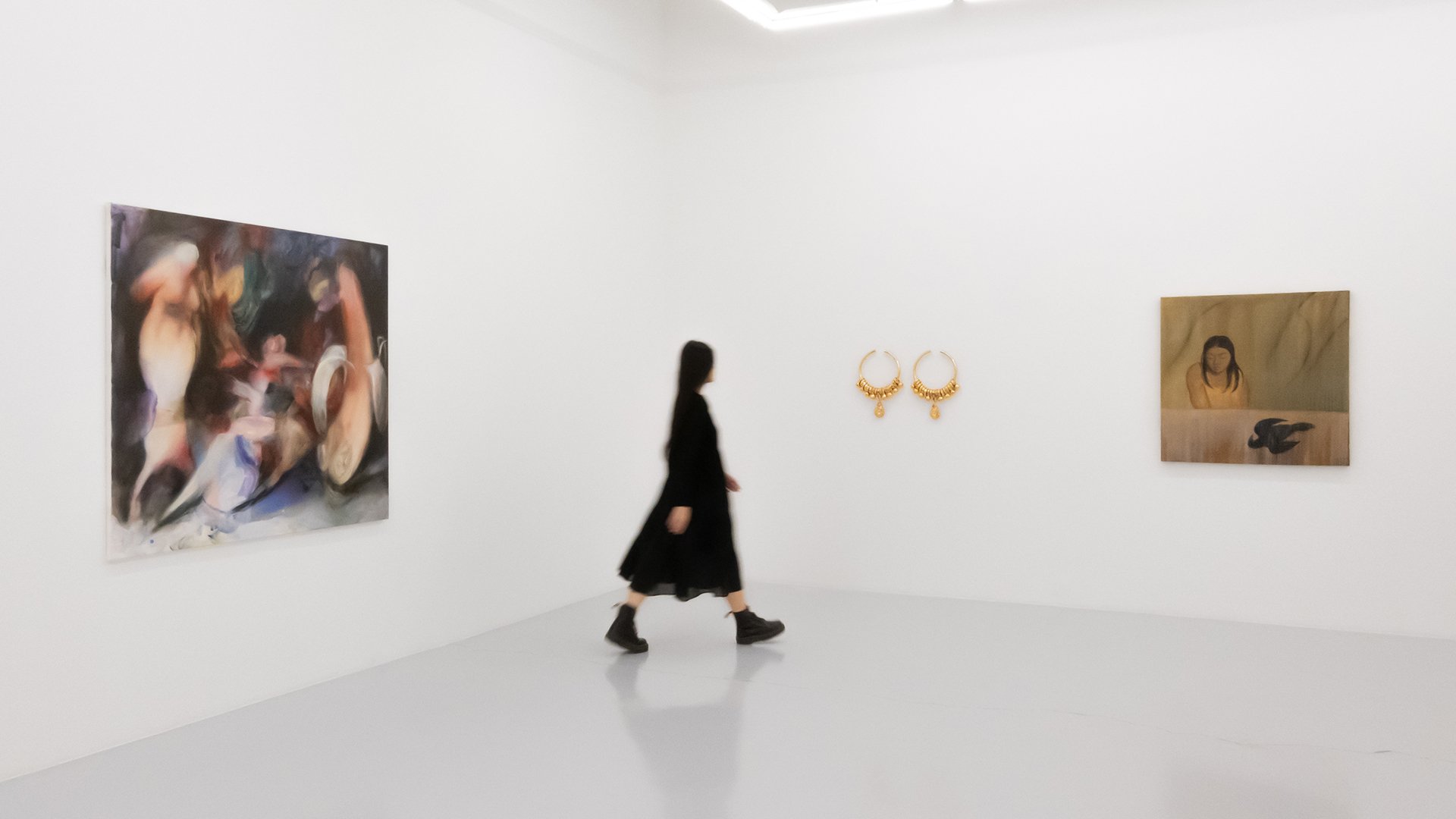
Installation shot of their flesh, a field | Courtesy of Ames Yavuz
The body is often seen as something we simply inhabit, but their flesh, a field invites viewers to see it differently.
In its latest group exhibition, Ames Yavuz brings together six artists from Australia, Thailand, and the Philippines to explore the body as a living landscape—one shaped by memory, identity, culture, and the experiences that define who we are.

Installation shot of their flesh, a field | Courtesy of Ames Yavuz
Rather than focusing on the physical form alone, the exhibition asks how our bodies become places where personal histories, emotions, and ideas of belonging develop.
The exhibition features distinct yet interconnected perspectives. Sarah Drinan, Julia Trybala, and Apichaya Wannakit each use figurative painting to examine the emotional terrain of the body.

Sarah Drinan, The play that was taken seriously, 2026, Oil and acrylic on canvas, 142.8 x 157 cm | Courtesy of the artist and Ames Yavuz.
Drinan’s fluid compositions explore vulnerability, desire, and transformation, while Trybala captures the complexities of intimacy through expressive figures between tenderness and tension.
Wannakit, meanwhile, layers self-portraits with memory, folklore, and symbolism, creating dreamlike works that blur the boundaries between past and present, reality and imagination.

Apichaya Wannakit, Ashes, 2026, Oil on canvas, 100 x 100 cm | Courtesy of the artist and Ames Yavuz.
The conversation expands beyond painting through the practices of Audrey Lukban, Monica Rani, Rudhar, and Kaylene Whiskey, who connect the body to broader cultural and social narratives.
Lukban reflects on the realities of the Filipino diaspora, particularly the experiences of women working overseas, revealing how migration shapes both identity and belonging.

Monica Rani Rudhar, Lion Hoops 1, 2025, Glazed terracotta, gold lustre, brass, 66 x 75 x 5 cm | Courtesy of the artist and Ames Yavuz.
Rudhar transforms inherited family objects into monumental sculptures that preserve stories of migration, love, and cultural memory across generations.
Meanwhile, Whiskey celebrates Anangu womanhood by bringing together Indigenous traditions and pop culture, presenting sisterhood as a source of strength, generosity, and communal care.

Kaylene Whiskey, Wonder Woman opening Presents, 2026, Acrylic on pages of found book in a UV99%, plexiglass and oak wood frame, 26.5 x 45.5 cm | Courtesy of the artist and Ames Yavuz.
Together, the six artists suggest that identity is never fixed. It is carried through the body, shaped by the people we meet, the places we leave, and the histories we inherit.
In their flesh, a field, the body becomes more than a vessel—it becomes a map of where we’ve been, what we carry, and where we continue to belong.
their flesh, a field is on view until August 29 at Ames Yavuz, Gillman Barracks, 9 Lock Road, #02-23, Singapore.