The Eyes of the Uncanny: The Unsettling Innocence of the Art of SAIS
For Carlos Bermas, known as SAIS, the pure emotion of childhood experience can carry more than just innocence and nostalgia.
Words Mara Fabella
Photo courtesy of Art Underground and Gail Geriane
November 10, 2025
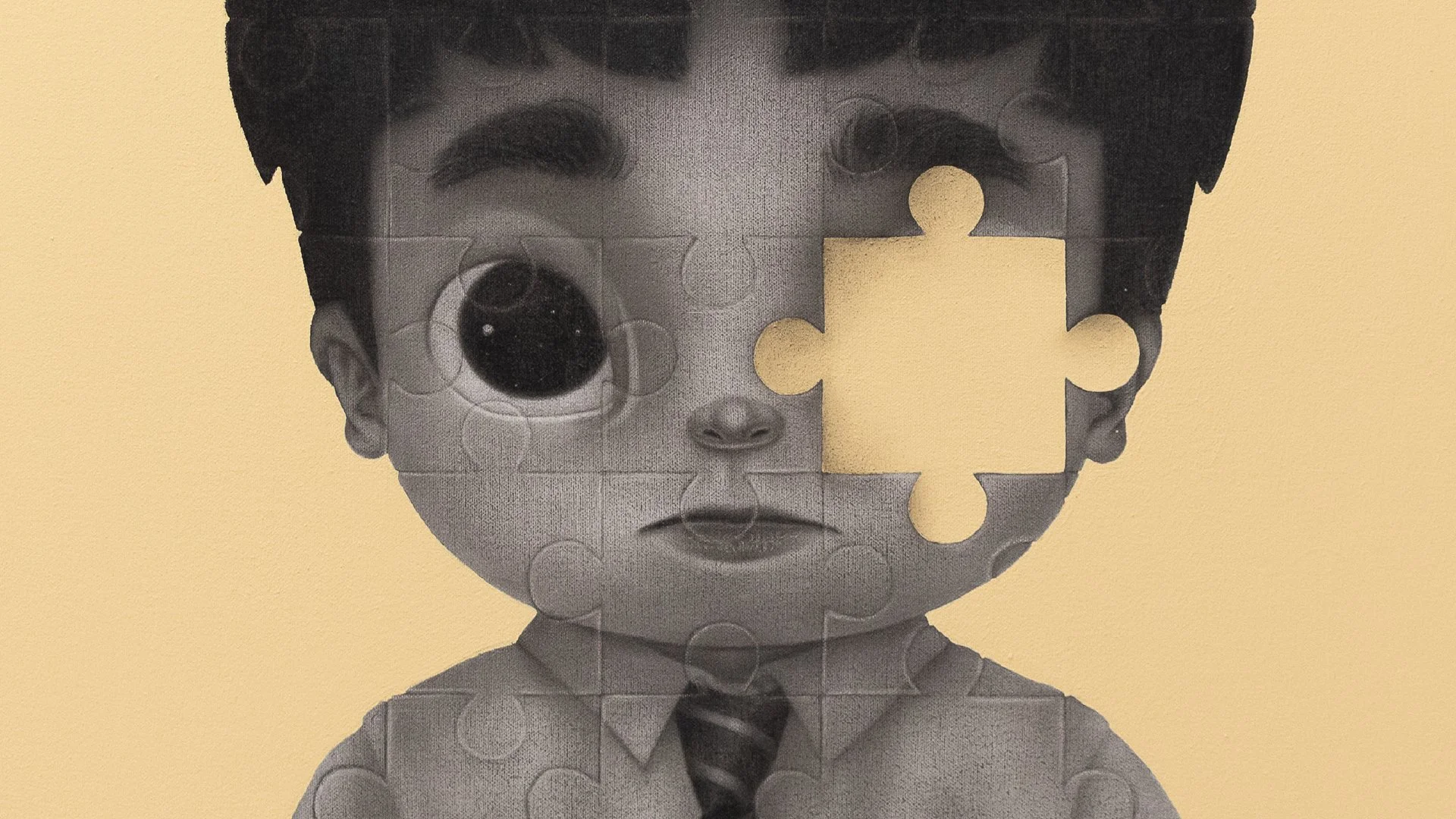
Photo by Art Underground
Innocent and uncanny. Not qualities one would associate with the other. One evokes purity, nostalgia, and shared experiences. We all have our own memories of innocence. Meanwhile, the other subtly and unsettlingly evokes the opposite. To be uncanny is to slightly deviate from what is normal—just enough to give us a hint something is out of the ordinary. So what happens when these two ends of the spectrum of the ordinary meet in a single artwork? What kind of visuals inhabit this in between, and what can they tell us about our known reality?
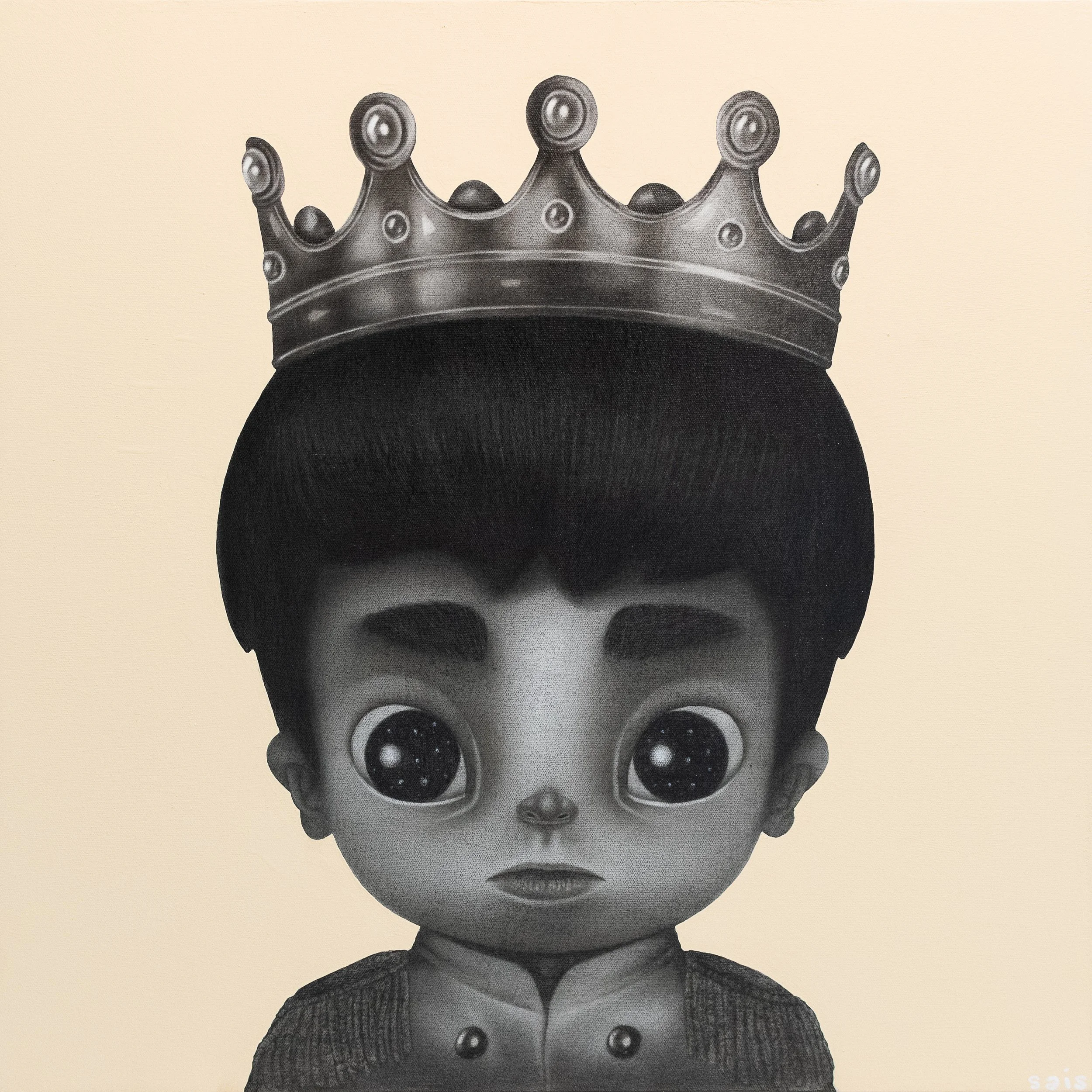
SAIS Manifested Dream, 24 x 24 in CC (2024), Photo by Art Underground
One can observe this duality when delving deep into the hypnotizing art of SAIS. His character portraits appear simple at first glance, but dig deeper, and they are wrapped with undertones of mystery. His paintings might be perceived as portraits of an imagined childhood. A child, a little boy, stares out at the viewer, sometimes adorned in playful imagery, like sweets or hats. In each work, the child is front and center, depicted with such a frank purity, it delves toward the unsettling. Poised against a plain beige background, this black and white character appears to be living out childhood fantasies. Yet the quiet and subtly surreal nature of SAIS’s works have us wondering what kind of fantasies they may truly be—mischievous and lighthearted, or enigmatic and faintly sinister.
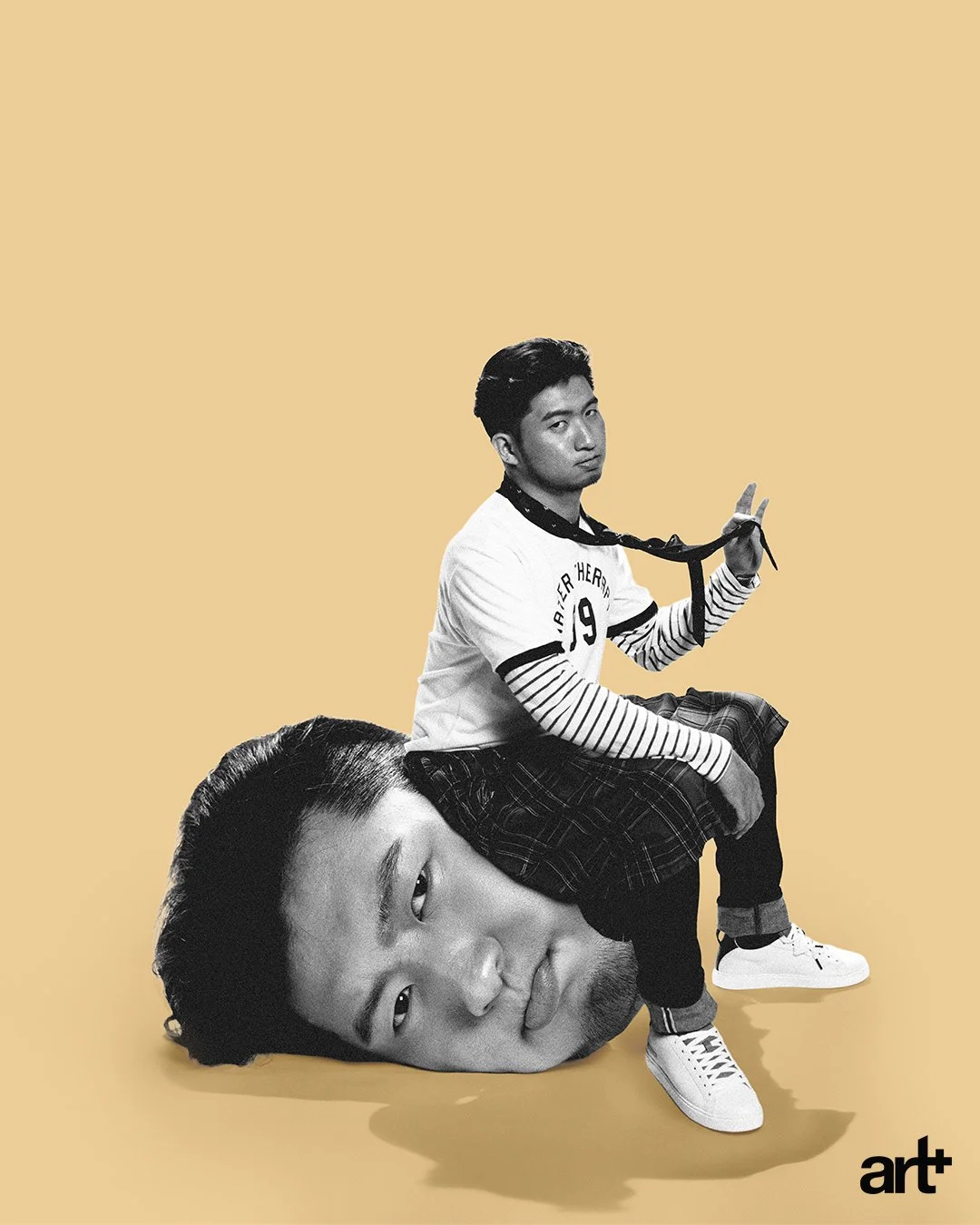
Photo by Gail Geriane
Carlos Daniel Bermas, known as SAIS, is a relatively new presence in the local art world, but one whose unique voice is quickly becoming known. Bermas did not visualize a future as an artist; but slowly, things fell into place. He studied advertising at the Technological University of the Philippines and initially planned to pursue his chosen field. During the pandemic, he began submitting his art to different events and competitions. Even without a consistent style or intention, he found himself motivated, especially after receiving his first commission. An internship at a gallery finally ignited the fire within him for the arts, and he left the realm of advertising. Things happened by chance for Bermas. Everything down to his artist’s name—an inside joke from his early days creating comics where he accidentally drew his figures with six fingers. And as it happens, all parts of his full name have six letters. Thus, SAIS was born.
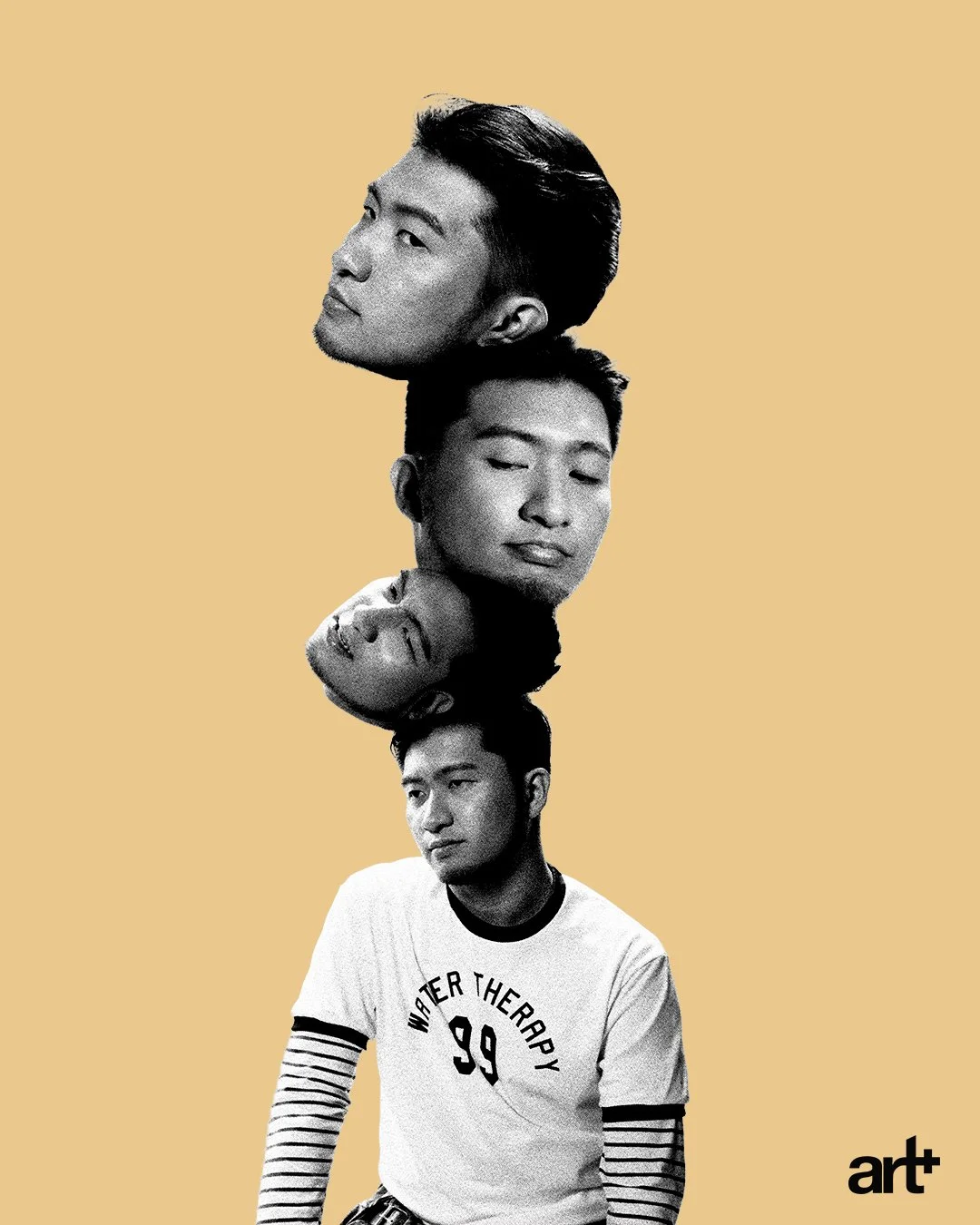
Photo by Gail Geriane
The black and white aesthetic has become a distinct trademark of SAIS’s. His works fuse the care and intention in his rendering with such a striking visual choice—one that, he says, emphasizes the underlying “creepy” nature of his art. This lack of color stems from his early use of charcoal in his works. Back then, he was drawing with a looser, more comic style. He would paint in achromatic shades against a clean white background. The artist eventually challenged himself to make his works look more realistic without losing their unique character. SAIS describes this period as being “sobrang try-hard magrealism.” He eventually refined his works enough to create the SAIS aesthetic of today, where cartoonish exaggeration meets the mysterious nuances of realism. The white background turned into a more cream hue to resemble a vintage filter. The imagined ideas of childhood he depicts leaves us pondering what our nostalgic memories really would look like brought to life.
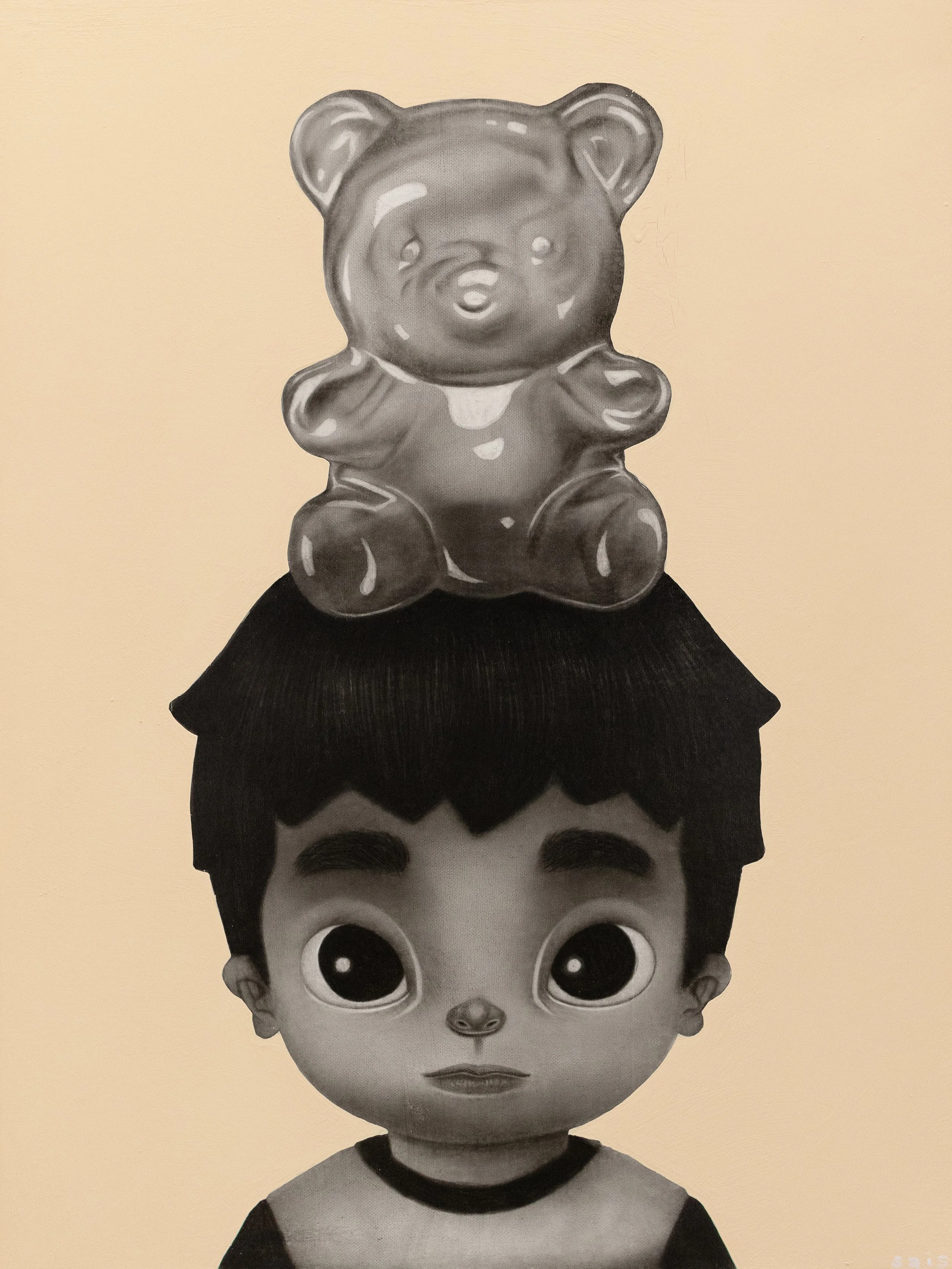
SAIS, Jelly Bear, 24 x 18 in CC (2025), Photo by Art Underground
Such an unmistakable style presents challenges for the artist. With such a coherent body of works, how can he explore different ideas and themes far removed from his core subject? One might see the little boy as a portrait of Bermas himself, but instead he views it as a “vessel.” Through a child as a subject, he taps into something where “mas raw ang emotion.” This is the jumping point from where he challenges himself to convey different ideas.
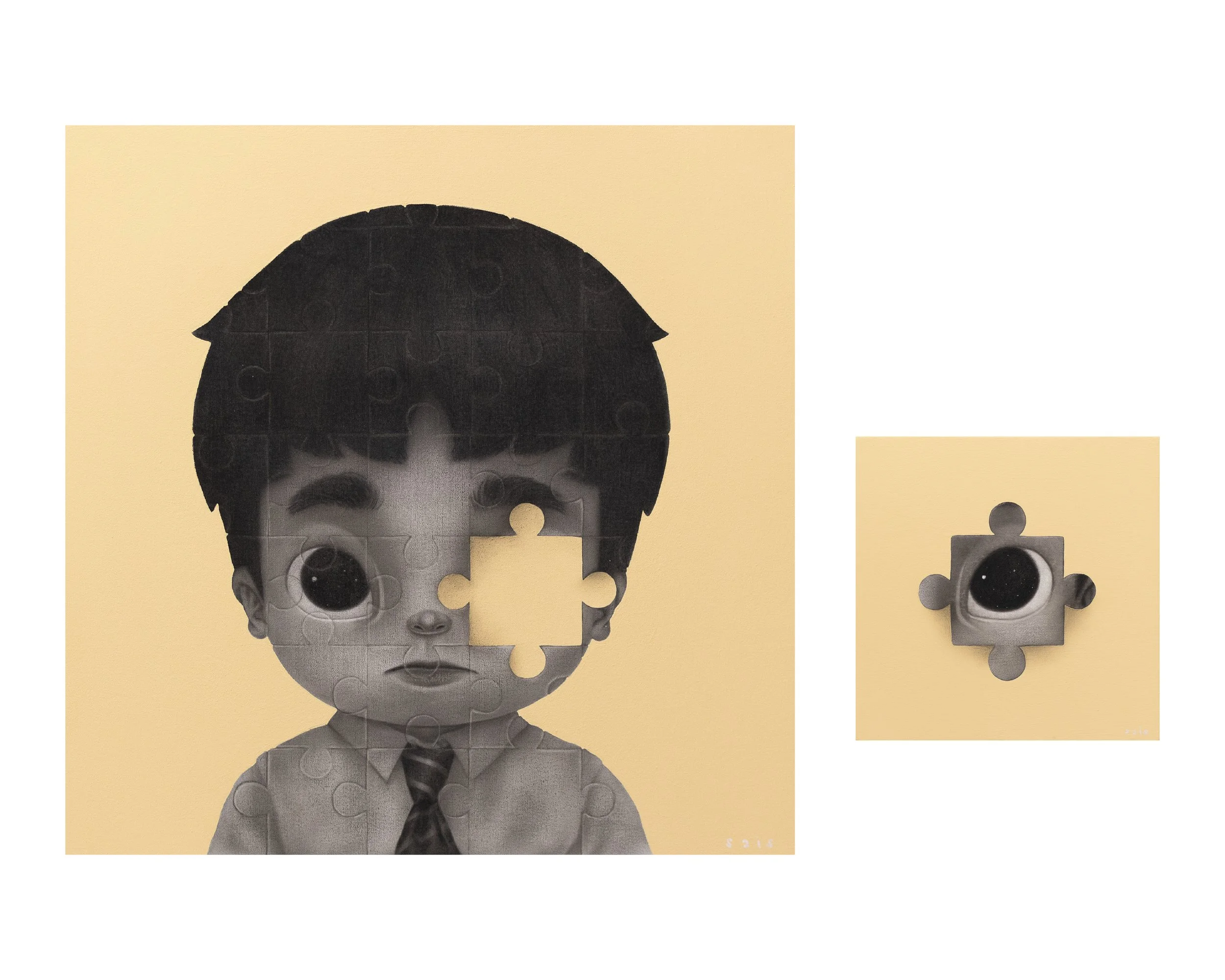
SAIS, inchoate & the missing piece, 24 x 24 & 10 x 10 in CC (2025), Photo by Art Underground
His first solo show, Prologue (2022) at Art Underground, marked an introduction to his signature character. As the show’s exhibition text states, it was an introduction to Bermas and to SAIS as “an embodiment of his ruminations and experiences.” They introduced his wide-eyed mysterious child dressed curiously in theatrical clothing—in everything from a kingly costume to a mushroom hat. For SAIS, this was a showcase of how “flexible” his young character was. He could visually present him in different ways while conveying different ideas.

SAIS, The One You’ve Dreamed of Becoming, 36 x 24 in CC (2023), Photo by Art Underground
SAIS carried over this flexibility to his next solo show, Phases (2023), also at Art Underground. He likened the phases of our life to the phases of the moon: “All is in flux, boldly embracing the unknown.” The eyes became a major focal point for this series. SAIS says his young subjects’ large wonder-filled eyes not only emphasized their childlike naivety, but became “carriers of images,” extending the visual narrative beyond what one could see literally through the eyes of a child. The result in his works ignites both fascination and disquiet.
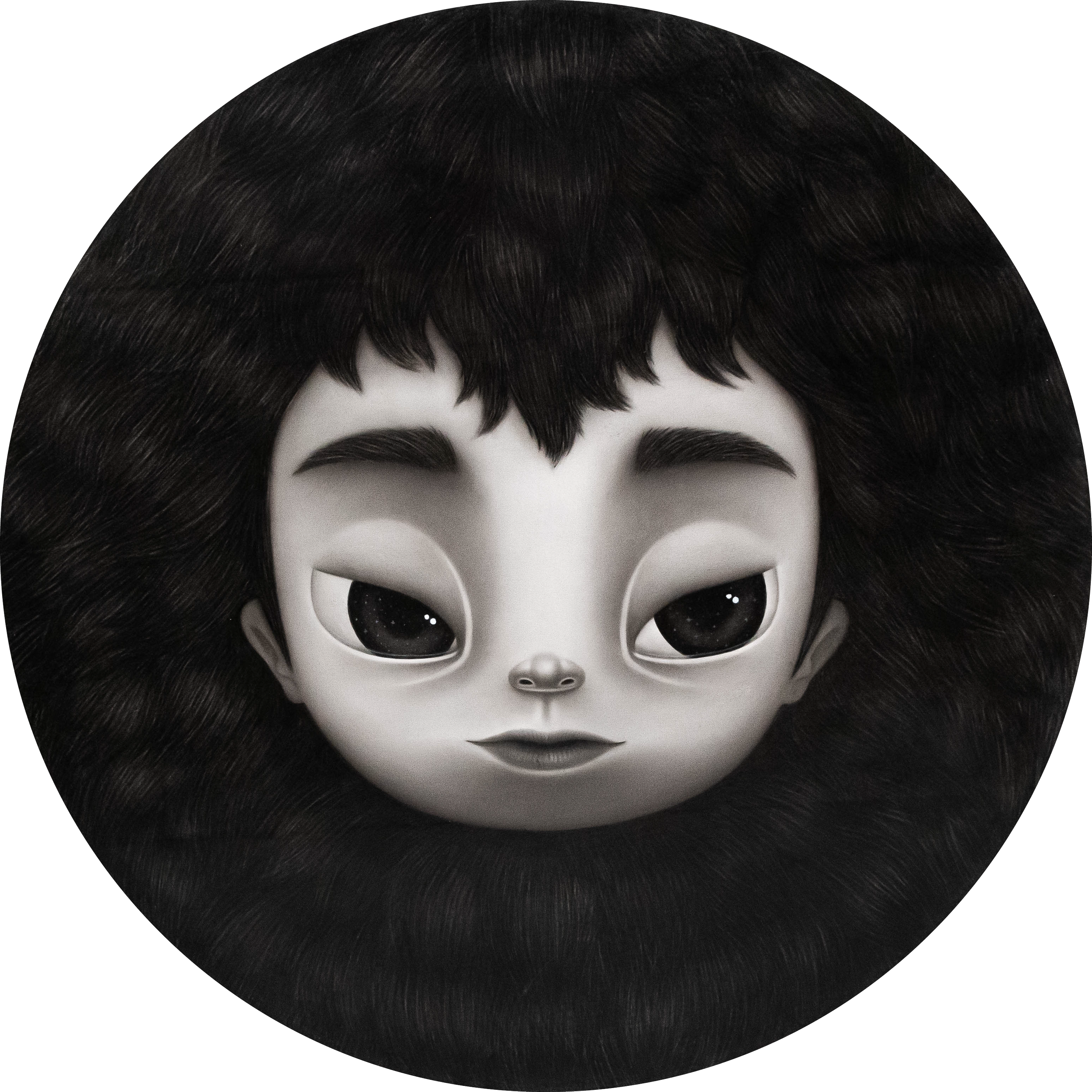
SAIS, Half-Closed in Deep Contemplation, 36 in dCC (2023), Photo by Art Underground
Childlike imagination was the starting point for In the End, We’re [All] The Same. Like a child changing from costume to costume, SAIS highlights the ultimately malleable nature of identity. In this series, SAIS’s young child seems to be living out all our childhood hopes—the proverbial manifestation that we can be whatever we want to be. SAIS’s works break down identity into thoughts and experiences showing in the end, we are all “reflections of one another.” In Texture Trove (2025), exhibited in Gallery Esse in Japan, versions of the young boy are turned into different textures, from polished marble, to wood, to crackling stone.
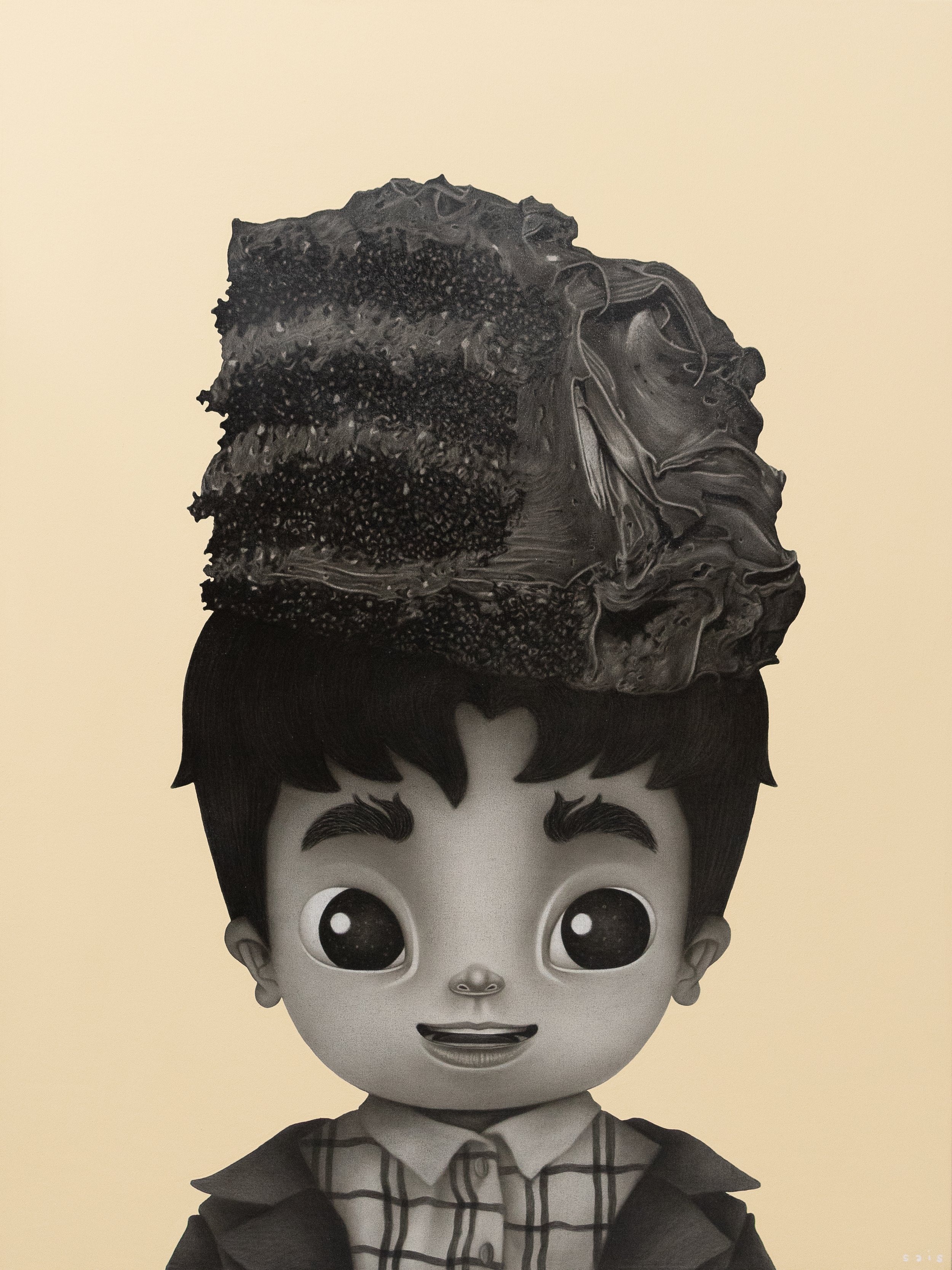
SAIS, Messy Slice, 48 x 36 in CC (2025), Photo by Art Underground
The artist’s most recent show was Sweet Treats at this year’s MoCAF. In these portraits, his young character was depicted with a medley of sweet treats on top of his head, like crinkles, ice cream, jello, and cake, rendered in startling detail. Rather than consciously balancing these sweets, they seem to be an extension of him; just as much a part of him as the hair on his head. What is truly striking about this series is what exhibit text writer Deseree Mapandi describes as “visual tension” between the polished face of the child and the meticulous hyperreal desserts. This tension is more than visual—what happens when the playful idealism of childhood meets unglamorous snapshots of reality. Through this perspective, the delectable chocolate crust of a crinkle can appear like jagged scars.
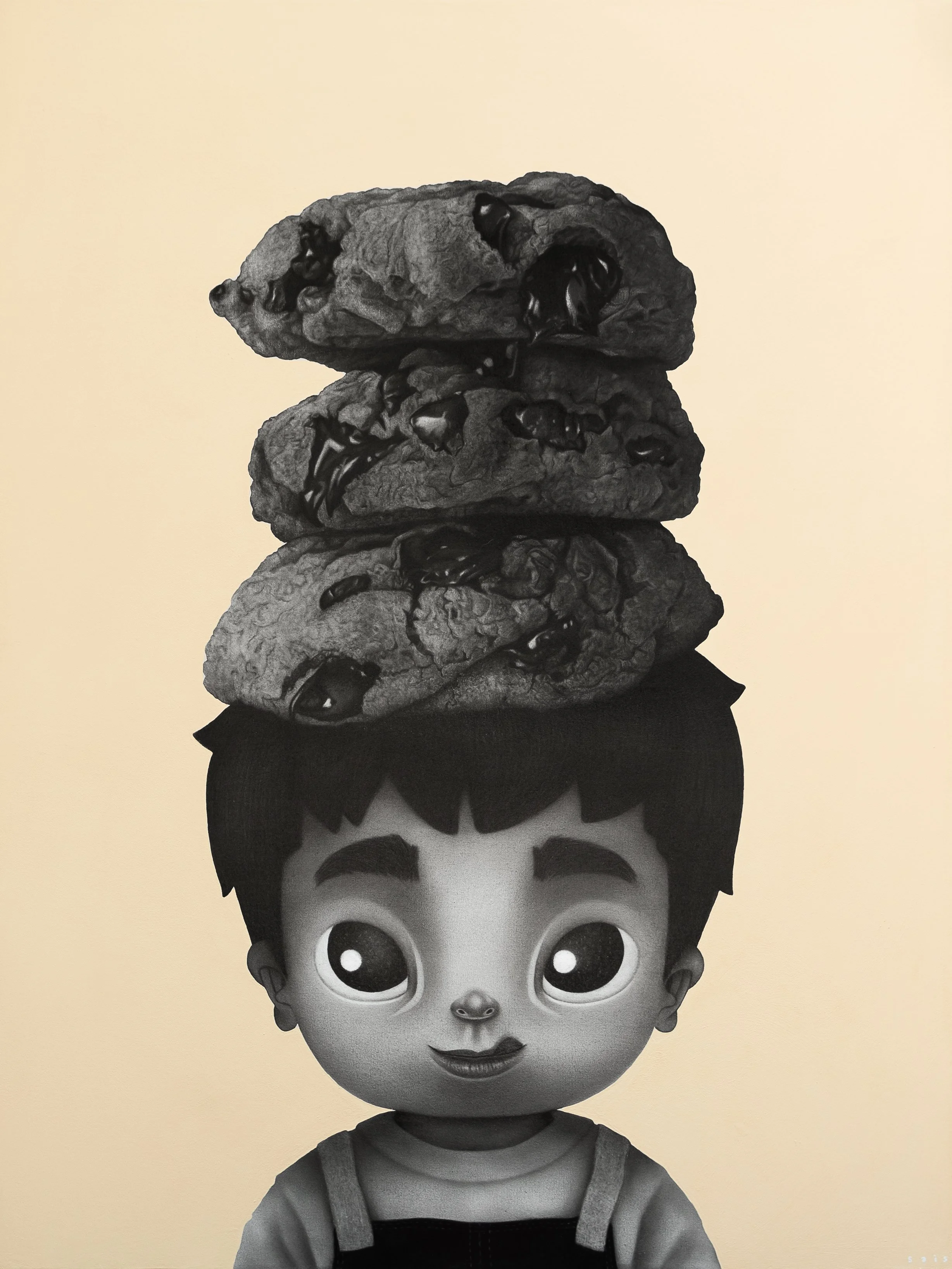
SAIS, Baker’s Recipe, 48 x 36 in CC (2025), Photo by Art Underground
A look at SAIS’s oeuvre shows his mastery at using his young vessel as a window to contemplate and reflect. What is it about this mysterious young wanderer that keeps us so transfixed? SAIS cites the immediately eye-catching appeal of his work with so much detail up close. This may also be what elicits the feeling of unease the artist mentions about his work. Constant scrolling through phones means imagery is often ingrained in our minds, and thus, when something deviates from the normal, we sense it immediately. This is reminiscent of the uncanny valley, where digital approximations of humanity often cause discomfort. We see AI-generated photos, for example, and instantly know something about them is simply not human.
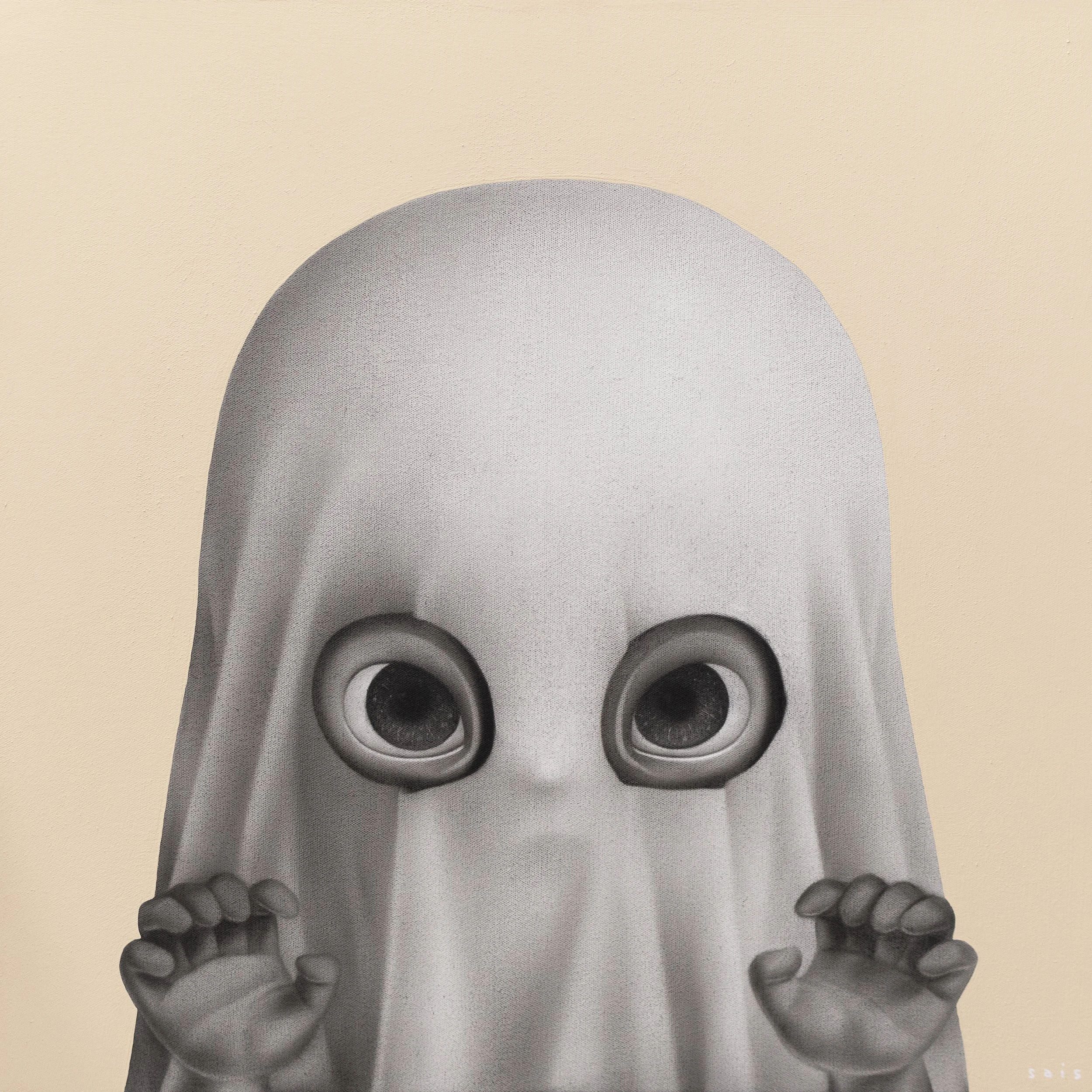
SAIS, Little Boo, 24 x 24 in CC (2025), Photo by Art Underground
In the case of SAIS’s art, he recalls childhood with all the familiar trappings: fanciful costumes, sugary desserts, and wide eyes brimming with delight. Yet whether it’s the use of grayscale or subtly surreal elements, part of us subconsciously mistrusts such narratives. All is not as happy or as blissfully optimistic as it appears. In the curious world of SAIS, we are made hopeful and cynical at the same time.
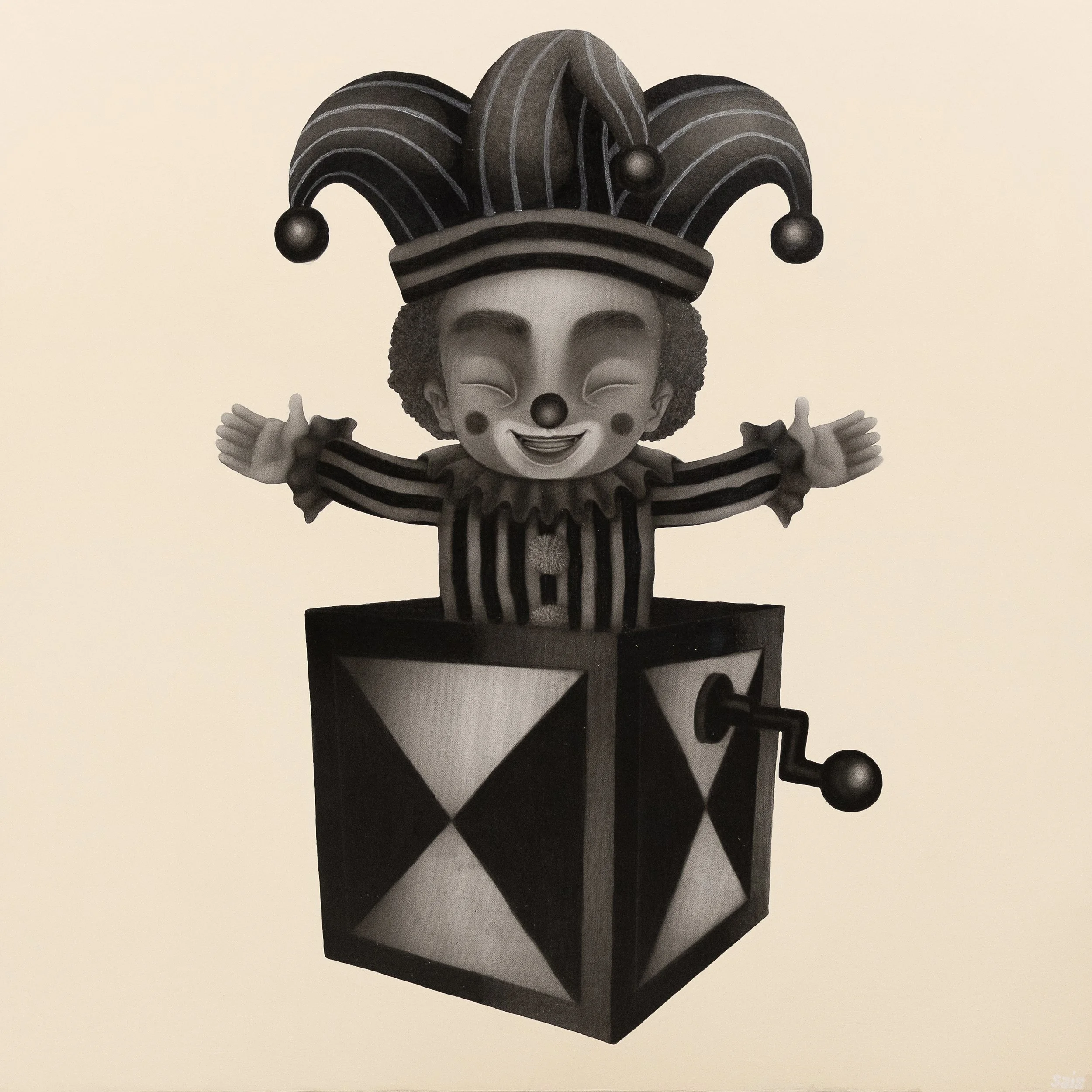
SAIS, Sais in the Box, 36 x 36 in CC (2024), Photo by Art Underground
One might see a contemporary fixation with childlike art cloaked in cynicism. Whether it’s overt horror or quiet unease, these depictions may allude to the way we look back on our own childhood, as we view through the lens of realism what may not be real at all. We use every imaginative faculty to bring to life dormant thoughts and aspirations. Suddenly the inner child we may want to protect, like the dewy-eyed child in SAIS’s art, is exposed to what is beyond the ordinary. This, at its core, is an unsettling idea, but one that can reveal more about ourselves than we are perhaps ready to confront.

SAIS, First Best Friend, 48 x 36 in, Charcoal and acrylic on canvas (2025), Photo by Art Underground
In SAIS’s art, we may see more overlap between the innocent and the uncanny than we realize. His portraits of longing childhood innocence reveal the way such plain purity can be regarded with anxiety and distrust. The opposite can be true as well—the uncanny, the eerie, the surreal, all have roots in the naivest nooks of our imagination. The young boy of SAIS’s works, after all, was shaped by the artist’s own experience and creative faculties as they both evolved throughout the years. For SAIS, as artists go through these phases, their essential task is to keep making art that impacts others. As personal or deep within an artist’s world their art may be, artists must find the threads that allow their work to impact others. These threads can allow the large eyes of a young boy to reflect the unpredictable, unsettling, and ultimately nostalgic facets of the human experience.