
Manila is a trap. So is home. Boyet leaves the city expecting his hometown to be different, and finds the same oppression waiting for him there. A Puregold CinePanalo entry, Starfish argues there’s no exit, just two systems of extraction wearing different faces.
Words Gerie Marie Consolacion
Art by Tristan Talon
August 27, 2026
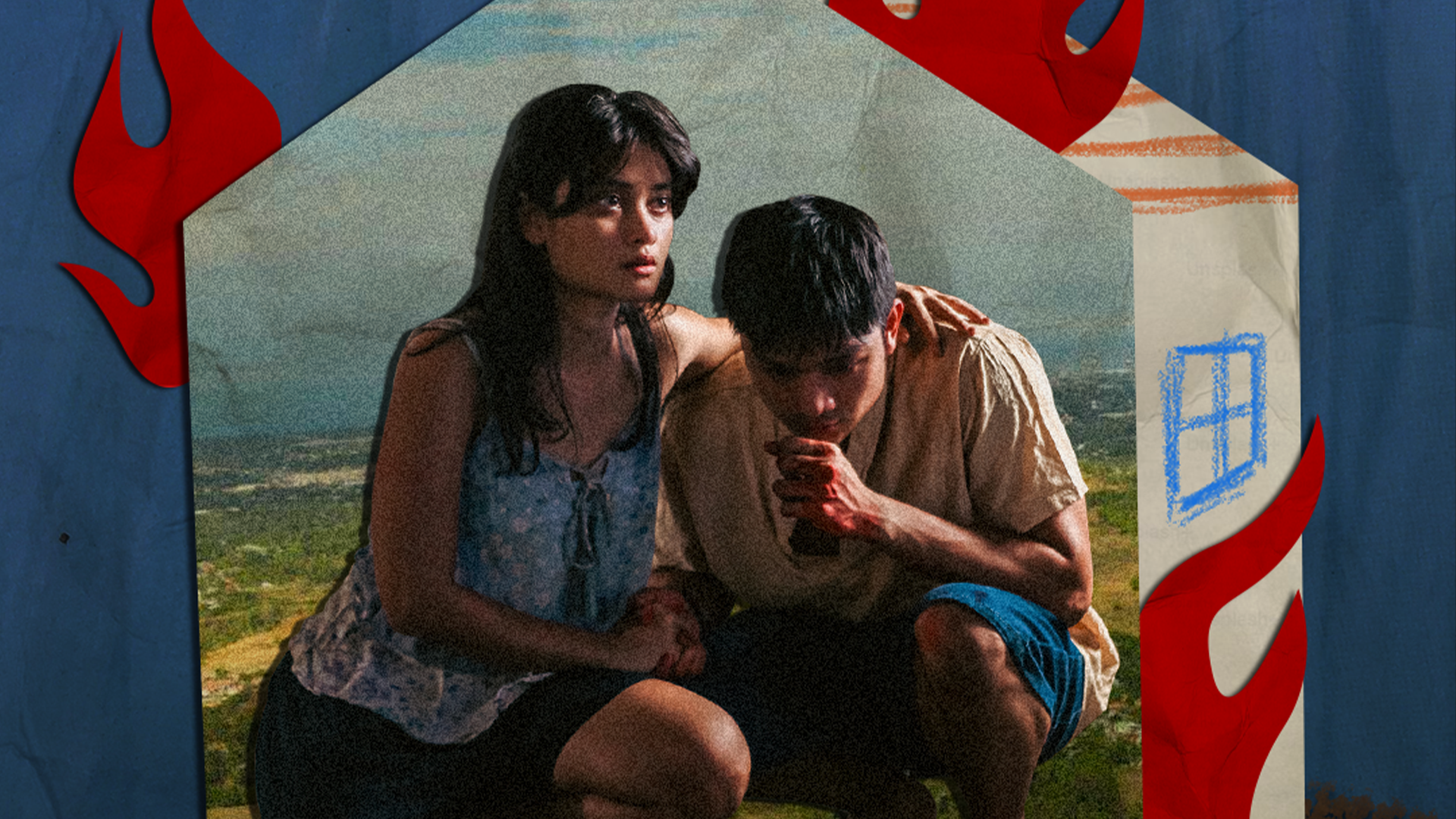
Actors Nour Hooshmand and VR Relosa for Starfish | Art by Tristan Talon
Manila is the dream.
It is the city of possibilities, where people go to chase better jobs, bigger dreams, and the promise of a better life.
But what if we burst that bubble?
Manila is not always a dream. Sometimes, it is a trap.
A trap not in a way with bars and locks, but the kind that looks like an open door. You walk through it expecting somewhere better, only to realize there was never really an exit.
Usually, home is where the healing happens. You leave broken, you return, and somehow you become whole again—or at least close enough.
Can Starfish offer that kind of homecoming?
Its protagonist, Boyet, spends the film learning that the forces that hurt him in Manila are not different from the ones waiting for him in his hometown. The scenery and the people change, but the power dynamics do not.
A job with no floor under it
Boyet is a macho dancer and sex worker in Manila. The film does not treat his work as a secret that needs to be exposed or a source of shame that defines him. It is simply part of his life, what matters is what happens when he tries to draw a line.

Actor VR Relosa for Starfish | Photo from Starfish Film
Amid a life shaped by saying “yes,” the first time Boyet says “no” becomes a quiet but pivotal moment. For director John Clite Apolinar, it reveals something essential about his character.
“Standing up for himself doesn’t set him free. Instead, it leads him into another system that takes his freedom away,” Apolinar shared.
For Boyet, saying no comes at a cost. With no safety net beneath informal work, choosing himself means risking everything.
Writer Adelbert Abrigonda, who wrote the screenplay describes Boyet as someone who has spent much of his life reacting rather than choosing.
“Boyet is a very linear character,” he says. “Very passive, very reactive. Things happen to him, so he makes a decision to go here, or submit to this.”
The act of saying ‘no’ is one of the few times Boyet makes a decision for himself. The fact that it immediately costs him is the point.
Home is not a landing pad
What if home isn’t where you heal, but where you finally have to confront what you've been carrying?
That question hangs over the film that turns the familiar idea of coming home into something far more uneasy. Boyet’s return is not framed as a clean break from the past or an easy beginning. Instead, the film creates a growing sense that some things follow you, no matter how far you go.
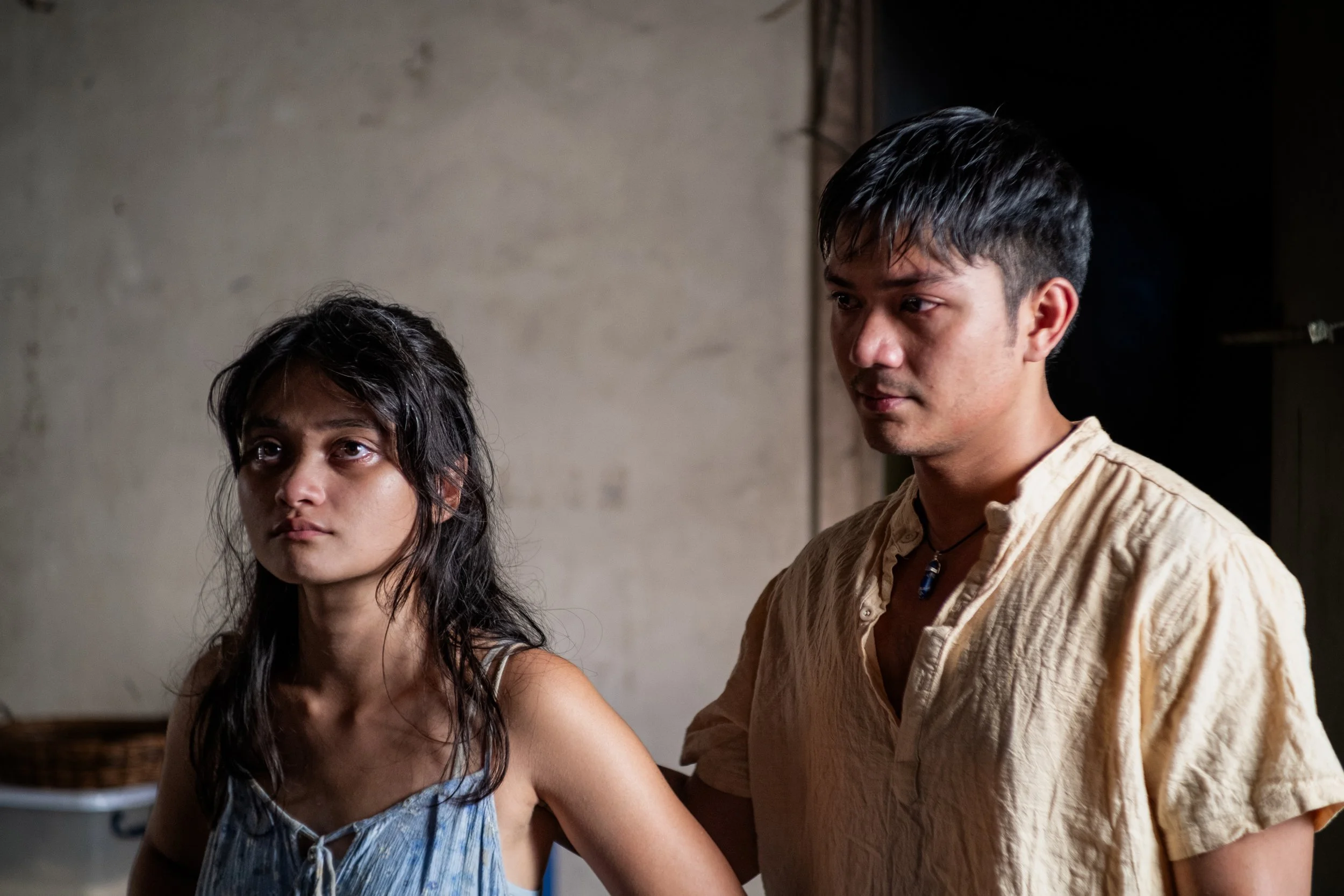
Actors Nour Hooshmand and VR Relosa for Starfish | Photo from Starfish Film
At its center is a character who has made a habit of enduring. He knows how to keep going, how to stay quiet, how to absorb what life places in front of him. But Starfish is interested in the moment when endurance stops looking like strength—and starts asking what it has been costing all along.
Apolinar describes the film’s larger concern plainly, “It's important for Boyet’s character to realize that oppression and systems of power exist in many aspects of a person's life.”
That gives Starfish its own tension. This is not simply a story about escaping one place for another, it is about recognizing the forces that shape us, the rules we learn to accept, and the difficult possibility of refusing them.
As Abrigonda shared, “Starfish is a metaphor for resilient people who easily accept and endure every inconvenience and wound they receive.”
The film leaves one question deliberately hanging, how long can someone keep surviving the same way before survival demands something else?
The one relationship that stays clean
Not everything in Boyet’s life is transactional.
His younger sister, Pia, is the only person who continues to see him as a brother rather than a burden, a source of shame, or a problem to be managed.
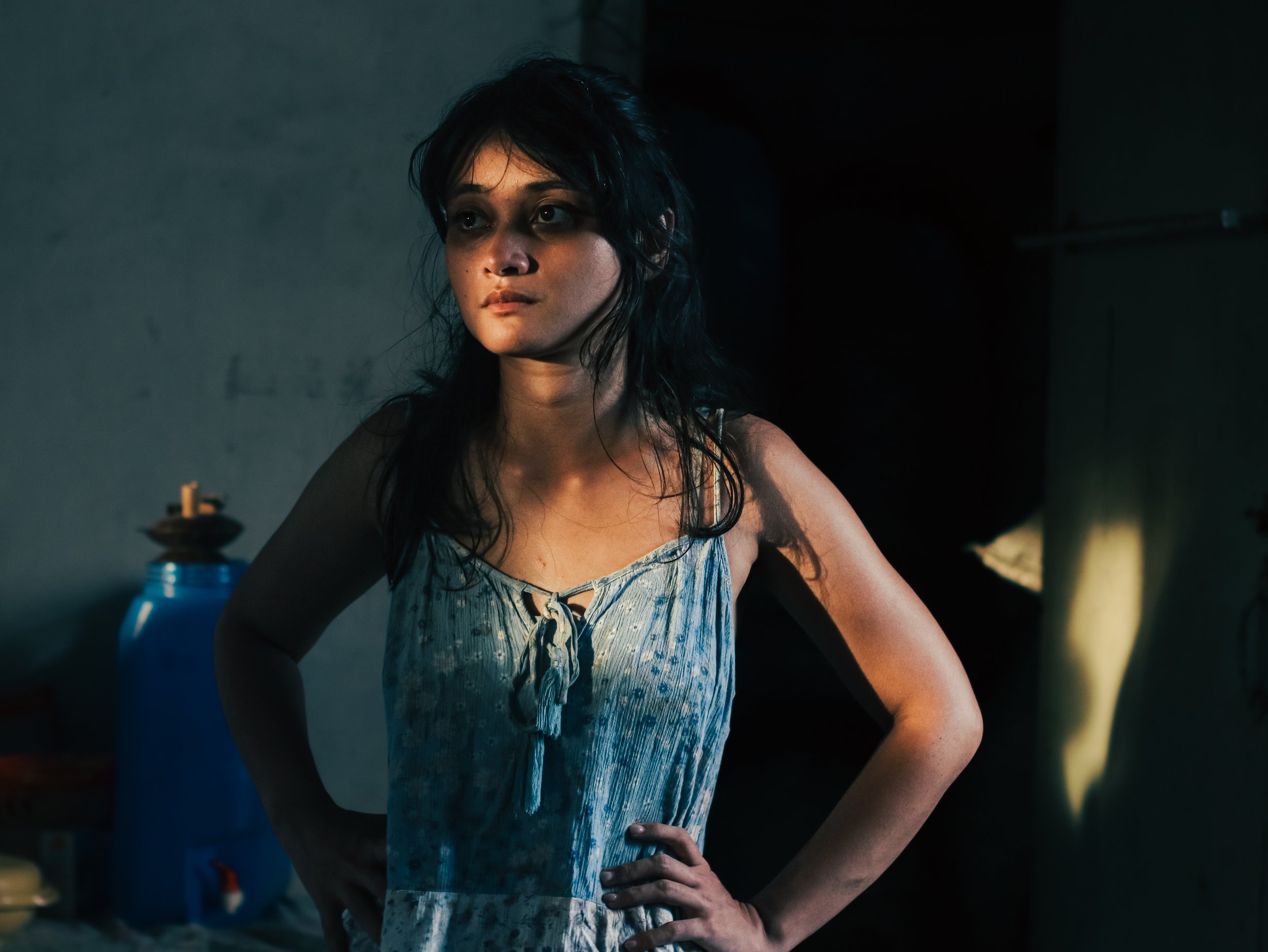
Actress Nour Hooshmand for Starfish | Photo from Starfish Film
Apolinar says that relationship was always meant to remain intact.
“Pia was always meant to remain as Boyet’s emotional anchor and serve as a balance to his father,” he shared. “She isn’t untouched by the same burdens of family expectation and sacrifice, but unlike the others, she doesn’t allow those burdens to define how she treats Boyet. Even within oppressive systems, empathy and compassion can still exist.”
Pia is one of the film’s few quiet mercies.
And because almost everything else in Boyet’s life comes with a condition, that kind of uncomplicated care becomes even more important.
A title that lies to you on purpose
Starfish can regrow a limb that has been cut off.
That biological fact gives the film its title—and sets up an expectation Starfish has no intention of fulfilling.
Art by Tristan Talon
Boyet reaches a breaking point after years of shame, violence, and pain he has kept buried.
What follows is quiet, unsettling, and difficult to look away from. The film does not offer an easy recovery or a neat resolution.
Even as the protagonist, Boyet is not given the comfort of a simple way out.
“Starfish isn’t about celebrating resilience. It’s about questioning why people are expected to keep enduring the same cycles of pain and struggle. Boyet’s bitter laugh reflects the tragic realization that he cannot simply escape the systems that have shaped his life.”
That idea hits close to home in a country that has long celebrated resilience as a virtue. After a typhoon, a job loss, a family crisis, a personal tragedy, the familiar response is often the same: endure. Keep going. Smile through it. Bounce back.
But Starfish asks what happens when “resilience” becomes an excuse for never changing the conditions that keep hurting people.
How much can a person be expected to endure before we stop calling it resilience and start calling it what it is?
Shooting where the story actually lives
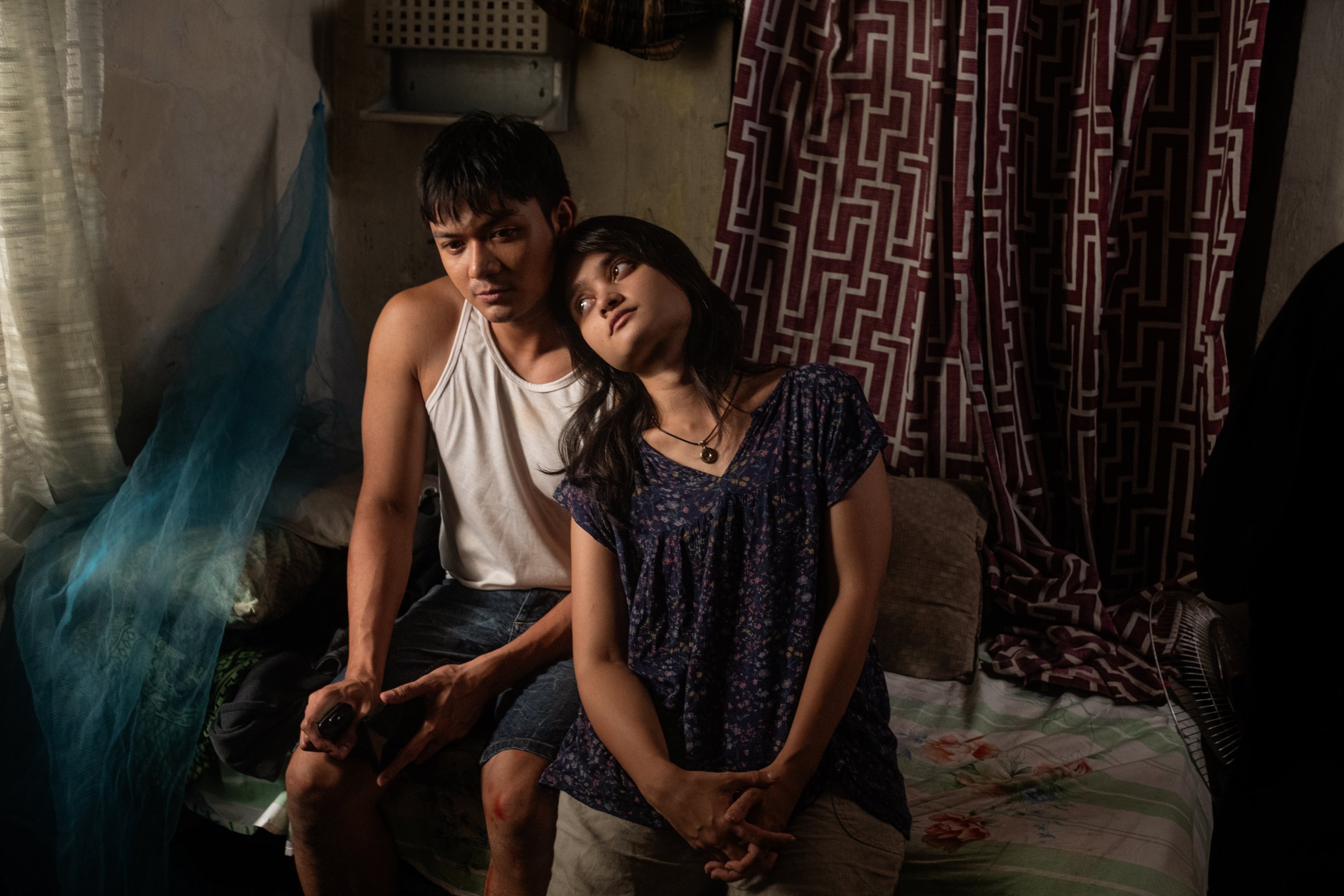
During the exclusive interview with the Art Plus Magazine, the production shared that they originally planned to film during an actual barangay fiesta, hoping to capture the energy and unpredictability of a real community gathering. However, a typhoon got in the way.
Actors Nour Hooshmand and VR Relosa for Starfish | Photo from Starfish Film
The crew had to recreate the atmosphere with what they had, turning a production limitation into part of the filmmaking process.
For Apolinar, filming on real locations still made a difference.
“Whether it was the docks or the community spaces we filmed in, shooting on real locations gave the film a texture and authenticity that would have been difficult to recreate on a controlled set,” he says.
That same groundedness extends to Boyet himself. Apolinar originally asked Abrigonda to write a character who was simply a dancer. Abrigonda made him a macho dancer instead, and that decision changed the shape of the story.
“His profession isn’t the focus of the film, nor is it meant to define who he is,” Apolinar says. “It became a way of understanding how family, power, and social expectations shape a person’s life. I wanted audiences to see Boyet first as a human being, through the struggles, choices, and dignity that make his story relatable.”
Boyet’s job may make his circumstances specific, but the forces around him are not.
That is what makes his story recognizable even to people whose lives look nothing like his.
The sound of doing it the hard way
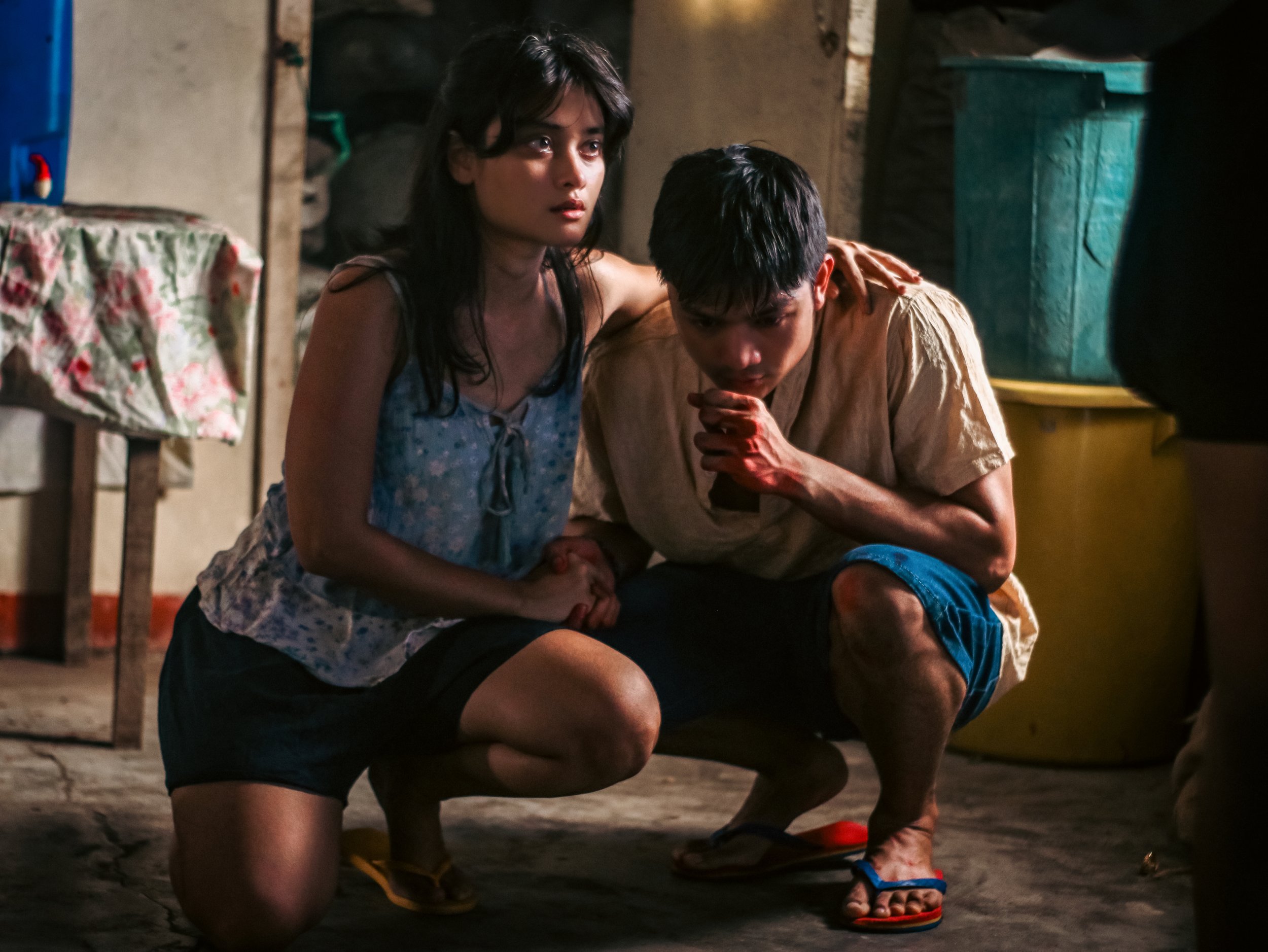
Art Plus Magazine also had a chance to talk with composer Ralph Novero, known online for refusing to use AI in his work, and scored the film entirely by hand. He also wrote and performed an original song for the soundtrack, his first time doing both for a film.
Actors Nour Hooshmand and VR Relosa for Starfish | Photo from Starfish Film
“I’ve never used AI in creating my art, especially my music, so I’ve never really had a moment where I considered it an alternative to resort to,” Novero says. “It did cost me some time and challenged my artistry, but it’s in moments like these that I find the most fun in scoring. I don’t want to become complacent with something I just genuinely want to keep getting better at.”
The song proved to be the harder part, not because of the technical work, but because it forced him to confront his own doubts.
“I think what was difficult was mostly my imposter syndrome resurfacing from time to time. I was, and still am, overly critical of how it turned out, but it’s a good opportunity for me to learn to trust what others have to say and just see how everything unfolds.”
There is something fitting about that.
Starfish follows a man who has spent his life wondering if he is ever doing enough to survive. Behind the film is a composer wrestling with a quieter version of that same question: Is what I made enough?
From Diverse Vision to Screen
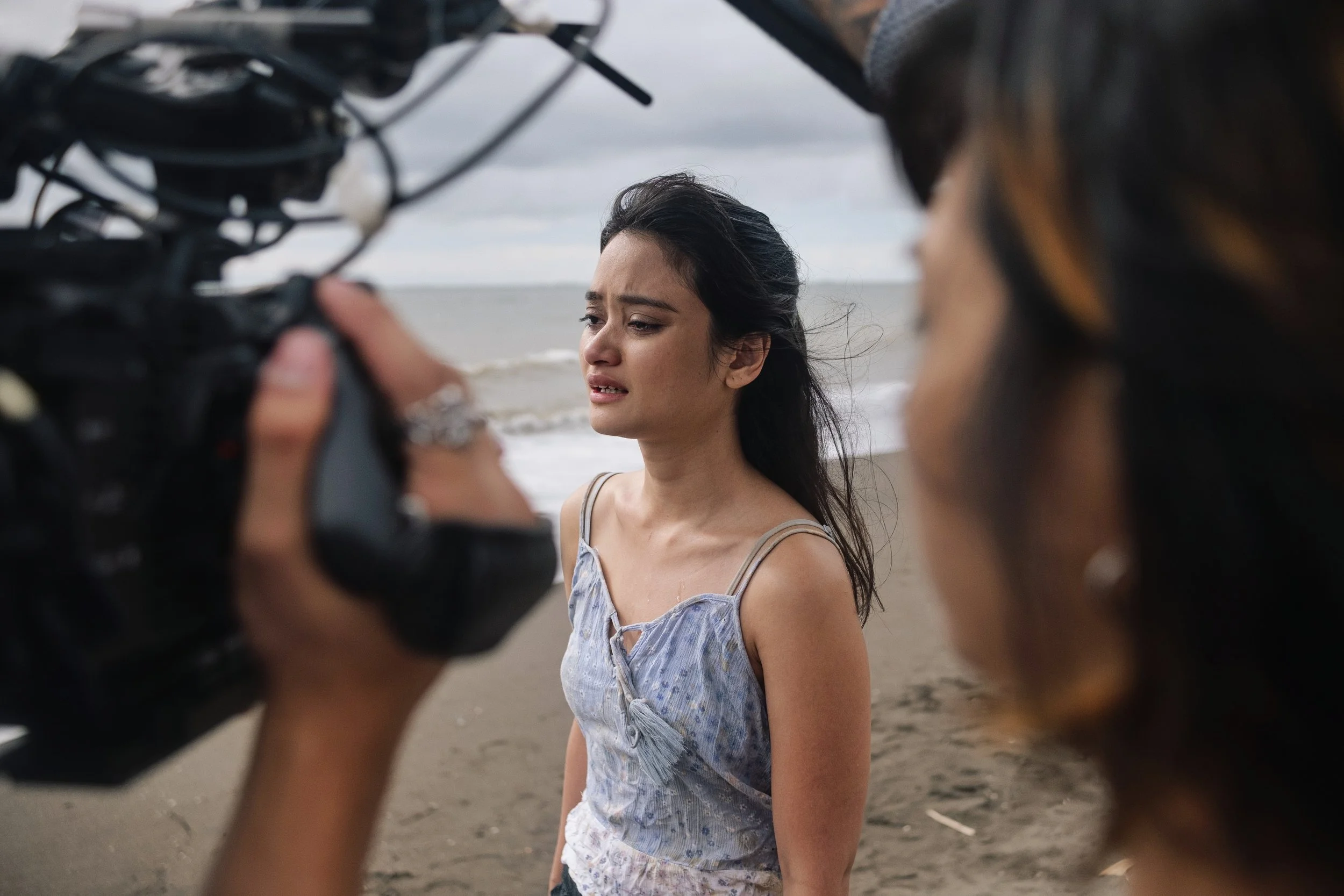
The film is directed by John Clite Apolinar of the Polytechnic University of the Philippines, bringing together a talented ensemble cast led by VR Relosa, Nour Hooshmand, Jake Ulan, Floyd Tena, and Dads Valencia.
Behind the scenes of Starfish | Photo from Starfish Film
The project is executive produced by Carey Erwin Bayno, Naiah Nicole Mendoza, Jon Galvez, Carlos Ortiz, and Leo Liban, with Carey Erwin Bayno, Naiah Nicole Mendoza, Ivy Zharisse Piedad, and Chris Cahilig serving as producers. Adelbert Abrigonda takes on multiple key creative roles as Creative Producer, Screenwriter, and Editor, shaping the film’s narrative and overall creative direction.
Behind the camera, Mark Francis Vicente serves as Cinematographer, capturing the film’s visual language, while Ning Gregorio leads the production design, creating the world in which the story unfolds. The film’s musical landscape is composed by Ralph Novero, with Elian Idioma overseeing sound, adding depth and atmosphere to the cinematic experience.
Together, the cast and creative team bring their distinct talents to the project, combining performance, storytelling, visual artistry, production design, editing, music, and sound into a unified cinematic work.
There is no away to go to
Take away the plot, and Starfish makes a simple but uncomfortable argument: the Filipino story of escape does not work the same way for everyone.
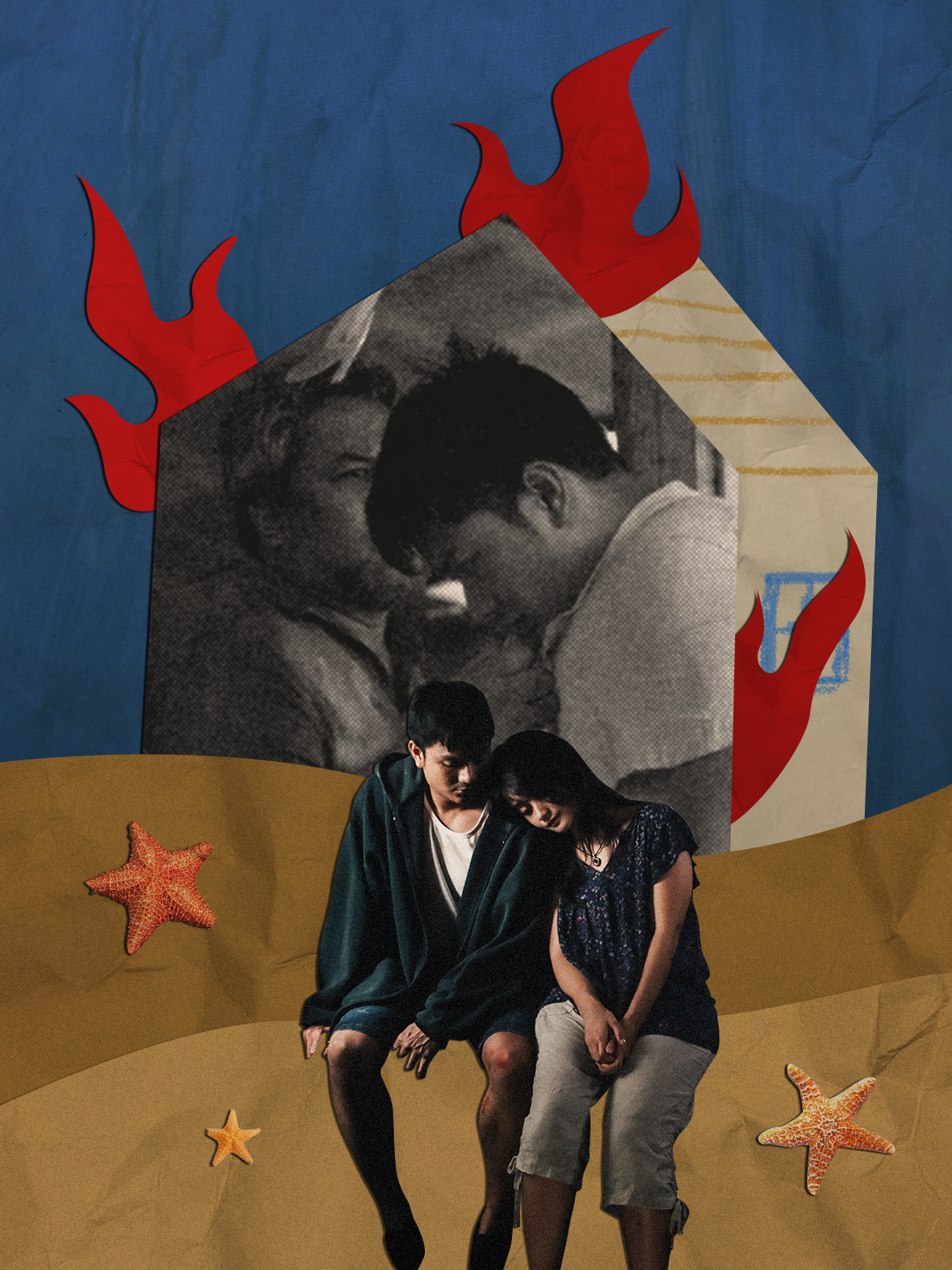
Manila gives Boyet a paycheck but no protection, his home gives him a roof but no protection either.
Art by Tristan Talon
Both places ask him to endure whatever comes his way and be grateful that he has somewhere to stay.
Boyet is left facing the same open horizon that often represents freedom in Filipino cinema. The sea is there, the horizon is wide open. And yet, for Boyet, freedom still feels impossibly far away.
Maybe that is the thing about Starfish. He keeps searching for somewhere he can finally breathe, somewhere life might hurt a little less. But every place he turns to seems to close in on him.
By the end, it is not just that Boyet has nowhere to go. It is the feeling that he has spent so long trying to escape that he no longer knows where escape could possibly lead.
And maybe, this film is a reflection that sometimes, the hardest thing to escape is a life that never gave you a chance and anywhere to run.