
Sayaw ng mga Ilaw: The Beauty of What We Choose to Remember
Through shimmering costumes, evocative staging, and the delicate dance of light, Tanghalang Pilipino’s Sayaw ng mga Ilaw revisits the painful history of Martial Law and asks what it means to remember in a country still grappling with political power, historical revisionism, and the cost of forgetting.
Words Gerie Marie Consolacion
Photos courtesy of Tanghalang Pilipino
October 22, 2026
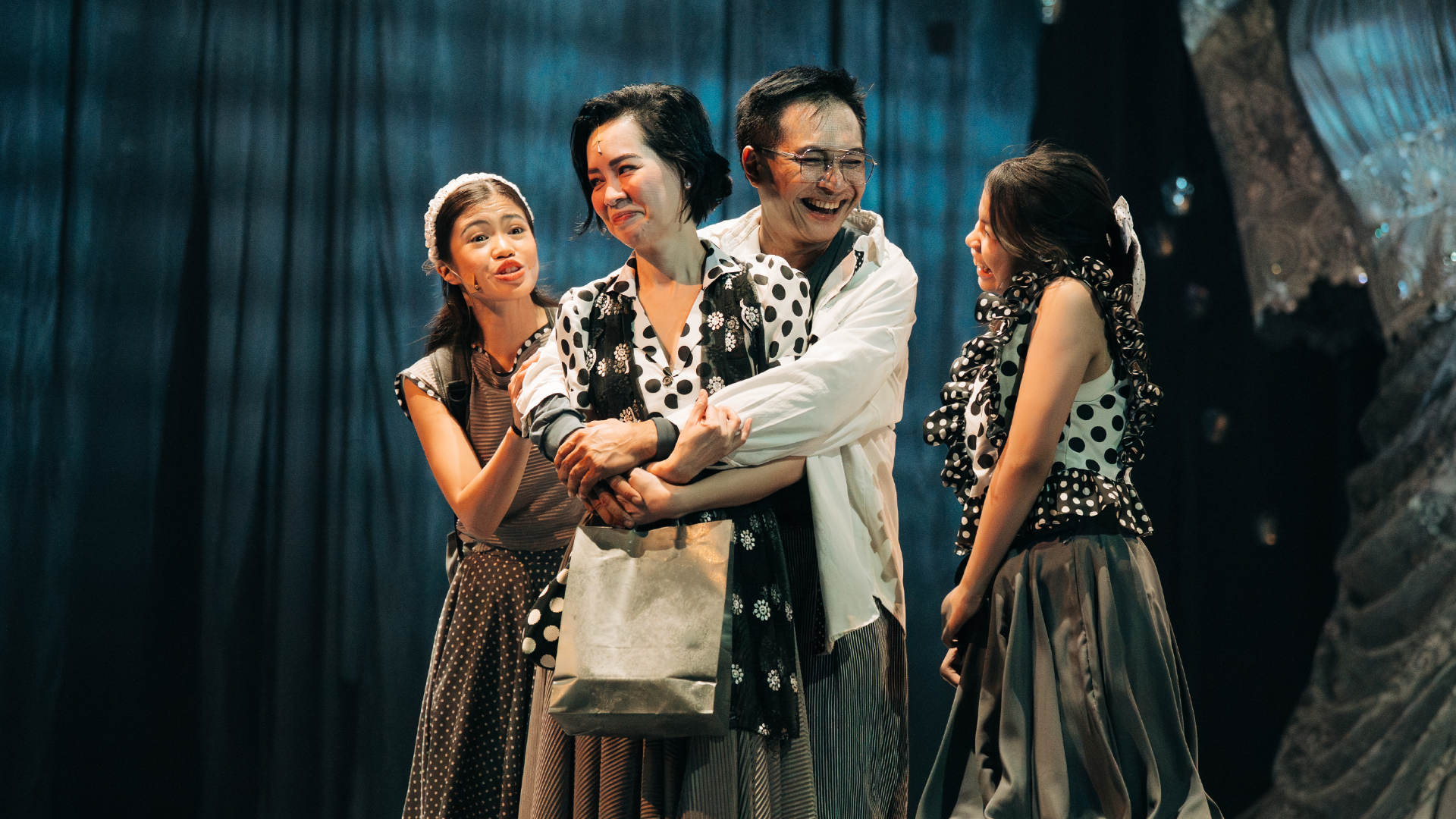
We often say, “Never again, never forget.”
But in a country where history seems to circle back on itself, where violence can be justified in the name of peace and order, and where the past remains a subject of political contestation, what does it really mean to remember? How do we tell the next generation about Martial Law, especially when the people connected to that history continue to shape the country’s present?
Tanghalang Pilipino’s Sayaw ng mga Ilaw approaches this question not through a lecture, but through the intimacy of theater. It brings a difficult chapter of Philippine history into the world of a family, where political violence is no longer an abstraction but something felt through absence, grief, and the fragile attempts of those left behind to make sense of it all.
There is something tender about the way the production makes room for younger audiences. It resembles a parent telling a child a difficult story, choosing words carefully without lying about what happened. The play does not need to make history less brutal to make it understandable. Instead, it finds ways to bring its weight within reach.
This is one of theater’s particular gifts. History books can give us dates, names, and records. Theater can give those records a body, a voice, a movement. It allows us to sit with the people behind the historical narrative, to imagine their ordinary lives before history interrupted them.
And perhaps that is where remembering begins: not with the demand that we know everything, but with the willingness to recognize that the people in our history were once as alive, hopeful, and vulnerable as we are.
The Dress and the Dead
The image I keep returning to is the enormous Filipiniana dress that occupies the stage. Its shimmering accessories catch the eye, its fabric stretches across the performance space, and its grandeur seems almost excessive. Gray cloth extends beyond the dress, covering the stage and reaching into the audience’s seating area. The effect is striking, but not entirely comfortable.
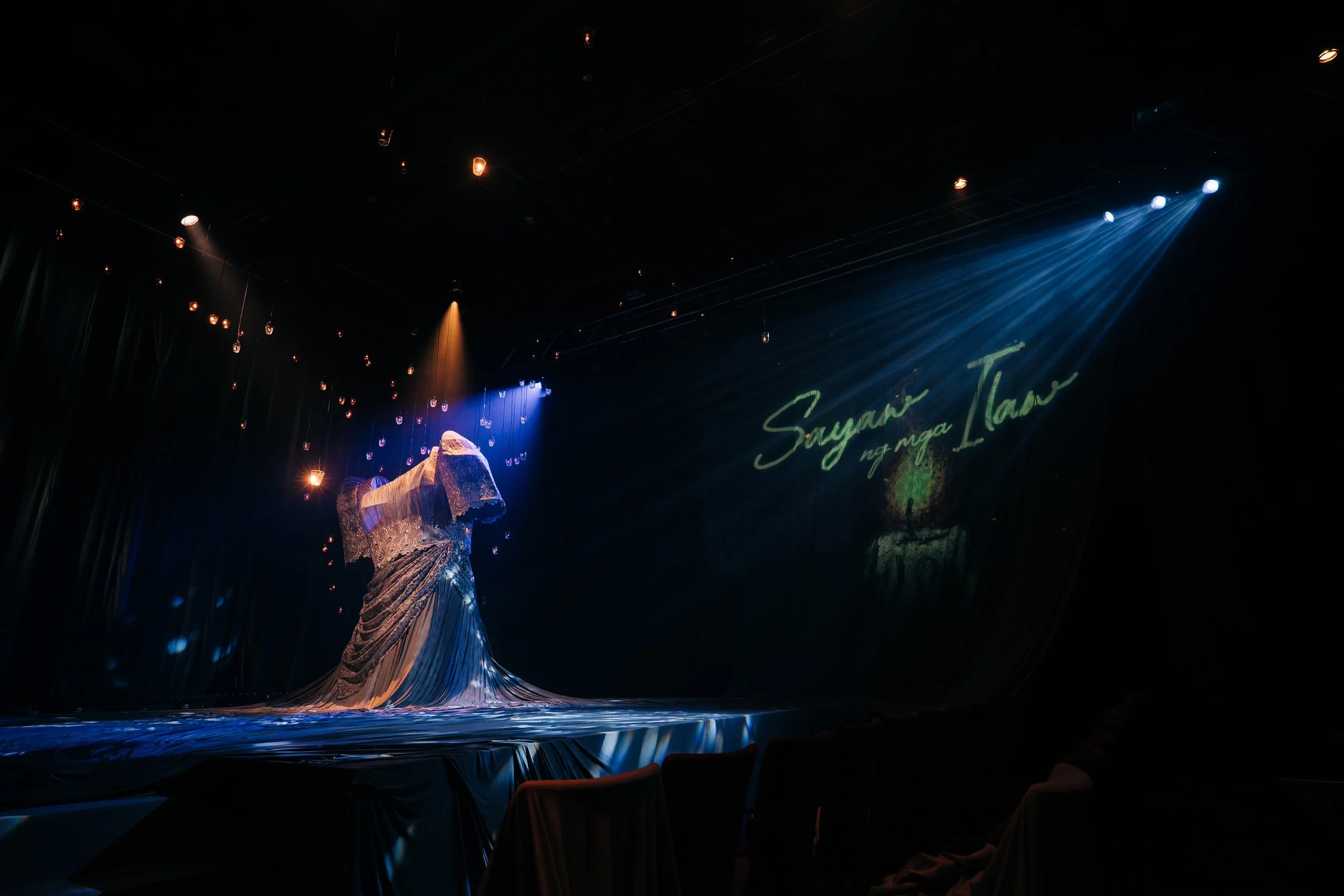
Stage design for Tanghalang Pilipino's Sayaw ng mga Ilaw
I read the dress as an image of Imelda Marcos and the spectacle of the Marcos era: the cultivated elegance, the extravagant displays, the desire to present the Philippines as a nation of beauty and sophistication. But the gray fabric complicates that image. It spreads like a shadow over the theater, making it difficult to admire the dress without considering what its grandeur might conceal.
The Manila Film Center tragedy of 1981 comes to mind. Built as part of Imelda Marcos’s ambition to establish Manila as an international cultural destination, the center became the site of a construction accident that killed workers during a rushed building project. The tragedy exposes an uncomfortable tension between the desire to produce something magnificent and the lives placed at risk in its making.
The connection is especially poignant in a theatrical work concerned with historical memory. What is a monument worth if we forget the people who built it? What does beauty mean when it becomes inseparable from the suffering it leaves out of view?
The dress does not need to represent the tragedy in any literal sense. Its power lies in the space between what it shows and what it allows us to imagine. The glitter draws us in; the gray fabric asks us to look again.
This is where the production’s visual language becomes more than decoration. The stage itself begins to function as an argument about power and appearances. Beauty is not innocent simply because it is beautiful. A spectacle can dazzle an audience while leaving the cost of its creation somewhere in the shadows.
I find this tension particularly effective because it refuses an easy separation between art and politics. The dress is beautiful, and that beauty is precisely what makes its implications unsettling. We are made to confront our own attraction to grandeur, even as we question the systems that produce it.
Dancing With the Light
The Pandanggo sa Ilaw offers another way into the play’s concerns. A traditional dance built around the balancing of lights, it carries an inherent delicacy. The dancer must remain attentive to each movement, keeping the flames steady while the body moves. There is skill in the performance, but also vulnerability. The light can be carried, protected, and passed along, yet it can also be lost.
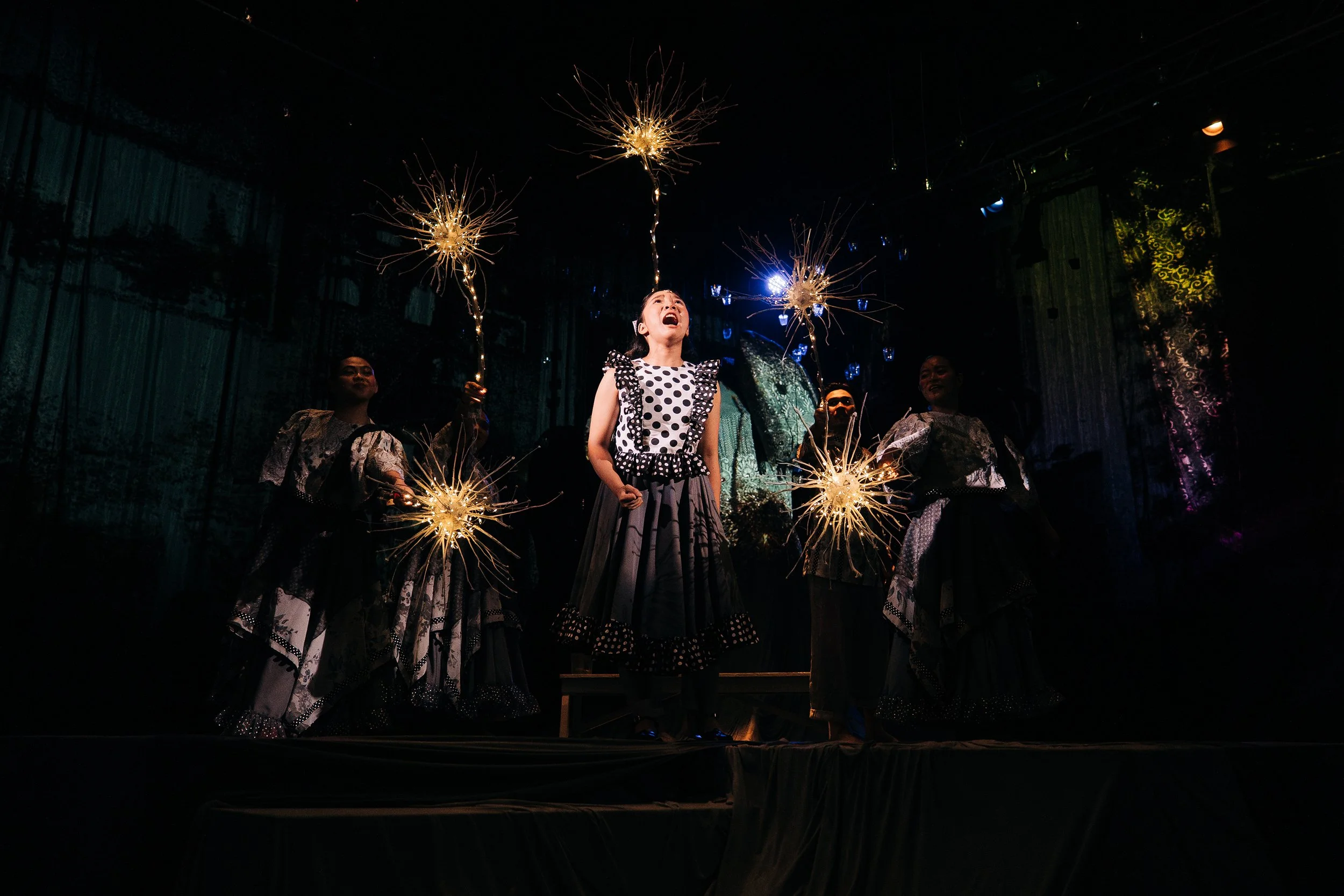
Wincess Jem Yana as Laya for Sayaw ng mga Ilaw
Within the play, the dance becomes more than a display of Filipino cultural tradition. It offers a language for approaching memory, grief, and the effort to continue living after loss. What might otherwise be difficult to express through dialogue can emerge through gesture, rhythm, and the relationship between bodies and light.
This is one of the production’s most affecting possibilities. The performers are not simply delivering a story to the audience. Through movement, they give the story a physical presence. Their bodies become sites of expression, carrying emotions that words cannot always contain.
The other elements of the production contribute to this experience. The costumes establish a visual world, while the lighting and music shape its emotional atmosphere. The stage changes not merely because the scene changes, but because the audience’s understanding of the world before them changes. What appears playful can acquire a shadow; what appears beautiful can become painful.
I am drawn to the contrast between the dance’s delicacy and the history surrounding it. Martial Law was a period marked by censorship, imprisonment, torture, and other human rights abuses. Against this history, the act of keeping a light steady begins to feel like an image of the work required to preserve memory itself. It demands attention, it demands care, and it requires someone to keep carrying it.
The theater, meanwhile, becomes a shared space for that act of carrying. The gray fabric reaches into the audience, making the visual world difficult to separate from the people watching it. We are not simply looking at history from a comfortable distance. We are placed within its atmosphere, asked to consider our relationship to the stories that have shaped us.
The Kingmaker and the Art of Political Memory
Lauren Greenfield’s documentary The Kingmaker offers a useful companion to this experience. Through its portrait of Imelda Marcos and its examination of the Marcos family’s political return, the film explores the relationship between political power, public image, wealth, and the stories people tell about the past.
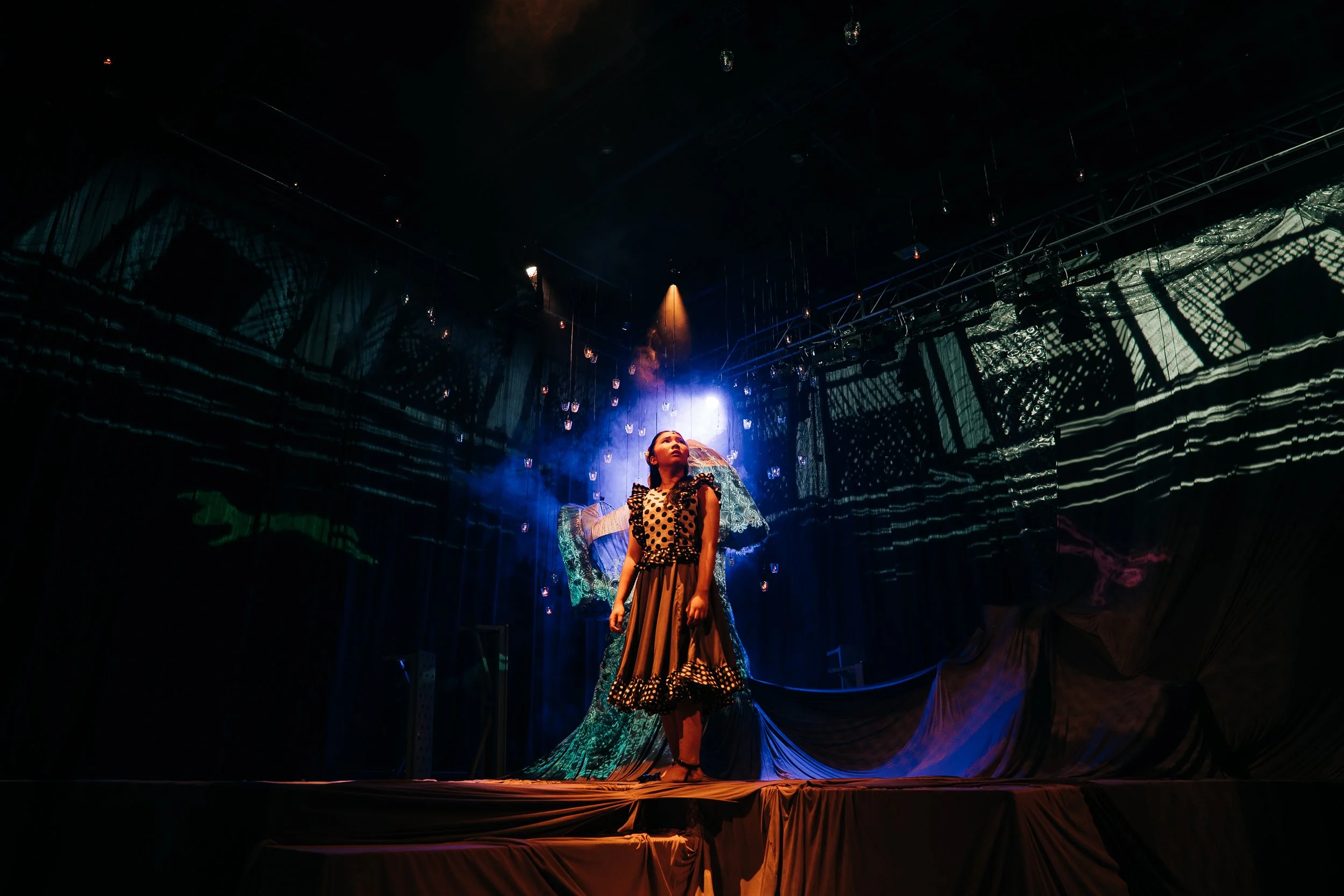
Wincess Jem Yana as Laya for Sayaw ng mga Ilaw
Where Sayaw ng mga Ilaw brings history close through a family’s experience of loss, The Kingmaker examines how a political family constructs and sustains its public identity. Their approaches are different, but both invite us to look beyond appearances.
The Filipiniana dress becomes particularly resonant in this context. Like the carefully cultivated images that circulate in political life, it commands attention through spectacle. It offers something to admire, something memorable enough to outlast the circumstances that produced it. Yet the gray fabric interrupts that admiration, insisting that the image cannot be separated from its consequences.
This is not merely a question of whether a public figure is liked or disliked. It is a question of how historical narratives are made, which details are emphasized, and which experiences are allowed to disappear. Political memory is rarely a passive record of what happened. It is shaped by institutions, families, media, education, and the stories a society chooses to repeat.
The return of the Marcos family to national leadership makes this question especially immediate. Ferdinand Marcos Jr., the son of the former dictator, assumed the presidency in 2022. His election reflects, among other things, the continuing contest over how the Marcos era is understood and remembered.
The uncomfortable truth is that historical memory does not automatically protect a society from repeating its mistakes. A dictatorship can become a chapter in a textbook while its victims’ experiences fade from public consciousness. A family’s political legacy can be recast through a new generation. The past can remain visible while its meaning changes.
Sayaw ng mga Ilaw does not have to resolve these disputes to make its contribution. By bringing the consequences of political violence into an intimate theatrical space, it reminds us that history is not only about the people who exercise power. It is also about those who must live with what power does.
The Language of Order
The questions raised by the play extend beyond the Marcos era. They return, in a different form, to the violence associated with the former president’s anti-drug campaign.
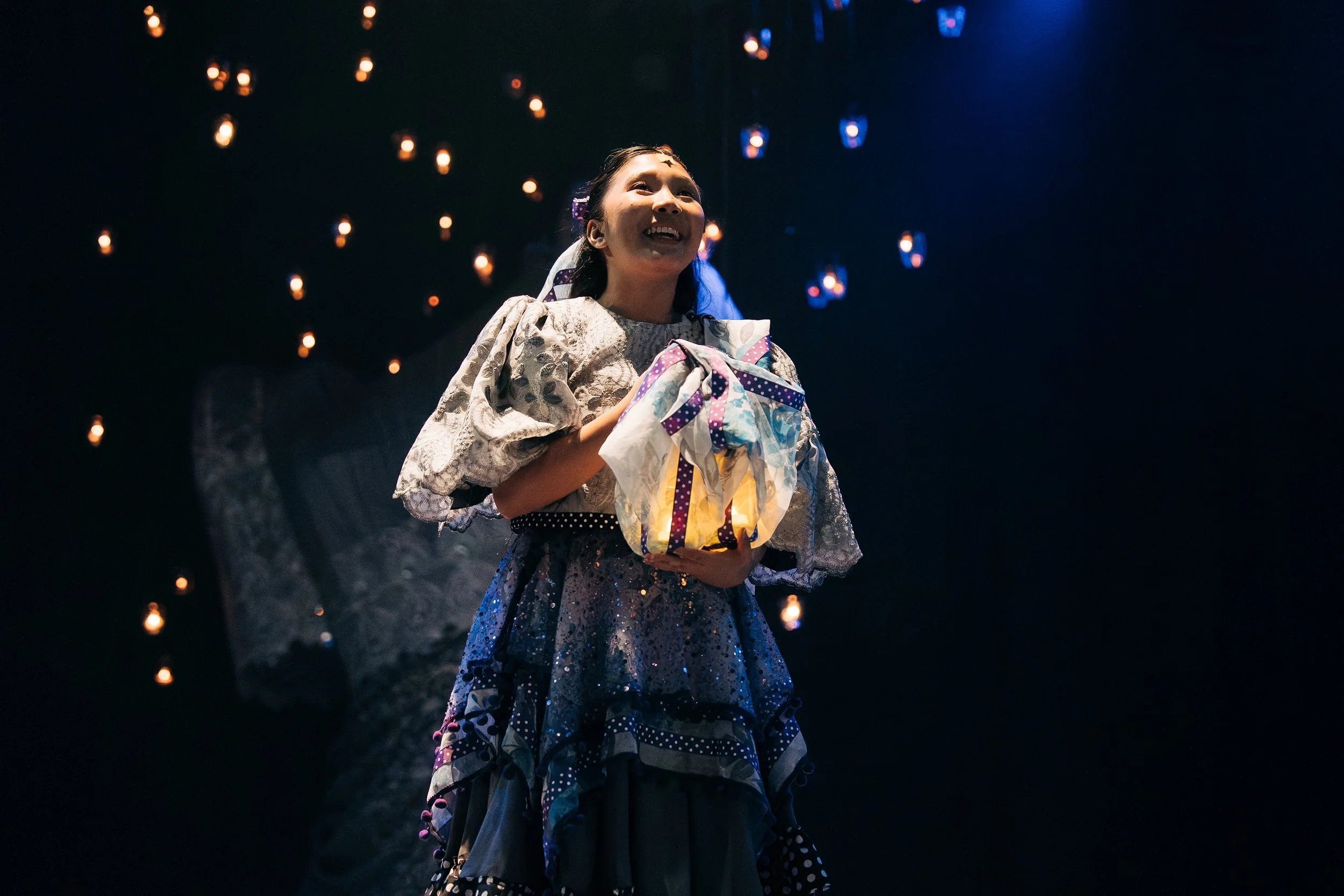
Wincess Jem Yana as Laya for Sayaw ng mga Ilaw
The campaign was defended by supporters as a response to illegal drugs and public insecurity. At the same time, thousands of deaths, allegations of extrajudicial killings, and accounts from victims’ families raised serious concerns about human rights and accountability. The circumstances of Martial Law and the drug war are not identical, and their histories should not be collapsed into a single narrative.
Yet both compel us to examine the distance between the language of public order and the experiences of people subjected to state violence.
Who is protected when a government promises security? Whose suffering is treated as necessary? And what happens when the people most affected by a policy are reduced to numbers, labels, or threats rather than recognized as human beings?
These questions are difficult because they concern more than the intentions announced by those in power. They concern the consequences experienced by ordinary people, and whether those consequences are acknowledged or dismissed.
The play’s attention to the lives behind historical events offers a way to approach these questions without pretending that every period or political administration is the same. It asks us to pay attention to the people who are usually furthest from the centers of decision-making, but closest to the consequences.
In this sense, the work of remembering is also the work of resisting simplification. It requires us to examine evidence, listen to affected communities, and refuse to let the language of order erase the question of human dignity.
The Present Beneath the Spectacle
Today, the son of the former dictator occupies the presidency, while the country continues to confront concerns about corruption, economic insecurity, and the rising cost of everyday life. For many Filipinos, these are not abstract questions of governance. They are felt in the price of food, the cost of transportation, the struggle to make wages last, and the uncertainty of planning for a future that already feels expensive.
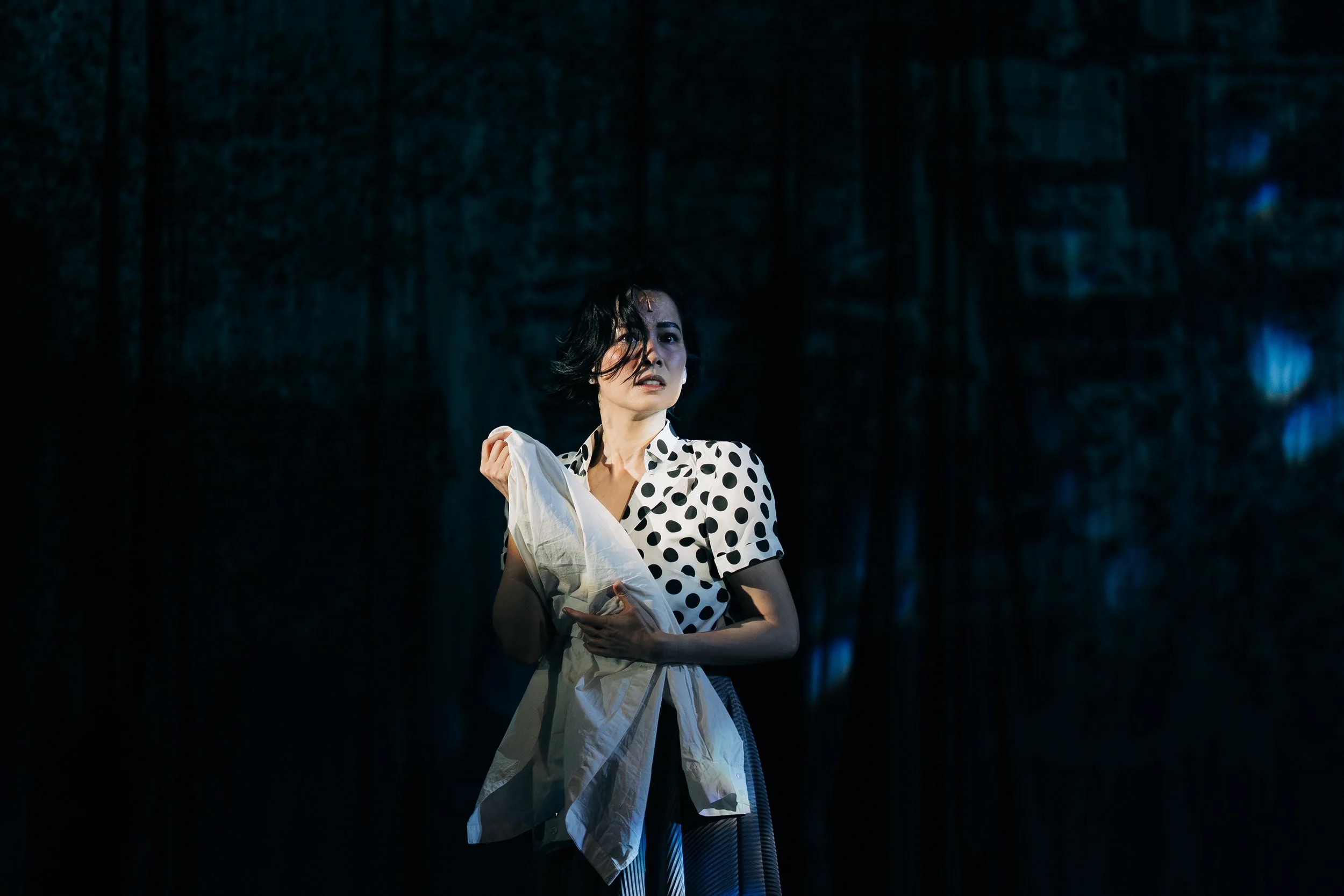
Shiela Valderrama as Nanay Lucia
The contrast between spectacle and lived experience remains difficult to ignore. The Philippines can present itself as a country of ambition, culture, and progress, but these images mean little to people who struggle to meet their most basic needs. Development cannot be measured only by the grandeur of buildings or the attention a country receives abroad. It must also be measured by the dignity, security, and opportunities available to the people who live here.
The massive dress in Sayaw ng mga Ilaw comes to my mind. Its scale is impressive, but it also raises the question of what lies beyond the image. What happens to the people who do not appear in the official portrait of national progress? Who benefits from the spectacle, and who bears its costs?
Corruption makes these questions more urgent. When public resources are misused, the consequences are not confined to government offices or news headlines. They reach classrooms that lack resources, communities that need infrastructure, hospitals that require support, and households already stretched by the cost of living. The public loses not only money, but also trust in the institutions meant to serve it.
It would be too easy to say that the present is simply a repetition of Martial Law. The country has changed, and the political and economic circumstances of today are different. But history can still teach us how to recognize the dangers of concentrated power, the importance of accountability, and the ease with which spectacle can distract from the experiences of ordinary people.
Perhaps this is what the play makes possible. It does not turn the theater into a political rally or reduce art to a set of instructions. Instead, it creates an experience from which questions emerge. It invites the audience to make connections between the past and the present, and to consider what remembering might demand of us now.
When the Lights Go Out
What stays with me about Sayaw ng mga Ilaw is the possibility that a painful history can be told with tenderness without losing its severity. The production finds beauty in costume, movement, and light, but it does not require that beauty to erase grief. Instead, beauty becomes one of the means through which grief can be approached.
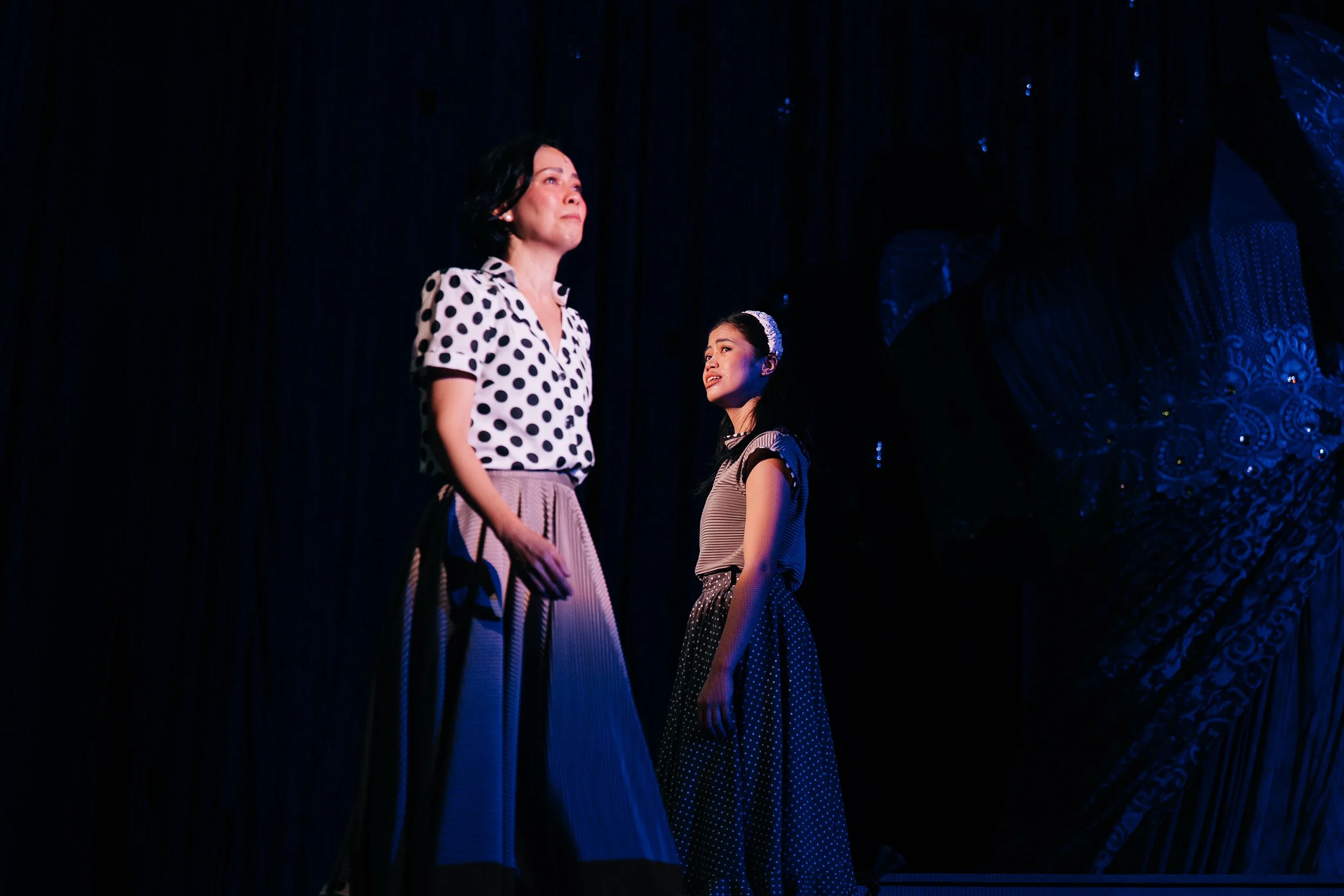
Shiela Valderrama as Nanay Lucia and Ynna Rafa as Kala for Sayaw ng mga Ilaw
That is a difficult balance for any work of art. To represent suffering is not necessarily to make an audience understand it. To display historical violence is not the same as helping people recognize its consequences. The production’s theatrical language offers another route, bringing history into the senses and allowing the audience to encounter it through a shared experience.
And perhaps that is why the dance matters. The light is fragile, but it is not meaningless. It must be carried carefully, and it must be kept visible. Memory works in much the same way. It can be neglected, distorted, or allowed to disappear. It survives because people continue to carry it, tell it, question it, and pass it on.
When the performance ends, the audience leaves the theater and returns to the country outside. The political arguments remain. The economic difficulties remain. The unresolved questions of justice and accountability remain. Art cannot settle these questions on its own, and a theatrical performance cannot repair the damage of history.
But it can make forgetting more difficult.
“Never again, never forget” should not be a phrase we repeat only when commemorating the past. It should shape how we look at the present, how we listen to those whose experiences are ignored, and how we understand our responsibility to one another.
The lights eventually go out. The dress returns to being fabric, and the stage becomes an empty space. But what we have seen does not have to disappear with the performance.
Perhaps remembering is its own kind of dance: delicate, imperfect, and demanding of our attention. And perhaps the real question is not whether the lights will continue to shine, but whether we are willing to keep carrying them.