
Rewriting History
A bold production of Emilia explores authorship, erasure, and the collective power of women.
Words Jewel Chuaunsu
Photos courtesy of Tanghalang Ateneo
April 17, 2026
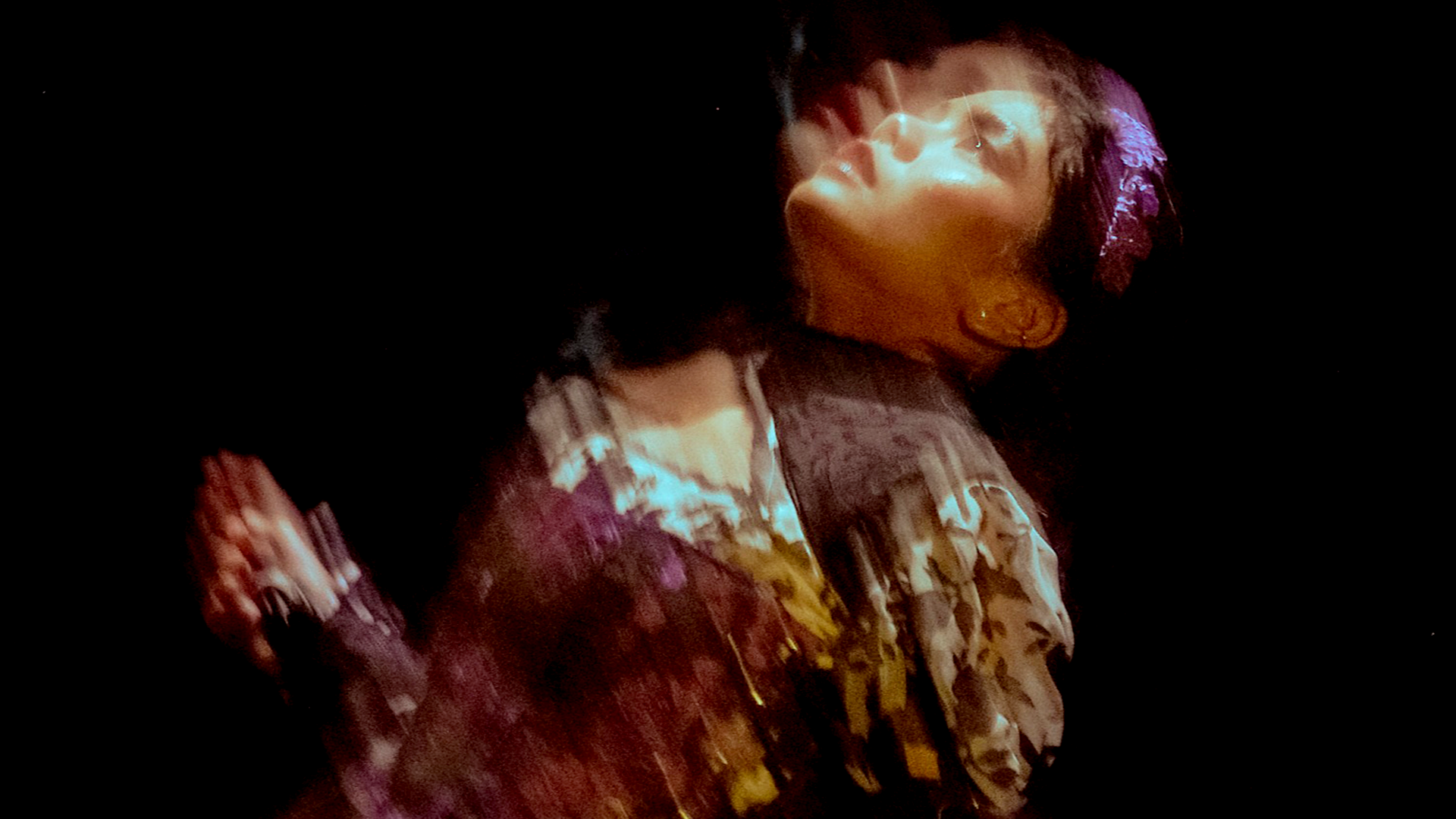
Written by Morgan Lloyd Malcolm, Emilia is inspired by the life of 17th-century poet Emilia Lanier (née Aemilia Bassano), as well as her speculated role as the “Dark Lady” of Shakespeare’s sonnets. The play was first produced at Shakespeare’s Globe in London on 10 August 2018. Emilia embodies the global struggle of the female creator in shaping a future where women are recognized not as muses, but as authors of culture and social change.
Born into a world where men hold power, wealth, and prestige—and where women are expected to secure their futures through marriage—Emilia presents a protagonist who refuses to play by these rules. She does not aspire to be a wife or to chase romantic love. Instead, she seeks something far more radical for her time: to become a poet and to be heard.
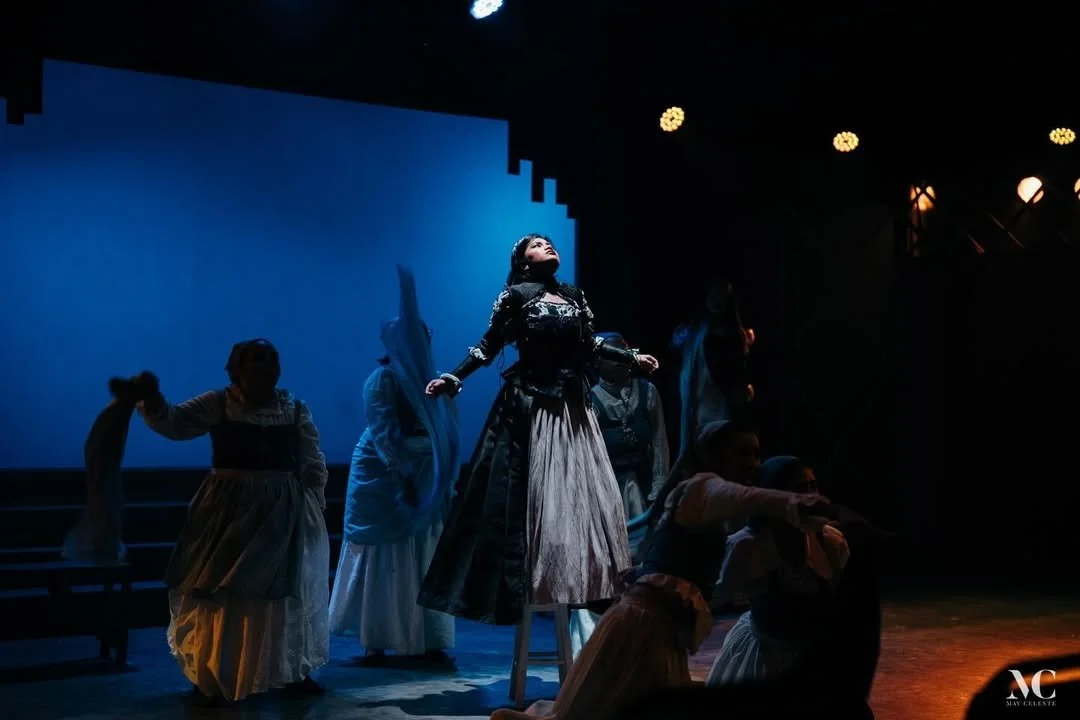
Photo by May Celeste
Strong-willed and unyielding, Emilia resents the constraints imposed by a patriarchal society and is determined to carve out her own path. Aware of the limited tools available to her, she strategically uses her beauty and desirability to gain access to influential circles, becoming the mistress of a wealthy benefactor, Henry Carey, and later the paramour of William Shakespeare. Through these connections, she moves closer to the literary world she longs to enter.
Yet the very system she navigates ultimately betrays her. The men around her rise in stature while she remains invisible. Worse, her words, experiences, and voice are appropriated for Shakespeare’s success, without acknowledgment or credit.
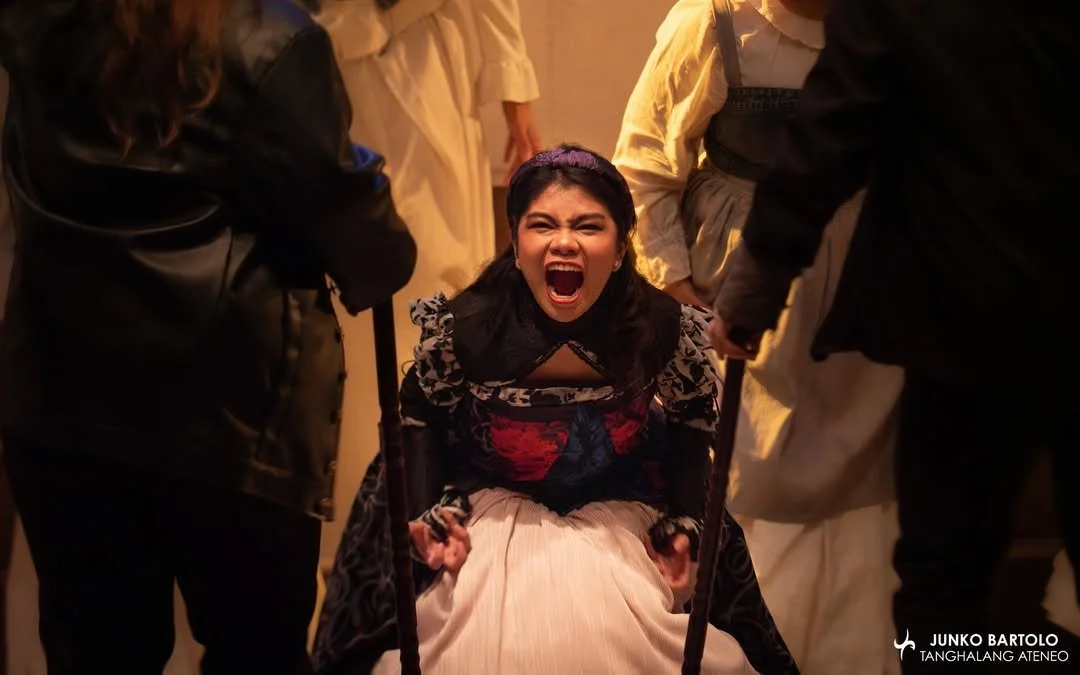
Photo by Junko Bartolo
The play’s structure reinforces this journey. The first act captures Emilia attempting to survive and succeed within a male-dominated world, only to encounter its inevitable glass ceiling. In the second act, the narrative shifts as she finds solidarity among women. In secret, they share her poems—works that reflect their lived experiences, offer guidance, and quietly empower. Through this collective, Emilia’s voice begins to reach others. But this growing movement does not go unnoticed; threatened by its power, men move to silence it.
One of the production’s standout achievements is its Filipino translation by Gab Mactal, Meeka Sayaboc, and Keith Bernas. Rendering a period piece in deep, poetic Filipino is no easy task, yet it feels very natural—fitting the material like a glove and making it more accessible for its audience.
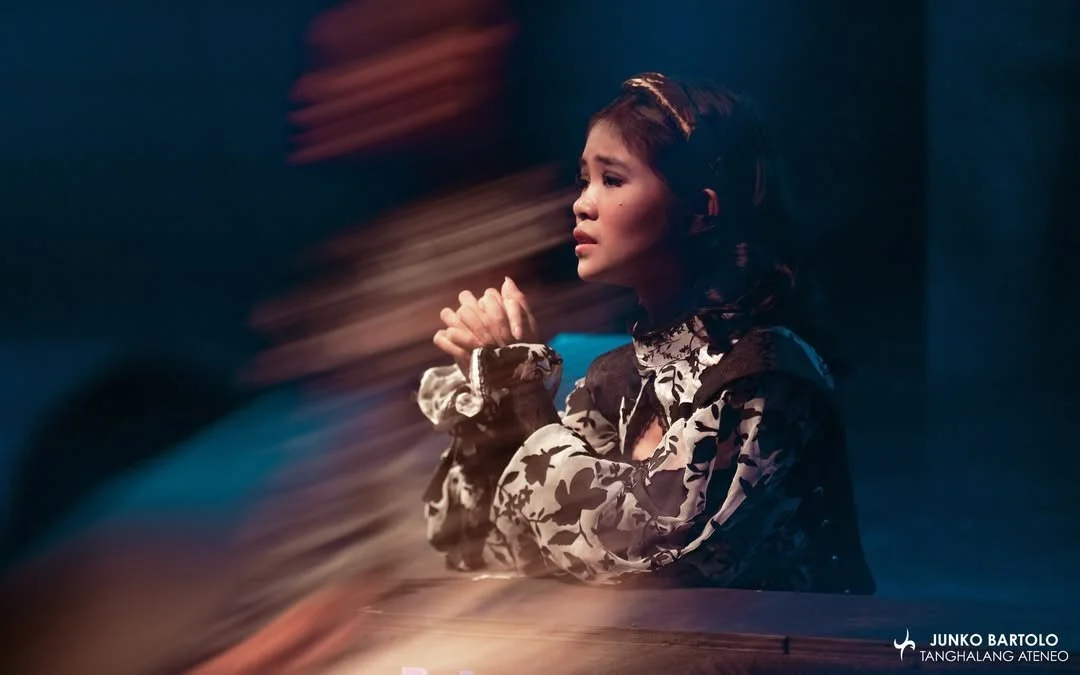
Photo by Junko Bartolo
The all-female cast delivers the story with grounded authenticity. Their performances feel assured and intuitive, perhaps because they are close in age to the characters they portray. There is an ease in how they move through the material, along with a delightful humor and playfulness in their portrayal of male roles.
The direction, set design, and movement design by Sarah Facuri deserve particular praise. Guiding such layered and challenging material toward this level of clarity and emotional truth requires immense skill. The minimalist set design works to the production’s advantage, while lighting design by Jethro Nibaten and Perine Nyssa Bianzon is used effectively to establish mood and maintain focus on the performers. Meanwhile, the costume design by Hershee Tantiado—blending period and modern elements—cleverly expresses each character’s personality.
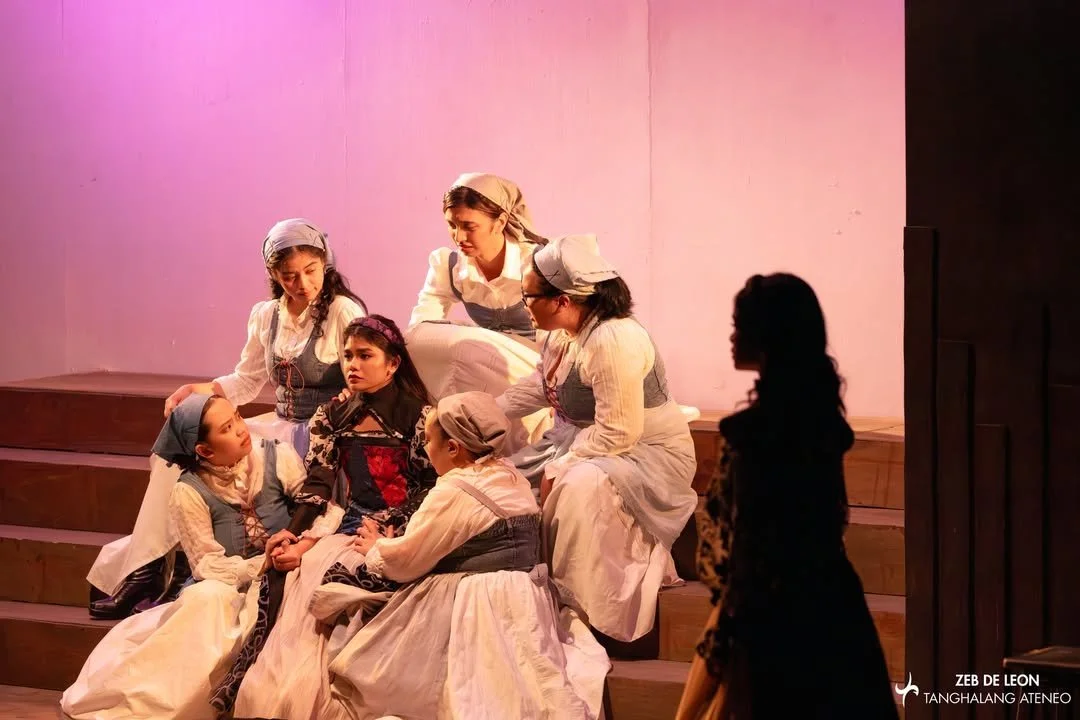
Photos by Zeb de Leon
A compelling device is the use of three actors to portray Emilia at different stages of her life: Chloe Abella navigates self-discovery within court life; Francesca Dela Cruz embodies anger, grief, and resentment; and Maliana Beran fully claims her voice while continuing to fight—not only for herself, but for other women.
What makes Emilia especially powerful is its relatability. Women are often raised to make themselves small—to control their emotions, suppress their anger, soften their voices, and defer to men. The play confronts these truths and offers an alternative: when women come together, they create space for one another, amplifying their voices and strengthening their resistance.
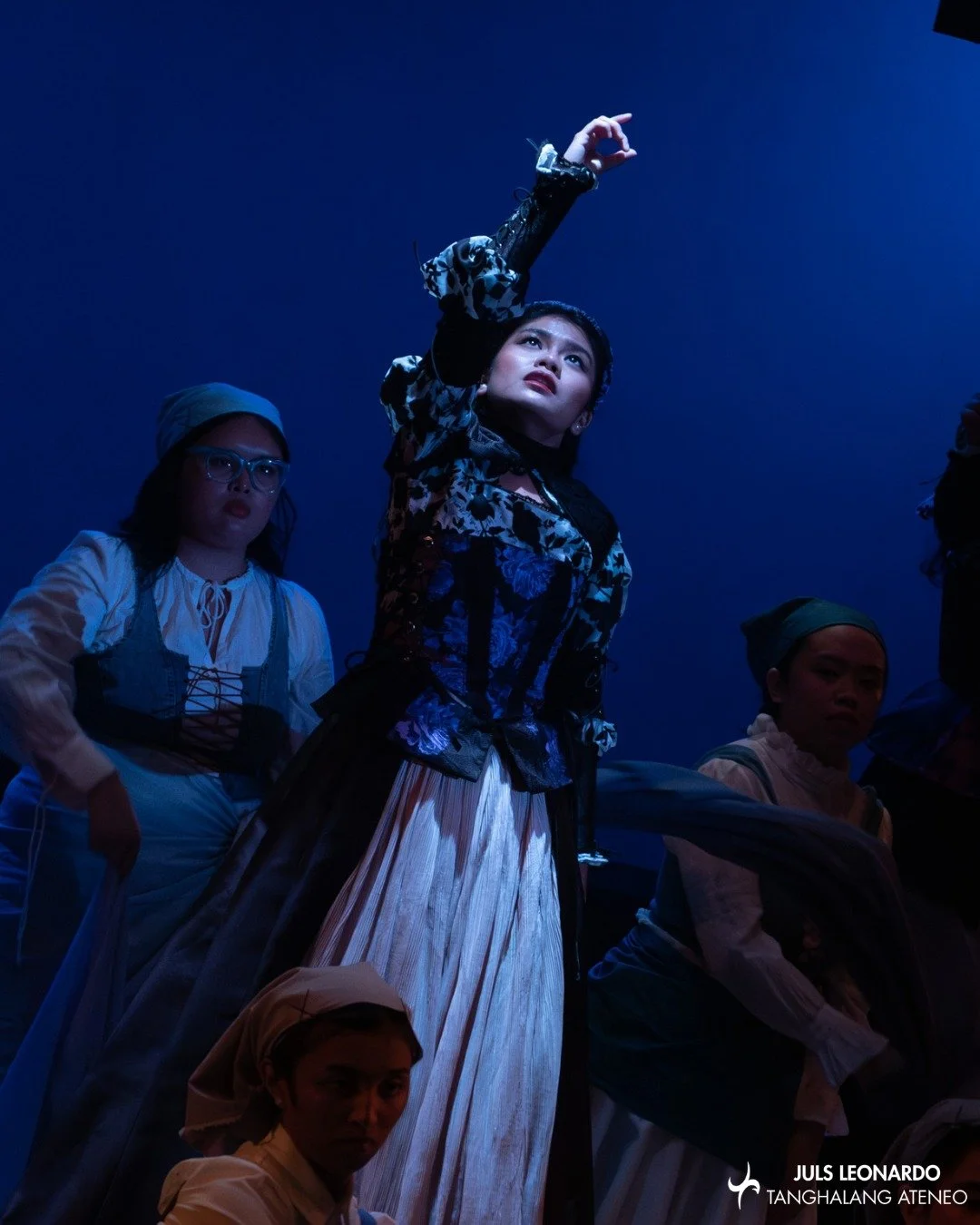
Photo by Juls Leonardo
By the end, the play becomes more than a historical retelling. It is both an acknowledgment and a challenge. It asks the audience—especially women—to reflect on how far we have come, and how much further we still have to go.
Emilia’s show dates are April 10-26, 2026, with the following showtimes: 2:00 PM - April 11, 12, 18, 19, 25, 26 | 7:00 PM - April 10, 11, 12, 17, 18, 19, 24, 25, 26.
Tickets are priced at PHP 800 for the General Public and PHP 550 for ADMU Community and faculty and students from our partnered schools. They can be purchased online at bit.ly/ta47emiliatickets.
For more information about the show, follow Tanghalang Ateneo on Facebook and Instagram.