
Preserving a Century Worth of Heritage Marks True Filipino Belongingness
Filipino heritage symbolizes the collective identity, deep familial ties, and shared humanity among every Filipino—or what locals call Kapwa-Bayanihan. By preserving an ancient tradition, just like Mambabatok artists are doing, this shows a sign of respect to commemorate the artistry that their ancestors left for them to carry on.
Words Henry Ramirez
Photos courtesy of Kamalig Garden Cafe
August 14, 2026
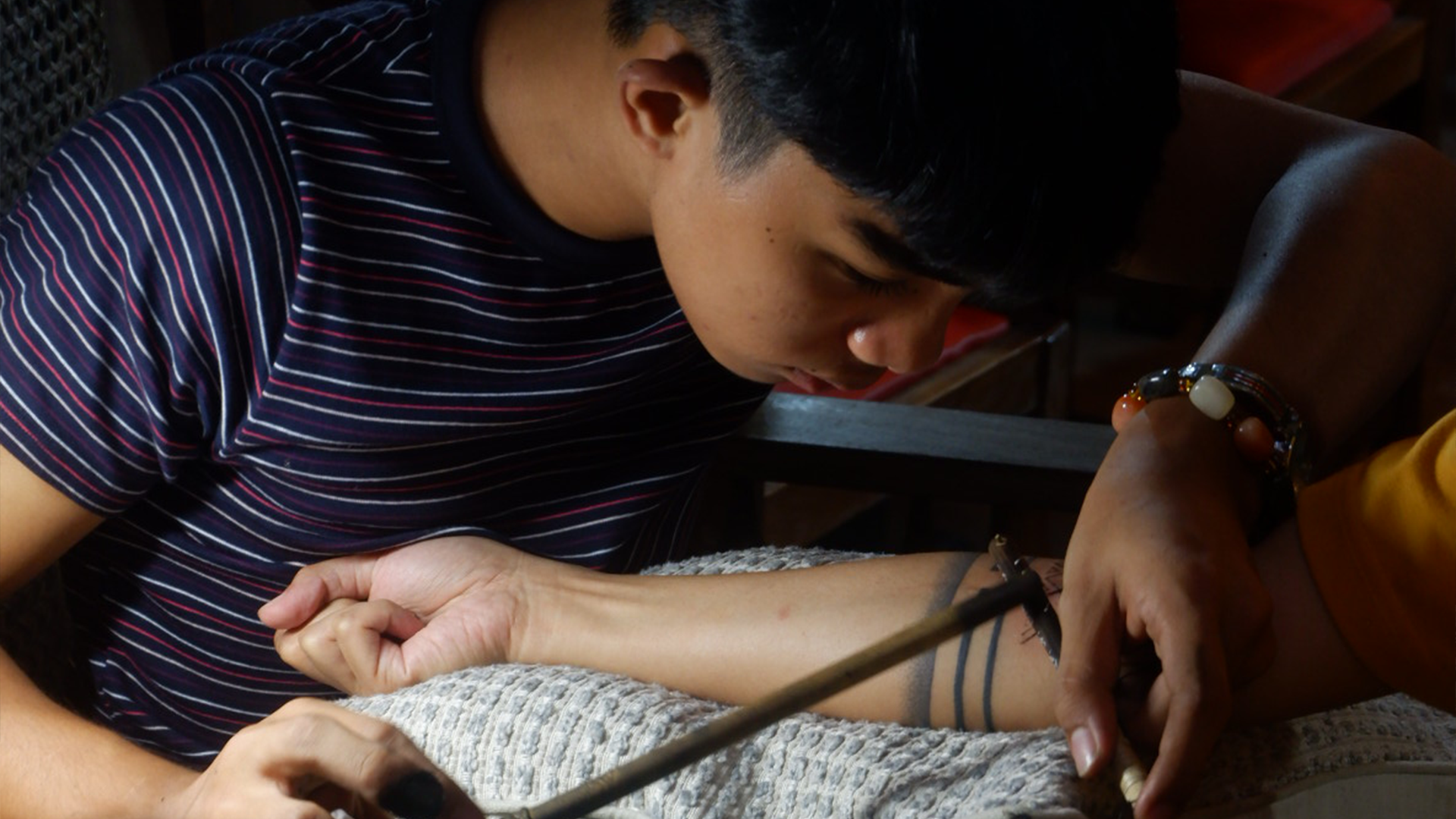
Mambabatok tattoo artists from Kalinga recently visited the famous antique Filipino-themed coffee shop Kamalig Garden Cafe on August 1 and 2 in Marikina City.
Despite light rainfall plunging through steel roofs and dripping down mounted woods, the artists still continued their work, letting city-goers experience a 1000-year-old tradition being curated on their skin.
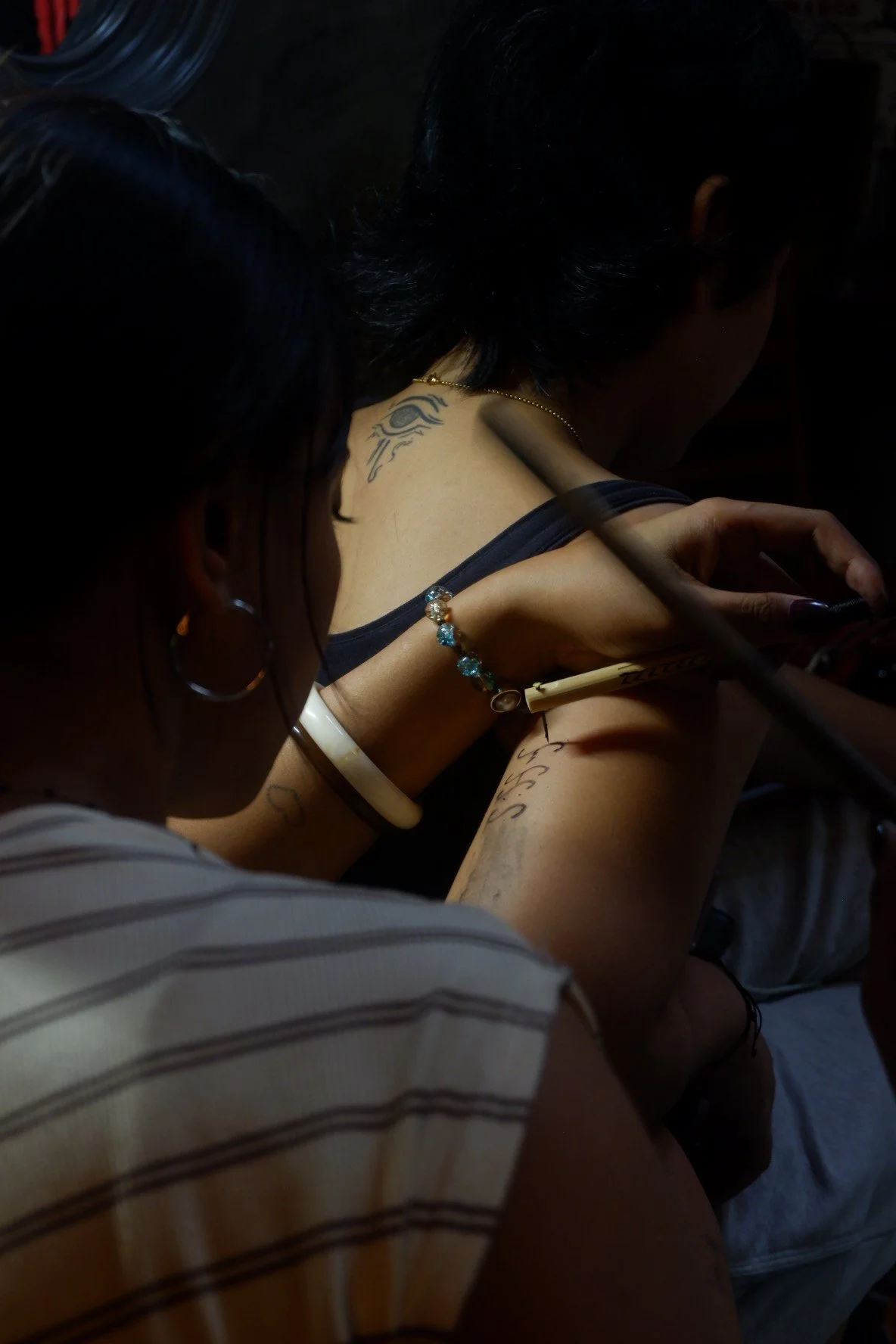
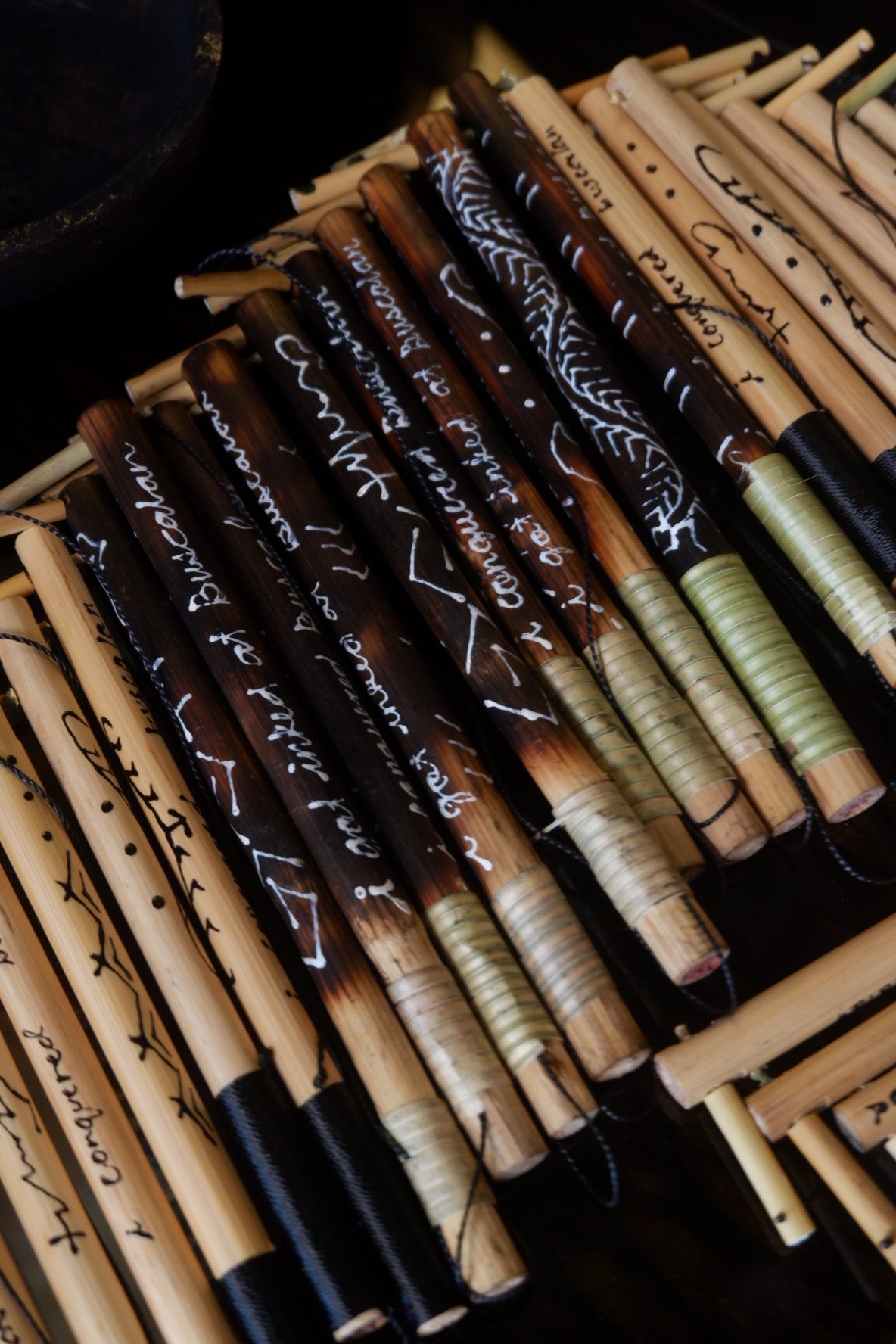
A rhythmic bamboo tapping, a sharp thorn punctured onto the skin, the blood drips, then a charcoal soot is permanently engraved in the dermis. These combinations of elements are not something you see and hear everyday in an ordinary cafe; yet KGC demonstrated how century-old heritage can blend into the city without seemingly becoming out of place.
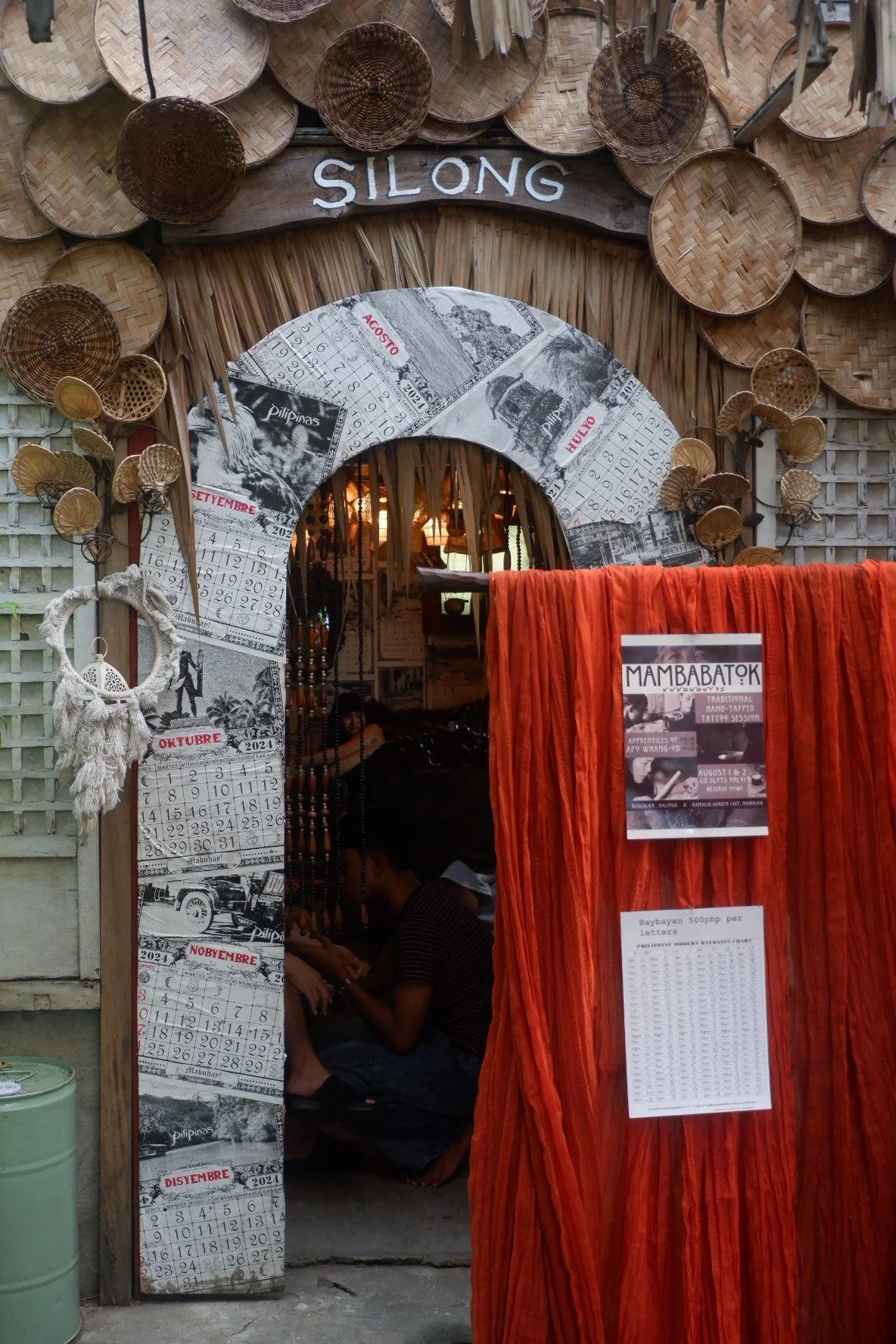
Pagbabatok is not your typical tattoo process that can be seen in every district of a city. In fact, only in Kalinga, villages are seen carrying out the traditional hand-tapped tattooing; but only a few cater exclusive sessions for tourists, and one of which is the Buscalan Village in Tinglayan.
Buscalan is famous for this century-old heritage performed prominently by tattoo legend Whang-Od Oggay or famously known as Apo Whang-Od. Now 109 years old and still running the scene, she is described as the last and oldest Mambabatok in the Philippines.
Yet, as she continues to write her legacy, newer generations of traditional tattoo artistry are also writing their own stories as inheritance to preserve a legend that can never be replaced.
Preserving Century-old Art Form
Art Plus Magazine recently sat down with Mambabatok artists Guiller Binulor Jr., Joan Agod, and Megan Dugao during their visit at KGC, and mentioned how honored they were as apprentices of the great Mambabatok legend.
“It’s an honor,” Binulor said. “Kasi parang nape-preserve din namin ‘yong tradition and culture namin sa modern world. Kasi ang tradition namin na pagta-tattoo sa [Kalinga], sobrang old siya. Honored po kaming maikalat-kalat ang aming tradition [sa mga tao],” he added.
Despite starting at a young age, Binulor and his team never actually dreamt of becoming tattoo artists—they simply grew up with it.
However, this does not stop their ambitions to preserve and pass down their knowledge to the newer generation of hand-tapping tattoos.
“‘Yong term kasi na pangarap, hindi naman [namin] siya pangarap [talaga] kasi kinakalakihan [na] namin siya and noon pa, tradition na namin and practices namin ‘yong pagta-tattoo.
[Galing siya] sa old [generation]. Ta’s gusto namin siyang hanggang sa pagtanda, ma-preserve namin ‘yong culture,” Binulor told Art Plus Magazine.
Not only that, this initiative also conserves the art form born a century ago into the Filipino culture, showing respect to the antiquity practices that many ancient generations thrived during its heyday.
KMC owner Ken Dominguez mentioned the importance of keeping traditions and cultures alive while preserving the long-curated heritage that the Filipino forefathers have earned.
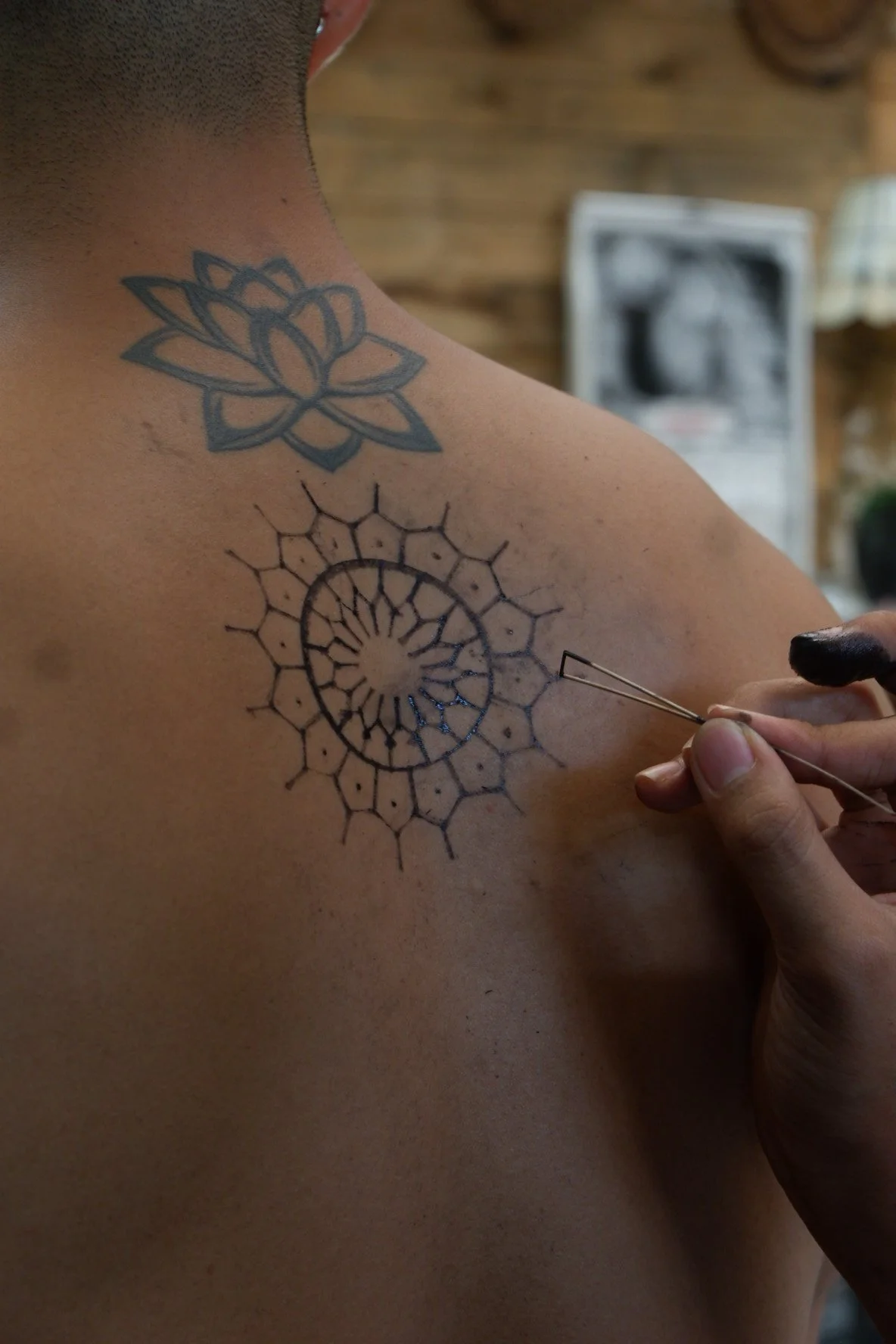
“Bridging traditional [and] cultural [traditions] with contemporary [artworks] has always been easy with us,” he said. “[Our cafe] is born to honor our forefathers. Mambabatoks [are] not foreign to us. We live to honor traditions and make sure they go down to the next generation,” Dominguez mentioned.
As newer technologies release every year, many have fallen victim into the consumerism trap where people utilize convenience over native heritage. Nevertheless, Binulor believes that while tattooing, like many others, evolves with time, Pambabatok simply symbolizes an art form that is very challenging to replicate.
“It symbolizes Filipino Artistry, ‘yong art ng mga Filipinos na still nag-e-exist kasi [mahalaga ang tradisyon nila] para hindi siya mabura sa ating [kultura]. As a respect [na rin] ito sa mga old practices ng mga [older] generation back then, para hindi naman masayang ‘yong kanilang art [forms] noon,” he said.
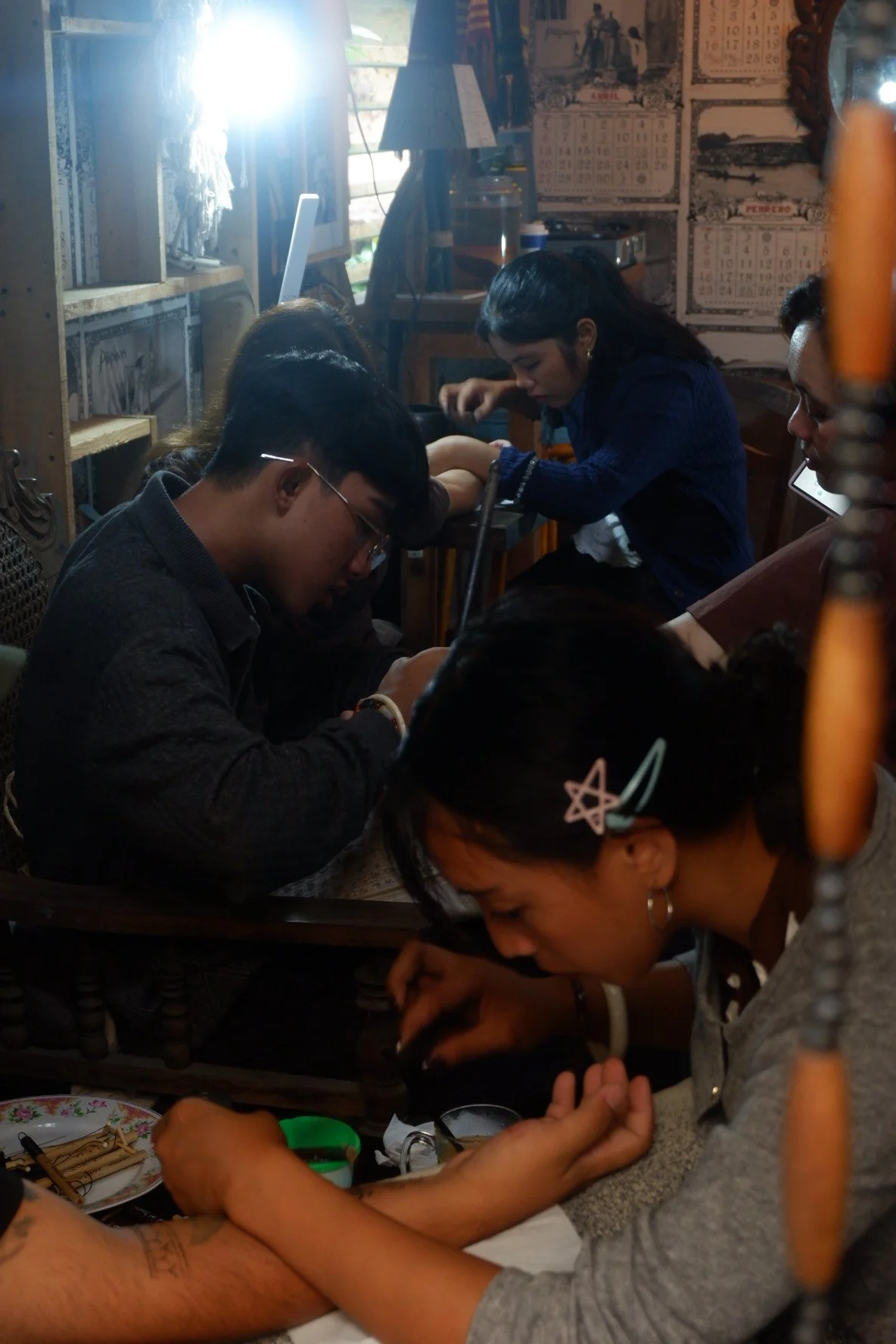
The much anticipated tattoo event was hosted by KMC, a Filipino-themed garden cafe that visualizes a classic Filipino home mixing the modernized local coffee experience paired with exemplary local dishes in the country.
Although open to only 60 slots, and an initial registration fee of ₱500 pesos for reservation with an inclusion of a free beverage, parts of the proceeds of this event will go to the Kapon Drive, a community outreach program that offers low-cost spaying and neutering services for rescued cats of the cafe community in Marikina City.
As Buwan ng Wika officially opened, the celebration not only commemorates the country’s home language, but also celebrates the deeply rooted Filipino ancestry that honed what Bayanihan is all about—by preserving the culture and heritage that their ancestors left and continuing it to the newer generation.