Paper Fortresses
Indonesian artist Irfan Hendrian transforms paper, memory, and Tionghoa history into layered acts of protection and resistance.
Words Jewel Chuaunsu
Photos courtesy of Irfan Hendrian and ara contemporary
March 19, 2026
The Tionghoa (ethnic Chinese) community in Indonesia has long faced discrimination shaped by colonialism, politics, and nationalism, often being treated as outsiders despite generations of residence. Under Dutch rule, they were placed in a separate social class—assigned specific economic roles that, while advantageous in some respects, also fostered resentment.
During Suharto’s New Order regime, Chinese Indonesians endured forced assimilation, strict cultural suppression, and systemic discrimination. These tensions erupted during the May 1998 riots. Amid the Asian Financial Crisis, mounting unrest and widespread demonstrations called for an end to the regime. In response, the military deflected public anger by scapegoating the ethnic Chinese minority, blaming them for the economic turmoil. Chinese Indonesians and their properties became targets of violence, looting, and destruction.
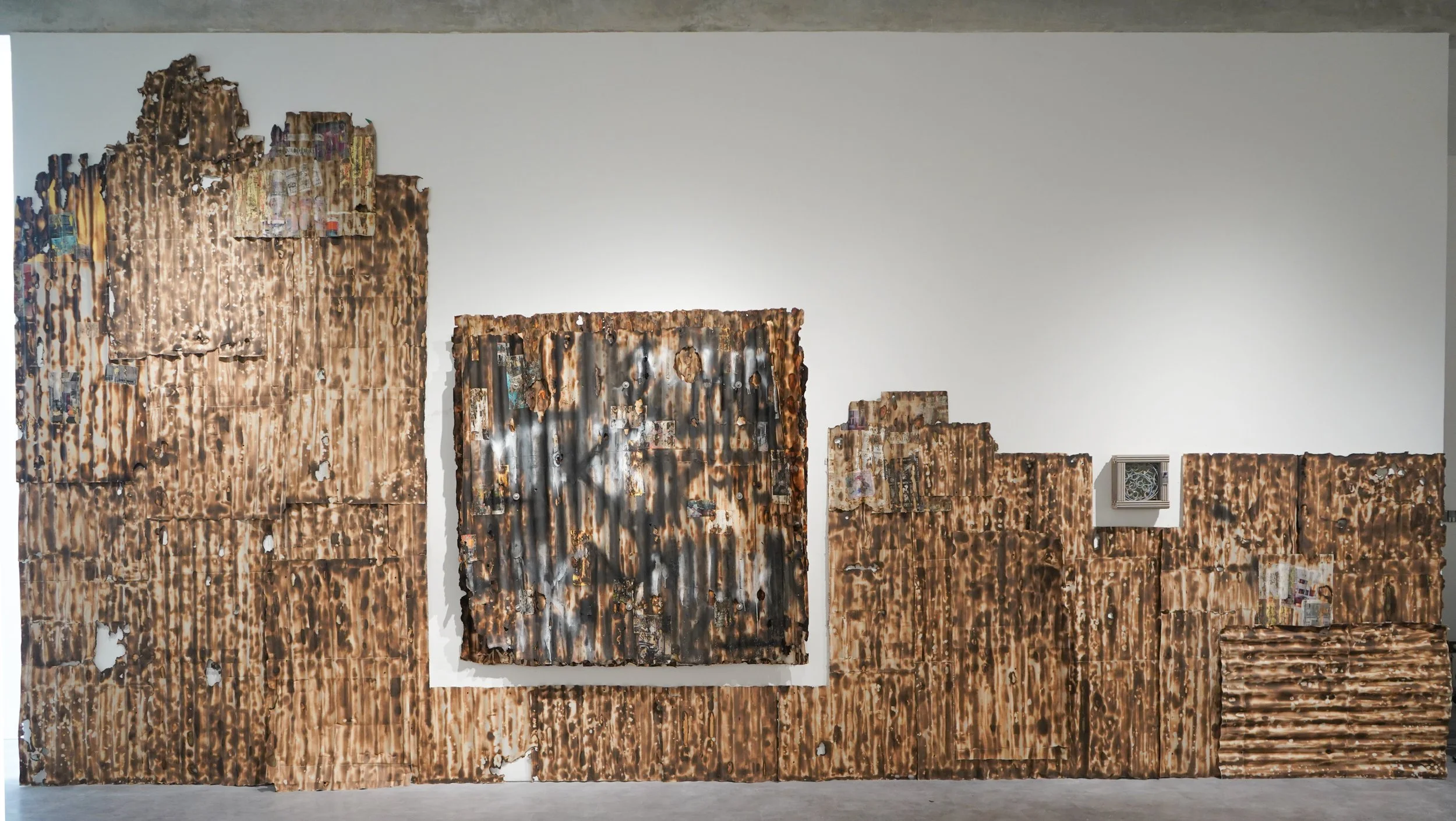
CLOSED (2026) by Irfan Hendrian | Photo by ara contemporary
The unrest ultimately contributed to the fall of Suharto’s rule. Although subsequent reforms have removed many discriminatory laws and increased cultural visibility, prejudice and stereotypes persist.
Artist and printmaker Irfan Hendrian recalls that, as a teenager in a public high school, he “desperately tried to shed [his] Tionghoa identity,” viewing his ancestry with “a sense of shame forced upon [him] by the times.”
Each year, Hendrian’s grandmother gave him a yellow paper talisman, folded into a tight triangle. Featuring traditional symbols and calligraphy, it is believed to ward off evil spirits and bring good fortune in Tionghoa culture. He kept it hidden in his wallet.

Installation view of CLOSED | Photo by ara contemporary
“I realized that while I was trying to assimilate on the outside, I was carrying a ‘paper architecture’ of protection on the inside,” he said. “That small, hidden triangle is the foundation of the work I make today; it represents the silent, fragile ways we protect our identity when the world feels hostile.”
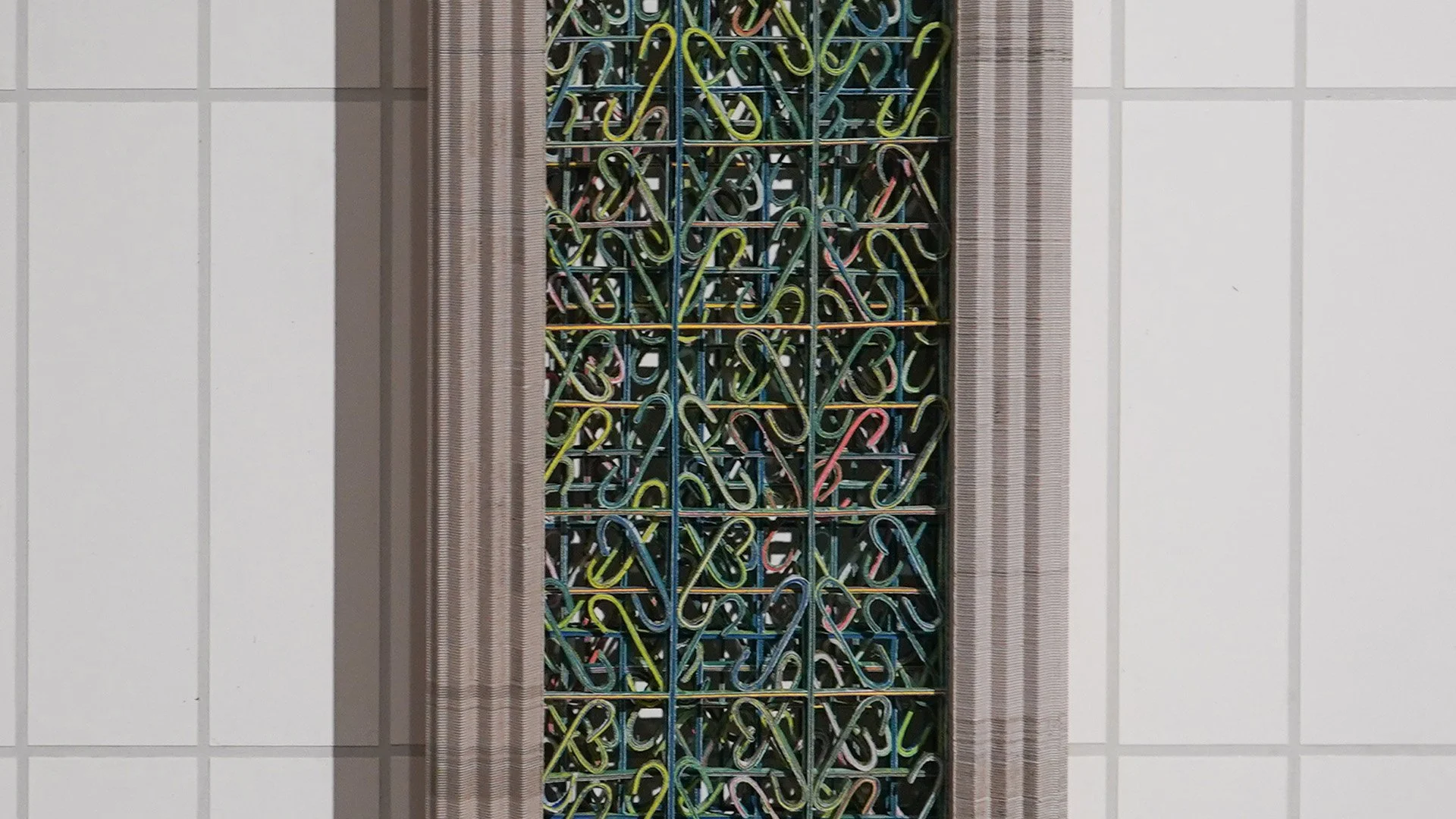
CLOSED, Hendrian’s recent solo exhibition at ara contemporary in Jakarta, presents his latest body of work, Chinatown Window Sample. Recurring forms in his work—window trellises, corrugated metal fences, locks, and keys—carry historical and contextual weight tied to the vulnerability experienced by the Tionghoa community in Indonesia. Described by the artist as an “architecture of fear,” these iron grates became a necessary strategy for survival. “Because we cannot arm ourselves, our homes become our fortresses,” he noted. “A shophouse without a trellis feels naked or incomplete.”

CLOSED (2026) by Irfan Hendrian | Photo by ara contemporary
While motorcycling through cities in Java, Hendrian built a visual archive of these structures, some dating back to the 1970s, pointing to “a long history of feeling unsafe.” In CLOSED, he amplifies these “layers of defense,” transforming the window trellis from a common architectural feature into a “symbol of permanent siege.”
Explaining his process, Hendrian said: “The photographs in the works were first printed in hundreds of copies using risography, which causes each copy to shift slightly. These layers were then sliced and cut by machine before being finally rearranged. In the work’s final structure, only traces of ink along the edges of the paper are visible, manifesting history as a delicate, layered artifact.”
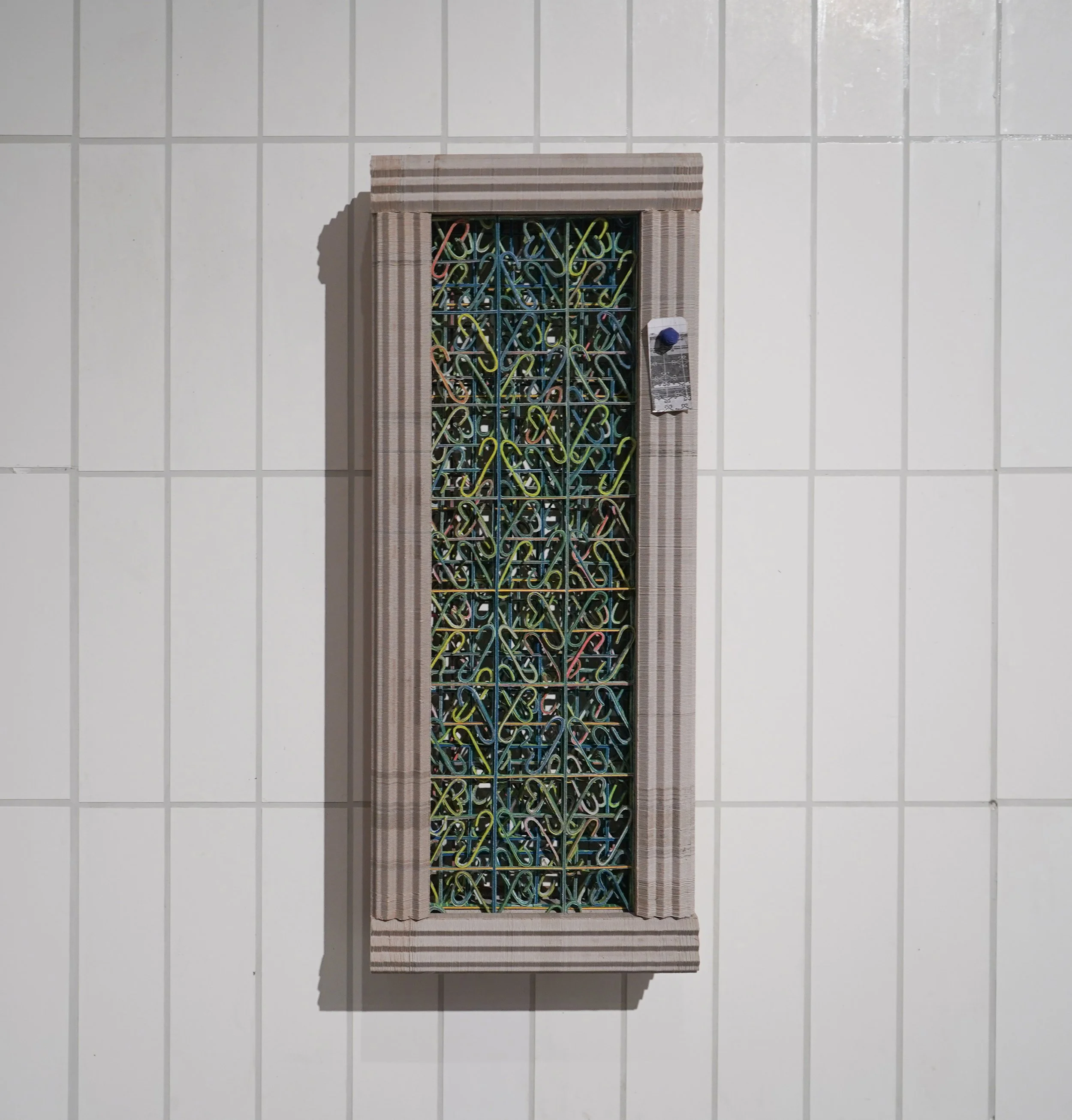
CLOSED (2026) by Irfan Hendrian | Photo by ara contemporary
The exhibition title refers to signs hung in shop windows. “For many Tionghoa shop owners in Indonesia, ‘CLOSED’ wasn’t just about the end of a workday; it was a desperate shield against racial violence and riots. I wanted to capture that specific claustrophobia—the transition of a place of livelihood into a place of hiding, fueled by a deep-seated anxiety that the doors might not be strong enough,” he said.
The August 2025 riots in Indonesia revived a familiar dread for the artist, though he observed a shift: “The public’s anger was directed toward the authorities rather than the minority.” This led him to a new approach—placing trellises over images of official residences instead of Tionghoa shophouses.
“I wanted to visually ‘re-route’ the anxiety. If anyone should live behind the suffocating layers of an ‘architecture of fear,’ it should be those in power who perpetuate these cycles, not the communities they’ve historically marginalized,” he said.

CLOSED (2026) by Irfan Hendrian | Photo by ara contemporary
Describing his works as “portraits of a survival strategy,” Hendrian hopes viewers will look beyond the architectural barriers—just as passersby peer through shophouse windows—and recognize the humanity they conceal. He invites them to reflect on “the cost of living a life that must always be ‘closed’ for safety.”
Hendrian’s choice of paper as his primary medium is central to his practice. He continues to explore its formal qualities and sculptural potential. “For me, paper is the soul of the work. I don’t want to just place an image on it; I want the image to live within its fibers. Paper is a magical, ancient material that has carried civilization for thousands of years. By folding and layering it, I’m transforming it from something thin and disposable into something with weight and volume. It’s no longer just a surface—it’s an object with its own strength and memory.”
At a time when images exist primarily on screens, Hendrian remains committed to paper. “Our human physiology is still deeply wired for the physical world; we crave the tactility, the weight, and the permanence of a material that exists in our same space. Digital images are fleeting, but paper has a presence.”

CLOSED (2026) by Irfan Hendrian | Photo by ara contemporary
“Some histories are too heavy to be held by a screen,” he added, noting that “the digital world is becoming a tool for collective amnesia.” It’s very easy to control the narrative, delete or revise history, and erase traces of dissent online. “This is why I work so heavily with paper. It is surprisingly resilient—it outlasts the digital cloud because it exists in physical space. Paper allows me to capture those ‘reliable fragments,’ like newspaper clippings, that remain after the internet has been cleaned.”
Looking ahead, Hendrian describes his future work as a search for the “missing pages” of Tionghoa history. “Growing up under the New Order, the Tionghoa contribution to Indonesia’s independence was systematically erased, leaving many of us, myself included, feeling a misplaced sense of shame…Today, I see shadows of that erasure returning. The question I carry forward is one of belonging: After giving up our language, our names, and our traditions in the name of assimilation, are we still viewed as ‘perpetual immigrants’? My work will continue to challenge the narrative that we are guests in a house we helped build.”