Kissing the Ground: Leslie de Chavez and the Art of Translating Community
In a revealing “Talaban” dialogue, the Filipino contemporary artist unpacked how his works translate rituals, labor, and contradictions into art that speaks community and critique.
Words Randolf Maala-Resueño
Photos courtesy of Gajah Gallery
March 18, 2026

The exhibition Halik sa Lupa (A Kiss on the Ground) could easily be mistaken for a visual spectacle. From the gilded sculptures, monumental installations, to the riot of materials ranging from rice to gold leaf. Yet during a recent “Talaban” dialogue with art scholar Eileen Legaspi-Ramirez, Filipino artist Leslie de Chavez revealed that the exhibition’s true foundation is conversation.
Not merely the kind held in galleries, but those embedded in the rhythms of a place.
For de Chavez, Lucban—his hometown—in Quezon Province is both subject and collaborator. Its rituals, myths, and contradictions form the conceptual soil of Halik sa Lupa, an exhibition that examines how faith, spectacle, and survival intertwine in Filipino life.
The talkback, fittingly titled Talaban—a word suggesting dialectic or sparring—became a key to understanding how these ideas translate into the works themselves.
Art outside the white cube
Early in the conversation, Legaspi-Ramirez noted the tension that defines de Chavez’s practice: the artist moves fluidly between global contemporary art circuits and a small agricultural town shaped by tradition.
De Chavez responded with a story.
Years ago, he relocated his studio to Lucban and eventually transformed it into Project Space Pilipinas, an artist-run initiative that looks, at first glance, like a modest roadside shop rather than an art institution. The unusual façade was intentional: an accessible entry point for locals who might otherwise find contemporary art intimidating.
“Programming is more important than the space,” the artist said during the talk.
This philosophy echoes throughout Halik sa Lupa. The works become extensions of lived community experiences—rituals, materials, and narratives reassembled into new artistic forms.
Translating ritual into form
Legaspi-Ramirez pointed to the exhibition’s recurring references to Lucban’s festivals, particularly the vibrant traditions surrounding the Pahiyas Festival and the giant figures of the Higantes Festival.
For de Chavez, these rituals provided pivotal visual inspiration and conceptual frameworks.
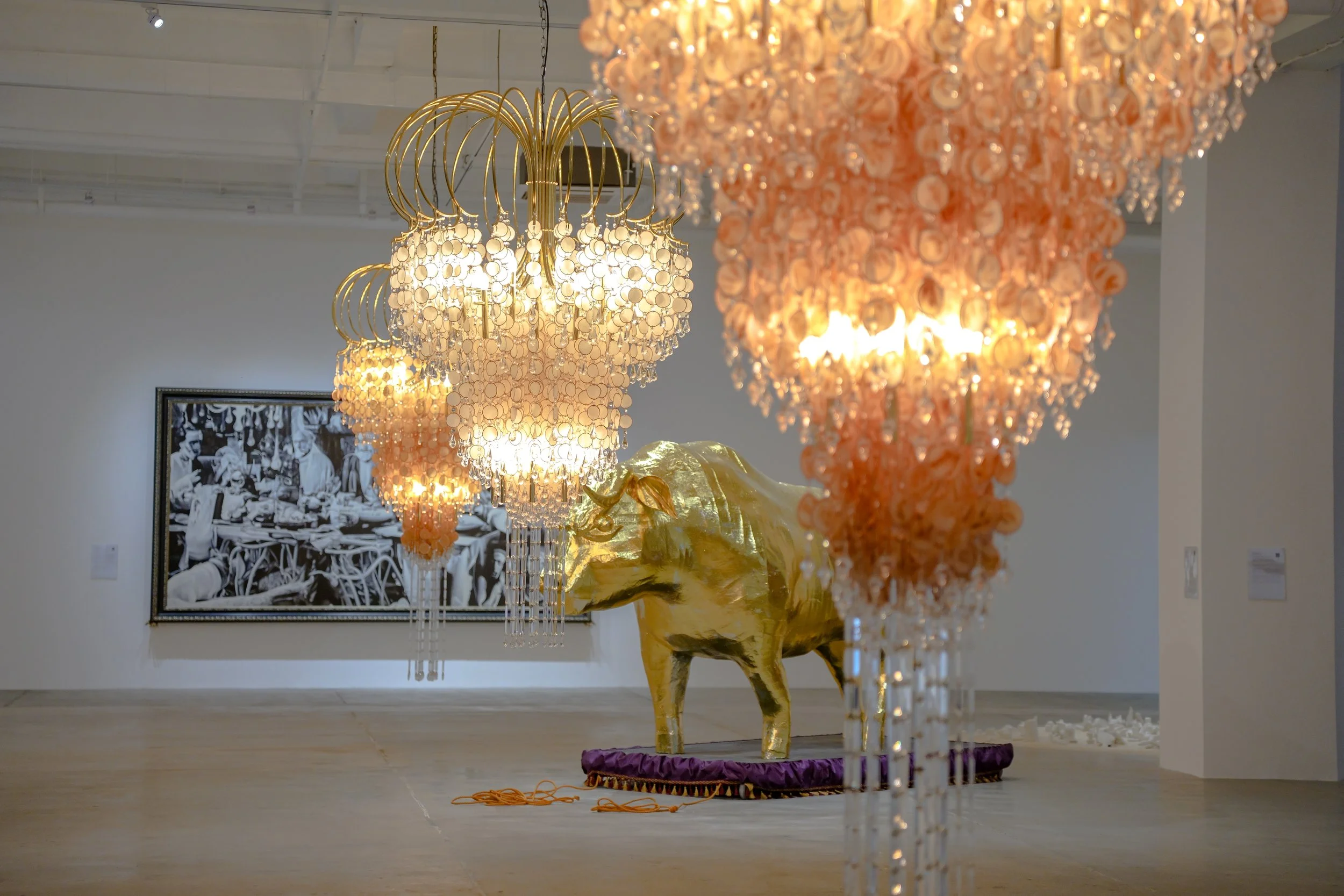
Take the towering golden bull sculpture in the exhibition. During the talk, the artist explained that it emerged from a local myth about a mystical guardian of the mountains—a creature believed to protect the land from harm. In the exhibition, that myth materializes as “Ginintuang Pangitain (Gilded Phantasm),” a radiant bull clad in gold leaf yet built from fragile papier-mâché.
The sculpture’s beauty masks its vulnerability, mirroring the illusions of prosperity that often accompany spectacle and belief.
In this sense, myth becomes metaphor.
Materials as cultural language
Throughout the dialogue, de Chavez repeatedly returned to the subject of materials.
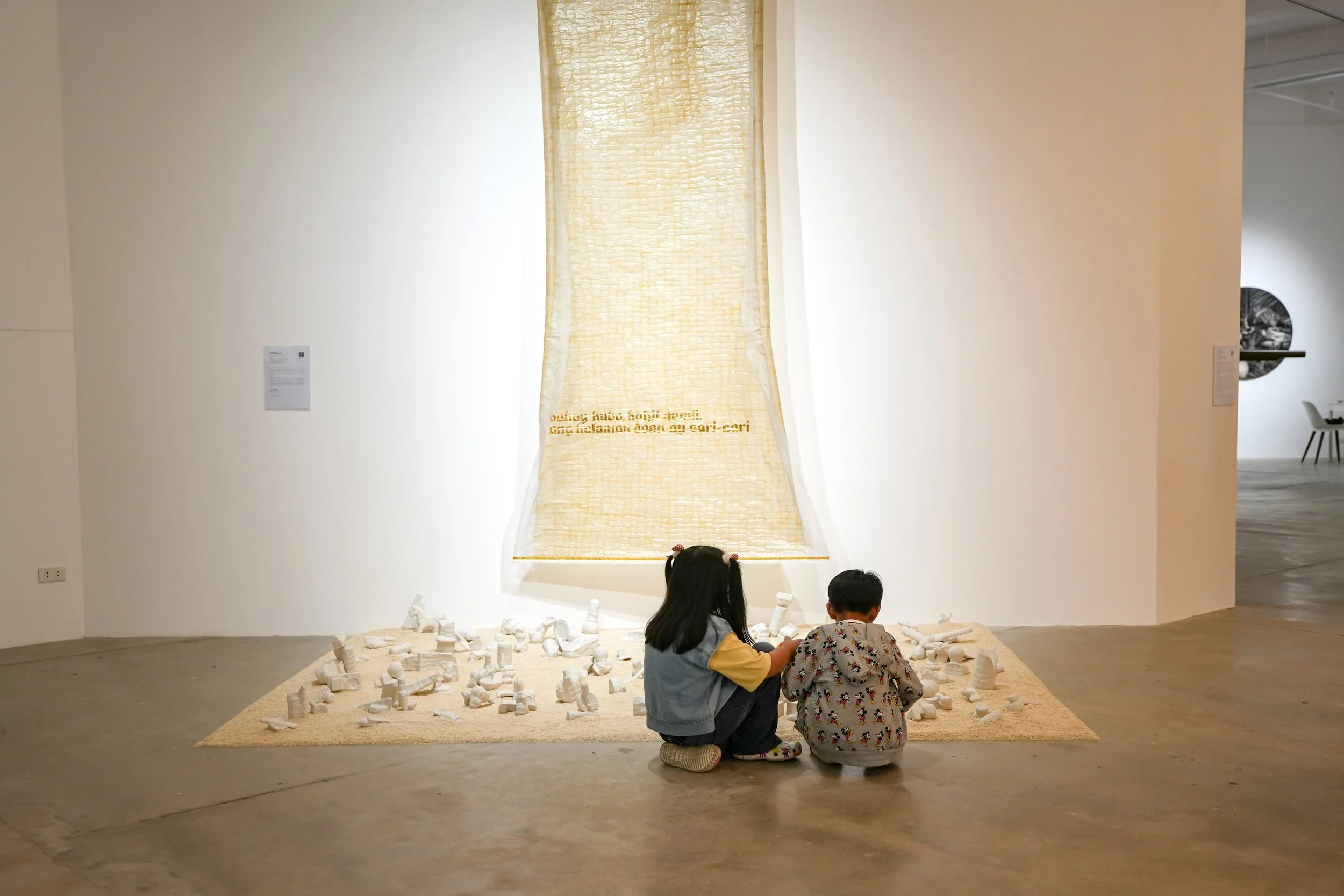
Growing up in Lucban, he was surrounded by objects deeply tied to agricultural life—rice, woven mats, textiles, and handmade ornaments. In Halik sa Lupa, these materials are recontextualized, transforming the ordinary into charged artistic language.
This approach becomes especially visible in the exhibition’s chandelier series, where luxury forms are constructed from improbable substances like rice or domestic fabric. The works recall the cultural grandeur associated with figures such as Imelda Marcos and institutions like the Cultural Center of the Philippines, while simultaneously exposing the fragility beneath displays of power.
What appears ornamental becomes political. For de Chavez, materials now carry stories of labor, aspiration, and contradiction.
Storytelling over technique
One of the most personal moments in the talk came when the artist recalled discovering art as a student. His school library contained only two coffee-table books on art, and those images shaped his earliest understanding of the field.
When he later encountered contemporary art in college—conceptual, critical, and experimental—it was a revelation.
That experience now informs his teaching philosophy at Project Space Pilipinas, where workshops prioritize storytelling over technical perfection.
Participants might draw their dreams or fears, cut the drawings into strips, and weave them into new forms, turning personal narratives into visual structures.
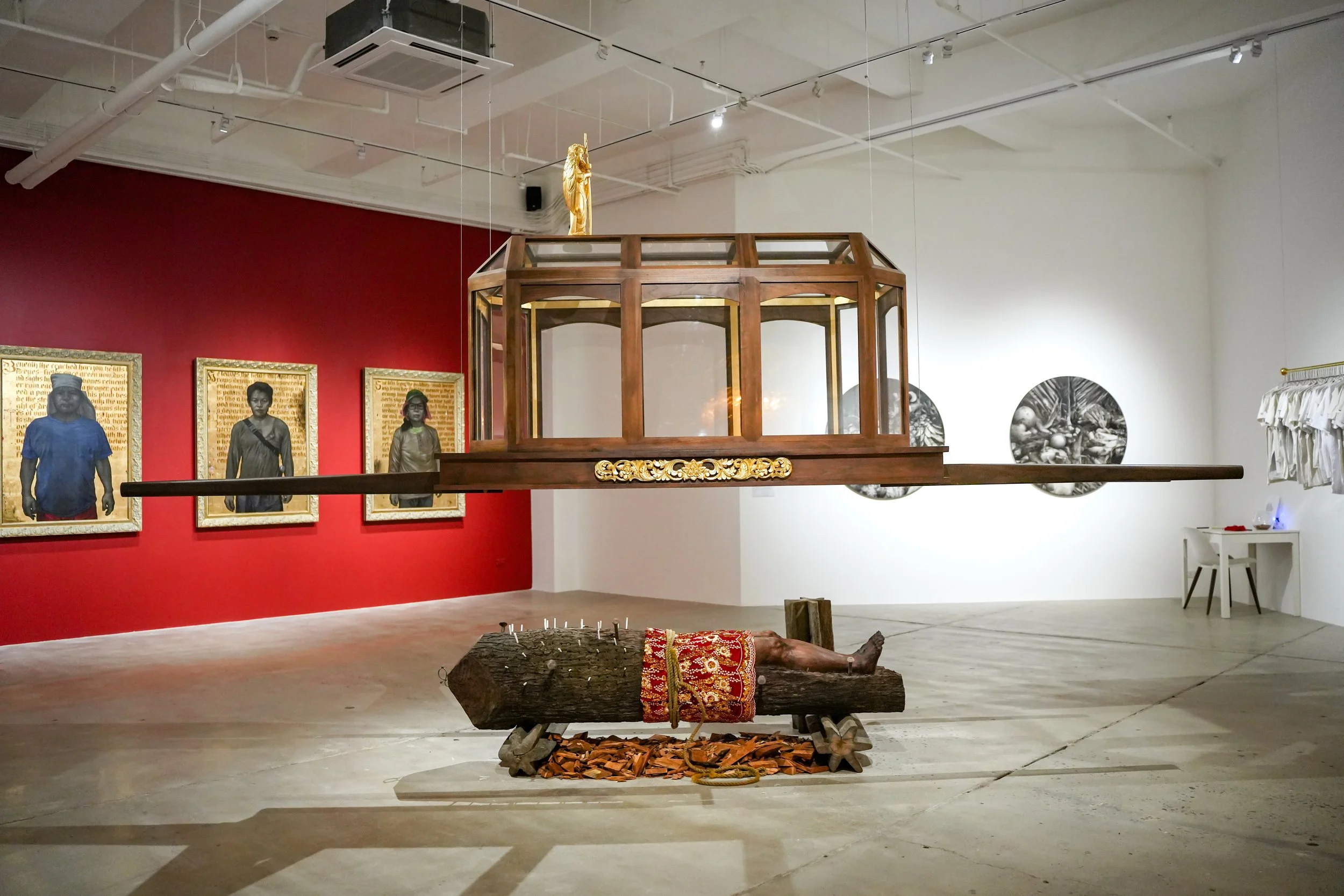
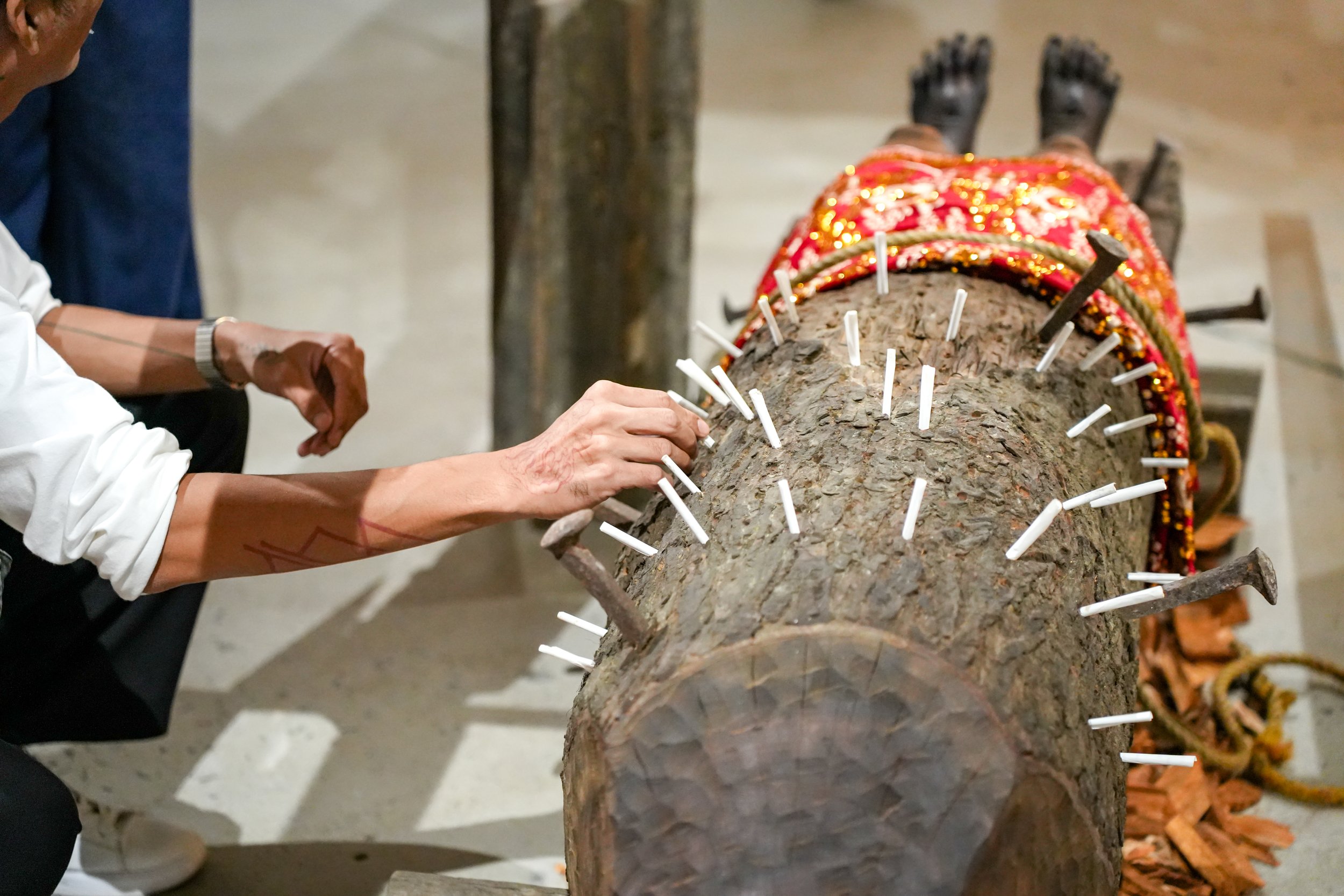
In Halik sa Lupa, this emphasis on narrative surfaces repeatedly. Portraits of farmers become devotional icons; discarded objects transform into relic-like assemblages; garments worn during religious processions appear as artifacts of collective memory.
The works transcend representations—they are translations of lived experience.
The ground as beginning
By the end of the talk, the title of his exhibition felt newly resonant.
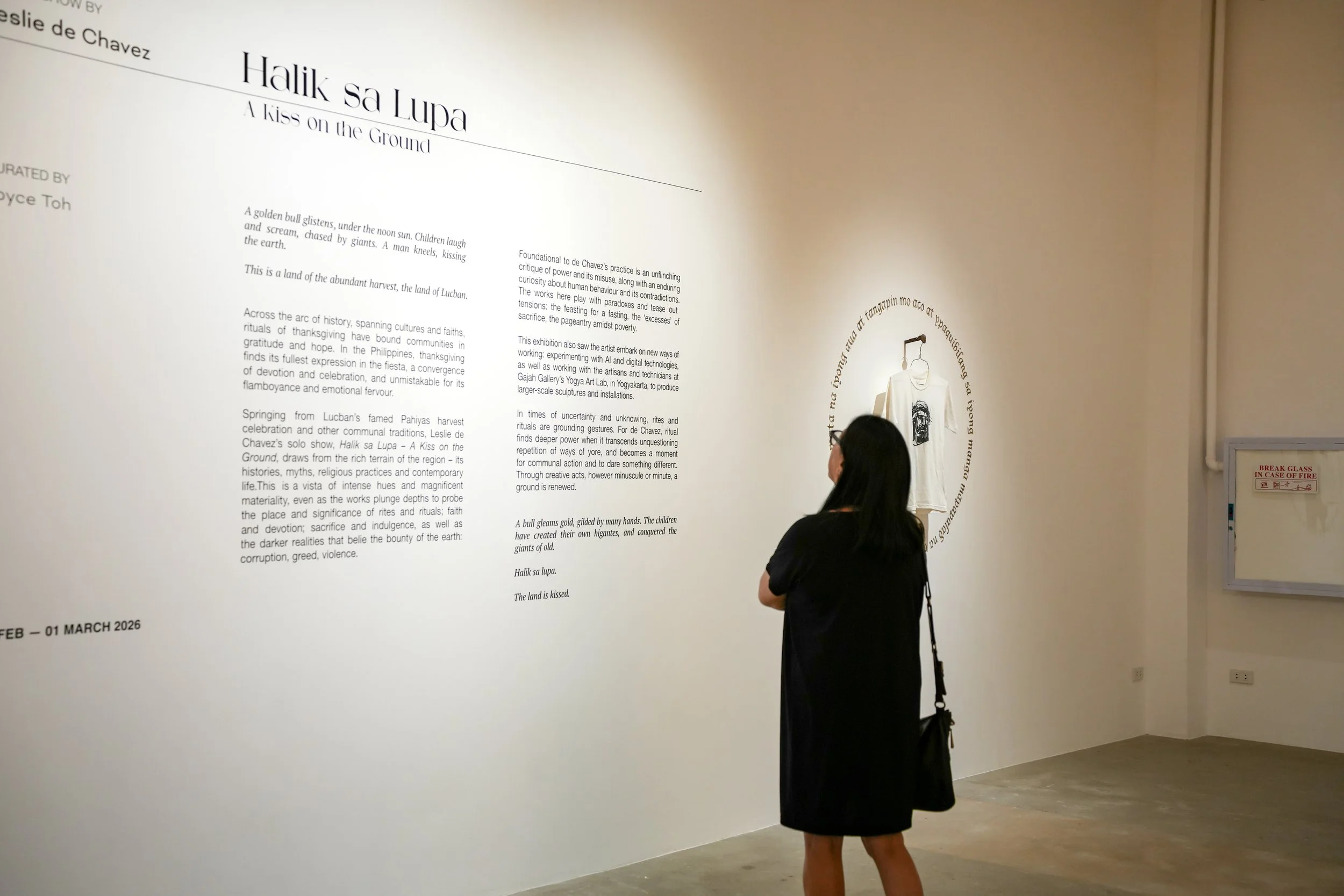
Halik sa Lupa—a kiss on the ground—suggests humility, gratitude, and reverence. But it also implies proximity to the earth: to community, to labor, to everyday life.
For Leslie de Chavez, that ground is not merely symbolic. It is where art begins.