
Mabining Mandirigma: A Steampunk, or a Reflection of the Current Situation?
Through gears, music, and revolutionary drama, Mabining Mandirigma: A Steampunk Musical revisits the ideals of Apolinario Mabini
Words Gerie Marie Consolacion
Photos courtesy of May Celeste
March 19, 2026

History often appears distant and confined to textbooks, dates, and familiar names. Yet in the hands of theater, history can transform into something immediate and unsettlingly relevant. This is exactly what audiences experience when Mabining Mandirigma: A Steampunk Musical returns to the stage of Tanghalang Ignacio Gimenez.
Produced by Tanghalang Pilipino with a book by Nicanor Tiongson and music by Joed Balsamo, the musical has earned its place as one of the most influential contemporary productions in Filipino theater. Since its debut in 2015, the show has gained both critical and popular acclaim. It famously swept several categories at the Gawad Buhay Awards, including Outstanding Original Musical, and has continued to attract audiences whenever it returns to the stage.
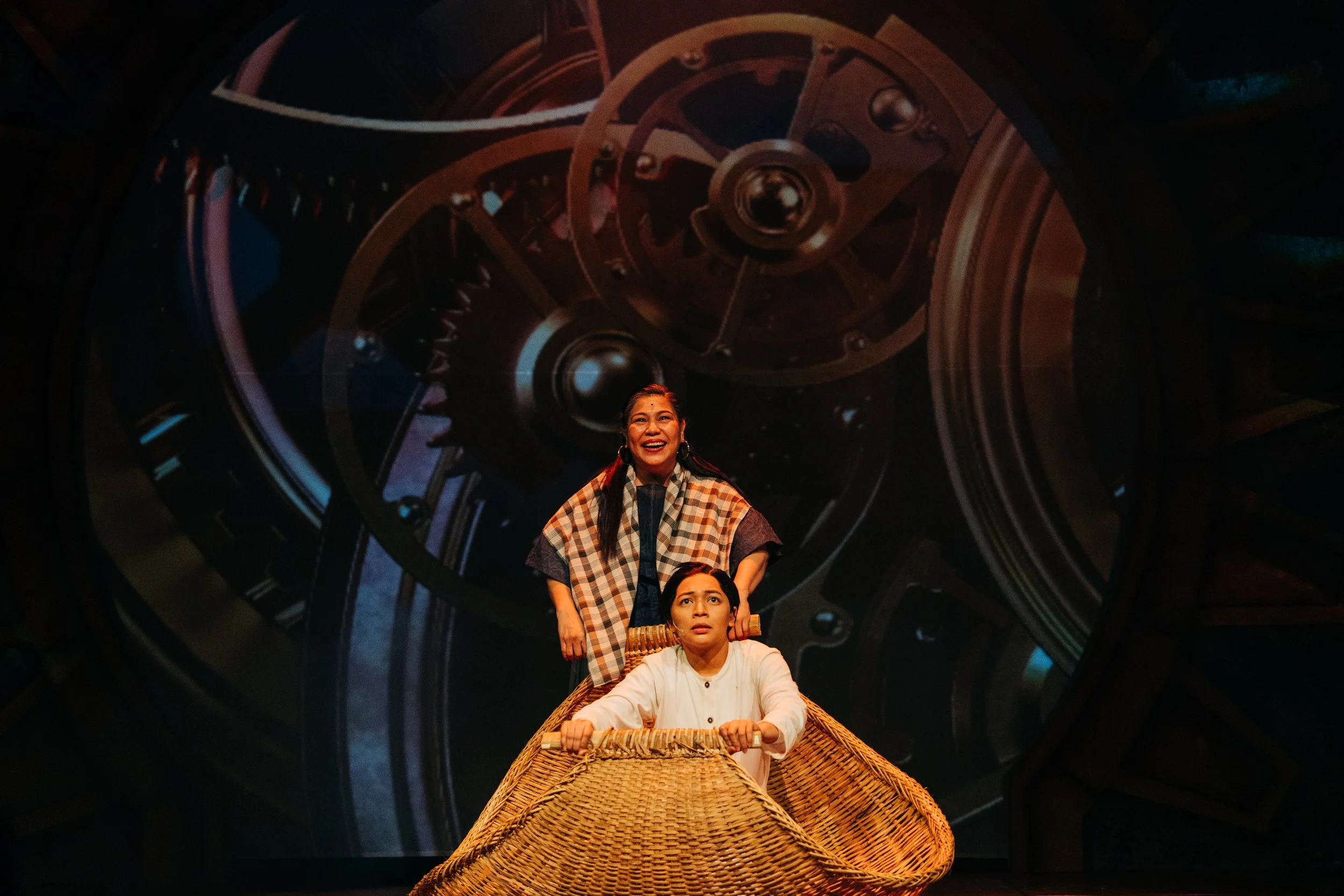
At first glance, the production dazzles with its unusual concept. The Philippine Revolution unfolds in a world inspired by steampunk, a visual style that mixes Victorian aesthetics with mechanical imagination. Brass, gears, elaborate costumes, and industrial imagery fill the stage. The setting feels both historical and futuristic at the same time. Yet beyond the spectacle lies a deeper narrative that invites the audience to reflect on the present.
The musical raises an important question. Is this simply an inventive retelling of history, or does it mirror the political and social tensions of the Philippines today?
Reimagining the Voice of Mabini
At the heart of the story is Apolinario Mabini, one of the most brilliant political thinkers of the Philippine Revolution. Known in history as the “Sublime Paralytic,” Mabini served as a key adviser to Emilio Aguinaldo during the formation of the revolutionary government.
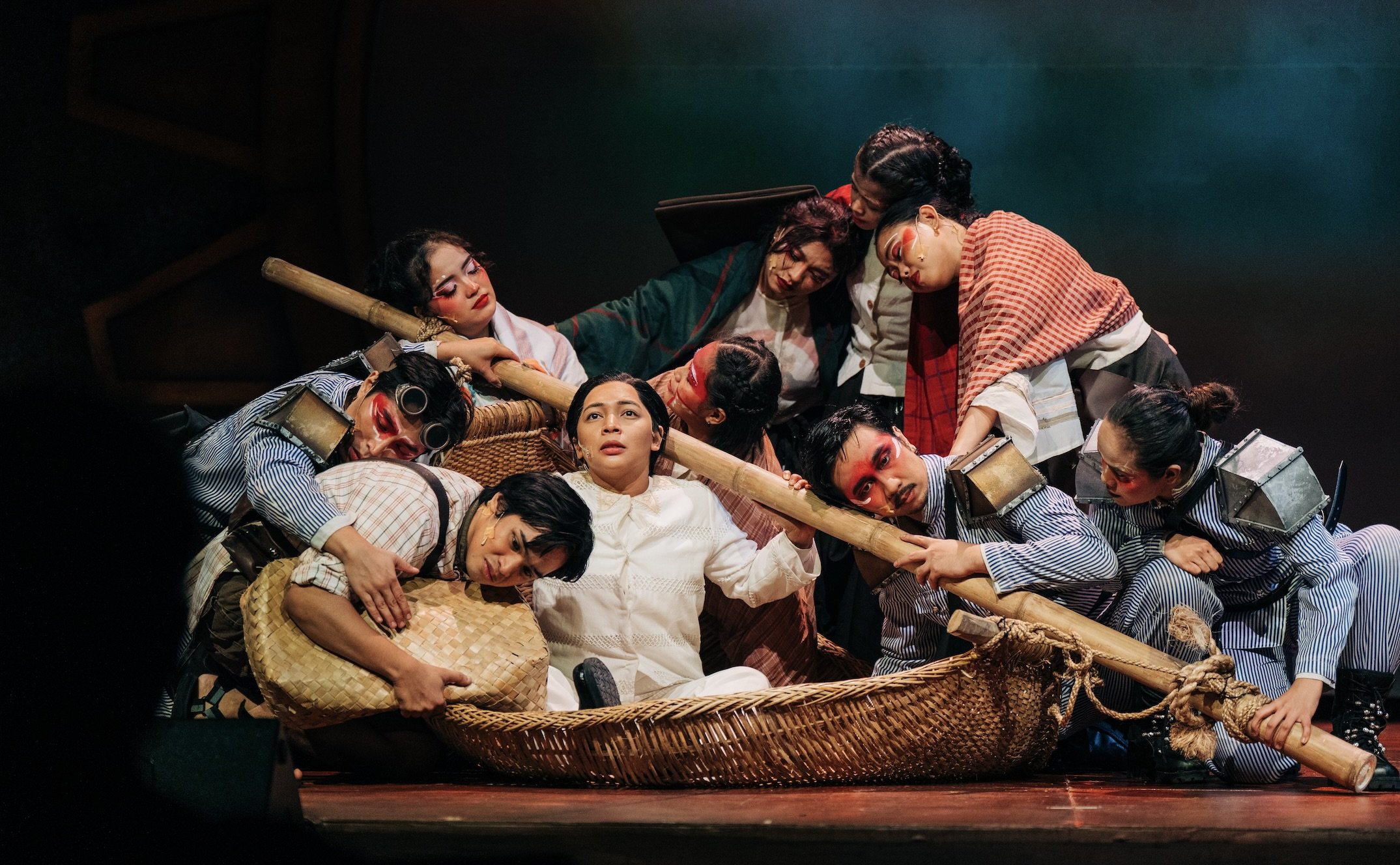
One of the most distinctive choices in the musical is the casting of a female actor to portray Mabini. This decision immediately sets the character apart from the predominantly male ensemble onstage. The intention is both practical and symbolic.
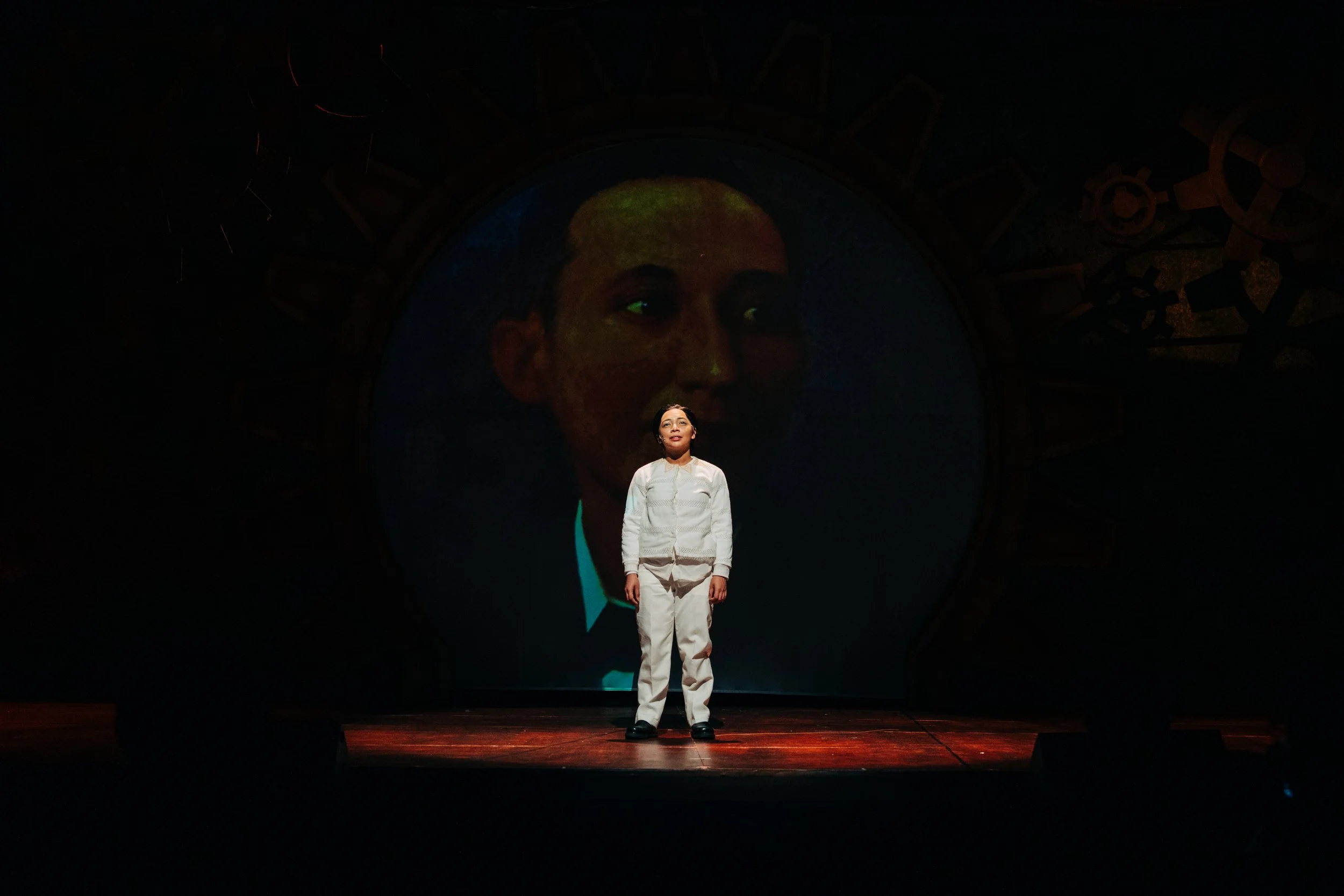
Mabini’s voice must rise above the chorus of generals, politicians, and elites who surround him. Casting a woman ensures that his presence becomes unmistakable to the audience.
In the 2026 revival, the role is performed by Shaira Opsimar. Her portrayal captures Mabini’s intellectual strength as well as his emotional struggle. Throughout the musical, she expresses the frustration of a man who sees the future of the nation with clarity but struggles to convince those in power to listen.
Opsimar follows a strong line of performers who have taken on the challenging role in previous productions, including Delphine Buencamino, Liesl Batucan, and Monique Wilson. Each interpretation highlights a different dimension of Mabini’s character. Some emphasize his quiet determination, while others focus on his moral intensity.
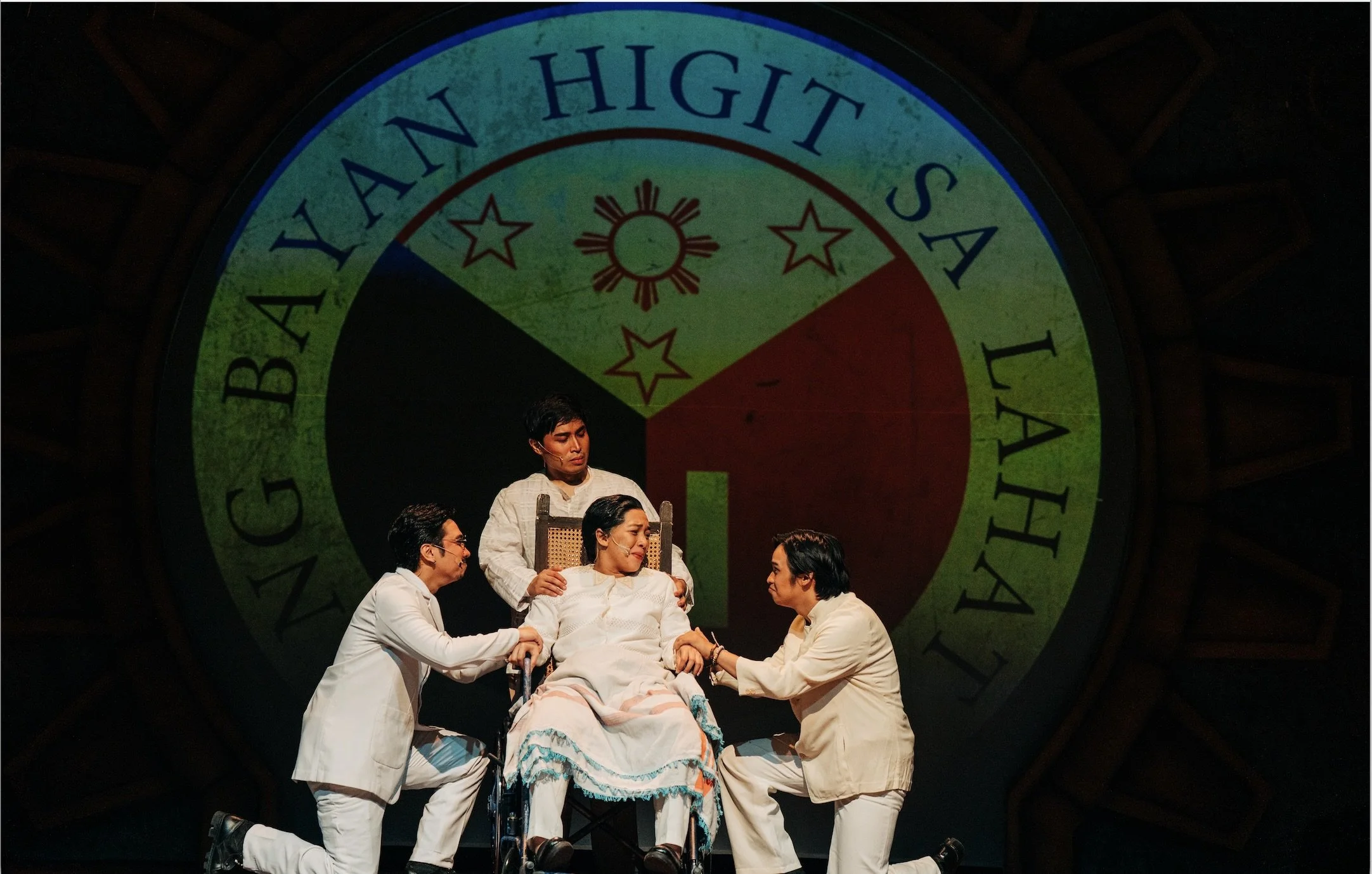
The choice to cast women in these roles also reinforces one of the themes embedded in the musical. The story promotes the importance of diversity in leadership and in national discourse. By placing women at the center of a narrative traditionally dominated by male historical figures, the production reminds audiences that the struggle for nationhood involves voices from different backgrounds and perspectives.
This approach is also reflected in the role of the young revolutionary priest Apolinario de la Cruz, more commonly known as Pule. In this production, the younger version of the character is played by singer-actress Ynna Rafa. The casting reinforces the production’s intention to reinterpret history while keeping its essential ideas intact.
The Chairs of Power
Among the many visual details in the musical, one stands out for its powerful symbolism. The relationship between Mabini’s wheelchair and the imposing chair of Aguinaldo becomes a striking theatrical image.
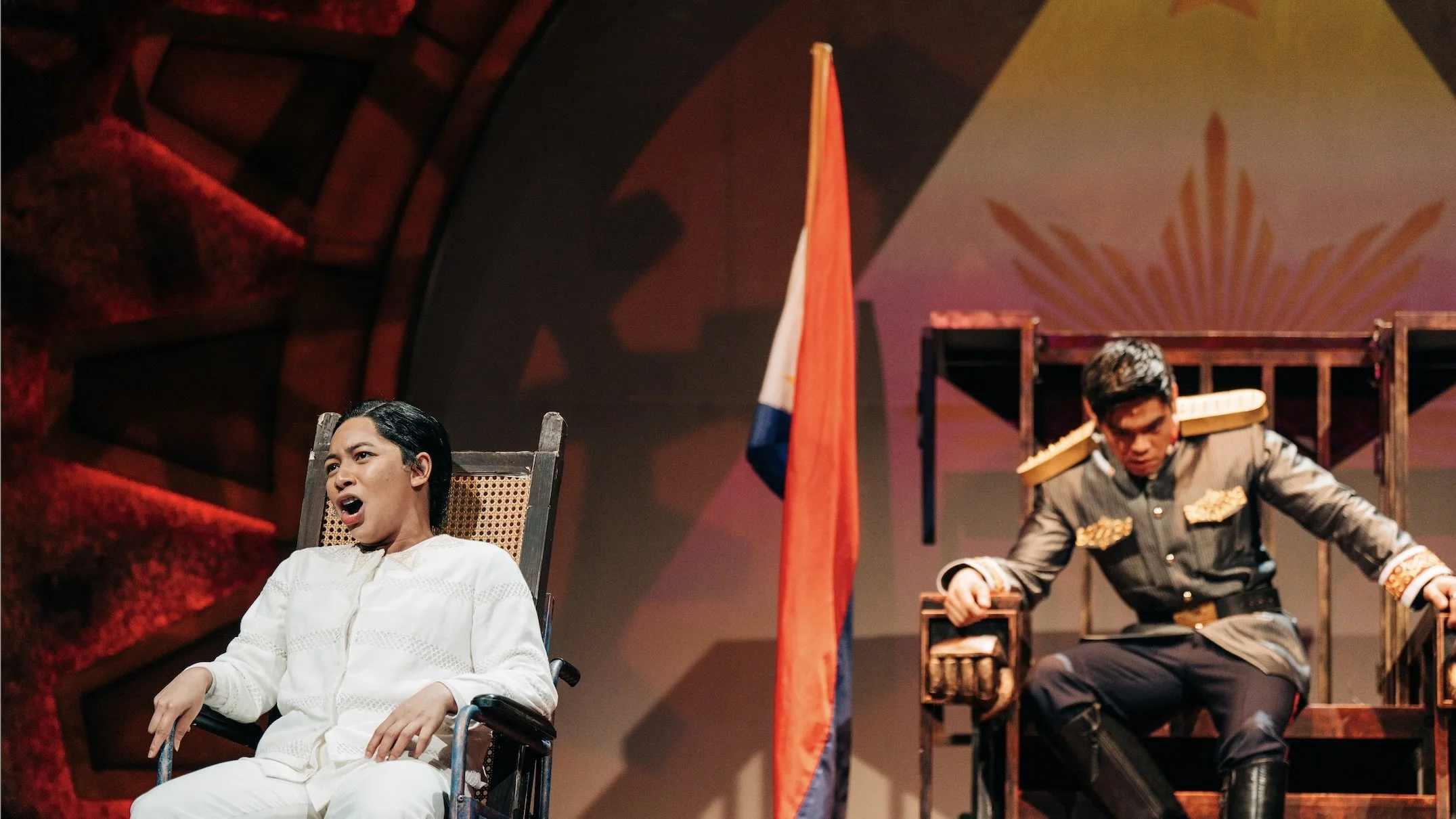
Mabini’s wheelchair is constantly visible throughout the performance. It reminds the audience of the physical limitations that defined his life. However, the musical emphasizes that these limitations never diminished his intellectual power. From this chair, Mabini developed ideas about governance, national identity, and independence that shaped the revolutionary government.
In contrast, Aguinaldo’s chair appears much larger and more commanding. The design resembles an enlarged version of Mabini’s wheelchair, almost as if the smaller chair has been magnified into a throne of authority.
The visual parallel suggests an important interpretation of history. Aguinaldo may occupy the seat of power, but Mabini represents the mind guiding the government’s direction. The imagery hints that leadership is not always determined by the person who sits in the highest chair.
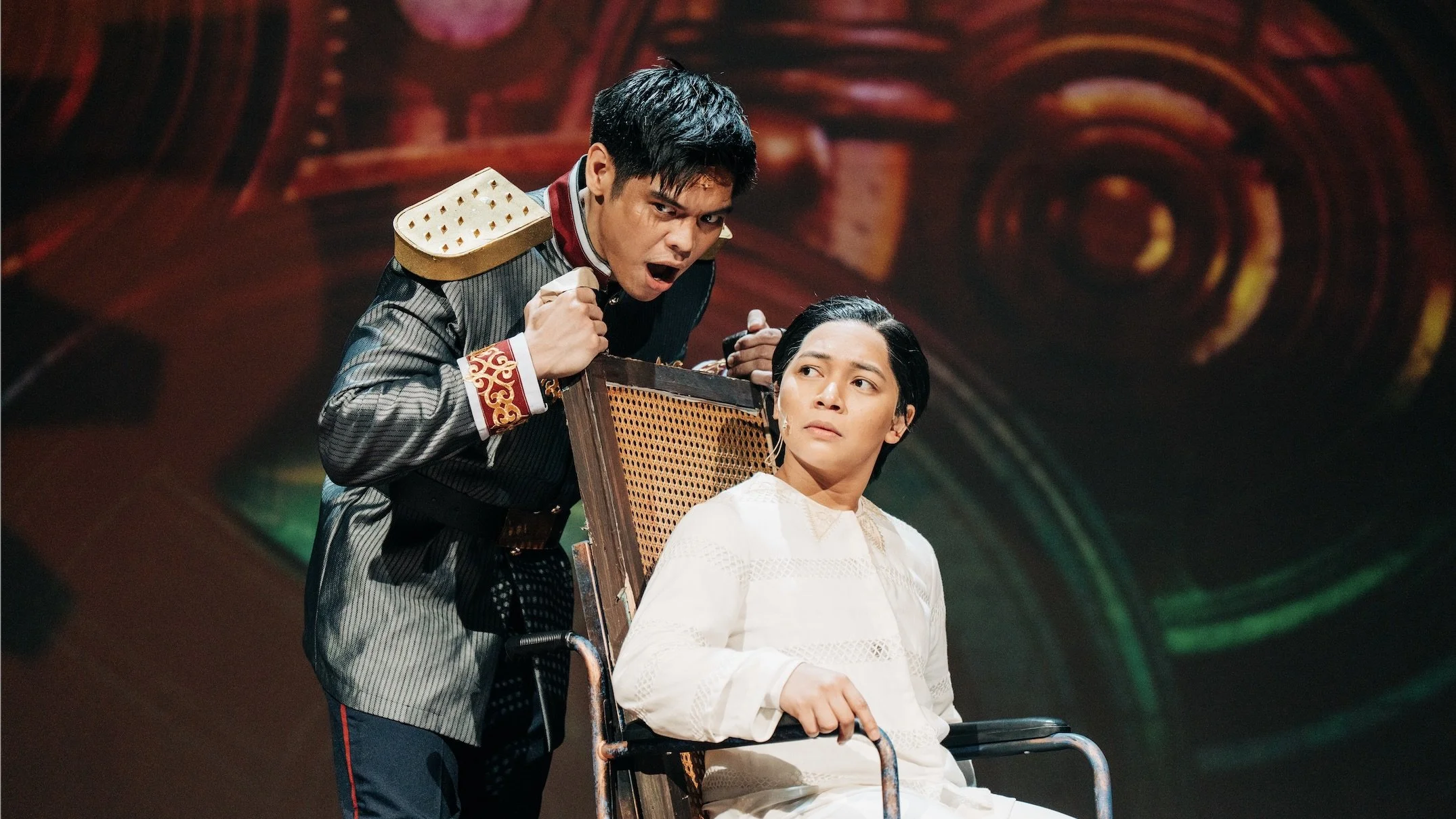
Sometimes the real power lies with the individual whose ideas shape the decisions being made.
This detail also reveals the careful thought behind the production’s design. Even the physical arrangement of objects onstage contributes to the narrative being told.
The Danger of Asking Questions
One of the most memorable lines in the musical comes from Mabini’s mother. She warns her son with the words:
“Ang taong mapagtanong ay ikinukulong.”
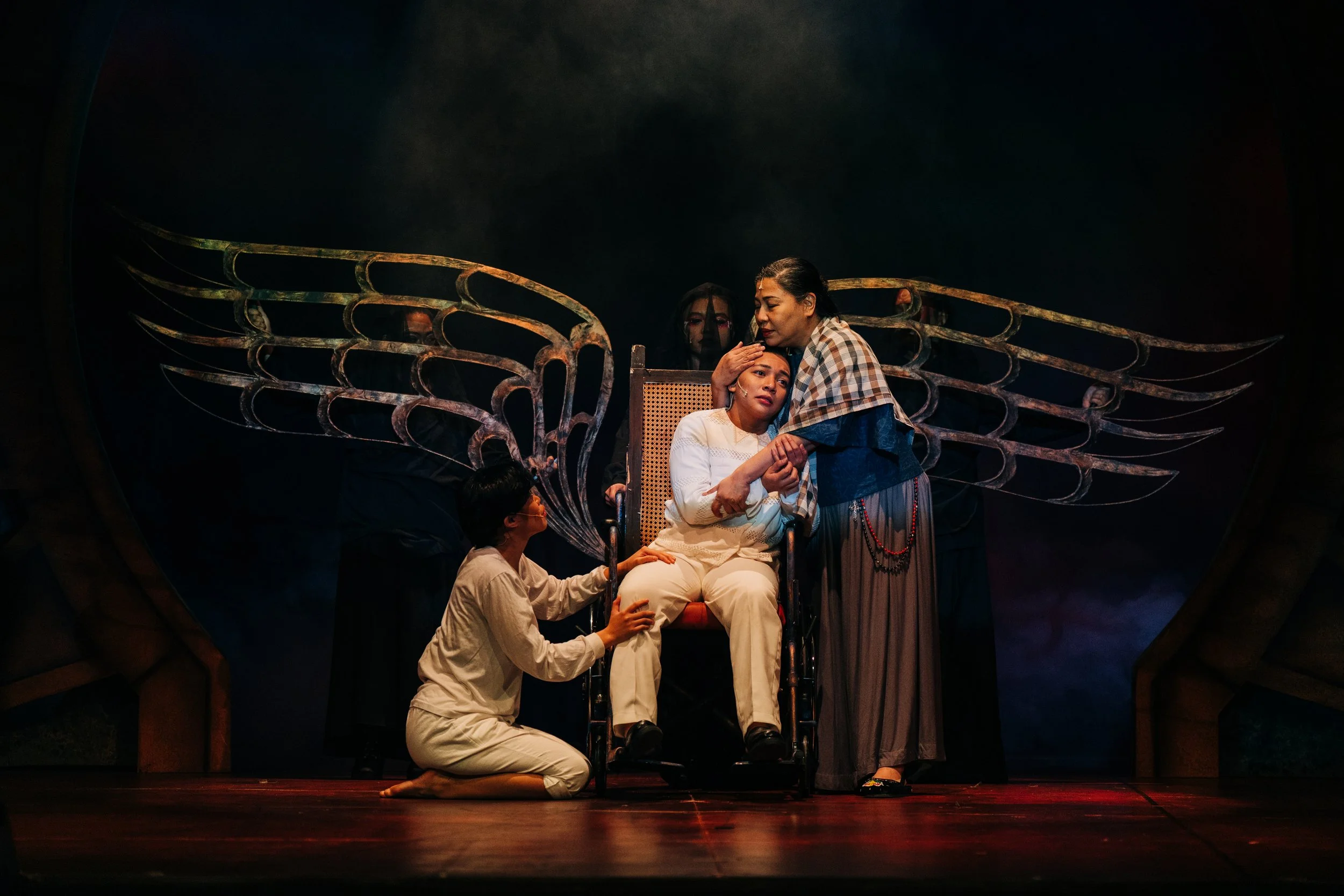
Within the historical context of the play, the statement reflects the fear that surrounded dissent during Spanish colonial rule. For a young Mabini, curiosity about the behavior and authority of the colonizers was considered dangerous. Asking questions could easily be interpreted as rebellion.
Yet the line resonates strongly with contemporary audiences. In modern Philippine society, there are still moments when individuals who demand transparency or accountability face intimidation, harassment, or legal consequences. Journalists, activists, and ordinary citizens who raise difficult questions often encounter resistance from those in power.
The warning from Mabini’s mother therefore carries a meaning that extends far beyond the historical setting. It highlights the enduring tension between authority and inquiry. The musical reminds the audience that democracy depends on people who are willing to ask questions even when doing so carries risks.
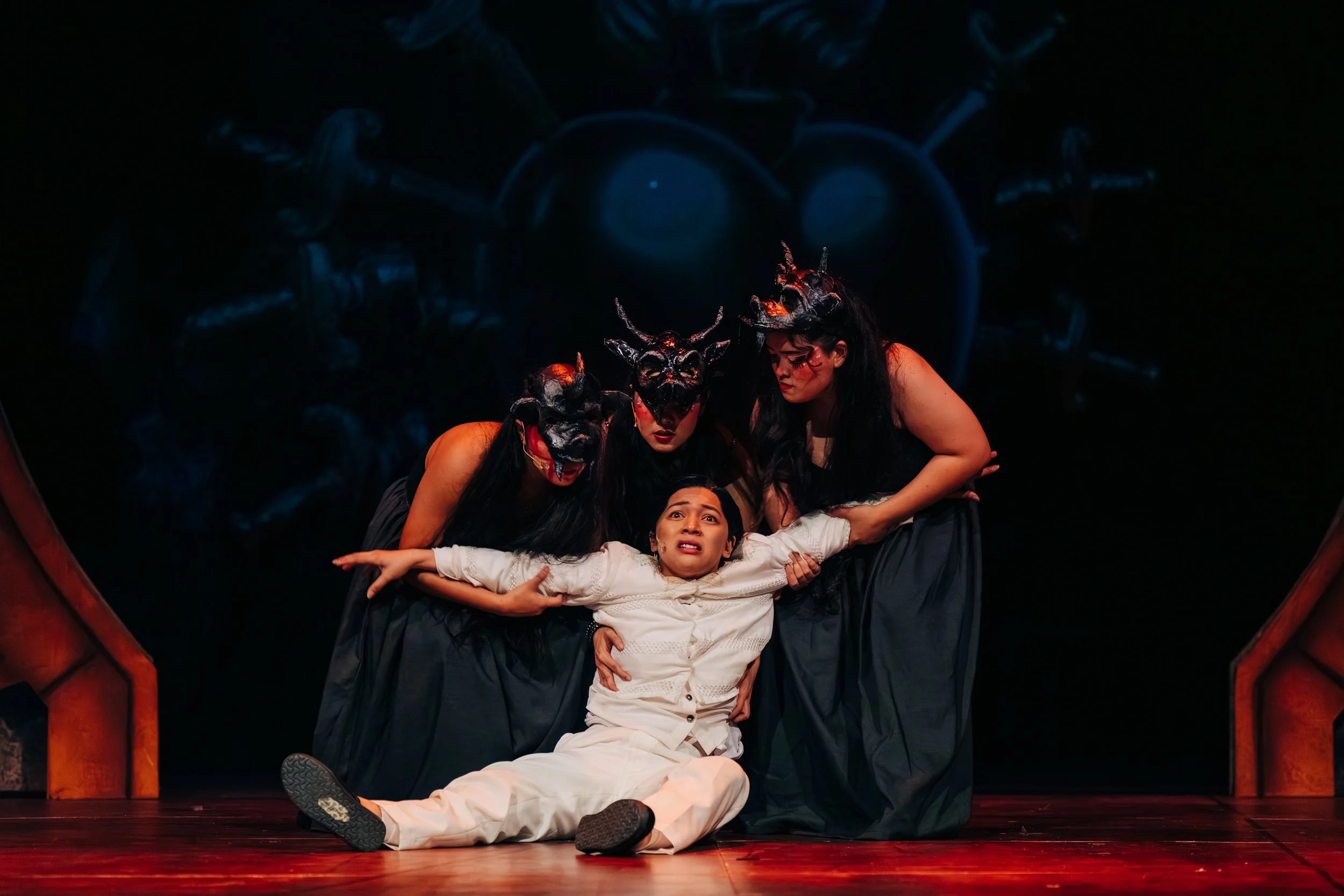
Mabini himself refused to remain silent. His writings and political ideas emphasized the need for a government built on justice, accountability, and equal representation. His intellectual courage became one of his greatest contributions to the nation.
The Meaning of Being “Inapo ni Mabini”
In public discourse, Filipinos sometimes refer to themselves as “inapo ni Mabini.” The phrase suggests a symbolic connection to the revolutionary thinker. It implies that the ideals he championed continue to live in the present generation.
However, the musical challenges this romantic notion in subtle ways.
Mabini’s life demonstrates that patriotism requires more than admiration for historical heroes. He consistently defended the idea of a transparent and accountable government. Even when his advice was unpopular, he refused to abandon his principles.
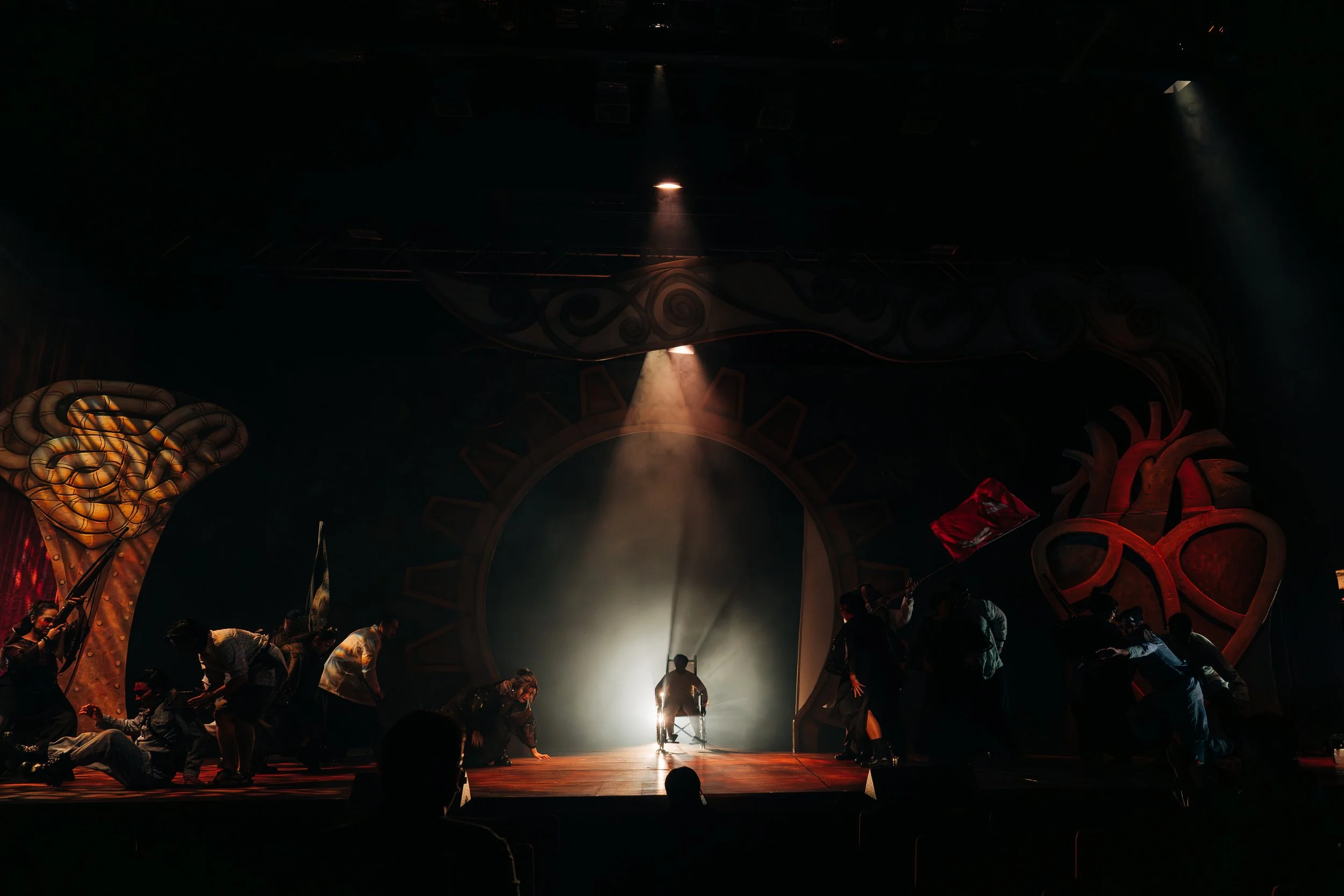
Because of this, the title “inapo ni Mabini” cannot simply be claimed by everyone. To embody Mabini’s legacy requires a commitment to the same values he defended. These include the courage to challenge injustice, the willingness to demand transparency, and the determination to protect the nation’s sovereignty.
Without these qualities, invoking Mabini’s name becomes little more than symbolic rhetoric.
The Illustrado and the Present
Another important element of the musical is its portrayal of the Illustrados, the educated elite who held significant influence during the revolutionary period.
Onstage, the Illustrados appear as charismatic and flamboyant figures. Actors such as MC de la Cruz, Jonathan Tadioan, Roby Malubay, and Marco Viana bring these characters to life through energetic musical numbers and stylized choreography. Their performances are entertaining, yet their role in the story carries a critical message.
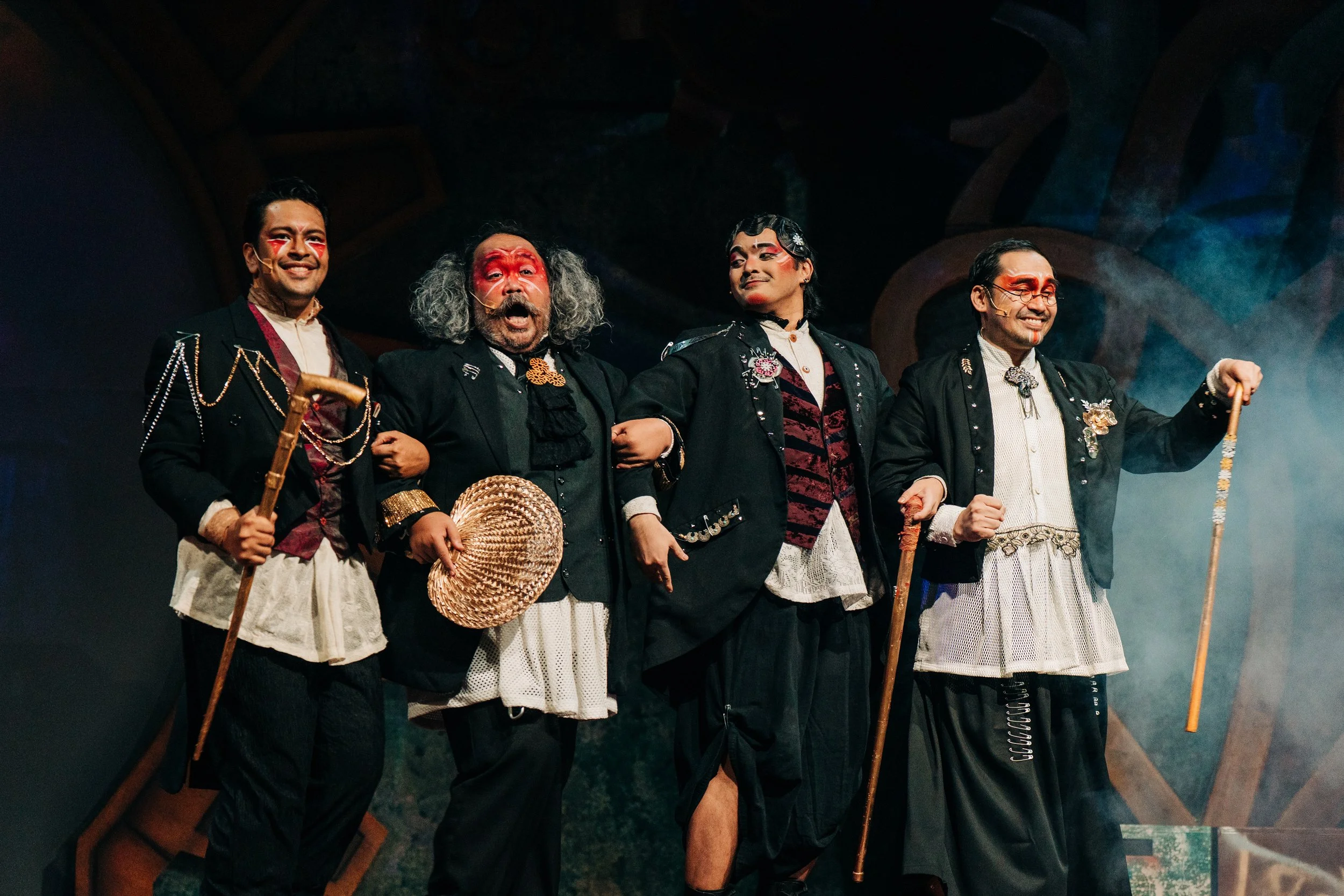
Historically, many members of the elite viewed the arrival of the Americans as an opportunity rather than a threat. Some believed that American rule would protect their social status and economic interests. This perspective often conflicted with the revolutionary ideals of independence and national sovereignty.
The musical captures this contradiction through a powerful line:
“Buhay ang mga illustrado sa katawan ng mga politikong meron tayo ngayon.”The statement invites audiences to reflect on the persistence of elite influence in modern politics. The critique does not apply only to politicians. It also raises questions about the role of intellectuals, educators, and professionals in shaping public discourse.
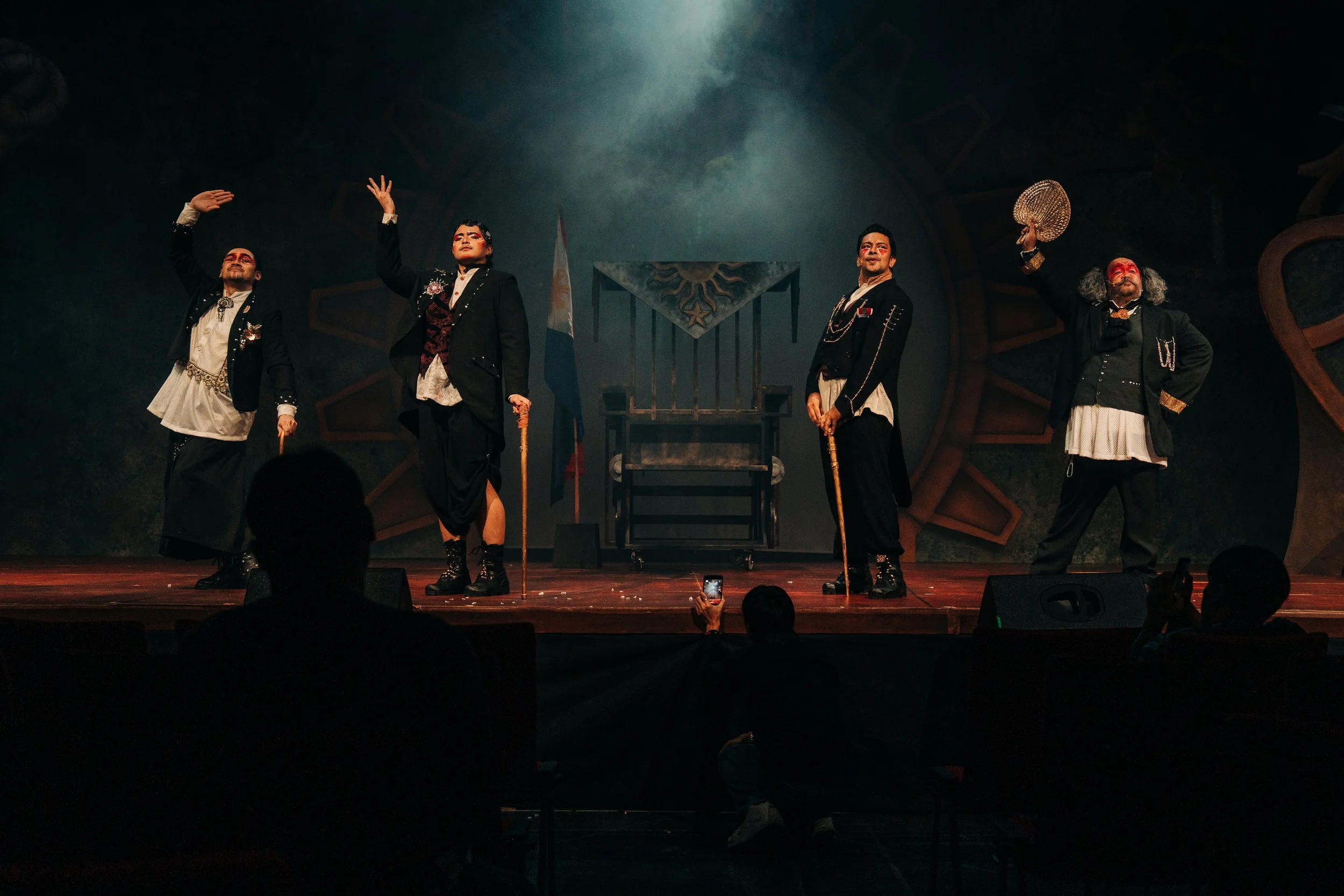
In contemporary society, there are instances when highly educated individuals defend political leaders whose actions may harm the country’s long-term interests. In these situations, education alone does not guarantee ethical leadership. The musical suggests that intellect must be paired with responsibility and genuine concern for the nation.
A World of Brass and Imagination
While the themes of the musical are serious, the production never loses its sense of theatrical wonder.
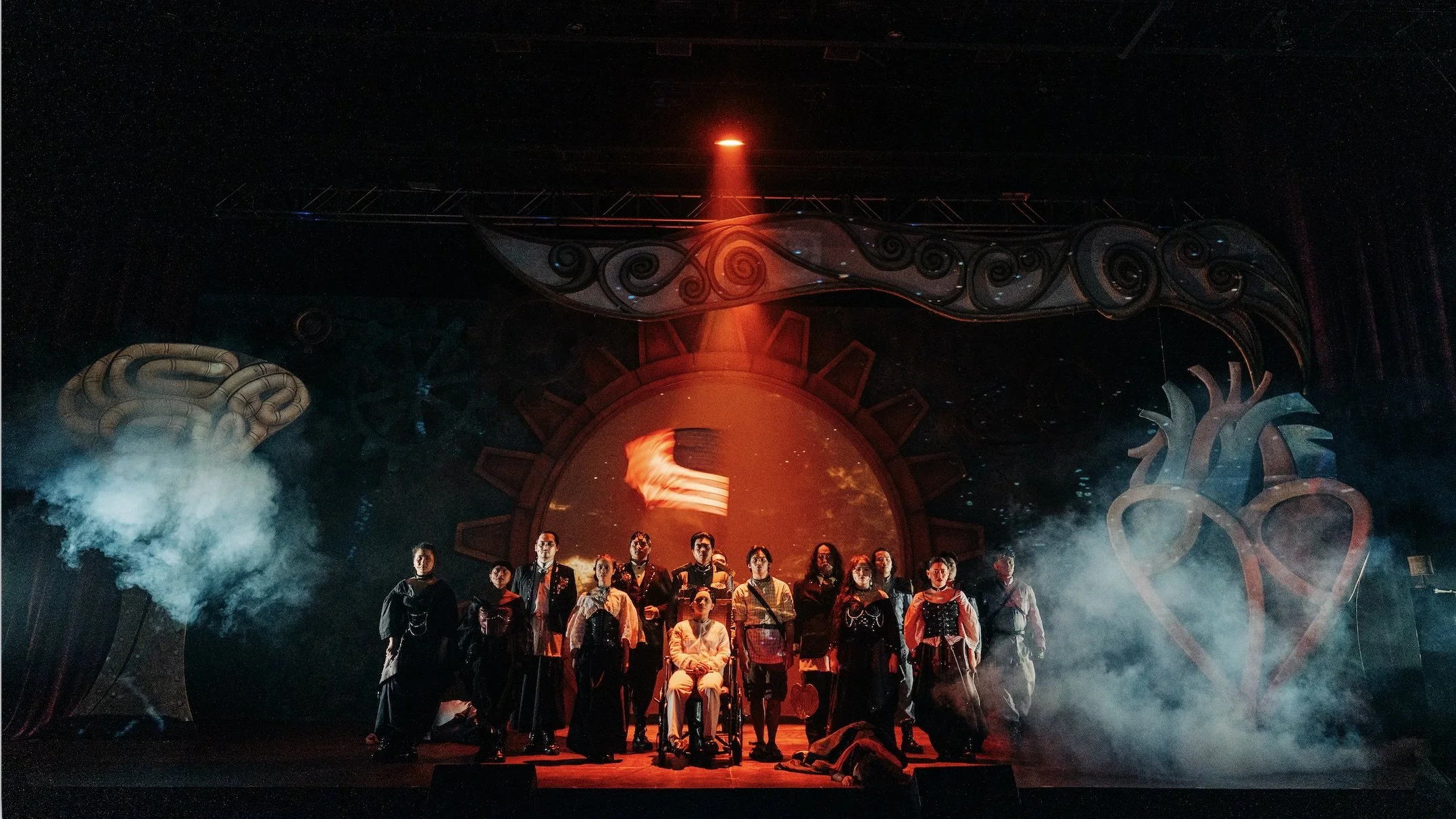
The steampunk aesthetic transforms the stage into a unique visual landscape. Sculptural sets and mechanical props designed by Toym Imao create the impression of a revolutionary world powered by gears and machinery. Costumes by the late James Reyes combine historical silhouettes with industrial textures. Projections by GA Fallarme add depth and atmosphere, while the musical arrangements by TJ Ramos blend classical theatrical traditions with contemporary sound.
The venue itself contributes to the experience. The relatively intimate space of Tanghalang Ignacio Gimenez allows audiences to observe every detail of the production. The craftsmanship of the props, the movement of the performers, and the intricacy of the costumes become part of the storytelling.
In this environment, history feels alive rather than distant.
History That Refuses to Stay in the Past
By the end of the performance, it becomes clear that Mabining Mandirigma is not simply about a revolutionary figure from the nineteenth century. The musical presents a portrait of a thinker whose ideas remain relevant to the present.
The conflicts that shaped Mabini’s time continue to appear in modern society. Questions about leadership, accountability, and national identity remain central to public life in the Philippines.
This is why the musical lingers in the mind long after the final scene. The audience begins to realize that the story unfolding onstage is not entirely about the past. It is also about the present and the choices that citizens continue to make.
The gears and machinery of the steampunk world may belong to theatrical imagination, but the questions raised by the production are very real.
In the end, the central question remains open.
Is Mabining Mandirigma: A Steampunk Musical simply a visually inventive retelling of history? Or is it a reflection of the Philippines as it exists today?