Open World
Lesley-Anne Cao engages with her environment in a dialogue of infinite possibilities.
Words Maia San Diego
Photos courtesy of Dennese Victoria, Miguel Lorenzo Uy, Ray Leung, and Beatrice Cao
December 19, 2025
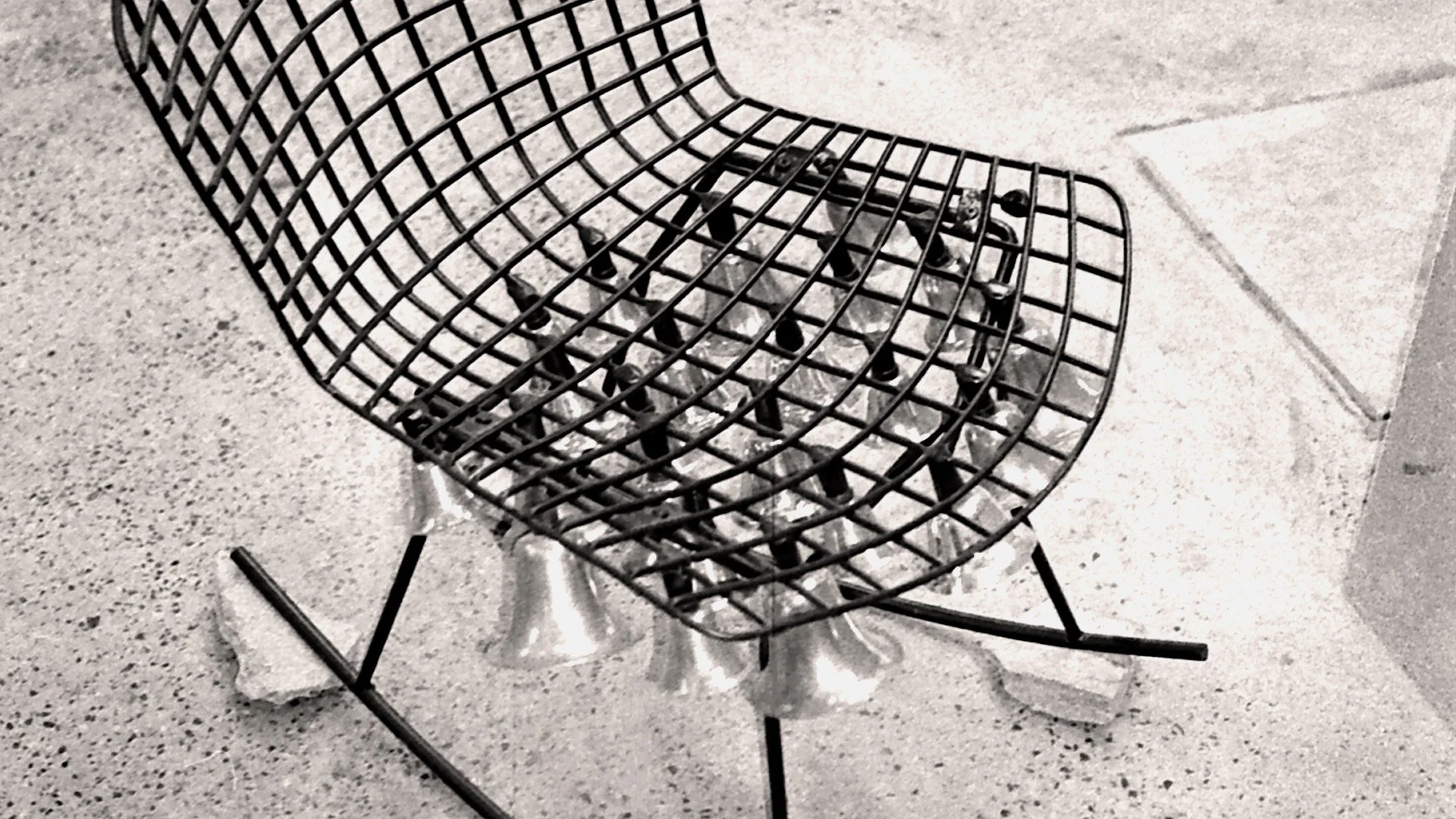
“When I was a child, I was playing outside and saw in the corner of my eye something that instantly told me that I saw something valuable.”
Artist Lesley-Anne Cao recalls her early beginnings—when she first began to see the world through a lens of wonder and endless inquiry. From the start, curiosity about her surroundings had already taken root. As a child, she once pondered the mysteries of a found rock:
“I found among the rough gravel a small rock that appeared to be partially gold […] I wonder what it was, what brought it there, why it had that color, why I thought and felt what I did.”
This early sensitivity became a seed—an elemental part of her process. With innocence and openness, she began a dialogue with the natural world.
A SEED
Cao describes her practice as a continuous study of materiality, language, and art-making. She works with self-produced, found, and collected materials—usually objects, images, text, and space—to consider new forms, narratives, and environments.
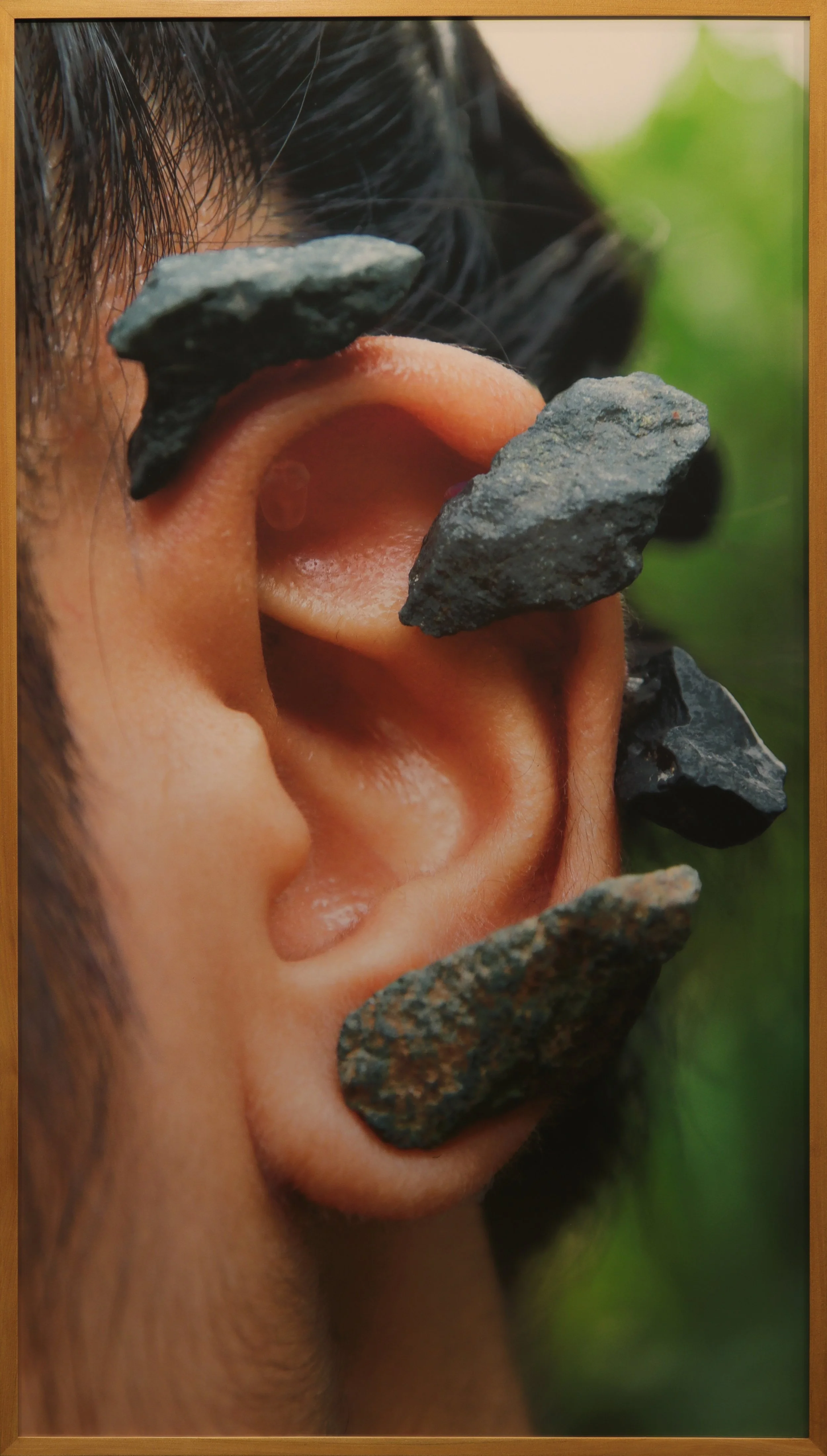
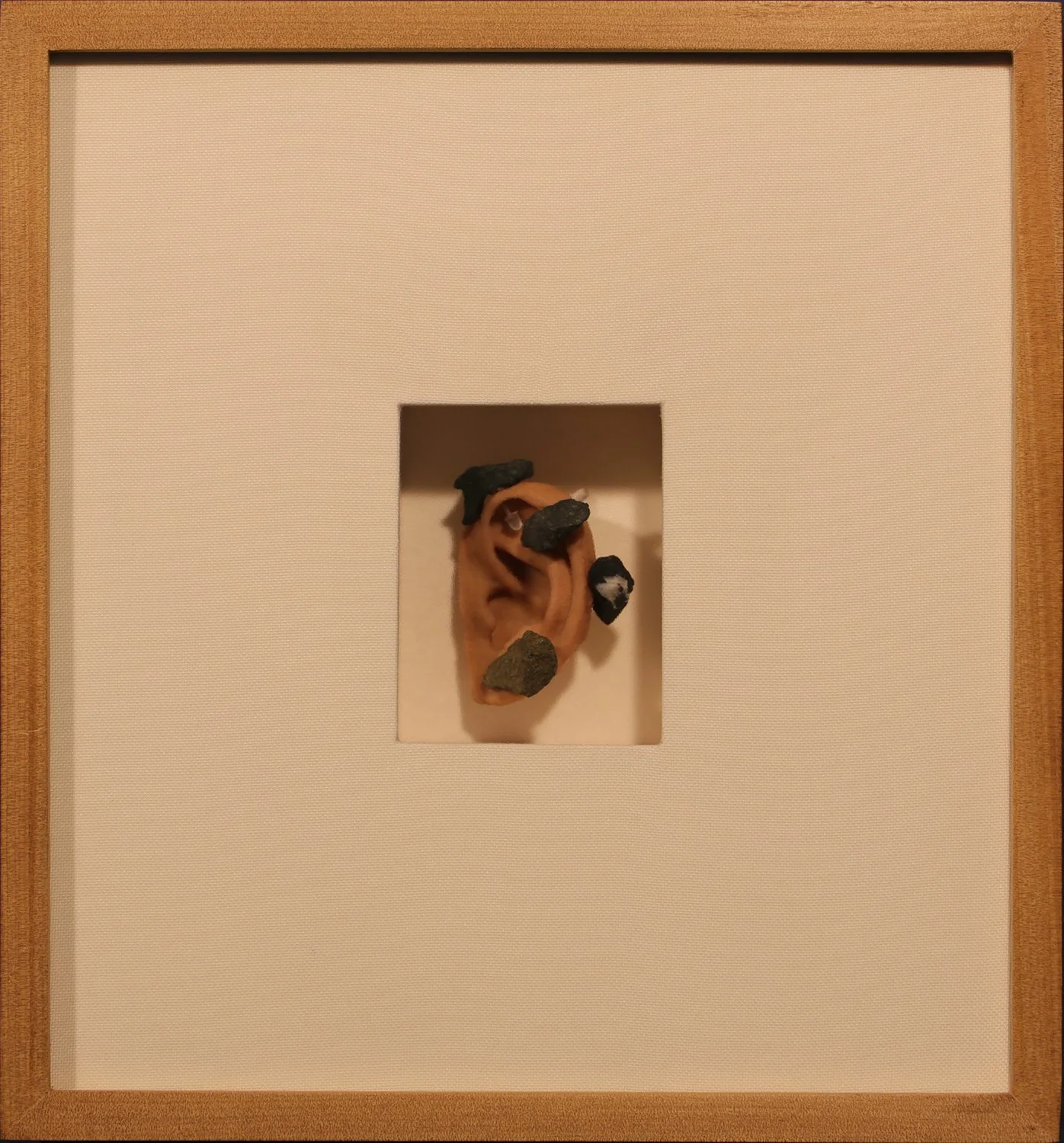
Untitled, 2018, diptych with inkjet print on archival paper and silicone, plastic, and rocks, 124.5 x 71.1cm and 30.5 x 27.5cm. Part of the solo exhibition The hand, the secretary, a landscape at the Center of the Philippines. Photography by Miguel Lorenzo Uy. Courtesy of the artist.
Her process is intuitive and process-driven, spanning installation, sculpture, video, photography, drawing, and text.
She enjoys working across disciplines, often collaborating with people in music, literature, crafts, and digital technologies—alongside mutable materials, machines, and environmental elements.
In 2013, Cao attended the École nationale supérieure des beaux-arts in Paris as an international exchange student. She earned her degree in Painting from the University of the Philippines Diliman College of Fine Arts in 2014.
Her first solo exhibition, The hand, the secretary, a landscape, opened in 2018 at the Cultural Center of the Philippines. In the years that followed, she mounted solo shows: Hard and soft prayers (The Drawing Room, 2021), A song plays from another room (MO_Space, 2021), and If time is an arrow, what is its target (Underground Gallery, 2023), while also actively participating in local and international group exhibitions.
Among her recognitions are the National Commission for Culture and the Arts International Travel Grant (2019), the 100 Artists Grant in Switzerland (2022), and being shortlisted for the Fernando Zobel Prizes for Visual Art in both 2019 and 2025.
A PROCESS
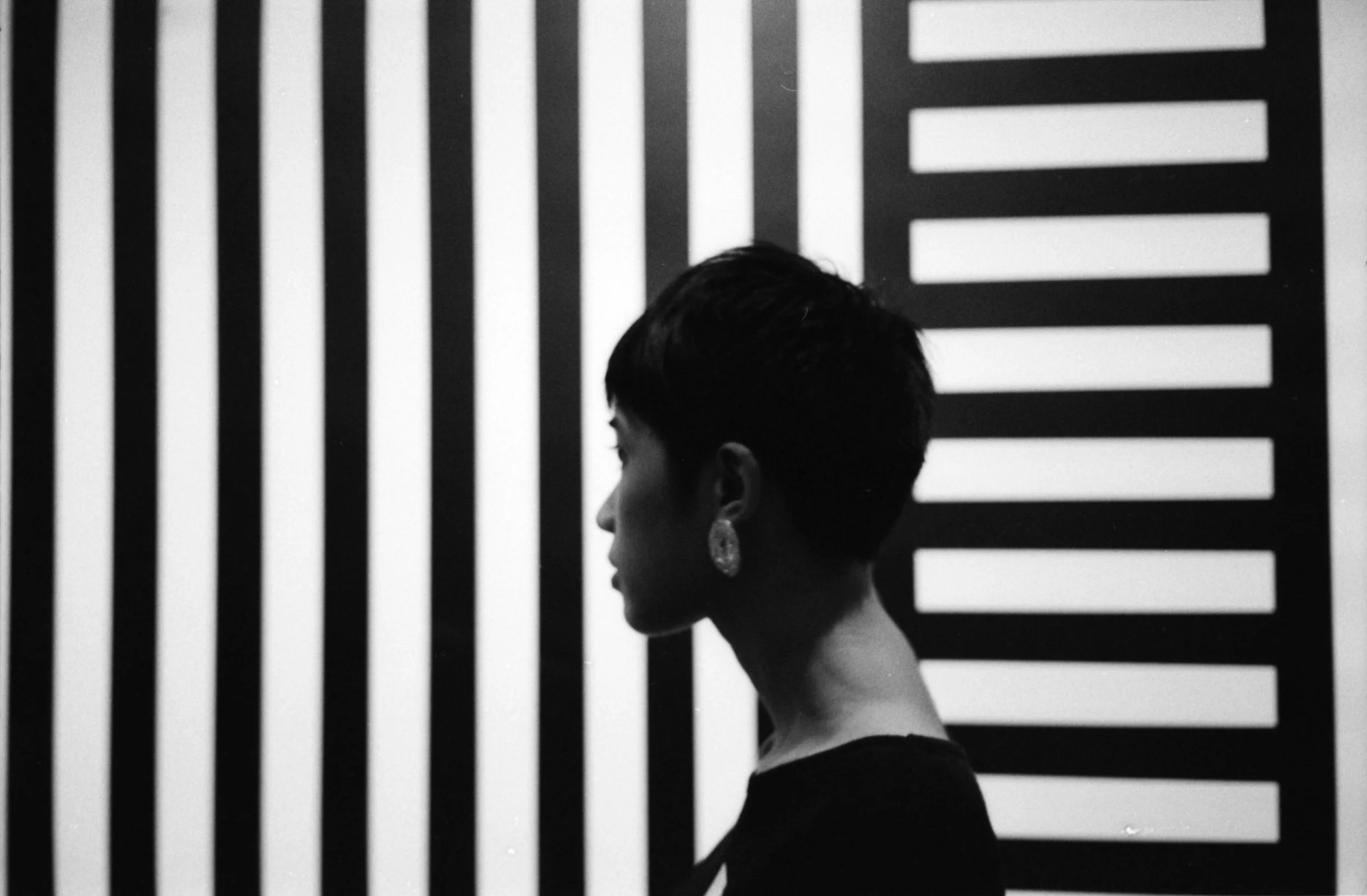
Portrait of Lesley-Anne Cao. Portrait by Beatrice Cao.
Cao’s projects begin from two main sources: the “seeds” of ideas that come from everyday life, and external invitations that provide her with specific parameters—space, time, resources, collaborators, and publics.
“There are seeds of ideas in my head. They come from everyday life and things I observe, look for, or chance upon [...] they can be socio-cultural and environmental phenomena and can be seemingly inconsequential things.”
When responding to opportunities, she evaluates what’s available and lets these conditions shape the form of the work:
“The way I work is that I respond to invitations or openings [...] What space is there? What resources are available? How much time do I and the work have? Who am I working with? Who will likely encounter this work? What will be the lifespan of the work, often in public, and what of its life ‘after’?”
This dynamic approach is evident in works such as Book for Weeds (2018), made for an outdoor farm exhibition in Silang, Cavite. The potential for rain shaped both form and content: “[...] the seed for this work was not wanting to have to go around this ‘threat’ and instead making something that can endure or belong in that space.”

If time is an arrow, what is its target, 2023/2025, coconut and soy wax, silicone rubber, plywood, and heat lamps, dimensions variable. Part of the group exhibition Moments of Delay at the Museum of Contemporary Art and Design (MCAD) Manila, 28 May-28 September 2025. Photography by Dennese Victoria. Courtesy of the Museum of Contemporary Art and Design (MCAD) Manila.
Another example is If time is an arrow, what is its target (2023/2025), where silicone became a key material for its ability to hold fine detail and withstand the heat of lamps and melting wax—two critical and non-negotiable elements.
Cao considers both internal ideas and external realities when making material decisions: “Sometimes the idea first anchors on a specific material or form. Other times, the idea is anchored on a concept, movement, or atmosphere that then asks what materials or forms would best actualize it.”
Her work strikes a balance between deliberateness and flexibility. Cao believes in being responsive and open to what evolves in the process—often adjusting as she goes, based on her changing resources and discoveries.
Resources, knowledge, health, money, time, community are the challenges faced when developing a project. “A big thing for me is arriving at a practice where the work can be fluid: I can work with a central idea, and most everything else, practical and conceptual, can move or change if necessary.” She sees these shifting conditions as part of the work itself.
A FIELD
Residencies have been an essential space of inquiry and experimentation for Cao. Her most recent residency was at HART Haus in Hong Kong (2024). She also completed three earlier residencies: Keelung Ciao in Taiwan (2017), Örö Residency Programme in Finland (2019), and Gasworks in London (2023).
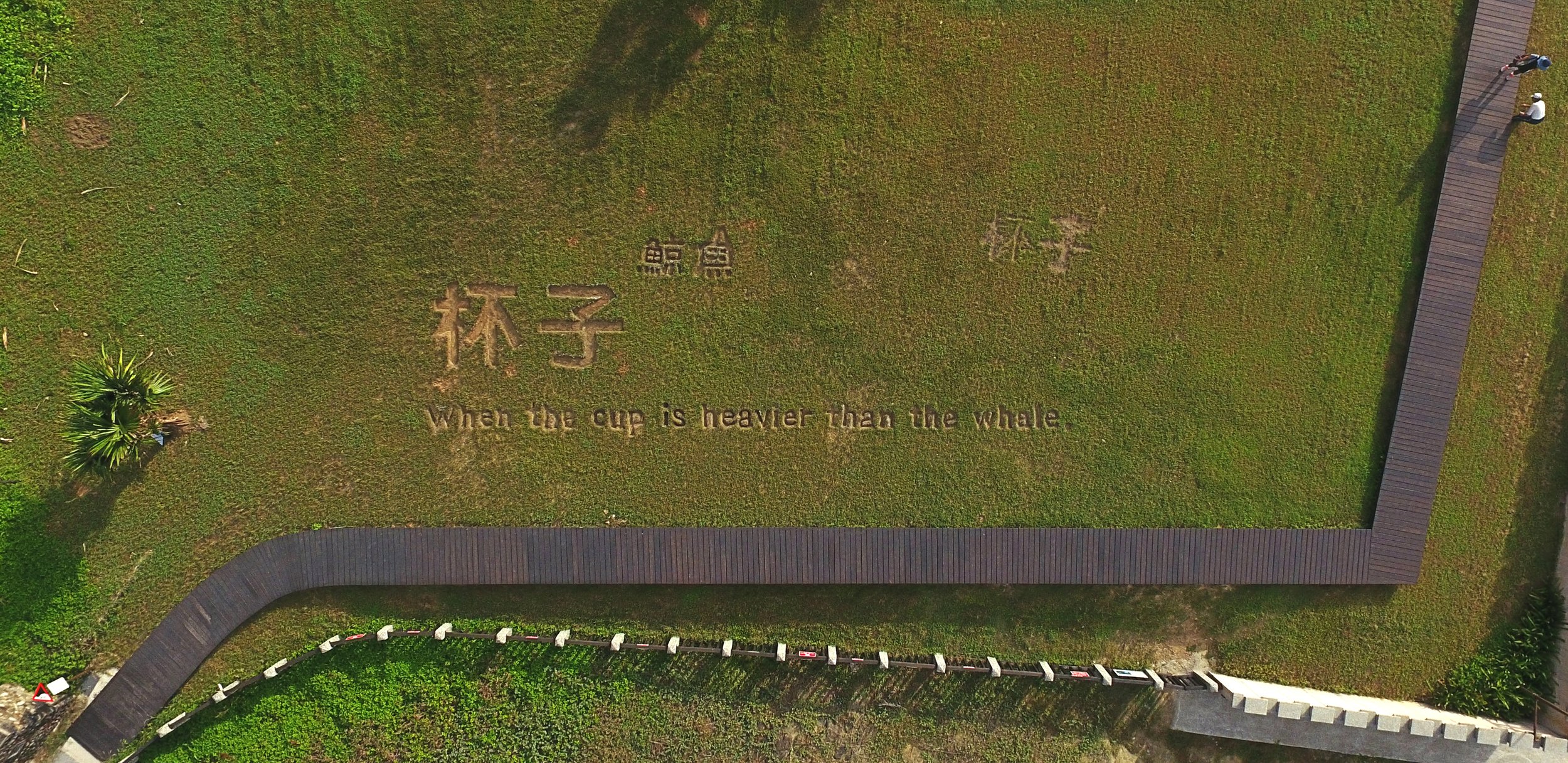
Untitled (When the cup), 2017, text, grass, 17.4 × 5.5m. Courtesy of the artist.
“For me, residencies encourage a heightened sensitivity. Sensitivity to different environments, how others live and work, how other systems are, what is ordinary and valuable, how a day feels. This leads me to new questions or new ways of asking the same questions.”
Whether in the major port city of Keelung or the fortress island of Örö, Cao's experiences of context shaped her way of seeing. London and Hong Kong offered different systems and stimuli—but all offered the opportunity to explore recognizable things in unfamiliar settings.
“Everywhere there are books, plants, instruments, textiles, stories, photographs, what have you.”
Her practice often centers on such common elements. She uses these to open up inquiry, without dictating meaning.
“What am I looking at? What am I looking for? What do I see? Can I look more closely?”
A DIALOGUE
Cao sees exhibitions as invitations to engage. While she doesn’t expect questions to be answered, she values the act of asking—and hearing how others interpret her work:
“I’m not very interested in whether questions are answered or not. But yes, the invitation is there. I think artworks and exhibitions are invitations.”
Since artists are often absent during the show’s run, she treasures indirect forms of feedback: “I appreciate hearing stories from fabricators, invigilators, gallery staff, friends who visited, or strangers who DM, who say for example that people were eager to touch a glass book or a book underwater, that someone stayed with a video or text, that children tiptoed or were lifted to peer inside work taller than them, or that an installation involving a hundred plants were thought of as a beautification project.”
Cao values seriousness and play in equal measure: “I enjoy and value mischief and mystery. So this seriousness and playfulness can mean, in a way, sharing a stage with the work where we're doing improv together and responding to a prompt, an audience, and the stage itself.”
Yet this spontaneity is always balanced with rigor and collaboration: “[...] when working professionally, this has to be done in a deliberate and collaborative way with the people you are working with.”
ONWARDS
Cao is currently working on a new iteration of Amphibian palm for Transoceanic Perspectives, a group exhibition opening in November in São Paulo, Brazil, curated by Yudi Rafael and Carlos Quijon, Jr. The first version of Amphibian palm was shown in Weather-world at Blindspot Gallery, Hong Kong (2024), and explored the materiality of books and the act of reading through book-like objects submerged in glass tanks—with mirrors, wave makers, relay timer modules, and glass counterweights.
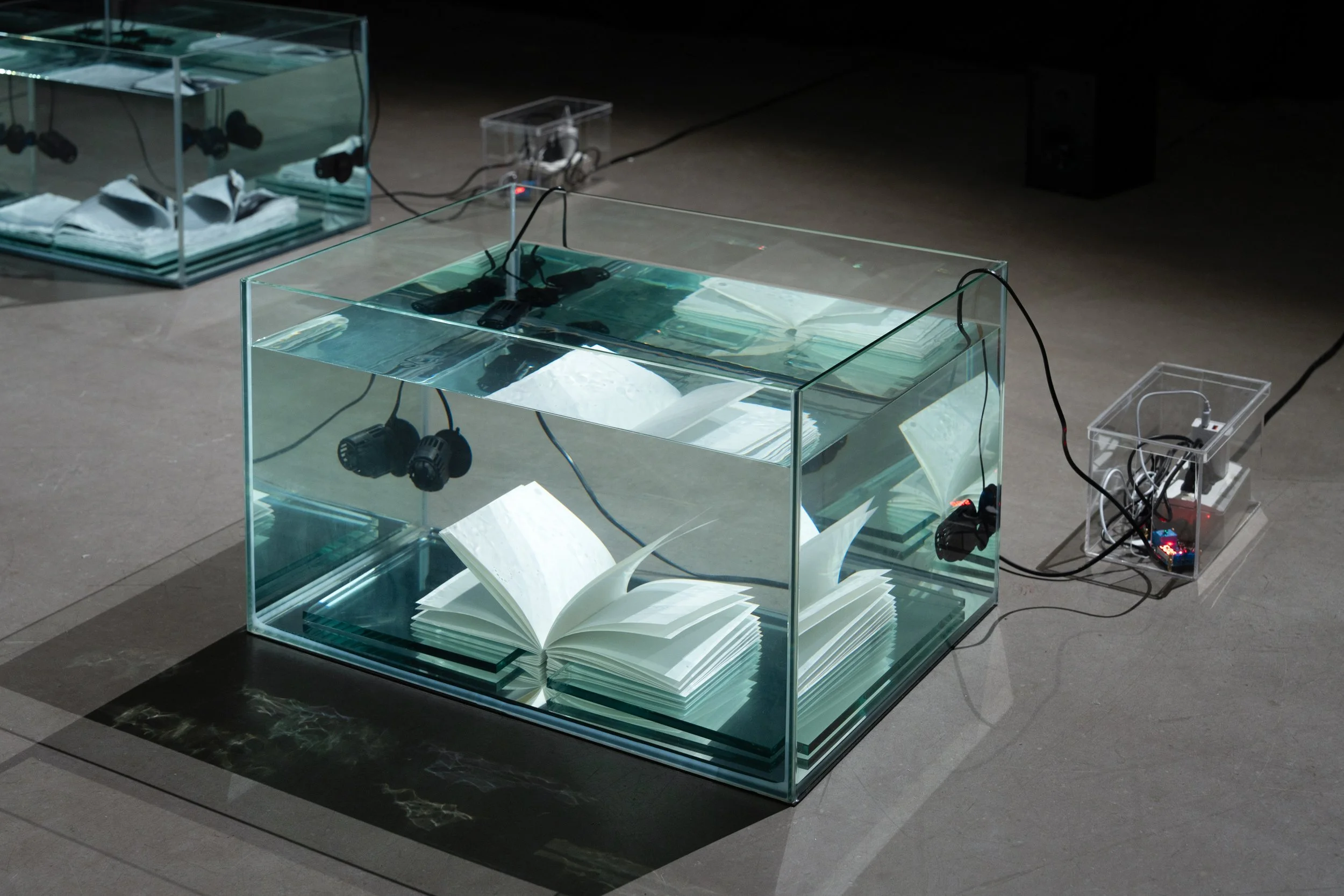
Amphibian palm (For measuring the wind) (detail), 2024, glass tank, mirror, glass weights, machine embroidery on gazar, acrylic box, wave makers, relay timer, water. Installation view of "Weather-world", 2024, Blindspot Gallery, Hong Kong. Photo by Ray Leung. Image courtesy of artist and Blindspot Gallery.
She is also preparing new work for ALT (with Underground Gallery under Special Projects) and her upcoming solo shows at Artinformal (Manila) and A+ Works of Art (Kuala Lumpur).
Amid this, she’s also settling into a smaller home—a move that she suspects will influence her routines, environment, and thinking. Looking ahead, she shares: “I’d like to think that what can be next is to make a film and to write again.”
From the intimacy of a passing thought to the scale of environmental forces, Cao’s works trace the evolving relationship between form and inquiry. Her process offers just that: the intimacy of dialogue—with people, with materials, with ideas—and the vastness of what remains unknown.