When Words Fail
The days after a disaster strikes are often the hardest, and for victims, the rebuilding has to start from within, one stroke at a time.
Words Marc Nathaniel Servo
Photos courtesy of DeeJai Tanji
December 20, 2025
During the onslaught of Typhoons ‘Tino’ and ‘Uwan,’ the flood proved that resilience is futile in a country that never learns. Muddled by corruption and climate abuse, Filipinos faced the brunt of the storm with nothing but hope that this would also fade.
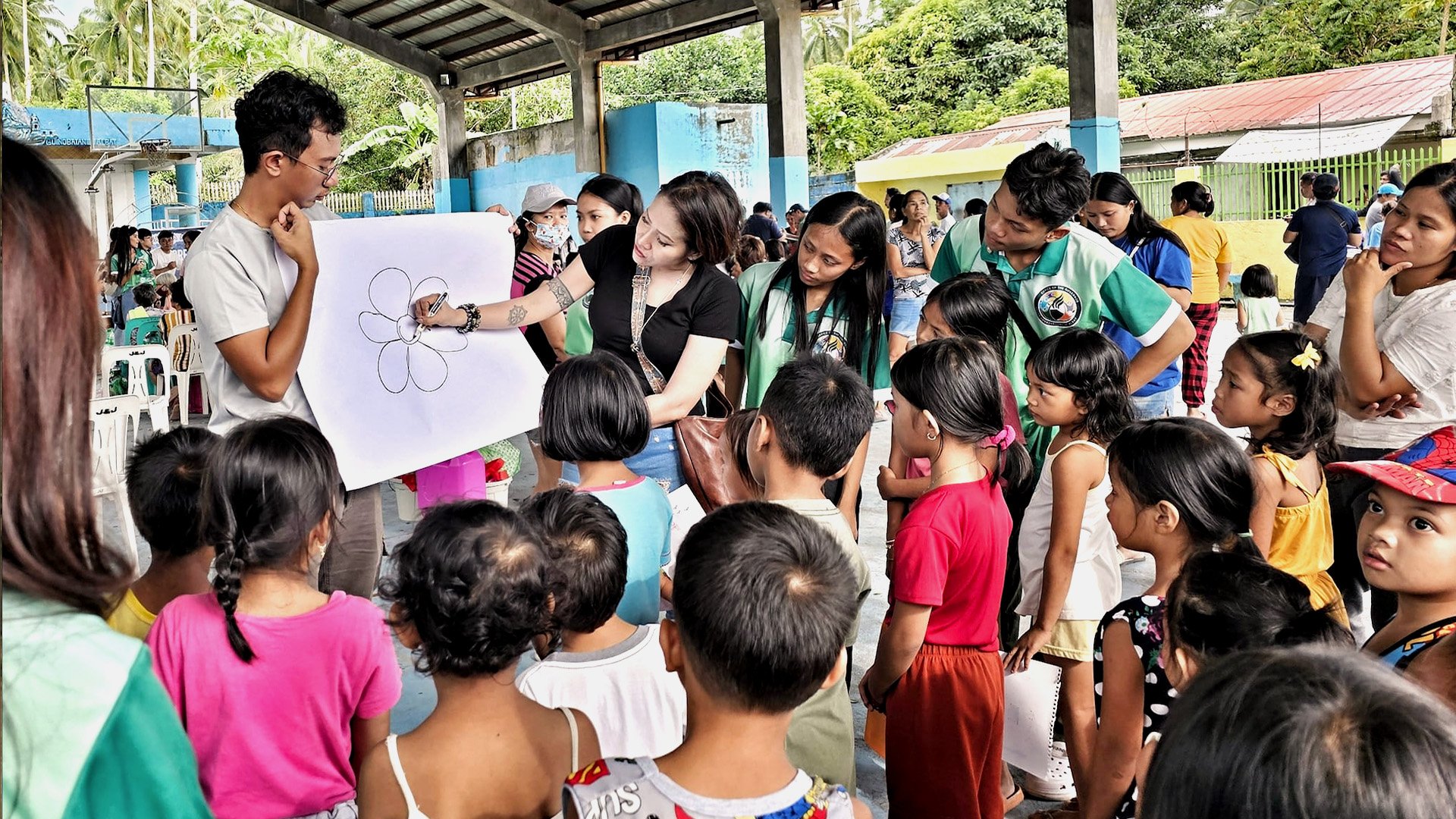
As Christmas approaches, the embattled families of the calamity struggle to celebrate with no table nor food to feed on. Rebuilding hardly felt feasible when you feel at a loss of what to do next. It is in this very emptiness that Bicolana artist DeeJai Tanji found her purpose—to transform art into a process of recovery as the flood recedes.
In our special interview, we asked DeeJai how important art therapy is for the distraught victims of calamity, as she once led the recovery of kids affected by Typhoon Kristine in October 2024.
“Mental health support is usually forgotten sa gitna ng relief goods, logistics, and rebuilding pero the emotional reconstruction is just as important, and art is one of the fastest, gentlest ways to start healing,” she told Art+.
Art therapy, for DeeJai, is a way to express the weight when words fall short. It’s about letting your heavy heart breathe in each stroke. Art provides a safe space to feel, process, and slowly revamp yourself—and it may not be instant, but surely, it helps you heal.
Traumatic events strike so much fear, confusion, and shock to its victims. For her, there were things that traumatized people struggle to verbalize, but could draw. So art becomes a medium of expression, which leads to healing. It helps them regain a semblance of control that dissipated after a calamity.
“Through art, they release what they cannot say. When survivors start choosing colors, drawing their stories, or simply creating something again, it reminds them that they’re still capable of rebuilding—not just their homes, but their inner world too.”
Reconfiguring the self
DeeJai discovered art in her darkest moments. She believes that God gave her this gift to share, to help others who are stuck in their own dark times find the will to survive through art.
“It made me realize that art becomes even more powerful when it is topped with love. It can move mountains. Art can heal not just a person, but an entire community,” she explained.
When asked how art therapy is any different from other kinds of trauma healing sessions, DeeJai stressed on the communal and very gentle aspect of art that helps put people together again.
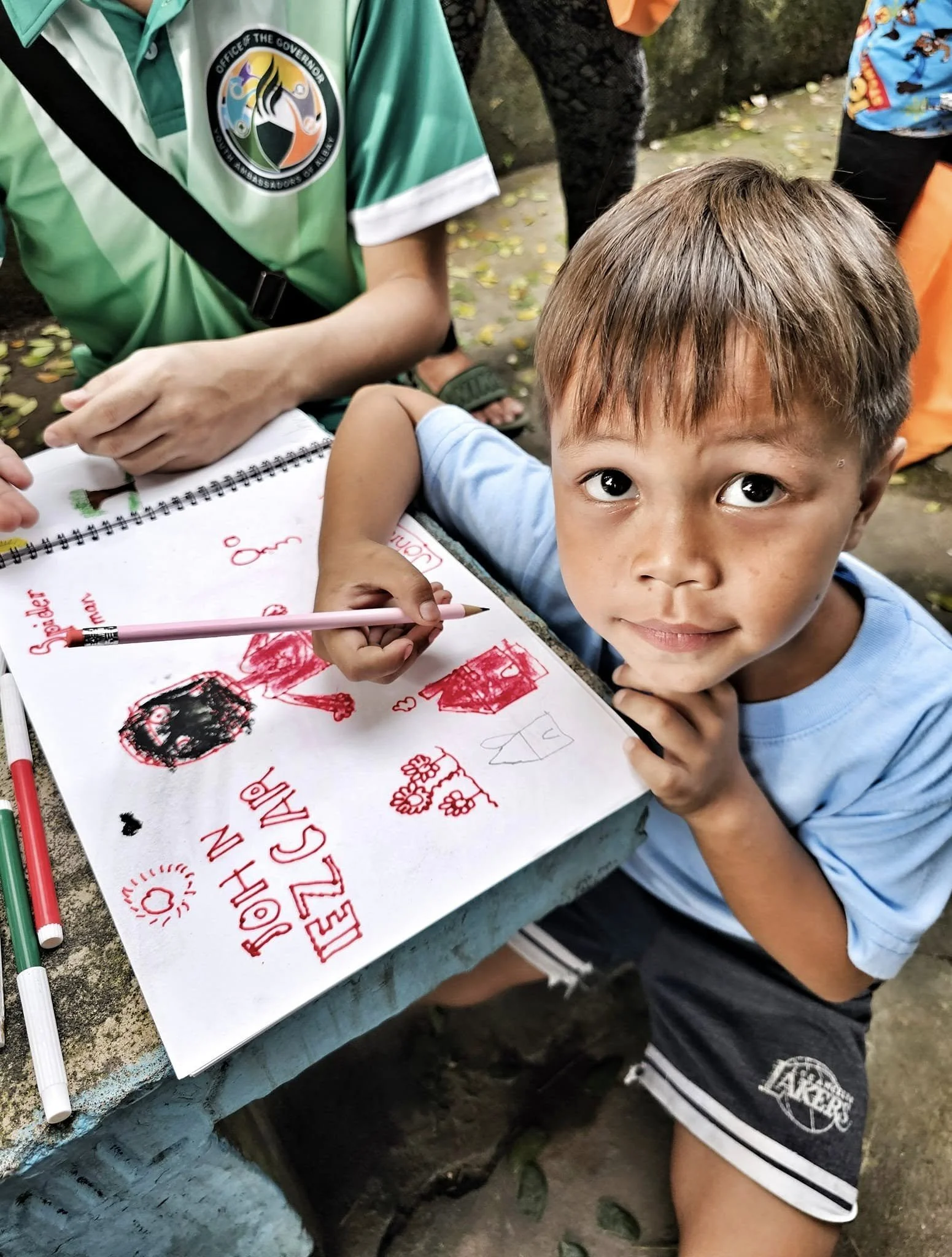
She told of how disaster victims share tables while creating art together. It allows for people to share the weight of their burdens together, despite the different stories they carry. The process of healing can be heavy, but when shared, especially by people tied by the same calamity, it turns into a spiritual bond that changes how they heal, for the better.
“Let’s be real, if you tell a traumatized person, “tara, mag-therapy tayo,” minsan nakakatakot. Pero ‘pag “gawa tayo ng art,” parang ang gaan, ‘di ba? So it’s absolutely more approachable,” she added.
This is what makes art therapy especially relevant today: it embraces the vulnerability of the victims. Unlike normal trauma therapies where they have to verbalize how they feel or recount what they experienced which could be daunting, art can be told in the simplest of manners: from the color you feel, or the strokes that you let loose in a blank canvas. It doesn’t have to be perfect. It doesn’t have to be anything at all.
“Art needs no words. The paper understands even your silence. You create at your own pace, kahit doodle lang, kahit stick figure lang.”
Painting over the hurt
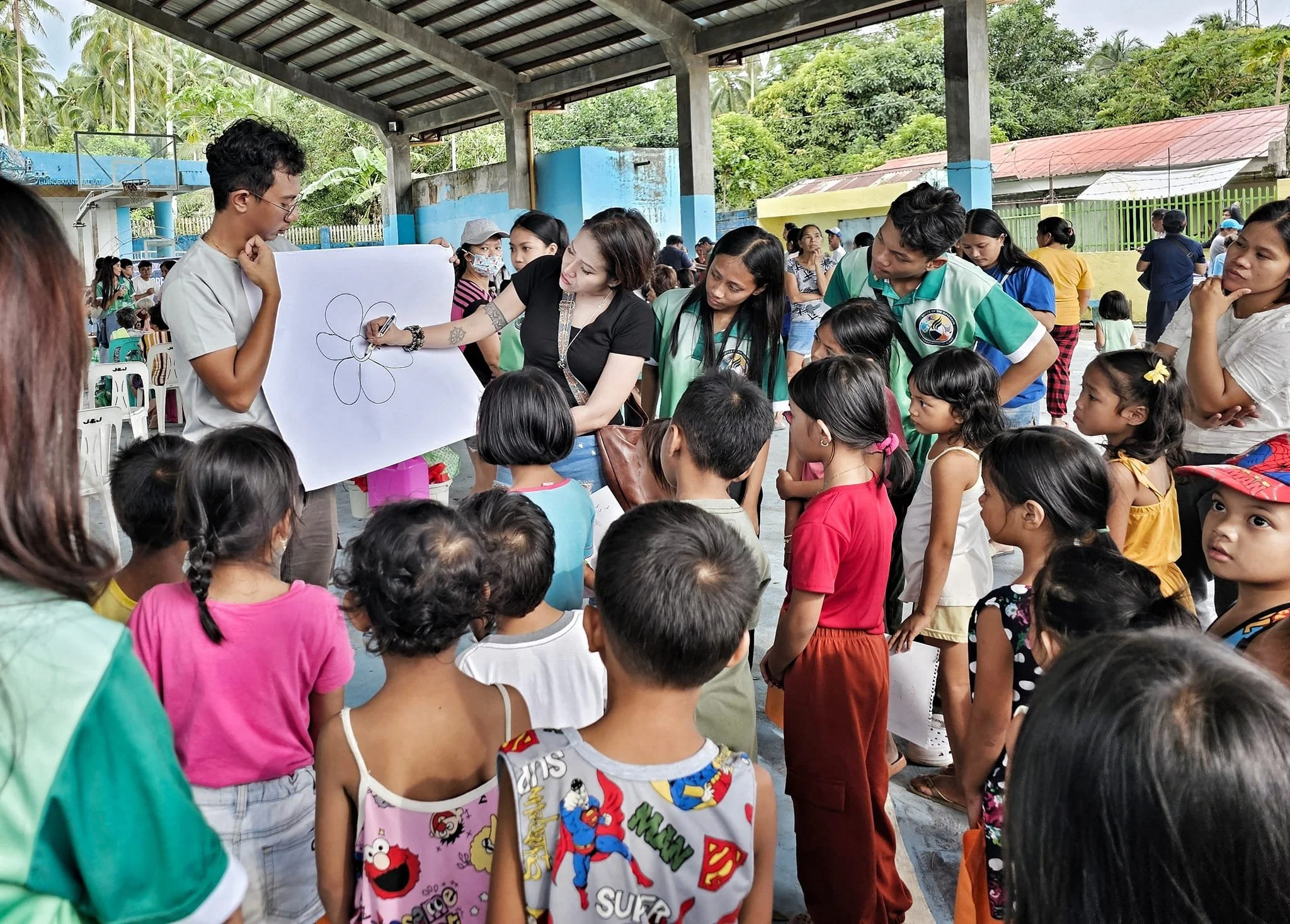
The process to put trauma behind may feel difficult, but it’s never impossible. DeeJai recounted how she conducts her therapy to calamity survivors.
“First, you create a safe space ‘yong environment na hindi judgmental, walang “pangit ‘yan,” o “mali ‘yan,” she began. The beginning always felt the most difficult, so it is important that everybody feels comfortable with the session.
After everything settles down, DeeJai gathers everyone for a light activity, something gentle, not too deep, or complicated. It can be something about their safe place, the colors they feel that day, or random shapes, “The goal is to make their hands move first, bago isipin ‘yong emotions.”
In this activity, it is important that you give them freedom—to let them flow without regards to rules or time. DeeJai stresses that this is where the emotional release quietly happens, so the people should be allowed to change colors, restart, scribble, or anything.
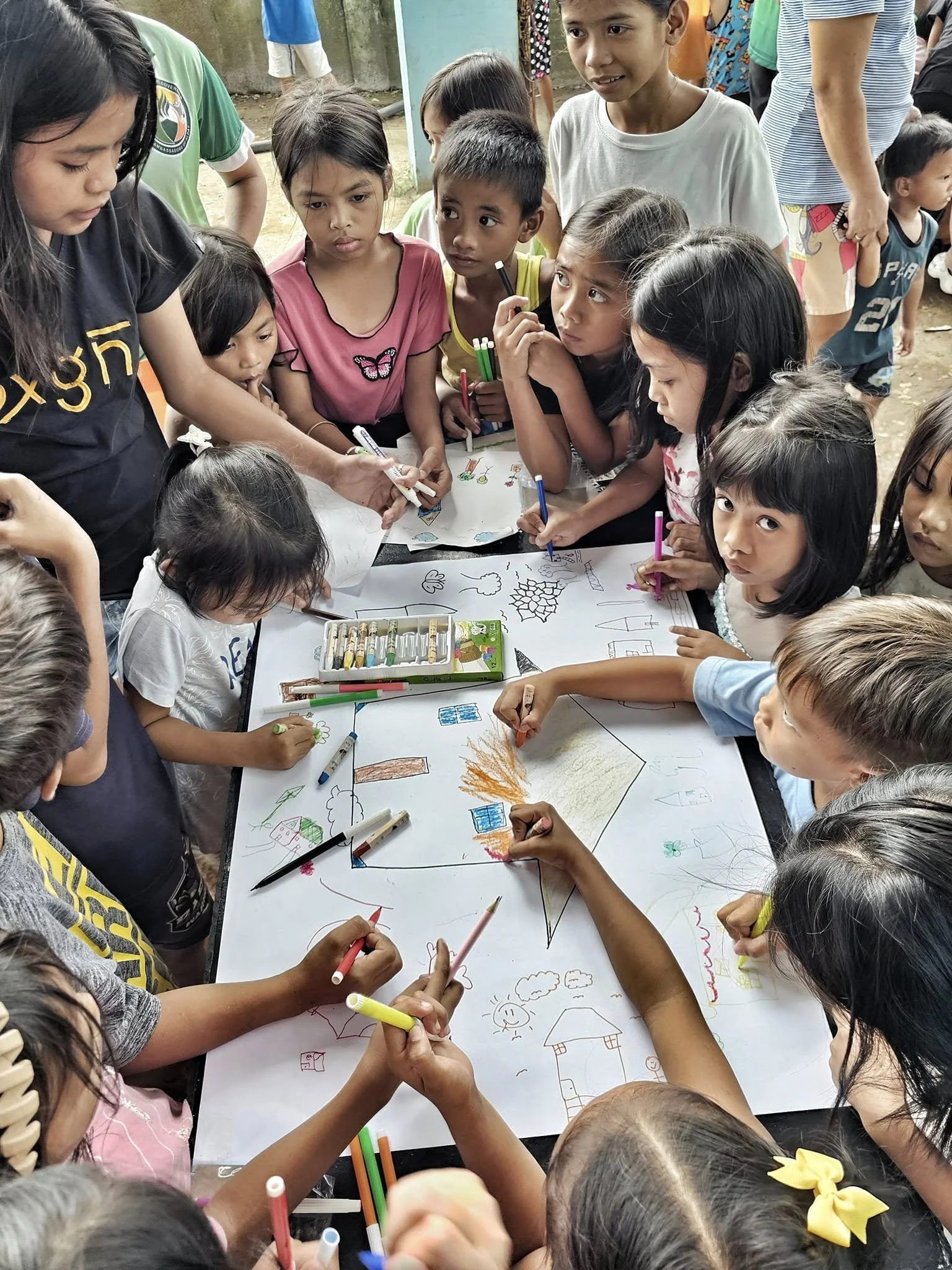
After which, once they’re ready (and willing, she notes), a short reflection begins. It could be about the feelings they felt while creating art, or what they want to share about their work, “Hindi kailangan ng deep explanation, sometimes, one sentence is enough.”
Then, you affirm. DeeJai begins unraveling the meaning behind the works—from the courage to the expression—without reinterpreting everything out of context. The difficulty of these lies to the conductor, when you have to connect with their internal reflections and ensure that you truly understand their woes.
In the end, she closes the event through a brief sharing or grounding. She also allows them to keep their works as a symbol of their capability to create—or for the bigger picture, to rebuild.
Within the sinews of this process is the tightrope of trauma bonding. Especially with kids, the therapy is very delicate, so DeeJai handles it with gentleness, patience, and fun. The secret is not to tackle the trauma immediately, but to let trust accumulate in small activities and light conversation. Slowly, their walls will soften and stories could flow.
“I also watch their non-verbal cues, like body language, breathing, how they hold a crayon kasi minsan, ‘don lumalabas ‘yong bigat. I keep my voice soft, my energy steady, and my instructions simple. Most of all, I validate their feelings without making the moment too heavy,” she said.
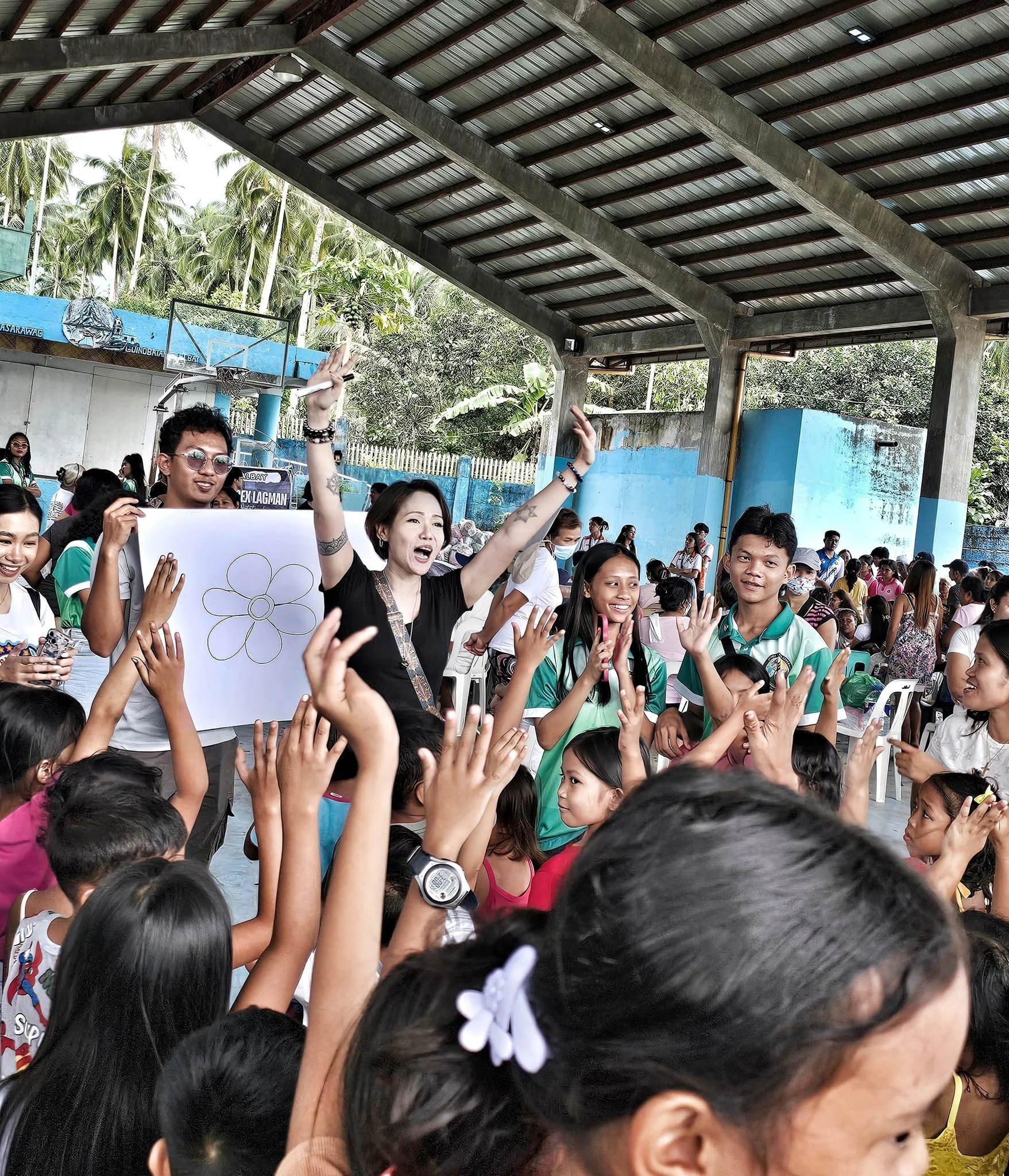
DeeJai also stressed that she treats victims, especially kids, with steadiness and comfortability. You must not make it feel as if you’re “fixing” them, because you don’t. You are helping them heal beyond the traumas induced by a disaster.
Systemizing creativity
Disasters have left so many wounds for us Filipinos; so much that resiliency could not cover for all the damages left by each typhoon and earthquakes that befall our country. Recovery remains as substandard as mitigation: we’re expected to heal on our own after a few relief goods and housing provisions.
“Art gives people a voice when they can’t explain what they feel—and in disaster zones, that’s priceless,” DeeJai affirms.
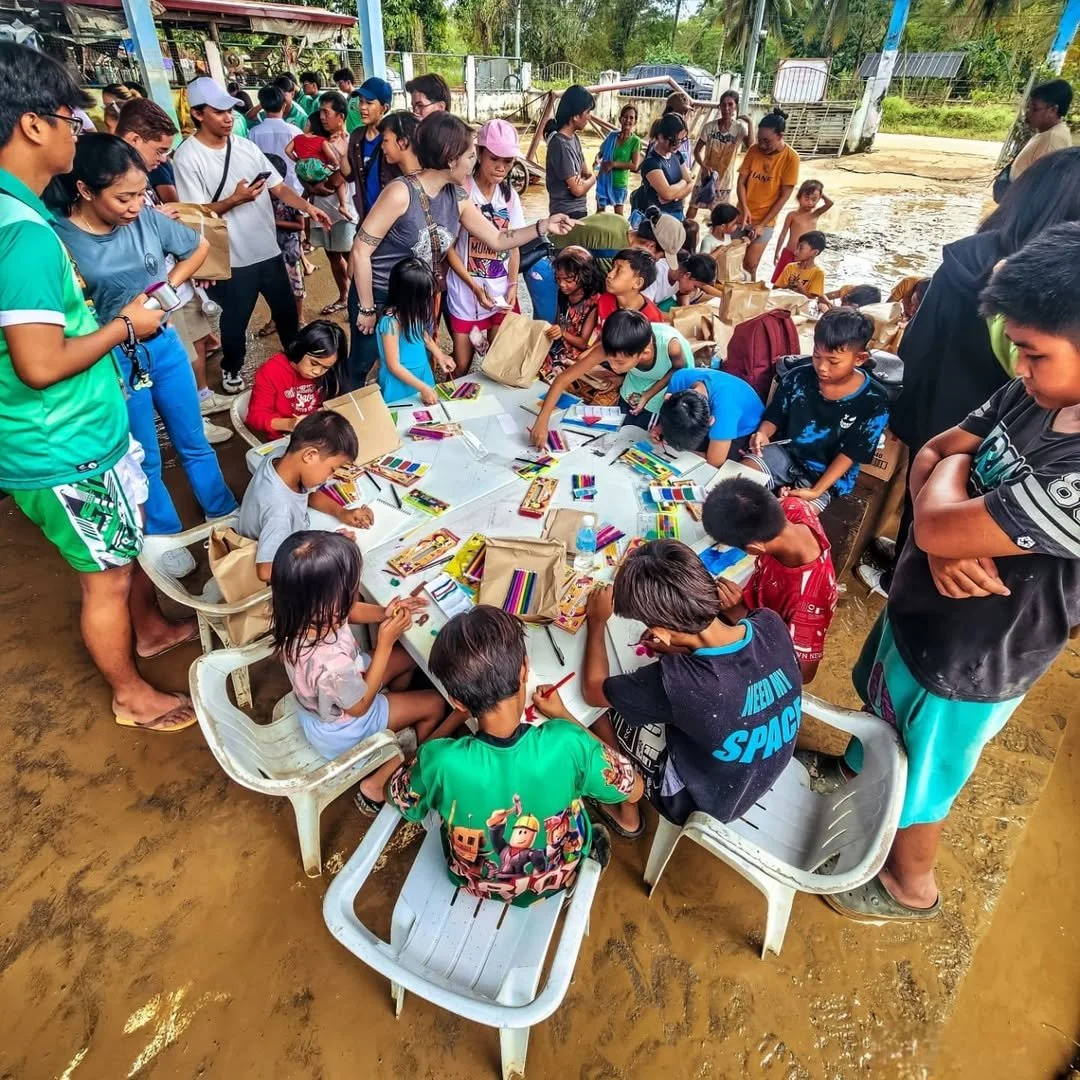
In these times when the shock, the damage, and all the loss grips your body and you’re too tongue-tied to speak, art provides a platform of expression that translates grief into something that can be understood in a gaze.
So when we asked DeeJai if art should be institutionalized in a country where disasters strike as frequently as it gets, the answer is a resounding yes.
“I believe art therapy should be institutionalized, not as an “extra,” but as a real, essential part of post-disaster response. If we want communities to rise again, we need to heal, not just their homes, but their hearts. Art does that quietly, naturally, and powerfully,” she remarked.