Latiff Mohidin and the Vintage Bird New Tricks in Bronze
Latiff Mohidin’s iconic Pago Pago vocabulary takes on new weight as the Southeast Asian modernist enters bronze for the first time, turning seven decades of artistic evolution into a study in reinvention.
Words Bernadette Soriano
Photos courtesy of Gajah Gallery
August 13, 2026
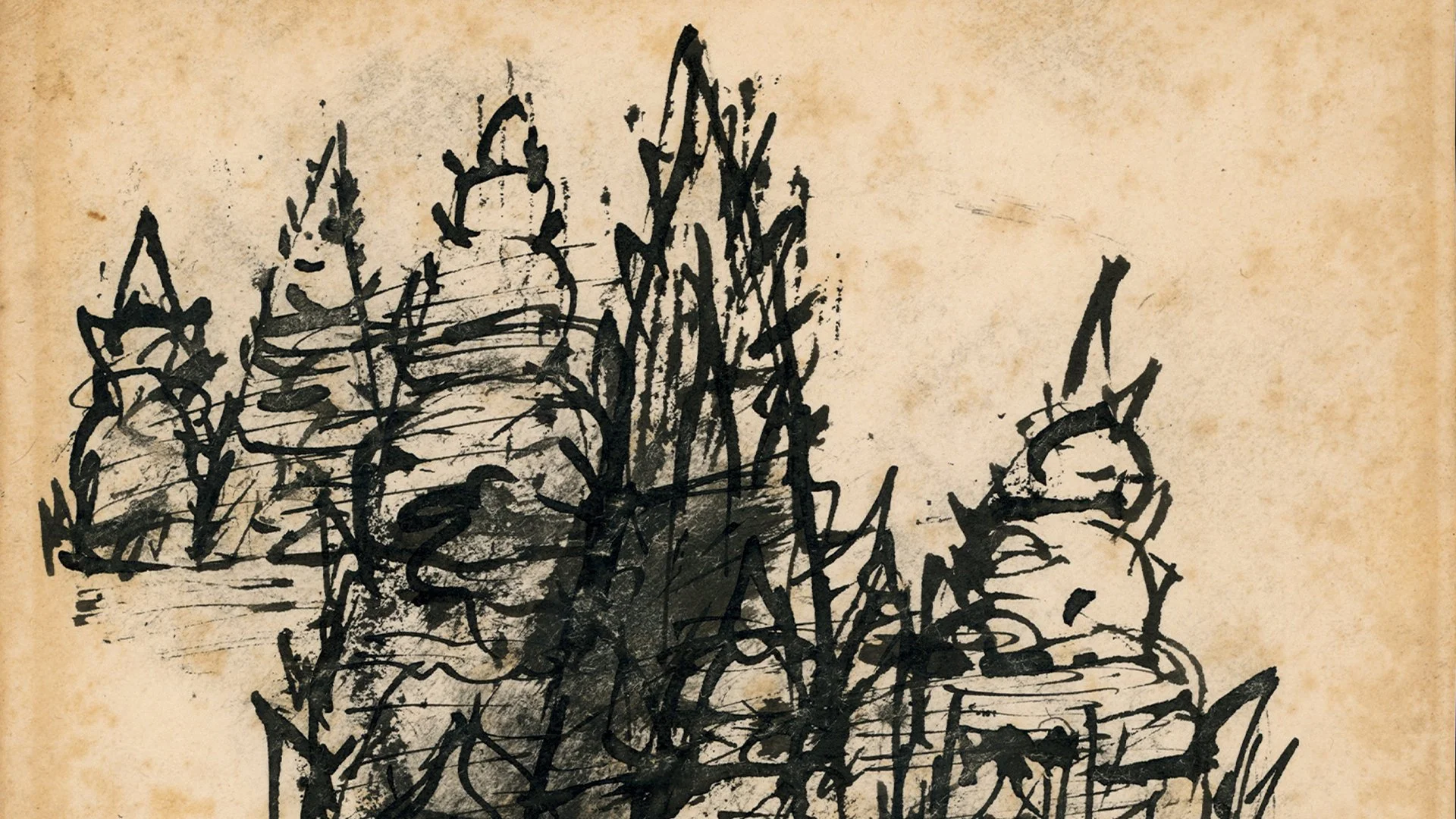
Detailed Shot of Latiff Mohidin - Pago-Pago Bangkok, 1964, Mixed Media on Paper, 16 x 12 cm
Few figures in Southeast Asian modernism have commanded the visual realm quite like Latiff Mohidin, whose artistic narrative spanning more than seven decades, has made creative metamorphosis a practice unto itself.
From August 28 to September 20, Gajah Gallery Singapore, in collaboration with LM Studio, brings Latiff Mohidin: Lines to Form into view—a landmark exhibition that looks backward by way of a retrospective anchor while charting boldly into an uncharted territory.
At the absolute heart of the showcase lies a monumental revelation: the master’s first foray into cast bronze, where the immortal Pago Pago vision finds itself reborn in the raw, metallic language of sculpture.

Latiff Mohidin - Wetlands, 2001, Crayon and Watercolour on Paper, 36 x 26 cm
Conceived during his formative travels across Southeast Asia in the early 1960s, the Pago Pago series broke new ground, carving out a distinctly regional passage through abstract modernism—its language rooted in the architecture, lush flora, and cultural pulse of the land.
Across the decades, these evocative forms gathered international acclaim, until their visual vocabulary found its way, in 2018, into the historic halls of Paris’s Centre Pompidou.
Yet, even beneath the weight of global laurels, Latiff would not let his art history become an oar upon which to rest.

Latiff Mohidin with his sculpture Burung 1 (Bird 1) Kuala Lumpur, 1967. Image courtesy of the artist.
Curated by Syed Muhammad Hafiz, Burung 1 (Bird 1) sits at the exhibition’s center, where decades of artistic passage come to a full circle.
First rendered in ciment fondu in 1967, the work returns decades on in silicon bronze, painstakingly rescaled and recast through a close collaboration with Yogya Art Lab (YAL), Gajah Gallery’s premier foundry arm in Yogyakarta.
Rising 180 centimeters, the sculpture turns a page in the artist’s oeuvre. Organic, biomorphic lines are given permanent, weighty tactility in cast bronze, through which Latiff draws the early structural impulse into conversation with his mid-career materiality.


The sculpture does not merely occupy space; rather, space seems to gather around it, yielding to a formidable presence within whose orbit the ancestral totem finds its unlikely counterpart in modern monumentalism.
Complementing this sculptural milestone is a meticulously curated selection of works on paper, through which the broader arc of Latiff’s visual evolution comes into view.
From the sharp, rhythmic architectural silhouettes of Pago Pago (1964) through the sweeping kinetic fluency of Rimba (1996) and Gelombang to the introspective meditations of Voyage, the paper works disclose an artist forever pushing against the envelope of spatial expression.

Latiff Mohidin - Voyage, 2003, Acrylic Graphite and Crayon on Paper, 27 x 37 cm
Seen together, these pieces reveal a coherence of vision that the medium has done little to disturb; whether in ink on paper or molten metal, fiercely alive beneath the material shift remains the same artistic impulse.
Lines to Form is no routine exhibition; it is the testament of an octogenarian master who, for all that his past triumphs might repose, refuses to be contained by them.
Marrying the legacy of Pago Pago to bronze’s monumental endurance, Latiff Mohidin makes a case for mastery as an act of departure: the courage to push beyond familiar shores, and in doing so, reinvent one’s own iconography for generations yet to come.