
Junhee Kim: The Soul of a Scholar, the Hands of a Virtuoso
Seoul-born pianist Junhee Kim brings clarity, depth, and storytelling to the stage in his Manila performances.
Words Serina Mara D. Alonzo
Photos courtesy of Philippine Philharmonic Orchestra, Cultural Center of the Philippines, and Double Pentagon Concerts
April 13, 2026
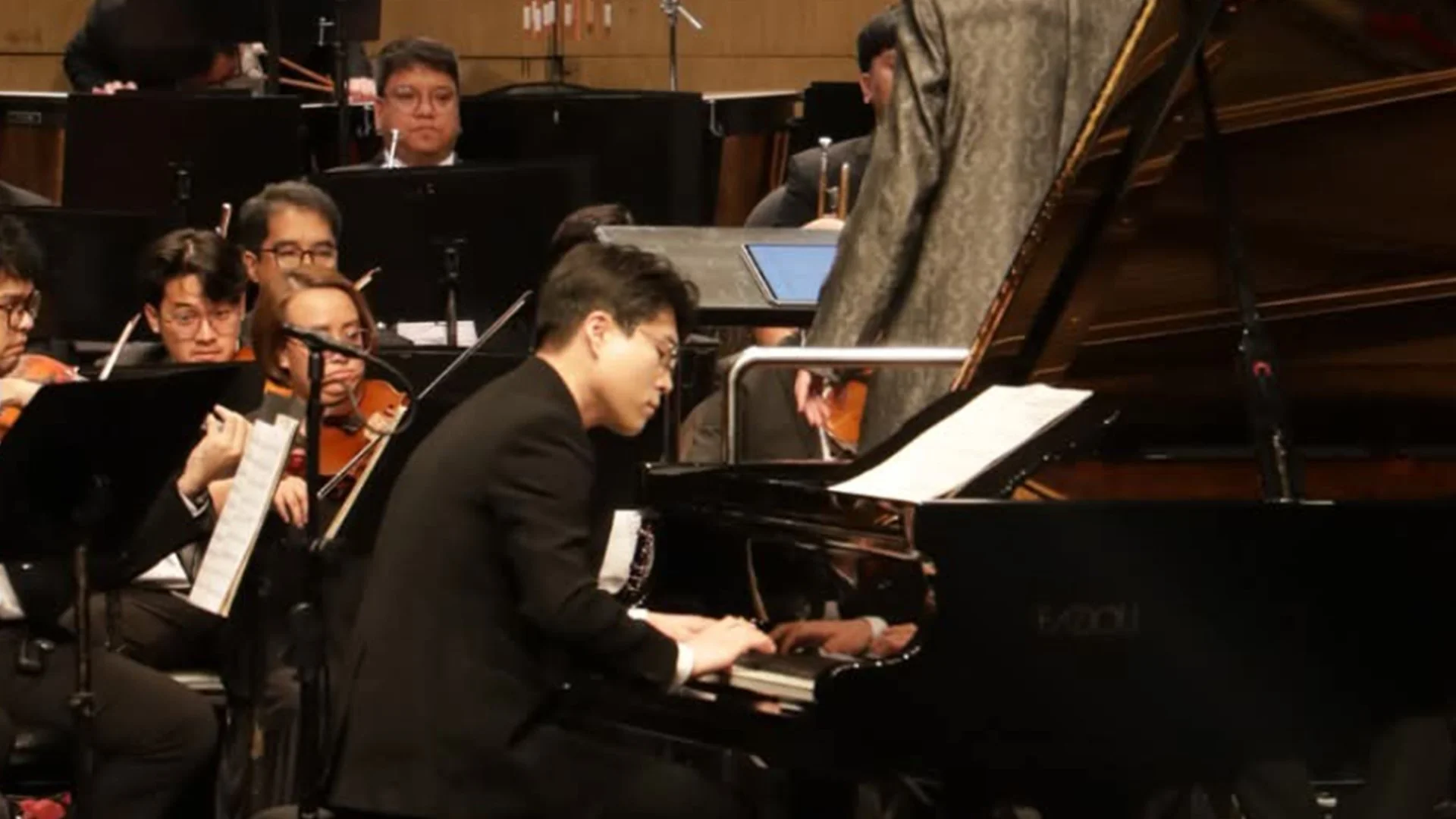
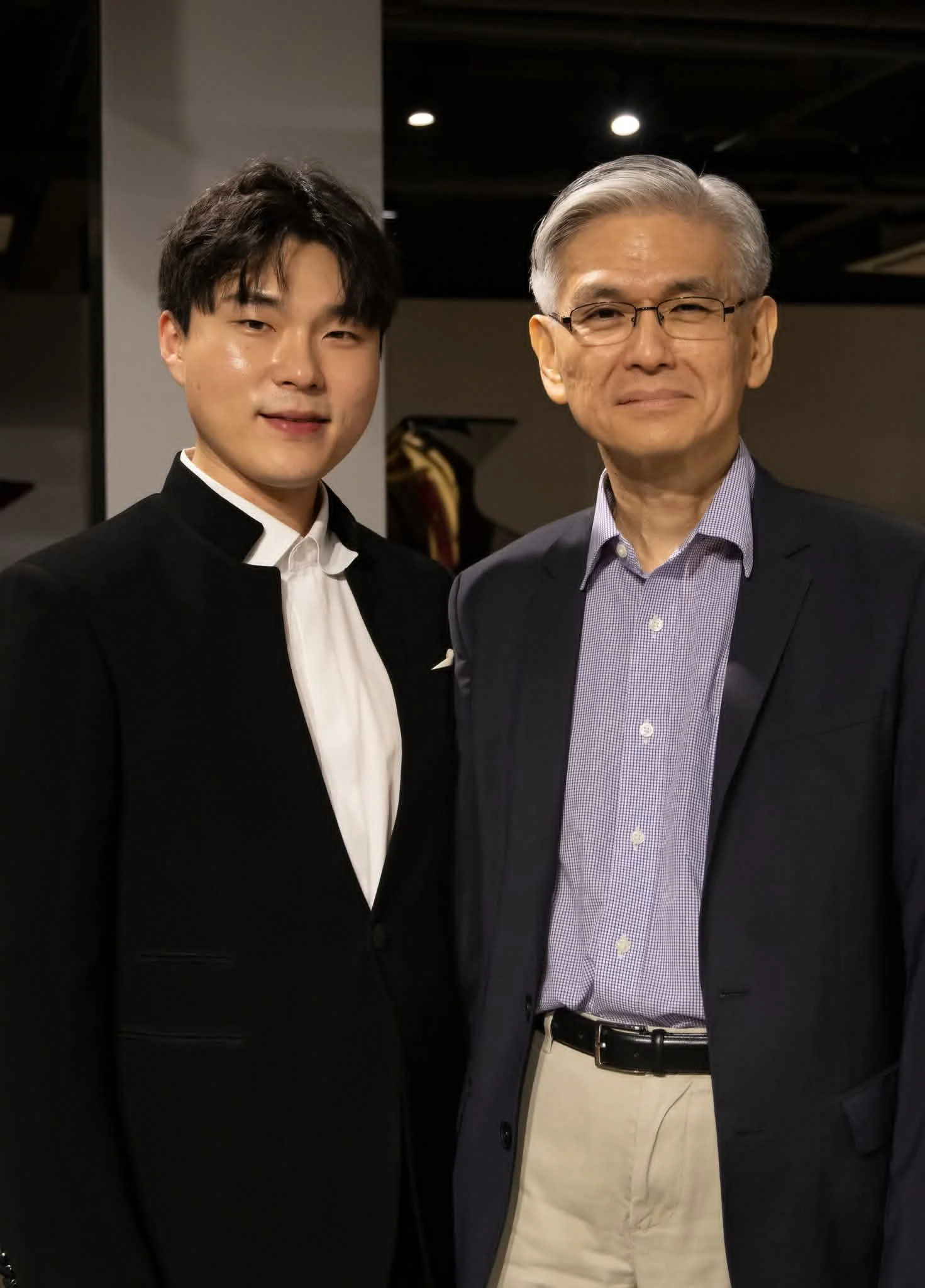
Junhee Kim, a South Korean pianist, is a compelling figure in the world of classical music, where virtuosity and intellectual depth come together. His artistry—characterized by a clear tone, precise rhythm, and carefully curated repertoire—reveals a rare balance between scholarly rigor and artistic expression.
Kim doesn't just play the piano; he uses it as a voice. His recent Manila performances showcased the piano as a vessel for self-expression, "singing with his hands" to communicate the inner life of music.
Defining an Artistic Identity: From Survival to Self-Definition
Kim thought about a turning point in his career during a virtual interview that I did from a coffee shop and he did from the quiet of his room. He says that his artistic identity was formed during the COVID-19 pandemic.
Before the pandemic, he described himself as operating in "survival mode," competing internationally and playing the prescribed repertoire to prove his technical mastery. He said, "Since the pandemic, the meaning of being a pianist has changed completely." The pause made him less concerned with what other people expected of him and more focused on developing his own musical language, which is based on his own tastes and self-reflection.
Rethinking Virtuosity
This shift redefined how Kim felt about virtuosity. When he was 15, playing Franz Liszt's Piano Sonata in B minor felt like a test of his strength. Now, he sees these kinds of works not as technical challenges but as philosophical statements.
For Kim, technique is no longer the goal; it's a language that helps a composer express their deeper thoughts. He sees Liszt not merely as a virtuoso, but as a thinker who used technique to express himself. In this light, Kim interprets monumental works as a “single force of explosion and philosophy,” revealing their human core beyond mere technical prowess.
Two Stages, One Voice
Kim's two recent performances in Manila demonstrate how well he can adapt his artistic voice to fit very different physical and emotional settings. For Kim, a venue is more than just a room; it's a setting of a musical narrative.
Samsung Hall: Orchestral grandeur and the "dry" challenge
On February 13, 2026, Kim took the stage at Samsung Hall to perform the first-ever performance of the Mozart-Ching Concerto with the Philippine Philharmonic Orchestra led by Maestro Grzegorz Nowak. He said that the hall's acoustics were relatively dry, which made it hard for him to use his normal technique. Kim used a deeper touch and more generous pedaling to make the piano's voice "sit clearly within the ensemble." This helped the sound resonate more fully.
This performance was more than just a technical achievement; it was a thrilling return to the past. Kim had to balance two very different musical languages at the same time: the 18th-century imperial pomp of Mozart's fragment and the modern chromatic tension of Jeffrey Ching's completion. The stage at Samsung Hall became a place where people could share energy, and the focus was on the grand architecture of a newly rediscovered masterpiece.
Manila Pianos: The closeness of breathing together
Two days later, on February 15, the atmosphere shifted entirely at the Manila Pianos Recital Hall. In this intimate setting, the need for massive projection vanished, replaced by a desire to “breathe the music together with the audience.” Kim saw this place as a quiet space, perfect for focusing on storytelling and the gradual progress of his ongoing work.
The Manila Pianos program offered a thoughtfully curated journey through the romantic repertoire. It began with Chopin's Barcarolle, a piece steeped in profound sorrow, and concluded with Ravel's Jeux d'eau, a vivid evocation of water's play. He also included Saint-Saëns' Danse Macabre, a piece he performed with the same technical prowess as his idol, Vladimir Horowitz. In this intimate space, every nuance of warmth and delicacy in his playing was palpable.
A Sustained Conversation: Working Together with Jeffrey Ching
A cornerstone of Kim's artistic mission is his ongoing work with composer Jeffrey Ching. Their partnership is based on rethinking classic works through modern conversation. Kim calls this process "two translations." It means moving between the original historical language of a composer and Ching's modern imagination.
Their projects have reimagined the very fabric of classical repertoire.
At Samsung Hall, Kim gave the world premiere of Mozart's unfinished Concerto in D major, KAnh. 56 (325f). The work started in Mannheim in 1778 but was stopped because Leopold Mozart told his son to come home for financial stability. It was left as a 74-bar piece and finished by Ching in Berlin in March 2025. Ching put together a full concerto using more Mozart pieces. It takes you back to the 18th century with imperial grandeur, an elegant minute, and a lively hunting scene in the rondo.
At the Manila Pianos, Kim performed Ching's Sonata Domenica, which is a contemporary reimagining of keyboard sonatas by Domenico Scarlatti, bridging Baroque form and modern styles.
Their collaboration also extends to broader reinterpretations of the canon, including a reworked piano concerto version of Pergolesi's Stabat Mater. Kim talked about a new solo piano project with Ching that would be based on the operatic language of Giacomo Puccini–an ambitious attempt to translate vocal drama into purely instrumental form.
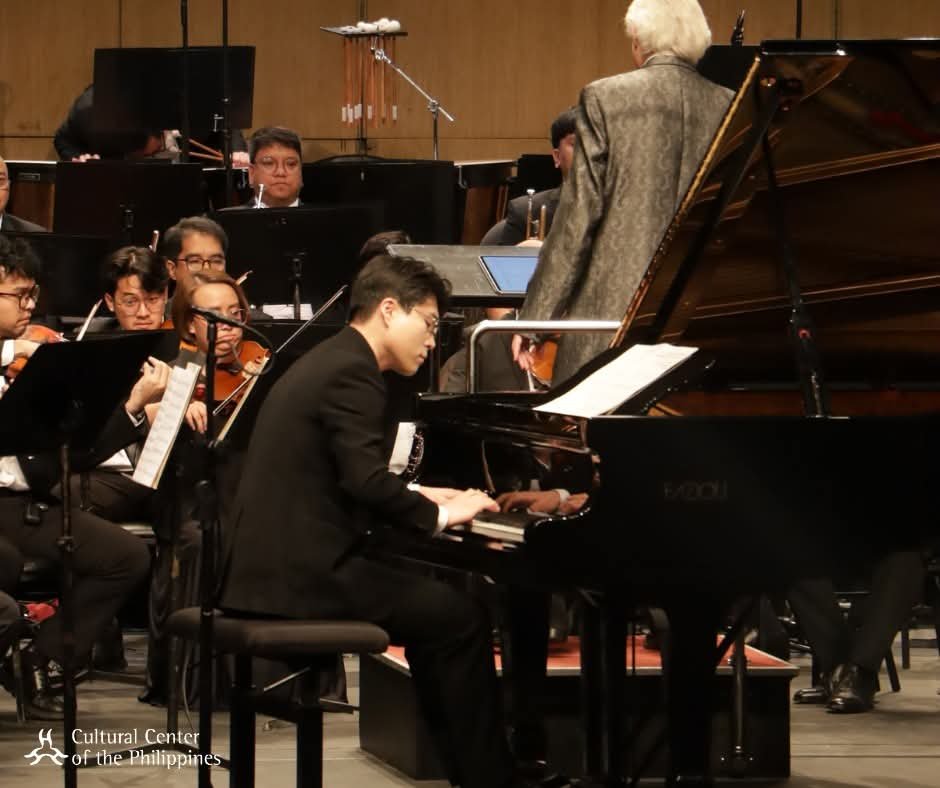
Photo courtesy of the Cultural Center of the Philippines
The Scholar's Impact: Seonbi Culture
Kim's art is rooted in Korea's Seonbi tradition, where scholar-gentlemen prioritize discipline, ethics, and inner refinement over outward show.
This influence shapes his interpretations of music, giving it structural clarity and emotional restraint, even in the very expressive works of Sergei Rachmaninoff. His first album, Apparitions, which was released through Deutsche Grammophon, reflects this synthesis. This is their debut album with WDR3 in Cologne, Germany. Kim looks at Liszt through the lens of Korean shamanism, connecting European Romanticism with Asian spiritual traditions.
Reimagining the Canon
Beyond performance, Kim extends his artistry through curation where he curates programs with a bigger narrative, focusing on themes rather than single concerts. He has been the artistic director of a music festival in Sardinia since 2019.
His projects include reimagining canonical works–such as Pergolesi's Stabat Mater and Ravel's Le Tombeau de Couperin–as well as bringing back composers who have been forgotten, like Sergei Bortkiewicz. Through these efforts, Kim expands the repertoire while creating dialogue between past and present.
A Vision for the Future
Kim describes his artistic identity in three words: "adventure," "unknown," and "diversity." A big part of this is his desire to find and perform lesser-known Romantic works–pieces he believes are waiting for the right interpreter to bring them to life.
He also sees the classical music scene in Asia gaining ground and wants to help it grow. He sees cities like Manila, Seoul, and Hong Kong as important cultural hubs.
Whether he is guiding students to "take off [with] their potential" in masterclasses or preparing new collaborations with Jeffrey Ching, Junhee Kim remains an artist who is guided by both intellect and imagination–one whose hands do not merely play, but give voice to the soul of a scholar.