
The Art of Lacquer
Hanoia, Vietnam’s premier luxury lacquer brand, debuts in the Philippines at Rustan’s.
Words Jewel Chuaunsu
Photos courtesy of Rustan’s
April 13, 2026
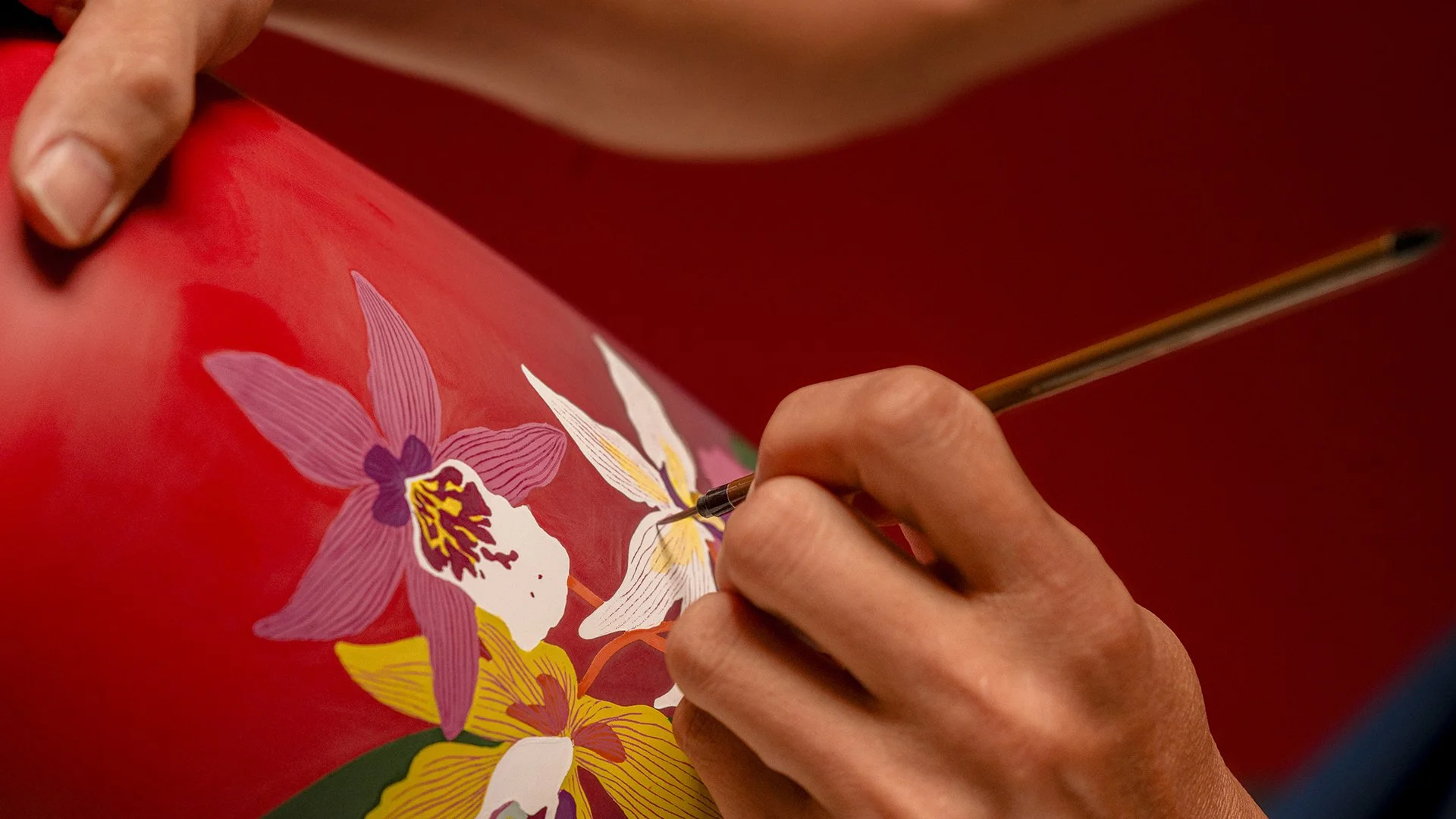
Now available through Rustan’s curated home selection, Hanoia—Vietnam’s premier luxury lacquer brand—invites Philippine audiences to experience lacquer not merely as décor, but as living art—crafted with patience, shaped by tradition, and designed for contemporary living. The partnership with Rustan’s marks Hanoia’s official arrival in the Philippine market, offering local design enthusiasts access to a collection where heritage craftsmanship and modern living converge.
Dating back over two thousand years, Vietnamese lacquer is a traditional art form that combines craftsmanship, patience, and creativity. It uses natural resin from lacquer trees to create smooth, durable surfaces that are both functional and highly decorative.
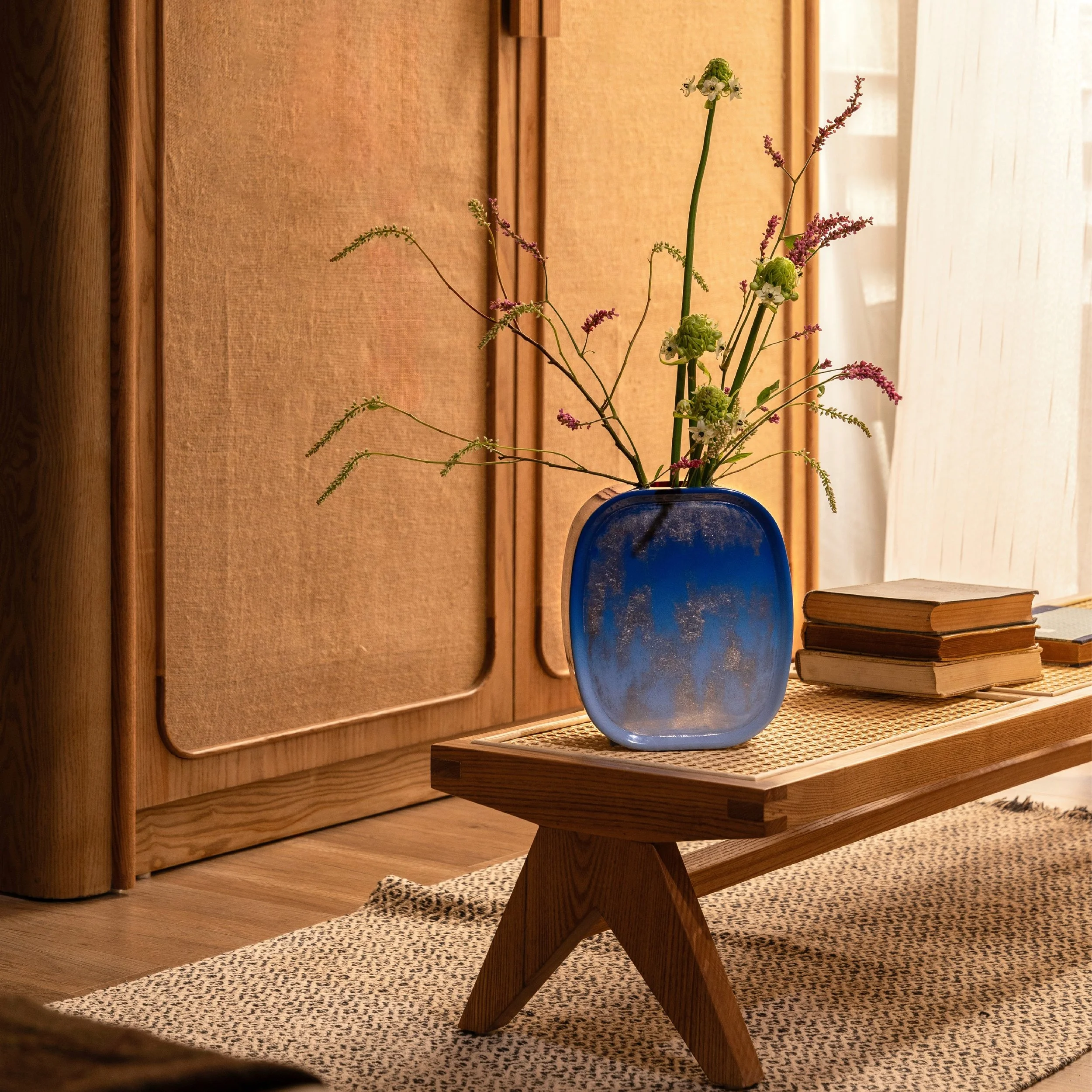
Ciel Collection
In traditional lacquer villages in Vietnam, this craft has been passed down from generation to generation. “You want to do everything you can to make sure this craftsmanship does not disappear, so we felt compelled to work with lacquer while introducing a more modern, contemporary interpretation,” says Christian De Ruty, CEO of Hanoia.
Founded in 1997, Hanoia takes its name from the artisans who perfected the ancient Asian art of lacquer, passing their knowledge and expertise through generations. What began as a deep respect for tradition has evolved into a globally recognized brand that brings together Vietnamese artisans and international designers to produce home accents and furniture that are both functional and enduring.
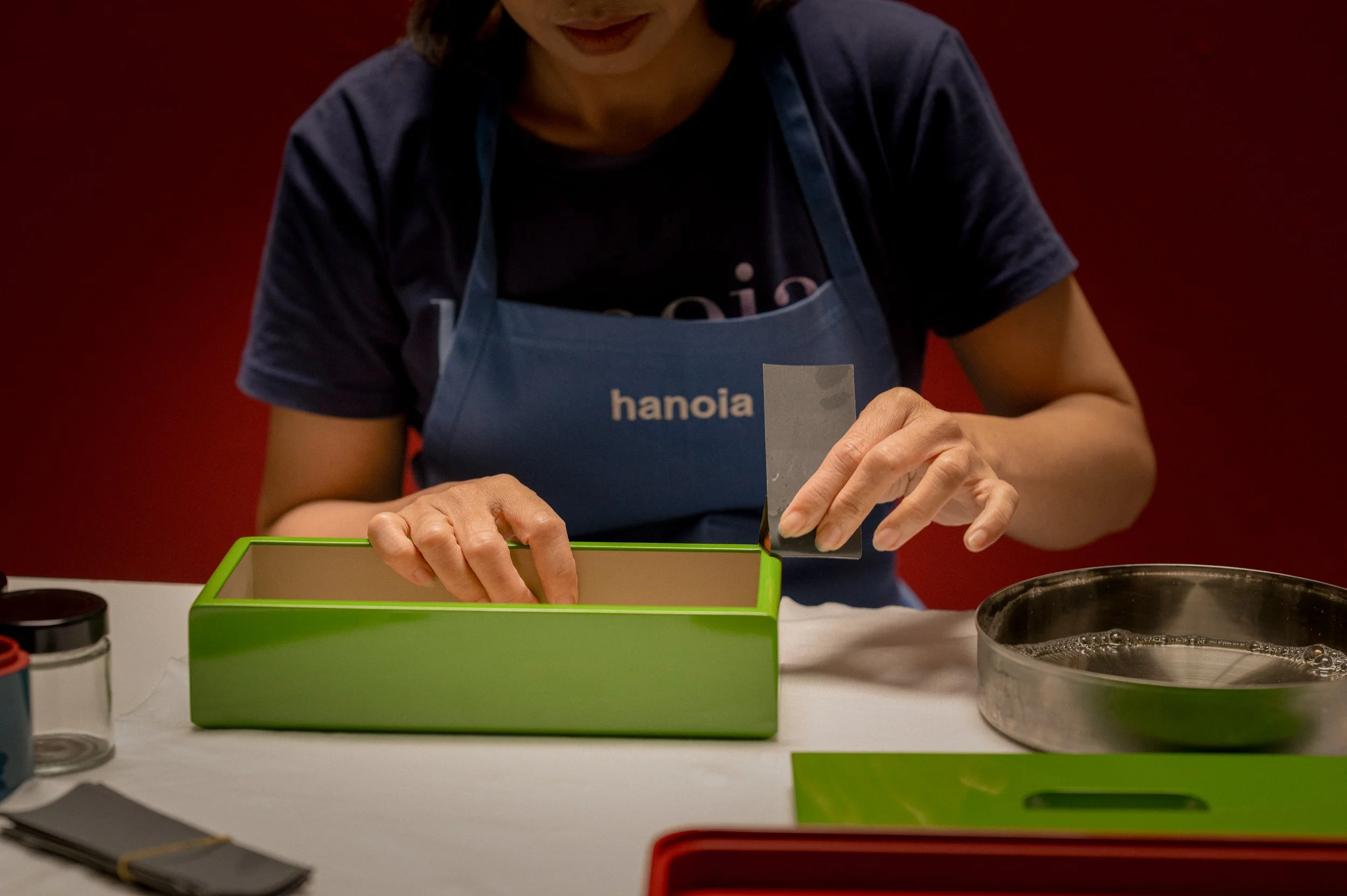
At the heart of every Hanoia piece is lacquer—an intricate craft that demands extraordinary discipline and care. Each creation undergoes a meticulous process that can take months, sometimes even a year, to complete.
What makes Vietnamese lacquer unique is its painstaking process. Artists apply multiple layers of lacquer, then sand and polish each layer to reveal depth, color, and texture. From forming the base object to applying an average of 15 layers, artisans move through repeated stages of lining, water sanding, coloring, and polishing.
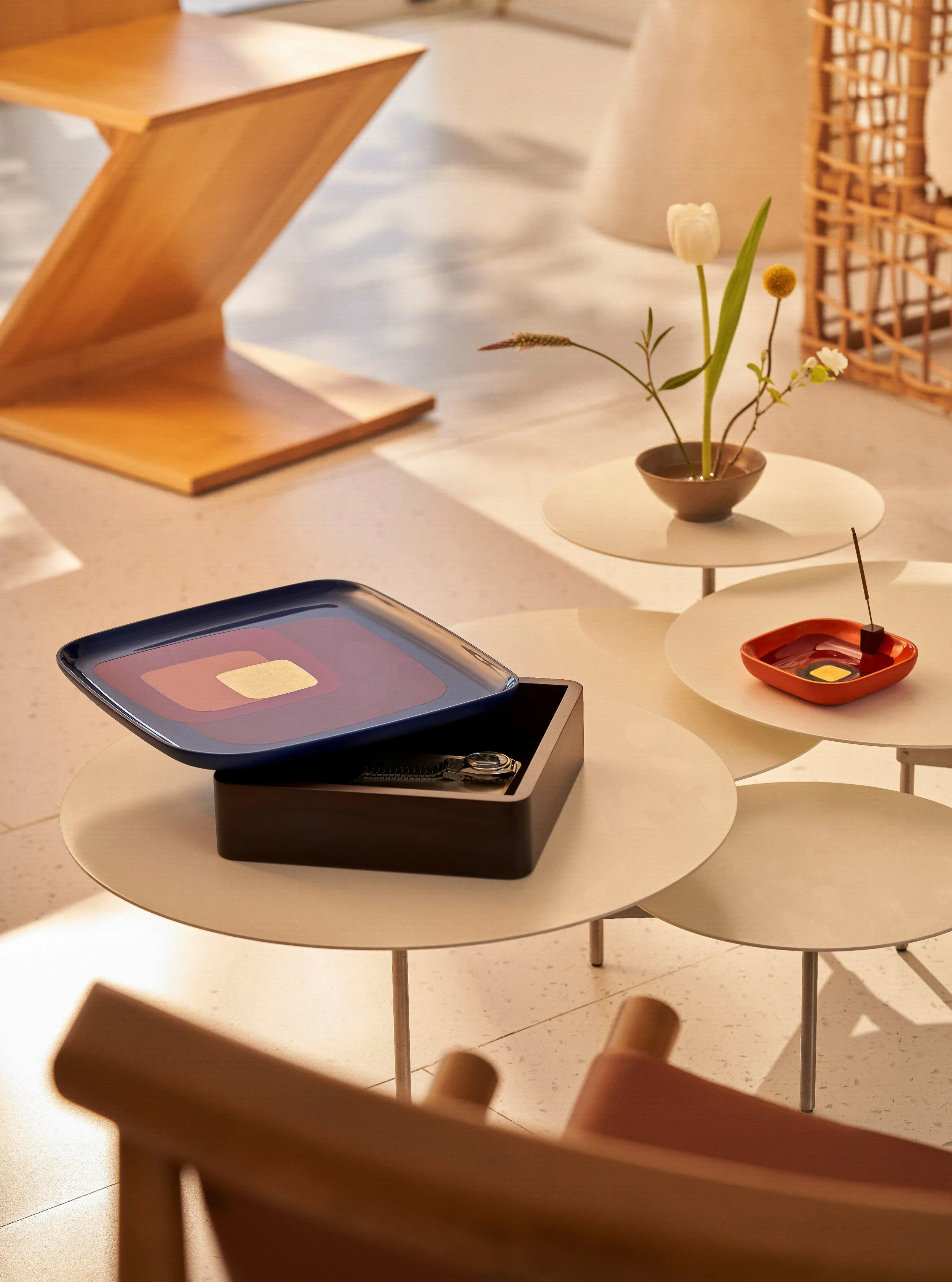
Terrace Collection
“Lacquer, in one word, is the art of sanding,” adds De Ruty. “It’s about sanding each layer so carefully and consistently that the eye can perceive the depth and transparency all the way to the base. That is what gives lacquer its richness.”
Describing the creation process, De Ruty explains, “First, you need inspiration. Secondly, you need a function—an objective for the product. Inspiration often comes from shapes found in villages, pagodas, temples, or ancient statues. This is always the starting point, after which we begin developing the forms. What is essential to Vietnamese lacquer is the layering. The final layer becomes the décor, and its possibilities are infinite.”
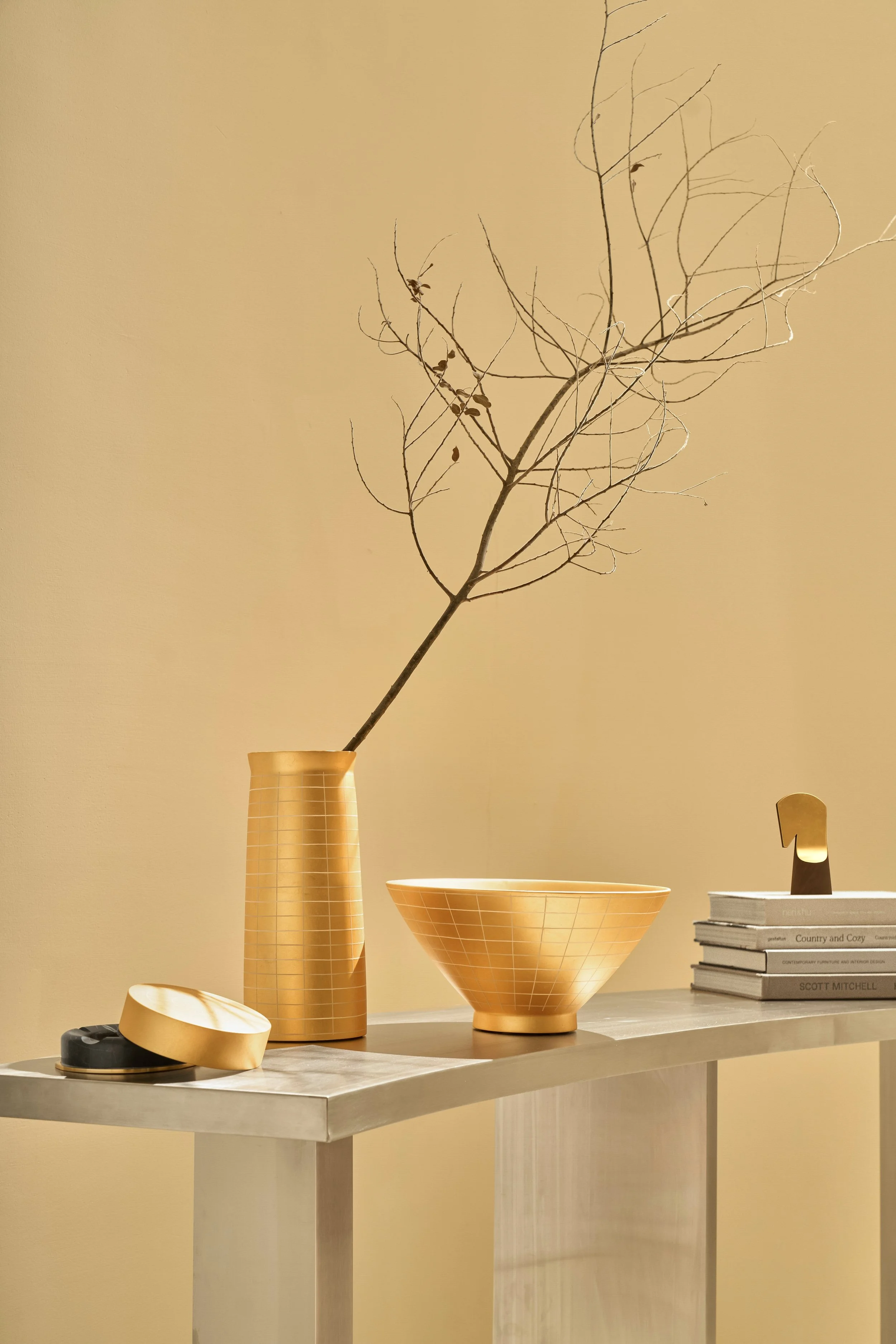
Aurify Collection
Depending on the design, specialized techniques such as eggshell inlay, engraving, hand painting, or gold and silver leaf gilding may be introduced. Materials like eggshell, mother-of-pearl, and gold leaf are often embedded into the surface, giving each piece a rich, luminous quality.
Artisans are key to the creative process. “The artisans are the jewel of the company,” adds De Ruty. “What we truly aim to do is preserve the craft—and its true inheritors are the artisans themselves.”
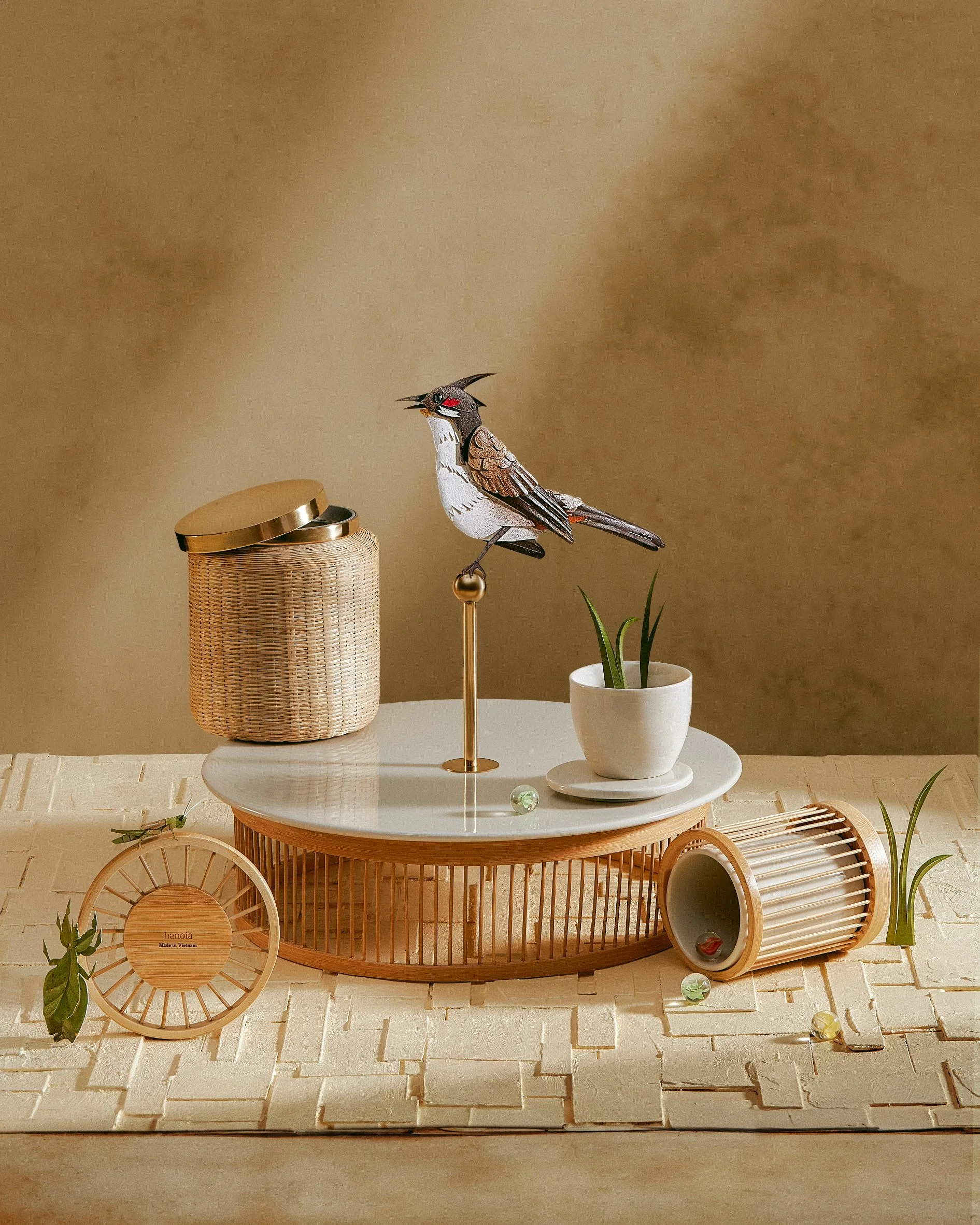
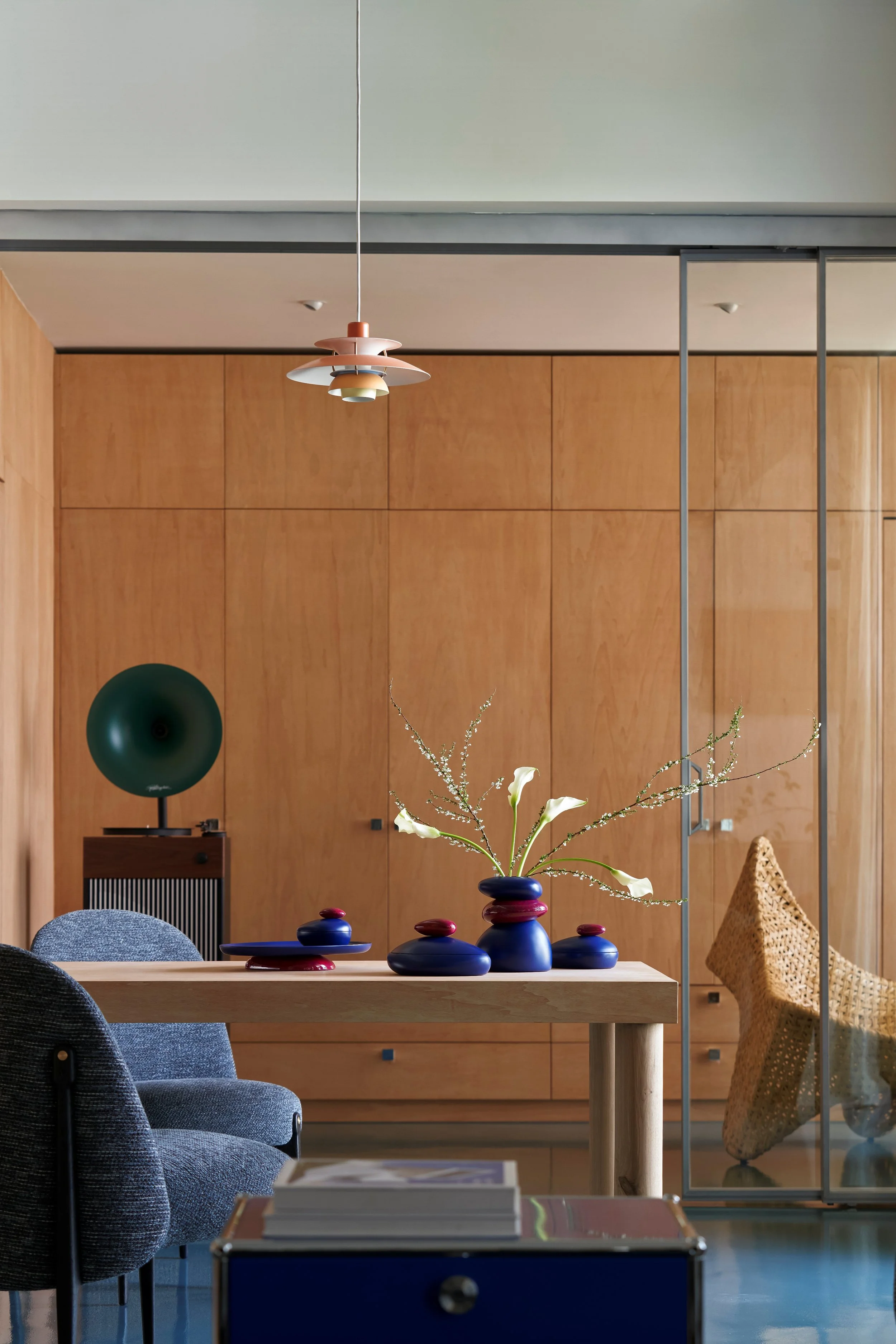
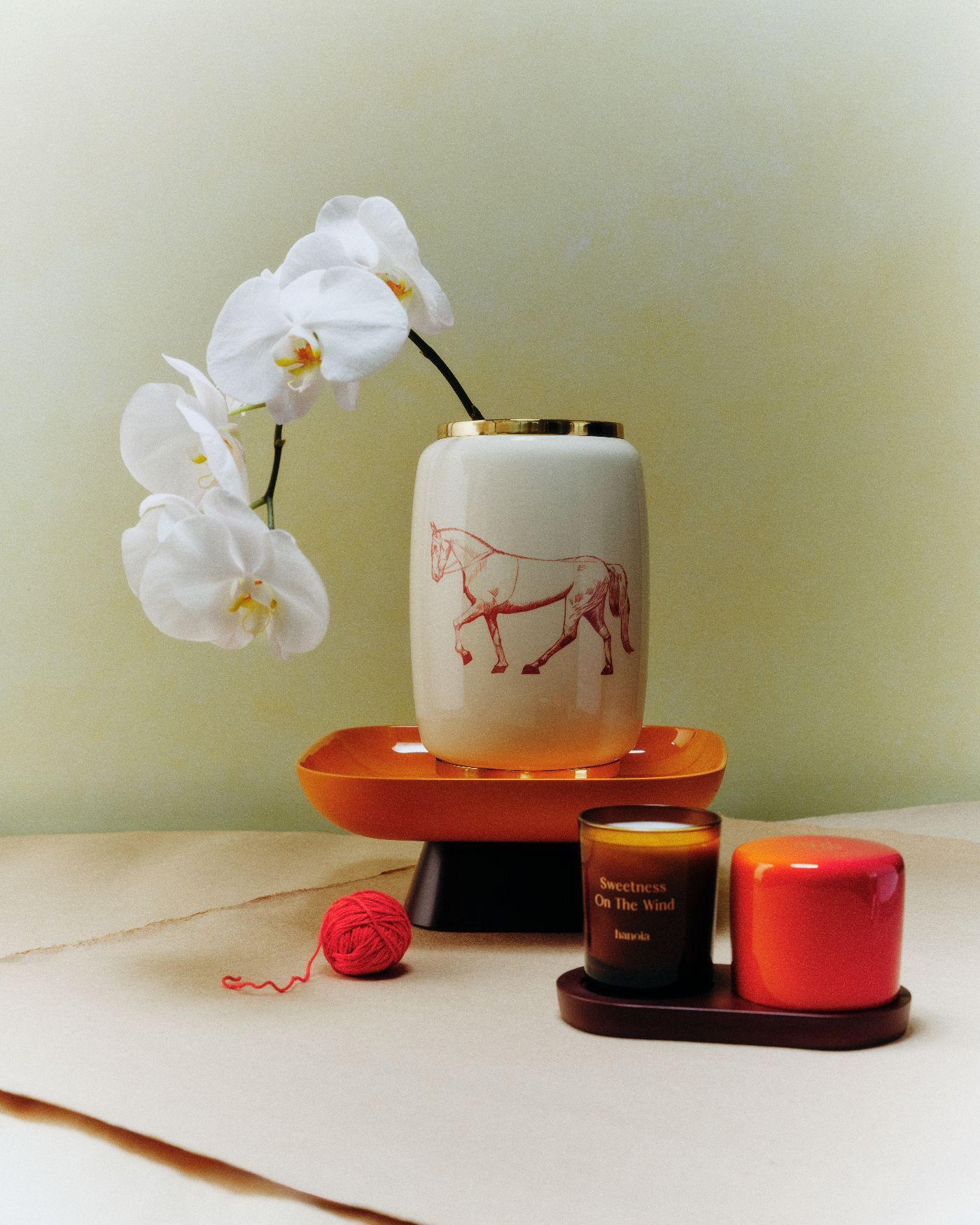
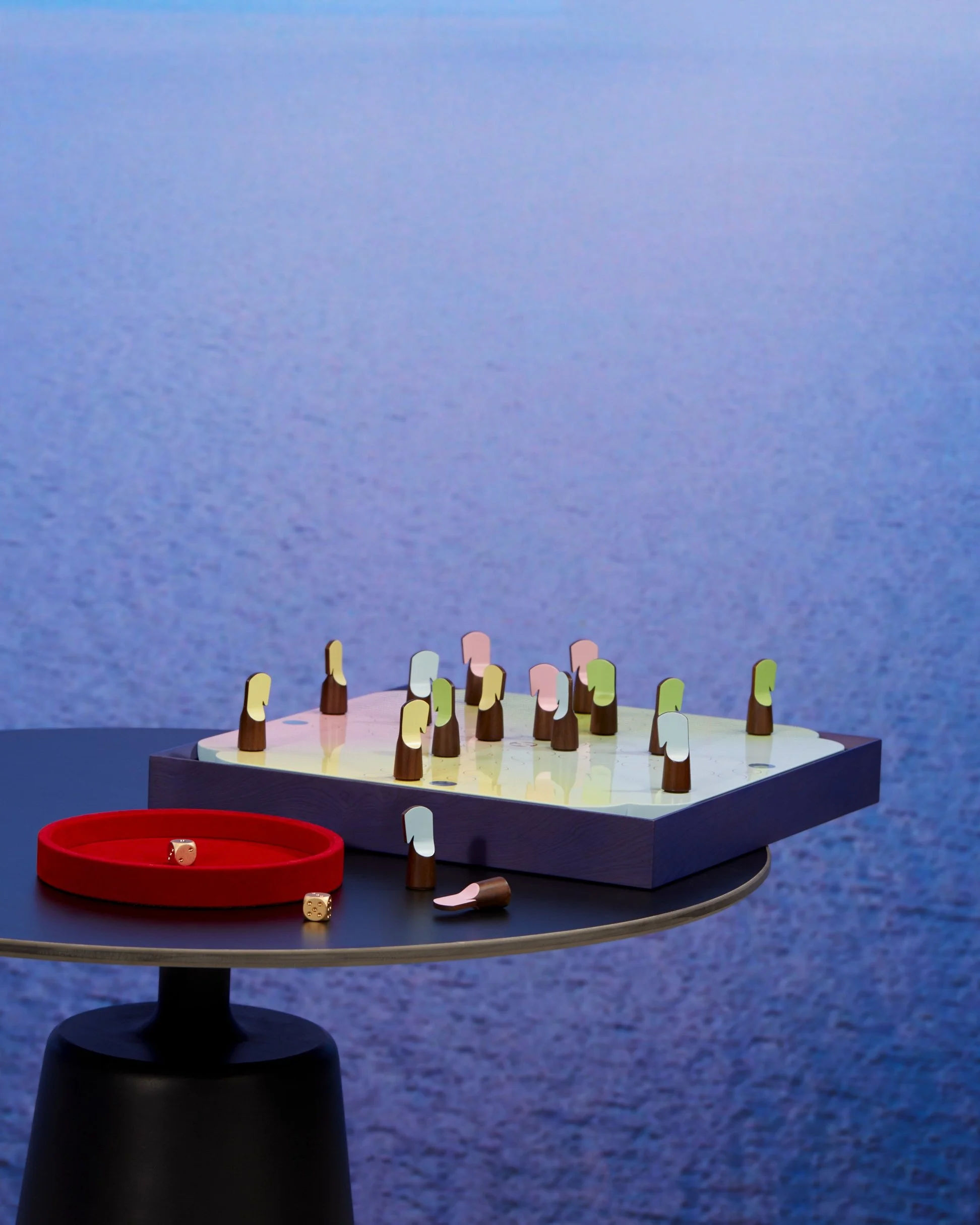
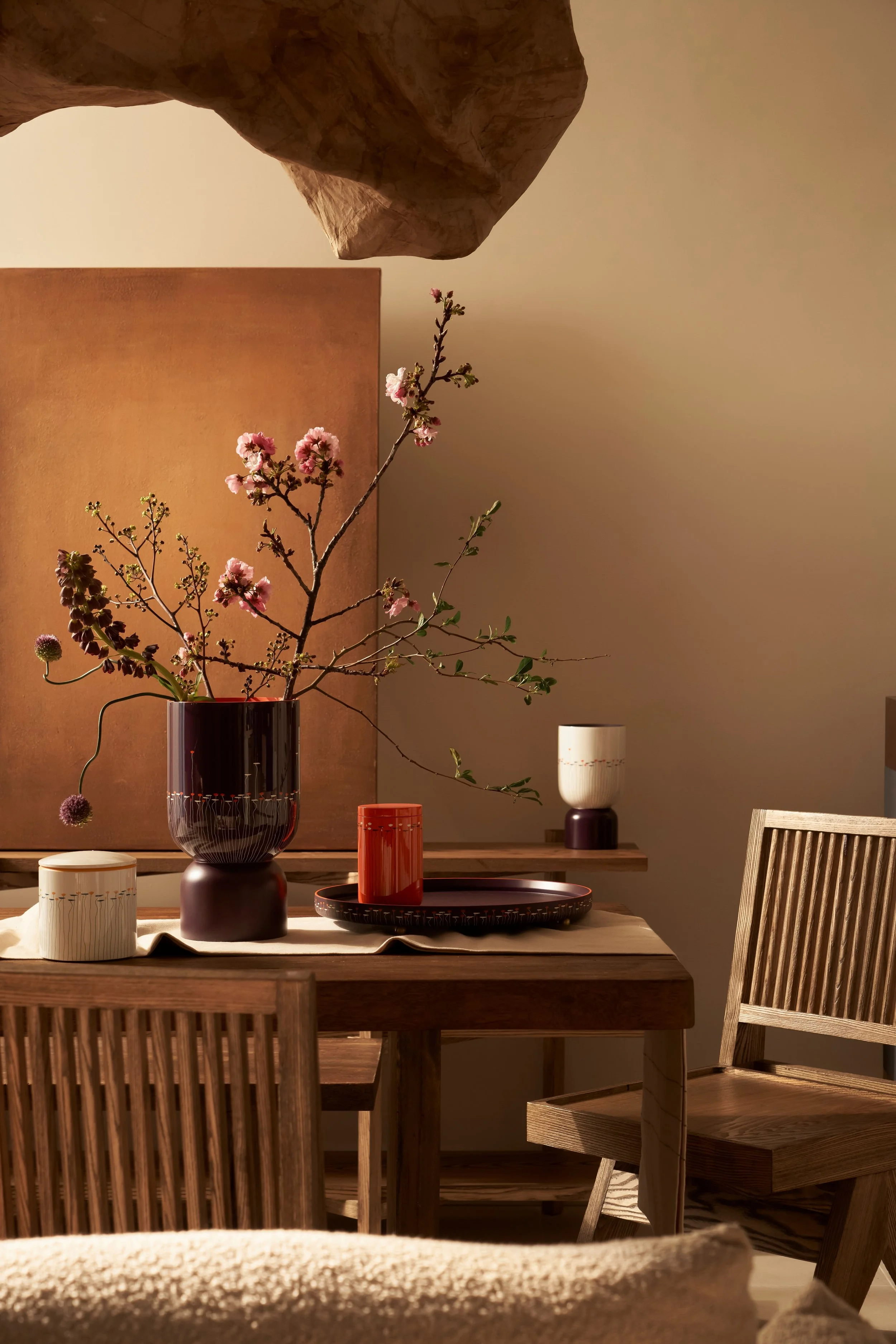
Vietnamese lacquer is recognized both as a traditional craft and a modern artistic medium, blending age-old techniques with contemporary design. Beyond technical mastery, Hanoia’s works embody the essence of Eastern culture and the values of Vietnamese heritage, reinterpreted through a modern lens. Bold centerpieces, sculptural vases, and refined accents allow the artistry to speak quietly yet confidently.
Guided by a forward-looking vision, the brand continues to explore new creative territories through collaborations with artists and designers, and by working across mediums such as ceramics, weaving, metalwork, embroidery, and mixed media.
“We are honored to partner with Rustan’s, which represents the epitome of luxury in the Philippines,” says De Ruty. Praising Filipinos for their refined artistic eye, skilled craftsmanship, and internationally renowned designers, he adds that being introduced to such a knowledgeable and discerning audience is a true privilege.