
How ‘Waiting For Godot’ Spotlights Filipino Longing
With Teatro Meron’s Waiting for Godot, Beckett’s tragicomedy became a soft reflection on Filipino longing, where hope, control, and uncertainty meet in the act of waiting.
Words Randolf Maala-Resueño
Photos courtesy of Teatro Meron
February 24, 2026

In Bonifacio Global City, inside the Special Exhibition Hall of The Mind Museum, Teatro Meron stages Samuel Beckett’s Waiting for Godot—inquiry-filled and mirrored.
The venue’s quiet hum of science exhibitions beyond the walls lends the production an added resonance: here, time is measured, observed, theorized. Onstage, however, time slips, stalls, repeats. We are left with two men waiting.
Directed by Ronan Capinding, this staging leans deliberately into philosophy. Capinding writes, “This production embraces the tension at the heart of Beckett’s work: the longing for essence, the freedom and anxiety of existence, the illusion of control, and the stubborn need to hope.”
The line functions in a thesis–his Godot is less about absurdity for its own sake and more about the anatomy of longing.
Tarek El Tayech’s Vladimir stands upright in belief. He is ‘essentialism’ embodied, clinging to the idea that there is structure, that Godot will come, that meaning precedes experience.
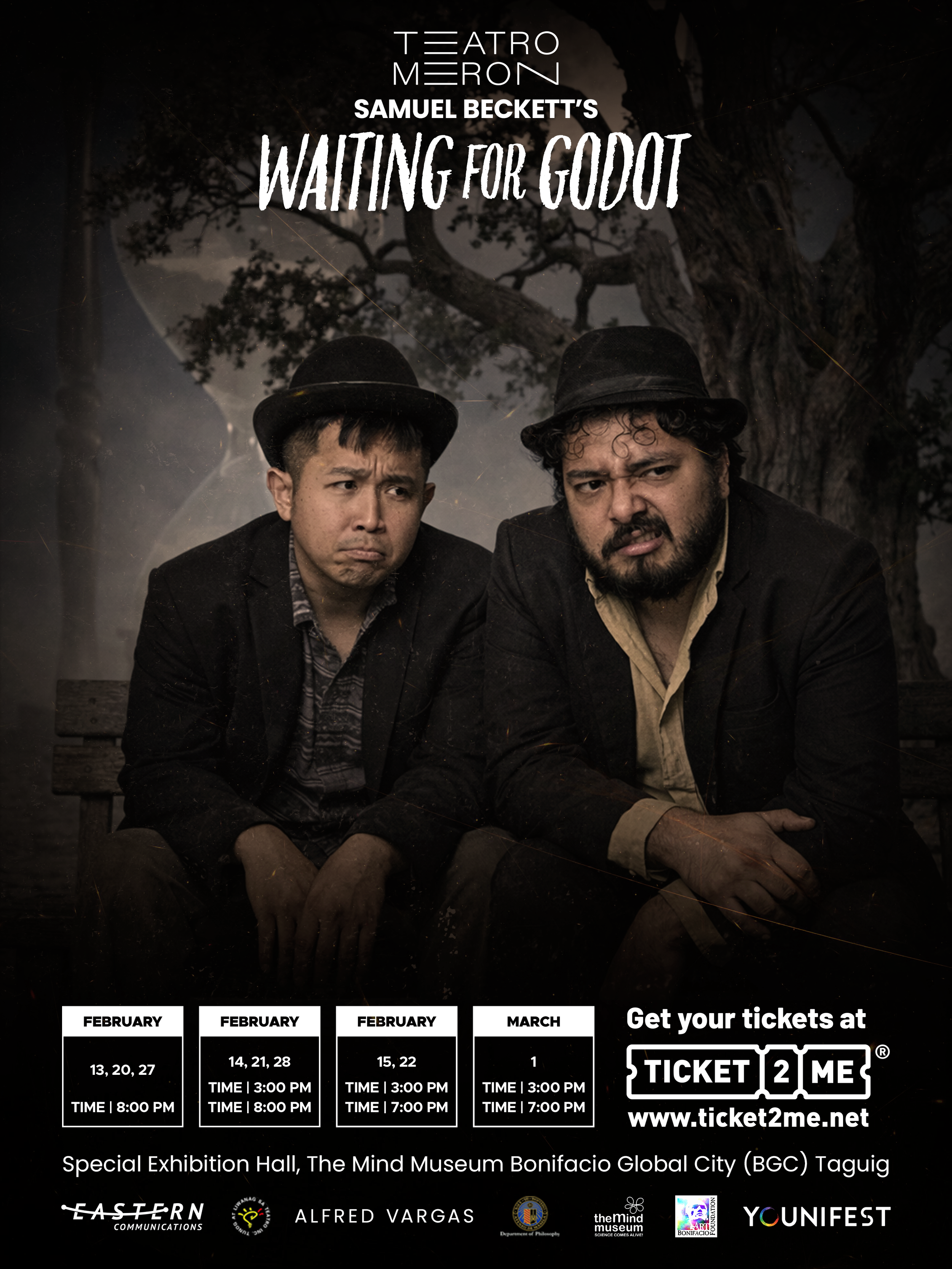
Across from him, Jj Ignacio’s Estragon slouches into ‘existentialism’—aching feet, impatient hunger, the insistence on the now. Their chemistry is strongest in silence: the pauses stretch like traffic along EDSA, familiar and maddening. In those suspended beats, the audience recognizes something distinctly Filipino: the practiced endurance of delay.
We are a nation fluent in waiting. Waiting for bureaucratically long lines, for government aid, for visa approvals, for justice that inches forward, for change promised on campaign slogans.
The Boy’s repeated message—that Godot “will not come today but surely tomorrow”—lands with uncomfortable familiarity. Hope here is naively habitual. It is what keeps families intact and institutions afloat. But it is also what keeps us suspended.
Capinding describes the play as “a portrait of humanity standing at the crossroads of meaning and meaninglessness… always on the verge of leaving, yet always choosing to wait.” That ellipsis feels earned in performance. Didi and Gogo often threaten departure, but inertia triumphs. In a country where migration is both aspiration and necessity, the line acquires political charge. We are perpetually on the verge—of leaving home, of reform, of revolt—yet tethered by circumstance, fear, or fragile hope.
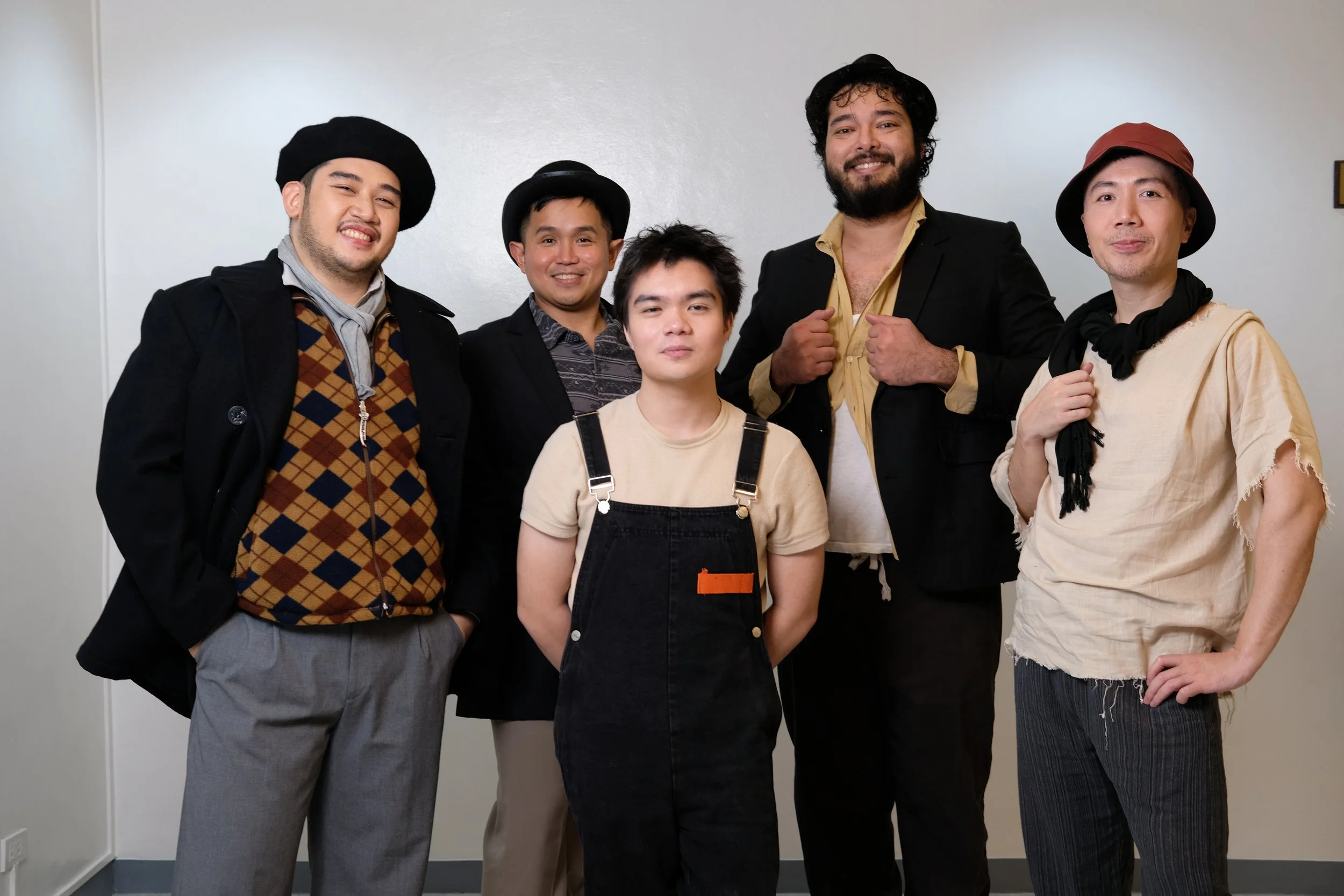
(L-R) John Bernard Sanchez (Pozzo), Jj Ignacio (Gogo), Yael Ledesma (The Boy), Tarek El Tayech (DIdi), and Lenard Tiongson (Lucky)
John Bernard Sanchez’s Pozzo blusters during act one: the archetype of authority convinced he can “control, interpret, and master Existence,” as the director notes. In act two, blind and diminished, he becomes an image of power undone.
The transformation subtly echoes modern Filipino disillusionment with strongman narratives—the belief that control is possible, that certainty can be imposed. Blindness becomes metaphor: systems collapse, leaders falter, and those who claimed mastery are revealed as equally dependent.
Lenard Tiongson’s Lucky, whom Capinding interprets as “Existence or Being itself: quiet, burdened, and seemingly controllable, yet ultimately elusive and beyond full comprehension,” is rendered with striking restraint.
His famous monologue ruptures through the core—a torrent of language that feels eerily like our information age: dense, breathless, overwhelming. It is one of the production’s more potent moments, though at times the pacing leading up to it risks intellectual overclarity, but illuminating nonetheless.
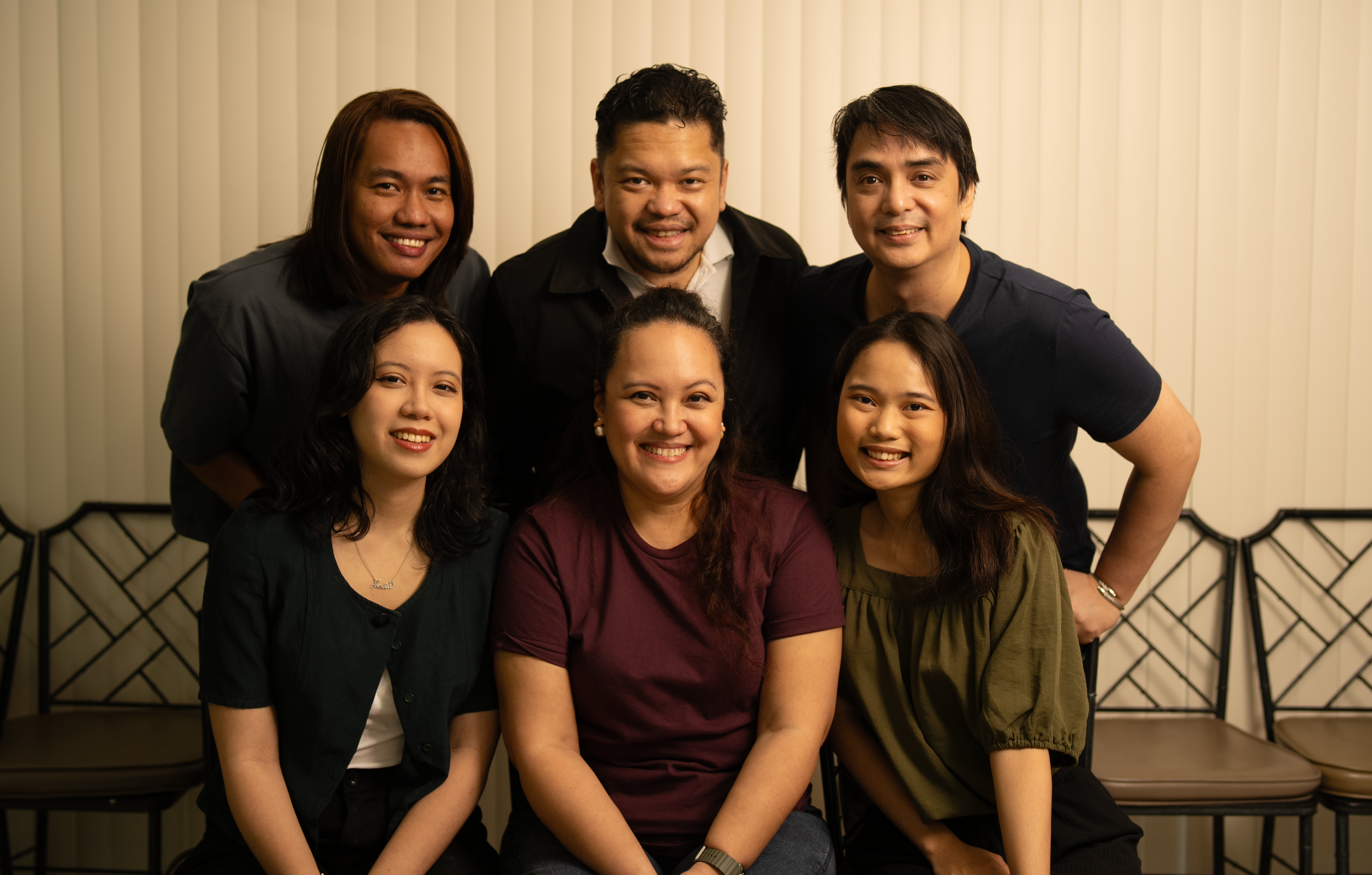
From top, (L-R) Marasigan (Asst. Production Manager), Reamur David (IT Head), Santi Caruncho (Graphics Designer), Julia Barredo (Marketing Associate - Sales), Gabrielle Barredo (Production Manager), Aya Venzon (Marketing Associate - SocMed)
Yet perhaps that clarity is part of Teatro Meron’s project. As a young company devoted to the classics, they approach the text with reverence and education. This Godot wants to be understood.
It invites audiences—students, thinkers, the philosophically curious—to grapple with essentialism and existentialism with embodied struggle. If the production does not fully surrender to chaos, it compensates with coherence and care.
What lingers most is the act of longing itself. Not dramatic yearning, but the quieter, daily version: showing up, returning to the same spot, rehearsing belief.
In the 2026 Philippines—economically restless, politically watchful, spiritually searching—waiting is both a burden and discipline.
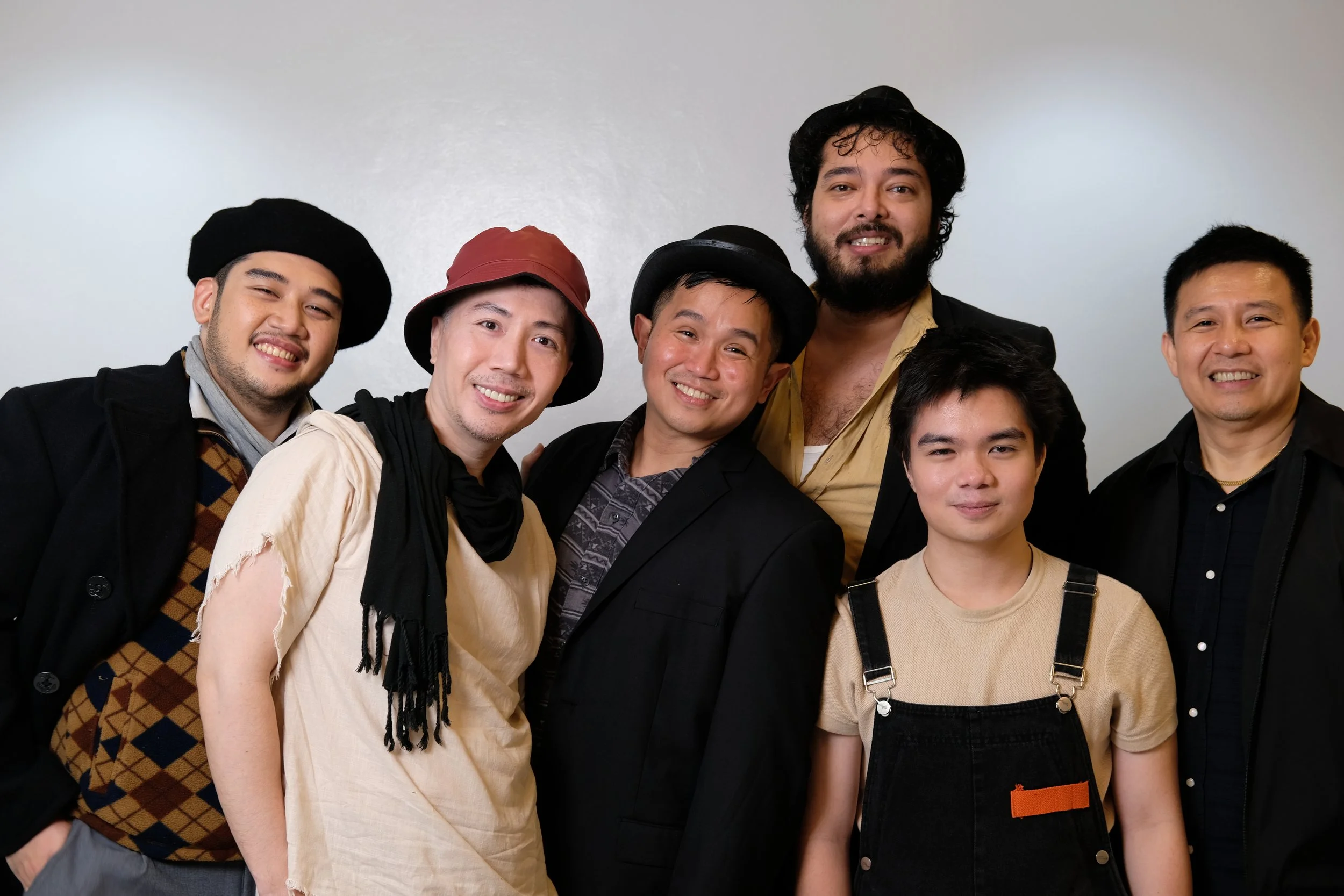
Cast with director Ronan Capinding
Definitively, Teatro Meron does not offer answers. Godot never arrives. But the production suggests that in the very act of waiting together—laughing, arguing, enduring—there is a fragile form of meaning.
It is not a flawless staging. Some rhythms could risk more unpredictability; some silences could dare to be more dangerous. But it is thoughtful, earnest, and attuned to the urgencies of now. In a country grittingly built on forward motion, Waiting for Godot asks us to sit still and examine what, and whom, we are waiting for.
Perhaps that is its quiet triumph.
Catch Teatro Meron’s production of ‘Waiting For Godot’ at The Mind Museum in BGC. For show dates and ticket sales, go to teatromeron.com.