
Here Comes the Lakambini
By reimagining Gregoria de Jesus with pop flair and political grit, Tanghalang Pilipino delivers a show that challenges how we remember, who we honor, and why stories matter.
Words Gerie Marie Consolacion
Photo courtesy of Tanghalang Pilipino, Bren Gingabo, Paul Islanan, and Gerie Marie Consolacion
November 26, 2025
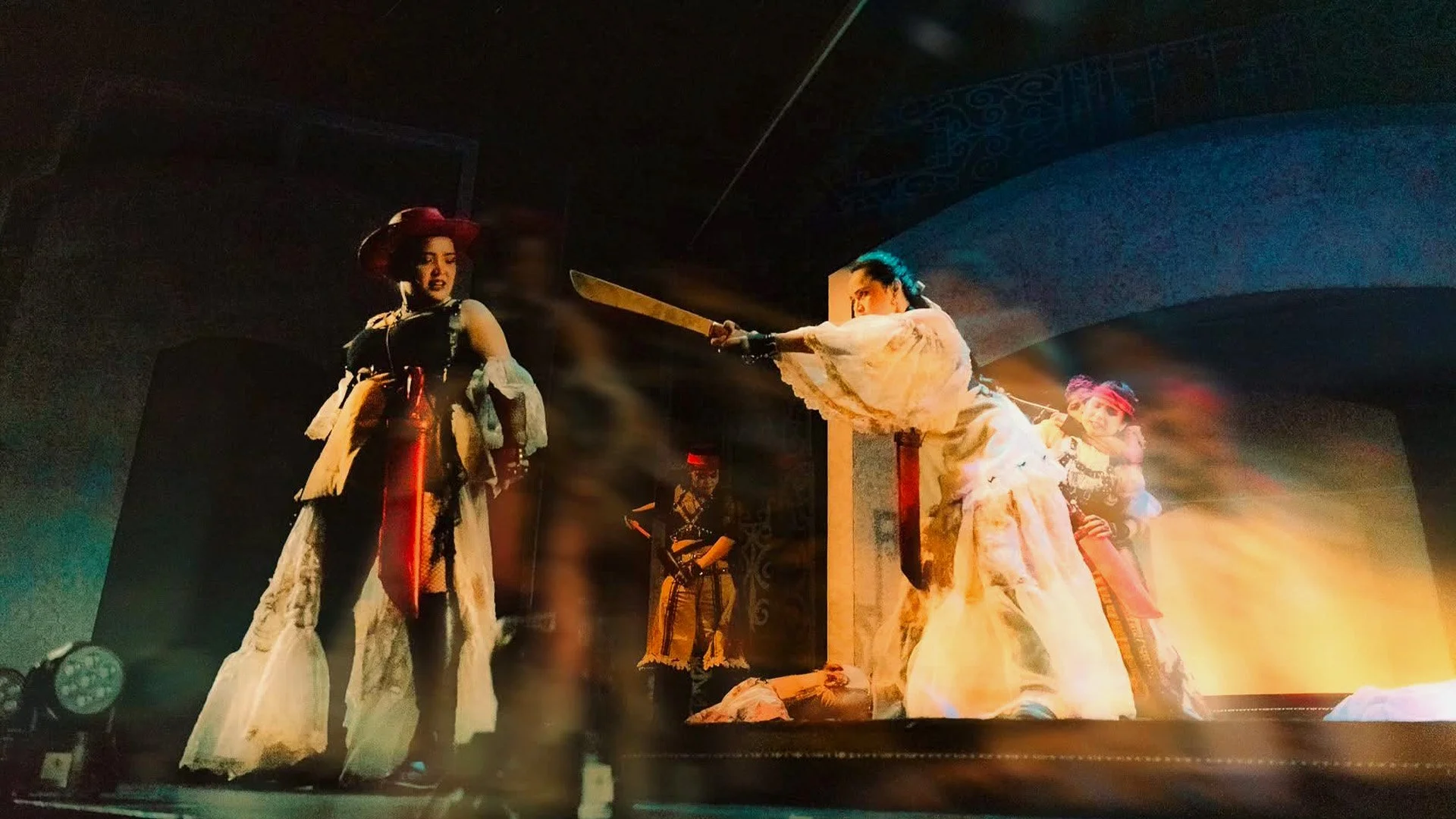
“G to the R to the E to the G to the O-R-I to the A….”
The curtains were up, the beat started to drop, and the cast delivered the first lines of the first song. Catchy and energetic, this is truly a pop musical that immediately captures your attention and leaves you wanting more. The show had officially begun.
When we discuss reliving the past lives of known heroes in the country, a certain setup usually comes to mind: historic settings, modest clothing, deep Filipino language, dim lighting, powerful men, and submissive women.
But Tanghalang Pilipino strikes again. From Sandosenang Sapatos to Pingkian, they continue adding another brick to their mission of telling our stories while reshaping the narratives.
And as a theater kid, if you ever imagined Hamilton and Six having a Filipino baby, Gregoria Lakambini: A Pinay Pop Musical is definitely their child.
Just a sneak peek
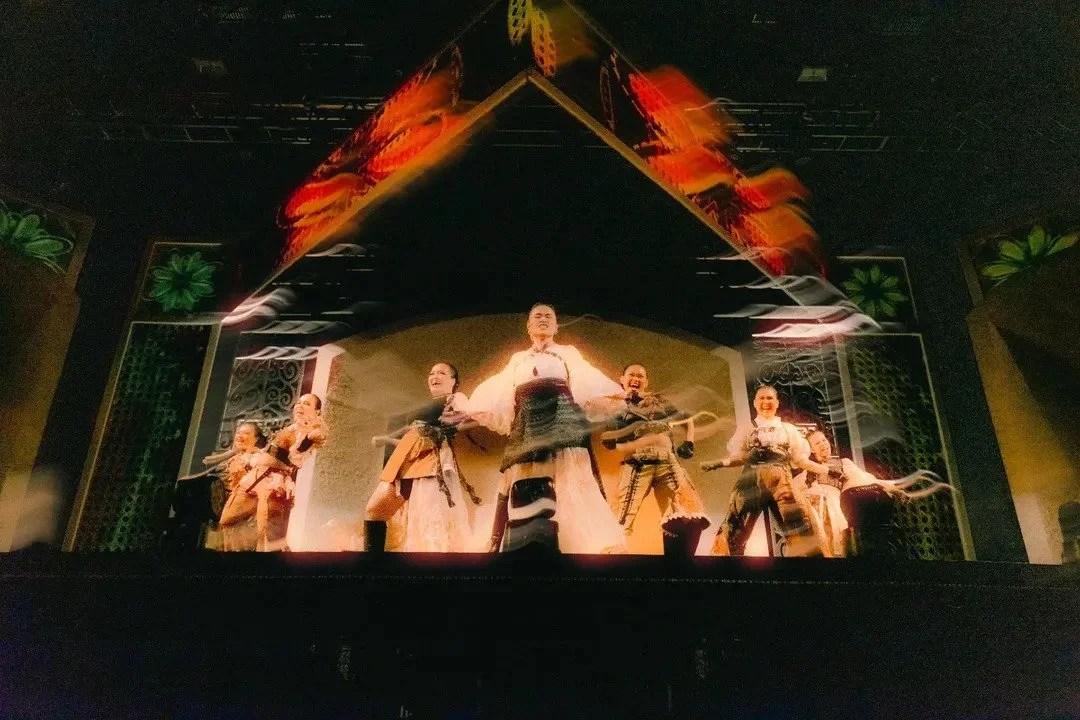
Photo via Tanghalang Pilipino’s Instagram (@tanghalang.pilipino) | Shot by Paul Islanan
Gregoria de Jesus, often remembered only every Bonifacio Day when Bonifacio’s famous love letter to Oryang resurfaces, deserves more than to be known as merely Bonifacio’s wife. It’s frustrating that despite her achievements, she is still overshadowed by her husband instead of being celebrated as the first female member of the Katipunan.
And here’s where the show becomes endearing. Its storytelling is light, witty, and accessible. It plays with humor, romance, and history in a way that younger audiences will instantly relate to, while older viewers will appreciate the layered social commentary.
Gregoria’s life was far richer than the usual “love interest” label—she guarded the secrets of a revolution, fought for the country, survived wars and widowhood, raised children, and rebuilt herself after numerous tragedies. The musical succeeds in capturing her as a complete woman: fighter, partner, mother, widow, revolutionary, and ultimately a symbol of strength and survival.
Let’s admit it—love stories remain one of the most awaited and beloved genres in both film and theater. But what sets this play apart is how it breaks the usual expectations for historical plays about national heroes.
It isn’t a monotonous, overly serious play where every line demands utter solemnity. Instead, it invites you to dance, follow the rhythm, and simply enjoy yourself. It’s the kind of production that allows audiences from different generations to understand Oryang’s life in their own way.
Meet the Lakam-besties
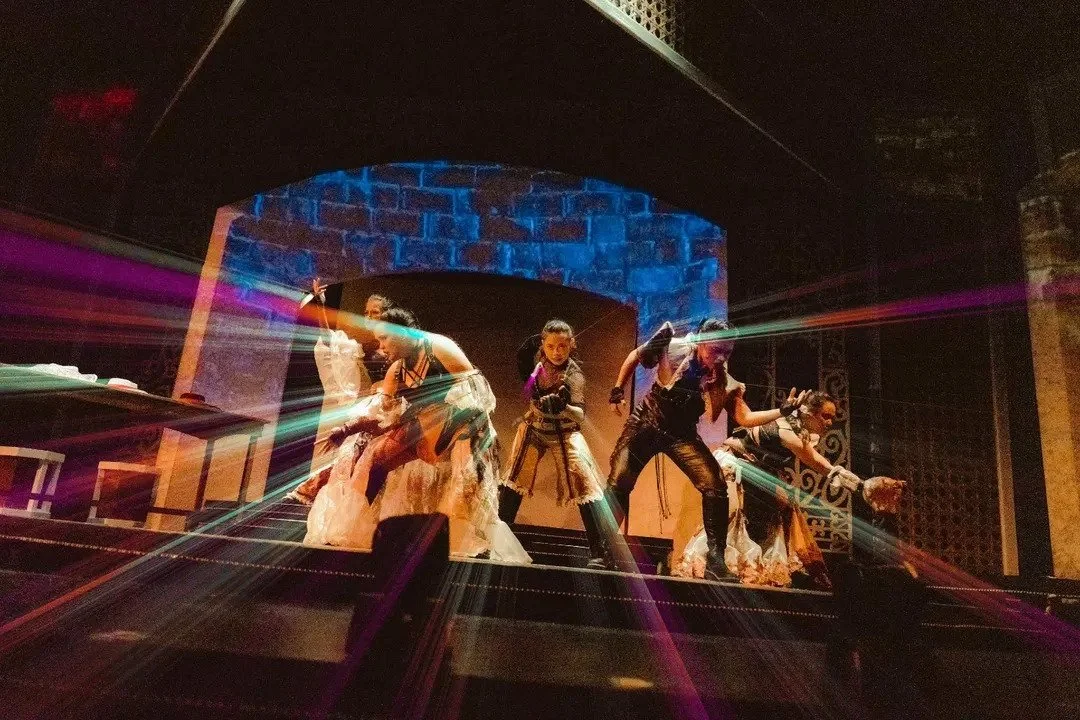
Photo via Tanghalang Pilipino’s Instagram (@tanghalang.pilipino) | Shot by Paul Islanan
The show opens not only with Gregoria on stage, but also with her Lakam-besties, who narrate details, introduce actors, and seamlessly split and merge into their roles. They even share comments and insights after events in the story. They are called Lakam-besties for a reason.
Another highlight: the cast is entirely composed of women. Why should Bonifacio, Aguinaldo, or Nakpil necessarily be played by men when women can portray them just as effectively?
Aside from their fun and light approach, these besties use Gen Z and Millennial language—awlrighttt ayarhn, sis, keri, halaur—tickling the audience with familiarity.
Despite portraying multiple roles, no one outshines anyone. Even Marynor Madamesila as Gregoria de Jesus (and of course Anya Evangelista as Andres Bonifacio—though let’s let Oryang take the spotlight for now) blends perfectly with the ensemble. Every Lakam-bestie has her moment, her charisma, her spark that draws the viewers in.
They also portray Gregoria’s parents, fellow Katipuneras, Oryang’s lovers, and her children. They are versatile actresses with powerful voices, graceful movement, and a sense of humor that raises the bar.
Credit must also be given to Marco Viaña, the costume designer, who brilliantly represents both male and female characters without overly complex costumes, proving the power of a headpiece or a simple cloth. The modern Filipiniana silhouettes, saya’t alampay, skillfully balance masculinity and femininity, giving each character a distinct style.
Three-Faced Woman
Shot by Bren Gingabo
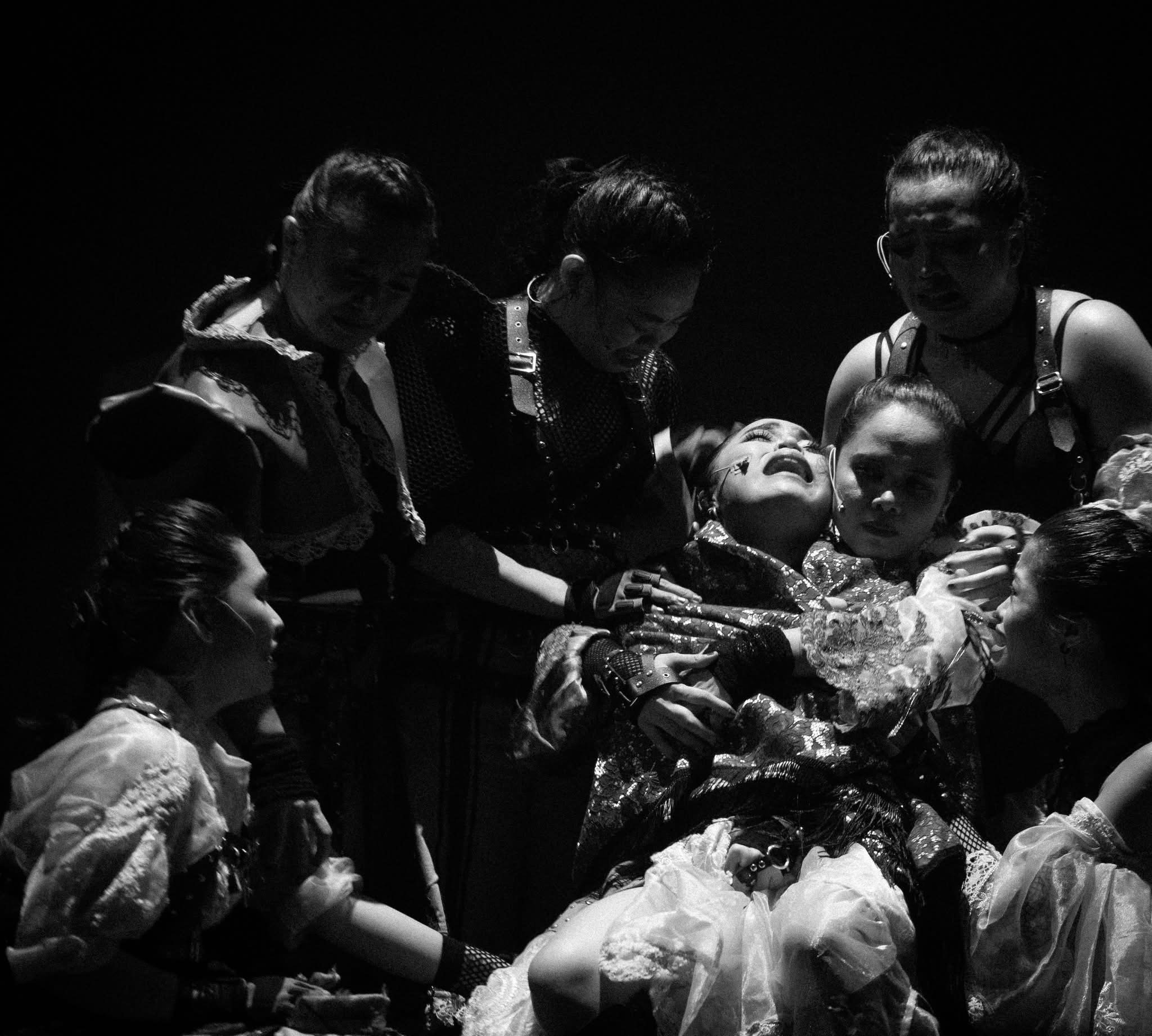
Gregoria de Jesus is a three-faced woman. She lived under three names:
Gregoria, the daughter cherished by her parents.
Lakambini, who left comfort behind to love Andres and her country, is a true Katipunera.
Oryang, the wife and mother who rebuilt her life after tremendous loss.
The show mirrors the problematic macho–feudal society women have endured since colonization, where Gregoria’s parents begged her to stay home rather than pursue her education, seeing her merely as someone’s future wife.
Her dreams were crushed by the phrase “Babae ka naman,” a phrase still very much alive today, still killing women’s confidence and ambition. When Gregoria met Andres, fell in love, and chose to challenge her parents, another identity emerged: Lakambini.
A woman whose love ran deep—not only for her husband but even more for her motherland. Their belief was clear: “Ang paglaya ng bayan ay ang paglaya natin.”
Freedom not only for a democratic nation, but freedom from the chains that limited their potential. Freedom to love without restrictions, without class boundaries.
Another thing I admire about the play is that it doesn’t villainize Bonifacio. Instead, it shows his human side—not glorified for doing the bare minimum, but understood as part of Lakambini’s journey to discovering herself.
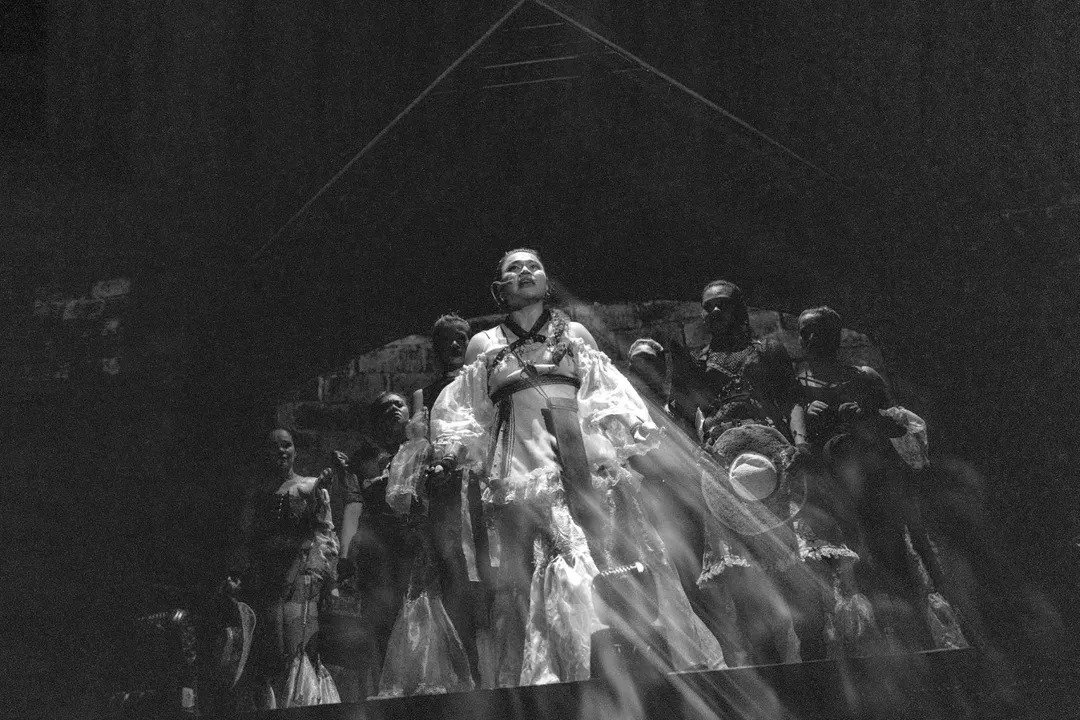
Photo via Tanghalang Pilipino’s Instagram (@tanghalang.pilipino) | Shot by Paul Islanan
One unforgettable line comes from the scene where Lakambini and Andres have their quarrel. Lakambini pleads to hold a sundang, aching to break free from “Babae ka kasi,” proving she is not fragile. Meanwhile, Andres struggles with whether to allow her—out of love or fear.
He eventually gives in. Lakambini teases, “Napilitan?” And he answers, eyes full of trust, “Nagtitiwala.”
Truly, Marynor and Anya’s chemistry is over the roof, not because their love is perfect, but because it is flawed, challenging, and real. But everything collapses—the betrayal, the lutong makaw, the hatred for election fraud—and after Bonifacio’s death, Lakambini doesn’t give up; she simply tucks away her pain.
Broken, grieving for her husband, children, and their shared dream for the country, she allows herself to shatter. And in December 1898, Lakambini was reborn as Oryang.
Widowed, she and Julio Nakpil eventually rekindle affection and form a new family. With eight children (two of whom died in infancy), Oryang becomes a devoted wife and mother. A simpler life, yes—but Lakambini’s fire remains alive within her.
This is how Tanghalang Pilipino and playwrights Nicanor Tiongson and Eljay Castro Deldog shift the narrative. The story does not end with Lakambini—Oryang’s chapter matters just as much.
Lutong Makaw, or Puta-Putahe?
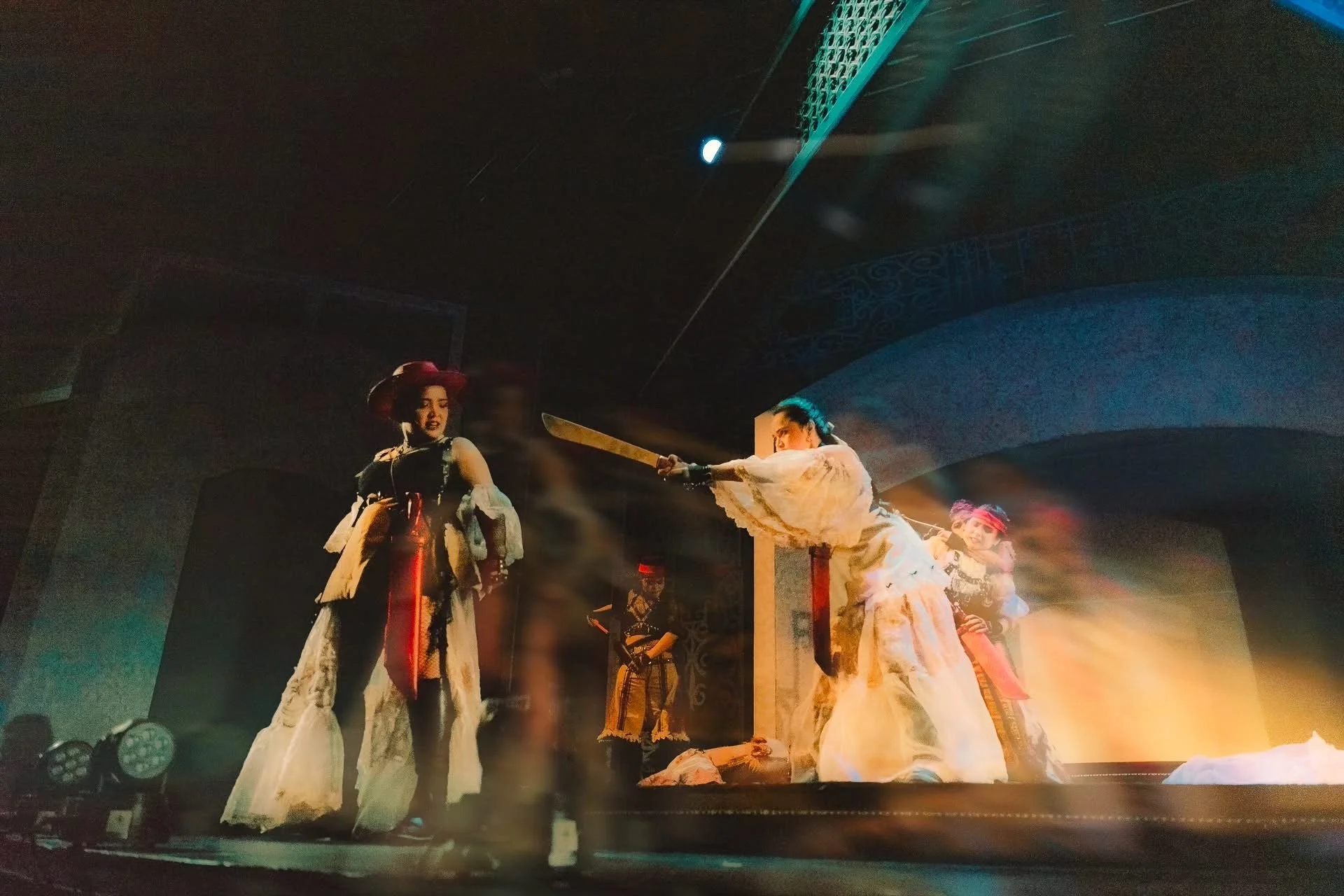
Photo via Tanghalang Pilipino’s Instagram (@tanghalang.pilipino) | Shot by Paul Islanan
During the show’s climax, when Aguinaldo’s betrayal comes to light, lutong makaw also materializes. The song goes: “Mapait sa dila, maasim sa sikmura, bayan ay ginisa sa sariling mantika, lutong makaw, lutong makaw, halalan ay ninanakaw!”
A line still painfully relevant today. Aguinaldo isn’t dead—he simply reappears under different names: a Duterte, a Marcos, or another surname.
But the bitterness is balanced by a later scene. When Aguinaldo visits Nakpil and Oryang’s home to seek support for his presidency, they still welcome him warmly, assure him, and even prepare a meal.
Oryang cooks Puta-Putahe—not too sour, not too bitter, not sweet—just a taste of his own medicine. A poetic payback not only for Lakambini and Bonifacio, but for the Katipunan itself.
And the dish becomes complete weeks later when Aguinaldo loses the presidency to Quezon. So between the two meals? I’d choose Puta-Putahe without hesitation.
WOMEN
From the beginning, the cast chants lines that leave a mark:
“Sa kwento ng bayan, babae naman!”
“Ang laban ng kababaihan ay laban ng Lakambini!”
“Babae ka!”
“Kami ang alas na naka saya’t alampay!”
“Ang lider na babae ay hindi lugaw!”
With an all-women cast, music by Nica Del Rosario, direction and choreography by Delphine Buencamino, and an audience that included Gabriela Partylist’s Rep. Sarah Elago and other powerful women–this production becomes more than just a show.
It becomes a political statement.
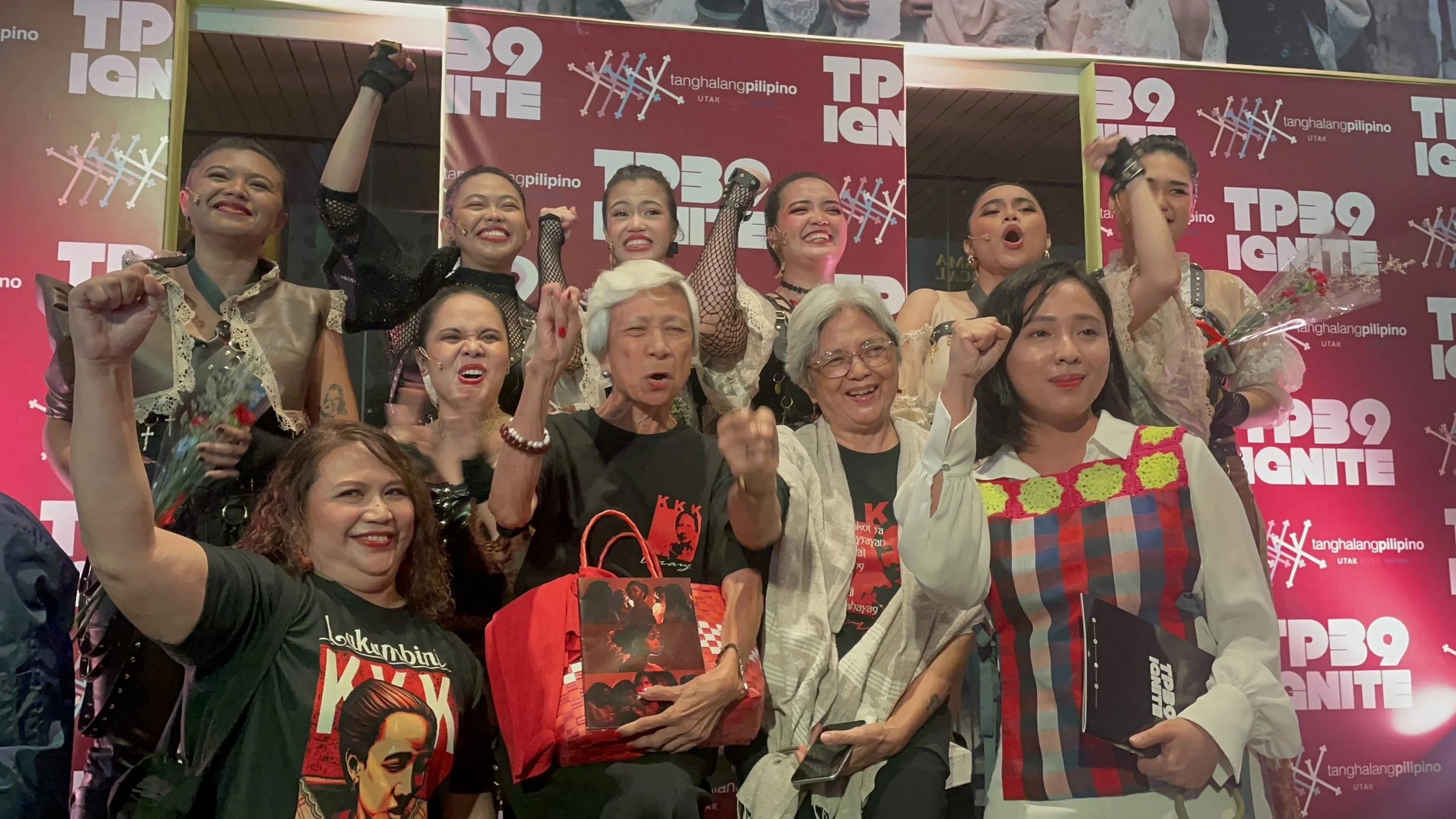
Shot during the opening night with Gregoria Lakambini: A Pinay Pop Musical casts, Oryang and Julio Nakpil’s descendants, and Gabriela Partylist Representative Cong. Sarah Elago
A declaration that the tactics of a macho–feudal, patriarchal society no longer silence us.
We direct our own lives. We decide who we become—rebels, mothers, career women, or simply women.
We reclaim our voices. We reclaim our power. Because at the end of the play, its message stands strong: Ikaw, ako, tayo si Lakambini.
The verdict?
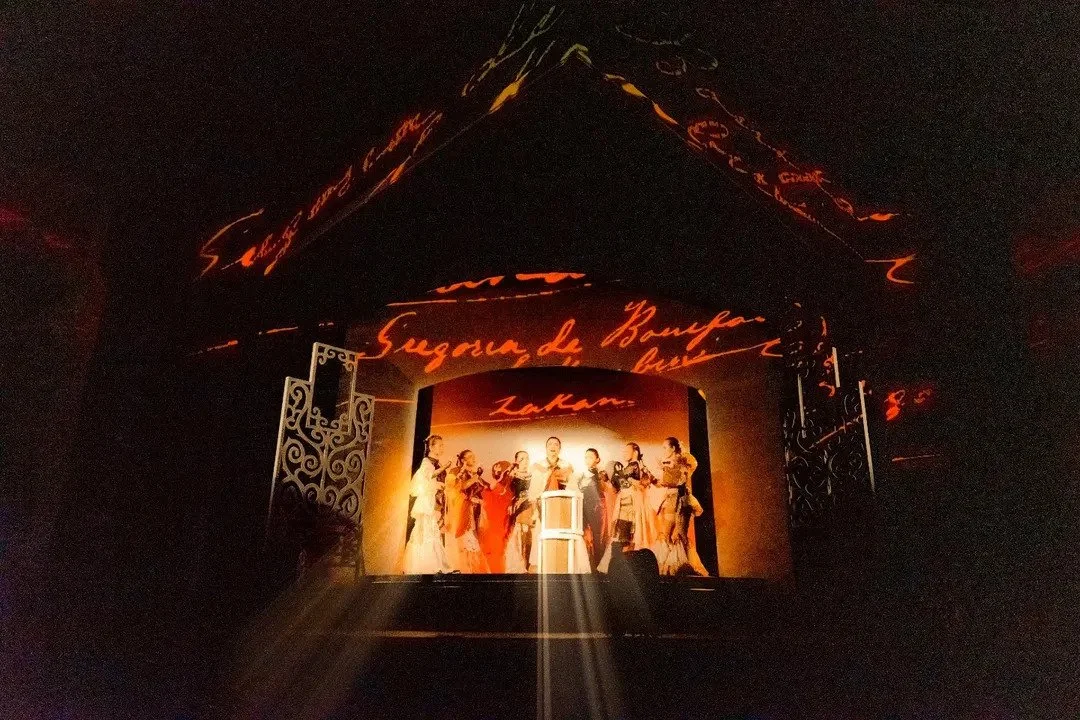
Photo via Tanghalang Pilipino’s Instagram (@tanghalang.pilipino) | Shot by Paul Islanan
When the lights finally go down, one thing becomes undeniable: Gregoria Lakambini: A Pinay Pop Musical doesn’t just entertain—it lands a punch straight to the gut of our complacent historical memory. It grabs Gregoria de Jesus from the margins of our textbooks and plants her firmly at center stage, where she should have been all along.
With its electric pop score, bold all-women cast, and unapologetically political storytelling, the show doesn’t tiptoe around its message. It shouts it. It dances it. It sings it until you have no choice but to listen.
This is a theater that refuses to behave. This is history that refuses to stay quiet. And as you walk out of the theater, one truth hits you harder than the bass drop of the opening number: Gregoria de Jesus was never just Bonifacio’s wife. She was a revolution with a heartbeat.
If the purpose of theater is to shake you awake, then this show does more than wake you—it calls you to rise.