For Every Queer Filipino Child Who Grew Up With Zsazsa Zaturnnah
Twenty years after her debut, Zsazsa Zaturnnah is returning to the stage. For those of us who grew up queer, her return feels like finding a piece of childhood we never really left behind.
Words Gerie Marie Consolacion
Art by Kirk Bertnard
October 21, 2026
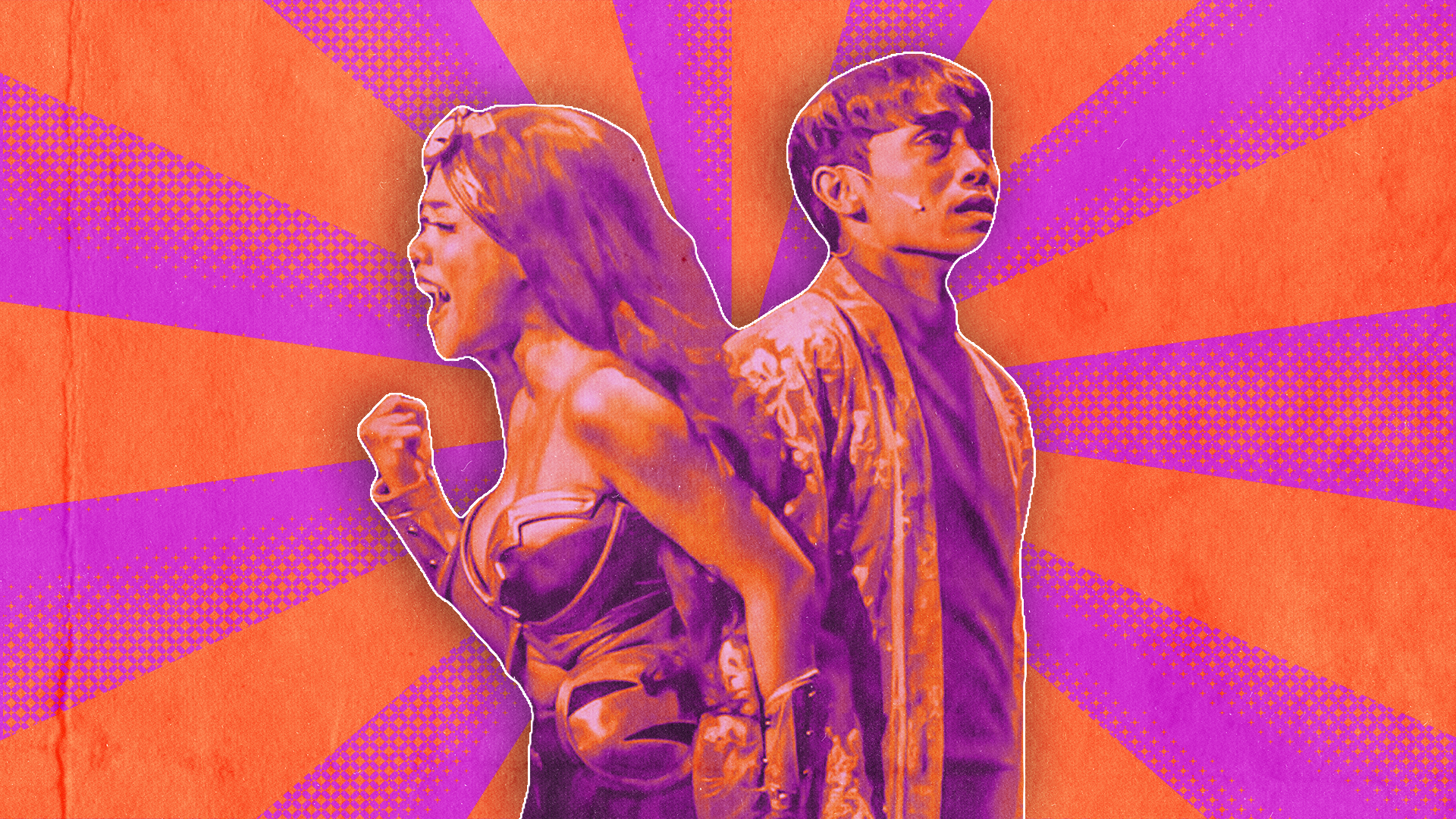
Art by Kirk Bertnard
There are some names you remember before you understand why they matter.
For many queer Filipino children, Zsazsa Zaturnnah was one of those names.
You might not have known what representation meant yet. You might not have had the words for being queer, or even understood why certain characters made you feel seen in ways you could not explain. But you knew Zsazsa.
You knew that a gay beautician could swallow a magical stone from outer space and become a beautiful, powerful superheroine. You knew that she could be loud, funny and unapologetically feminine. You knew she could take up an entire room and never once look like she was asking permission.
For a queer child growing up in the Philippines, that could mean more than adults realized. I know it did for me.
Looking back now, Zsazsa Zaturnnah feels like one of those childhood memories that becomes more meaningful as you get older. At the time, she was simply fabulous. Now, as part of the queer community myself, I understand why her name resonated so deeply.
She gave us someone to recognize before we knew we were looking for ourselves.
Before we had the words, there was Zsazsa
Carlo Vergara first introduced Zsazsa Zaturnnah in his graphic novel Ang Kagila-gilalas na Pakikipagsapalaran ni Zsazsa Zaturnnah in 2002.
The premise sounds like something that could only exist in the wonderfully chaotic imagination of Filipino pop culture. Ada, a gay beautician, discovers a magical stone from outer space. When he swallows it and shouts “Zaturnnah!,” he transforms into a superpowered woman. It is absurd, it is camp, and it is very Filipino.
But underneath all that spectacle is Ada, a gay man trying to make his way through a world that does not always make that easy.
He looks for love, he deals with family, he encounters homophobia, and he tries to exist as himself while navigating all the expectations placed on him.
The superheroine may be fictional, but the life underneath her is recognizable.
That is what makes Zsazsa different from a character who simply happens to be queer. Her queerness is not something tucked away in the background, it is part of the heart of the story.
And for queer children watching, reading or hearing about her, there was something quietly radical about that.
Here was someone like us, except she had superpowers.
She was allowed to be fabulous
There was never anything subtle about Zsazsa. She was not interested in making queerness palatable and she did not become powerful by becoming less feminine, less flamboyant, or less herself.
If anything, she became more and that image stays with you when you grow up queer.
As children, we learn very quickly that there are things about ourselves that other people might find strange. May it be the way we speak, the way we move, the things we like, the people we admire, and sometimes we learn to make ourselves smaller before anyone even tells us to.
But Zsazsa offered another possibility: What if being too much was not a problem? What if it was the superpower?
I did not have that language as a child. I only knew that there was something about Zsazsa that felt familiar, that there was a freedom in watching her be completely, almost impossibly, herself.
That is why her name still resonates with me now and it is not only nostalgia, but recognition.
A Filipino kind of queer story
Zsazsa also felt different because she did not exist in some distant, Western superhero universe. She was ours.
Her humor was ours, her references were ours, her way of dealing with family, romance, embarrassment and everyday absurdity felt distinctly Filipino.
Most importantly, she carried the particular humor of ‘bakla’ culture.
That humor can be sharp and theatrical. It can be playful one moment and cutting the next, it can make fun of the things that hurt because sometimes laughter is the only way to get through them.
Vergara has spoken about this himself. In a 2020 interview with When in Manila, he described comedy as a way of dealing with problems and concerns, a means of processing things that might otherwise be difficult to confront.
That is all over Zsazsa’s story.
She fights monsters, but she also deals with heartbreak. She faces absurd villains, but she also encounters prejudice. Her world is ridiculous because sometimes life is ridiculous, especially when you are trying to navigate a society that has not always known what to do with people like us.
From a comic book to a cultural memory
Zsazsa did not stay on the page for long.
In 2006, Zsazsa Zaturnnah Ze Muzikal brought the character to the stage, with Eula Valdez as Zsazsa, Tuxqs Rutaquio as Ada and Ricci Chan as Didi.
The musical returned for several runs between 2006 and 2011, proving that Zsazsa was more than a fleeting pop culture moment. That same year, she made the jump to cinema in Zsazsa Zaturnnah Ze Moveeh, with Zsa Zsa Padilla taking on the title role.
Years later, another generation got its own Zsazsa when Ateneo blueREP staged Zsazsa Zaturnnah the Musical... 'Yun Lang! in 2023. Kim Molina played Zsazsa, while Phi Palmos, Adrian Lindayag and Shaun Ocrisma alternated as Ada, with Kakki Teodoro as Queen Femina. Every version gave her a different face and perhaps that is exactly why she lasted.
Zsazsa has never belonged to one performer, one production or even one generation. She belongs to the people who see something of themselves in her.
The superheroine who found her way into queer culture
It is also impossible to talk about Zsazsa without talking about drag.
Her exaggerated femininity, glamour and theatricality have made her a natural reference point for Filipino drag performers. She embodies a kind of femininity that does not apologize for being constructed, performed or spectacular.
And for queer people, that matters. There is freedom in realizing that identity can be something you explore, play with and express. There is freedom in discovering that femininity does not have to belong to one kind of person. Zsazsa takes all of that and makes it enormous.
She is not merely a character who happens to be feminine, rather, she turns femininity into an entrance.
Twenty years later, she is coming home
Now, Zsazsa is returning to the stage once again.
Zsazsa Zaturnnah Ze Muzikal is set to run from April to June 2027 at Shooting Gallery Studios under Wishbone Collective.
The production brings together Chris Martinez for the theatrical adaptation, Vincent A. De Jesus as composer, lyricist and musical director, and Chris Millado as director.
For theatergoers, it is another revival, but for those of us who grew up with Zsazsa, it feels like a door opening.
There are parts of childhood that you think you have outgrown. Then something brings them back and suddenly you remember not only what you watched, but how you felt watching it.
For the children who came after us
There is a tendency to look back at older queer representation and measure it only by how progressive it was.
But sometimes representation is simpler than that. Sometimes it is a child seeing someone on a page, on a screen or on a stage and thinking, even without the words to explain it, I like this. I understand this. There is something here for me.
That was Zsazsa for many of us.
She did not solve homophobia. She did not make being queer easy. She did not magically change the families, schools and communities that could make queer children feel like outsiders.
But she gave us an image of queerness that was not only about shame or struggle. She was funny, glamorous, powerful, loved, and most importantly, the hero.
And for every queer child who grew up watching her, that image could stay long after childhood was over.