
For Erikson Arcilla, ‘The Longest Wait Makes the Prettiest Flowers’
Erikson Arcilla's thirteenth solo exhibition declines the promise that patience is always rewarded. Rather, it offers something quieter: the conviction that waiting, uncertain as it remains, can still become a way of seeing.
Words Bernadette Soriano
Photos Courtesy of Art Underground
July 31, 2026
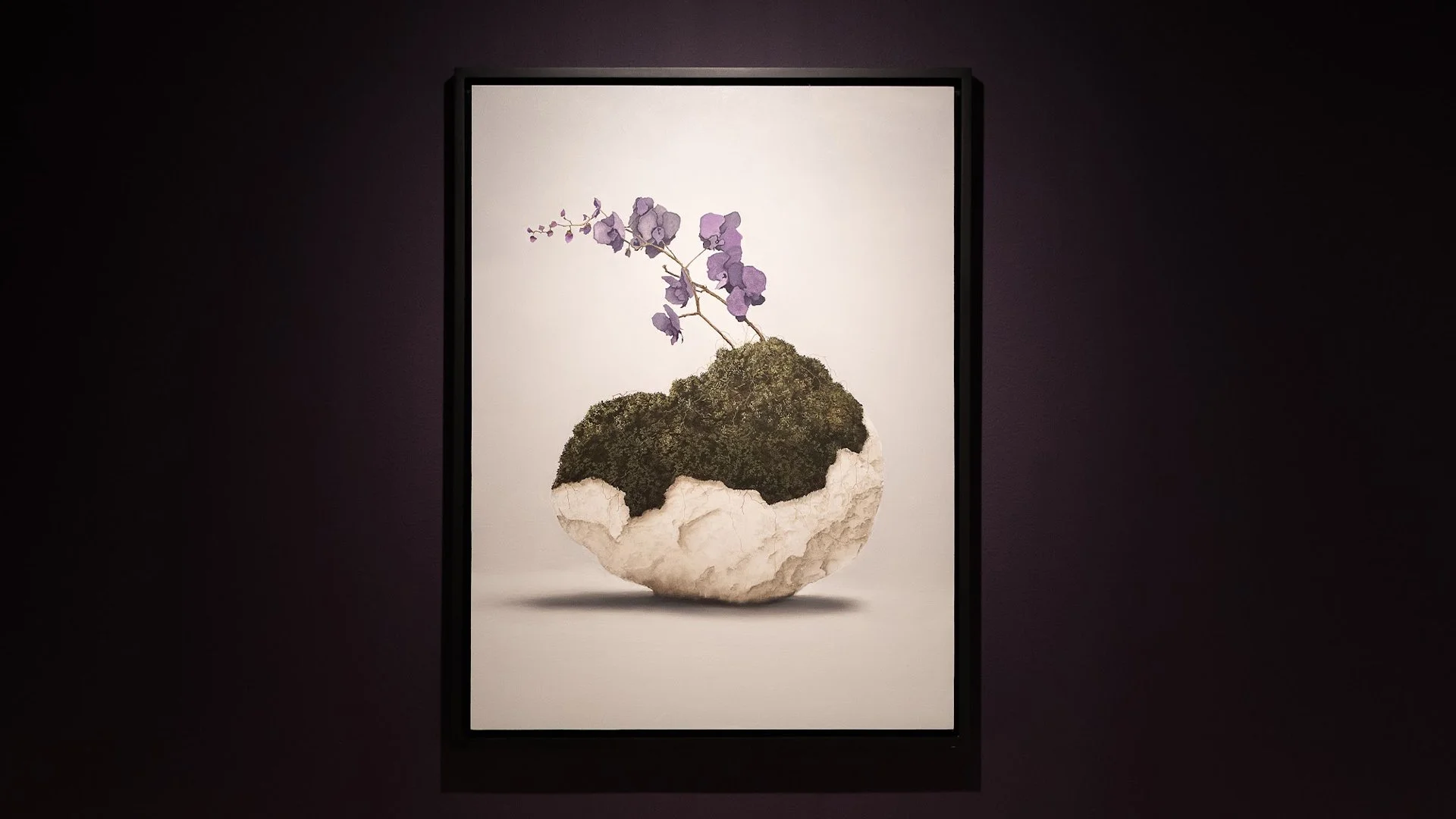
Before a flower appears, how much of its waiting has already taken place unseen?
In an exclusive interview with Art+ Magazine, Quezon City-based artist Erikson Arcilla reflected on how waiting has, of late, come to bear the stigma of failure, as every corner of contemporary life increasingly measures itself against the demands of relentless acceleration—faster deliveries, swifter promotions, instant replies, and immediate gratification—rendering any pause all too easily mistaken for falling behind.
Arcilla proposes another chronology.
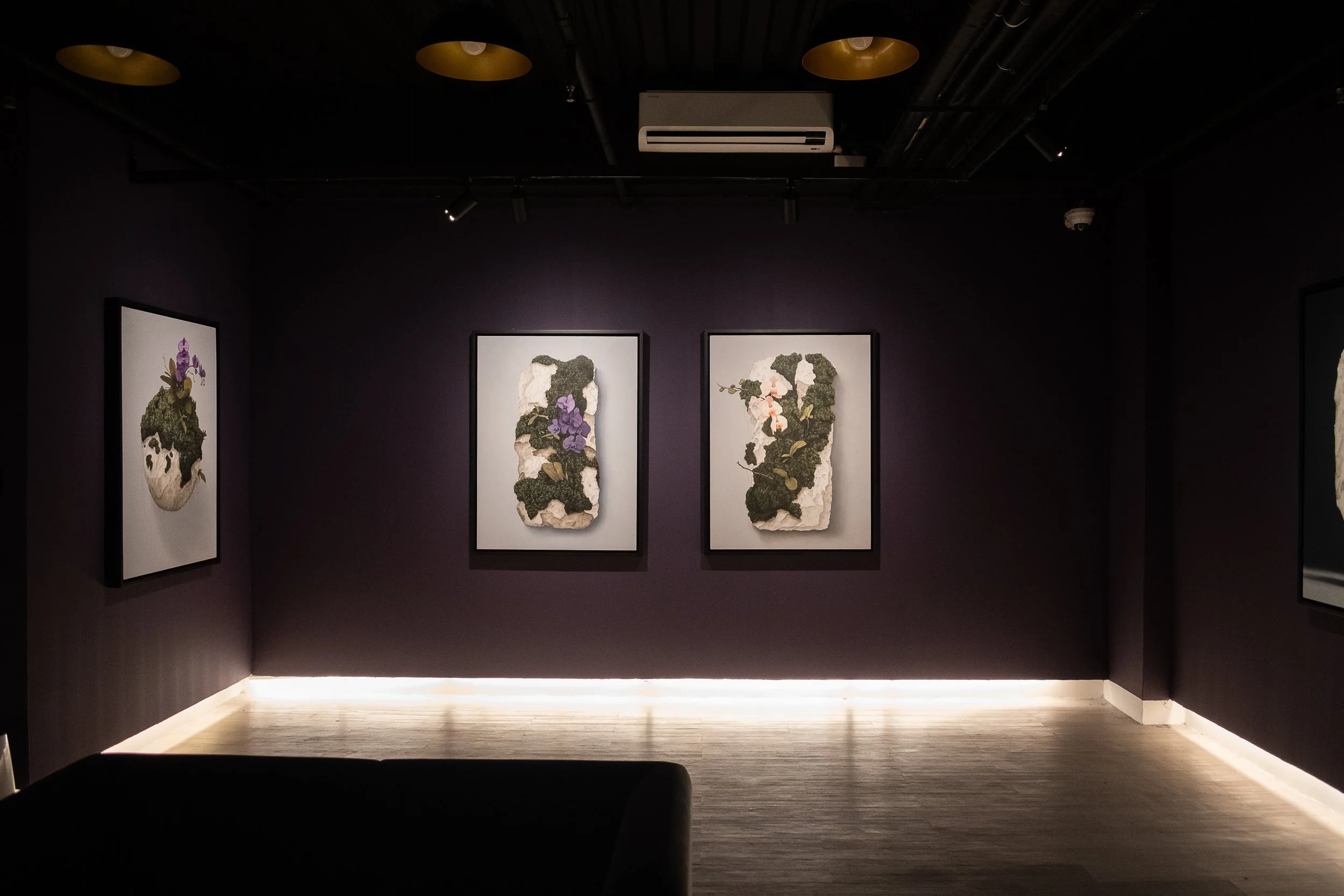
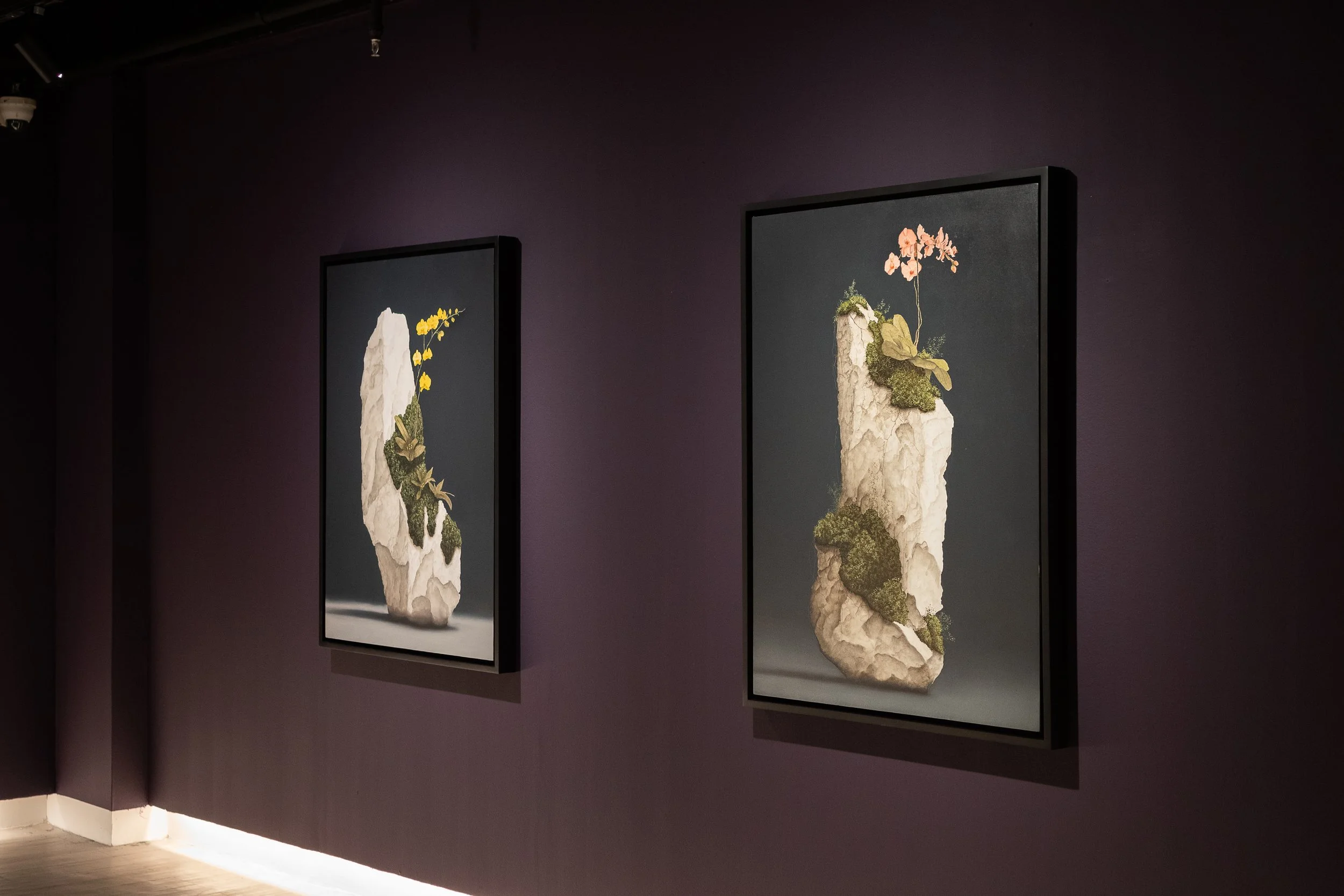
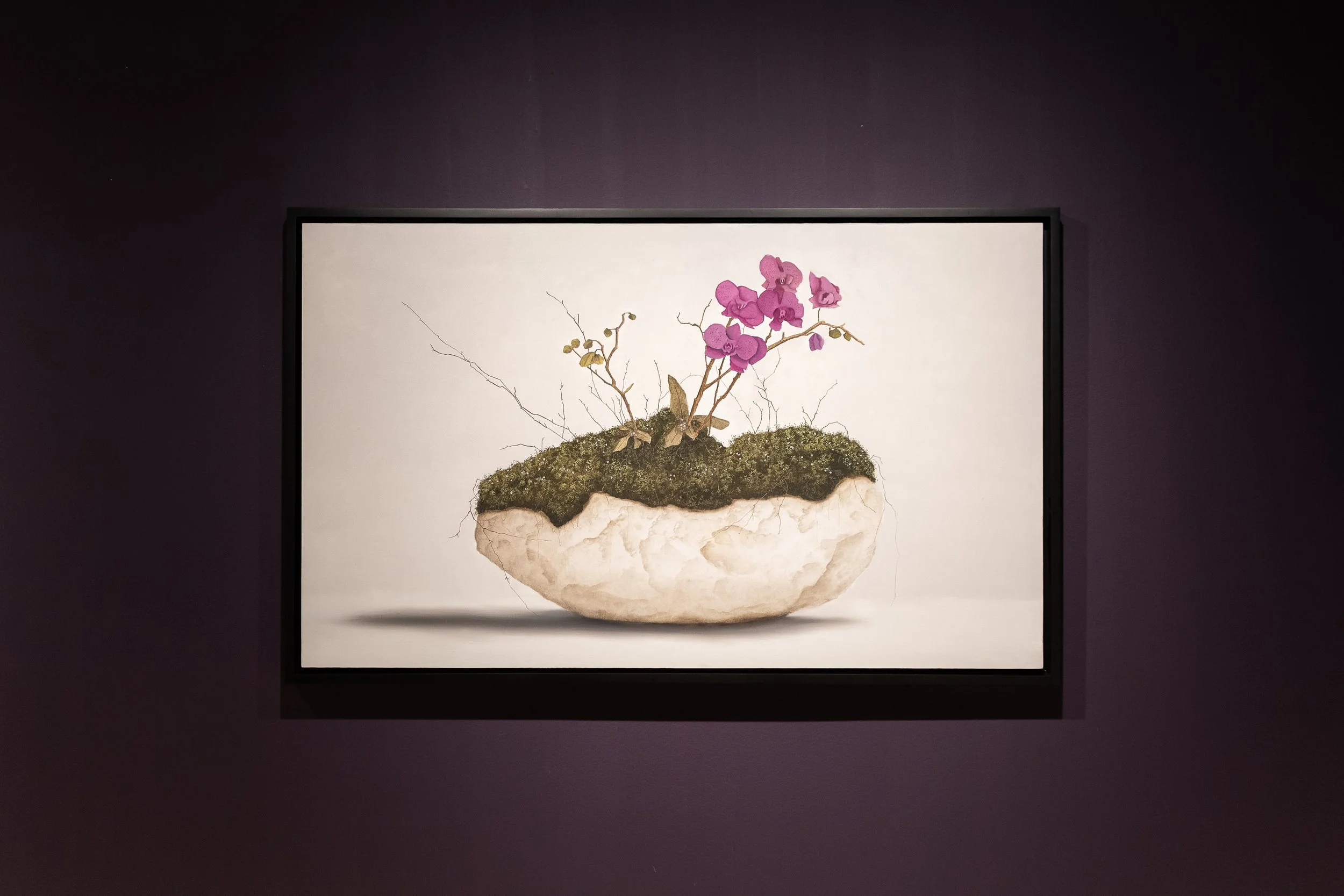
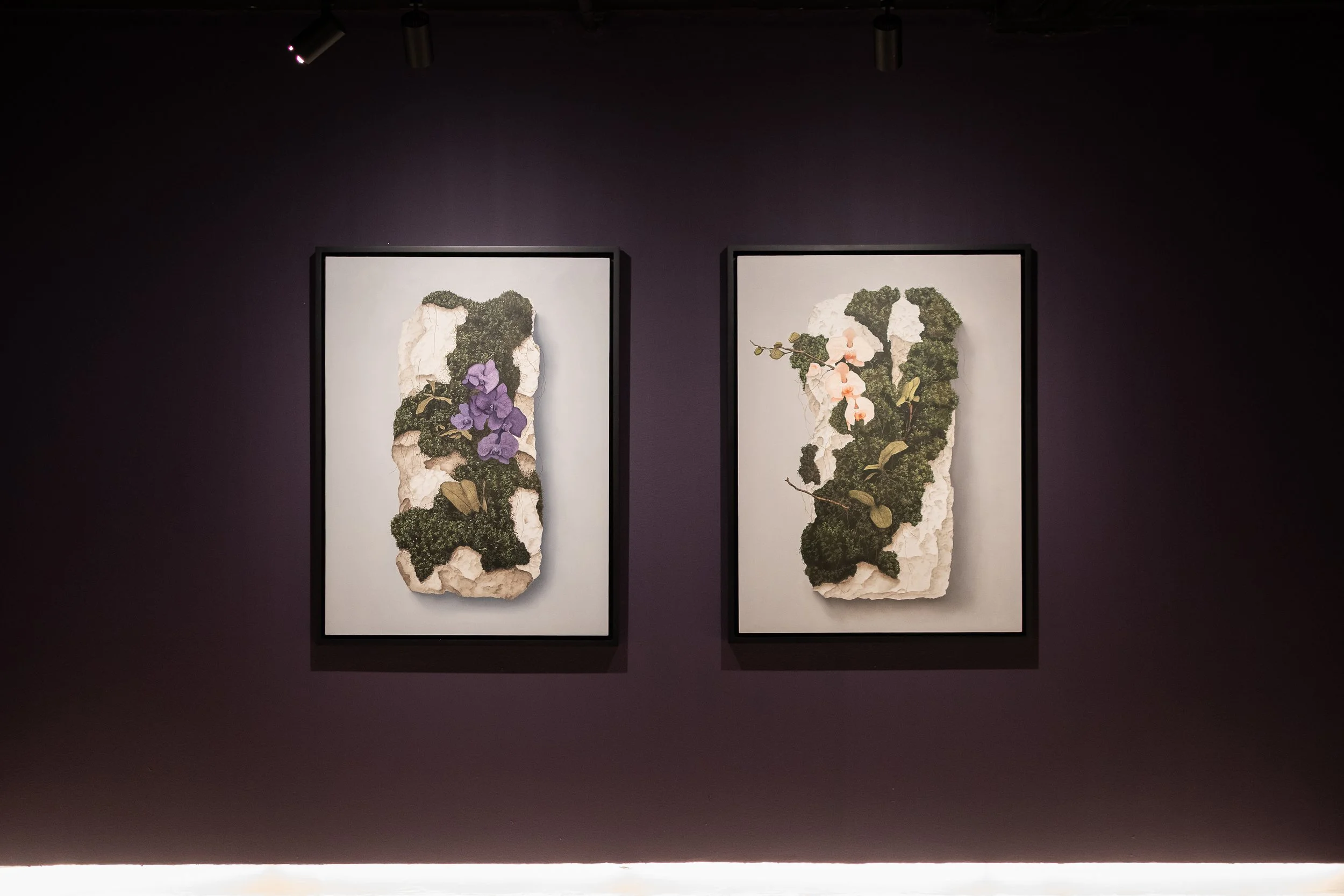
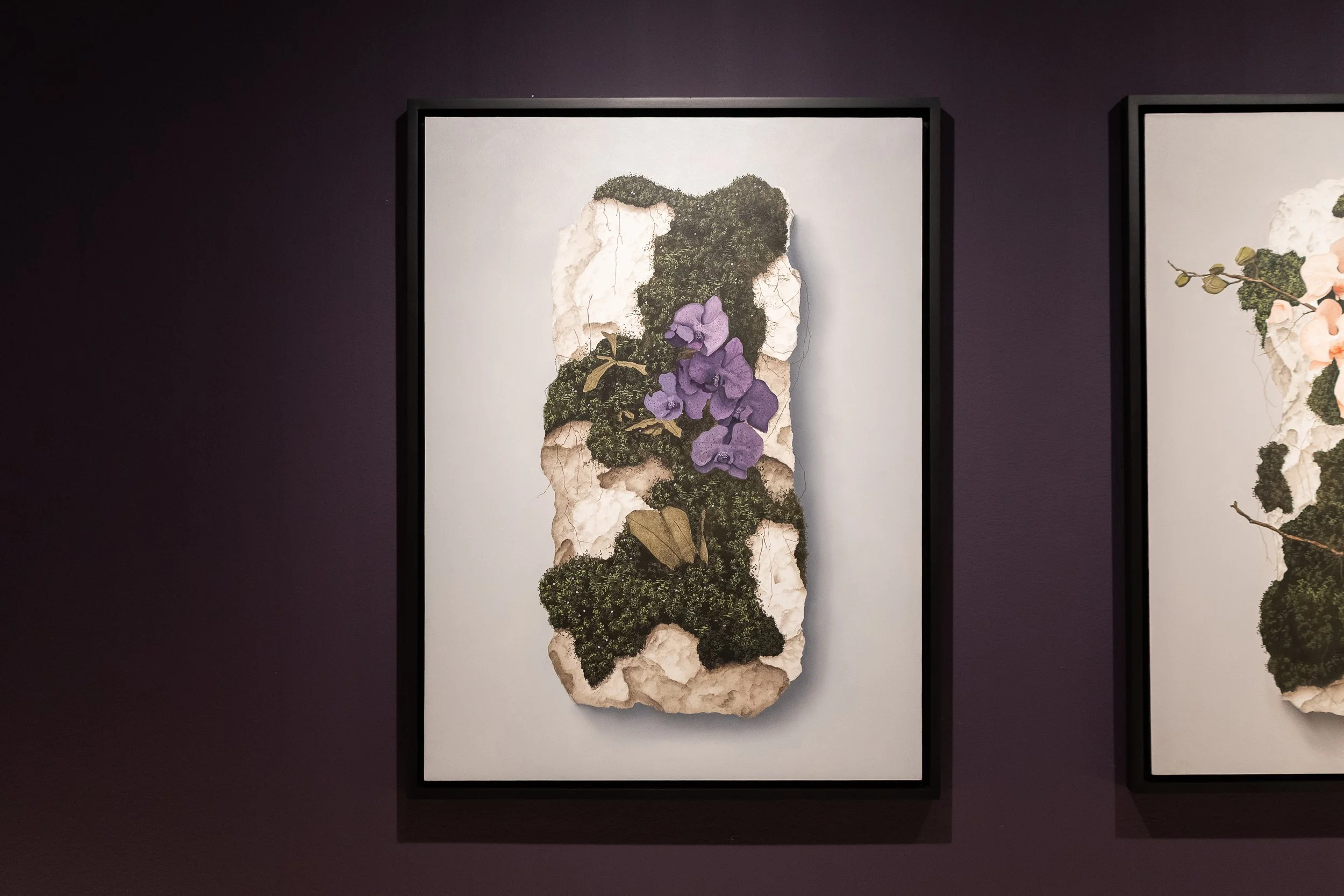
His latest exhibition, The Longest Wait Makes the Prettiest Flowers, unfolds not so much around dramatic arrivals as around slower transformations—the kind moss encroaches over stone, orchids over bark, seasons across landscapes, and memory over the course of a life.
Much as the title initially appears reassuring, it is insofar as it promises that patience culminates in reward that the artist quietly dismantles said expectation.
“I don't have an answer that will romanticize the dread of waiting,” he says. “This show isn't a guarantee that something beautiful will come out of waiting. It's a prayer, a wish, a hopeful outlook perhaps—but not a guarantee.”
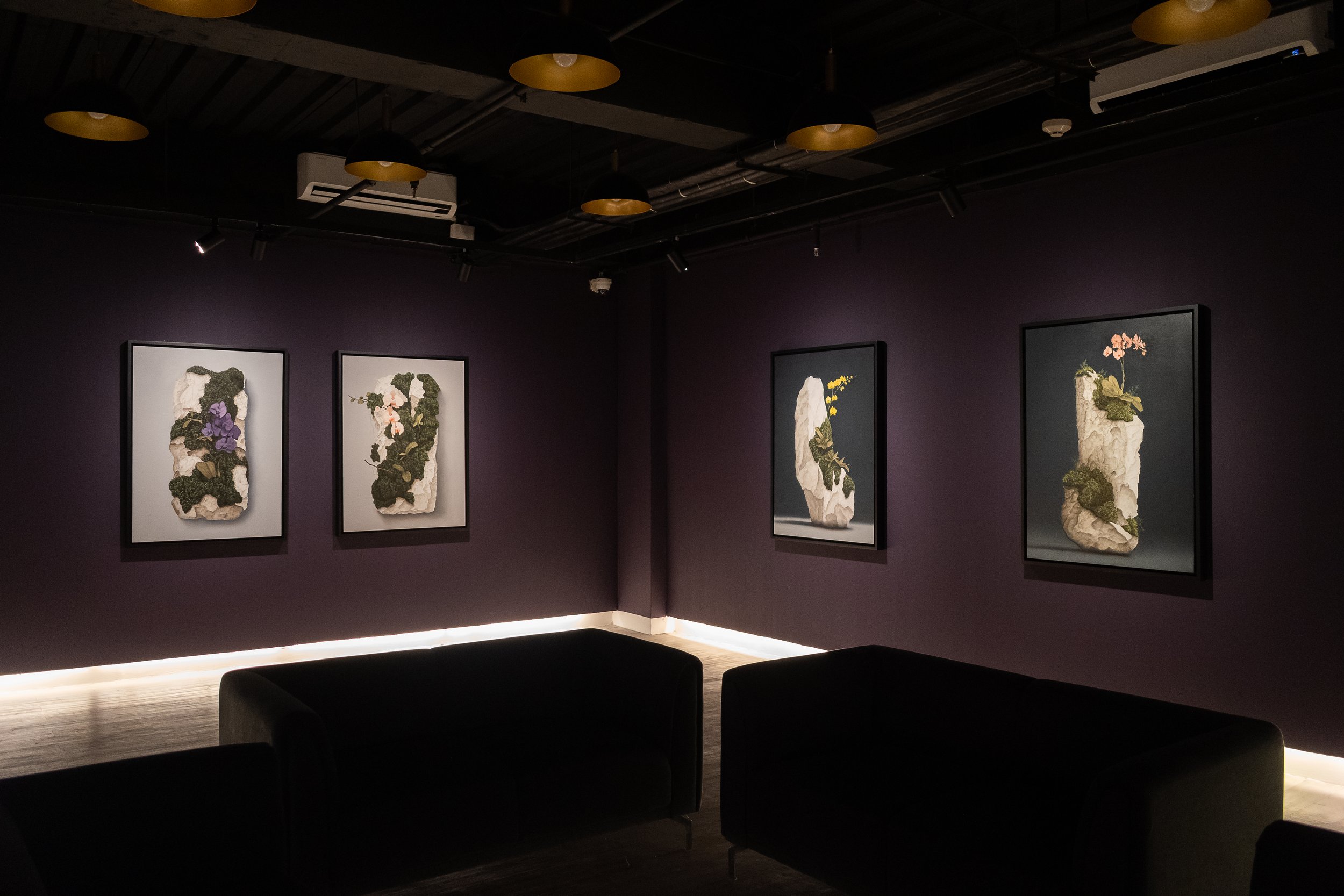
That distinction proves essential—not an attempt by Arcilla to redeem uncertainty, rather a refusal to let it collapse into the false consolations of a motivational slogan.
Hope, in his paintings, remains hope precisely by resisting the very certainty that would otherwise undo it.
The Art of Not Rushing The Flower
The exhibition's botanical vocabulary seems almost designed to resist human urgency. Moss creeps where conditions appear least hospitable. Orchids bloom according to rhythms indifferent to deadlines. Stones record centuries with remarkable indifference to calendars.
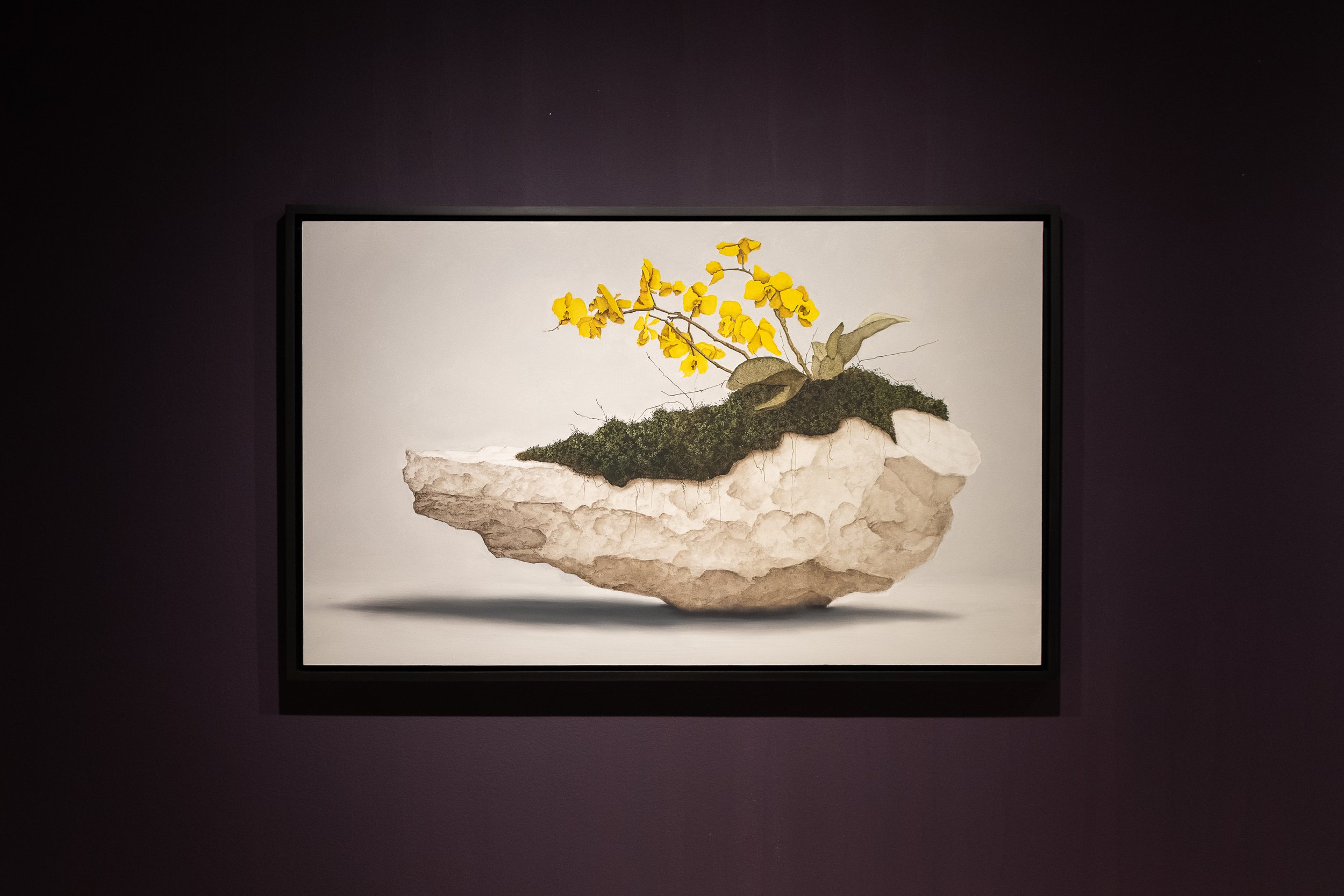
While these paintings readily invite interpretation as a critique of a culture beholden to speed, productivity, and perpetual optimization, Arcilla accepts the premise only to reorient its trajectory, turning it inward before letting it extend outward once again.
“The truth is, I'm someone who struggles with delayed gratification,” he admits.
Diagnosed with Attention-Deficit/Hyperactivity Disorder (ADHD), he speaks of the condition with striking candor: no sooner does an idea present itself than he feels compelled to see it materialize that even the interval separating imagination from execution becomes, at times, almost unbearable.
The exhibition, then, functions as self-address before social commentary.
“Maybe I can afford to slow down a bit,” he reflects. “Maybe not look for instant gratification so fast.”
Such admissions rescue the work from abstraction in another sense. Patience appears not as inherited wisdom or a national virtue, but as a discipline continually negotiated against the urgencies of one's own impulses.
Even so, Arcilla resists recasting perseverance as yet another heroic narrative. Filipinos, he observes, have long been called upon to wear patience as a moral obligation, often under conditions in which waiting is imposed, devoid of choice.
He remains attentive to the uneasy distinction between endurance freely embraced and suffering compelled by circumstances beyond one's control.
Waiting, he suggests, can illuminate both possibilities at once.
The Growth Beneath The Growth
Arcilla's relationship with waiting predates this exhibition by years.
Entirely self-taught, he came to painting almost by accident while studying Human Resources Development Management at the University of Santo Tomas (UST). Curiosity served as his first instructor, well before any institution could assume the role.
If abstraction initially offered a point of entry, it was partly because it freed him from academic expectations of draftsmanship. With time, however, he wound up with what now appears to him to be an irony: abstraction, far from permitting imprecision, demands extraordinary precision, for without recognizable forms to carry the image, every gesture must justify its own existence.
That apprenticeship in patience extended beyond style into technique. However, sketching, he admits, never came naturally.
“The finished painting already exists in my head,” he recalls. “But the skills weren't there yet.”
The distance between vision and ability demanded a different kind of contentment—not satisfaction with limitation, but acceptance that technical growth ripens according to its own hidden timetable. The atmospheric landscapes now filling the gallery were imagined years before they could take root in material form.
“This is the fruit of that waiting.”
The paintings themselves bear witness to that evolution. Earlier rectangular formats have gradually yielded to irregular contours whose silhouettes feel as though they have come into being, their edges preserving the asymmetries and breathing patterns of the natural world.
After The First Harvest
The exhibition repeatedly returns to becoming over-arrived, a distinction Arcilla now extends to his understanding of artistic success.
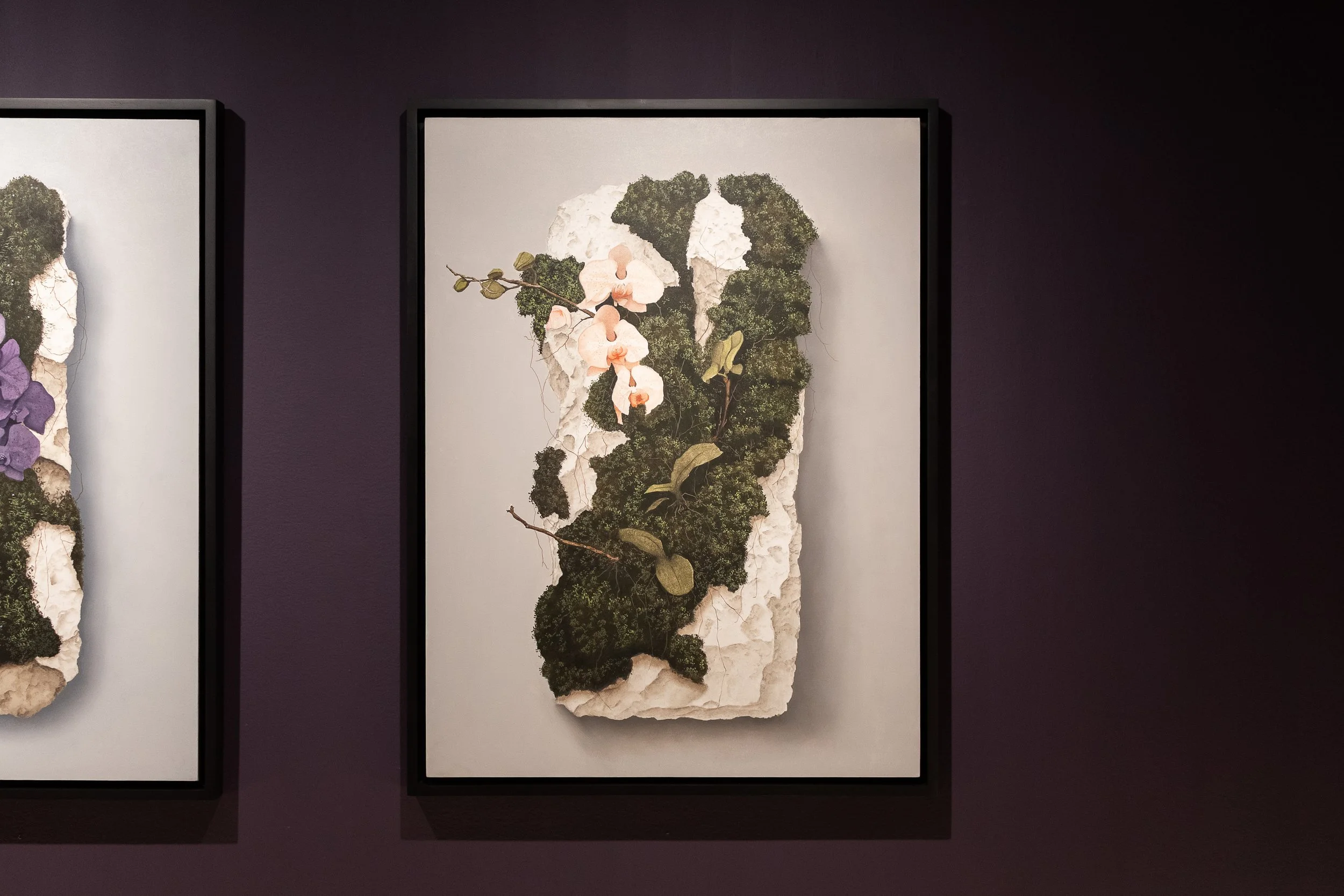
“When you're starting out, you dream about that big success,” he shared.
For many young artists, the first solo exhibition appears to be the summit. Once achieved, another question replaces it: how does one continue?
The Longest Wait Makes the Prettiest Flowers is Arcilla’s thirteenth solo exhibition and another chapter in his enduring relationship with Art Underground, which has represented him since 2018.
His practice has likewise extended beyond the confines of the local art landscape, with his participation in group exhibitions in Tokyo and Fukuoka, Japan, marking further engagements with diverse artistic contexts and expanding the conversations surrounding his work.
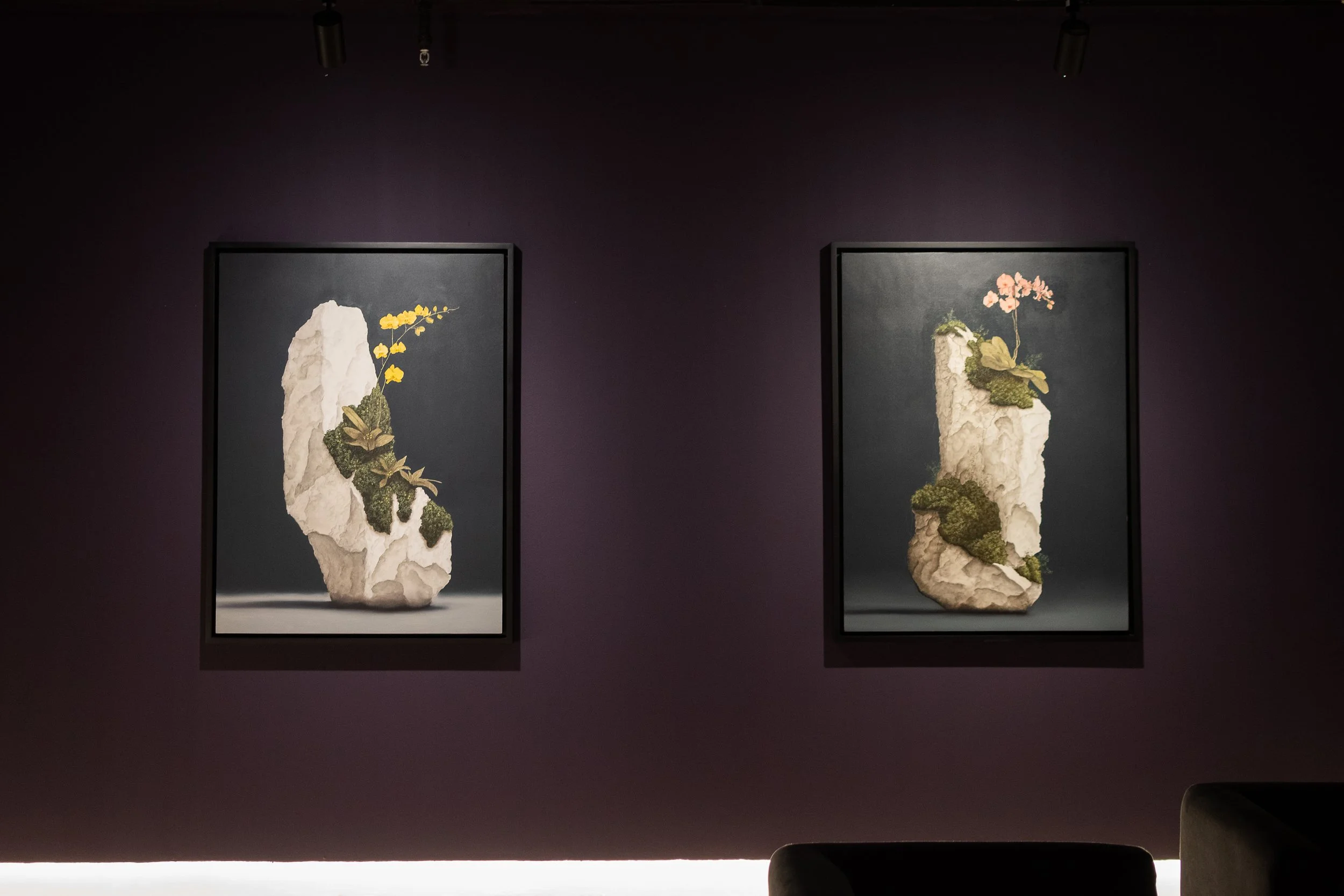
Longevity has not merely altered his ambitions, even as it has allowed them to mature, and branch into new forms of growth.
Success now resembles equilibrium more than spectacle: staying grounded in the work he truly wishes to make, sustaining a livelihood, and preserving curiosity against the fatigue that slowly shadows over long careers.
Where Memory Takes Root
Arcilla's landscapes appear almost improbably serene given the anxieties from which they emerge.
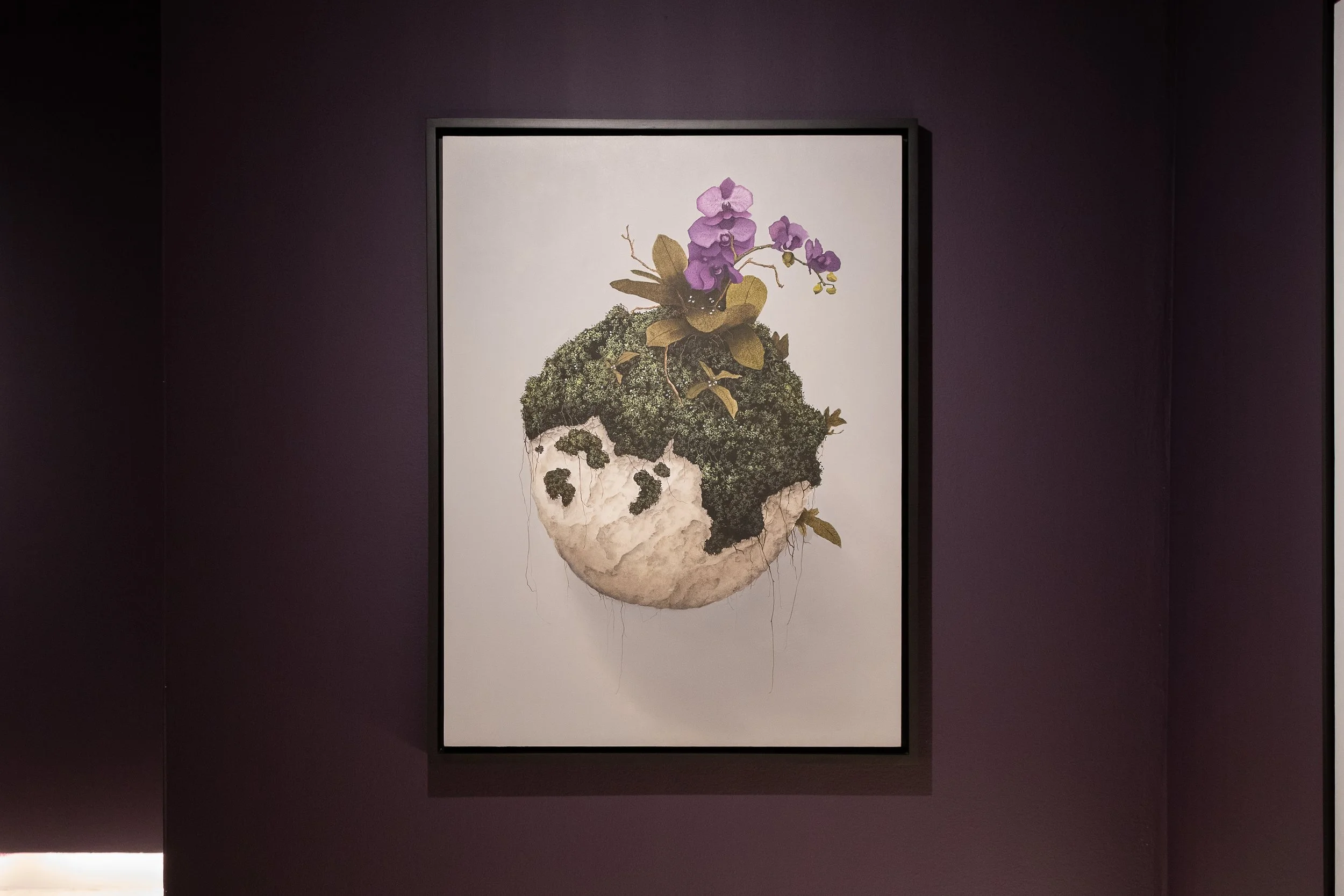
Raised in Catanduanes, his relationship with nature exceeds the picturesque, provided it is less a subject to be observed than a living memory continually being revised. Childhood encounters with lush island vegetation continue to nourish his visual language, even as each return home allows another narrative to germinate past familiar vistas.
“I literally saw my province getting swallowed by the sea.”
Climate change enters the work through recollection before advocacy, arising as much from vanishing landscapes as from public discourse. Coastlines grow fragile through the quiet ebbing away of erstwhile familiar shores, all along reports of environmental decline—from destructive mining to contested claims over land—accumulate without allowing catastrophe to become spectacle.
“I don't want to lecture people about global warming,” Arcilla explains. “I want them to feel what's at stake.”
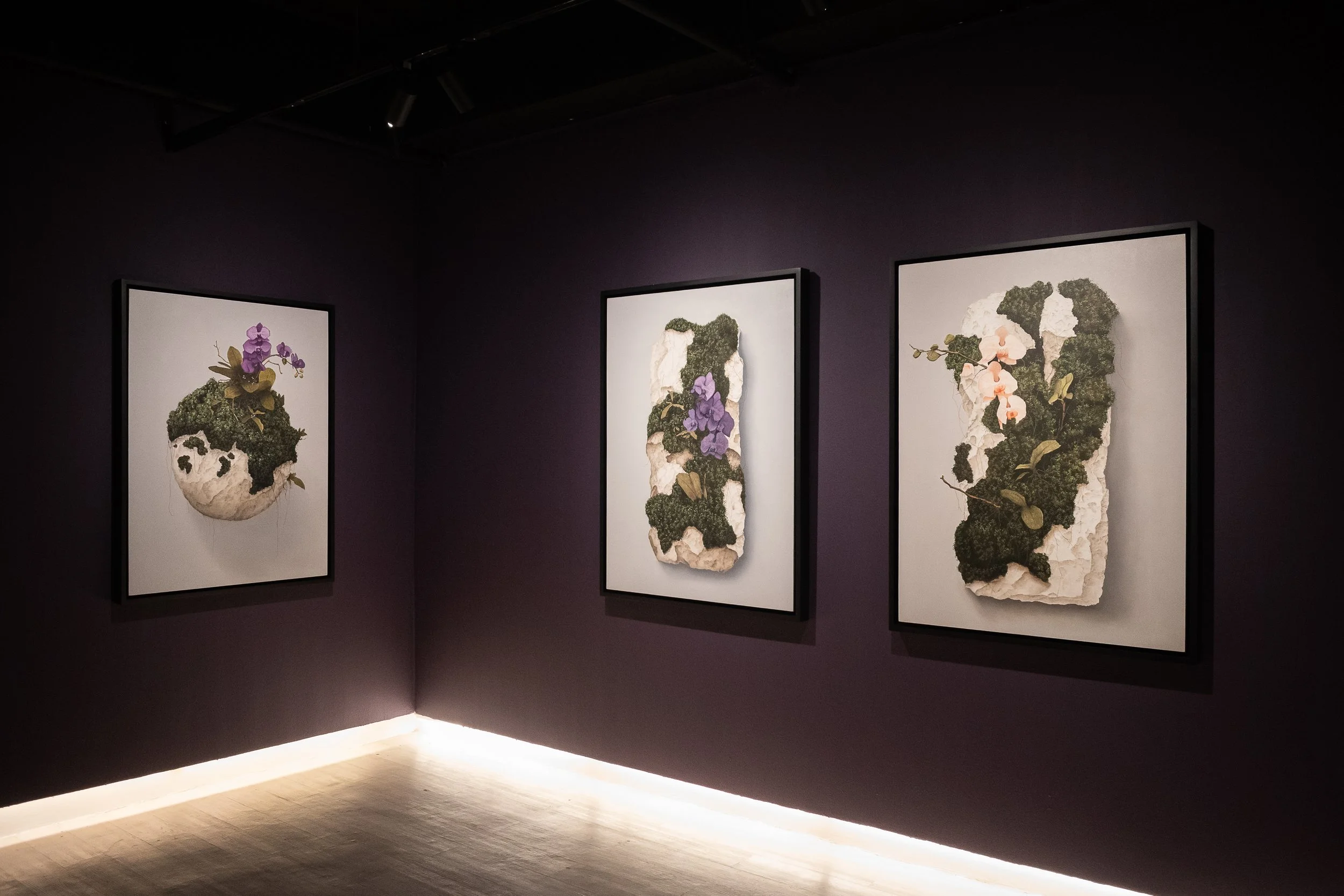
The strategy is deliberate. Rather than to overwhelm viewers with alarmist imagery, he cultivates tranquility, recognizing that emotional attachment often precedes persuasion.
Muted palettes and contemplative atmospheres invite sustained attention where louder warnings might bring forth only momentary notices.
The orchid, recurring throughout the exhibition, embodies its philosophy being that it flourishes amid conditions seemingly hostile to growth.
On Making a Garden For Stillness
If the exhibition offers consolation, it does so sans denying contemporary unrest. Arcilla speaks candidly about political instability, economic uncertainty, and the cumulative exhaustion of absorbing crisis after crisis; yet the answer, he believes, is not withdrawal but replenishment.
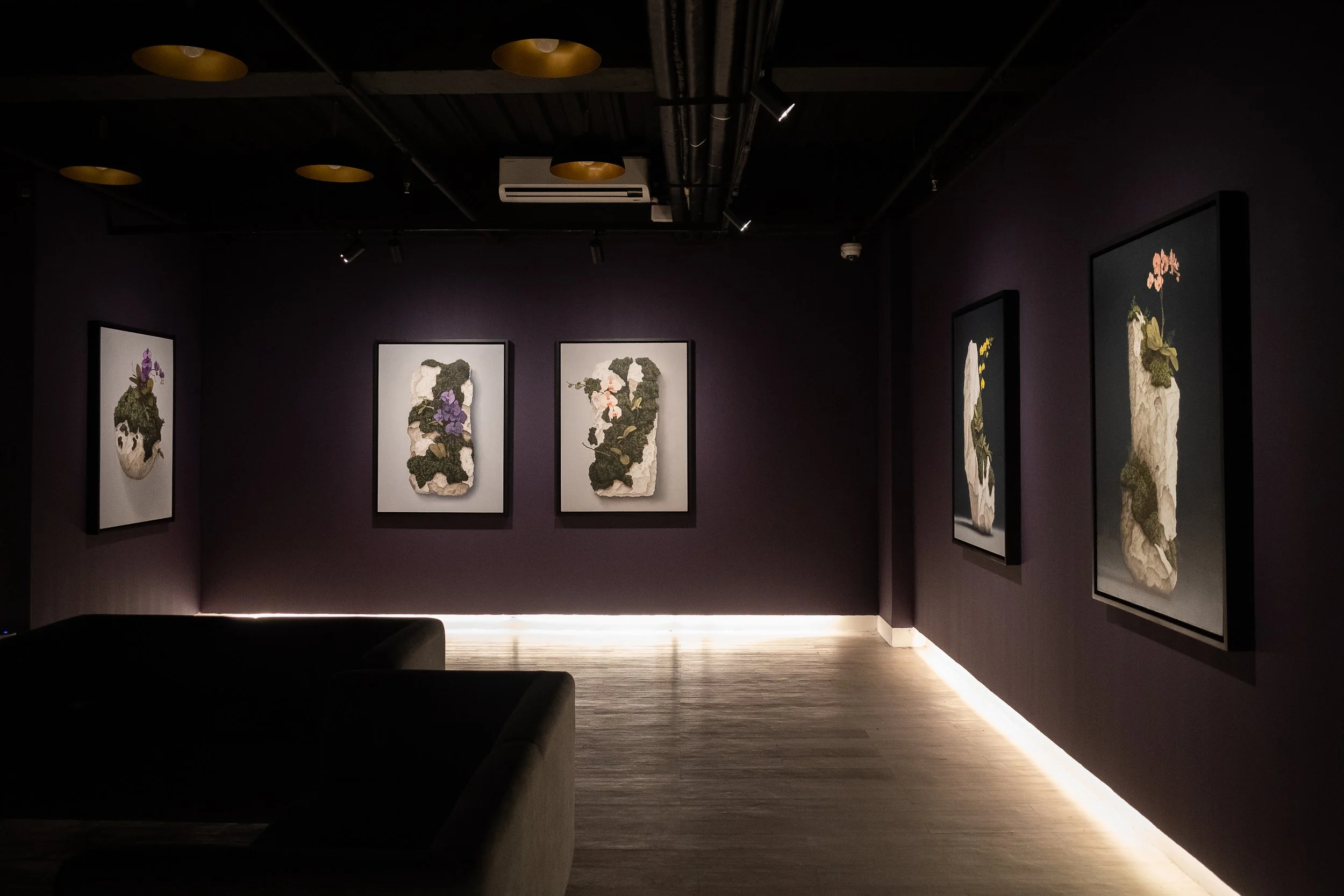
“I think it’s important to find a little space in the corner,” he says. “Sit down. Slow down. Give yourself that time. Then you can go on.”
His paintings inhabit that space—not by escaping reality or surrendering to it, but by making room for stillness within its turbulence.
Arcilla recognizes a painting’s completion at that elusive threshold when the work seems to speak for itself. Completion has little to do with exhaustive realism or perfect description; what matters is whether the canvas has incarnated the emotional state from which it emerged.
A garden of continuous becoming is what his studio practice resembles, wherein no canvas exists apart from the seasons of learning that surround it. Fuller leaves, deepening atmospheres, and growingly instinctive decisions unfold across the process, until the final work sprouts as an archive of everything cultivated along the way.
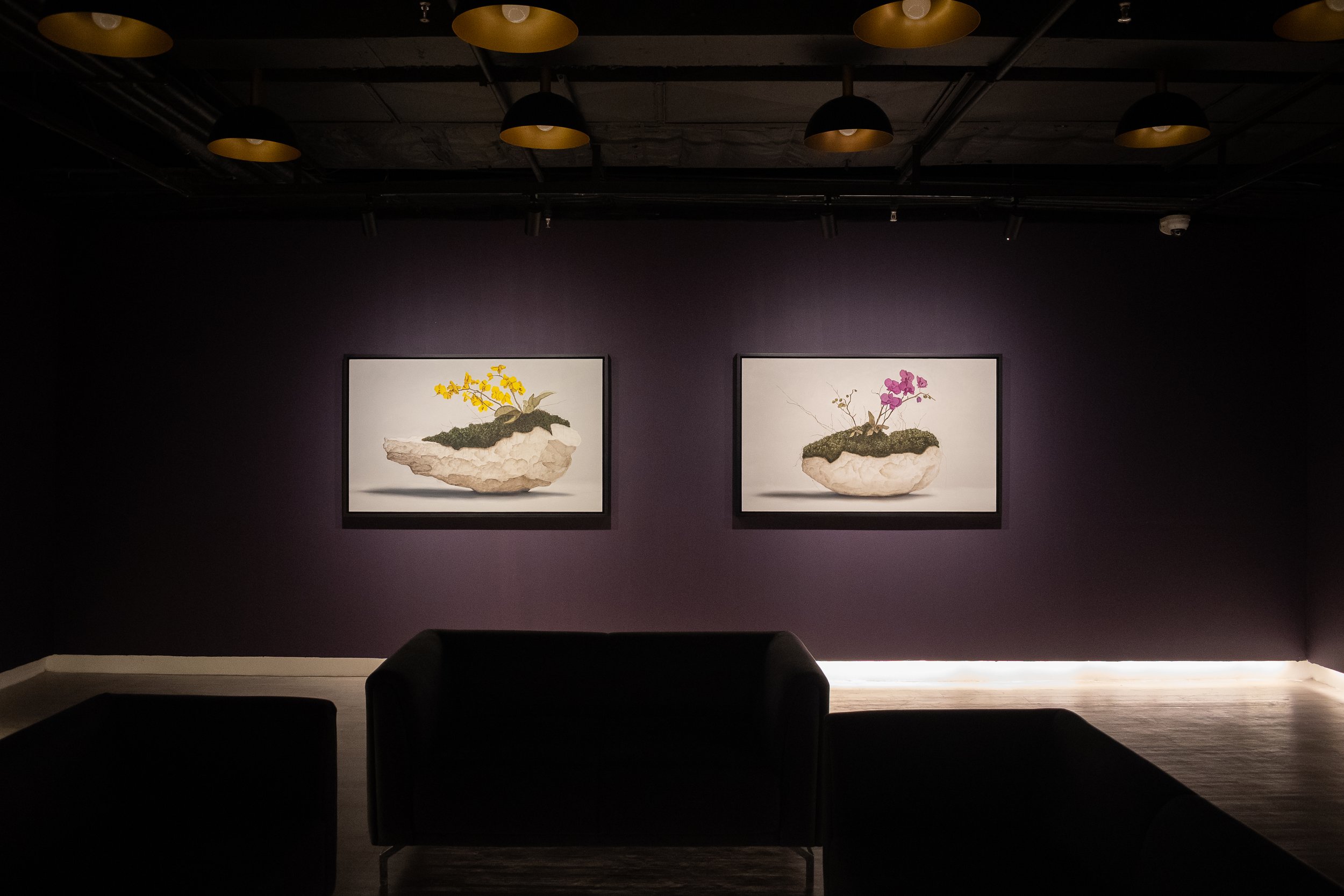
And that perhaps is why The Longest Wait Makes the Prettiest Flowers linger beyond the gallery. It never promises that waiting guarantees reward, knowing too well that time does not always yield a bloom.
What it proposes instead is subtler: that time, when met with attentiveness over anything other than impatience, transforms perception before it delivers outcomes.
Because sometimes the flower blooms, and sometimes doesn’t.
Yet what the waiting denies in bloom, it restores in transformation to the one who remains faithful to it.
The Longest Wait Makes the Prettiest Flowers by Erikson Arcilla is on view at Art Underground from July 21 to August 10, 2026. Art Underground is located on the second floor of Mabini180, 180 A. Mabini St., Brgy. Addition Hills, San Juan, Metro Manila, and is open Monday to Saturday, from 10:00 AM to 7:00 PM. For more information about the exhibition and gallery programming, visit www.aumanila.com.