Five Artists Reunite at Leon Gallery
At a recently concluded DF Art Agency group exhibition at Leon Gallery, five longtime friends brought distinct artistic voices into the same space, turning a group show into a reunion shaped by shared memories, personal experiences, and years of growing together.
Words Gerie Marie Consolacion
Photos courtesy of DF Art Agency
August 28, 2026
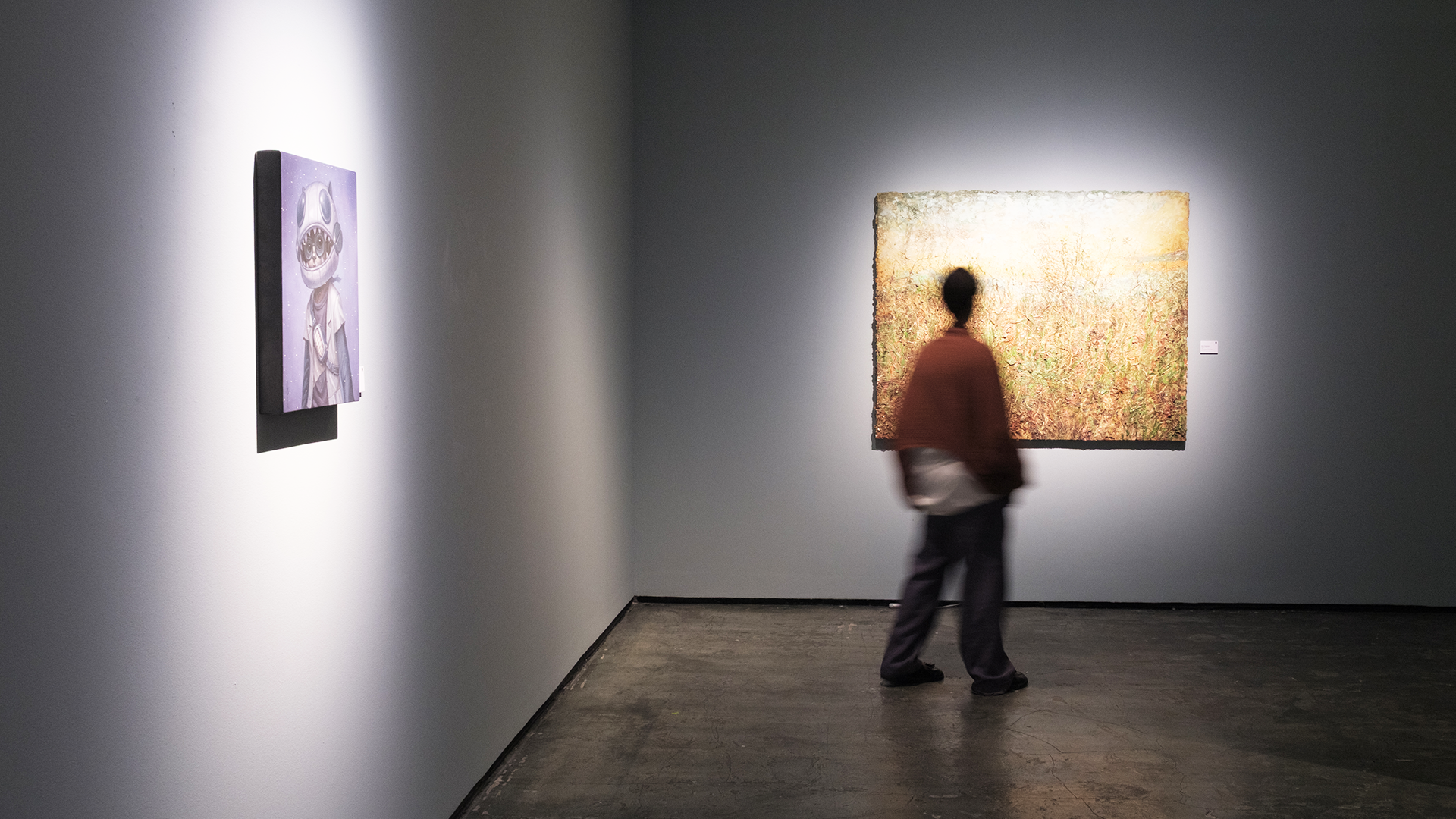
Some friendships begin in school and refuse to end.
For artists OBAGS, Miller Laberinto, Macj Turla, Jeosh, and Ross Gadiana, the recently concluded DF Art Agency group exhibition titled “The Next Chapter” at Leon Gallery was more than an opportunity to present their work.
It was a rare convergence of five friends who have known one another for years and have since developed their own identities as artists.
Their works are distinct, shaped by different interests and experiences.
OBAGS found inspiration in his recent fascination with pickleball. Miller explored isolation and the possibility of growth through Desolate Place. Macj looked toward the limitless imagination of childhood, while Jeosh returned to the fantasy adventures he created as a child. Ross Gadiana, the fifth artist in the group, brought another individual perspective into the exhibition.
Together, their works reveal how five artists can share a history without necessarily sharing the same artistic language.
More than a conventional group exhibition, the show became a portrait of friendship in motion: five people who began as friends and classmates, eventually finding themselves sharing a gallery as artists.
Finding Inspiration in the Everyday
For OBAGS, being included in the exhibition was both an artistic opportunity and a personal milestone. Learning that he would be part of a show at Leon Gallery was especially meaningful because he would be exhibiting alongside friends who had once been his classmates.
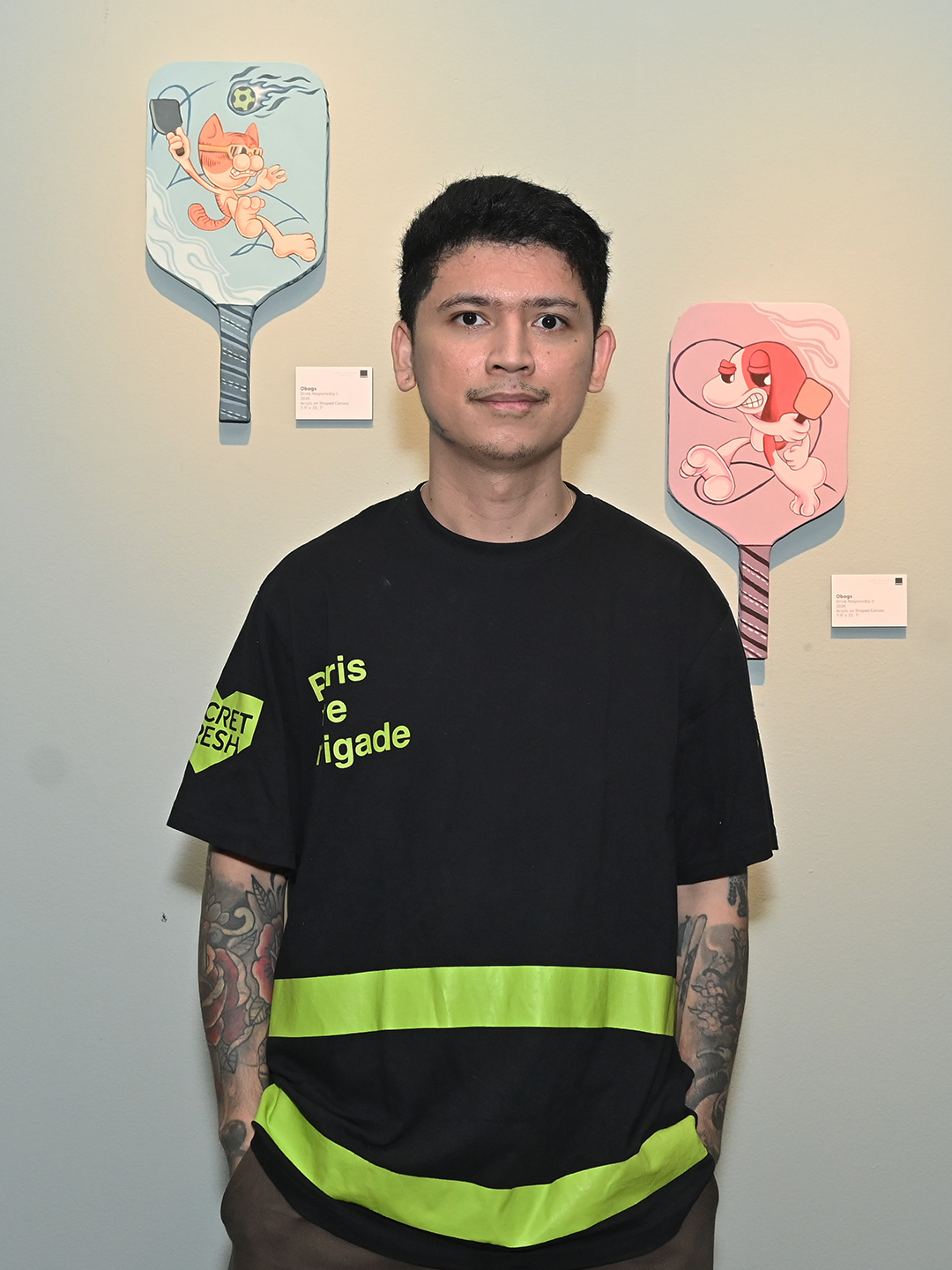
Artist OBAGS
He expressed gratitude for the opportunity and for the support of DF Art Agency and Derek Flores, as well as Leon Gallery, recognizing the exhibition as an important moment in his developing art career.
But beyond the professional opportunity was the simple pleasure of seeing familiar faces in the gallery.
Working alongside his friends also gave OBAGS an unexpected source of motivation. He acknowledged that some of his fellow artists were more experienced and skilled in painting, but rather than seeing this as a disadvantage, he viewed it as an opportunity to grow.
“Ayon, siyempre friends ko sila and at the same time [ay] mas magaling sila sa akin sa pag-paint din, mas experienced sila. Kumbaga nacha-challenge din ako na mas matuto, mas gumaling sa ginagawa ko kasi ‘pag magagaling ‘yong kasama mo, minsan nahahatak ka rin nila para gumaling din sa crafts [o] ginagawa [mo],” he shared with the Art Plus Magazine.
When talented people surround you, he suggested, their abilities can encourage you to become better at your own craft. For OBAGS, friendship and artistic development therefore go hand in hand.
His work for the exhibition came from a more immediate and unexpected source: pickleball.
Having recently become interested in the sport, OBAGS began playing with friends from church and eventually became inspired to translate that enthusiasm into art. One of his works incorporates a pickleball paddle, transforming an object associated with a new hobby into part of the canvas.
It is an example of how inspiration can emerge from everyday life. A recreational activity becomes a concept, and a familiar object becomes an artistic material.
Finding Bloom in Solitude
For Miller, the exhibition offered a different kind of comfort.
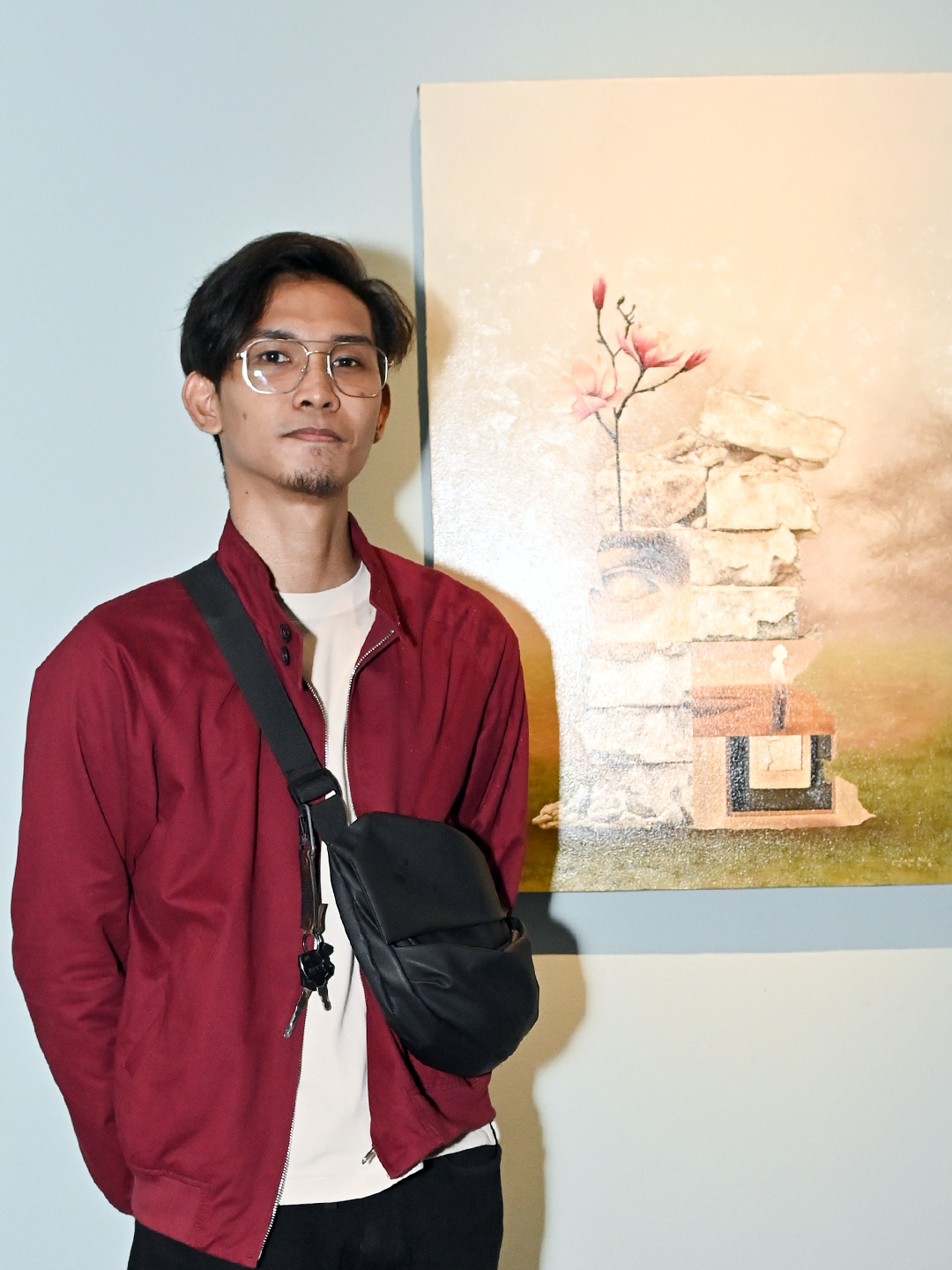
Artist Miller
He noted that many of the artists he had previously exhibited with were older than him. This group show felt different: for perhaps the first time, he was exhibiting alongside artists within roughly the same age bracket—and, more importantly, alongside friends.
The atmosphere felt lighter because instead of feeling pressured by the presence of more experienced artists, Miller found himself enjoying the process with people he already knew. The exhibit became less about competition and centered more on being together and seeing the results of their work.
His contribution, Desolate Place, takes a more introspective direction.
The series explores what happens when a person chooses to isolate themselves from the pressures of their surroundings. For Miller, stepping away from external noise can become an opportunity to turn inward and search for something within oneself.
The flowers in the works become a metaphor for what can emerge from that process.
Something can bloom even in a place that initially feels desolate.
“When you feel the pressure towards you, what comes to mind [is that] like you just need to find something in yourself, then create and something will bloom. That’s the flower,” Miller shared.
Through Desolate Place, isolation is not presented simply as emptiness. It can also become a space for reflection, creation, and renewal.
The Undying Imagination of Childhood
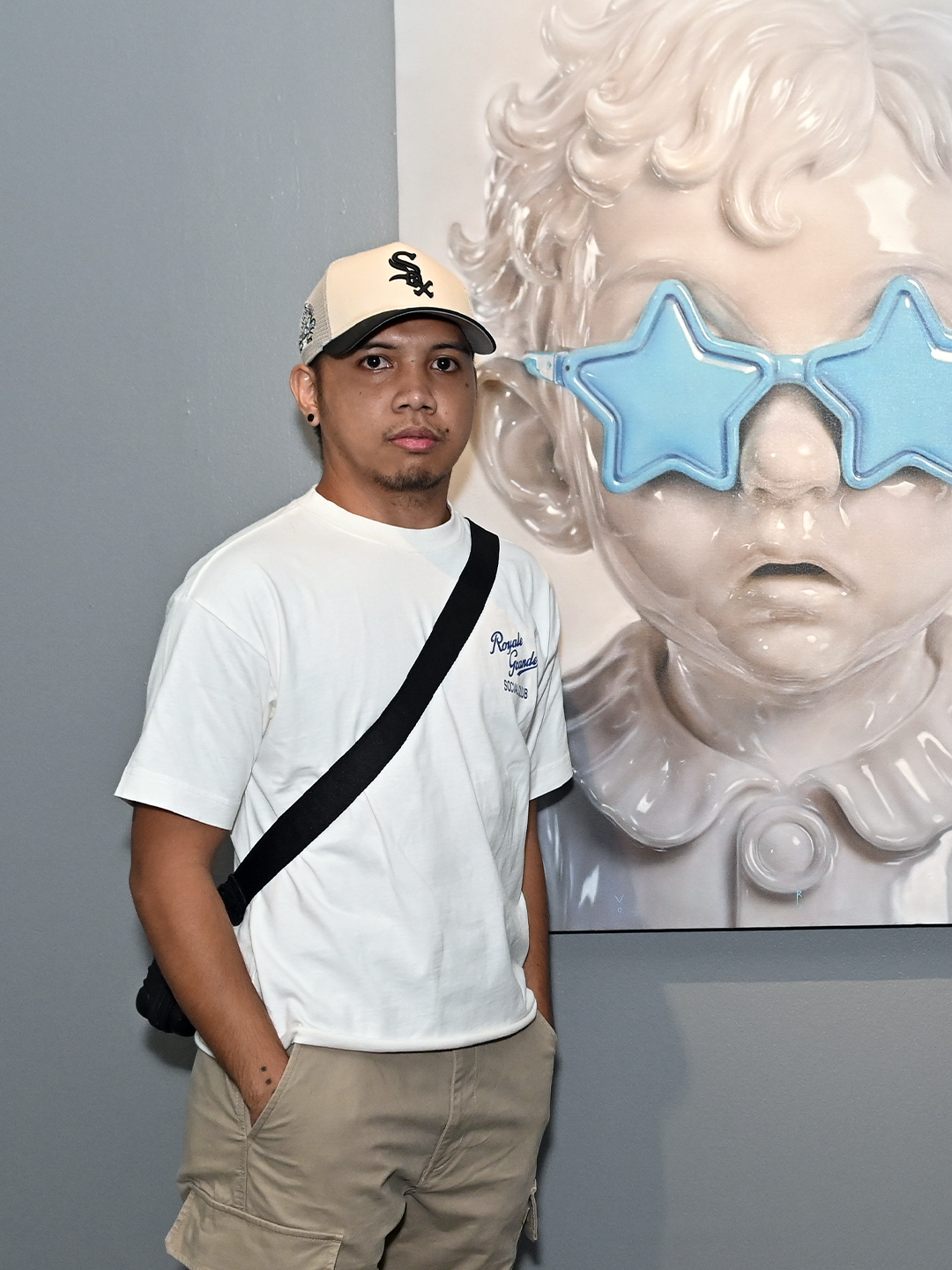
For Macj, friendship is not only a source of companionship. It is also a source of ideas.
Artist Macj Turla
Working with his longtime friends allows them to exchange thoughts and perspectives, broadening the places from which they draw inspiration.
“Malaking tulong kasi nakakapagbatuhan kami ng mga idea,” Macj shared.
The experience, he added, is enjoyable. Borrowing his own words, “para ka lang naglalaro.”
That sense of play extends into the inspiration behind his work. Macj looks toward childhood and the expansive imagination of a young mind. He reflects on how children can imagine freely before adulthood brings stress, responsibilities, and problems that can narrow one’s perspective.
His work centers on a child and a star reflected in a mirror, evoking a world where imagination remains open and seemingly limitless. It is a meditation on the freedom of being young: a time when the mind can wander without the weight of adult concerns.
The work was completed in roughly two weeks, but its inspiration reaches much further back—to the openness, wonder, and imagination associated with childhood.
Returning to Childhood Adventure
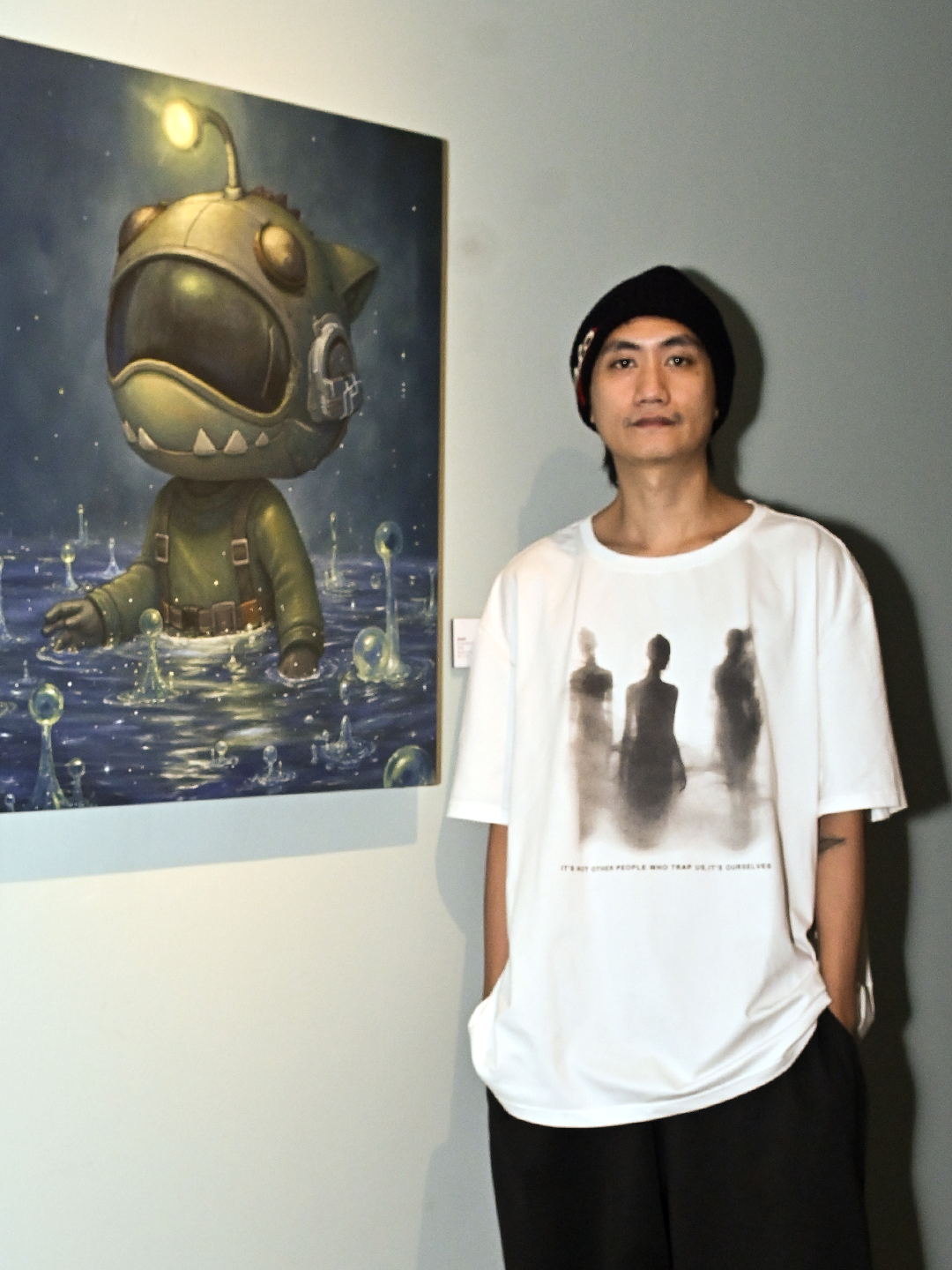
For Jeosh, the exhibition's significance is closely tied to the friendship behind it.
Artist Jeosh
When asked about working with the other artists, his friends, he emphasized how meaningful it was to still be together after all these years.
“Masarap sa feeling kasi kami-kami rin ’yong magkakasama noon tapos hanggang ngayon kami pa rin ’yong magkakasama,” he said.
For Jeosh, that continuity feels rare. Not everyone gets the opportunity to remain close to the same friends they knew when they were younger, much less to eventually find themselves pursuing the same creative path.
His work also looks backward, drawing heavily from childhood imagination.
As a child, Jeosh was fascinated by fantasy and adventure. He would make a helmet out of cardboard and imagine himself embarking on an adventure. A cape could transform an ordinary moment into another world.
The work is not about a literal childhood dream of becoming an astronaut. Instead, Jeosh revisits the imaginative process itself—the ability to turn simple objects into the tools of an imagined journey.
His art becomes a return to the way he once saw the world: full of adventure, possibility, and wonder.
That makes his work an intriguing counterpart to Macj’s. Both artists look toward childhood, but from different perspectives. Macj explores the expansiveness of a young imagination, while Jeosh reconstructs the fantasy worlds he once created for himself.
Together, their works suggest that childhood does not necessarily disappear with age. Sometimes, it simply changes form.
Moving with the Flow
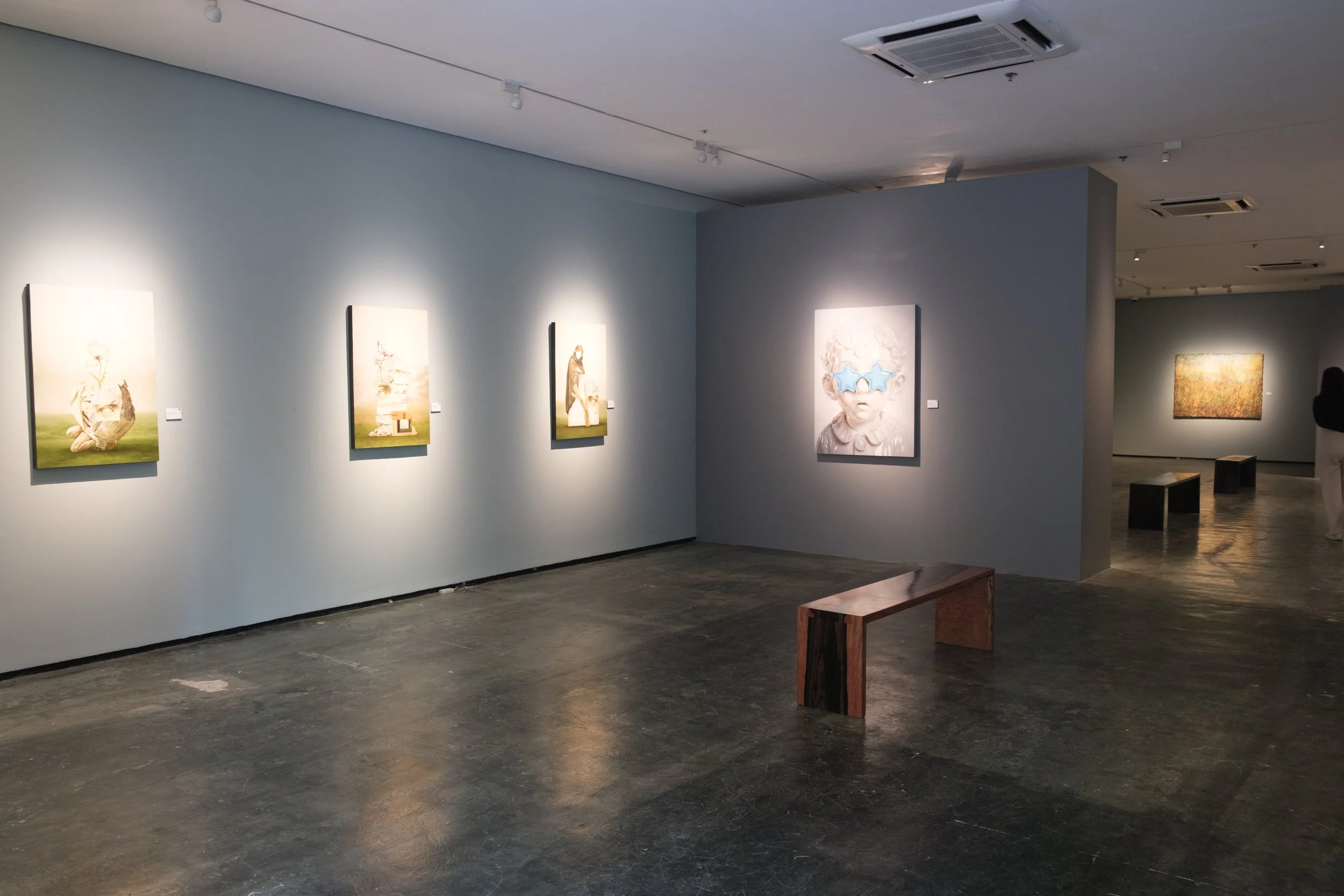
Gadiana brings another perspective to the group through Daloy, a work that he has described in terms of continuing to move with the flow of life.
Installation view of The Next Chapter at Leon Gallery International
In a recent Instagram post, Gadiana marked his return to making art with gratitude: “Salamat universe nakapag art art na ulit.” He followed this with a reflection on the challenges that may be ahead, writing that he would continue in the “Daloy” ng buhay—the flow of life.
While the post offers only a glimpse into the thinking behind the work, it places Daloy within a broader reflection on movement, change, and persistence.
Where OBAGS finds inspiration in something newly discovered, Miller examines what happens when we withdraw from external pressure, and Macj and Jeosh revisit the imagination of childhood, Gadiana turns toward the present and the act of continuing forward.
His work becomes part of the exhibition’s wider conversation about where artists find themselves at a particular moment—and how personal experience inevitably enters the work.
Five Artists, One Circle onto The Next Chapter
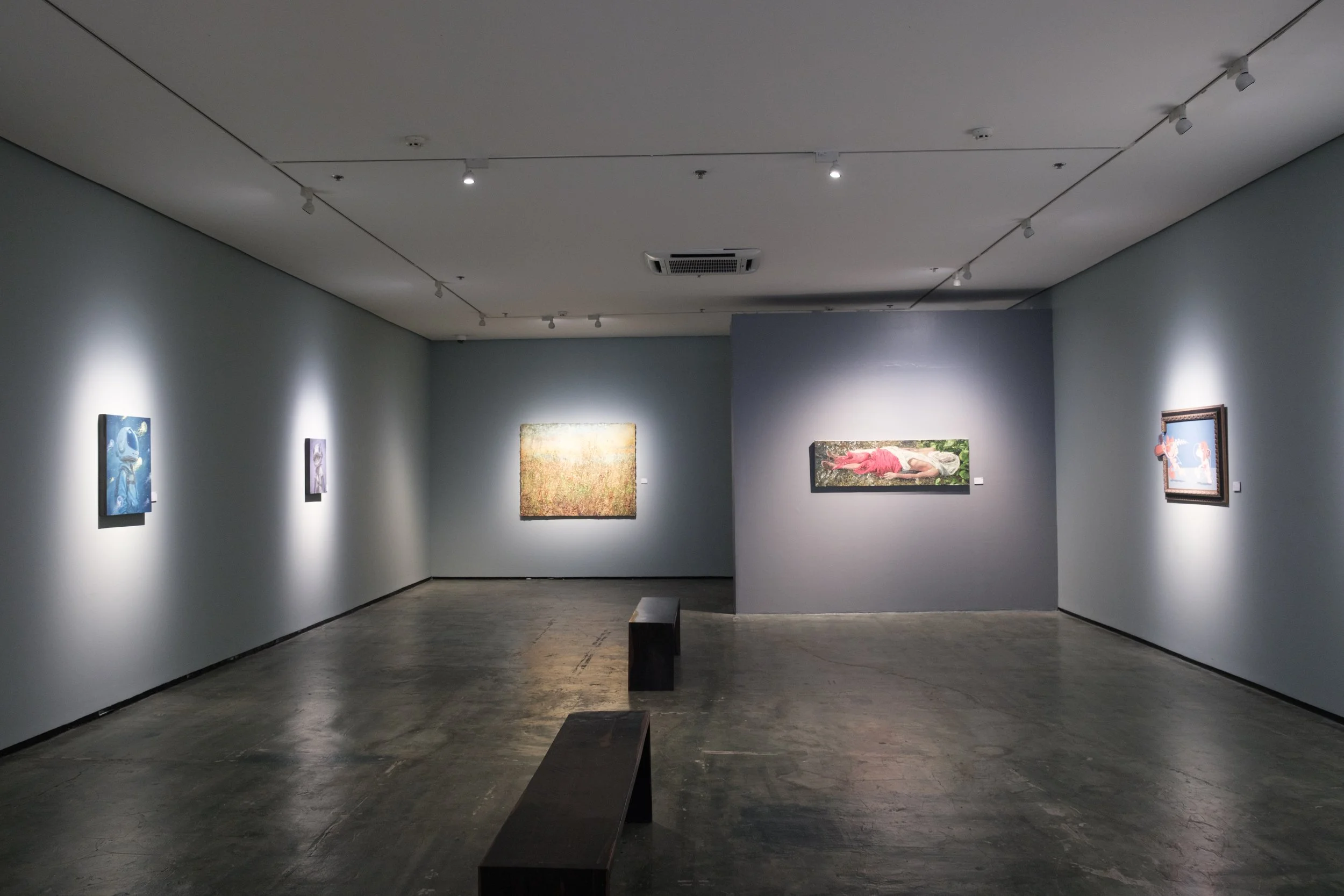
What makes the exhibition compelling is not simply the variety of styles on display. It is the relationship between the people behind the works.
Installation view of The Next Chapter at Leon Gallery International
OBAGS finds inspiration in a new passion. Miller turns inward, exploring solitude and growth. Macj revisits the boundless imagination of childhood. Jeosh reconstructs the adventures he once invented as a child. Gadiana adds another individual perspective to the group.
Five artists, different art styles, five ways of seeing, yet grounded by their friendship, love of art, and a shared history.
For these friends, working together creates a creative environment where ideas can be exchanged freely. OBAGS sees his friends’ experience as motivation. Macj values their exchange of ideas. Miller appreciates the ease of exhibiting alongside people close to his age and within his circle. Jeosh finds meaning in the fact that the friends he once knew are still beside him years later.
Their friendship becomes an invisible thread running through the exhibition. It is present in the conversations between artists, in the encouragement they give one another, and in the memories that continue to shape what they create.
Perhaps that is what makes the exhibition especially resonant.
These five artists did not simply arrive at Leon Gallery as strangers whose works happened to occupy the same walls. They arrived with years of history behind them, with their artistic voices having evolved, their interests changed, their styles increasingly their own, yet the circle remains.
In the end, the exhibition was not only about five artists coming together in one gallery. It was about five friends who had already shared one chapter of their lives—and found another way to share the next chapter.