
Communion in Consumption
Why is eating alone such a taboo in Filipino culture?
Words Erika Anne Sulat
Photo courtesy of Wikipedia Commons, Pexels (Cottonbro studio, Gary Barnes)
November 13, 2025
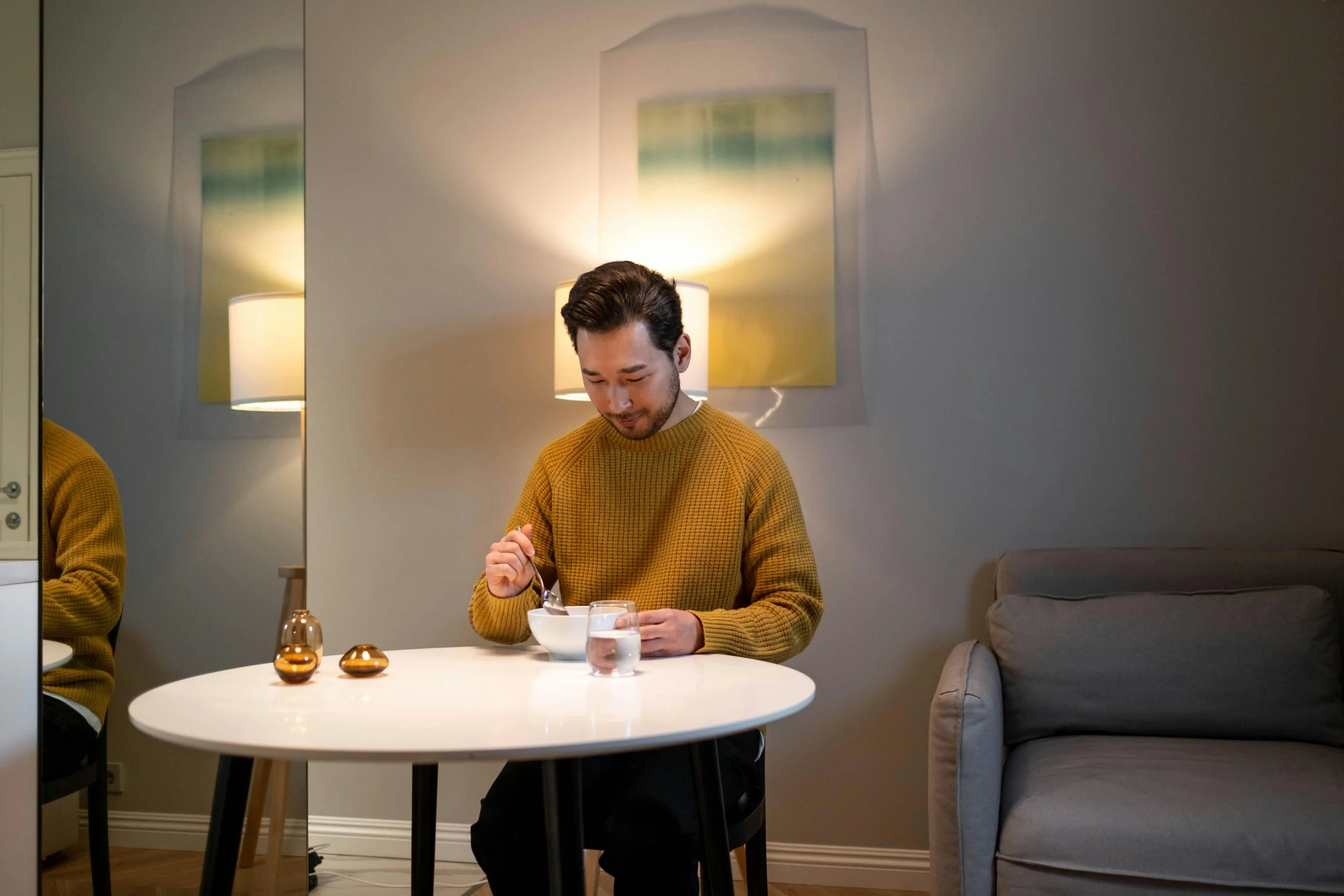
A few years ago, a myriad of photos shared online showing diner patrons eating alone trended on social media. These photos, posted by individuals who felt pity for these diners, often included sad captions emphasizing their lack of companions.
It rightfully raised concerns among the public about data privacy laws, the exploitative nature of putting captions over someone’s photo without full context, and the simple act of minding one’s own business. But it also made me think: despite being grown adults, why does it seem so sad when Filipinos navigate the world alone—much less eat alone?
I remember being a teenager, lining up at a fast-food restaurant and feeling nervous about ordering and sitting alone for the rest of the meal.
It even goes as far back as grade school, when I was deathly afraid of eating alone at lunch after being conditioned to always eat with my family at home, and in preschool, when all we had to do was eat at our desks beside our classmates.
Eating alone at lunch is a universally embarrassing experience, but for Filipinos, who are generally collectivist in nature, there is an added layer of isolation and shame that comes with dining alone.
A Ritual than Sustenance
For Filipinos, dining is a ritual shared with others, a communion with those we know, more than it is about sustenance. Dining alone is an outlier because we typically associate food with company.
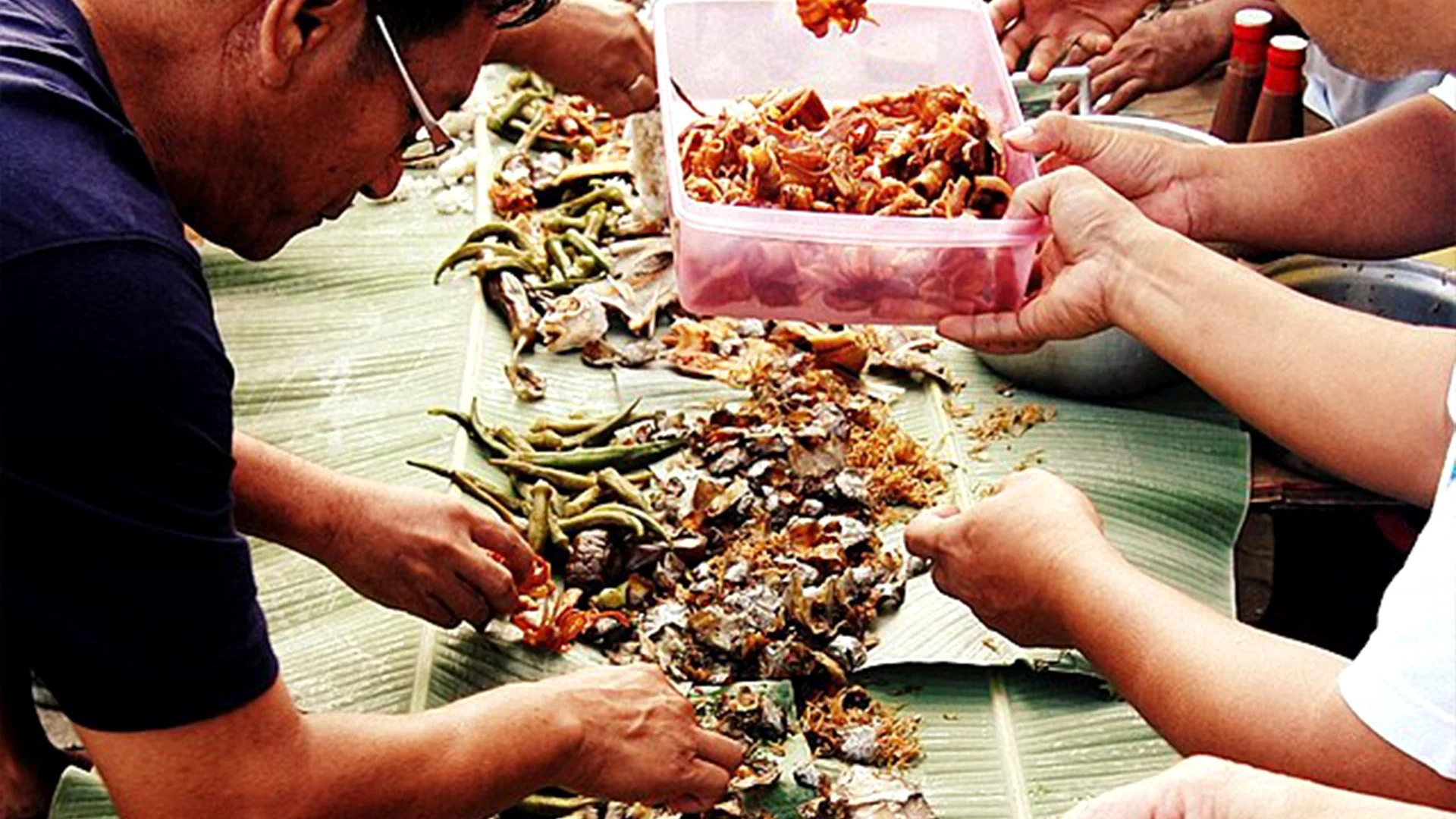
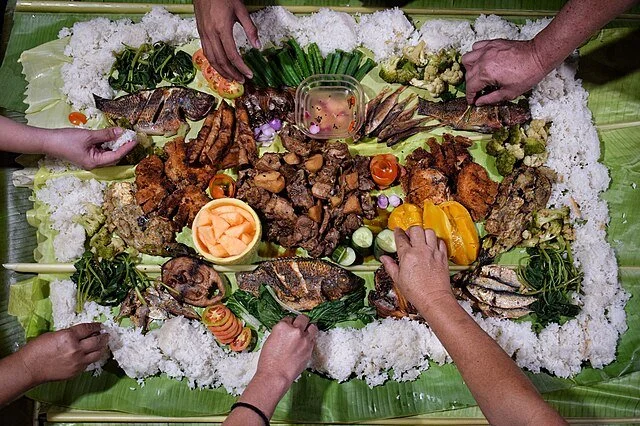
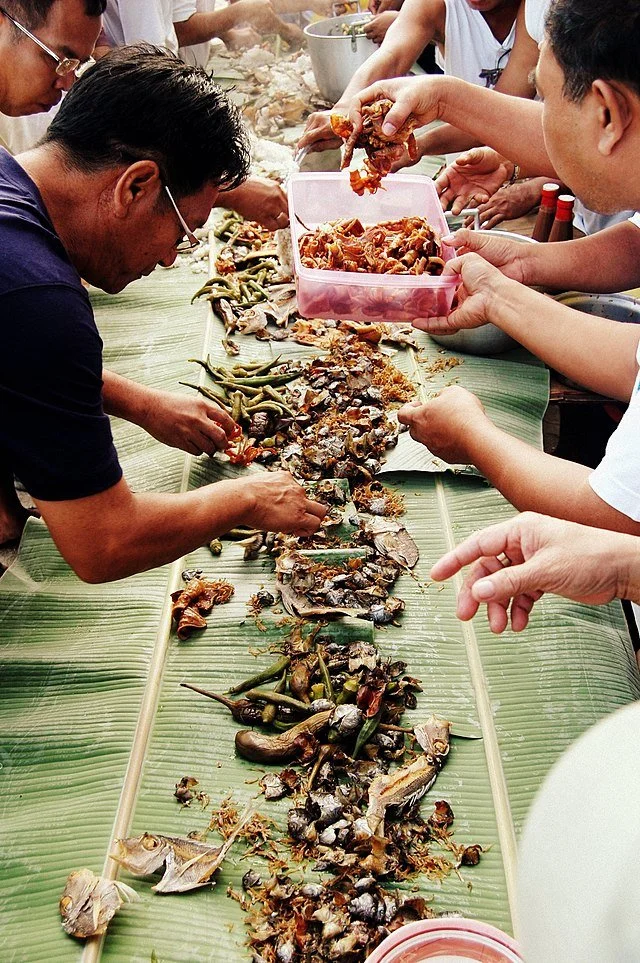
When a Filipino is eating, whether alone or with others, it is not unusual for them to invite people passing by with a single word: “Kain!” not to mention that one of the most iconic hallmarks of our culture is kamayan, eating with a large group of people, without plates or utensils, just our hands.
When one thinks of Filipinos, one of the first aspects of our culture that comes to mind is how much we value community.
In Rogelia Pe-Pua and Elizabeth A. Protacio-Marcelino’s Sikolohiyang Pilipino (Filipino Psychology): A Legacy of Virgilio G. Enriquez, the concept of kapwa, according to Enriquez, is integral to Filipino psychology and shapes how our social interactions work. It is about treating people as kapwa—as part of our kind, as fellow human beings.
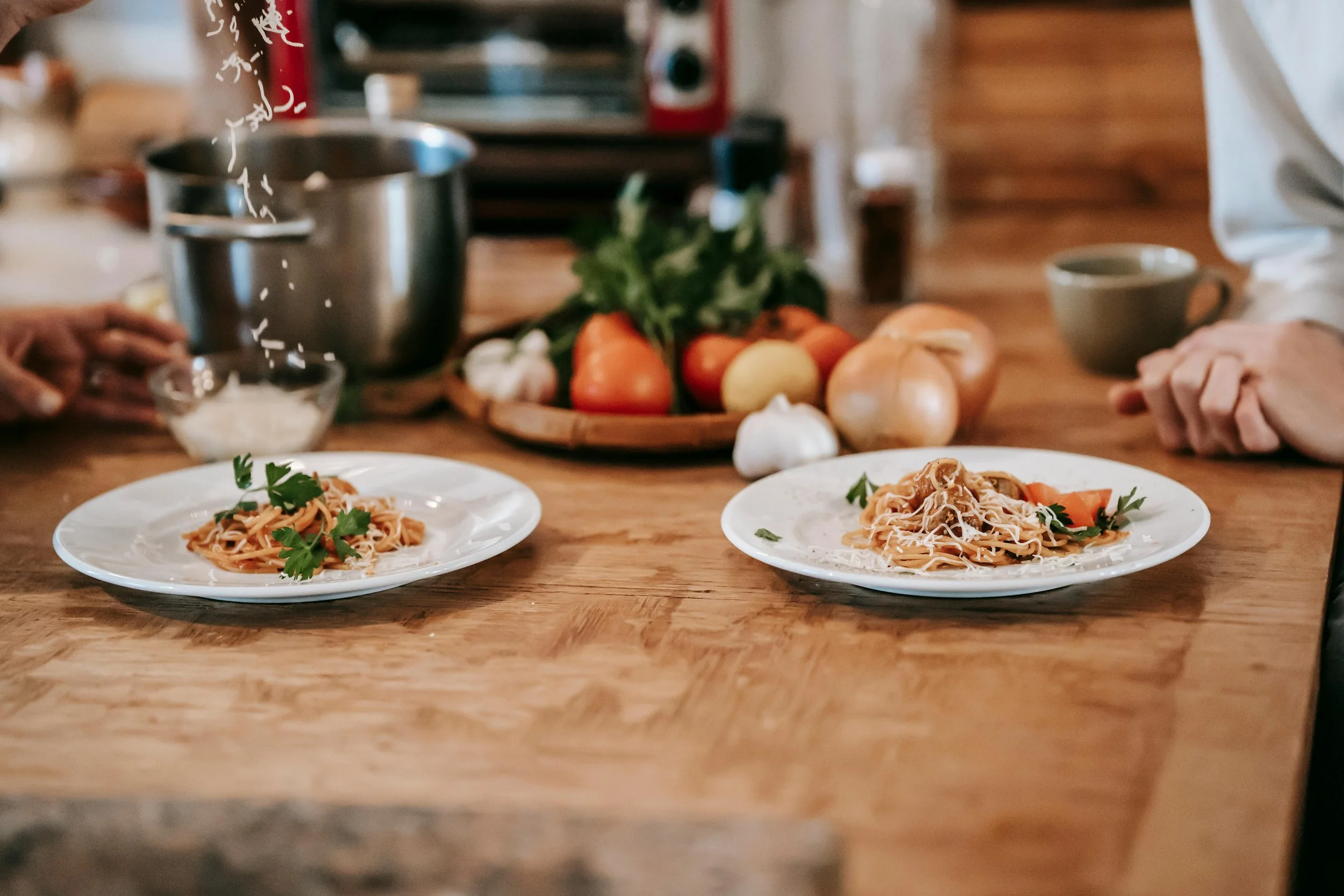
So it’s no surprise that when we eat, regardless of who is around, we invite them to join us because they are our kapwa.
Eating and Wellbeing
Furthermore, dining with others may or may not have an impact on one’s well-being. According to the 2025 World Happiness Report, which draws on data gathered by Gallup from 2022 to 2023, sharing meals with others is associated with better well-being.
However, the report also notes that the specifics of causation remain unclear. Either way, it offers an interesting perspective on how eating is linked to one’s overall well-being.
To put it simply, there’s nothing wrong with dining alone. It’s something Filipinos are still learning to accept, as our culture deeply values sharing the experience of a meal with others. Yet, as isolation brought about by the ever-growing world of technology continues to spread, we can always turn to our kapwa, those around us, to share our meals with.