Can Memory Outlast Its ‘Afterimage’?
What survives in memory is rarely what happened—it is what refused to let go. In Afterimage, South Korean artist ByungWoon Yoon transforms snow-laden landscapes into meditations on the quiet persistence of emotion.
Words Bernadette Soriano
Photos Courtesy of THE ANNEXT
July 10, 2026
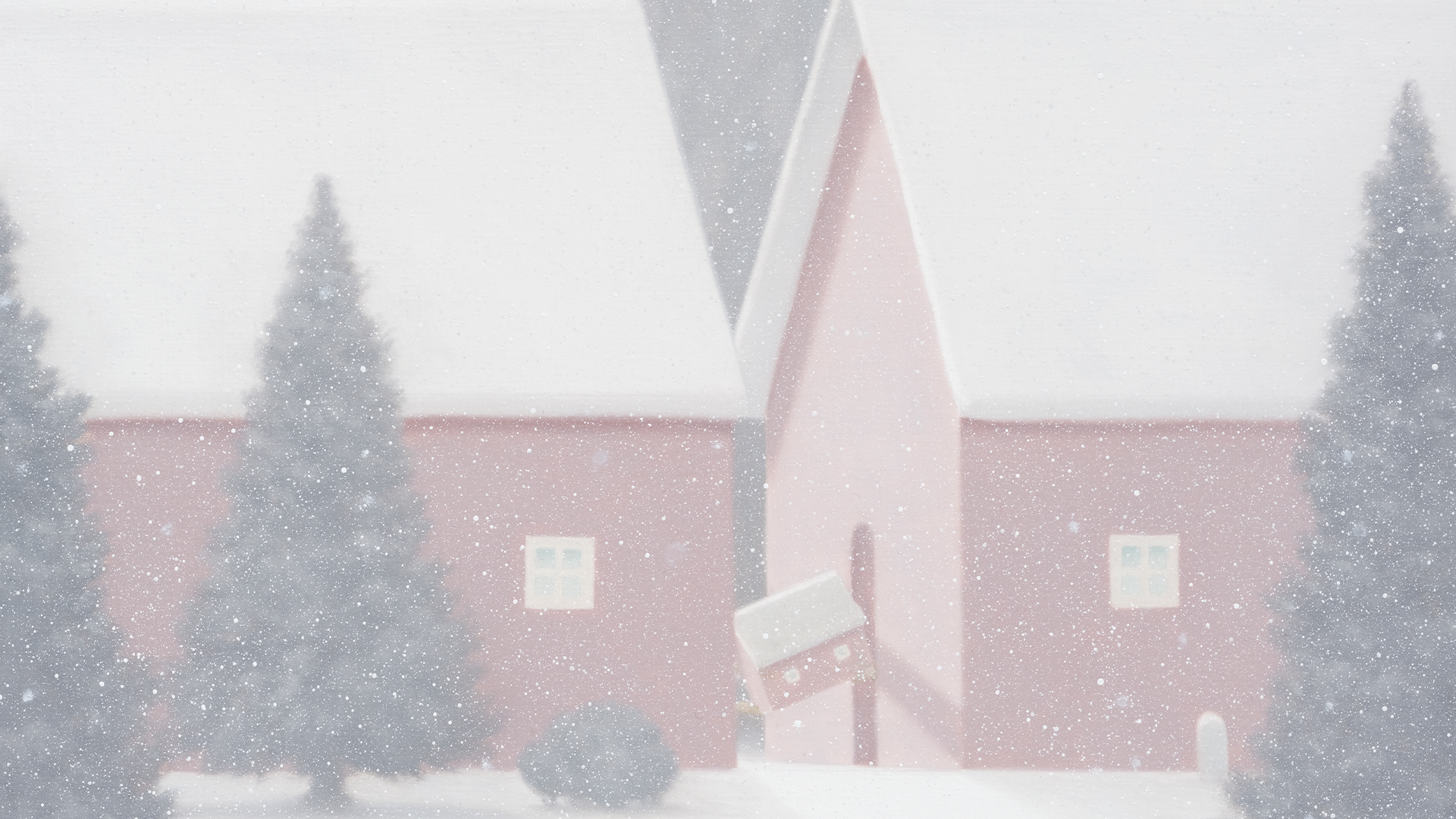
Details of ByungWoon Yoon, House Thief, 45.5 x 53 cm, oil on canvas, 2024
For all our sophisticated systems of preservation, recollection remains stubbornly indifferent to its terms, fastening itself to fleeting sensory detail: the metallic scent of rain on pavement, the softened cuff of a jacket, the slant of afternoon light in a now-changed room, while entire years of experience recede into haze.
Memory, it seems, has an incurable habit of burying the lead, allowing what ought to have been central to drift into the margins while granting curious longevity to moments that, at the time, scarcely appeared worth keeping.
For South Korean contemporary artist ByungWoon Yoon, the past never settles into fixed record but remains a fluid narrative, a sensibility affirmed by recognitions from the Dong-A Art Prize, the Kyunghang PAG’s Today’s Young Artist Prize, and the Danwon New Frontier Special Prize.
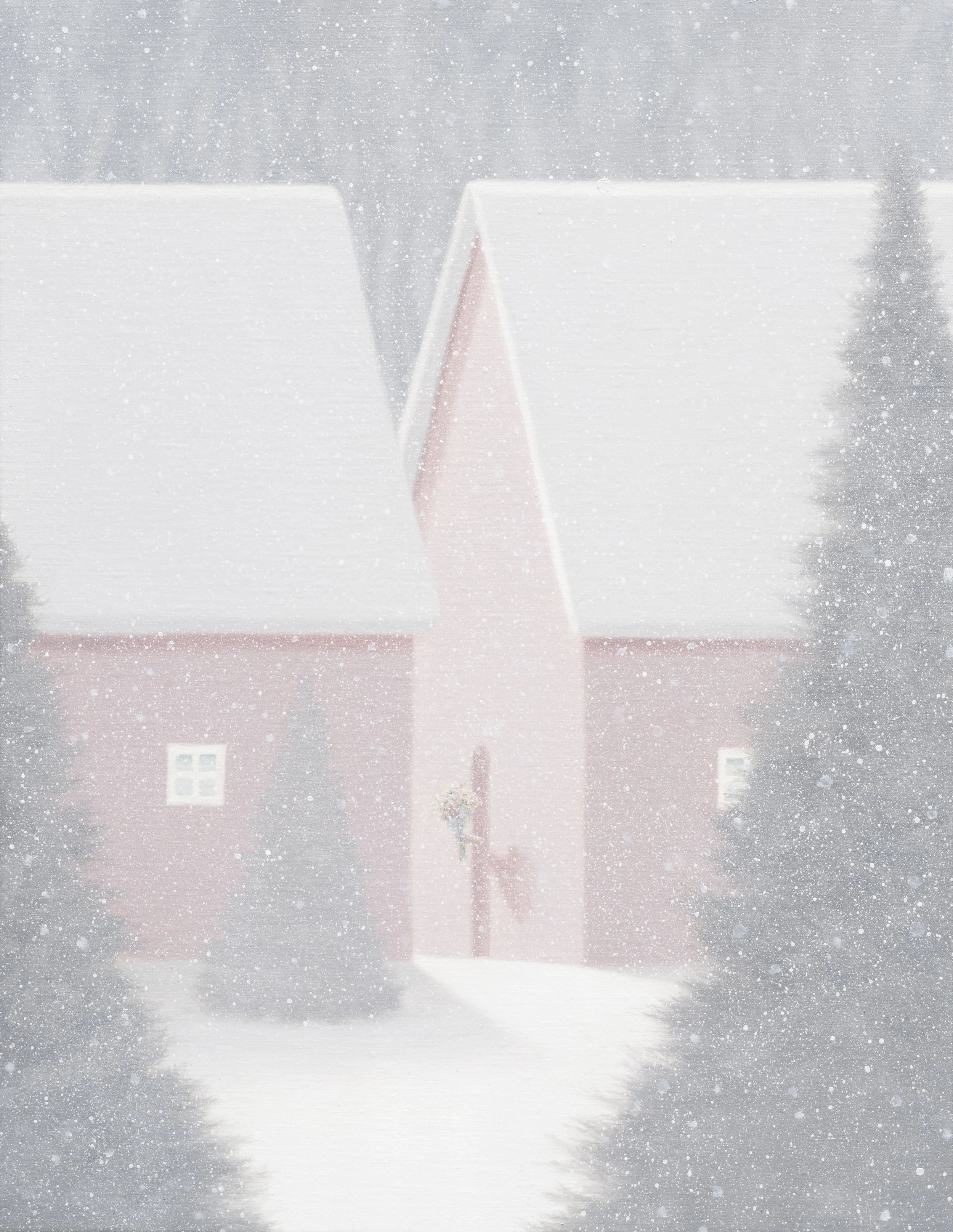
ByungWoon Yoon, A Posy, 53 x 41 cm, oil on canvas, 2025
Borrowing its title from the optical phenomenon of lingering vision, Afterimage, presented by THE ANNEXT (The Alternative Nest for the Next Artists) in its fourth exhibition and first solo presentation, frames memory as interpretive and unstable; as curator Prim Paypon notes, an afterimage is “the persistence of your idea.”
Which raises a question far slipperier than whether a memory is accurate: what happens when something remains truthful long after it has ceased being entirely factual?
The Climate of Recollection
Visitors encountering Yoon's paintings for the first time often arrive at the same conclusion, seduced by pale atmospheres drifting across forests and pathways, and landscapes suspended in silence so complete one almost expects to hear snow falling.
The assumption proves understandable. It also misses the point by a country mile.

ByungWoon Yoon, Pictures, 53 x 45.5 cm, oil on canvas, 2025
“This is not actually a painting of snow,” Paypon clarified during the opening, noting that what pans out to construe as weather gradually reveals itself as memory.
The white particulate atmosphere drifting across compositions functions closer to what he describes as ‘memory dust’—the emotional residue that accumulates each time an experience is revisited, until the original event becomes inseparable from everything later attached to it.
For Yoon, recollection appears to possess a meteorology all its own.
Paypon recalls the artist’s recurrent framing of memory as a kind of coldness, not insofar as Korean winters occupy any dominant role in the artist's imagery, but to the very act of recollection to the sensory temperature of experience. Time settles over remembered events like frost upon a windowpane or voices heard faintly from another room.
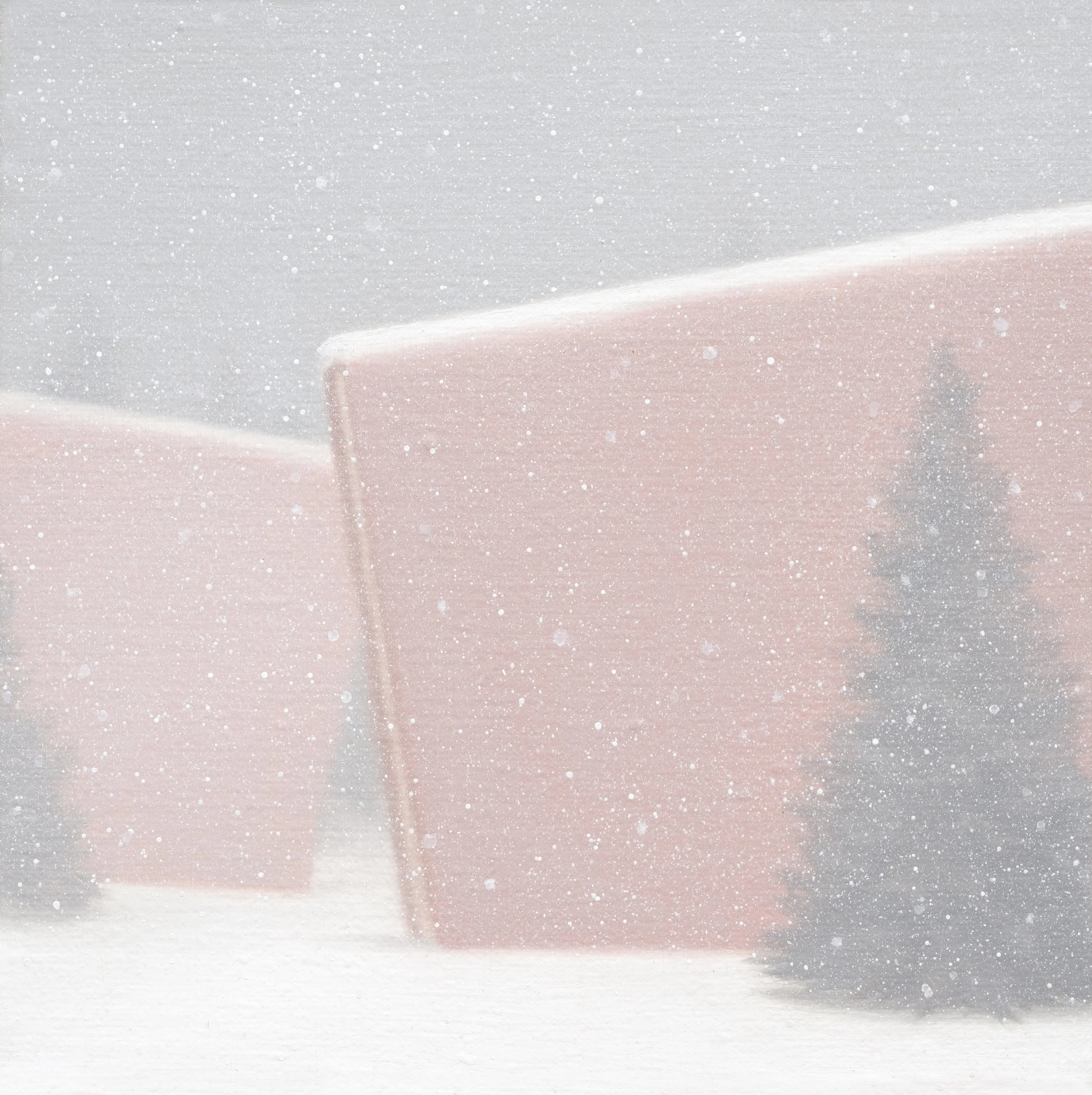
ByungWoon Yoon, Same Story, 25 x 25 cm, oil on canvas, 2025
This resulting atmosphere imbues with a distinct duality: Yoon's paintings feel intimate yet remote, familiar yet estranged, as though one were revisiting a place long known only to discover it has quietly changed in the interim.
It deepens through Yoon's refined handling of depth. Viewers are not simply presented with forests so much as drawn into them. Trees recede into boundless layers of atmosphere.
Pathways fade into tantalizingly uncertain expanses just as the eye continues searching for clarity even as it learns that definiteness already slipped through the window.

ByungWoon Yoon, Silence, 33.4 x 53 cm, oil on canvas, 2026
Perhaps it is in the nature of certainty that it survives its passage into memory, leaving only traces, sediments, and residual weather patterns of experiences long since softened.
The Blur Between Truth and Fact
Nowhere are these visual works’ confines clearest in Yoon's treatment of edges, which he sneaks up with something approaching suspicion.
No matter how painstakingly rendered the composition, hard boundaries seldom afforded much hospitality. Trees soften into the ambience. Silhouettes drift gently into their surroundings. Distances loosen their hold on geography. Forms remain visible, though their contours seem perpetually engaged in negotiation with space.

ByungWoon Yoon, Piano, 41 x 53 cm, oil on canvas, 2024
“There are blurry lines when you try to recollect memories,” Paypon observed.
The statement feels almost self-evident once spoken aloud, though it opens onto one of the exhibition's more compelling propositions.
Memory has never operated like a photograph.
Or perhaps more accurately, memory has never been particularly interested in doing so.
During a discussion following the exhibition opening, questions repeatedly returned to a tension familiar to anyone living in an age of endless documentation: if life has become increasingly invested in preservation, what becomes of memory as reconstruction? How does one reconcile an evolving narrative with the demand for verifiable fact?

ByungWoon Yoon, Reading, 45.5 x 53 cm(10F) oil on canvas 2026
Paypon's response sidestepped the opposition altogether.
Reconstruction, he noted, requires recording; one cannot revise what was never first observed. Observation alone remains insufficient, be that as it may, to grasp full meaning, as memory accrues layers long after the event has ended, shaped by age, circumstance, emotional disposition, and the many subsequent experiences that bear their own interpretive weight.
The result is a curious paradox. Memories become “less factual” over time, but that does not necessarily make them “less truthful.”
The distinction sits at the heart of Yoon's practice.

ByungWoon Yoon, Face II, 25 x 25 cm, oil on canvas, 2025
Facts tell us what happened. Truth concerns what endured. One orders time. The other preserves meaning. Although the two occasionally travel together, they are by no means inseparable companions.
Painting as Remembering
What ultimately distinguishes this showing is the extent to which its curatorial and visual strategies extend this meditation beyond the paintings themselves.
Every element is calibrated for immersion—from walls tuned at precise tonal values and sculptures distressed and patinated with the weathering of time, to lighting softened against any harsh white glare.

ByungWoon Yoon, A Mirror, 25 x 25 cm, oil on canvas, 2025
Circular halos around the works recall snowballs and afterimages alike, extending the exhibition’s visual language into space. With music drawn from the artist’s listening repertoire, the show reads less a venue than a constructed state of mind.
The cumulative effect recalls a museum one remembers visiting years ago without quite recalling where or when.
This attention to detail mirrors Yoon’s practice, which Paypon describes with admiration and disbelief.
Working in slow fashion, the artist treats color with near-scientific precision, documenting pigments and combinations so rigorously that viewers would be hard-pressed to distinguish recent works from those produced years earlier. Even the natural walnut frames were personally sourced and assembled by Yoon, an extension of the same exacting hand.

ByungWoon Yoon, Silence, 27.3 x 41 cm, oil on canvas, 2020
Far from an overnight revelation, the artist’s proud assemblage arises from a sustained probing into mechanics of remembering and the afterlife of images long after their originating moments have vanished.
Perhaps this explains why nostalgia operates so differently within his paintings. Where many artists invoke it, he seems intent on rendering its texture visible.
His paintings do not simply recall experience; they stage the conditions in which remembering occurs. Each mist-like canvas becomes an amalgam of regrets, longings, revisions, and references whose genealogies have grown too entangled to admit of any definitive accounting.

ByungWoon Yoon, Into the Story, 53 x 41 cm, oil on canvas, 2025
After all, significance rarely announces itself while it is happening. Nobody receives advance notice that they are currently inhabiting a future nostalgia. Life proceeds with its usual assortment of errands, obligations, distractions, and unfinished conversations all while memory keeps its counsel in the background.
What remains is not the event exactly, nor even a faithful record of it, but something stranger and perhaps more valuable: an emotional echo that retains enough of the original light to illuminate the present, even after its source has long gone dark.
And that staying glow is what Yoon calls an Afterimage.