The Fine Art of Drag
Eliza, the sole drag performer for the Modern and Contemporary Art Festival 2026, talks about drag and her first appearance at the most dynamic art festival.
Words Johannz Miguelle Dela Cruz
July 10, 2026
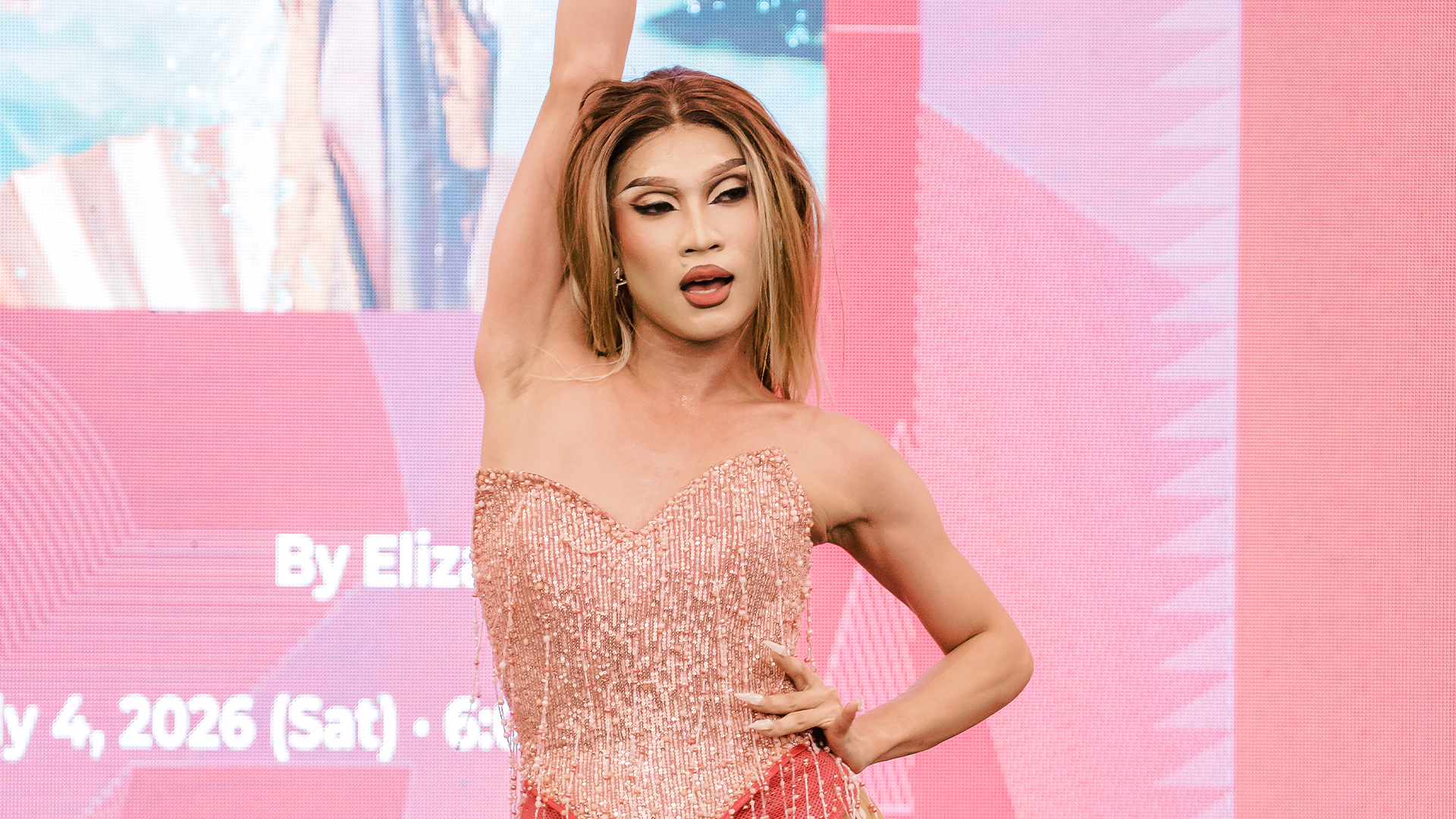
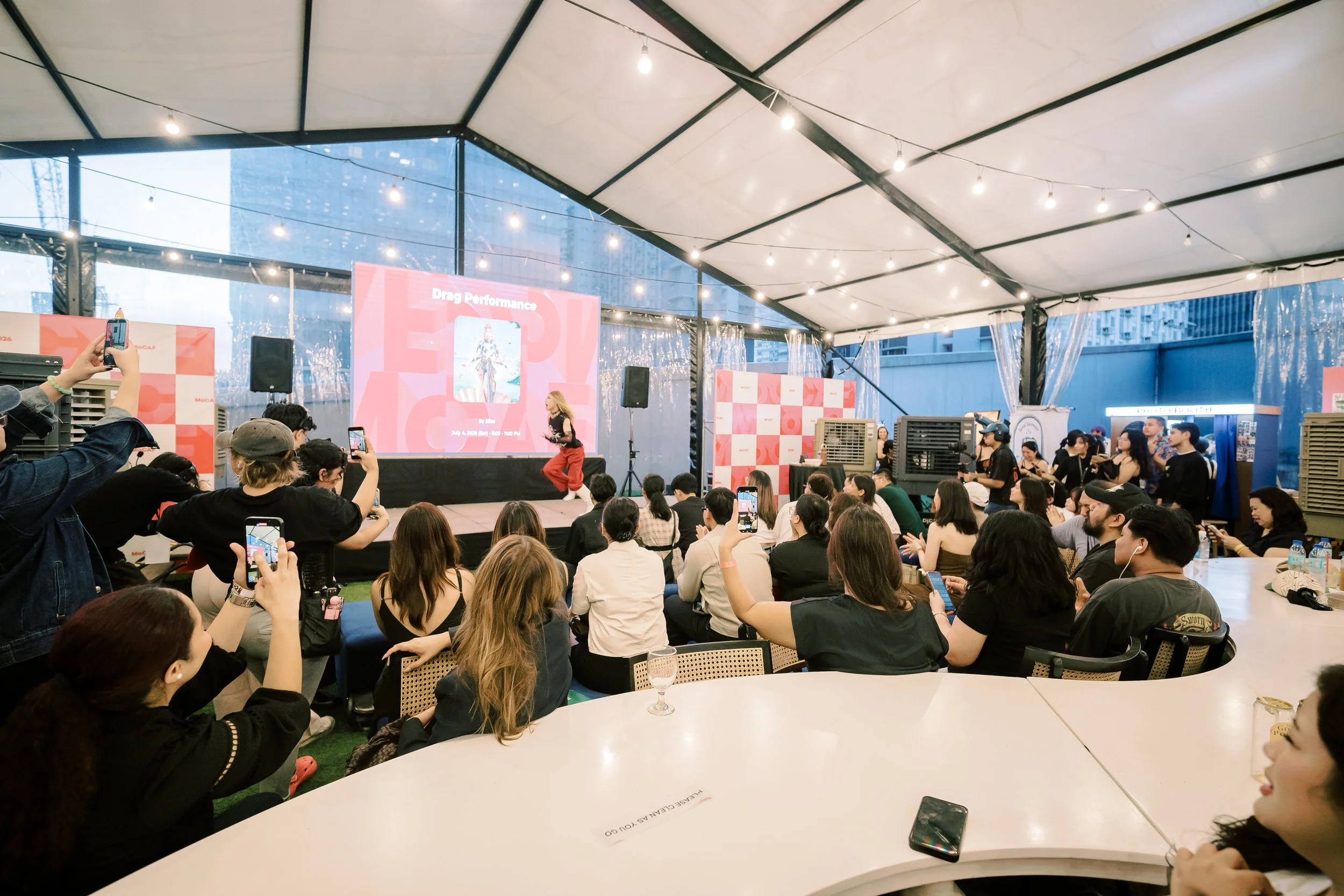
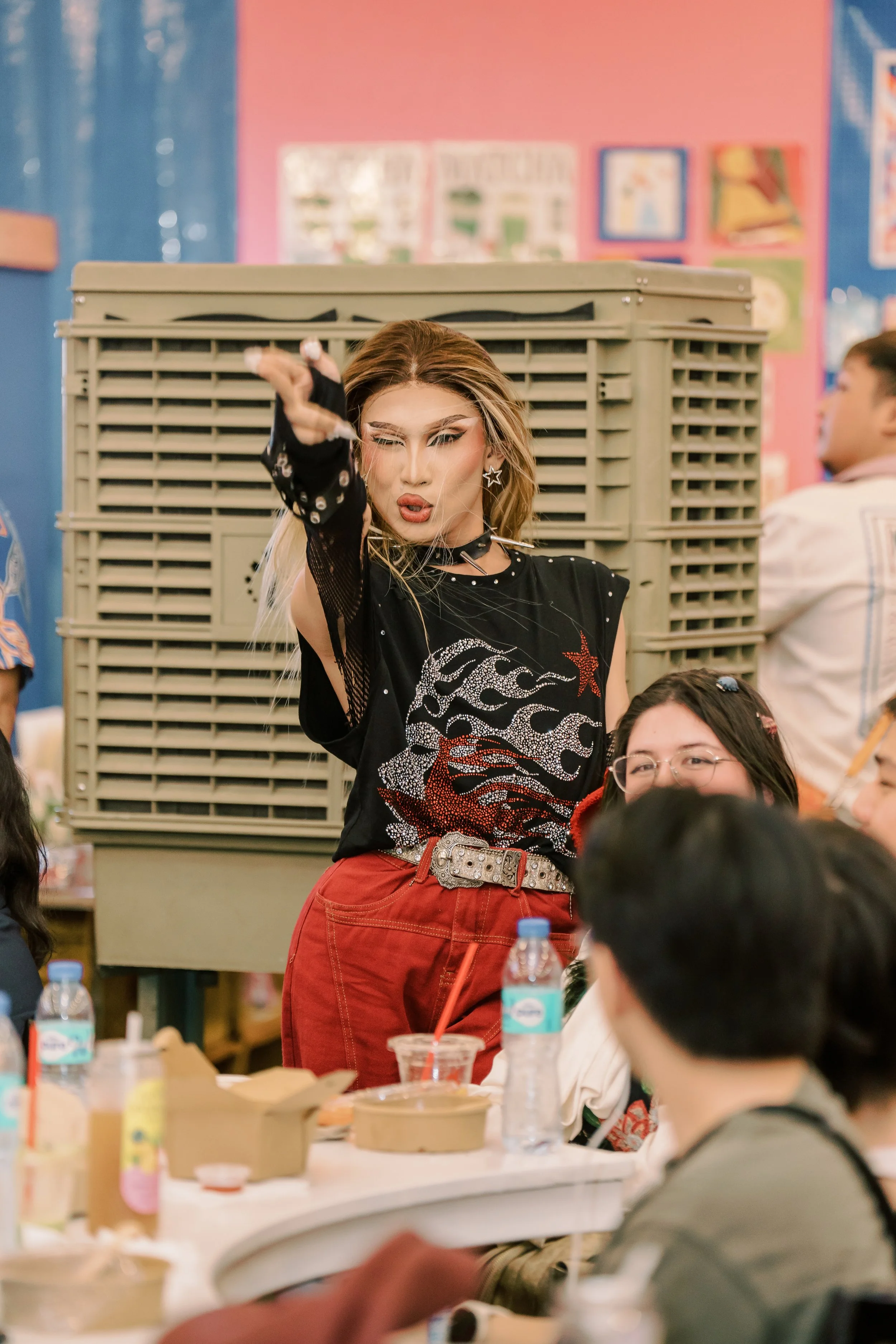
Still into You by Paramore blared on the speakers as Eliza entered from the left. Wearing a sparkly tee and a red cap which she quickly tossed to the front seats, she made her way through the crowd with ease, slicing through the density with a precision that only she possesses.
Her effortless splits rivaled her dips to the beat of the music. Hilariously, she turned electric fans into props for her act, her hair flowing like she was on the front cover of a magazine.
Because if it’s about entrances, then you can count on Eliza to make them grand.
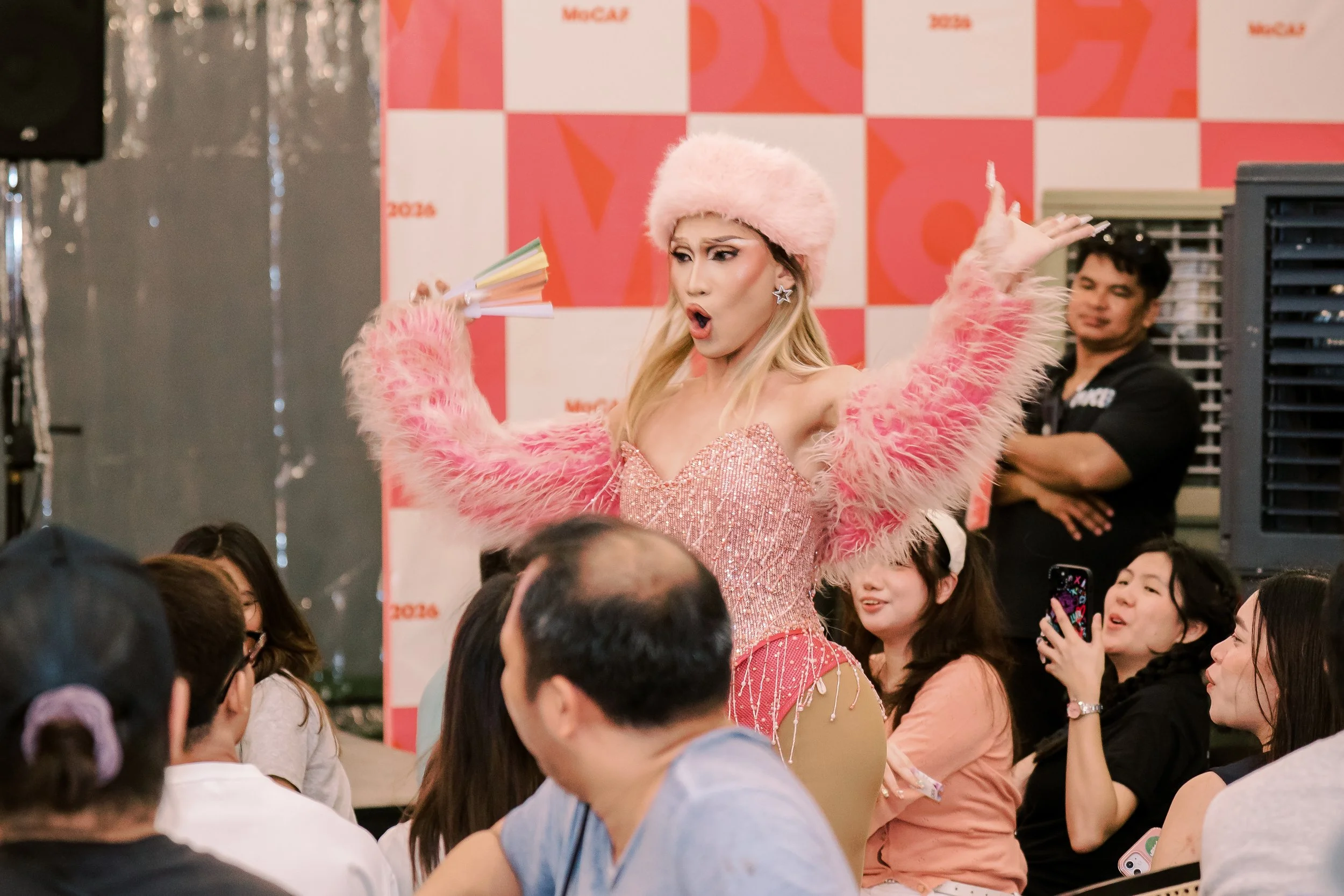
Enchanted, the crowd steadily paid attention to both of her performances and applauded at every second, all while her lipsyncing was uncompromised by the heat of the night. It was a performance that echoed all throughout Bonifacio Global City, and unlucky were those who missed it.
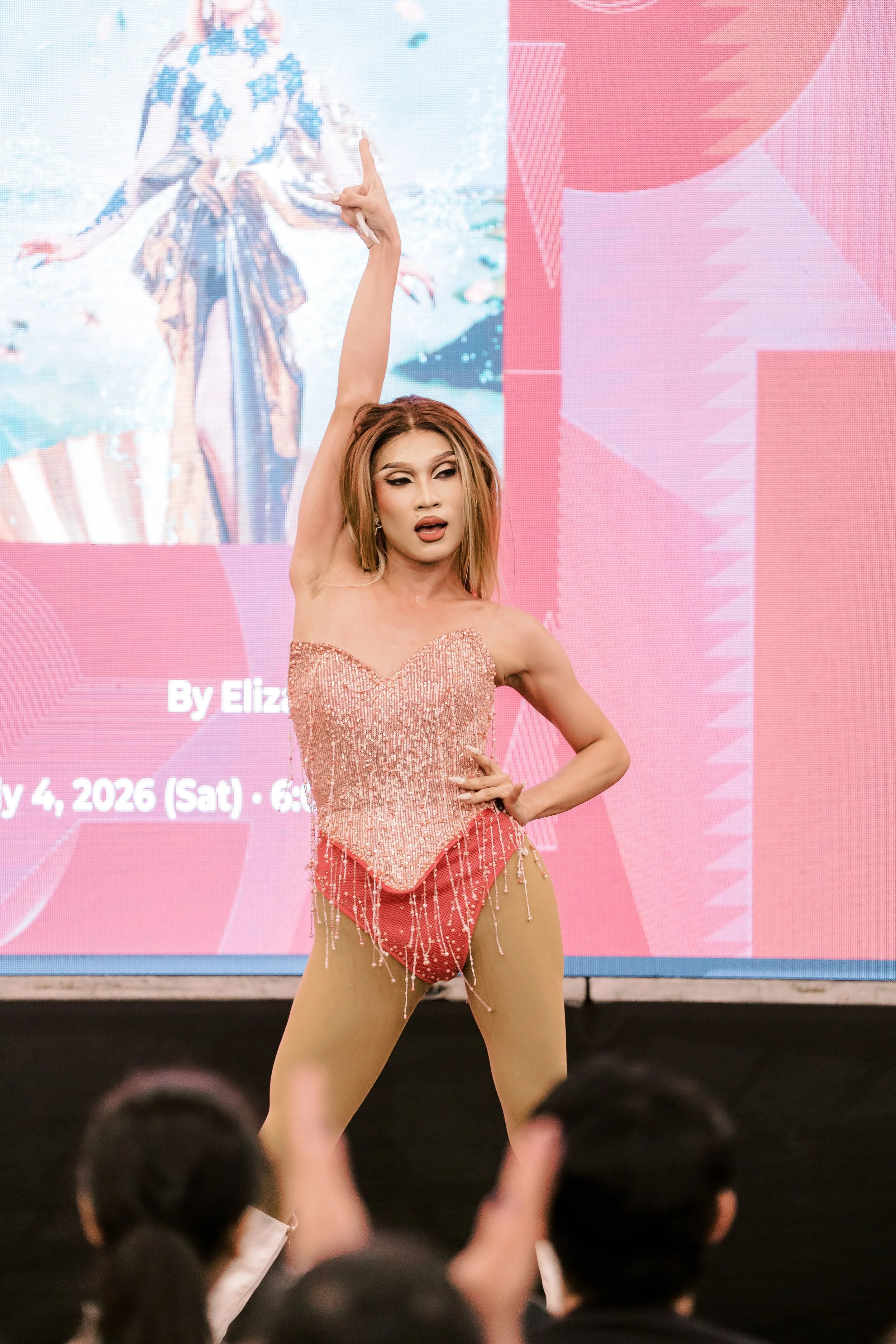
Drag Artist Eliza
She performed two songs with a glamorous change of costume in the middle. For her final song, she lipsynced to the confidence-booster, Domino by Jessie J, and as she made her exit, more phones were on her, the audience captivated by her allure.
Spirits remained high even as the MoCAF 2026 closed its doors for that night.
Eliza started her rock-inspired drag performance with the famous love song: Eliza never performs a fleeting experience. She drills into your memory, captures this moment, and delivers something unforgettable.
At first, she wasn’t sure if the crowd would be receptive to her explosive art in comparison to the quiet and solemn nature of analyzing a painting.
While preparing for her performance, the Art+ Magazine team had the chance to speak with her. As she picks the color of her eye shadow, checking her eyelashes, and picking her lipstick shade, conversation started to flow.
“Detalyadong nakatingin, tahimik lang. They’re trying to be, like, parang cinoconsume nila [in a] way natahimik,” she began, talking about how the fine arts scene and art galleries encourage silence over vocal dialogue. She had an impression that the arts were analyzed in solitude, with passersby clouded with thoughts stuck in their heads.
On the contrary, “Drag is explosive, sobrang taas ng energy ng drag. [Those are] totally two different things,” she added. “I’m hoping how you receive my art is how you receive ‘yung mga visual arts sa mga galleries niyo.”
Despite this, her hope never faltered in delivering a performance up to her standards: “It’s exciting! Because, honestly, I don’t know what to expect,” she beamed, in reference to her first time being at MoCAF.
This doesn’t scare her at all. Art thrives in the unexpected, and having a drag performer at an art festival brings queer voices closer to the local art community.
“Probably some people who will be watching me already know what drag is, but I’m open to the fact na most of the people na nandiyan first time makakanood,” she shared. This unfamiliar experience for both sides of the stage only excites her even more.
She quickly learned how MoCAF 2026 operated in a cultural sense: fun, quirky, and generously catered to a variety of audiences. In fact, the day before her performance, a DJ set rocked the courtyard of MoCAF 2026, and the previous years of MoCAF never dared to shy away from that loudness.
But what’s wonderful about all of her experience is that her participation in MoCAF 2026 further affirmed how drag is an artform in itself.
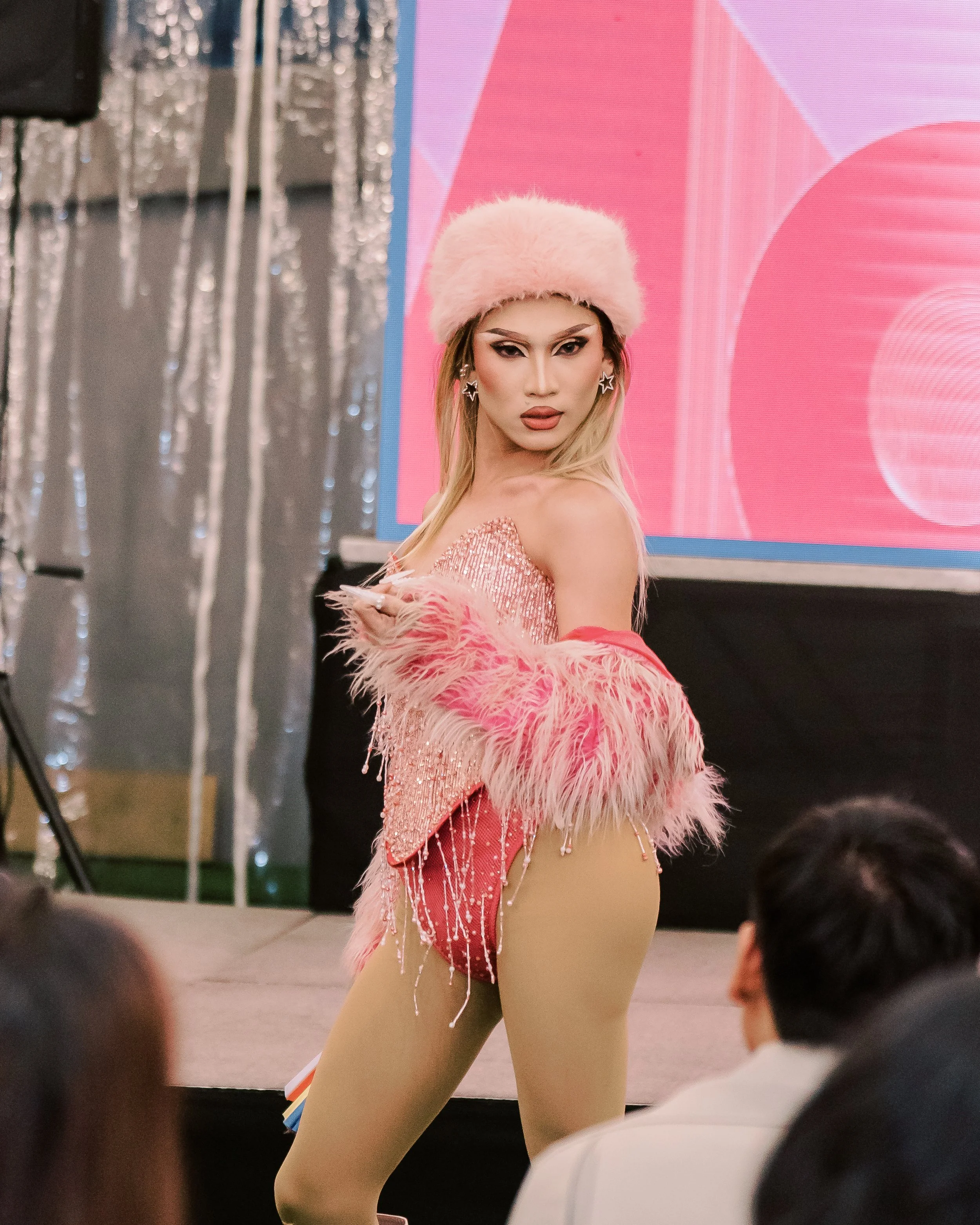
Putting on make-up is like painting on a canvas, and Pride being a protest imbues drag with meaning and heart. Drag becomes a cultural moment that marches forward with how we celebrate queer voices in art.
“Being here is a testament na modern art can be…lumalaki siya, nage-evolve siya. Welcoming drag to this type of event—it says a lot. I think it’s progressing,” she expressed.
A drag performer might seem unusual to the art festivals. Regardless, Eliza’s participation legitimizes how queer identities have contributed greatly to how we view the local art scene. It speaks greatly to how Filipino art is dynamic, ever-changing and never stagnant.
Amidst times of crises, Eliza made that statement even more powerful. “Pride is us,” she asserted, fixing her eyeliner. “It lives inside us. [...] It doesn’t end or start [in] just a random month.”
Eliza had grown up surrounded by the arts, and it’s her resolve towards constant and consistent improvement that had allowed her to be the big personality that she is: “If I’m feeling a space inside me, then that only means I need more. But it’s a part of me telling myself na ‘Ang laki pa ng memory card mo!’”
She recalls dancing in high school, sharing the stage with her friends. What she didn’t know was how her life would be dedicated to performance—a fated sort of kismet weaved into her being.
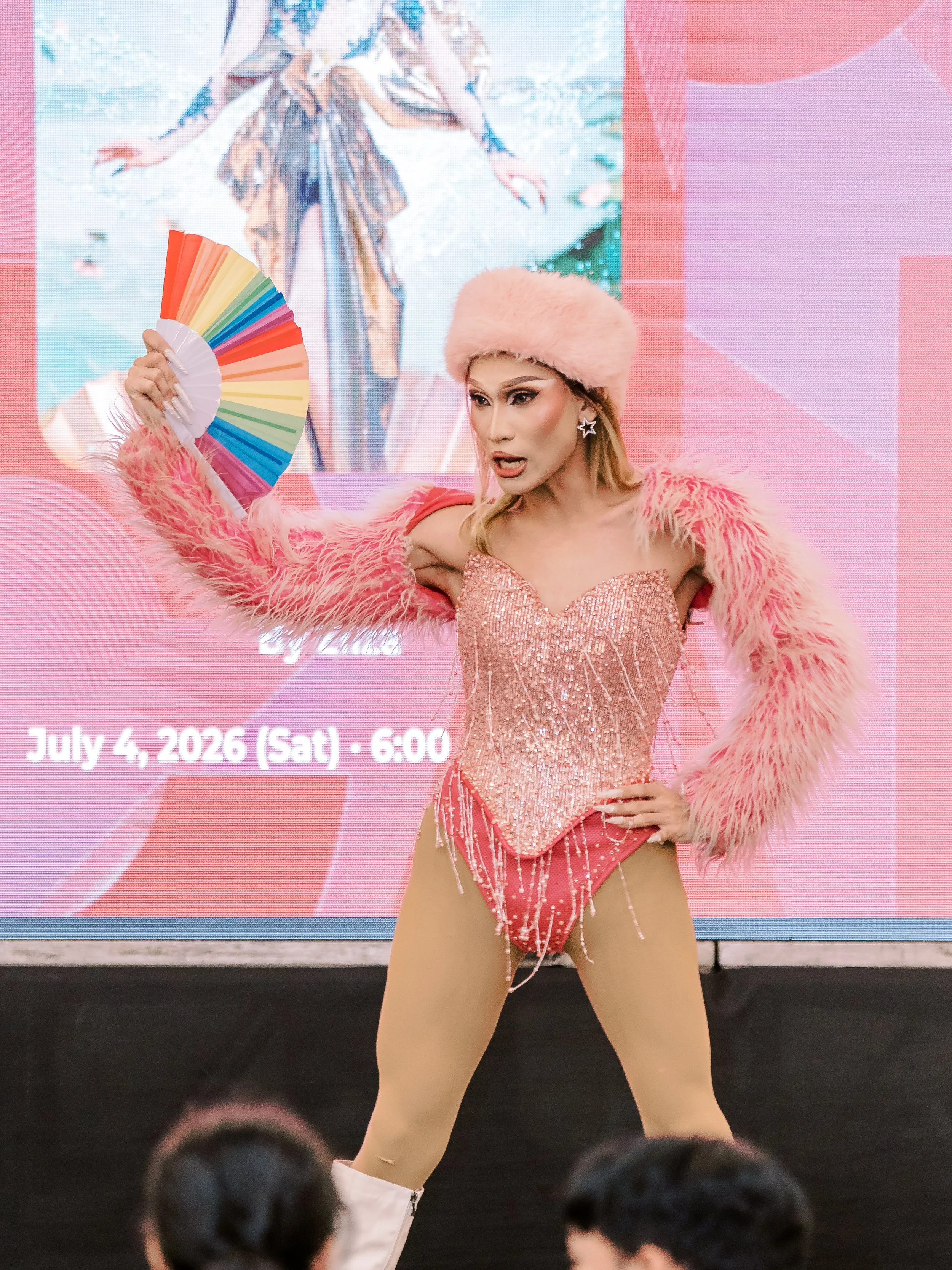
And while she won’t always be on stage, her heart remains dedicated to the proliferation of the queer performing arts. Opening stages for more queens to perform on has been on her mind recently, and she calls it the greatest contribution she can do for the queer community.
“The community does not want to be silenced at all. We are loud,” she declared. June might have ended, but she calls it only the beginning for a fuller year of love and pride.
By then, her look is half done, and all that’s left is to put on her wig, the final piece to her superhero suit. “We are fearless for those shows.”
With everything said and more to do, Eliza won’t stop at any hurdle—her passion and love for the queer community burns stronger than ever, and it’s a resolve she won’t stop chasing.
Even as she leaves the stage, she will always be the fierce and fabulous Eliza, her bedazzled accessories incomparable to the brightness she brings to each performance and conversation.