
After The Spectacle
Slow violence unfolds through coastlines, coconut trees, and the lives shaped by environmental change.
Words Amanda Juico Dela Cruz
Photos courtesy of Martha Atienza and Silverlens
July 10, 2026
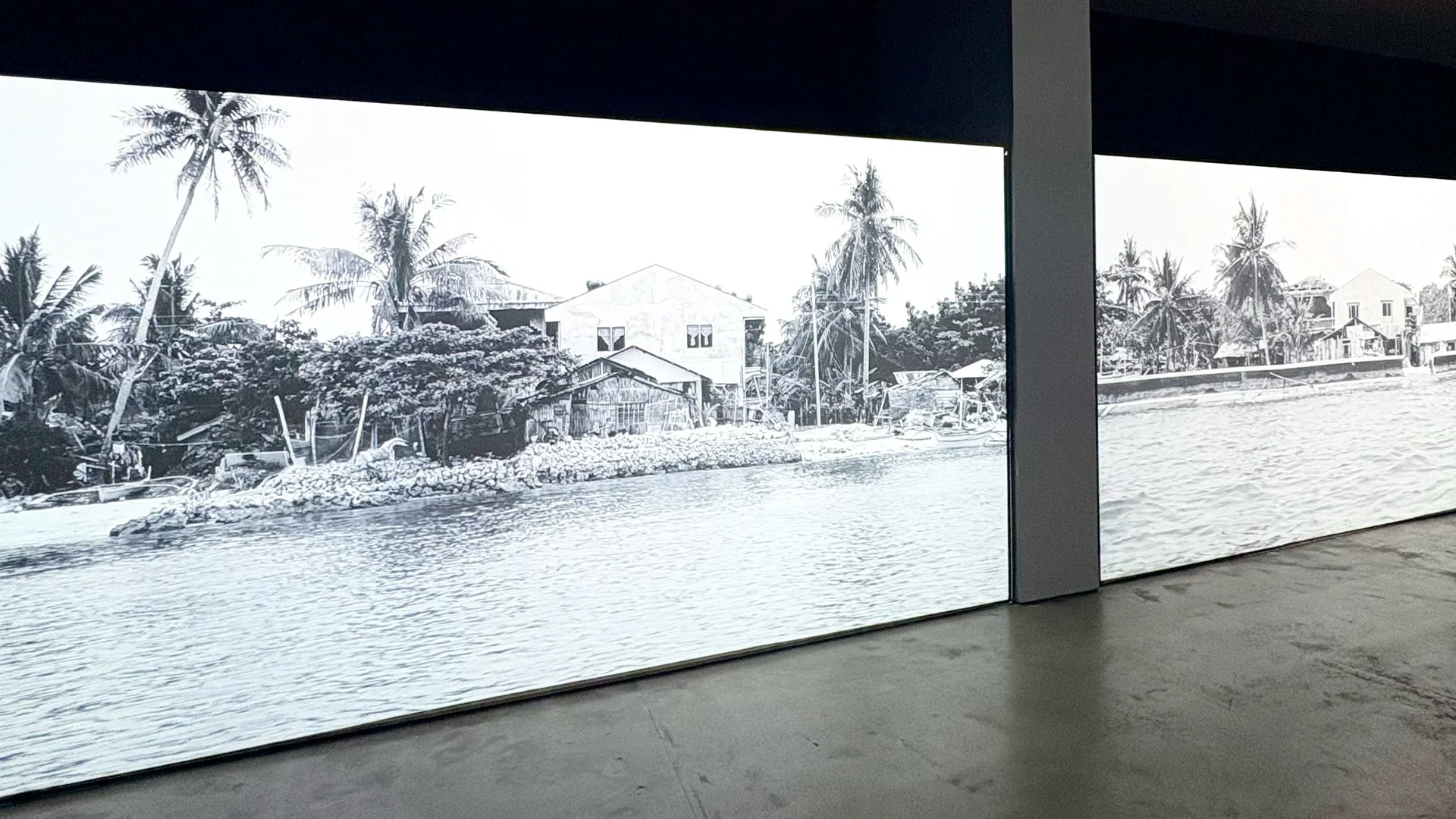
Martha Atienza’s Installation view of Malbago 11°17'18.2"N 123°44'49.6"E, 2026. Images courtesy of Silverlens Manila | New York.
Let’s begin in the aftermath.
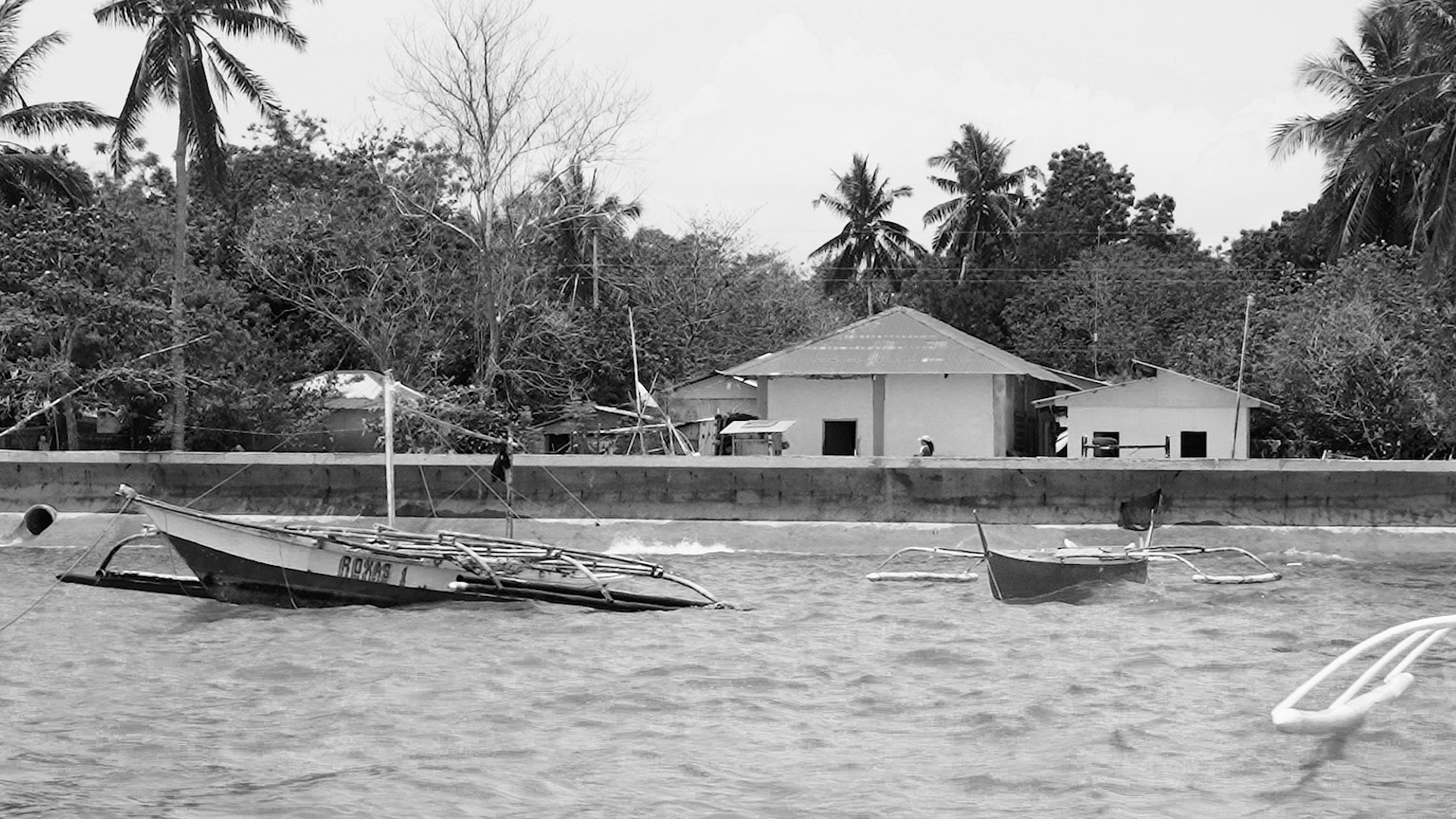
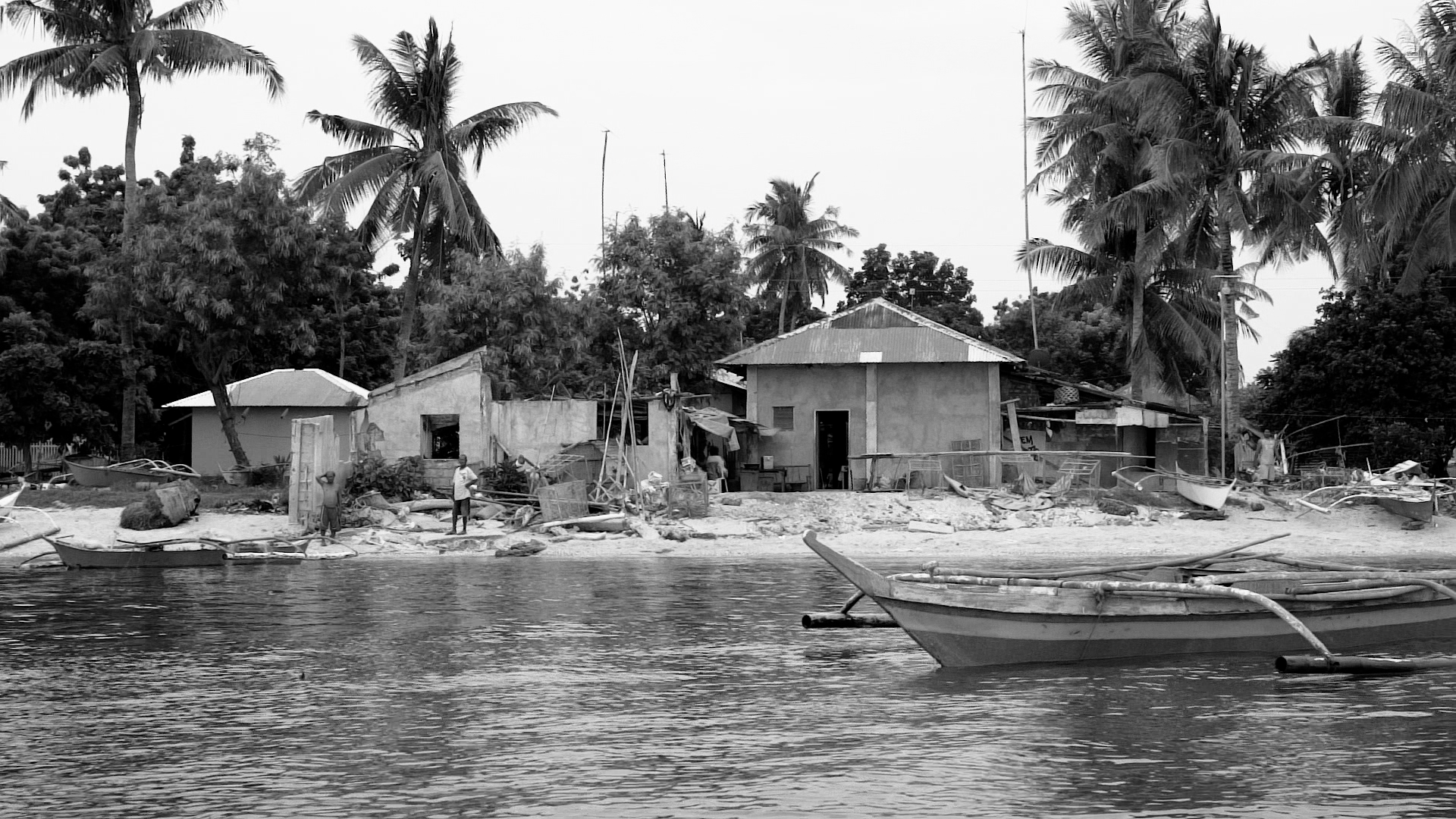
Martha Atienza’s two-channel video, Malbago 11°17'18.2"N 123°44'49.6"E, shows the coastal area at the northern end of Bantayan Island. It faces the Visayan Sea, an inter-island sea bordered by Cebu, Leyte, Masbate, Panay, and Negros. The left panel of the video installation shows the stretch of the coastline in 2019, while the right panel shows the same coastline seven years later. In the two panels, we can identify some of the infrastructures still in the same place. And despite the changes over time in the coconut trees that lined Barangay Malbago’s shores, we can see some of them still standing in the same spot. In the right panel, however, some of the infrastructures and coconut trees have been replaced by a seawall. The open shoreline is now blocked.
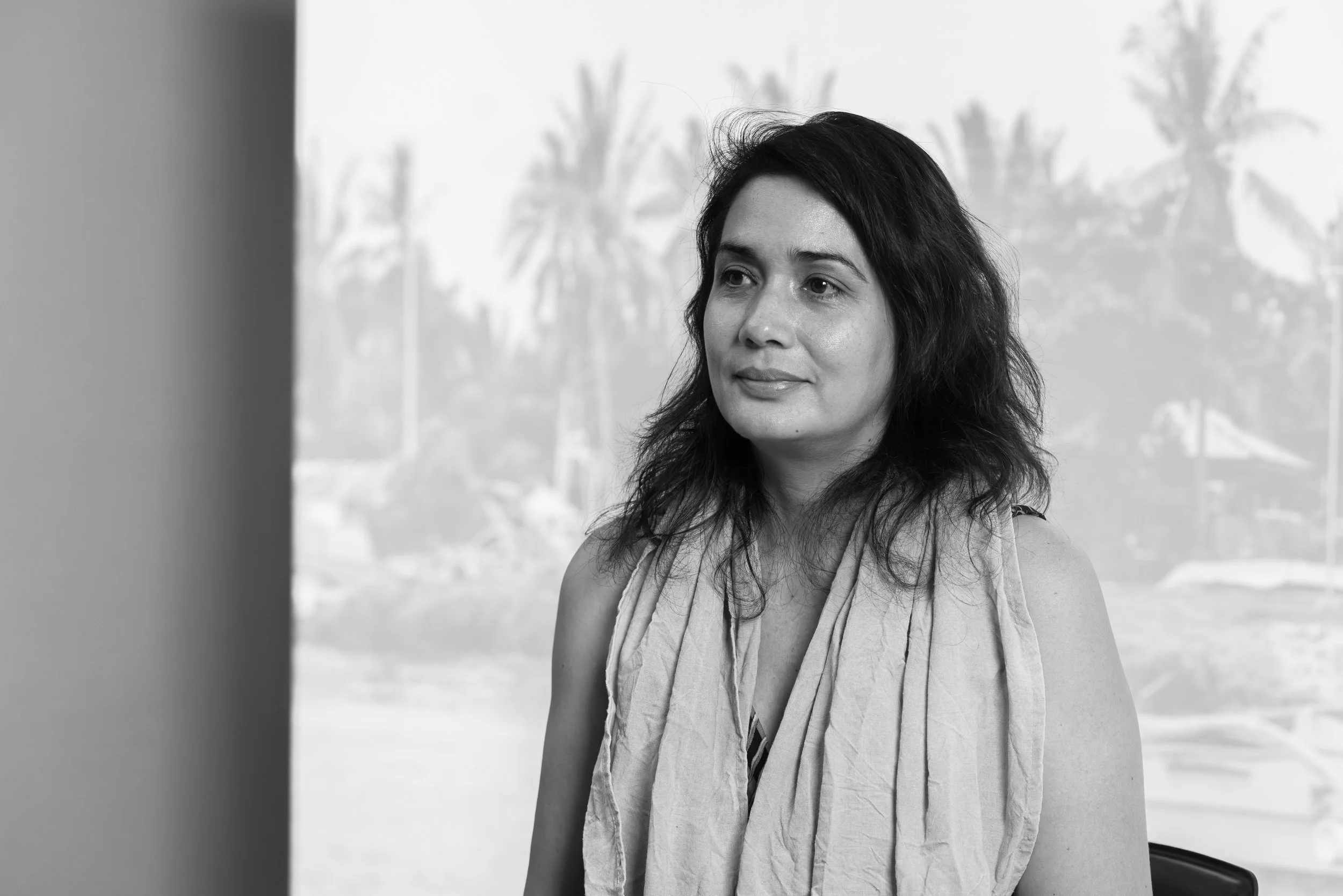
Martha Atienza | Images of Silverlens Manila | New York.
Rob Nixon writes that "violence is customarily conceived as an event or action that is immediate in time, explosive and spectacular in space, and as erupting into instant sensational visibility." Spectacle is privileged over slow harm. Take Atom Araullo’s coverage of Yolanda’s wrath, for example, as benchmark for how super typhoons are reported today. Aerial photographs of flattened towns and landscapes strewn with debris have become a familiar visual language of environmental disaster. But what happens when climate change no longer looks dramatic?
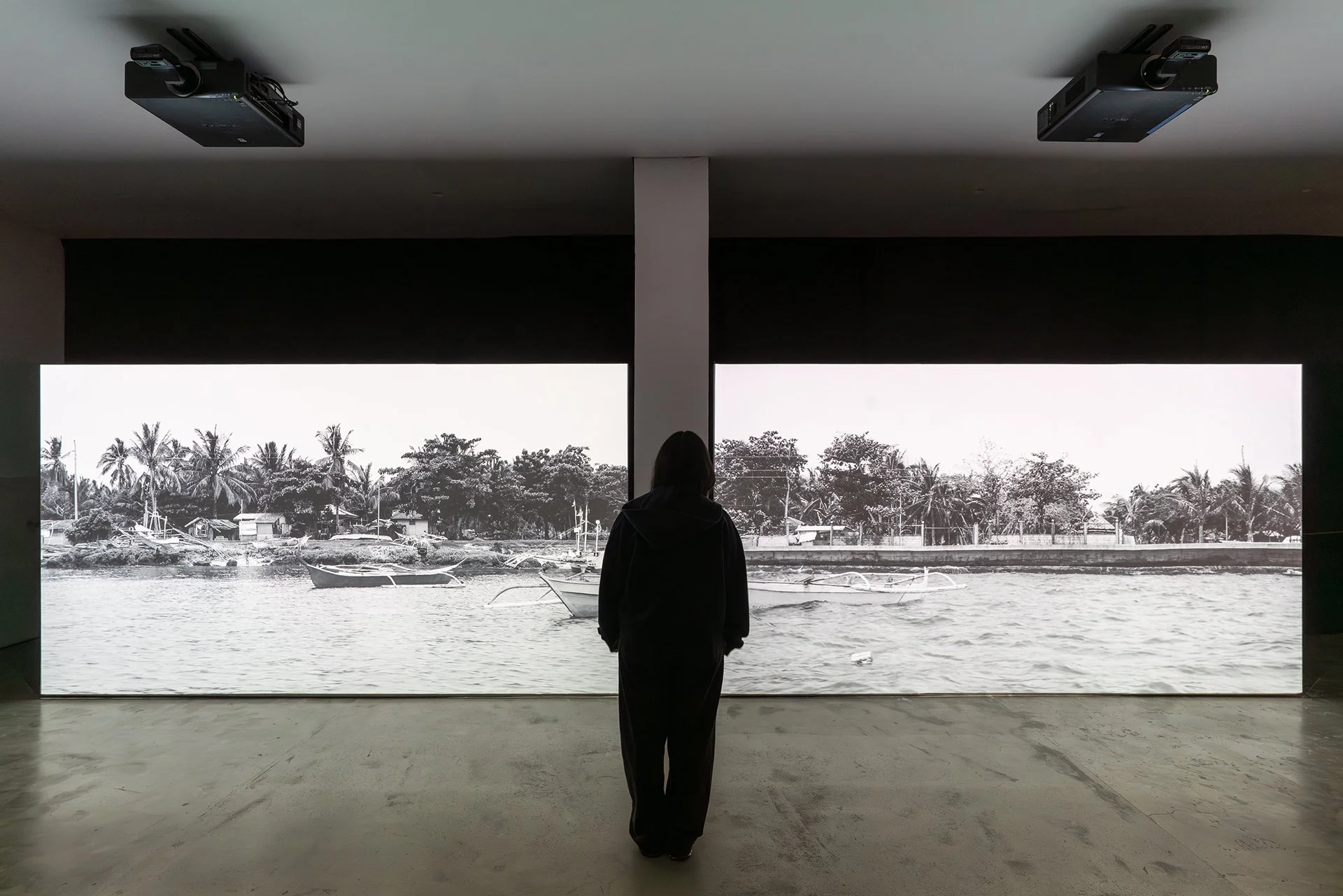
Martha Atienza’s Installation view of Malbago 11°17'18.2"N 123°44'49.6"E, 2026. Images courtesy of Silverlens Manila | New York.
We watch Malbago 11°17'18.2"N 123°44'49.6"E on loop. Unlike a photograph that can be taken in at a glance or a news clip consumed in minutes, the video installation asks for time. It asks us to remain with the coastline long enough for differences across seven years to become perceptible. The loop denies us the dramatic arc of catastrophe. There is no beginning, climax, or conclusion. There is only the repeated act of looking. Only in spending time with the work do we realize that we are looking at violence. The conditions that led to the construction of a seawall were themselves violence. The seawall materializes those accumulations, making visible what would otherwise pass as ordinary infrastructure. Nixon continues, "We need, I believe, to engage a different kind of violence, a violence that is neither spectacular nor instantaneous, but rather incremental and accretive, its calamitous repercussions playing out across a range of temporal scales."
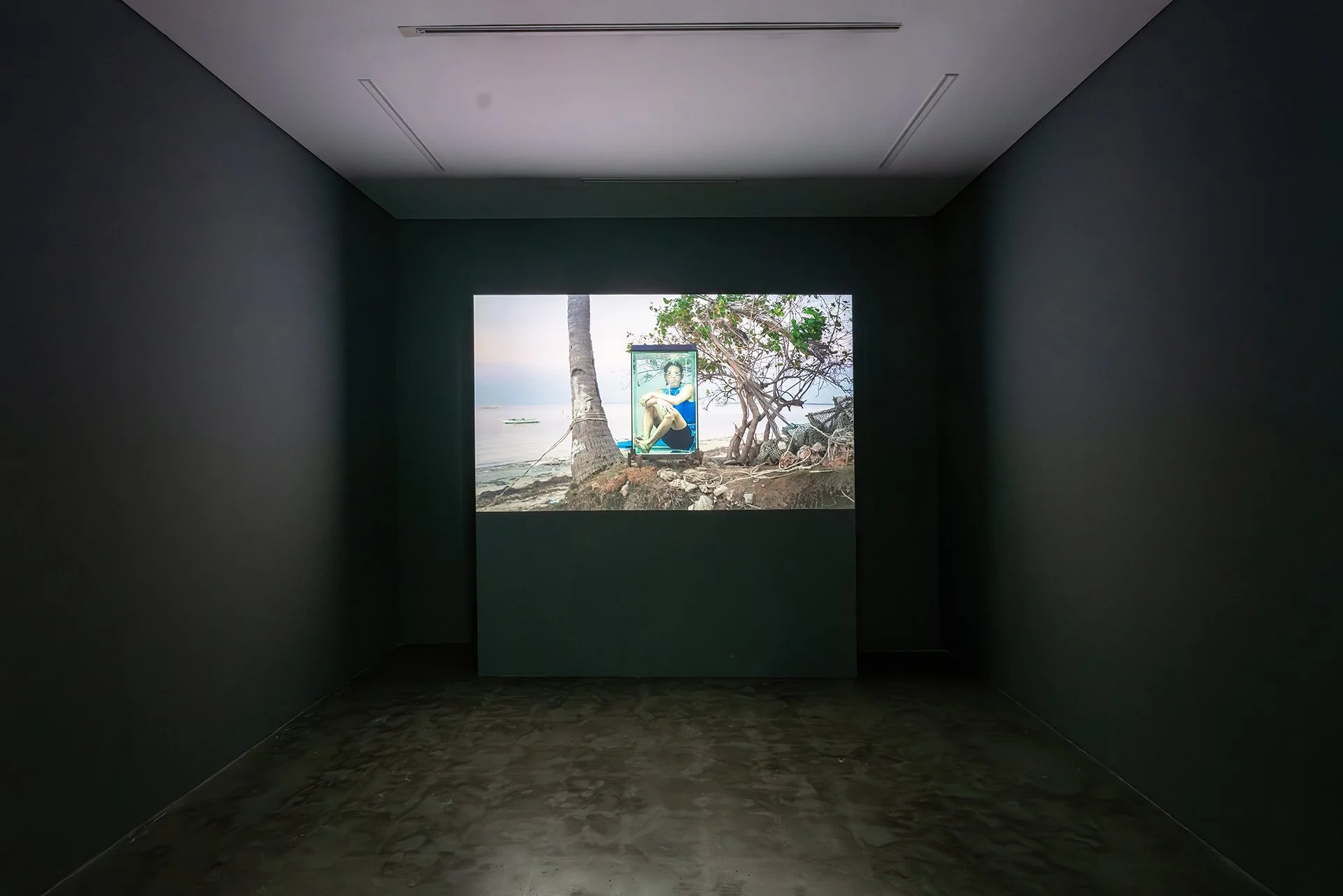
Martha Atienza’s Installation view of Batang No. 1, 2026. Images courtesy of Silverlens Manila | New York.
The ones left to navigate these changes are the fisherfolk. In Batang No. 1, we see a male figure crouched in an aquarium just big enough for himself. He wears a pair of googles and looks directly at the camera, at us, for the majority of the single-channel video installation. He looks toward his right to momentarily break his gaze only for him to return his gaze upon us. He’s still, but if we look at his body intently—really intently—we would see his body bobbing up and down as he breathes out and in through a tube that extends outside of the aquarium. The illuminated interior of the aquarium contrasts with the surrounding dim coastal landscape with the sea and the purple sky in the background. The aquarium is placed neatly right beside a coconut tree whose exposed roots are gripping what’s left with the eroding shore.
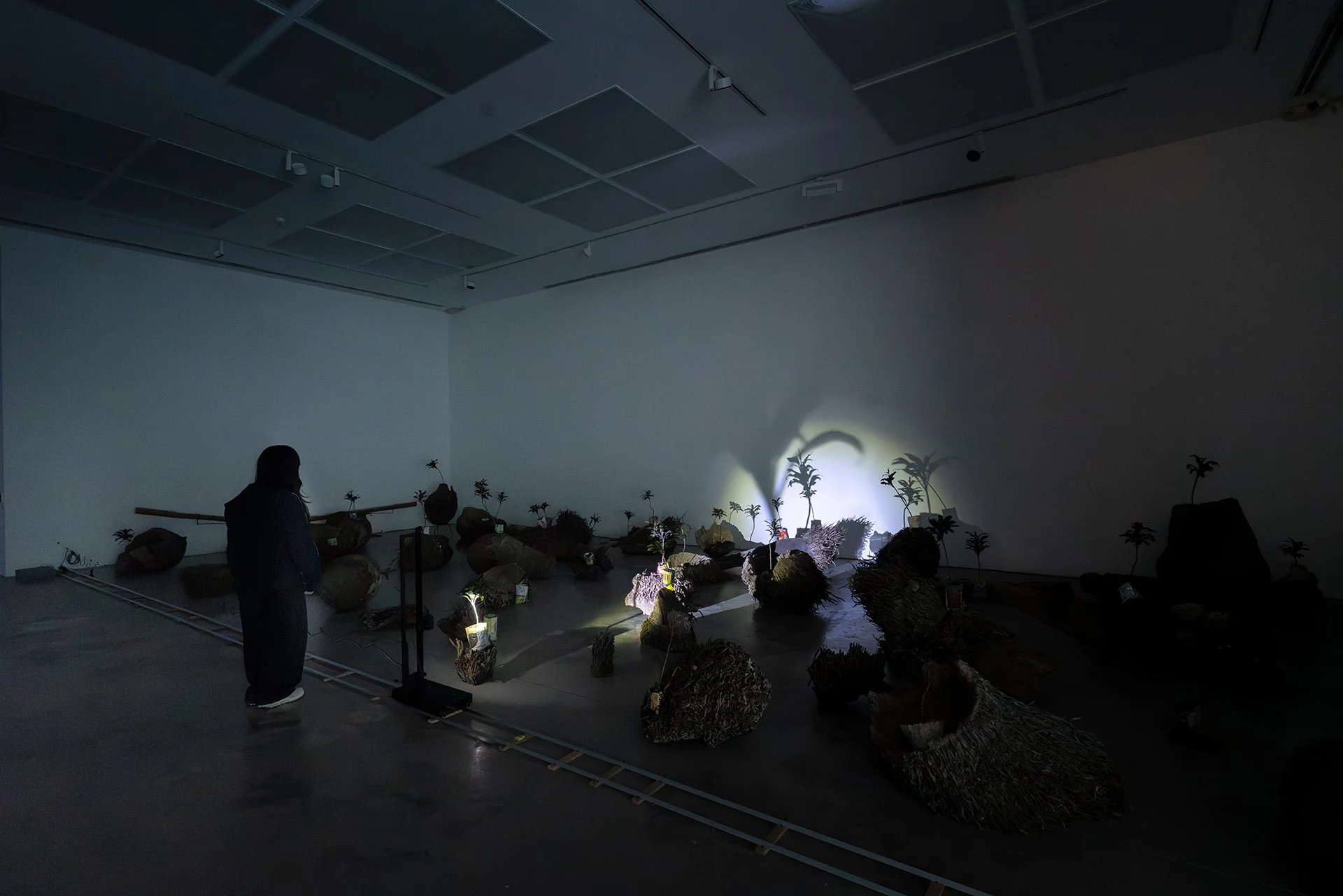
Martha Atienza. Installation view of The Coconut Tree Methodology, 2026. Images courtesy of Silverlens Manila | New York.
Nixon asserts that the invisible, like the fisherfolk in this exhibition, are the ones who experience the risk of slow violence as their lived reality. If news coverage relies on image of those affected by massive flooding as the attempt to make the effects of super typhoons visible, Atienza directs our attention to the often overlooked. We do not know who or what placed him there, or if he kept himself in the cramped aquarium. But we feel he’s trapped with just enough resources to keep him alive. The aquarium allows us to watch every breath he takes, yet we remain unable to alter the conditions that sustain him. The work transforms spectatorship into a prolonged encounter with vulnerability.
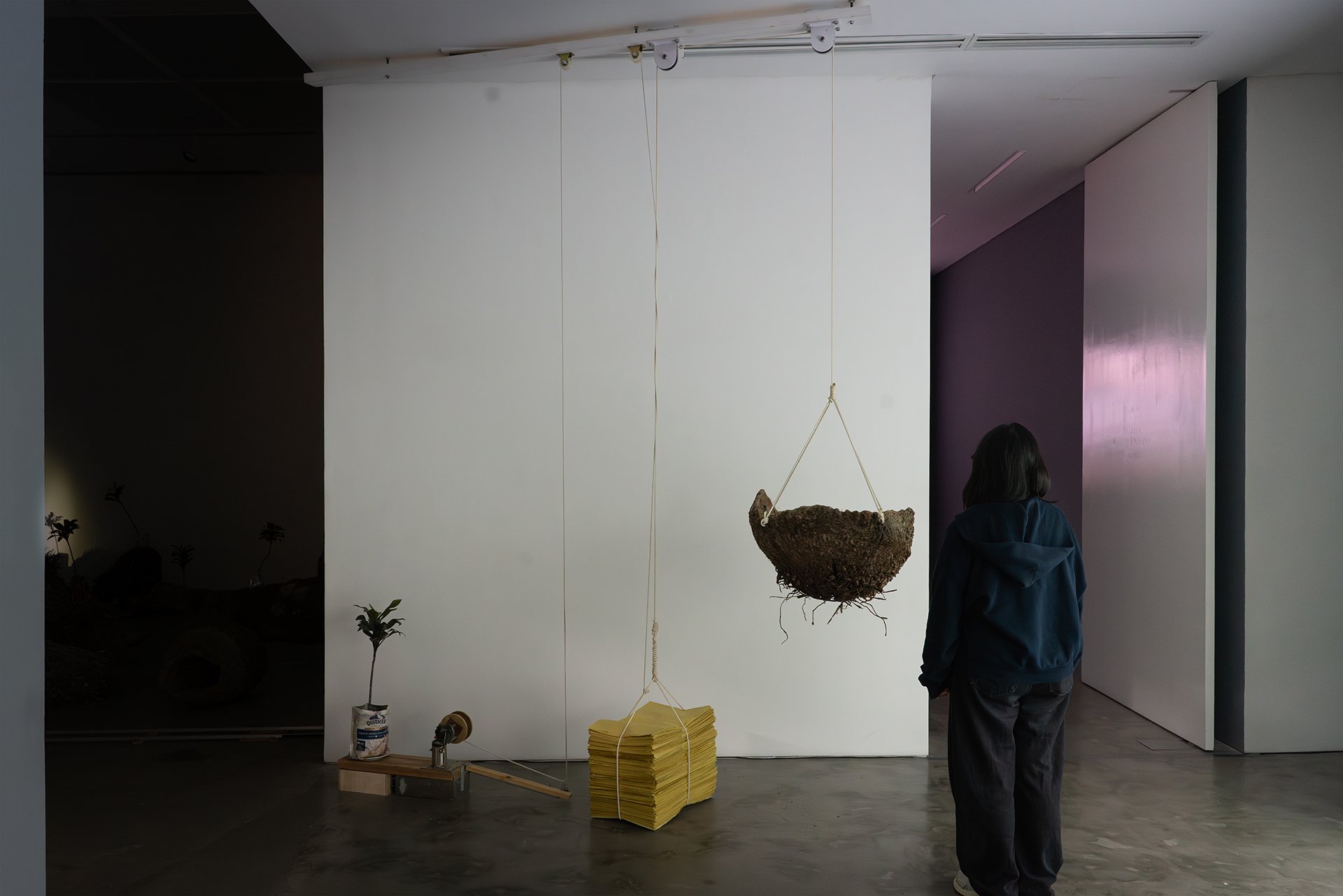
Martha Atienza's detailed view of The Coconut Tree Methodology No. 2, 2026. Images courtesy of Silverlens Manila | New York.
In 2019, the House of Representatives passed a bill that sought to remove Bantayan Island from its Protected Wilderness Area status, citing investment, infrastructure, and tourism development among its aims. While the measure still required Senate approval, it reveals that the future of Bantayan’s coastline is shaped also by political and economic decisions. Read alongside this context, the aquarium stages a condition in which survival depends on structures beyond the fisherfolk’s control.
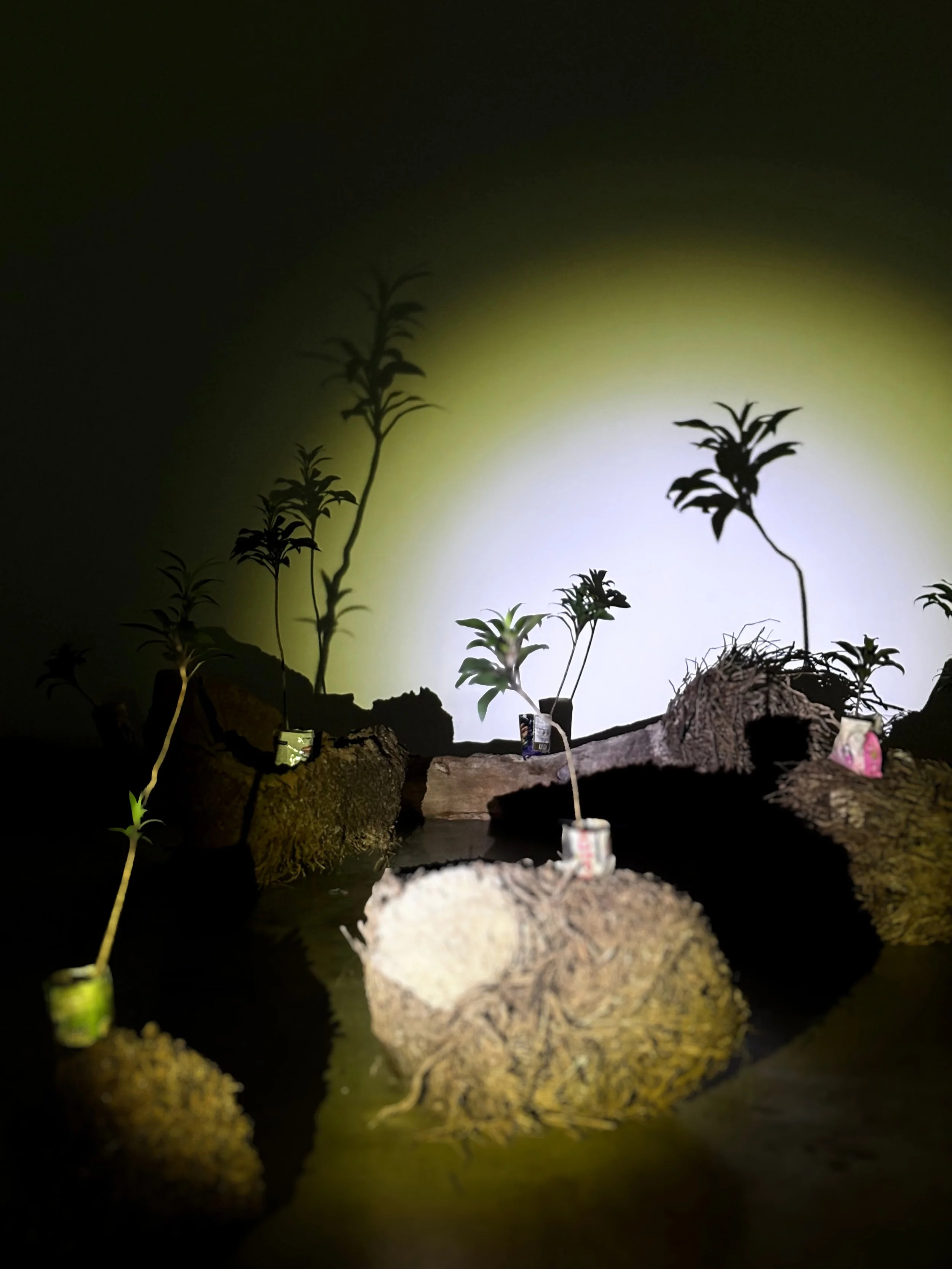
Martha Atienza's detailed view of The Coconut Tree Methodology No. 1, 2026. Images courtesy of Silverlens Manila | New York.
The Coconut Tree Methodology No. 1 transforms the exhibition space into what feels like an island terrain. Scattered across the floor are ti plants planted in discarded packaging of chips repurposed as pots, each nestled within a coconut root. Yet the installation never reveals itself in its entirety. A motorized spotlight slowly traverses the gallery—from left to right and then back again. It goes on and on, marking the passage of time. The pyanas placed throughout the gallery fill the space with the rhythm of waves. Activated by water and batad shells, the bamboo sound machines produce the sound of the sea, extending the coastline into the exhibition itself.
Martha Atienza's detailed view of The Coconut Tree Methodology, 2026. Images courtesy of Silverlens Manila | New York.
At first, the installation reads as an invitation to stay with the plants potted in discarded packaging, a replacement for broken trees, perhaps evoking the fallen coconut trees carried away by the sea and eventually washed back ashore among discarded waste. The coconut tree becomes the exhibition’s point of departure. We see its relationship to the coast—from its vulnerability to its disappearance to its return. And in its return, another image emerges. The shadows cast on the wall begin to resemble grown coconut trees rooted along the shoreline. What first appeared as an arrangement of objects slowly becomes an image of what is no longer there.
Martha Atienza's detailed view of The Coconut Tree Methodology, 2026. Images courtesy of Silverlens Manila | New York.
As the exhibition takes the coconut tree as its point of departure, it proposes another way of knowing climate change. In The Coconut Tree Methodology No. 2, a coconut root slowly descends as a stack of manila paper—a material through which knowledge is made visible—rises. The installation stages an encounter between two forms of knowledge—one that takes the form of documents and another that begins with the landscape itself. The movement of the installation responds to Malbago 11°17'18.2"N 123°44'49.6"E. As the video installation reveals stretches of coastline without a seawall, the mechanism of The Coconut Tree Methodology No. 2 is set into motion. Knowledge, after all, begins because the landscape demands a response.
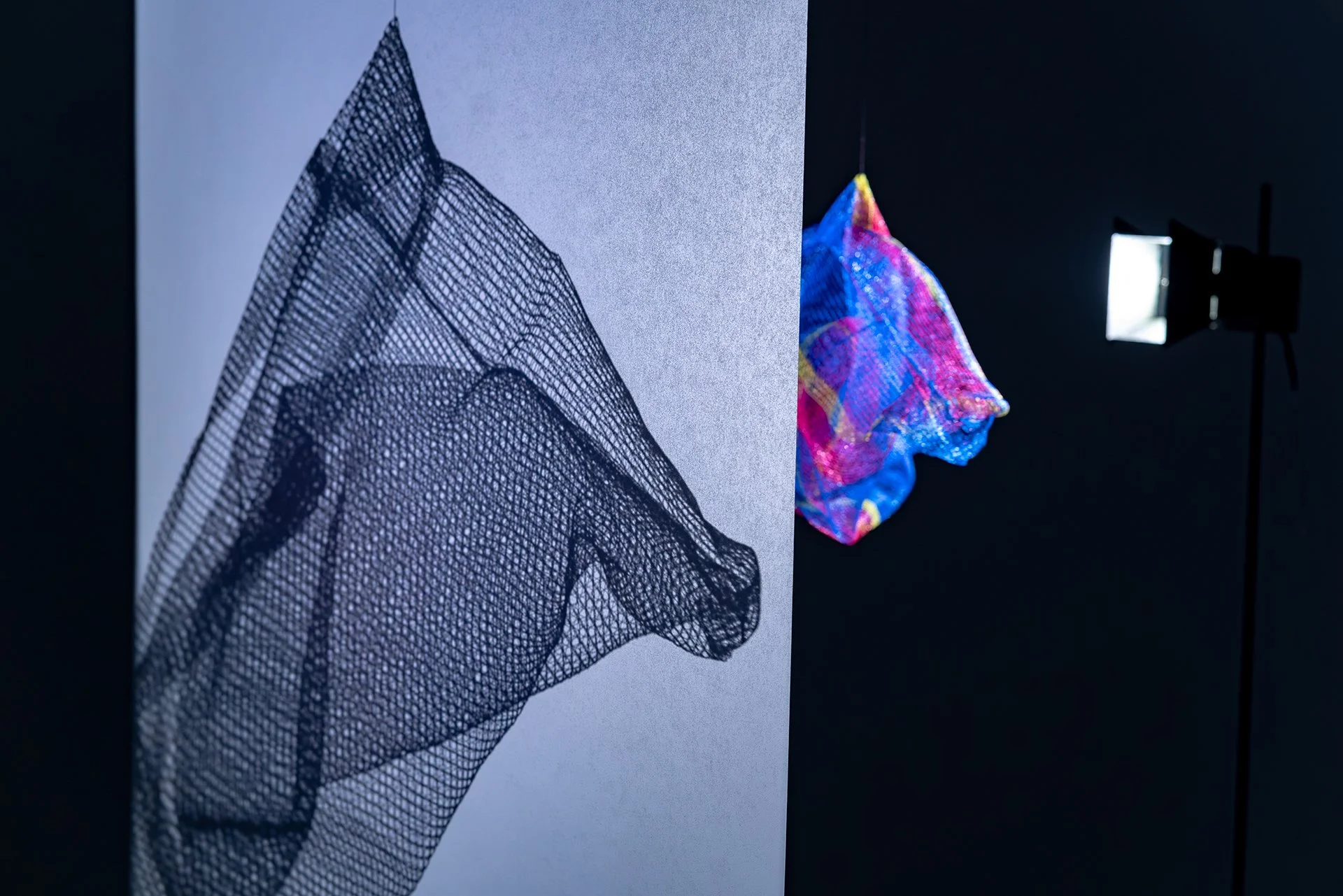
Martha Atienza's detailed view of The Coconut Tree Methodology No. 3, 2026. Images courtesy of Silverlens Manila | New York.
And as we arrive at the last exhibition area, we encounter The Coconut Tree Methodology No. 3, paring the exhibition down to one of the coconut’s most ordinary tools—a net bag used for squeezing coconut milk. Suspended before a screen, it slowly rotates under a motor as light projects its shifting shadow. The net bag no longer resembles a kitchen tool. Under the light, it becomes an image that asks to be examined.
By the time we leave the exhibition, we have learned another way of attending to climate change. The exhibition proposes the coconut tree as a methodology because it reminds us that the landscape, too, keeps its own record. It asks us to remain with it long enough to read it.