
Can a Broken Photograph Tell the Truth Better?
In Fragmentia: Oculations of Reality, Kevin Pineda turns the discarded photograph into something unstable, sculptural, and strangely seductive—where fracture itself begins teaching the eye how to look again.
Words Bernadette Soriano
Photos courtesy of Kevin Pineda and SPRUCE Gallery
June 01, 2026
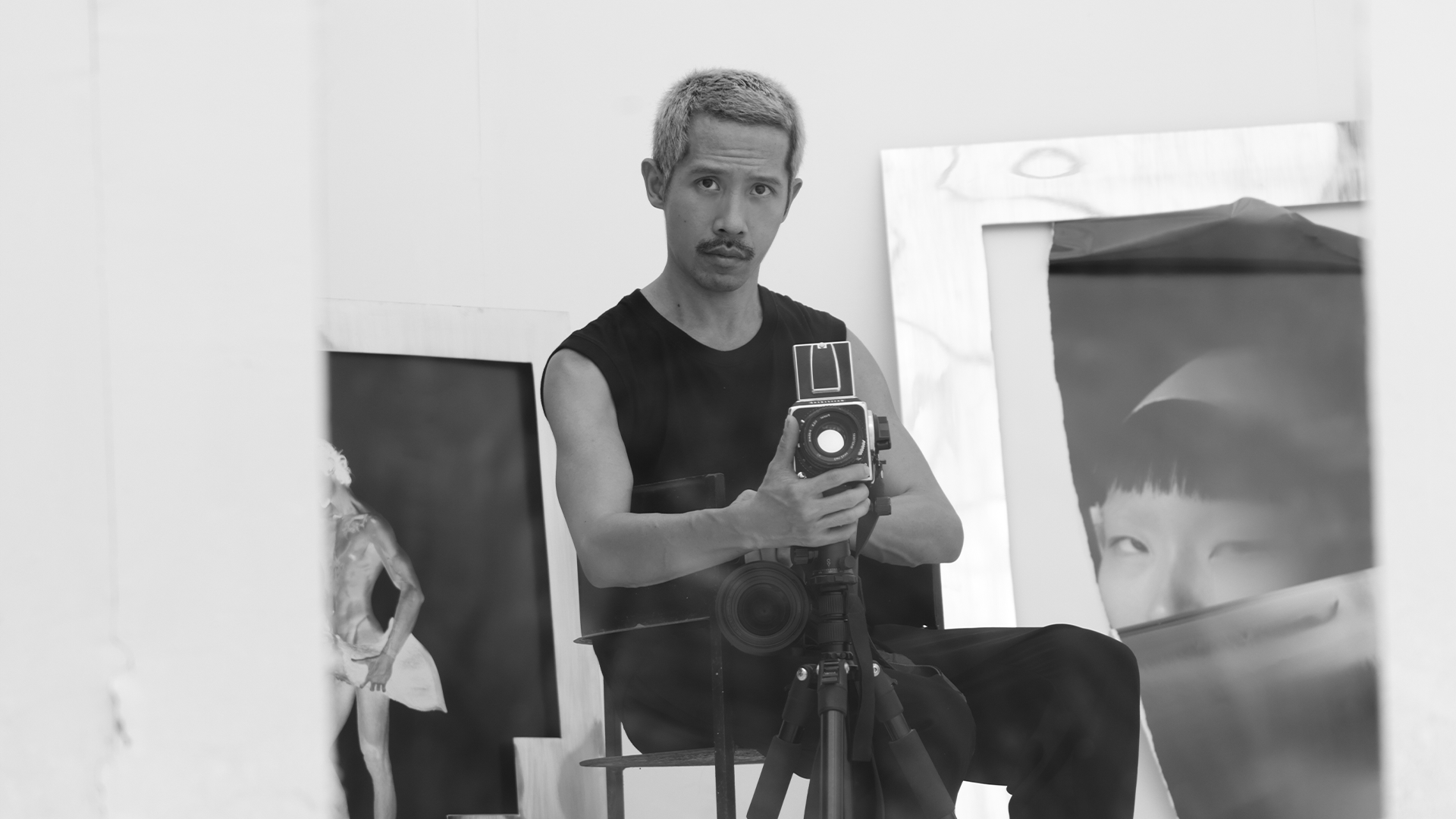
Photography has always trafficked in a peculiar kind of certainty. This happened. The camera saw it. End of discussion. Modernity, after all, has long treated the photograph like a well-dressed witness: objective, dependable, occasionally vain about its own authority.
Kevin Pineda arrives precisely at the moment that authority starts coming apart at the hinges.
In Fragmentia: Oculations of Reality at SPRUCE Gallery, images stagger back into visibility carrying the evidence of what they have endured. Torn prints. Folded surfaces. Negative treatments. Bodies interrupted by brushed steel. Faces slipping through glare as though memory itself had briefly lost its train of thought.
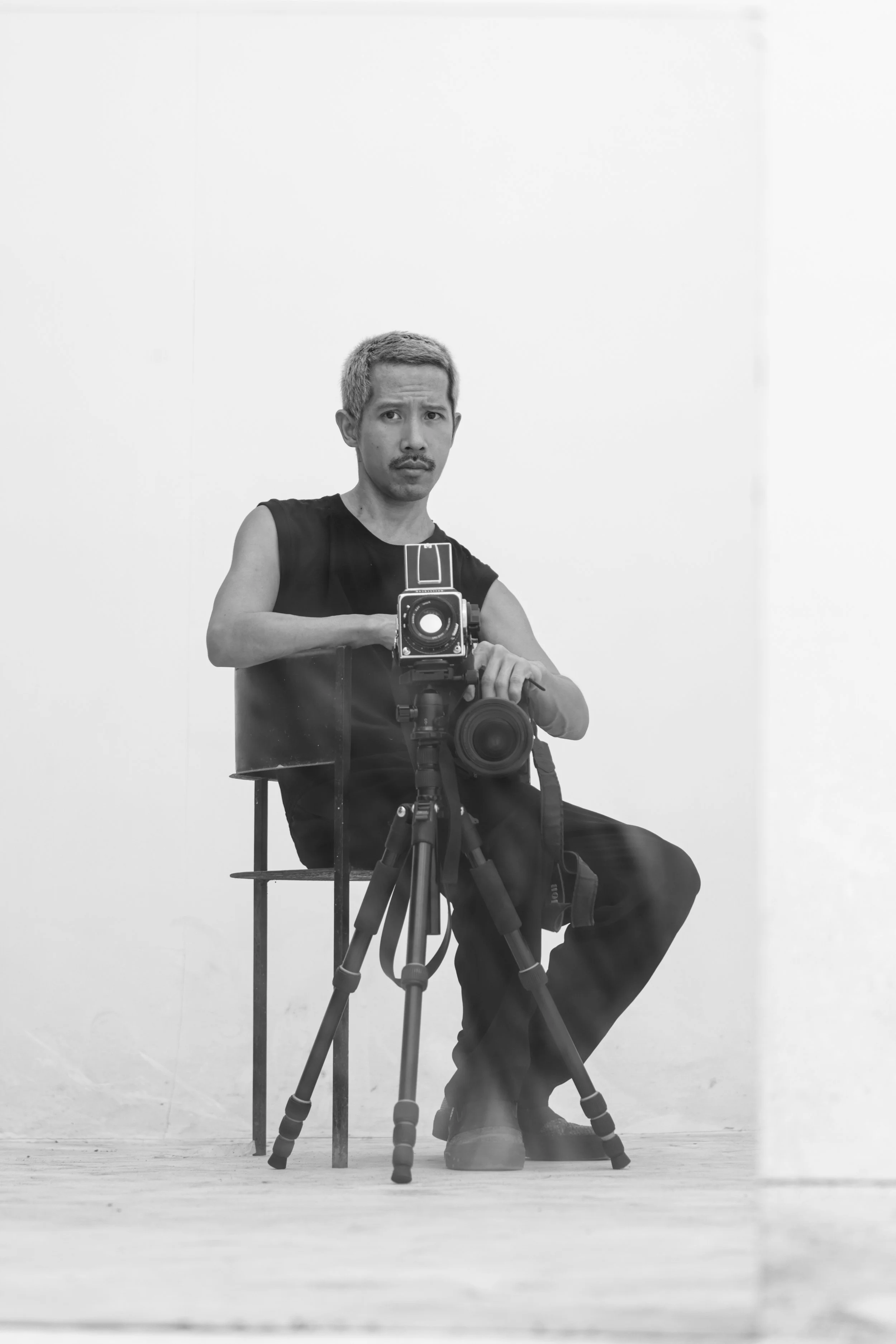
Photographer Kevin Pineda
The photographs appear caught somewhere between preservation and collapse, halfway out the door yet unwilling to leave quietly.
And quietly is certainly not this exhibition’s preferred register.
From the outset, the works insist on physicality. They occupy space with the stubborn confidence of objects that have outgrown flatness. Stainless steel cuts through the compositions with icy composure, functioning by turns as frame, threshold, reflective trapdoor, and occasional instigator.
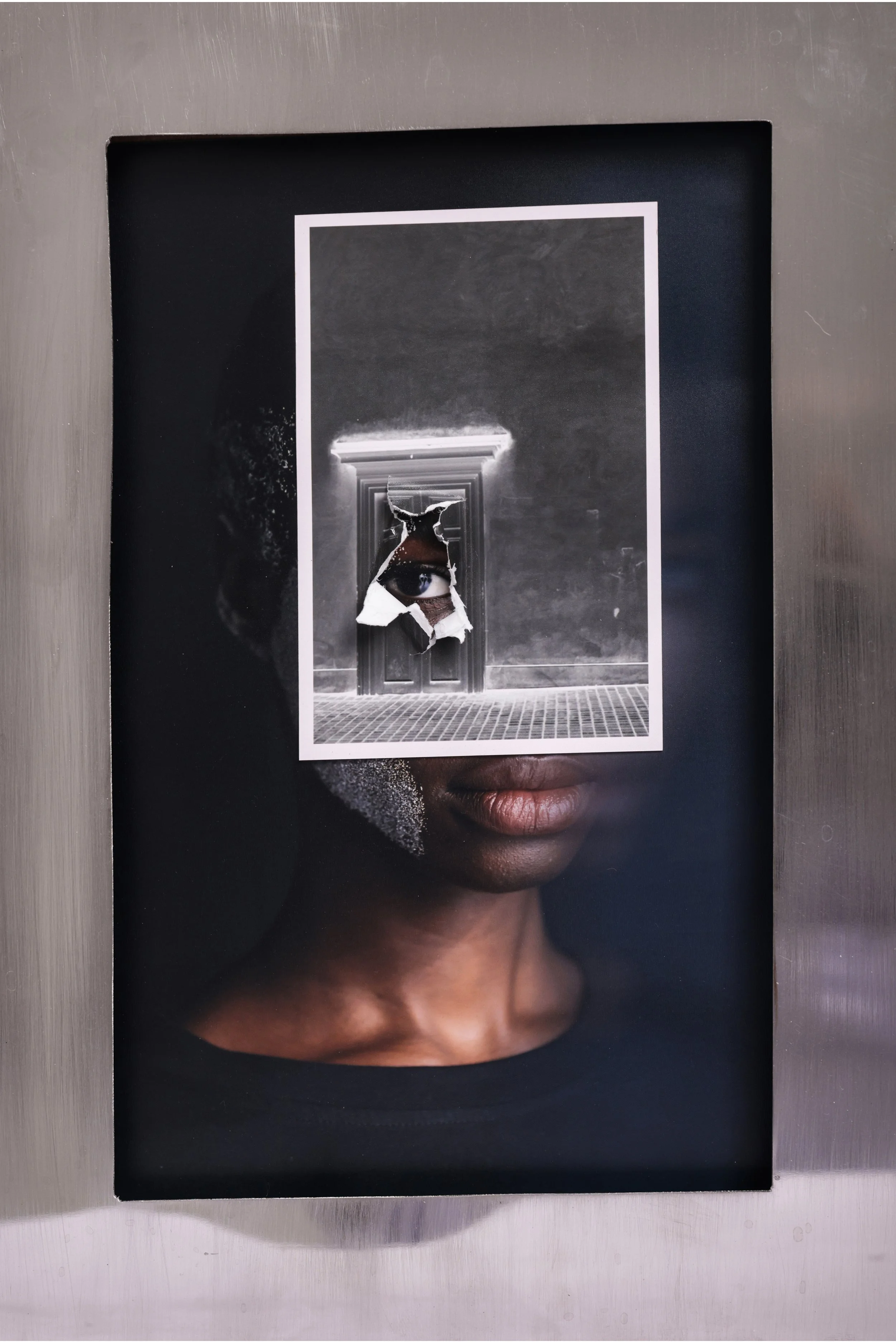
lady in waiting with frame 8x12
One begins noticing how aggressively alive the framing devices feel. They clutch at the images. Crowd them. Complicate them. Every so often, they appear perilously close to swallowing the photograph whole.
The frame, once relegated to the sidelines, suddenly starts stealing scenes.
It is a thrilling little upset.
When Failure Develops a Taste for Survival
Throughout the exhibition, Pineda repeatedly circles back to the image contemporary photography usually sweeps under the rug: the corrupted file, the blurred exposure, the near-deletion, the awkward frame nobody bothers defending once the cleaner version arrives. Visual culture, particularly in the age of algorithmic polish, tends to reward smoothness with almost religious devotion. Anything that stutters gets shown the door.
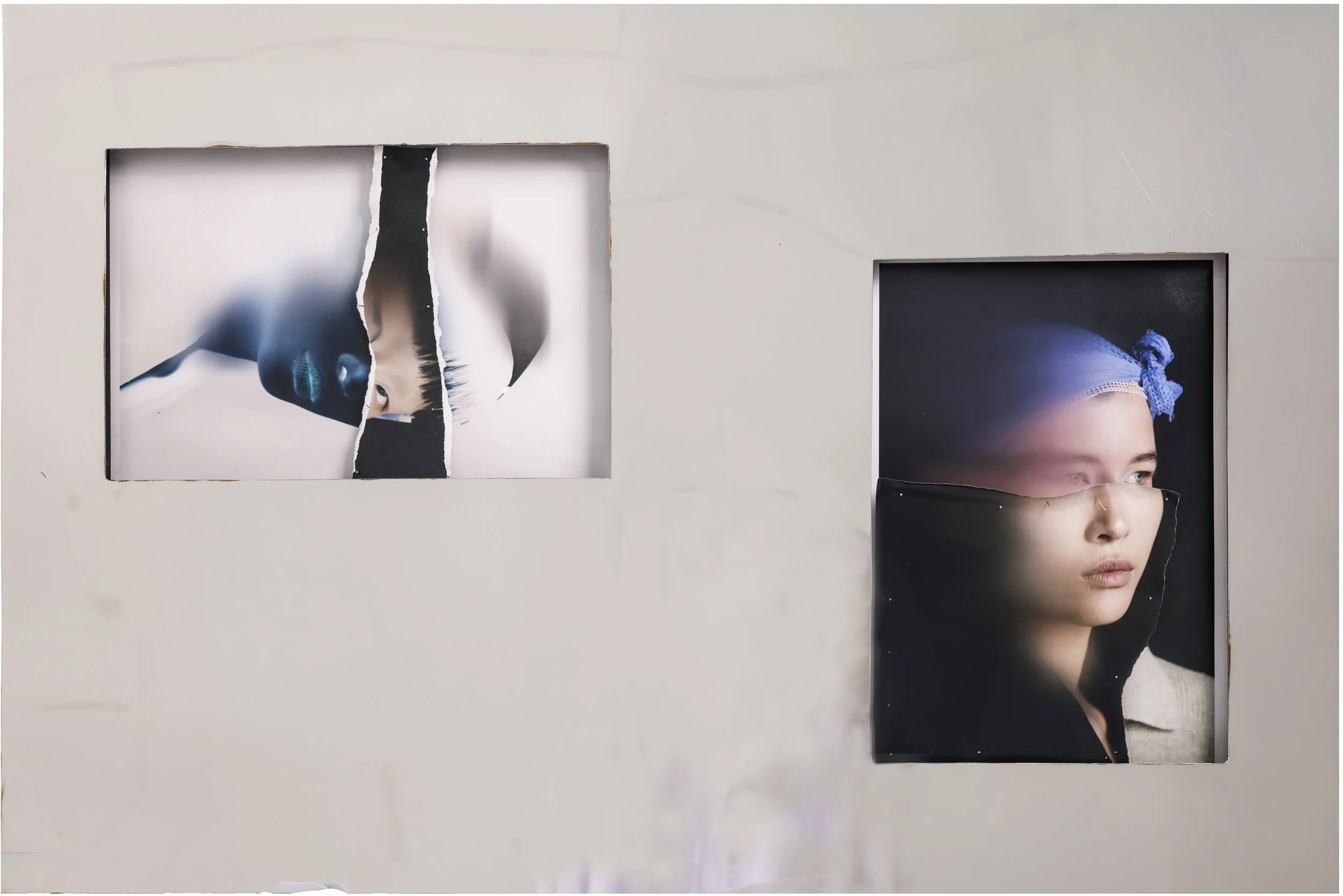
2 ladies with frame
Pineda, however, seems deeply fond of the stutter.
He retrieves these discarded photographs and subjects them to further intervention—tearing, lifting, mounting, suspending, transferring, stressing—until failure itself develops texture, rhythm, even a certain swagger.
The rejected image stops behaving like evidence of error and starts carrying the unruly charisma of something that survived editing with its attitude intact.
Perhaps the outtake always knew where the bodies were buried.
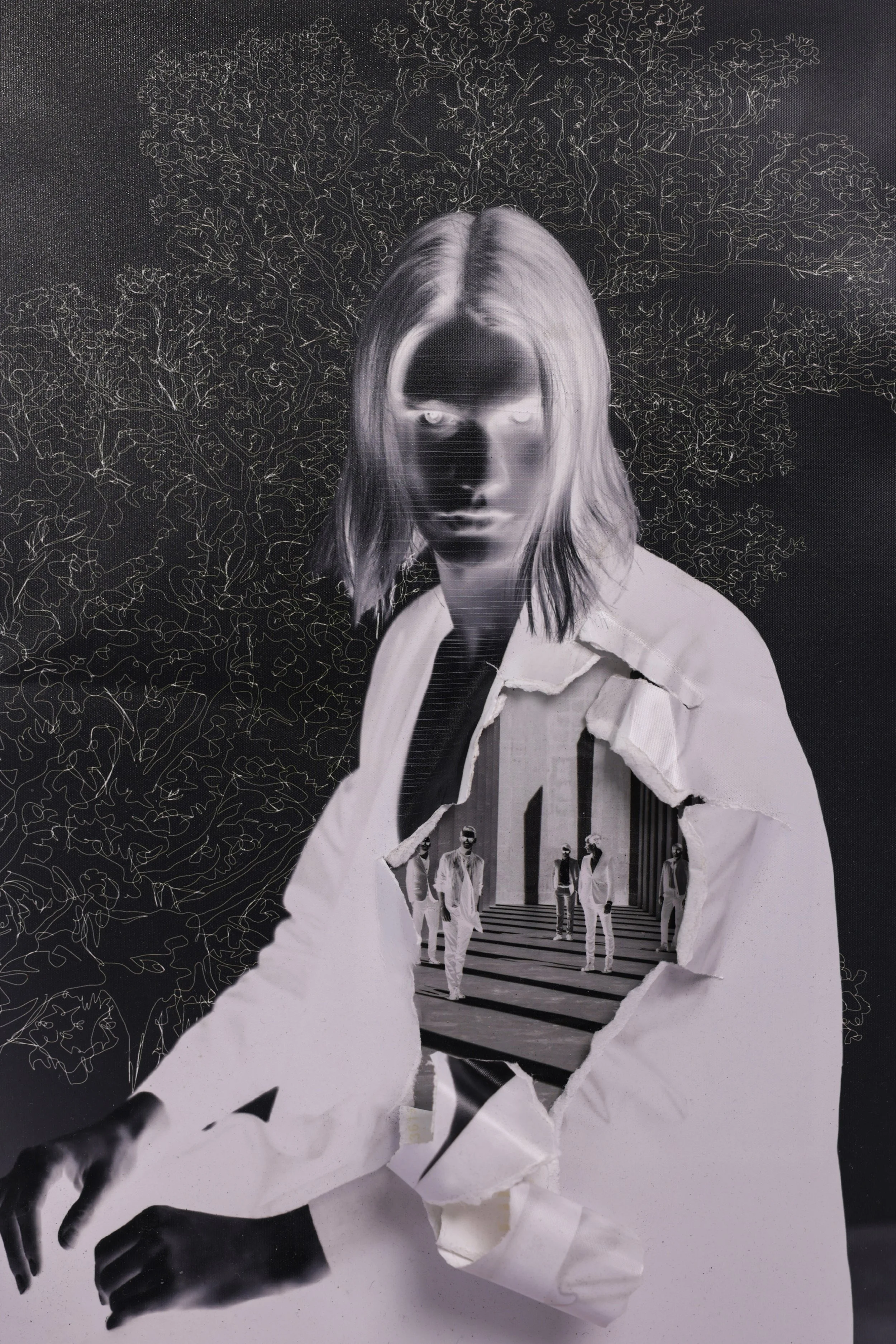
8x12 august
The exhibition’s fascination with damaged glamour sharpens this proposition beautifully. Fashion photography lingers everywhere inside Fragmentia, though its elegance now carries hairline fractures running beneath the surface.
Editorial poise remains visible, but only just. Faces split into spectral fragments. Bodies hold their seductive posture while quietly drifting loose from the commercial arithmetic that once organized them so neatly. Glamour still enters the room impeccably dressed, though one senses it arrived after a long night and a difficult phone call.
There is something deliciously unstable in the atmosphere Pineda constructs: too controlled for collapse, too volatile for comfort. One can almost hear the machinery of polished image-making grinding its own gears in the background.
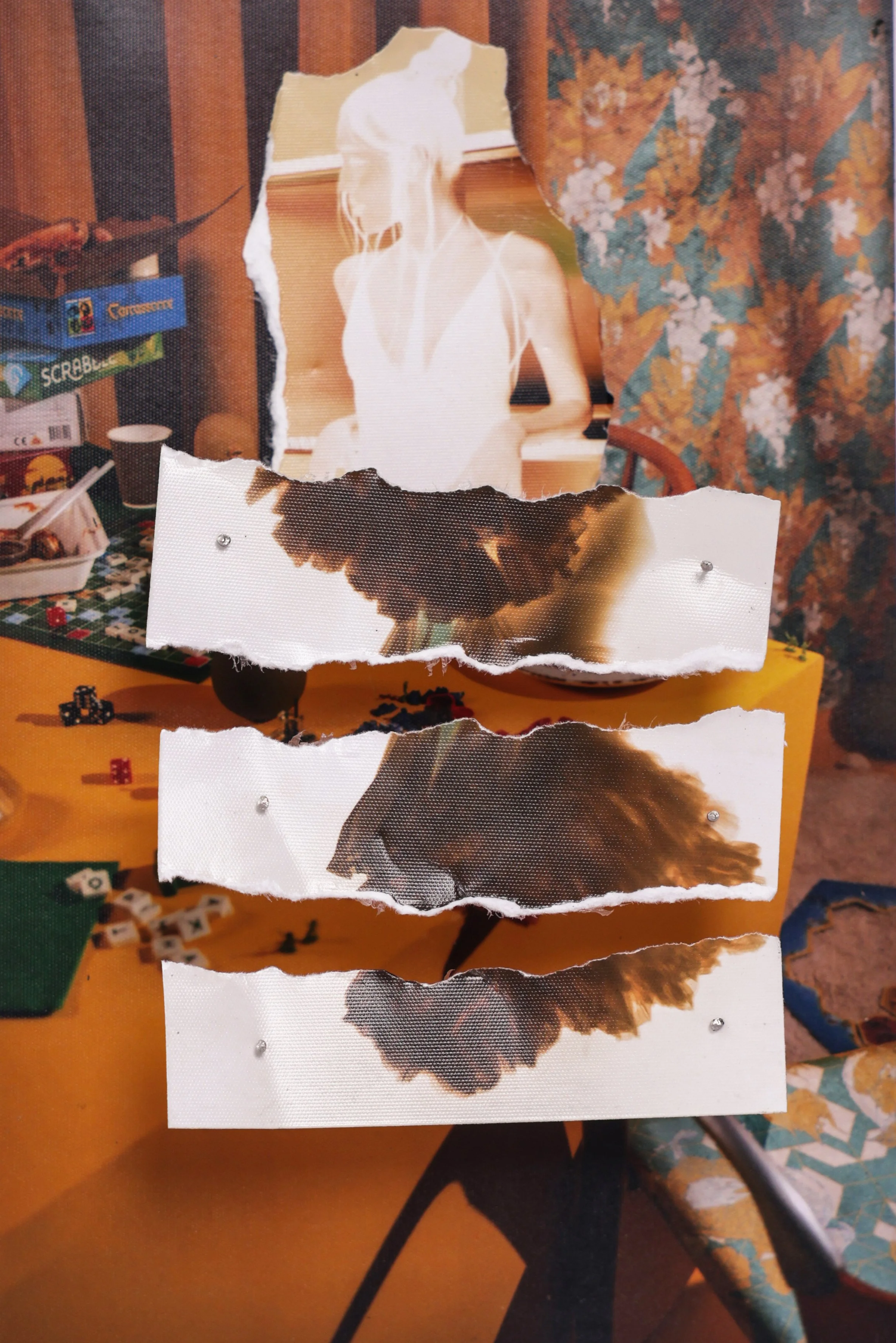
4x6 Pohjala Trussardi korlan
And still, the exhibition never tips into chaos. It keeps its composure with the same determination one finds in a person fixing their cufflinks while the party burns down around them.
The Photograph Leaves the Wall
Pineda’s multidisciplinary background—stretching across photography, interiors, furniture, gallery work, culinary practice, and object-making—threads quietly but decisively through the exhibition’s material intelligence. Images no longer behave like passive surfaces awaiting interpretation. They acquire density, weight, and temperament.
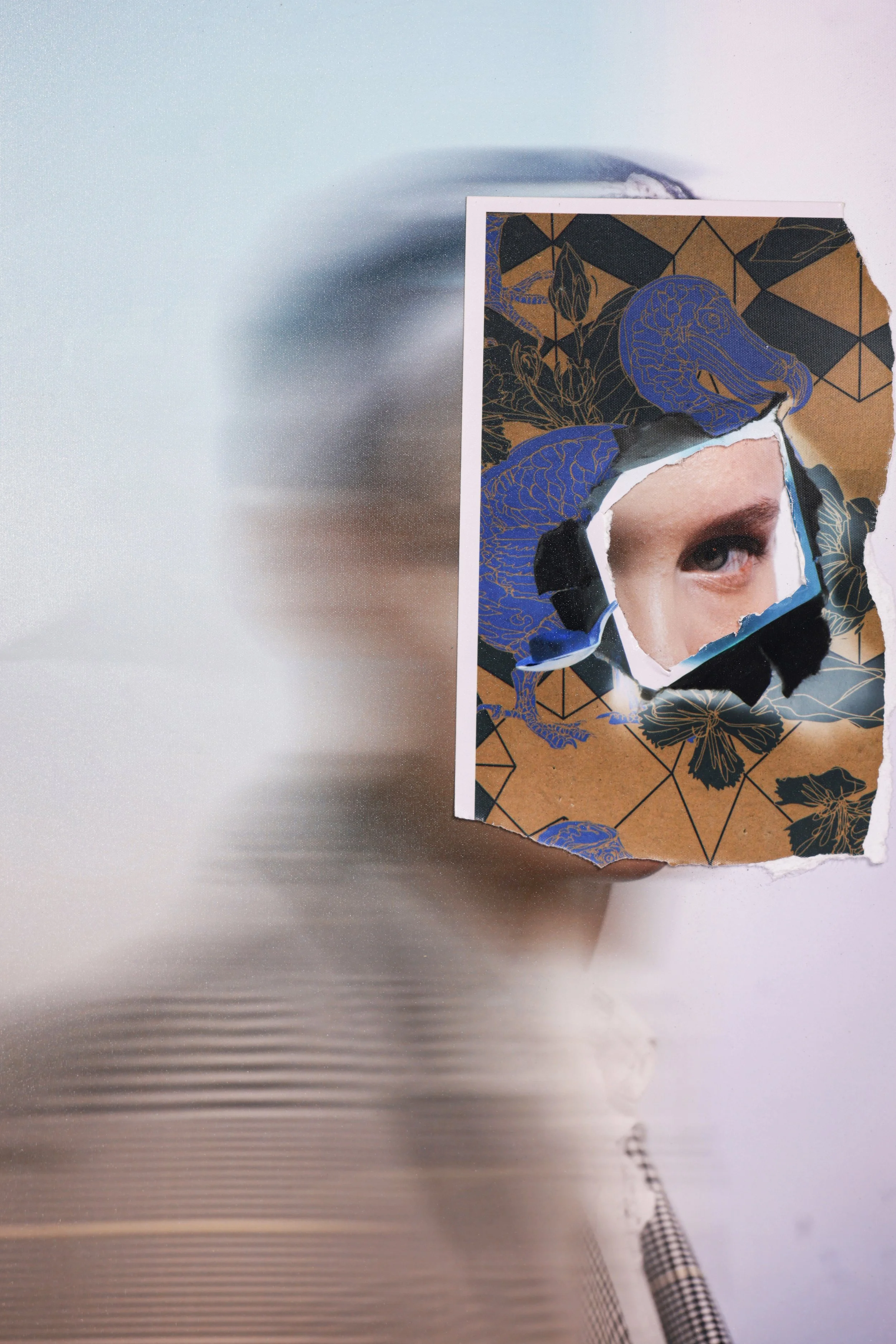
8x12 lady in wating 6
One begins encountering photographs the way one encounters objects in a room: through proximity, reflection, pressure, interruption.
Certain surfaces appear peeled back as though the image had grown impatient with its own skin. Elsewhere, brushed steel apertures cut through compositions with surgical elegance, opening wounds that double as sightlines.
Negative treatments transform figures into forensic echoes, lingering afterimages hovering like cigarette smoke trapped inside expensive fabric.
Even the tears perform labor. They redirect the eye. Introduce hesitation. Open visual detours where certainty once moved in a straight line.
Damage, here, carries extraordinary composure.
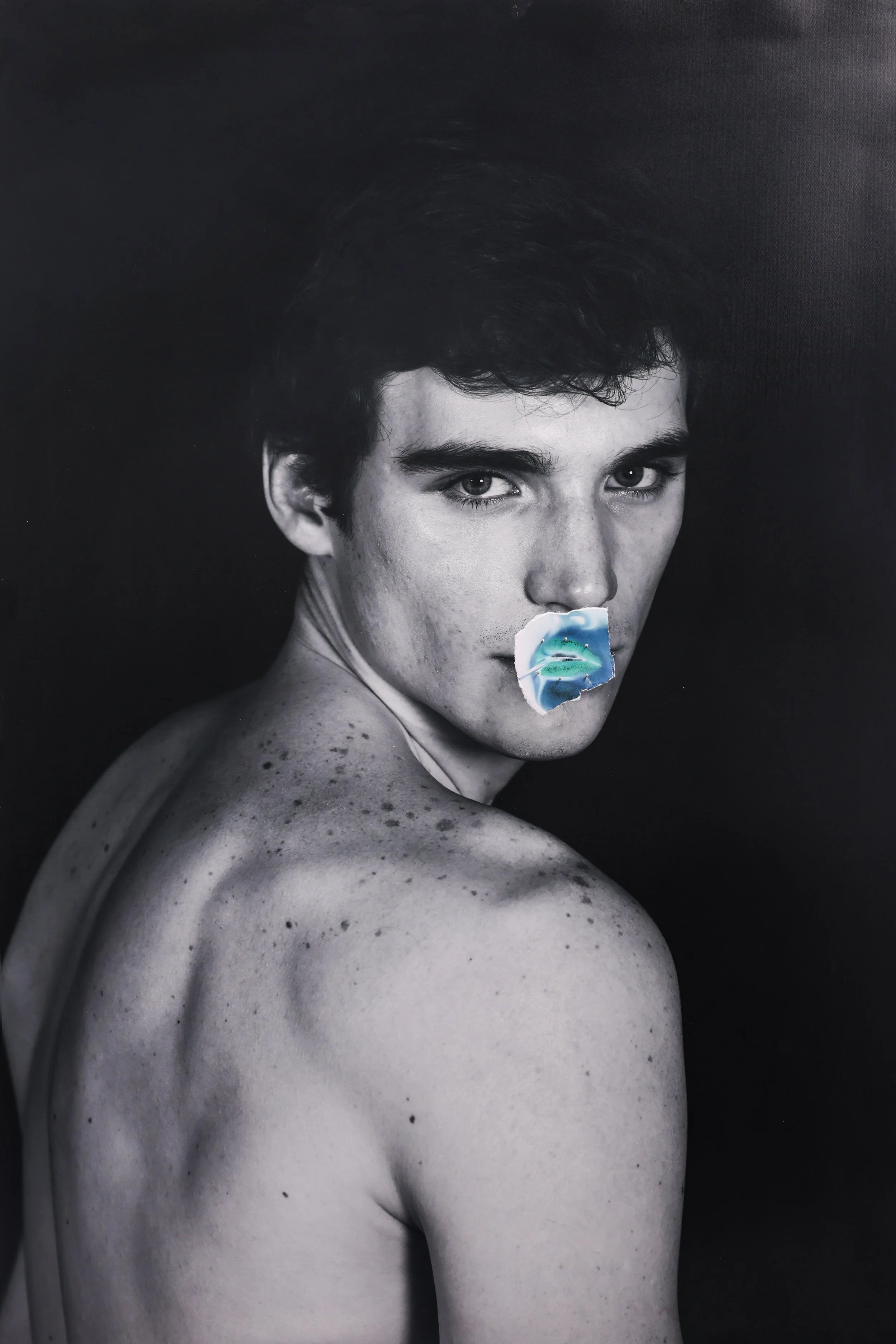
20x24 man with the lips
No melodrama. No pleading. No handwringing about fragility. Pineda understands a useful truth many artists learn too late: once art starts begging for sympathy, the air leaves the room almost immediately.
His images prefer sharper company.
Against the Gospel of the Polished Image
Lurking beneath the exhibition is a broader anxiety surrounding the life cycle of contemporary images—their circulation, degradation, disappearance, resurrection.
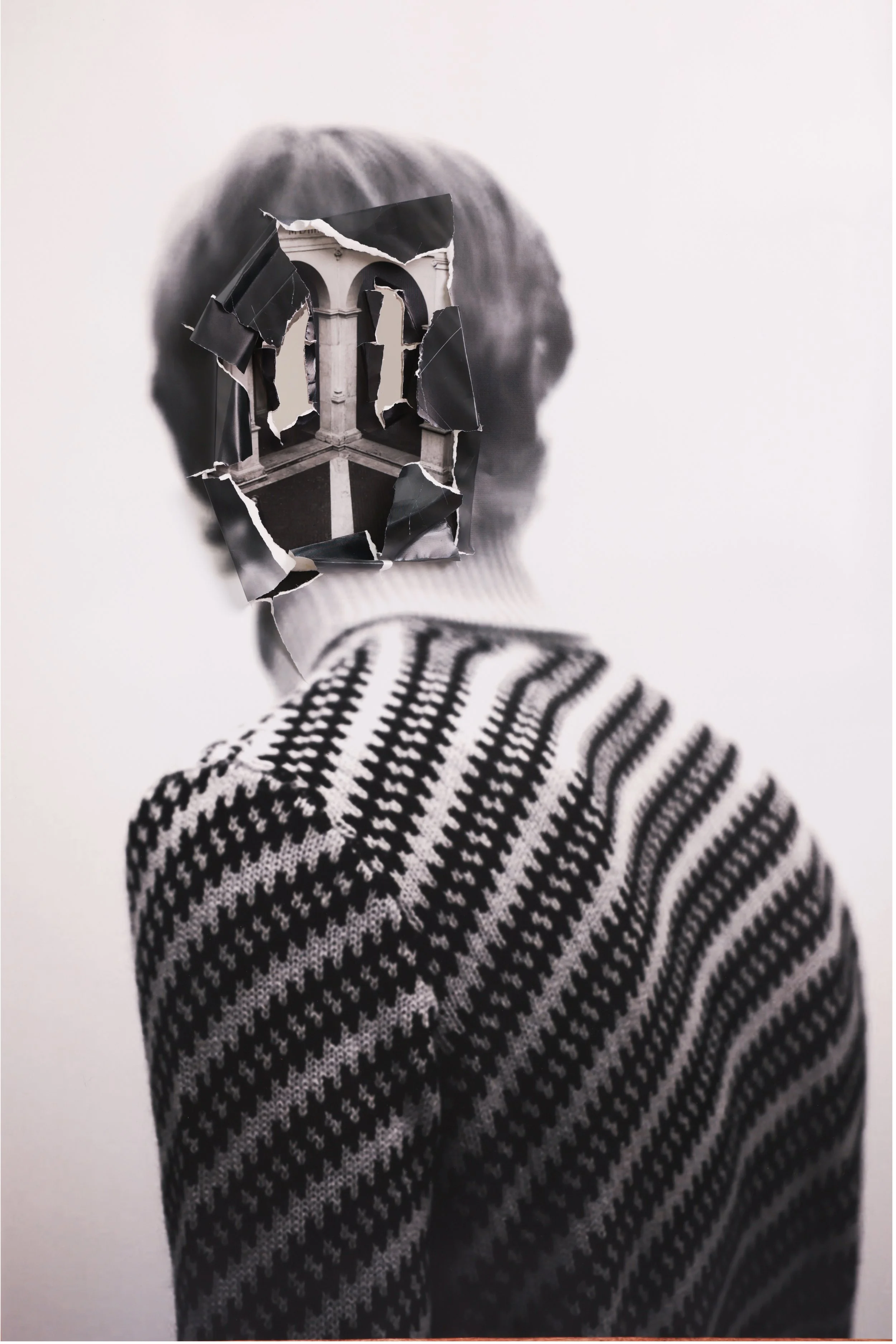
PRADA 24x36 ROTHKO no frame
Hito Steyerl’s In Defense of the Poor Image hovers nearby like theoretical static, particularly in its meditation on degraded visual culture: compressed files endlessly circulating, losing resolution while gaining strange new forms of velocity and cultural residue.
Pineda’s terrain remains distinctly tactile, but the kinship feels unmistakable. Once stripped of polish, the photograph begins revealing another species of authority altogether. Smoothness, after all, has become one of contemporary culture’s more exhausting little faiths.
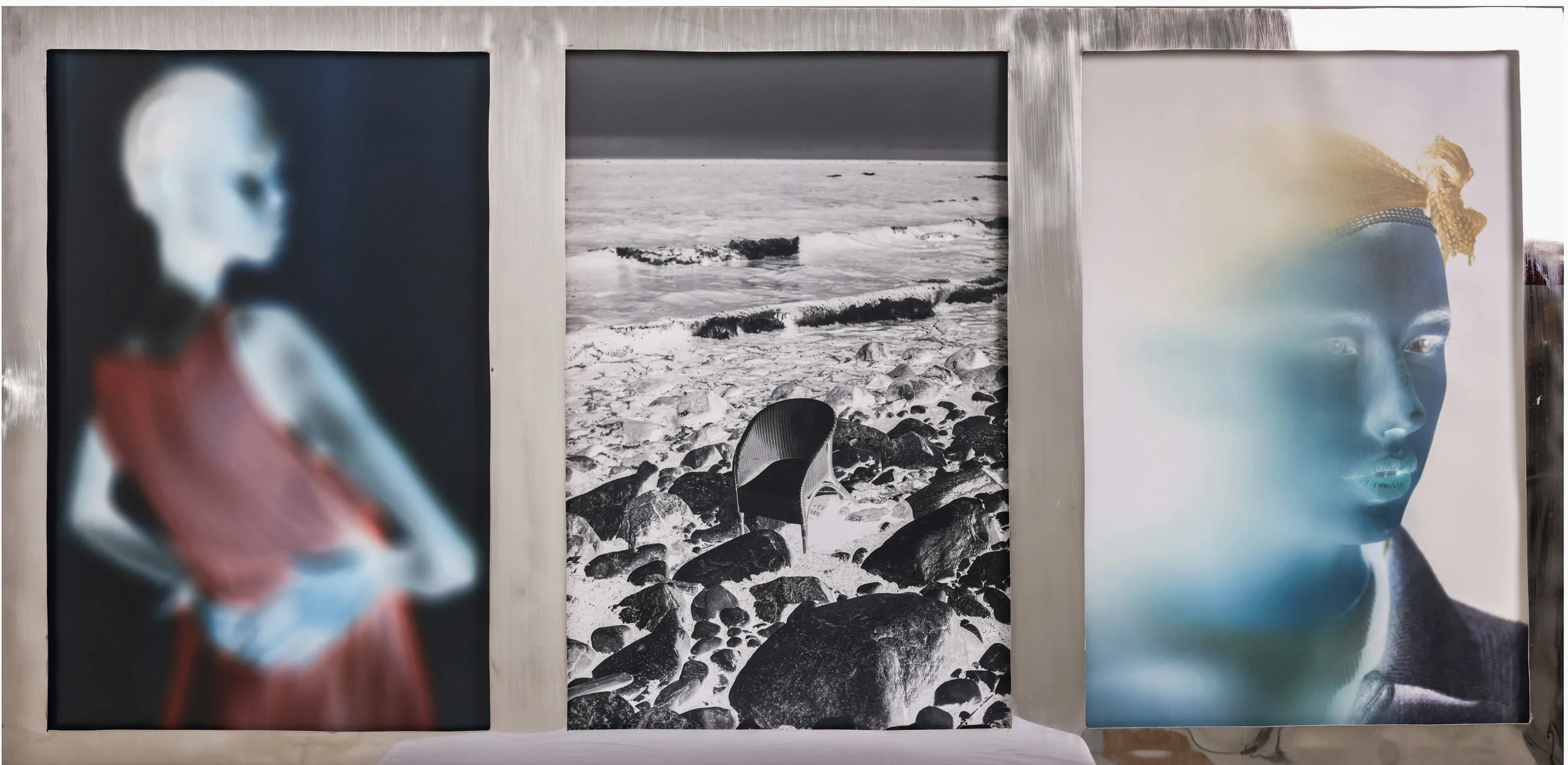
FULL trio with frame
And faiths tend to wobble eventually.
Vilém Flusser’s thinking around the photographic apparatus adds further pressure to the conversation. Cameras do not simply record images; they produce systems of visibility, deciding which photographs deserve preservation and which should vanish politely into the archive.
Pineda intervenes precisely where those systems seek closure—the approved exposure, the usable frame, the image rewarded for behaving itself.
He drags the discarded material back into circulation with all the tact of someone reopening old gossip at dinner.
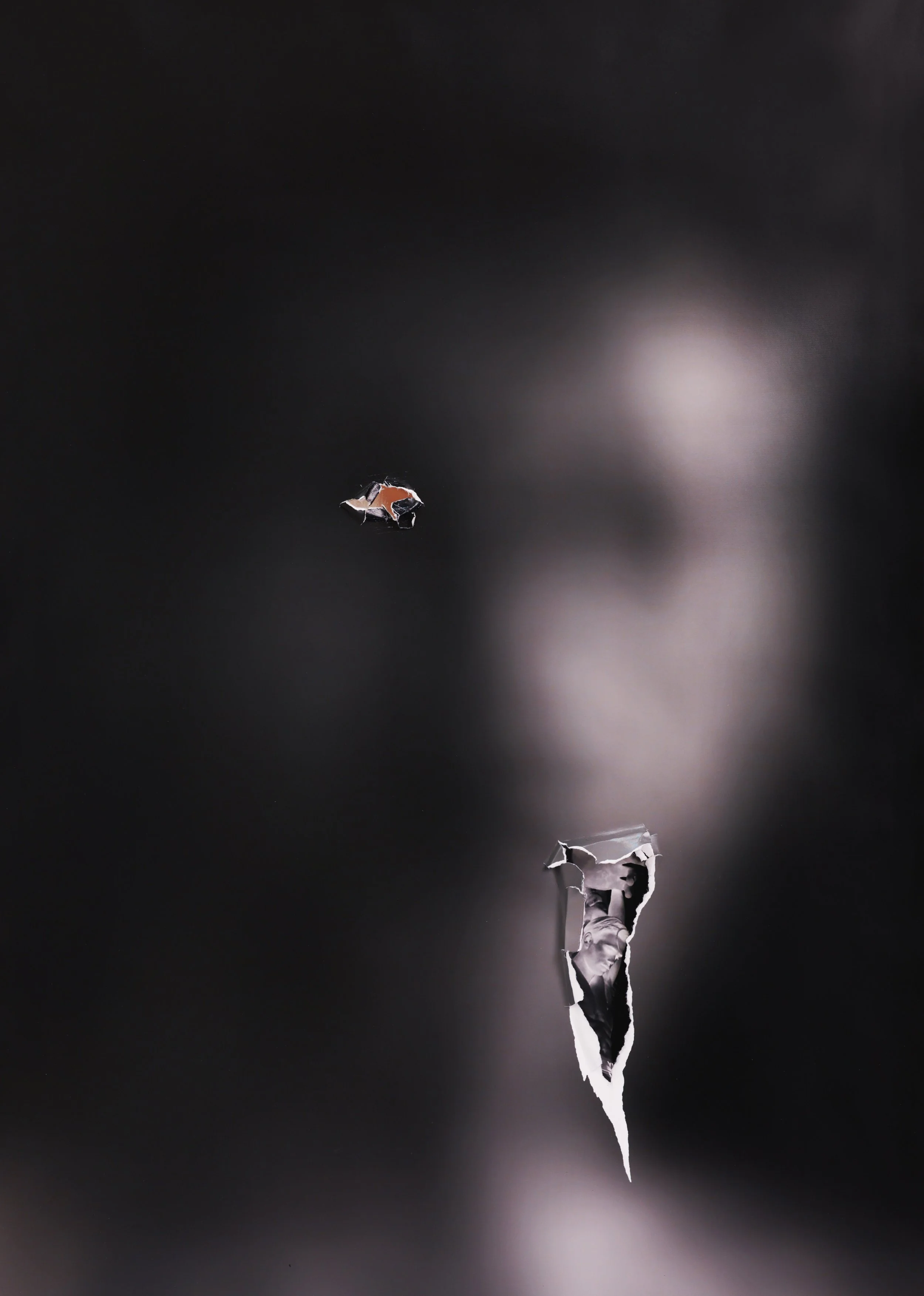
24x 36 FACE with WHITE BORDER no frame
The title gathers force through this logic. Fragmentia feels less like an exhibition name than a jurisdiction populated entirely by broken things refusing retirement.
Its fragments remain warm to the touch. They continue pressing outward long after the culture surrounding them has moved on to shinier distractions.
Apparently, the disappearance did not take place.
The Dangerous Pleasure of Looking Again
Then comes Oculations—the exhibition’s stranger, more optical current.
Eyes recur everywhere throughout the works: mirrored interruptions, torn apertures, reflective steel surfaces, partial revelations hovering at the edge of legibility. Vision loses its clean authority. Looking catches against obstruction. Reflections interrupt perception midway through its own confidence.
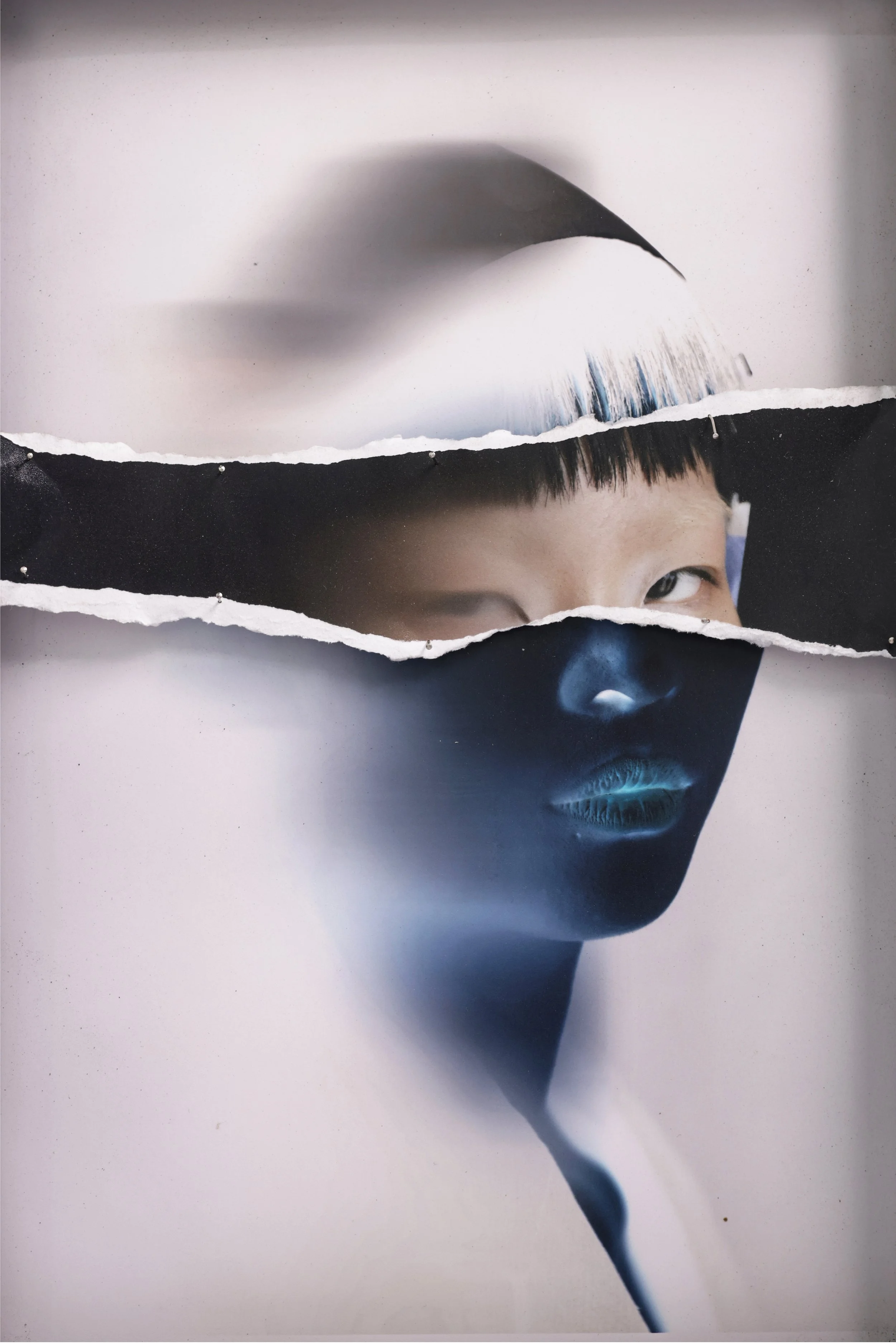
8x12 lady in waiting 1 with frame
The cut, unexpectedly, sharpens sight.
Before long, the viewer finds themselves implicated in the same economy of selection that produced the rejected image in the first place. What gets preserved? What gets discarded? What qualifies as failure simply because it refuses to flatter the habits through which we have learned to look?
The exhibition offers no tidy answers.
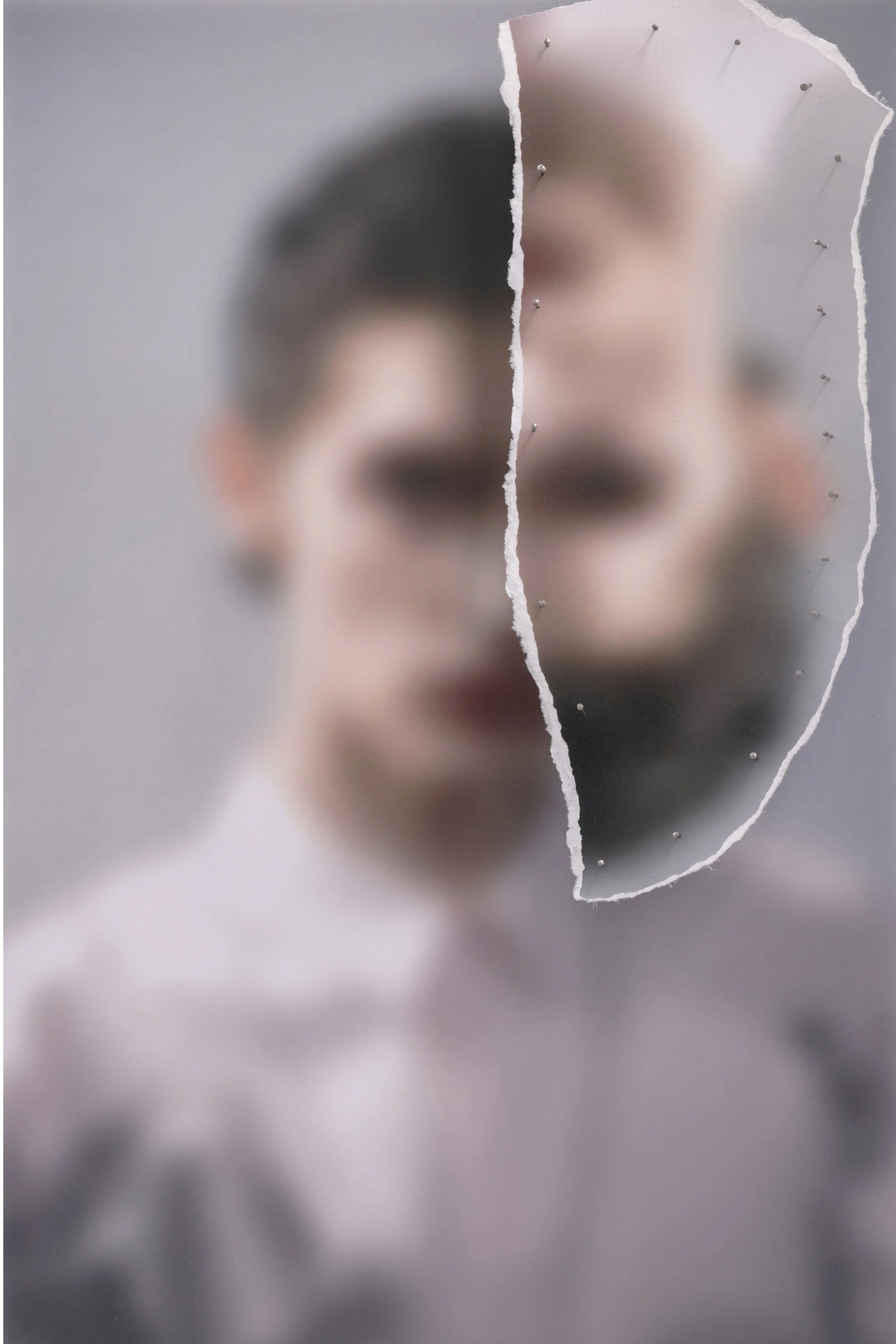
8x12 the opposite face off
What it does provide is far more interesting: photographs that have lost their original instructions and gained a troubling degree of autonomy in the process.
They linger as surfaces under pressure, objects recovering from visibility itself, fragments carrying the unnerving habit of looking back.
By the time one exits Fragmentia: Oculations of Reality, the rejected image no longer feels rejected at all. It has returned sharpened, elegant, slightly feral around the edges, and considerably less interested in earning approval.
Funny thing about discarded images: leave them unattended long enough and they develop a second life of their own.
Usually with sharper manners the second time around.