
Brown Madonna
Created and performed by Ea Torrado, Brown Madonna is a full-length dance theatre work that’s part ritual, part spectacle.
Words Ricky Francisco
Photos courtesy of Jhay Em Nacion
August 22, 2026
Photos courtesy of Jhay Em Nacion
I first encountered Ea Torrado’s work long before Daloy Dance Company formally came into being. I had been following her practice since 2008, and by the time I featured her in Complicated at the Lopez Museum in 2014, alongside Leslie de Chavez and Mike Adrao, it was already clear to me that Ea was an artist deeply committed to the body as a site of truth-telling, resistance, and reckoning.
Through works such as Canton, Sisa, and her many other socially engaged performances, Ea has consistently asked difficult questions about the conditions that shape Filipino lives—especially the lives of women, workers, and those made vulnerable by class, history, migration, and power. Her work has always carried the urgency of social realism, but through the language of movement: the body pushed, burdened, desiring, resisting, remembering.
Photos courtesy of Jhay Em Nacion
When I saw a preview of Brown Madonna in August last year, before Ea brought the work to Berlin and allowed it to further gestate, I felt I was witnessing a turning point in her practice.
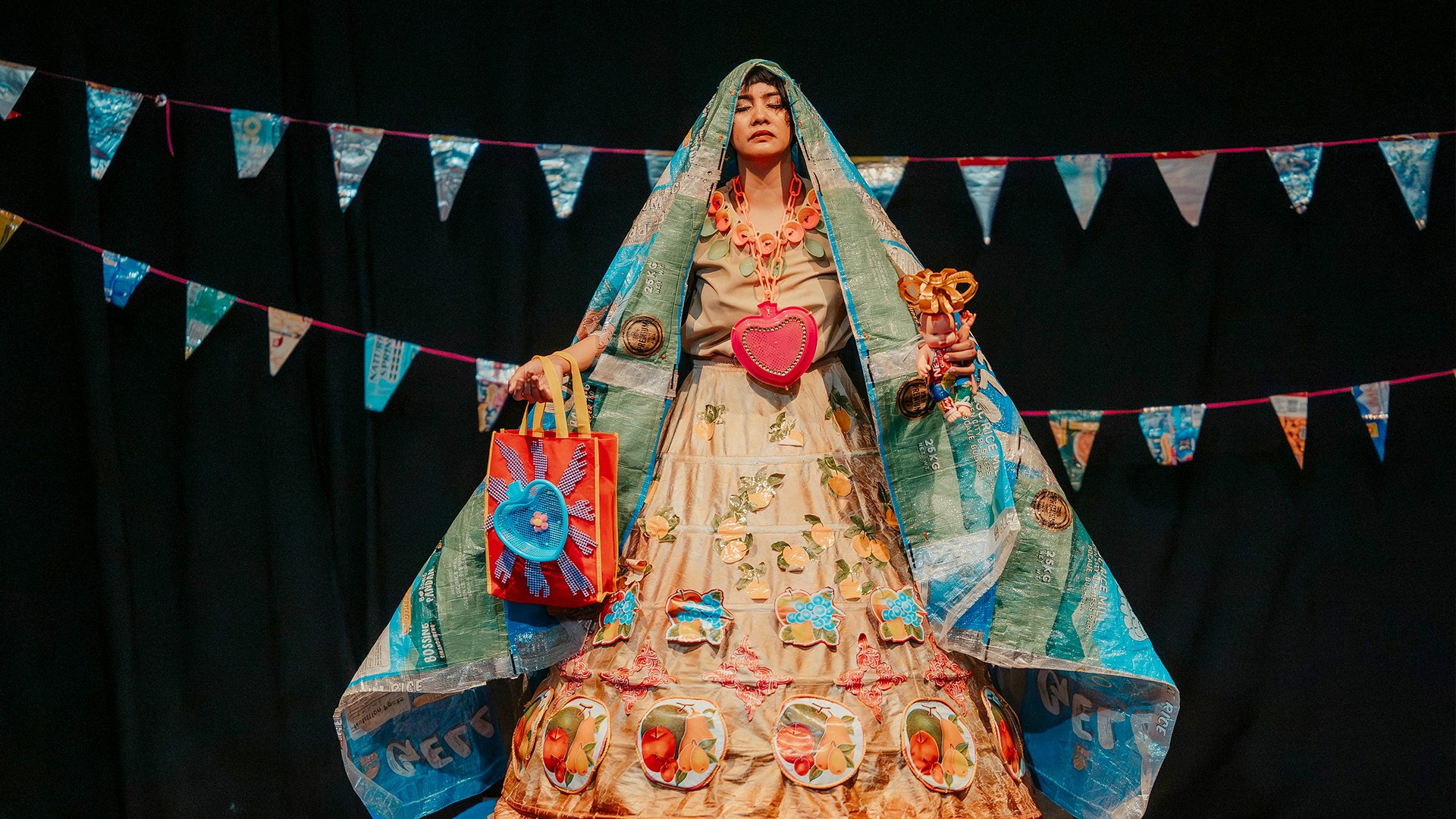
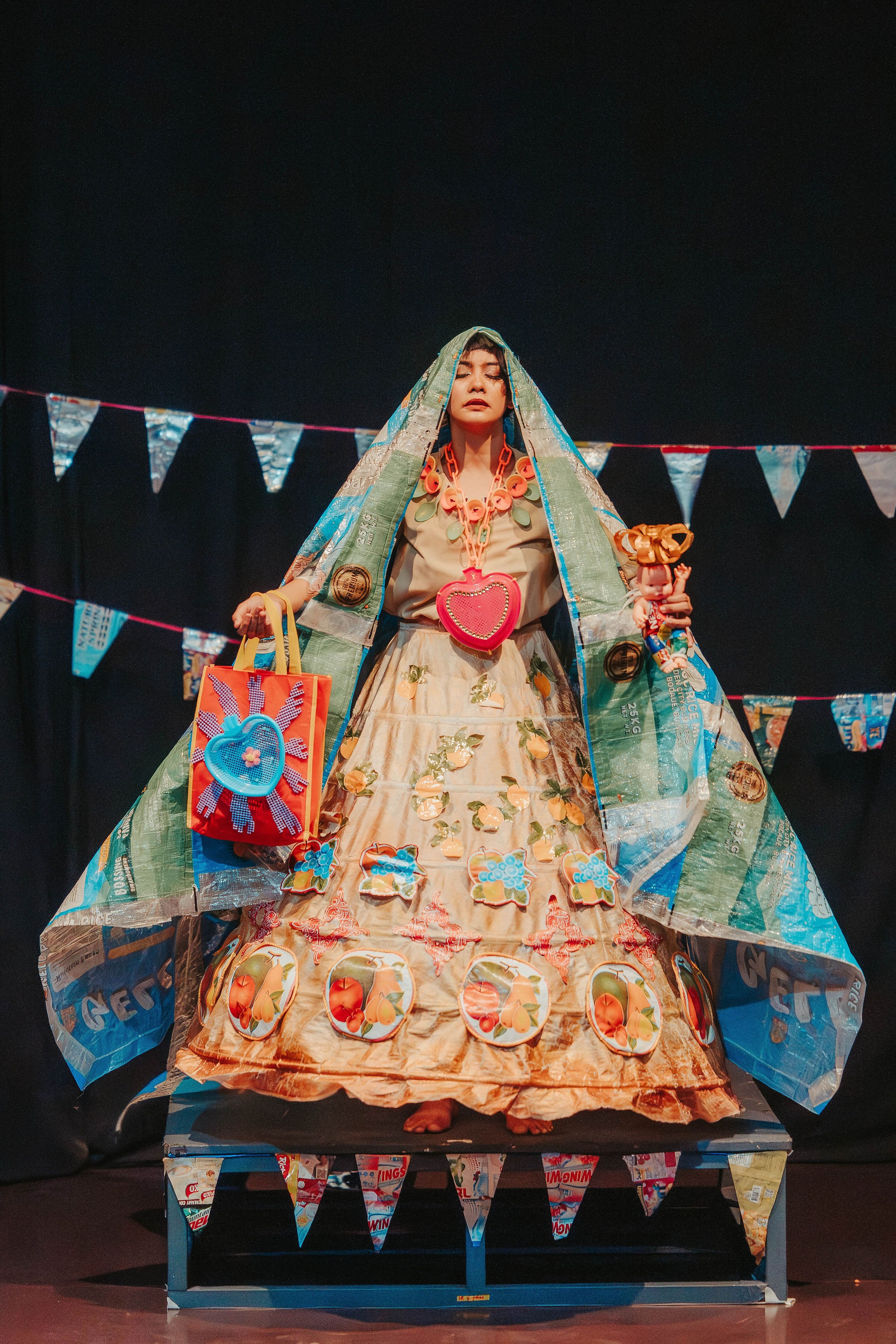
Brown Madonna begins with two charged images: Galo Ocampo’s Brown Madonna, which reimagined the Virgin Mary as a brown-skinned Filipino woman from the lower classes, and Madonna the pop icon, whose birthday Ea shares. Both Madonnas are subversive figures. Both challenge inherited assumptions of purity, sanctity, femininity, beauty, and power. Both ask: who is allowed to be venerated? Who is allowed to be desired? Who is allowed to speak?
Photos courtesy of Jhay Em Nacion
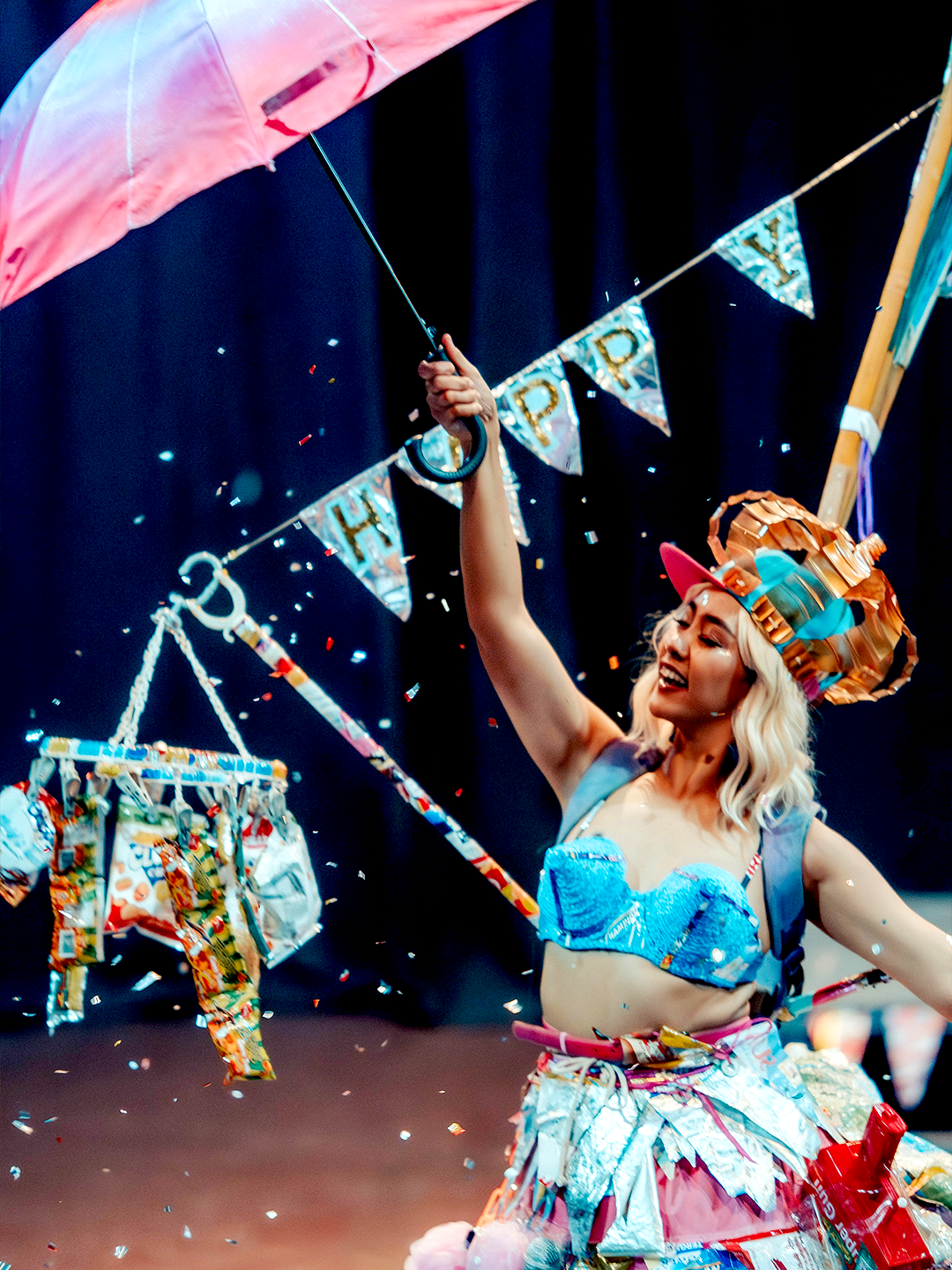
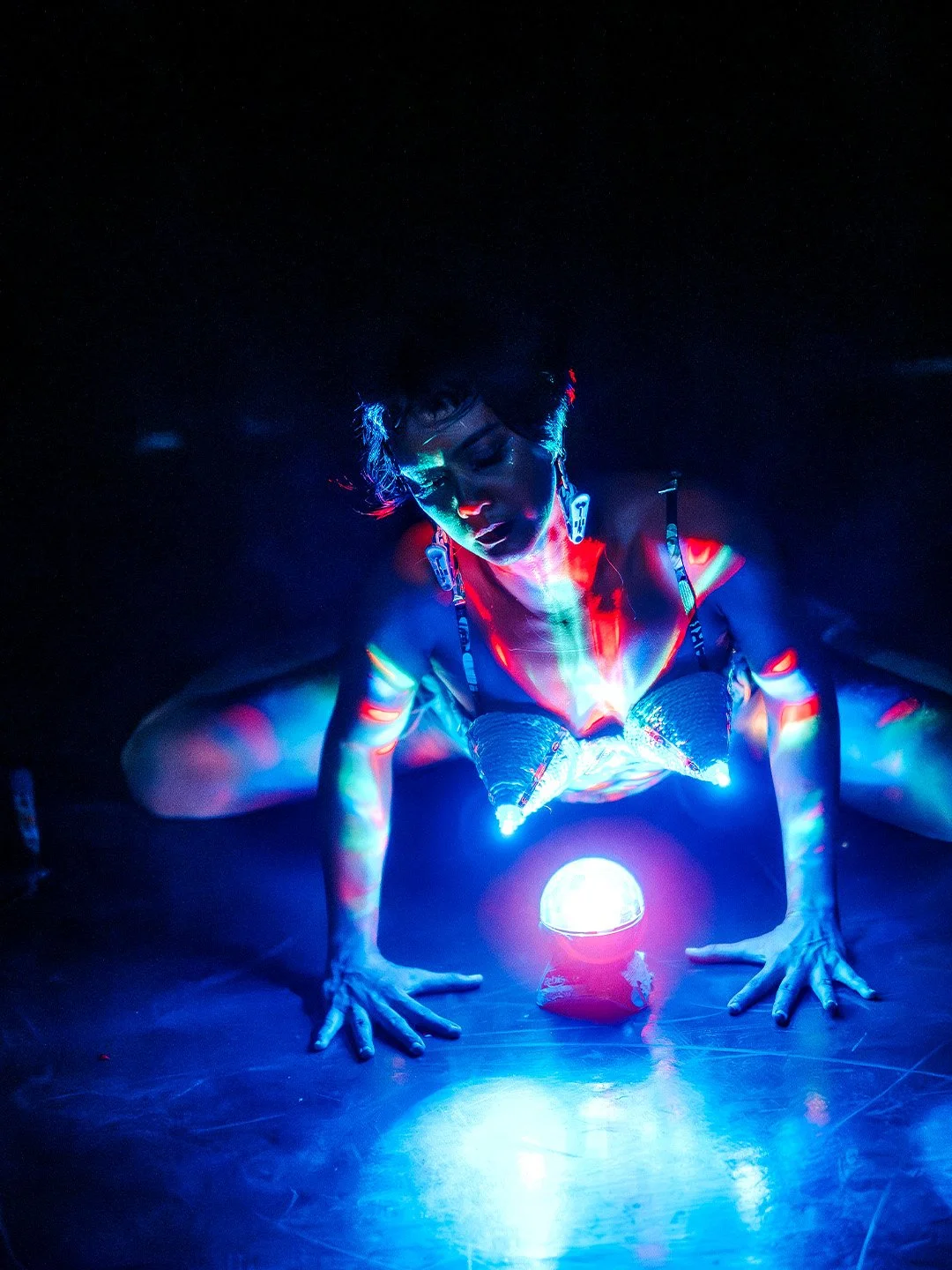
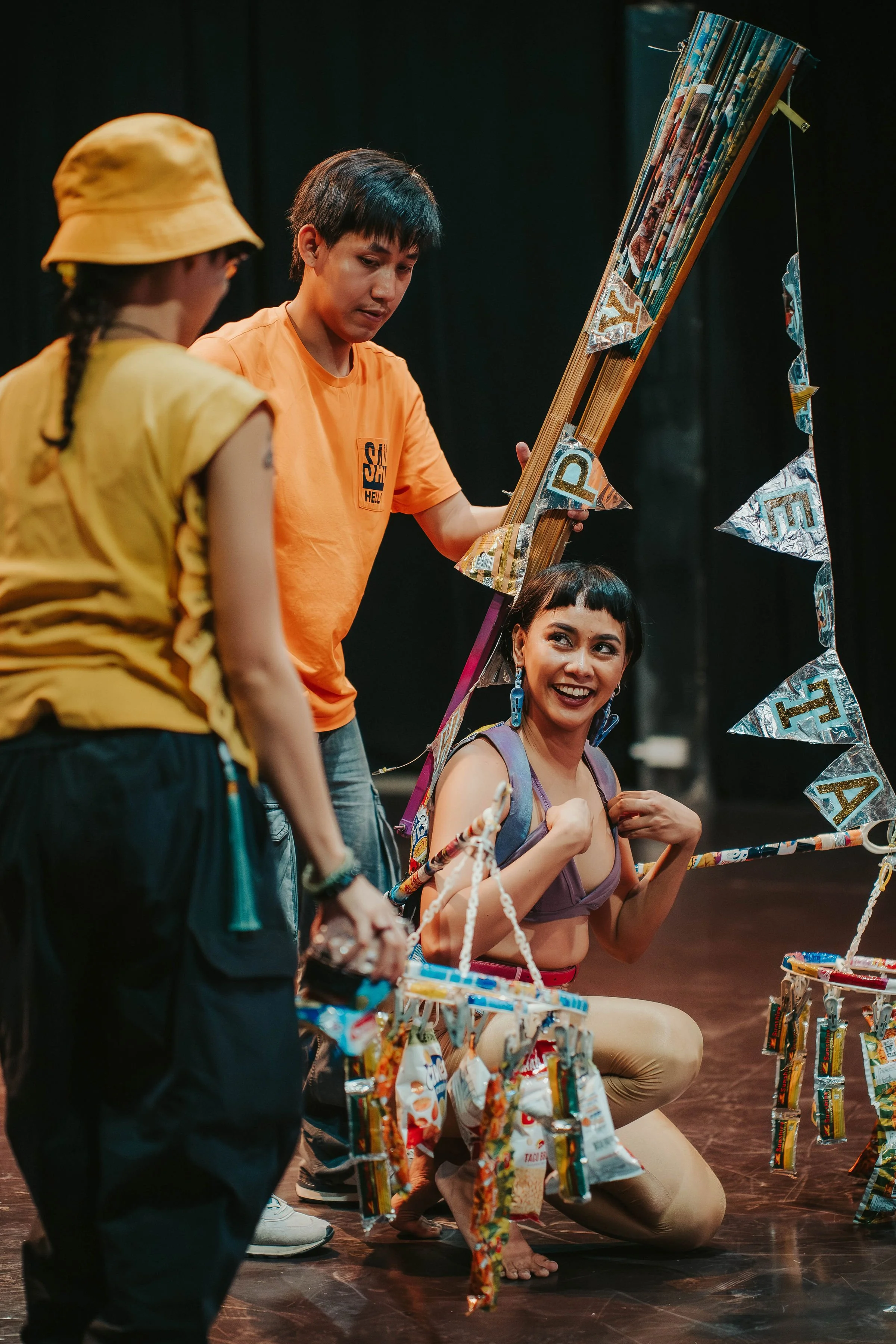
Ea’s Brown Madonna takes these questions and brings them into the charged, colorful, excessive, and deeply familiar world of the Filipino fiesta. She appears first as the Blessed Virgin Mary, an image of reverence in a country where Catholic devotion and communal festivity are deeply intertwined. But in Ea’s hands, the Madonna does not remain still, silent, and untouchable. She transforms. The venerated icon becomes the fiesta itself. From beneath her skirt come goodies and giveaways, which the audience is invited to take. The sacred body becomes spectacle, abundance, commodity, and offering.
Photos courtesy of Jhay Em Nacion
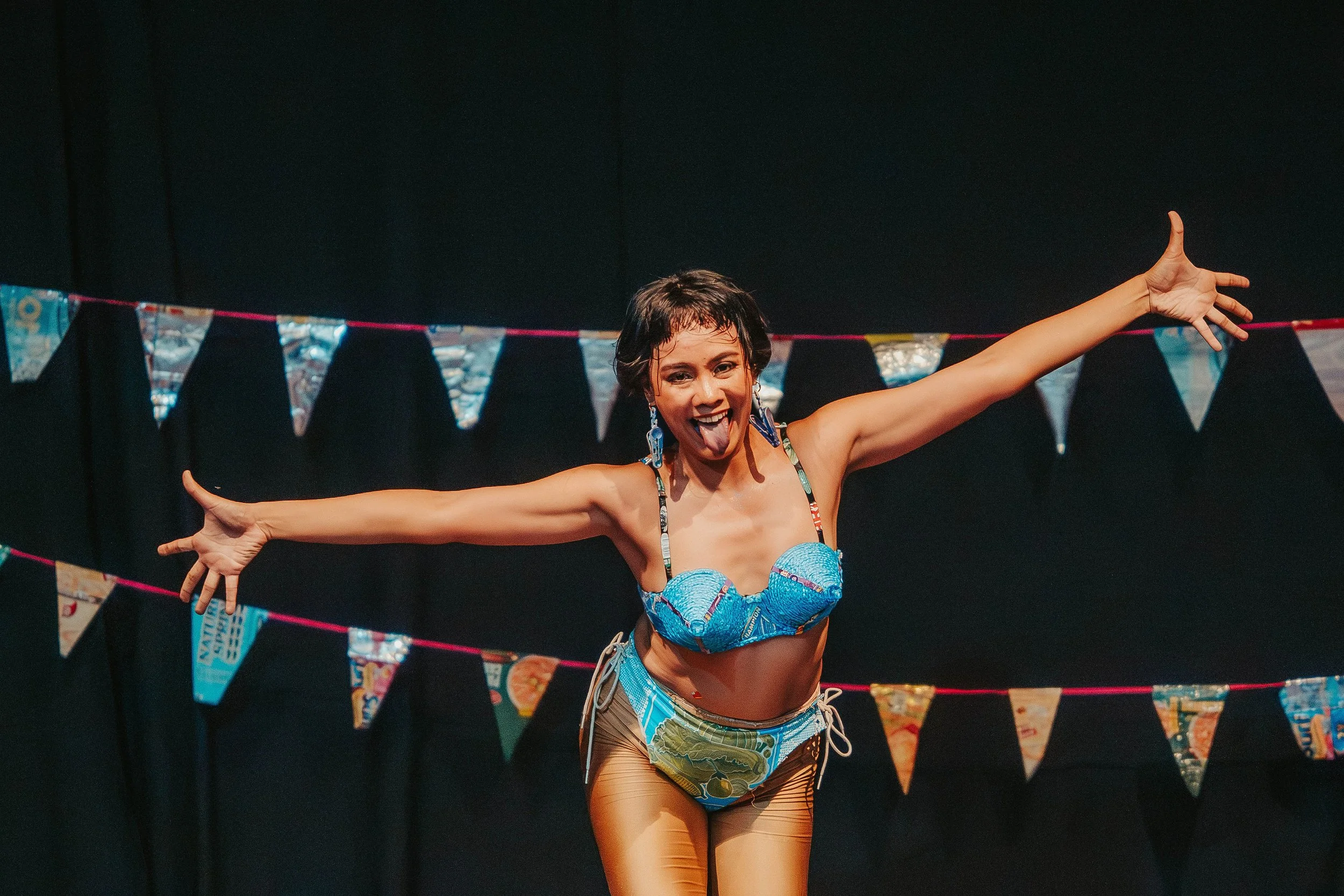
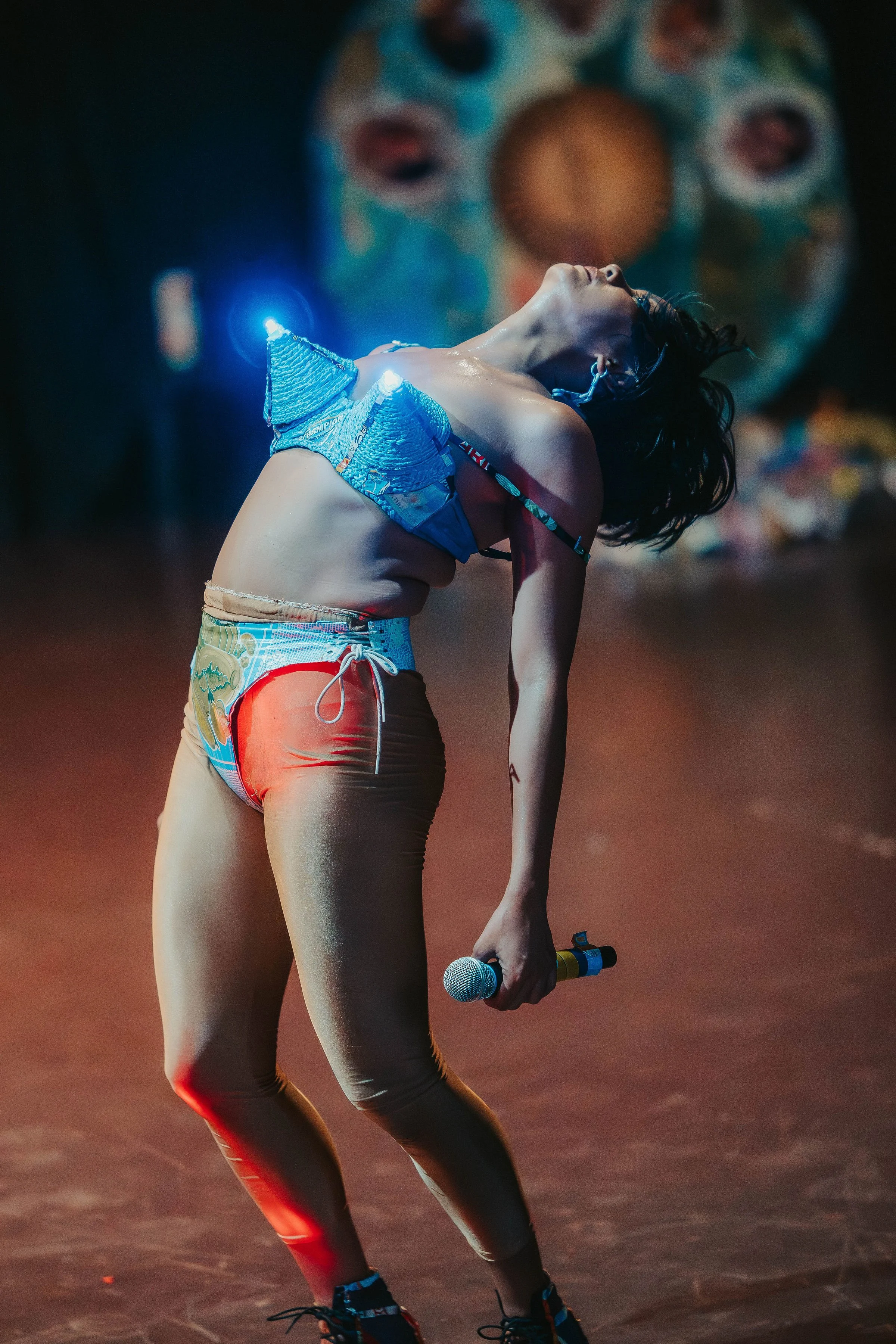
From there, the figure shifts again—this time, into the overseas Filipino worker, perhaps the country’s most enduring and painful export; a reality all too real for Ea, whose mother had to work abroad to make ends meet. Ea sings, raps, jokes, and performs with a wit and theatricality that are both disarming and incisive. It is kitsch, comedy, song, dance, and critique all at once. And because Filipinos know these languages so well—the fiesta, the karaoke number, the punchline, the dance, the religious procession—the work enters through pleasure before revealing its sharper edge.
Photos courtesy of Jhay Em Nacion
This is where Brown Madonna becomes most powerful. Beneath its humor and spectacle is a serious indictment of the colonial structures that continue to shape Filipino culture and society: the worship of foreign ideals, the burdens placed on women’s bodies, the commodification of Filipino labor, the persistence of class hierarchies, and the ways faith, entertainment, and survival are often tangled together.
Photos courtesy of Jhay Em Nacion
In this sense, Brown Madonna belongs to a long tradition of subversive Filipino art and performance. It recalls the revolutionary power of the zarzuela, such as Walang Sugat, which challenged colonial rule through popular theater. It also echoes the strategy of Rizal’s Noli Me Tangere and El Filibusterismo: to use forms people recognize in order to expose the systems that oppress them. Ea understands that critique does not always have to arrive solemnly. Sometimes it arrives singing. Sometimes it arrives dancing. Sometimes, it arrives “baklang-bakla”, “bakyang-bakya” and laughing, only to leave us unsettled by what we have recognized in ourselves.
Photos courtesy of Jhay Em Nacion
What moved me most in Brown Madonna was seeing Ea mature not only as a dancer and choreographer, but as a total performer and artist. Here, she allows herself to be funny, excessive, vulnerable, irreverent, and commanding. She speaks, sings, raps, jokes, dances, and holds the audience with a presence that feels both intimate and monumental.
Brown Madonna is Ea Torrado at her most daring: rooted in devotion, sharpened by critique, and alive to the contradictions of being Filipino, brown, female, sacred, commodified, exported, and still defiantly whole.
It is a work of transformation—of icon into body, body into nation, nation into performance, and performance into resistance.
Brown Madonna by Ea Torrado ran from August 15-16 at the Myra Beltran Dance Forum Studio.