From sculpture to mixed media, the 2025 MADE Awardees honor the creativity and resilience of today’s Filipino artists.
Words Jewel Chuaunsu
Photo courtesy of The Metrobank Foundation, Inc.
October 2, 2025
Now in its 41st year, the Metrobank Art & Design Excellence (MADE), organized by the Metrobank Foundation, Inc., continues to nurture and celebrate the next generation of Filipino artists. The 2025 MADE competition drew an impressive array of paintings, sculptures, and mixed media artworks from all 17 regions of the country.
This year’s MADE Awardees were announced on September 18 during the awarding ceremony. The 2025 winners were selected by a distinguished panel of judges composed of esteemed art masters and market luminaries, led by Toym Leon Imao, along with Leeroy New, Raffy Napay, Derek Flores, Dindin Araneta, Reg Yuson, and Tessa Maria Guazon.
In this feature, we take a closer look at the 2025 MADE Awardees and their winning works. Artworks by the awardees, semi-finalists, and national finalists are featured in the exhibition Vast Horizons, on view until October 18 at the Metropolitan Museum of Manila in BGC.
2025 MADE Awardees
Sariling Tahanan (…And We Are Home)
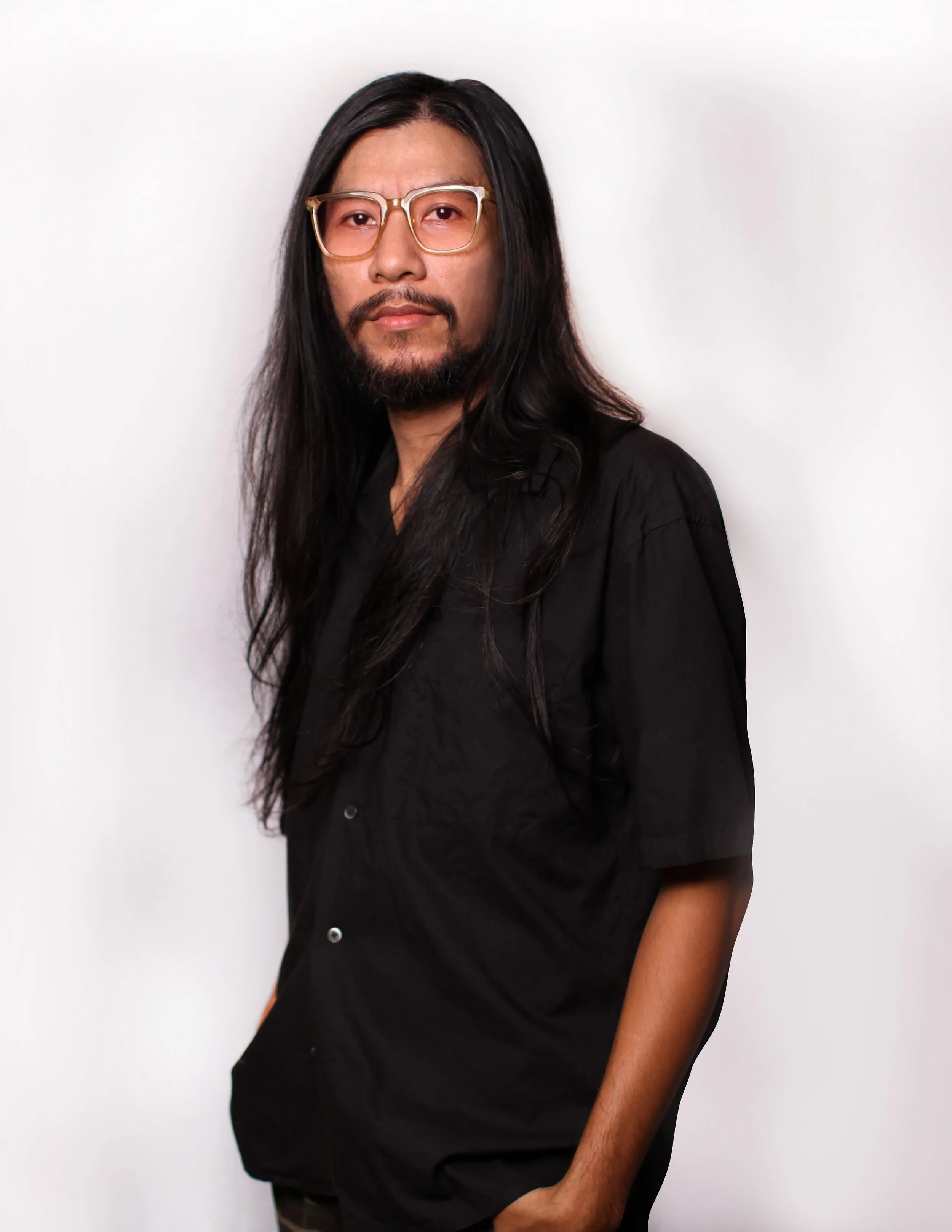
Rober Mark A. Liwanag
Grand Award - Sculpture
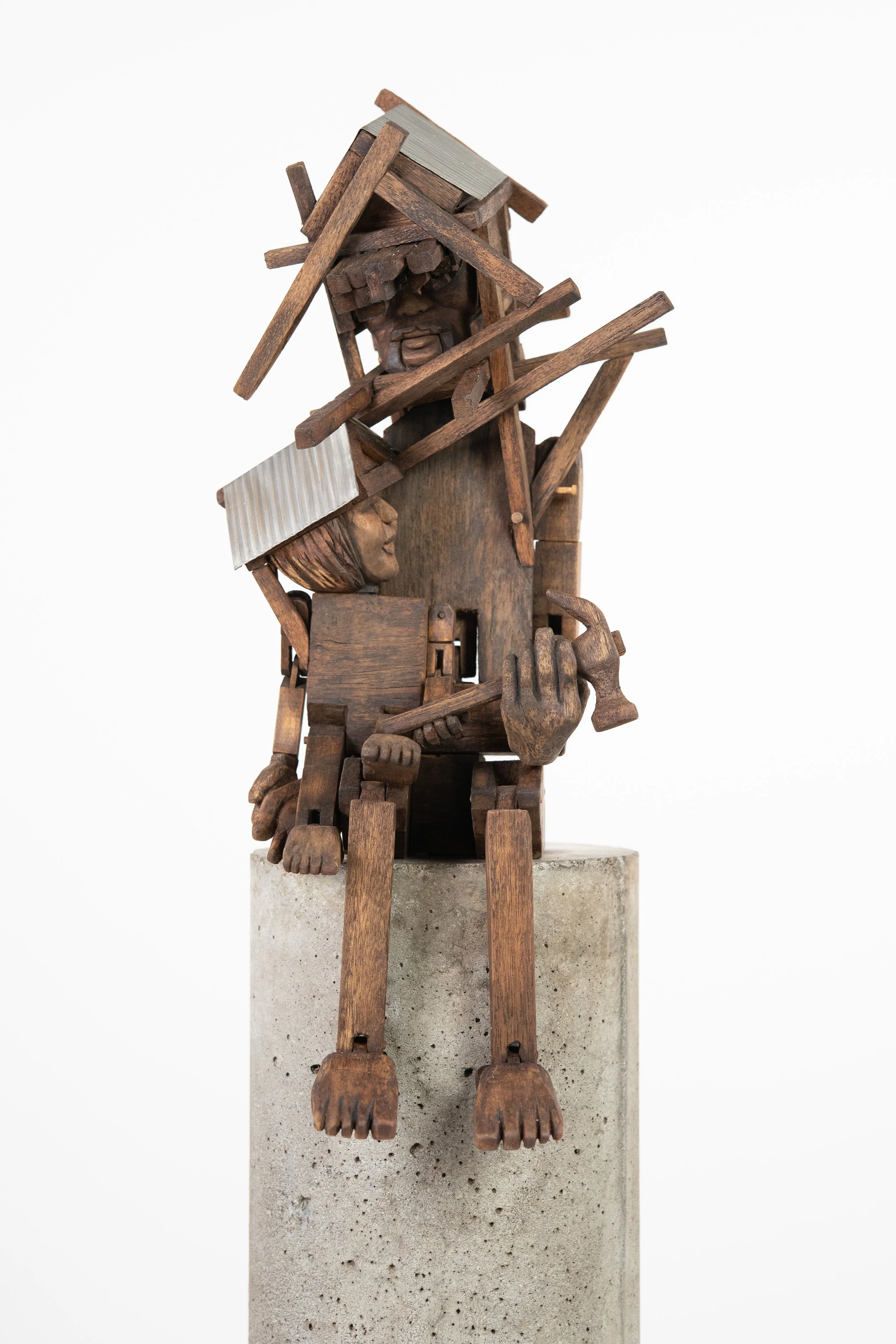
Robert Mark A. Liwanag’s “Sariling Tahanan” is a sculpture rich with layered meaning. It portrays a grandfather cradling his grandson on his lap, both sheltered beneath the structure of a home. On one level, the piece serves as a heartfelt tribute to Liwanag’s own grandfather, a carpenter who crafted wooden toys for him. Through his use of wood and found objects, Liwanag reconnects with cherished memories from his childhood.
At the same time, “Sariling Tahanan” touches on themes of displacement—when individuals and families are forced to leave their homes due to conflict, violence, persecution, or natural disasters. Displacement is not merely the loss of a physical space; it represents a deeper loss of security, stability, and identity. The sculpture also brings attention to the global housing crisis, particularly the lack of affordable housing. This issue affects not only developing countries like the Philippines, but communities around the world. Access to housing is a basic human need—yet it remains out of reach for many.
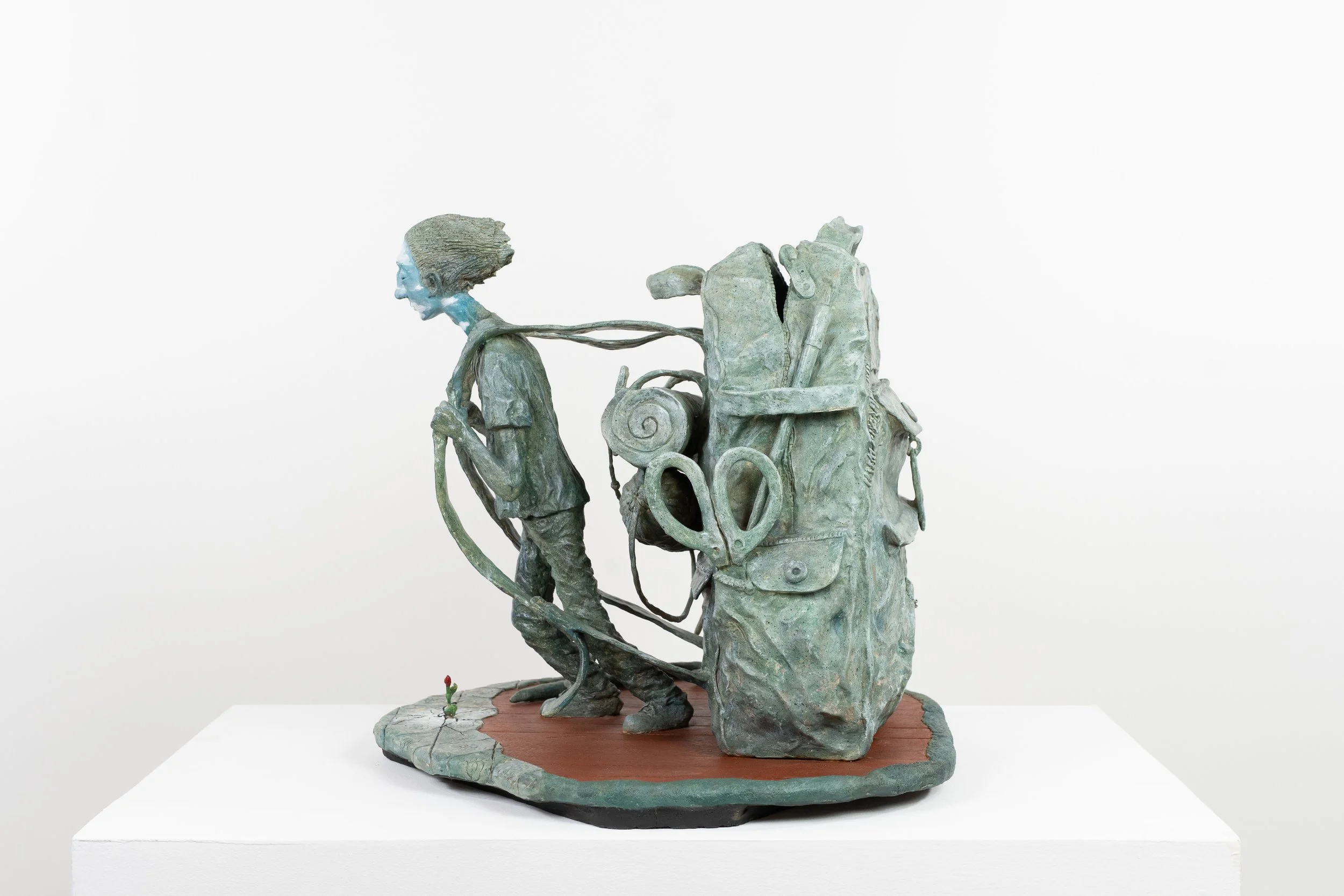
Bagahe (Baggage)
John Michael Martines Delmo
Special Citation - Sculpture
In John Michael Martines Delmo’s “Bagahe,” the central figure is an artist carrying a backpack filled with canvas, paintbrushes, and other tools. It’s a powerful metaphor—after all, everyone carries some form of baggage, whether you’re an artist, migrant worker, nurse, laborer, employee, or student. The list goes on. Yet the burdens we bear can also ground us, shaping our identity and giving us purpose.
As both a painter and sculptor, Delmo chose to express this concept through sculpture rather than painting—believing the physicality of the medium more effectively conveyed the literal and symbolic weight of our baggage.
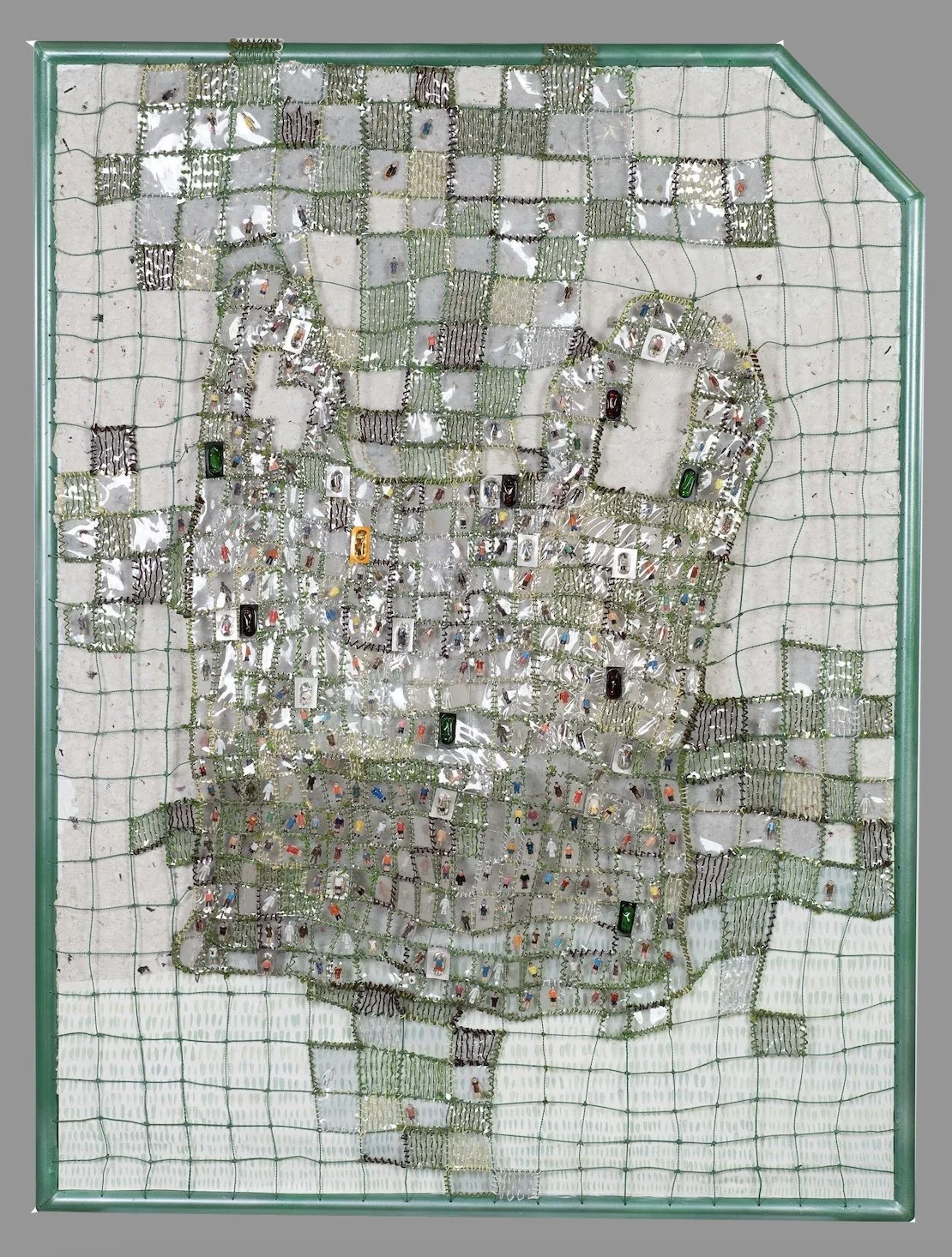
Tulad ng Isang Halaman na Minsan Nanirahan (Like a Plant That Once Lived)
Jao Eugene Sabangan Pelaez
Grand Award - Mixed Media
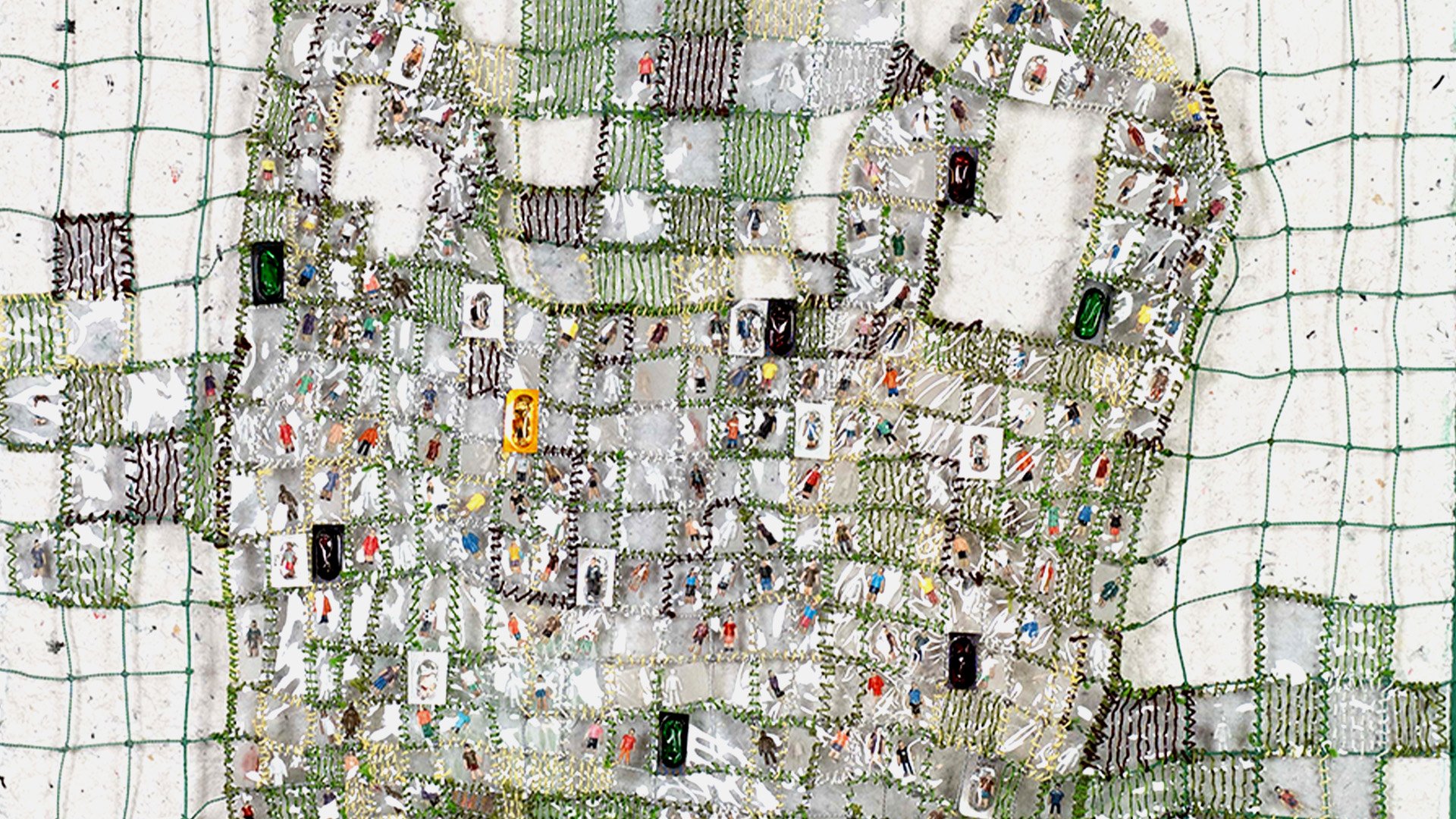
Jao Eugene Sabangan Pelaez lives in Malabon but works in Quezon City. It takes him two hours to get to work and four hours to return home. During his long commute, he often notices different kinds of plants along the way—those growing on black rocks, by the water, in the middle of the road, or on the sidewalk. “When I see these plants, I wonder how much longer I’ll be able to see them. Because if you think about it, the places where they grow aren’t ideal for plants,” Pelaez says in Tagalog. “They live in difficult conditions. But no matter what, they continue to fight.”
“Tulad ng Isang Halaman na Minsan Nanirahan” serves as a metaphor for flourishing against the odds and overcoming difficult, even hostile, situations. It symbolizes resilience, strength, and the capacity for growth in harsh environments. Drawing a parallel between hardy plants and the human experience, the assemblage includes miniature human figures and used vitamin containers—details that are best appreciated up close. From a distance, the piece resembles climbing plants and a bayong (a traditional Filipino woven bag). It represents how people can be agents of change and healing, and how they can support each other in moving toward a better life.
I SEE ERA

Rhoss John Farro Gadiana
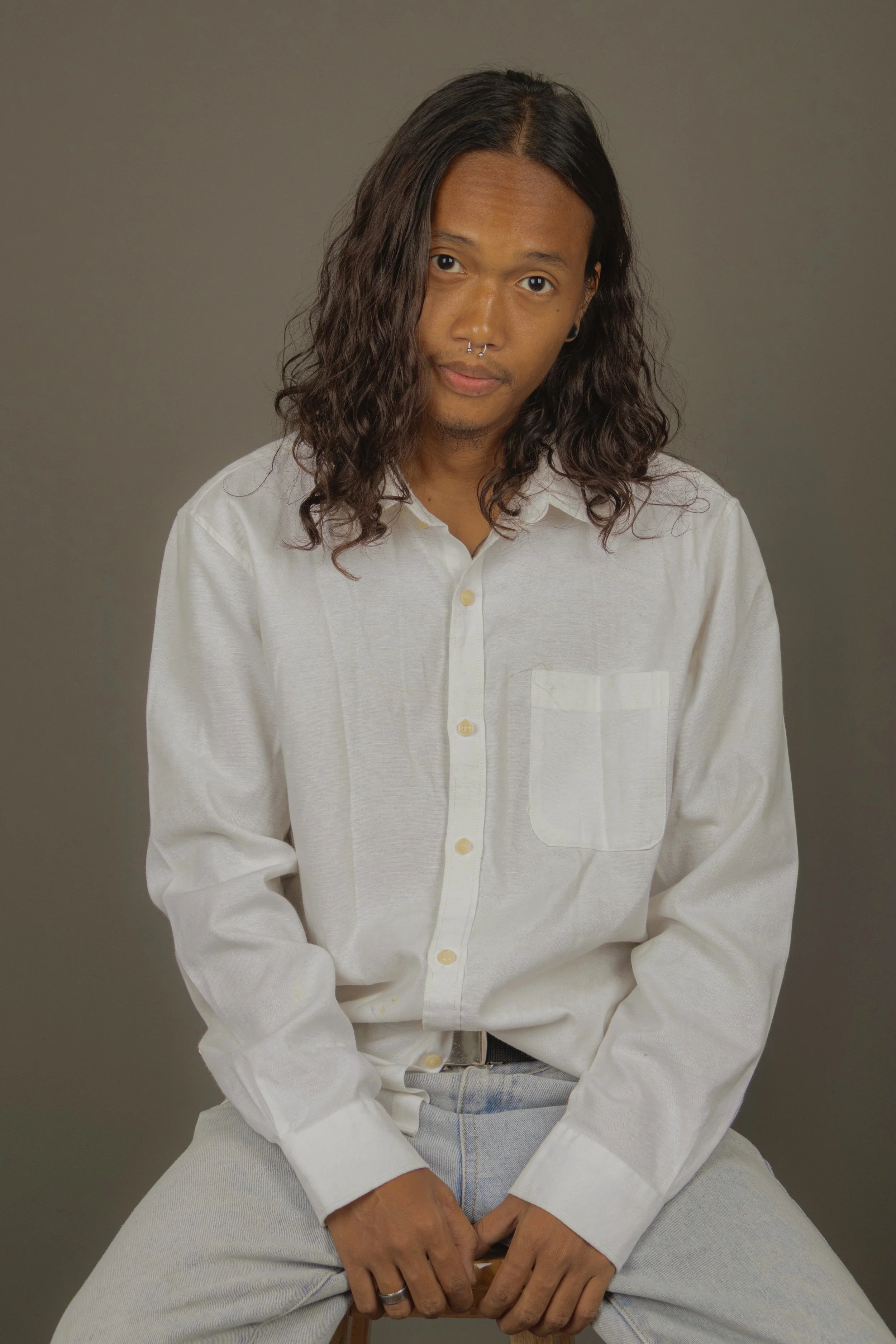
Special Citation - Mixed Media
In “I SEE ERA,” Rhoss John F. Gadiana portrays the Sierra Madre mountain range as a woman—the “mother of mountains”—bare, denuded, and wounded. From his home in Rodriguez, Rizal, Gadiana witnesses the alarming deforestation of the Sierra Madre, largely driven by extensive quarrying operations.
This mountain range plays a vital role as a natural barrier against storms and tropical cyclones, helping to mitigate the destructive impact of typhoons. Its preservation is therefore critical—not only to shield communities from climate-induced disasters, but also to protect the region’s rich biodiversity.
Despite the gravity of the situation, Gadiana’s vision remains hopeful. In his depiction, roots, branches, and leaves continue to grow—a symbol of nature’s resilience.
Finding the Light Within

Jack Enriquez De Castro

Grand Award - Oil/Acrylic on Canvas
In “Finding the Light Within,” Jack Enriquez De Castro uses a technique where black paint is scraped off a white-painted surface to reveal a design. By removing the top layer, the color beneath is exposed. In the same way, De Castro’s artwork explores the idea of discovering light within darkness.
The painting resembles chalkboard sketches, with each panel revealing what makes life meaningful—the light of happy memories, our hopes and dreams, and the simple joys we experience. These hidden lights serve as gentle reminders not to let darkness consume us and to hold on to what truly matters.
The Road You’ve Never Taken

Marc Allan Elizan Jose

Special Citation - Oil/Acrylic on Canvas
It is often said that the experience of commuting to work can be more taxing than the work itself. Marc Allan Elizan Jose believes that public transportation is a vital part of daily life, affecting a wide range of people—including workers, students, and the majority of Filipinos. However, the Philippines faces challenges with poor and unreliable public transportation services, which impact individuals from all walks of life.
Jose’s painting, “The Road You’ve Never Taken,” calls on government officials to see things from the perspective of ordinary Filipinos. In his artwork, a government official, clad in a barong tagalog, rides the bus alongside regular passengers. The piece opens up a conversation about critical social issues and emphasizes the importance of empathy. By understanding the struggles of the less fortunate, those in power may gain a better understanding of the plight of the masses.
Gunita (Memoir)

Benedict John Iñigo Simbulan
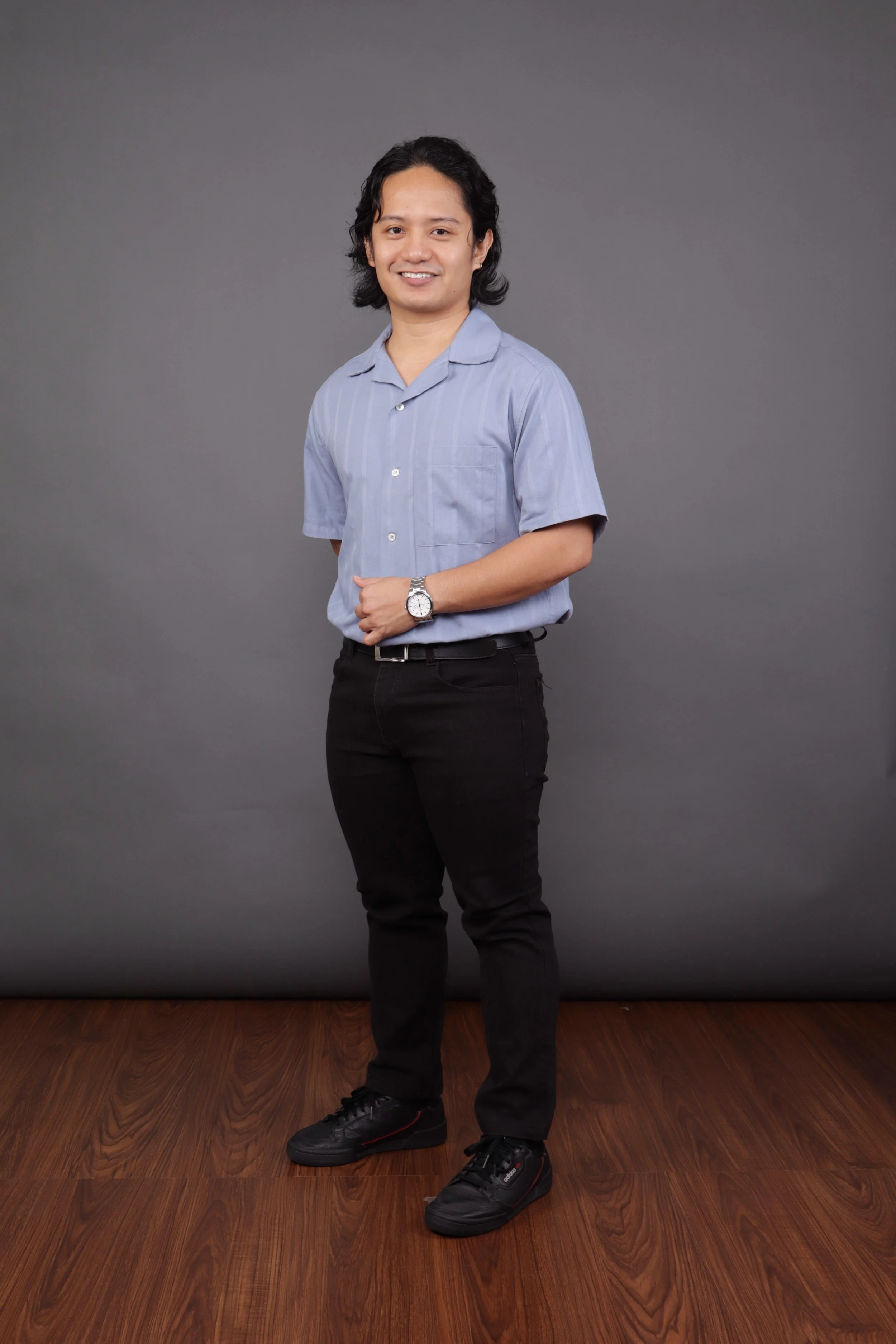
Special Citation - Oil/Acrylic on Canvas
The painting “Gunita” is based on a photograph taken by Benedict John Iñigo Simbulan of his grandmother during a family trip. In the soft light of morning, she sits at the edge of the bed, taking a quiet moment for herself before the day begins. Simbulan felt moved to capture this peaceful scene and it became the subject of his painting.
His grandmother passed away three months later, making the piece not just a memory, but also a tribute to his lola. It reflects his grief and the love behind it. Losing someone you care about is something we all go through. But in that shared experience, we can find strength and comfort in knowing we’re not alone.