
Behind the Lens is where Photography Transcends Borders
Spanning five decades, Behind the Lens: Cultural and Border Crossings 1950s–2000s brings together the works of four acclaimed photographers whose images transform history into deeply human stories.
Words and Photos courtesy of Elle Andrea
August 31, 2026
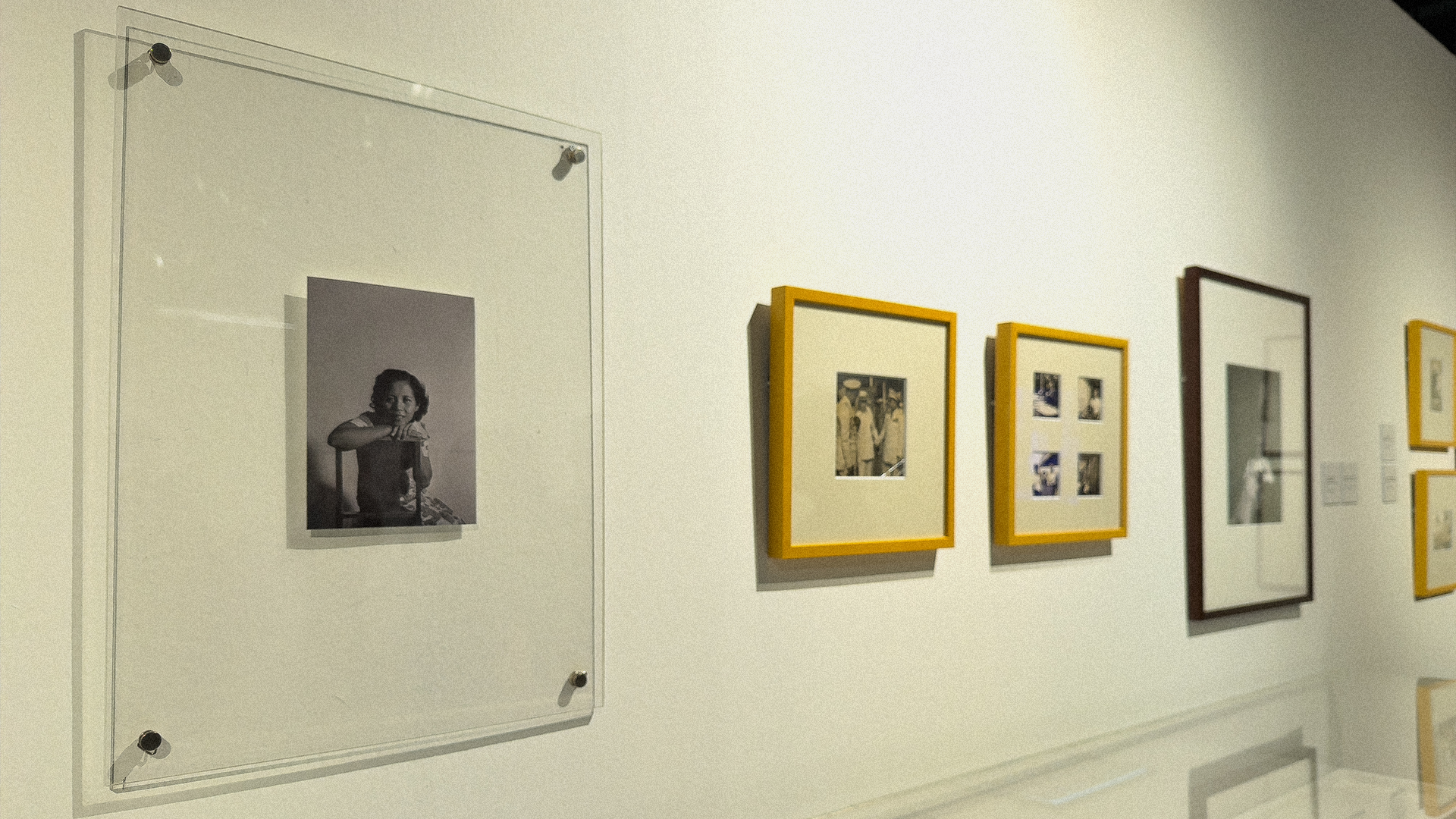
History isn't just marked by dates and headlines. It lives in the people who were there, and in Behind the Lens: Cultural and Border Crossings 1950s–2000s, it’s told by the ones who witnessed it and experienced it firsthand.
The exhibition did the magic of making you feel like you were there with them witnessing it in a way that most of the photographs transcends time.
The exhibit opened last August 6, at the Metropolitan Museum of Manila's 3/F North Gallery in Bonifacio Global City. A collective of works by F. Sionil Jose, Xyza Cruz Bacani, veteran photographer George Gascon, and internationally acclaimed photojournalist Romeo Gacad.
The carefully curated photographs span five decades, the exhibition dives into major themes of migration, identity, and the photographer’s everyday life showing how photography has the power to go beyond borders, cultures, and even generations.
True to its title it does a great job of categorizing each of the photographer’s journeys and it also puts bigger things into perspective because walking through the gallery feels less like a traditional exhibit.
With every frame that is hanging, knowing these prints hold decades of history, it's curated in a way that they feel less distant, and the places you haven't even seen before begins to feel familiar as you progress from one white wall to another.
Among the exhibition's photographs are Romeo Gacad's stills from the U.S. led invasion of Afghanistan. Published in TIME magazine's Christmas Eve 2001 issue, the series came together and it ultimately became the body of work that led to Gacad being named a Pulitzer Prize finalist in 2002.
The photographs capture moments of vulnerability and resilience that are often lost in headlines, inviting viewers to see the people behind the war, rather than the war alone. Standing before Gacad's images, the distance between observer and subject begins to dissolve.
This feeling extends throughout the exhibition. Though the artists document an array of different places and experiences, they are united by a shared commitment to preserving stories that might otherwise fade with time.
From scenes of war to intimate portraits of everyday life, the photographs show that documentary photography is not just about recording events, it is about safeguarding memories and cultivating empathy and reveals the shared humanity that endures across cultures and borders.
In an era when thousands of images disappear into endless social media feeds and AI-generated images continue to blur the line between documentation and fabrication, Behind the Lens reminds us that photography remains as one of our most powerful ways of understanding the world.
These are not just records of the past, they are enduring acts of witness. They invite viewers to cross borders, not only between countries, but between experiences, memories, and perspectives, proving that a single photograph can outlive the moment it captures and continue to shape how we understand the world.
Behind the Lens: Cultural and Border Crossings 1950s–2000s runs from August 6 to October 11, 2026, at the 3/F North Gallery of the Metropolitan Museum of Manila in Bonifacio Global City.
Through the lenses of some of the country's most accomplished photographers and storytellers, the exhibition offers audiences an opportunity to reflect on history not as something distant, but as something that's well lived.