
All the World’s A Stage
Filipina architect Saira Margarita Puyat Nepomuceno imagines a world where movement and creativity can all meet halfway.
Words Piolo Cudal
Photo courtesy of Saira Margarita Nepomuceno
November 11, 2025

In the city of bridges, Venice, a Filipina architect is reimagining what a bridge can be.
Inside Palazzo Mora, a new exhibit explores new ideas for living and connection. Among them is Saira Margarita Puyat Nepomuceno, whose installation ‘All the World’s a Stage’ is drawing attention at the 2025 Venice Architecture Biennale.
For Nepomuceno, architecture is about “staging human connection,” where environment, culture and creativity meet halfway.
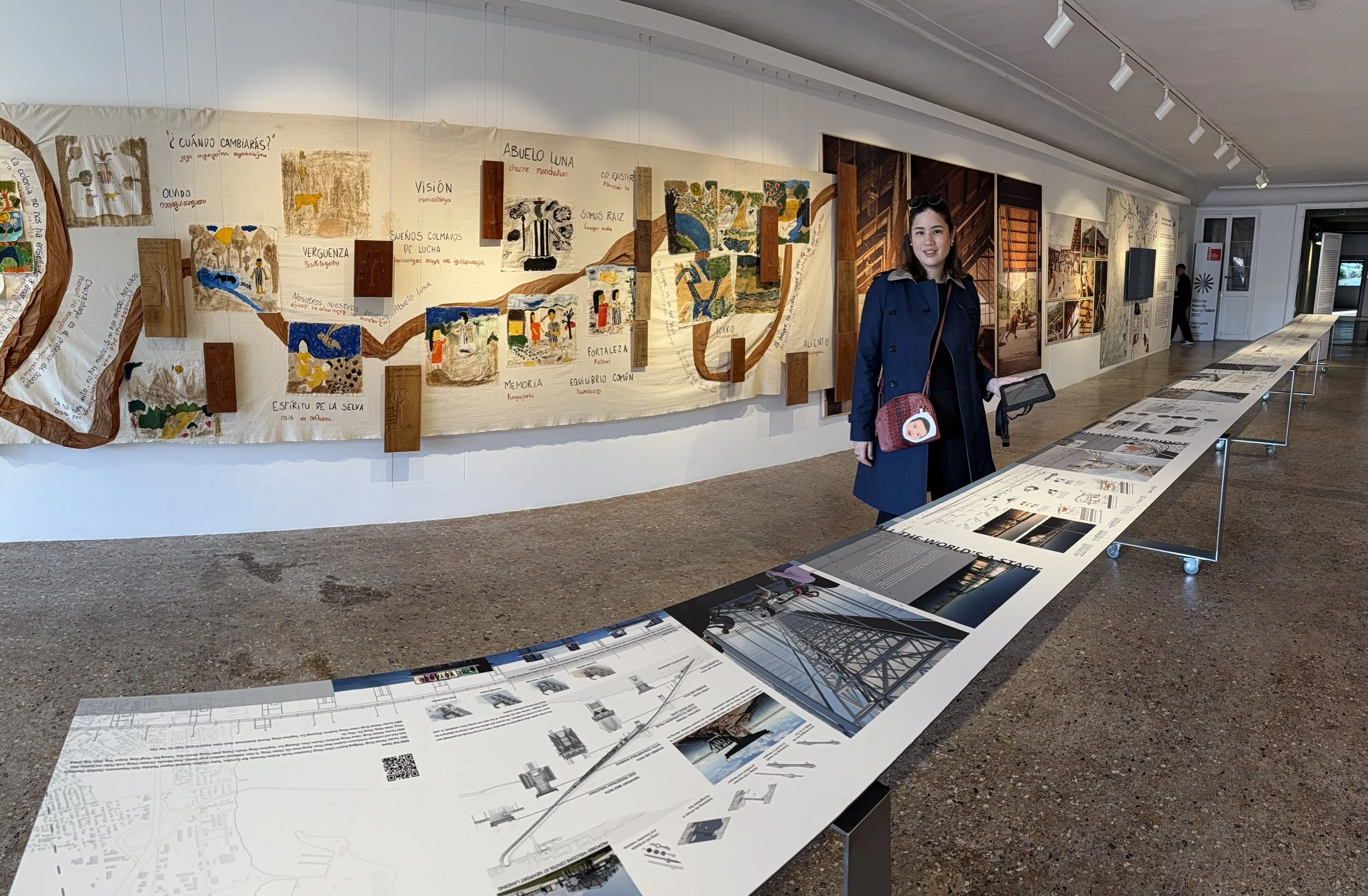
Photo courtesy of Saira Margarita Puyat Nepomuceno
Bridge, reimagined
Nepomuceno’s work is part of Crossing the Pell, a design and research project by RSID. The project focuses on the Claiborne Pell Bridge in Rhode Island, a 3.5 kilometer suspension bridge that links Newport and Jamestown.
The Pell Bridge represented an outdated way of thinking about mobility. It asked an urgent question: How can we reuse car-centric infrastructure to support people and communities instead?
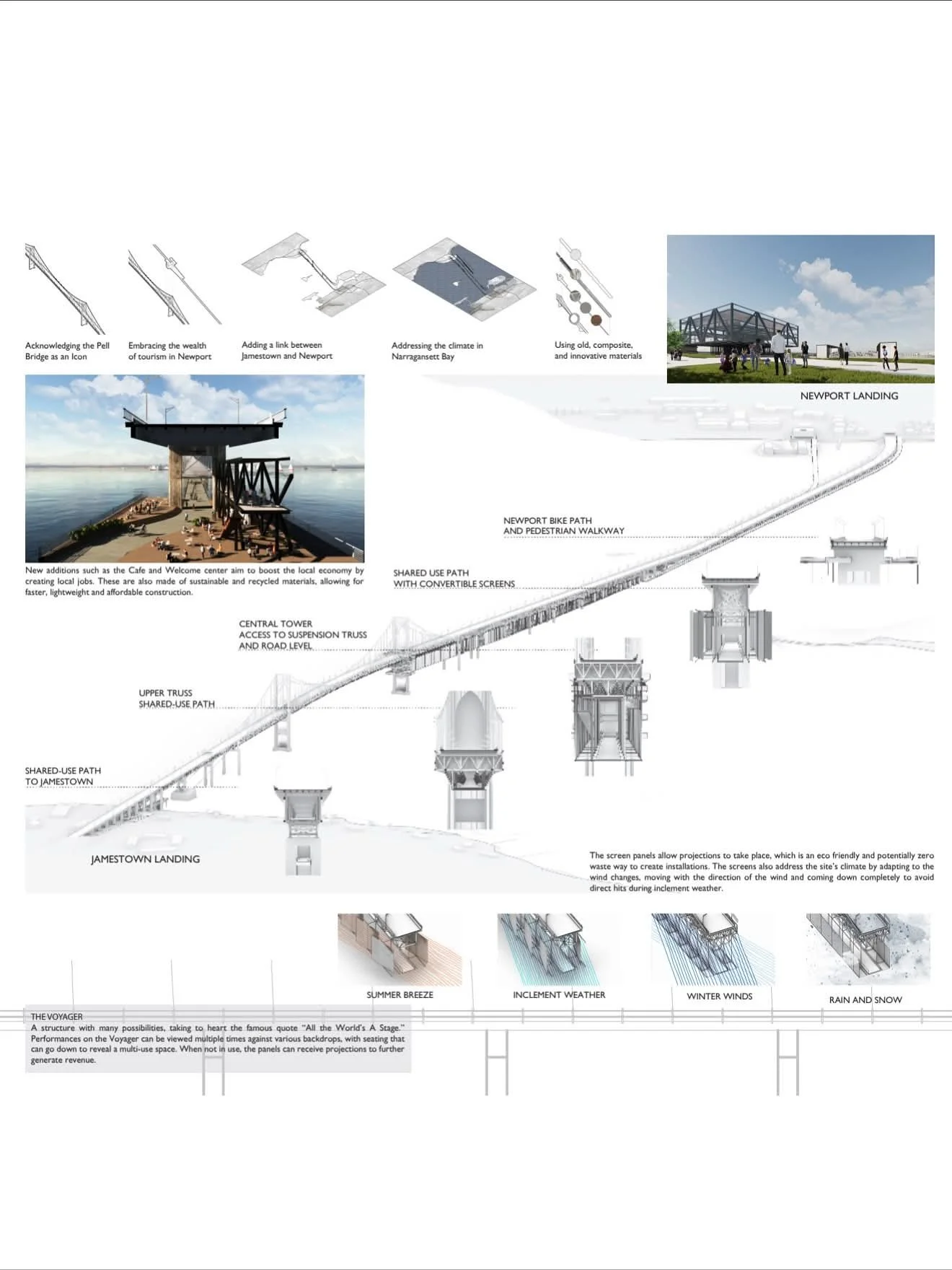
Photo courtesy of Saira Margarita Puyat Nepomuceno’s Facebook
Working in teams, eight graduates from Interior and Landscape Architecture explored new ways to adapt the bridge. Guided by professors Liliane Wong, Michael Grugl, Andrew Hartness, and Wolfgang Rudorf, they considered everything from wind and sea-level rise to social and environmental impact.
This bridge features bold and creative ideas such as a lower deck for walking and cycling, lined with small parks and cafes, floating eco-islands and fish markets, solar, wind and piezoelectric energy systems, translucent wind membranes, and a rerouted on-ramp to connect marginalized neighborhood.
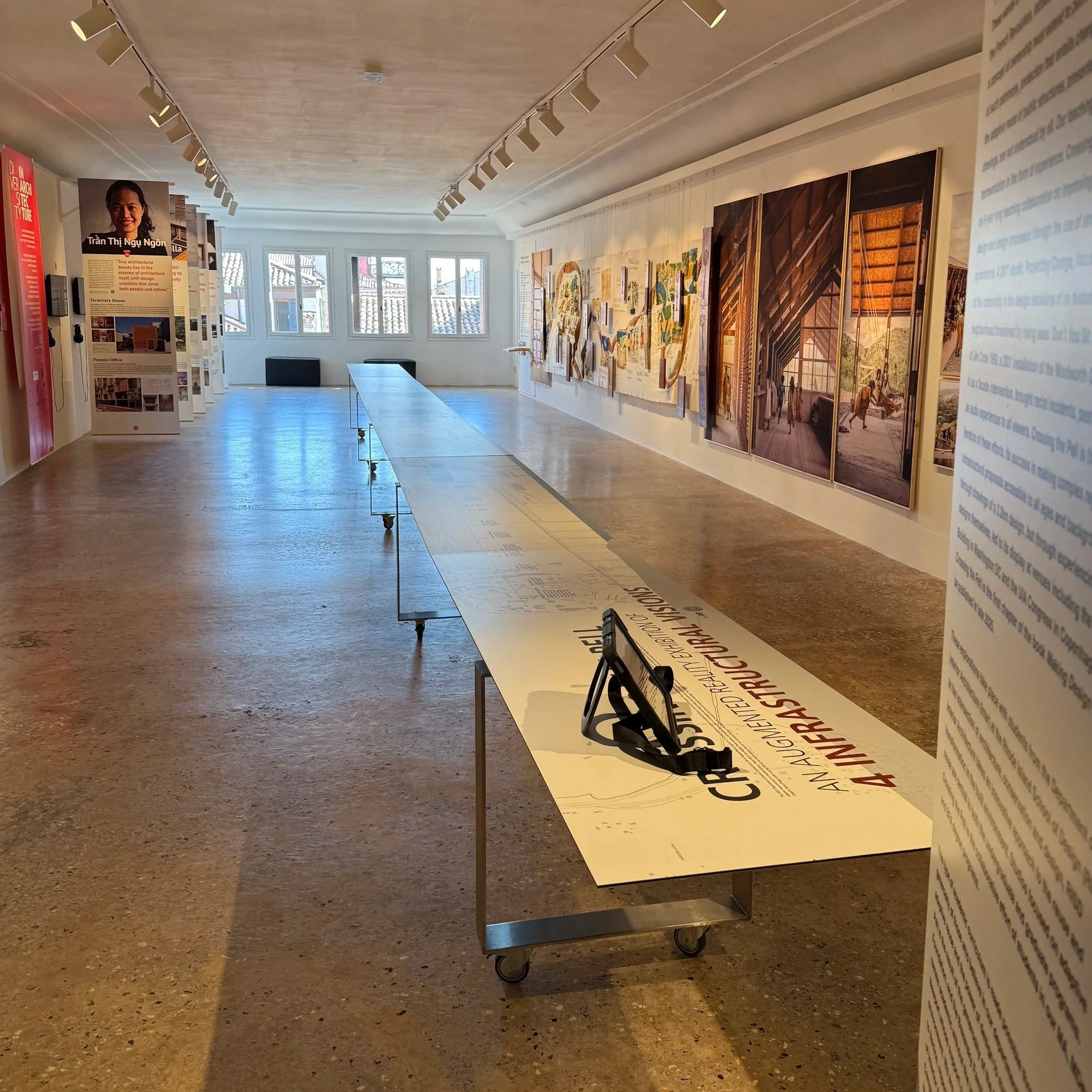
Photo courtesy of Saira Margarita Puyat Nepomuceno
From this collaboration came Nepomuceno’s design, ‘All the World’s a Stage.’ Inspired by Shakespeare’s line, she reimagined the Pell Bridge as a public space for everyday life and performance.
Her design includes bike and walking paths, a cafe and welcome center, and floating decks that move with the rising sea levels. The highlight is a section of the bridge that transforms into the world’s largest outdoor theater, visible from boats or a floating amphitheater below.
Coming full-circle
Nepomuceno’s design was shaped by her experience in the Philippines. Now the founder of Studio Saira Architecture and Interiors in Manila, she continues to design spaces that connect people and reflect culture.
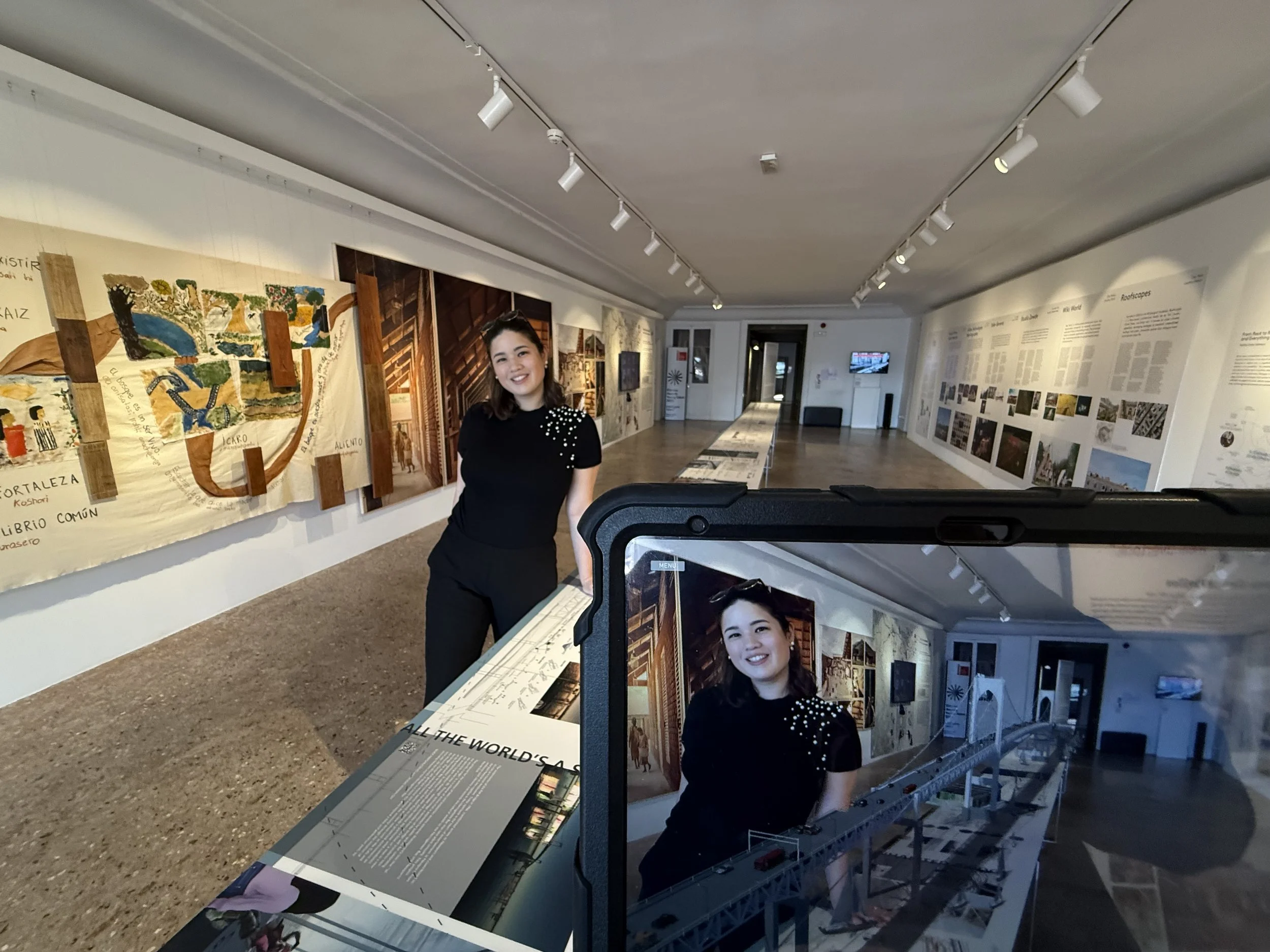
Photo courtesy of Saira Margarita Puyat Nepomuceno
Showing her work at Palazzo Mora carries special meaning. The same venue hosted the Philippine Pavilion in 2016, when the country returned to the Biennale after 51 years. For her, exhibiting in this same space is both “personal and symbolic,” reinforcing the connection of Filipino creativity and resilience to a global architectural dialogue.
Through ‘All the World’s Stage,’ Nepomuceno invites visitors to see bridges and architecture in a new light. Not just as structures of steel and concrete, but as spaces that hold stories and hope. Her work remains on view at Palazzo Mora until November 23, 2015.