
A Traveler's Guide to the Real-Life Philippines of Sun Chaser
The greatest wonder in Sun Chaser isn't hidden on the map. It's the feeling of recognizing home where you least expect it.
Words Bernadette Soriano
Photos courtesy of Sun Chaser
July 27, 2026
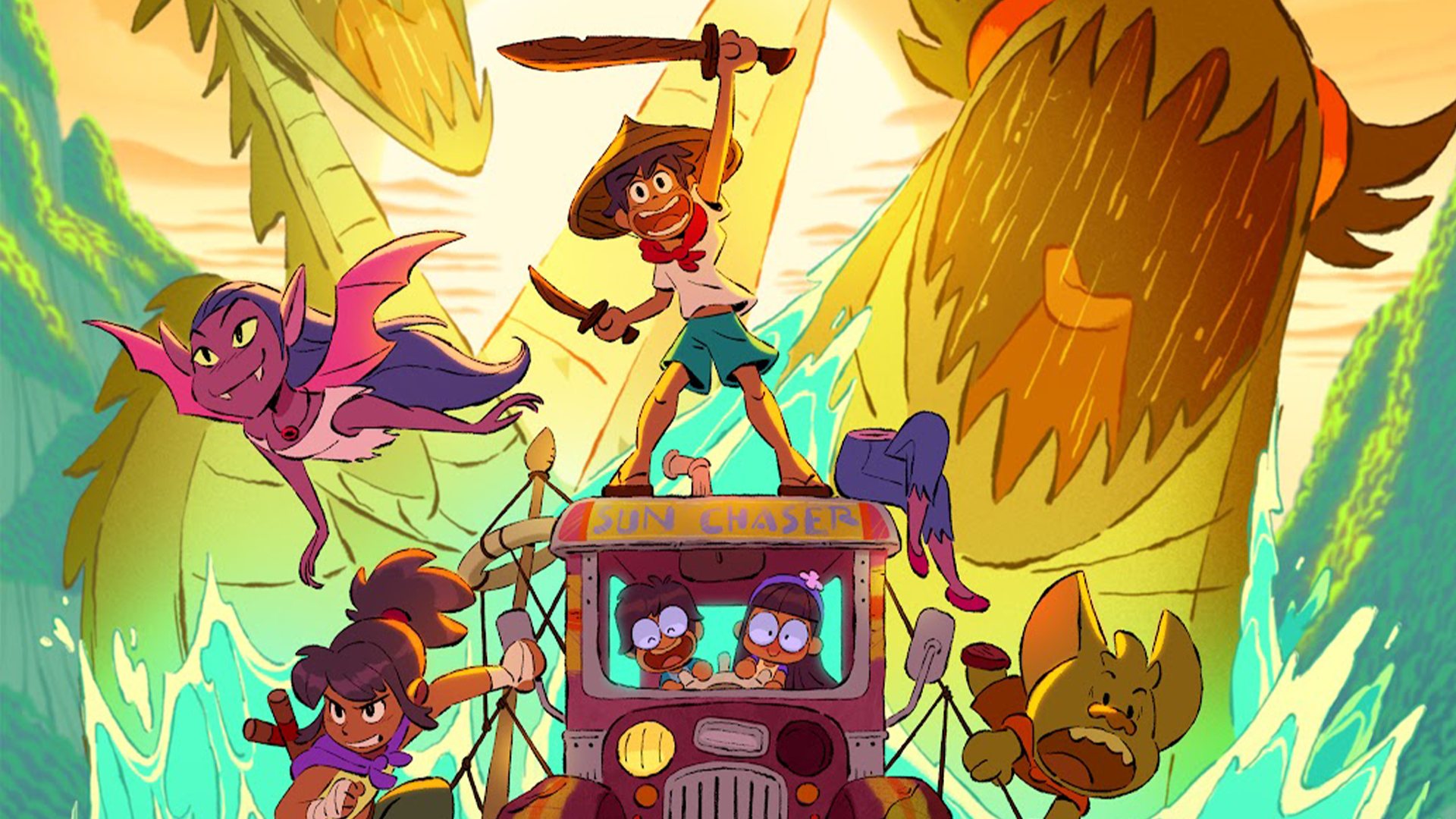
Fantasy has long made a habit of borrowing from reality, though seldom with the poetic audacity of Sun Chaser.
Here, the soul of the Philippines manifests not through colossal monuments or manicured postcard vistas, but by way of the exquisitely ordinary.
It is an exercise in cultural geography where the world never feels artificially staged; rather, it feels as though the creators uncovered a slumbering version of the islands’ collective memory.
Sailing into the series’ worldbuilding, Art+ Magazine sat down with director Bobby Pontillas and co-director Bernard Badion for a conversation that mirrored the show's own wandering spirit.
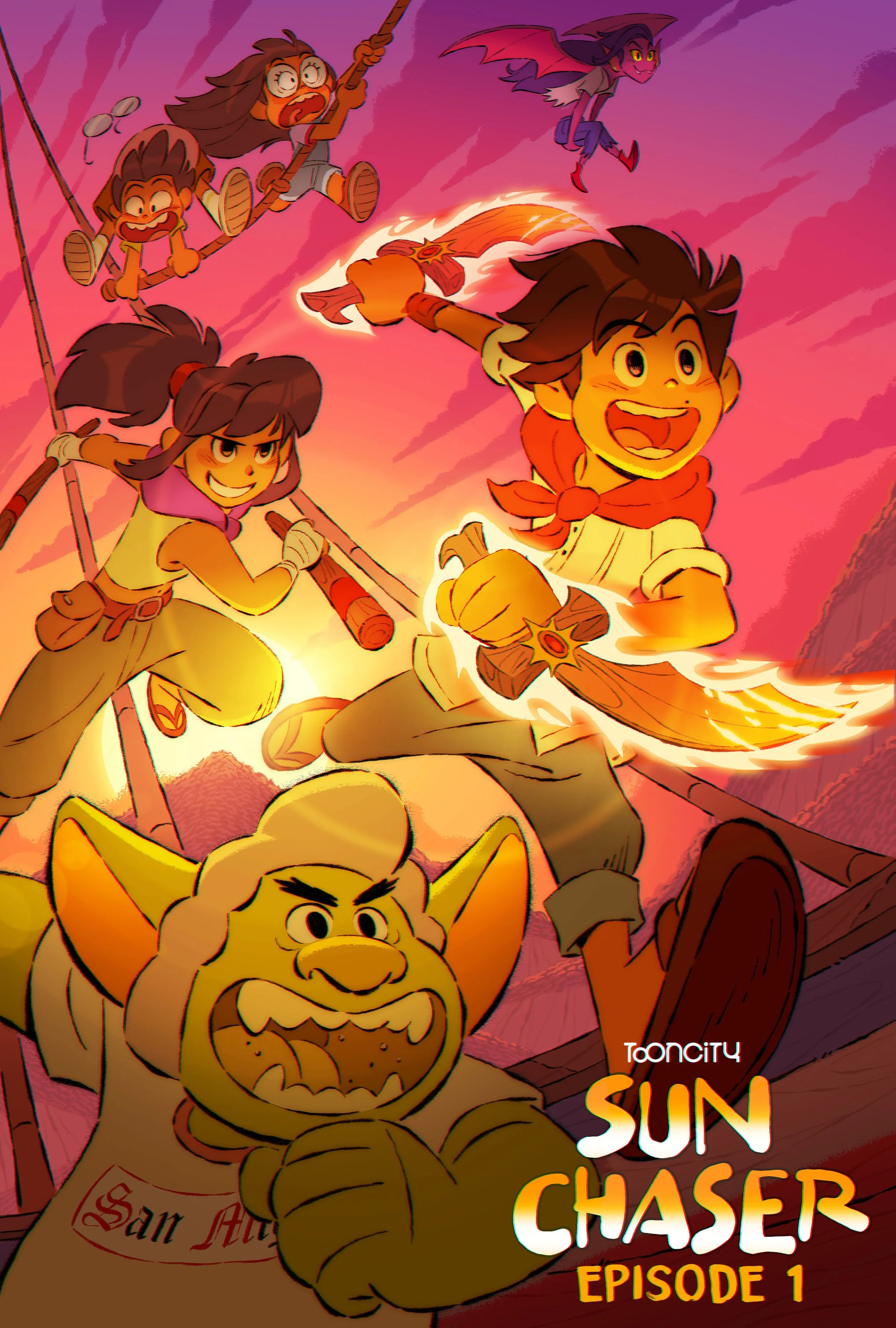
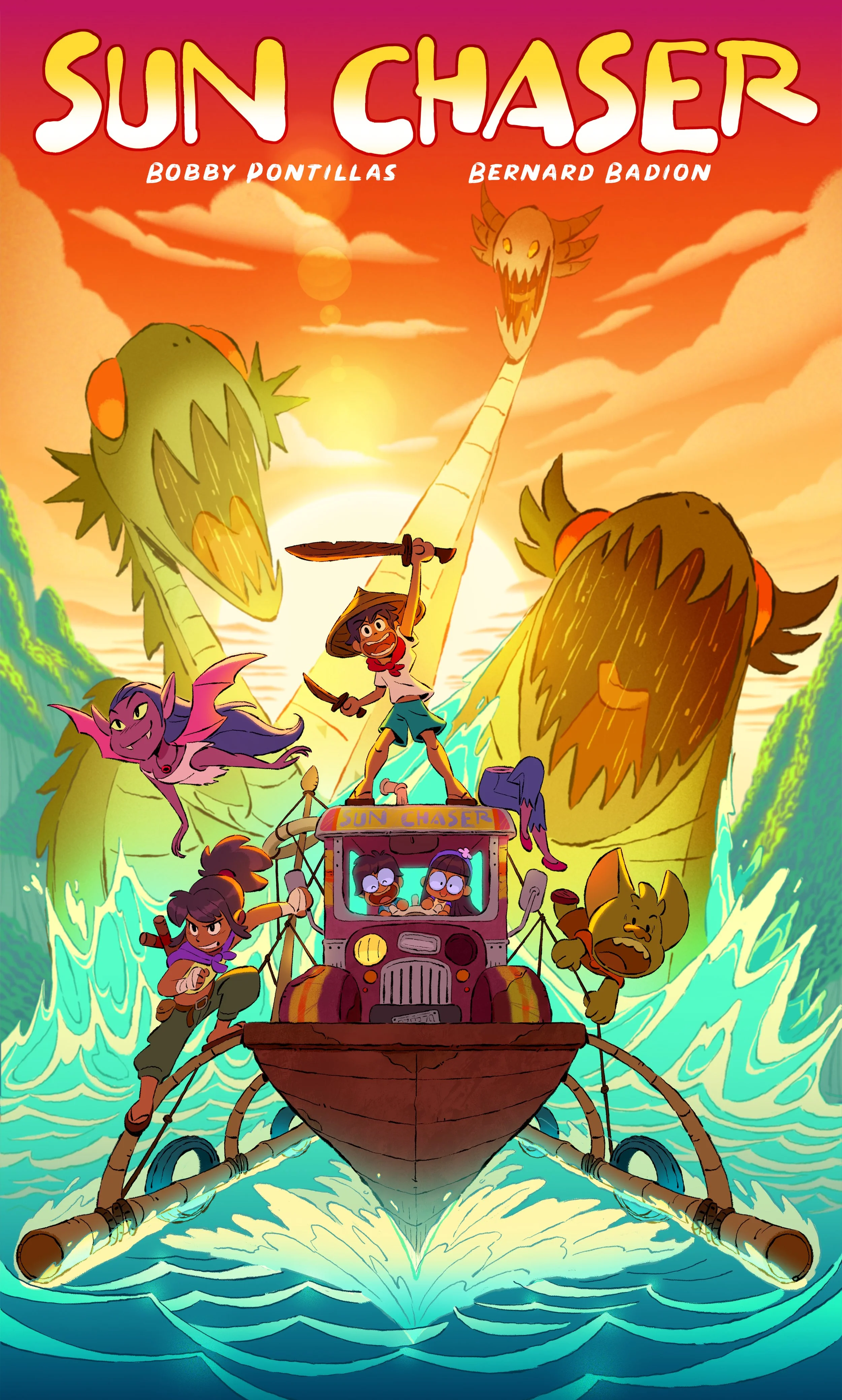
Sun Chaser Official Poster
Pontillas, the Oscar-nominated Disney animation veteran, and Badion, the seasoned storyteller behind Transformers: EarthSpark, bypassed the typical tourist traps to guide us into the quieter corners of their creation—where high fantasy yields, almost imperceptibly, to the textures of a home millions know by heart.
To achieve this, Pontillas and an all-Filipino artistic team skirted rigid reference sheets in favor of instinct.
“Whatever you can bring to the table in terms of authenticity... please bring it,” Pontillas recalls. “Let's just try to make it as Pinoy as possible,” Badion agreed, cultivating a space where the animators’ personal histories dictated the worldbuilding: “Whatever thing they pitched... we would always just kind of go with it.”
Stop One: The Neighborhood Convenience Store
The odyssey begins at which every Filipino day takes root. Sharp-eyed viewers will spot a storefront echoing the familiar glow of an Uncle John’s.
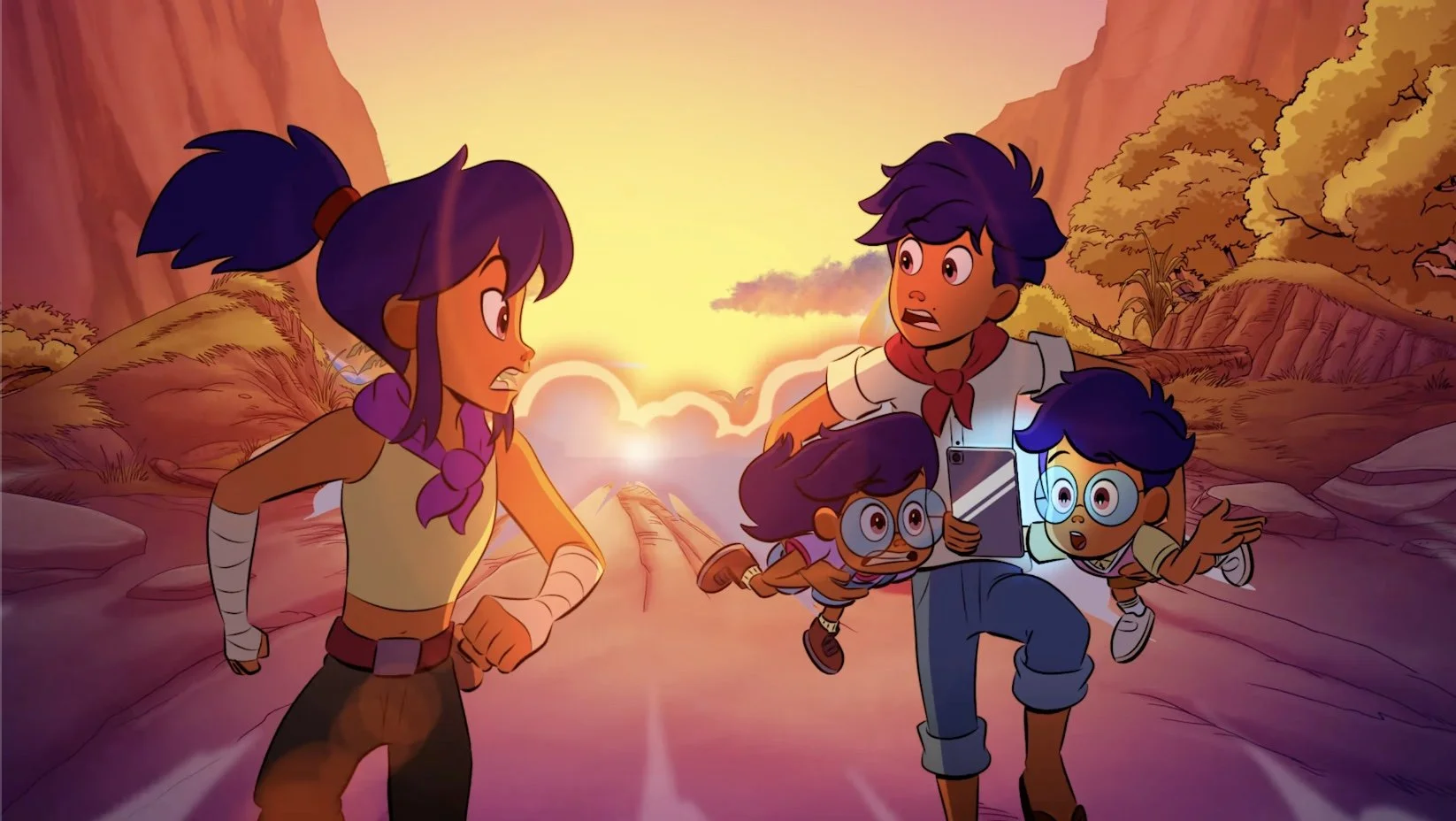
Still from Sun Chaser’s YouTube
By swapping out the conventional fantasy bazaar for this neon-lit sanctuary of late-night snack runs and school-day nostalgia, Sun Chaser establishes its pulse in the domestic environment. So naturally the mundane proves only a thin veil for the magical that each transition scarcely blares itself at all.
For Badion, the emotional charge of such everyday spaces is felt most keenly by the artists themselves.
He recalls an animator finishing a sequence and stating, “I've been animating for over ten years. That's the first Filipino thing I've ever animated.”
Stop Two: Lola's House
Few sanctuaries are as sacred, or as aesthetically distinct, as a grandmother's home, not least because they accumulate the quiet evidence of lives long lived.
Inside Lola's dwelling, religious iconography, faded family portraits, and beloved heirlooms interlock, insofar as memory permits, into a space where time seems to have done the arranging, each object settling naturally into the next.
“Whenever I walk into my Lola's house... there's religious stuff everywhere,” Pontillas notes, having tasked his team with capturing that exact, comforting alcove.
“I didn't tell them where to put it... I was just like, can we get a little bit of a sense of you walking into your Lola's house and there's a crucifix... sure enough, the next pass was a fully rendered Jesus on the cross. And I was like, that's a little bit too detailed, but all right, let's go.”
The result is a living museum of affection, where every object feels inherited and no less than painstakingly mended.
Stop Three: Batanes in the Rain
Some of the series’ most brilliant strokes are worn rather than spoken. The traditional rain gear of the characters takes its cue from the Ivatan vakul—a woven head covering fashioned from local fibers to deflect the battering northern winds of Batanes.

Still from Sun Chaser’s YouTube
Presented without heavy-handed exposition, the attire exists as a quiet tribute to indigenous ingenuity, rewarding those who recognize its silhouette while effortlessly enveloping those who don’t.
Stop Four: Stone Houses at the Edge of the Sea
The coastline, for its part, remembers. Along its edge stands buildings bearing the unmistakable profile of Batanes’ stone houses, their weathered limestone walls and generous cogon roofs carried into fantasy landscape with hardly a seam showing.
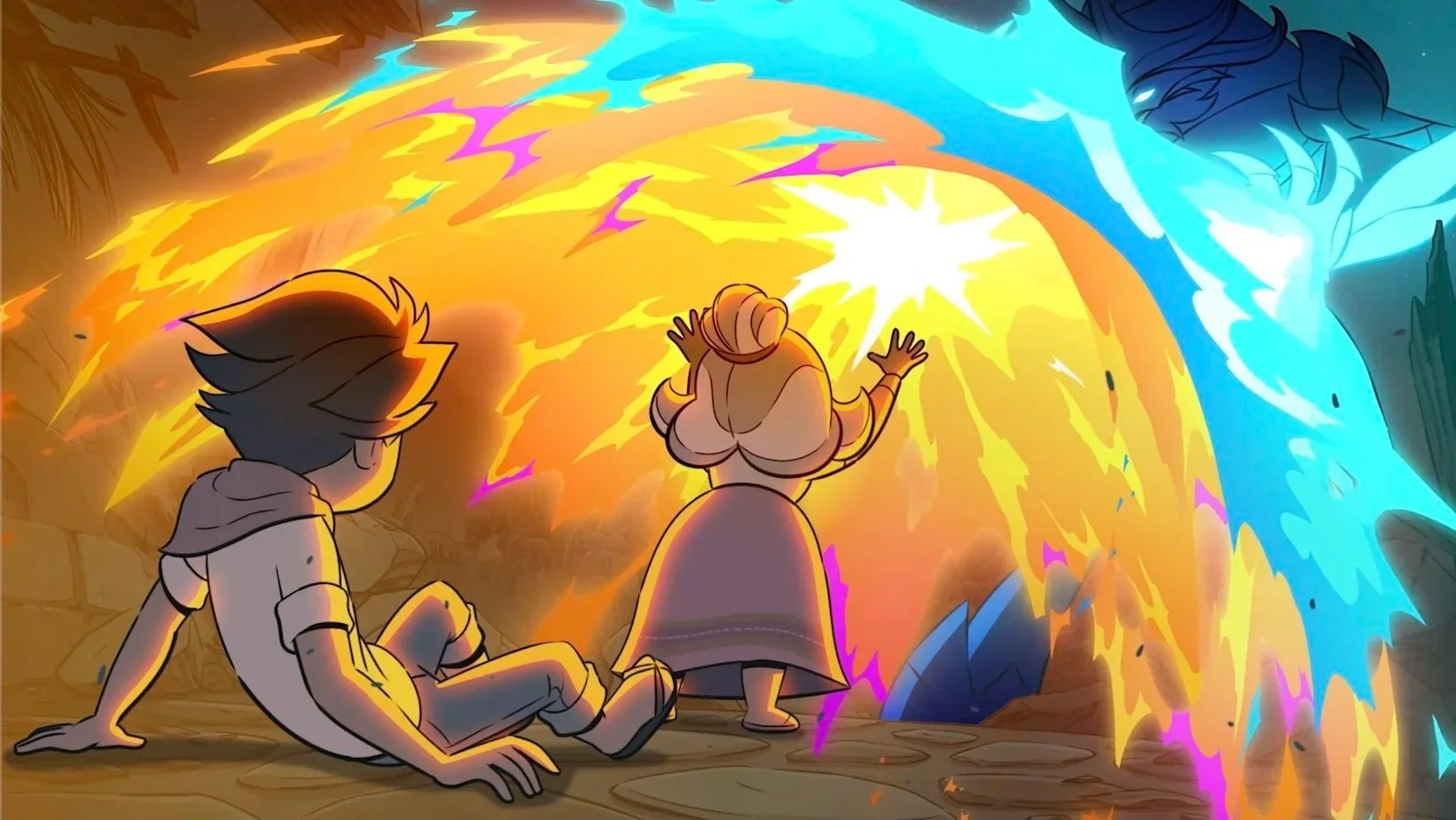
Still from Sun Chaser’s YouTube
Such is the conviction that, by the time dialogue arrives, the world has introduced itself through going against the mythical tides long before the characters think to do so.
Stop Five: A Jeepney That Learned to Sail
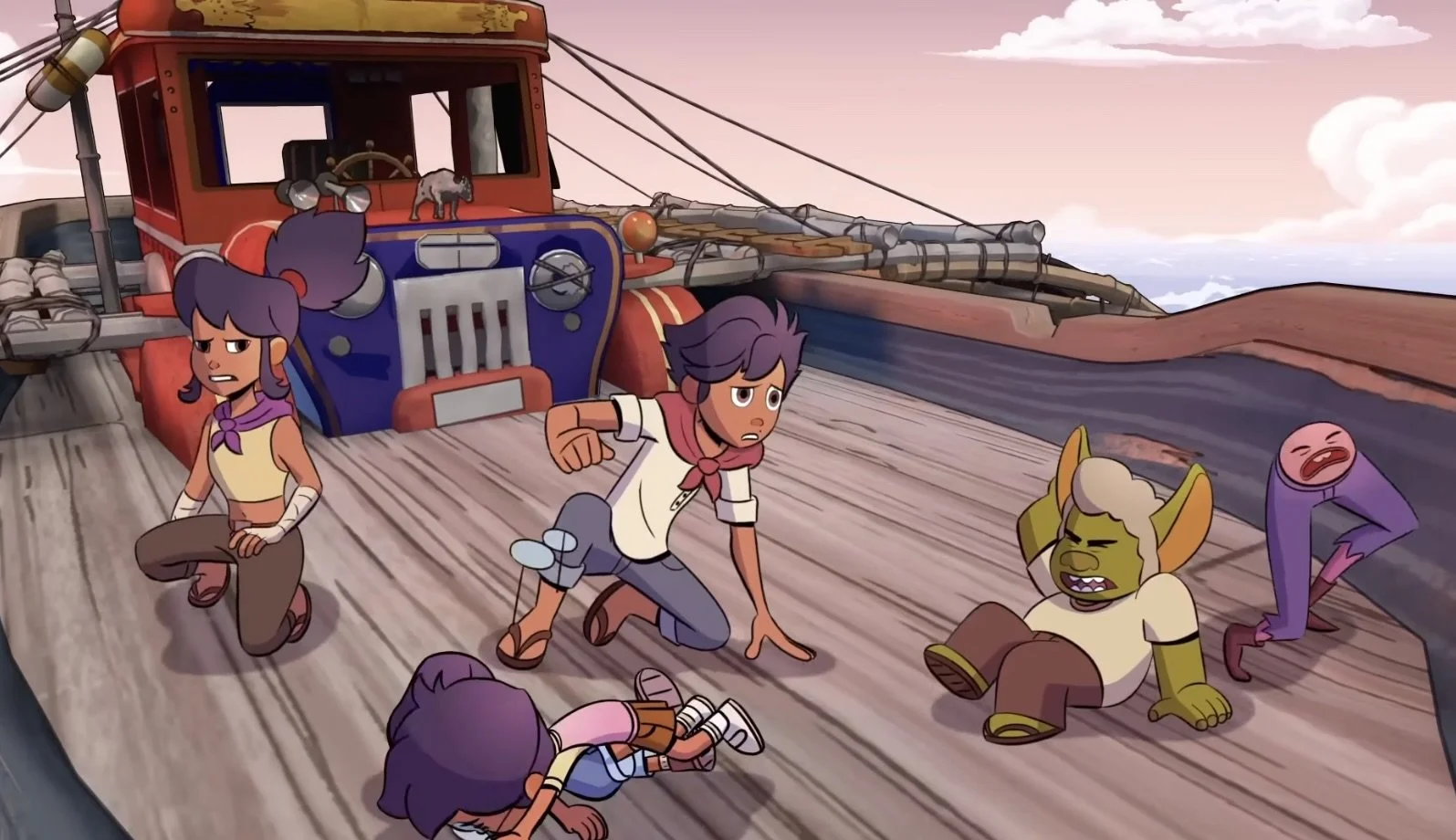
Nowhere is the show’s visual alchemy more potent than in its central vessel. Part outrigger boat, part roaring jeepney, the craft fuses two titans of Filipino transit into a single, seafaring icon. “I saw the boats with the bamboo floats outside... super iconic," Pontillas explains of his travels through the shores.
Still from Sun Chaser’s YouTube
“Of course, the jeepney is something that we grew up on... If we're going to have a sailboat throughout the season, let's make it two iconic Filipino images and mash them together. It might not make sense logically, but that doesn't matter. The audience isn't going to care.
Badion attends to the socioeconomic depth behind this visual choice, grounding it in working-class Filipino resourcefulness.
“I knew I didn't want Jordan's family... to be rich... I want to give Jordan's family this kind of ingenuity... maybe we could use the jeepney's engine to kind of be like a motorboat... my dad would do weird stuff like that all the time where he would not throw away anything... in kid logic, it works.”
Stop Six: Beyond the Capital
Leaving Manila's skyline astern, this animated feature charts a course through the sapphire waters of El Nido, and Coron of Palawan.
Still from Sun Chaser’s YouTube
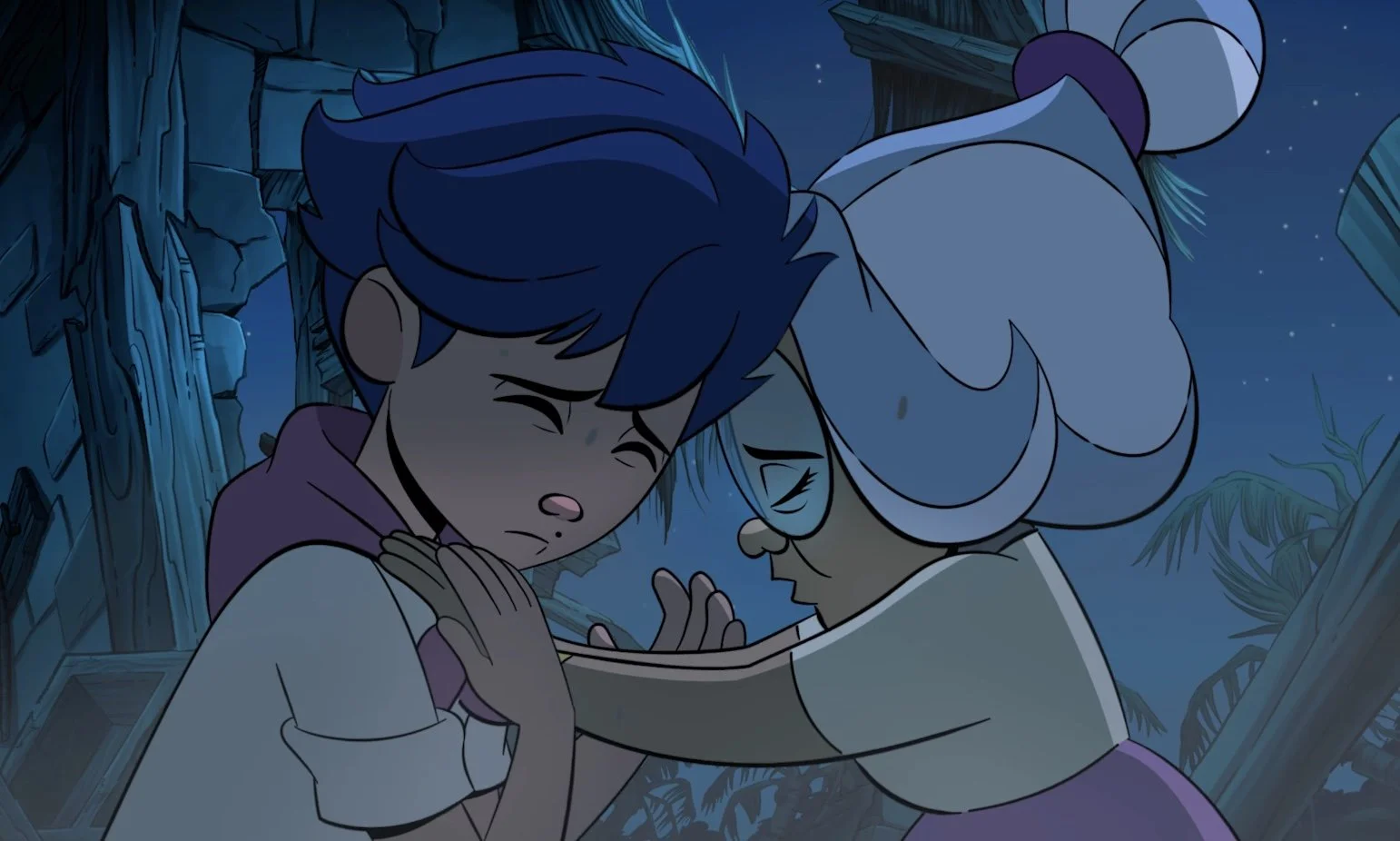
Pontillas sought to capture the effortless bayanihan spirit—the communal harmony between traveler and local—widening the visual vocabulary of the genre to remind us that the Philippines was a sprawling archipelago much earlier than it became a metropolis.
He views the entire journey through the lens of the diaspora: “The magic in the series is a metaphor for the magic that you will find if you make the choice to go back to your country of origin and discover how beautiful it is.”
Stop Seven: The Sea of a Million Islands
Geography itself is treated as folklore. The fictional Sea of a Million Islands reimagines the country’s maps as a mythological playground where ancient sea serpents stir beneath the waves and provinces are reborn as legendary realms.
Still from Sun Chaser’s YouTube
“It is supposed to be a mythological play on the archipelago,” says Badion. Rather than merely reciting old fables, the world breathes them; the ocean becomes the fluid spine connecting the human world to the spirit realm.
Yet the series approaches mythology with a comedic wink, giving even its most fearsome creatures room for younger audience.
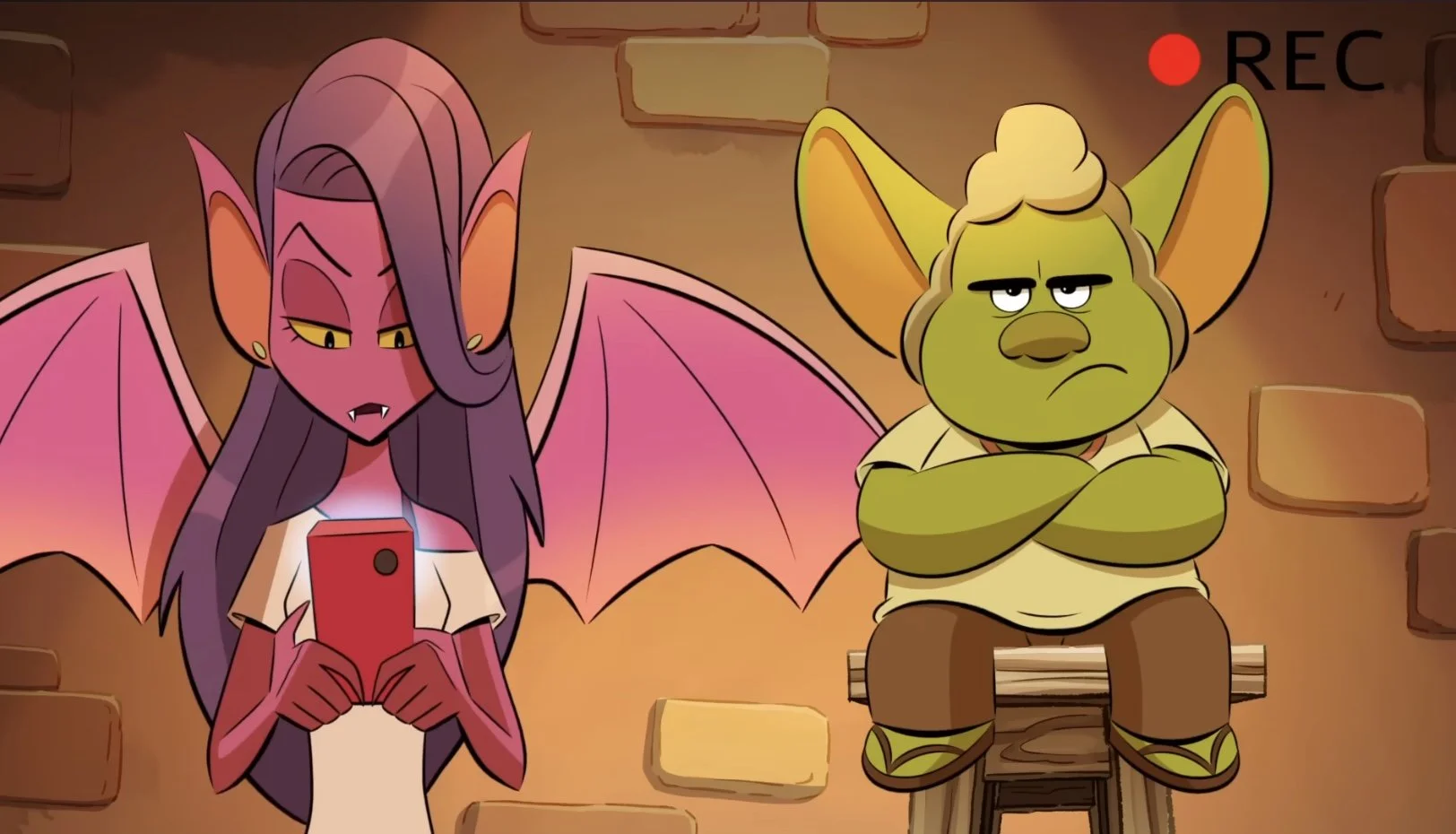
“Manananggal is one of the most savage characters in Filipino mythology,” Badion laughs. “I just thought, oh, we’re doing a kid’s thing. I've never seen it as a cool auntie or a cool older cousin... We were like, if we’re going to make the Manananggal a cool auntie, we should also make the legs a character and just be fun if it was just a character.”
Stop Eight: Voices That Feel Like Home
A landscape is only as real as the voices that echo across it. Sun Chaser assembles a powerhouse cast of Filipino and diasporic talent spanning both sides of the Pacific.
Manny Jacinto lends his cross-cultural nuance to the protagonist, Jordan, while Liza Soberano wore two hats as producer and casting architect to recruit Manila’s finest—all while pulling double duty in the recording booth to voice both Angie and Queen Marisol.
Through her vision, the production enlisted titans and rising stars alike—Charo Santos, AC Bonifacio, KD Estrada, and Zia Dantes.
Badion recalled how Soberano completely transformed her own performance during production: “We didn't know what Queen Marisol sounded like until we heard... Hope does that voice that she said she's never done before in her life in the booth. That's the Liza Soberano story.”
The casting process itself yielded moments of pure serendipity. Securing Dingdong Dantes to voice a massive supernatural entity happened entirely by accident while he was helping his daughter, Zia, record her own audition.
“She was auditioning, she had this mysterious guy who was feeding her lines,” Badion recalls. “And I was like, ‘who is this guy? This guy's amazing.’ And they were like, ‘oh yeah, that's her dad, Dingdong Dantes.’”
Dantes lent the role a puckish charm past its one-note villainy. “He completely flipped the script on what I thought this character was,” Pontillas notes. “He did that by making the character human and have a sense of humor.”
These performances thrive on their natural cadence, allowing Pinoy humor and emotional weight to exist without translation or apology—even extending to a karaoke needle drop of Dionela's contemporary OPM hit, Marilag.
“If we didn't have karaoke in this episode, [the] Philippines would be terribly upset,” Pontillas jokes.
The Best Souvenirs Are the Ones You Recognize
Sun Chaser Official Poster
For all its soaring beasts and map-making magic, Sun Chaser keeps its feet in the familiar. Pontillas sees in it a massive paradigm shift for the local industry in 2026: “We've been a service studio country for decades... I think we're turning a new leaf nowadays where the country is starting to produce their own original stories... Their ambition is not necessarily to work for Disney. Their ambition is to tell their own stories in the Philippines.”
The true landmarks of this journey remain the smooth grain of bamboo furniture, the weathered stone of a coastal refuge, and the neon glow of a neighborhood storefront.
It is a mosaic of how people “look, act, decorate, celebrate,” as Badion beautifully puts it. The spell cast after the final frame isn't the wonder of an impossible world; most of all, in the discovery that our own was enchanting beyond imagination all along.