
Would you talk to a dead loved one again if AI let you?
Barefoot Theatre Collaborative’s production invites audiences into a deeply human story about loss, ethics, and the evolving relationship between people and technology.
Words Gerie Marie Consolacion
Photos courtesy of May Celeste and CJ Ochoa
March 26, 2026
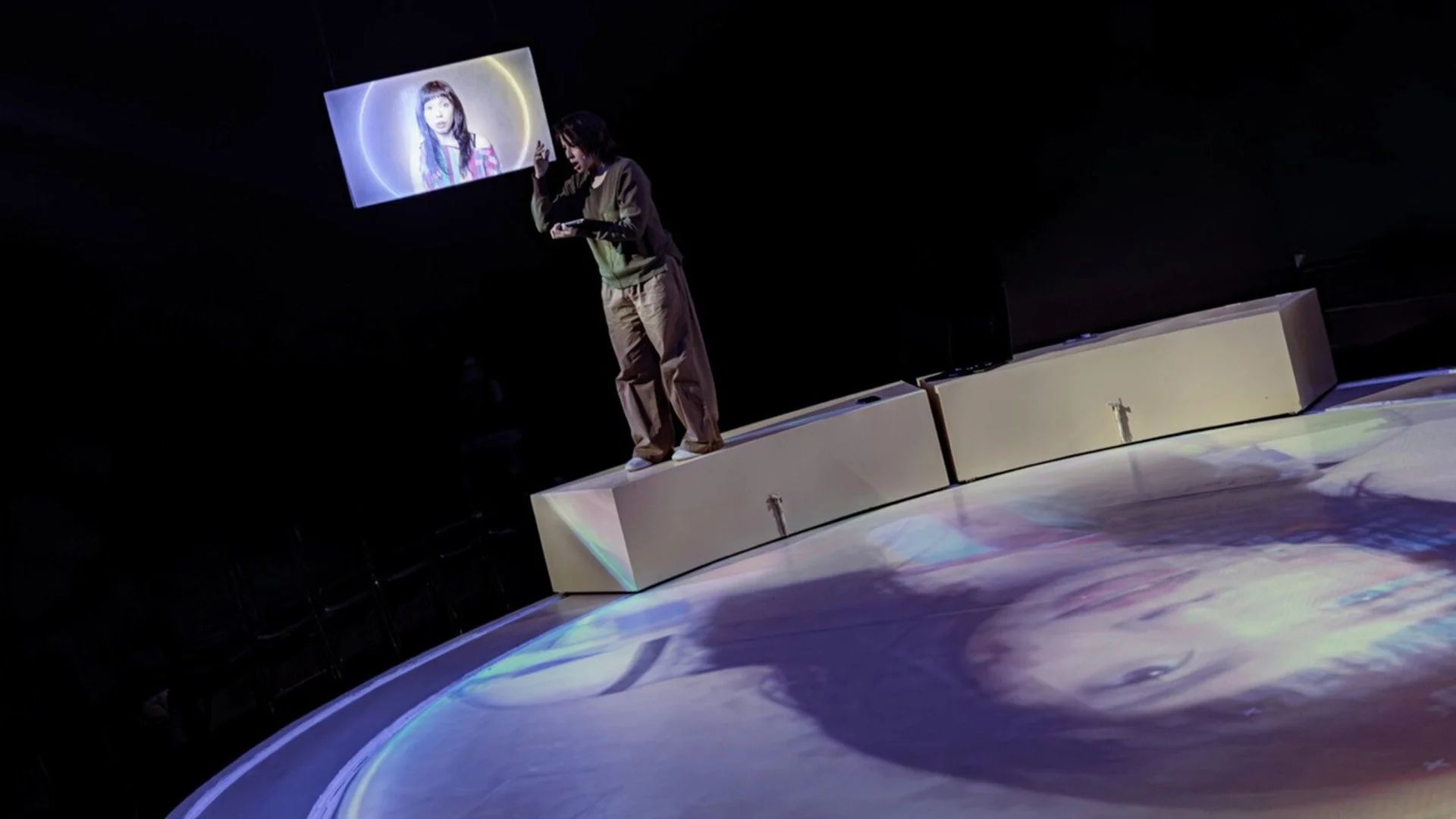
What happens when grief refuses to stay buried? When memory becomes so heavy that even technology begins to feel like a refuge?
These are the questions that echo long after anthropology takes its final bow. In Barefoot Theatre Collaborative’s staging of Lauren Gunderson’s work, the play does not simply tell a story. It lingers. It is unsettling. It asks its audience to sit with something uncomfortable and deeply familiar at the same time.
A space that feels too close to home
The first thing you notice is how near everything feels.
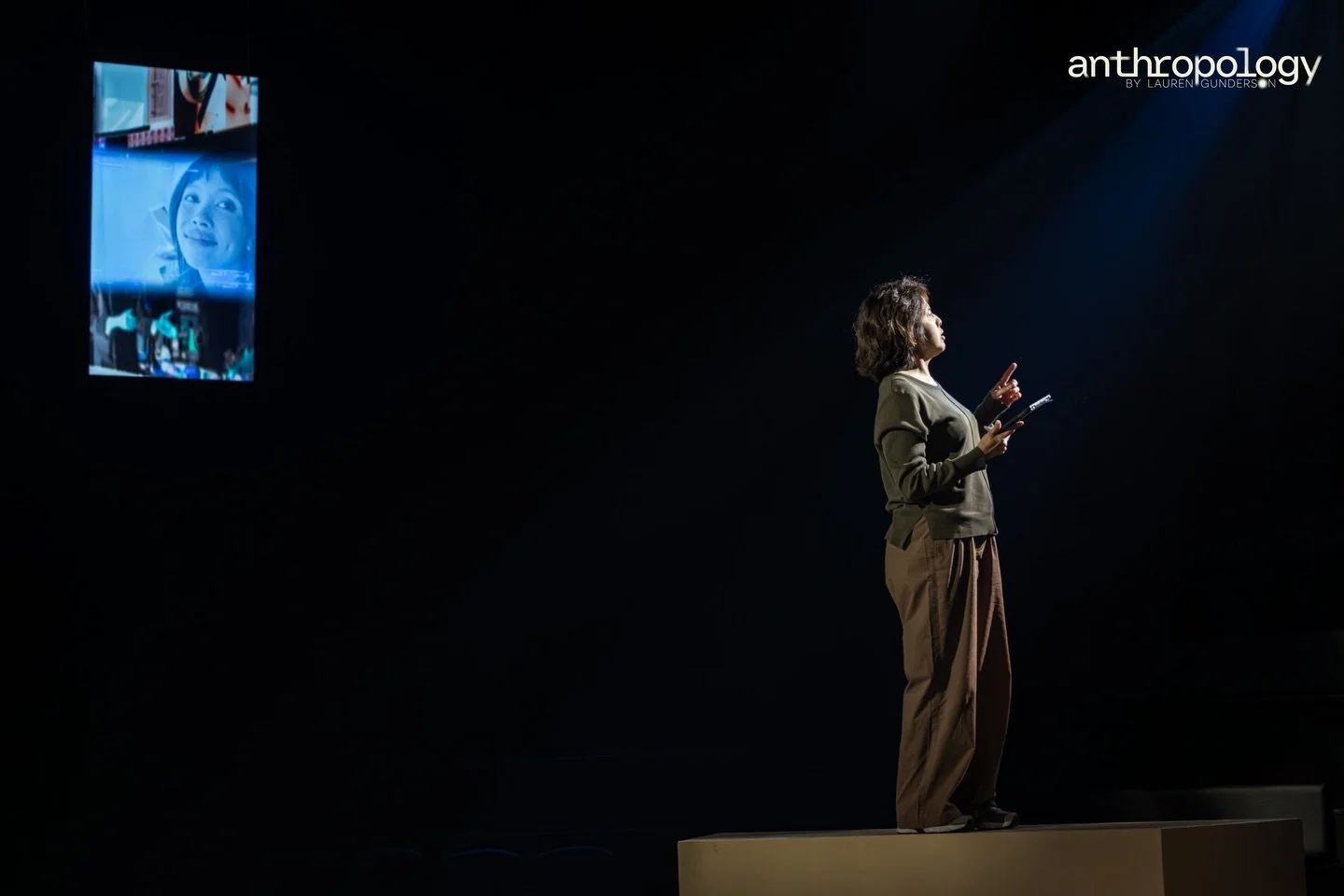
Jenny Jamora as Merril | Photo from Barefoot Theatre Collaborative
The stage is arranged in a circle, and there is no real separation between the actors and the audience. You are not watching from a distance. You are inside it. Every shift in tone, every pause in speech, lands with a kind of quiet weight.
There is no grand spectacle. No overwhelming set pieces. Just bodies, voices, and the quiet intrusion of technology into something as fragile as memory. And that is enough. Because anthropology is not interested in impressing you. It is interested in asking something of you.
Grief that doesn’t sit still
At the center of the play is Merril, a woman trying to make sense of her sister Angie’s absence. But absence, in this world, is not as final as it should be.
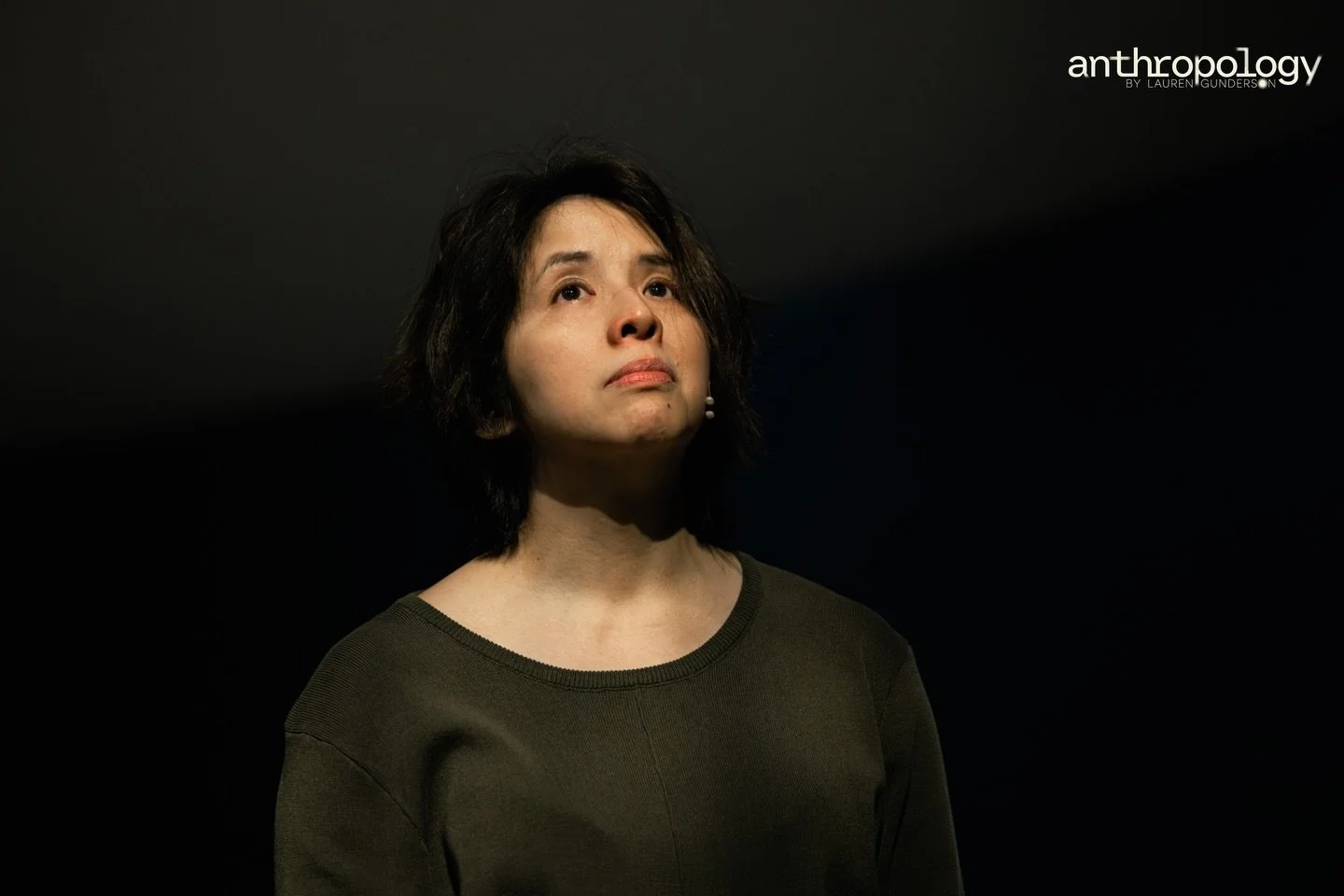
Jenny Jamora as Merril | Photo from Barefoot Theatre Collaborative
Through artificial intelligence, Angie is brought back. Not fully. Not truly. But enough to speak. Enough to respond. Enough to feel, at least on the surface, like she is still there. And that is where the discomfort begins.
Because grief is supposed to move forward. It is supposed to hurt, then soften, then settle into something quieter. But what happens when it doesn’t have to? What happens when you can return to the person you lost, again and again, as if nothing ever really ended?
When technology steps in
The play does not treat technology as a villain. It is not framed as something inherently dangerous. Instead, it is presented as something far more complicated.
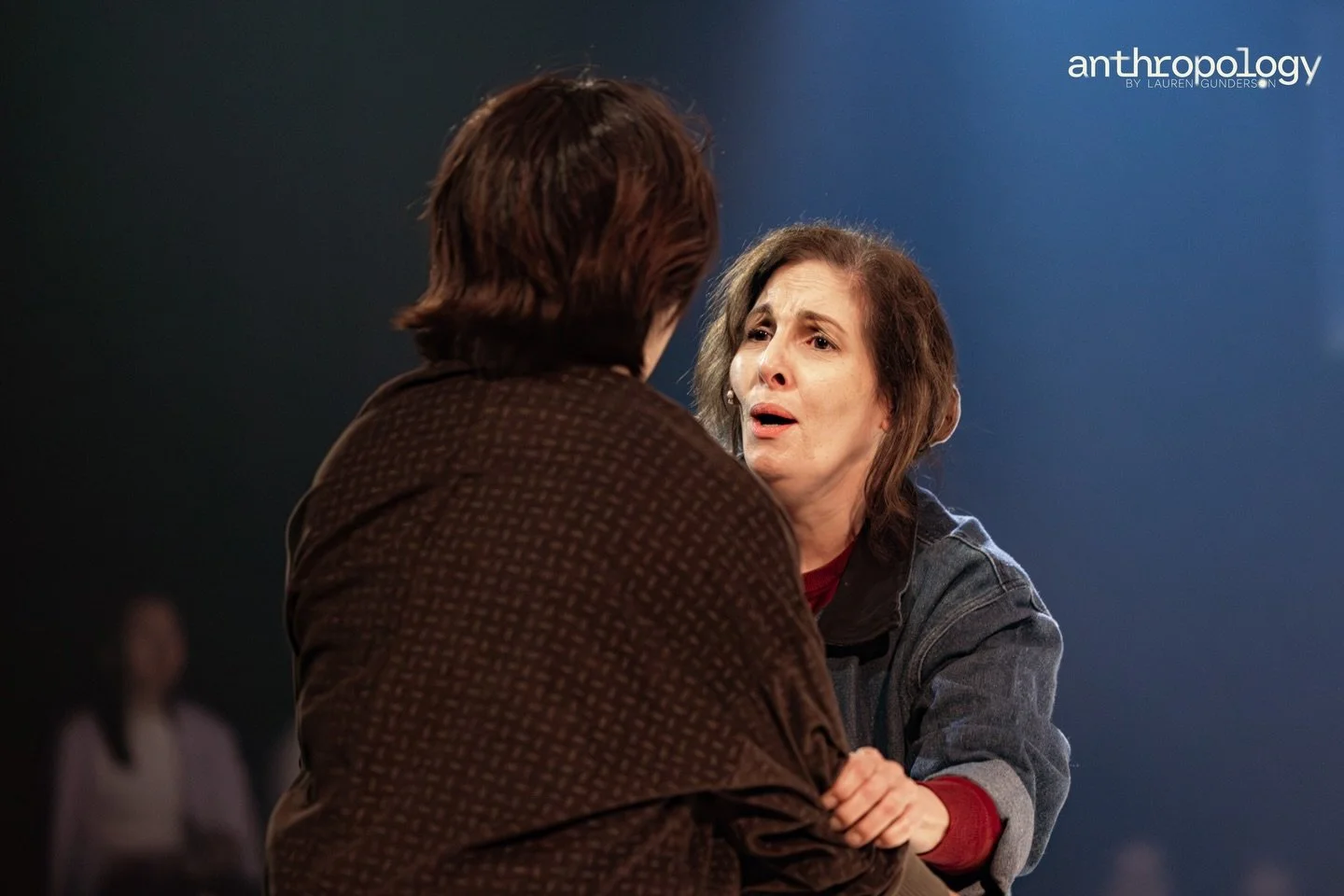
Jackie Lou Blanco as Brin | Photo from Barefoot Theatre Collaborative
During the exclusive interview with Jackie Lou Blanco wherein she played as Brin, she captures this tension in a few simple words, “…nakasagabal ang technology… it’s consuming you.”
There is no dramatic warning in that statement. Just a quiet recognition. Technology helps Merril in her search for Angie, but it also begins to take something from her. Time, attention, and the connection with the living.
Capturing Merril and Raquel’s words, “Patterns are all we have after this kind of trauma, in which Raquel responded, “Sometimes yes, and I understand that routine is important for you, but I loved you so much and I know you loved me too and that pattern didn’t save us, did it?”
It becomes less of a tool and more of a space she retreats into.
A mirror, not a cure
Maronne Cruz, who plays Angie, during the exclusive interview with Art+ Magazine stated that the role of technology is not fixed. It shifts depending on the person using it, “It can be a tool to help you process but it can also be a tool to help you run from it.”
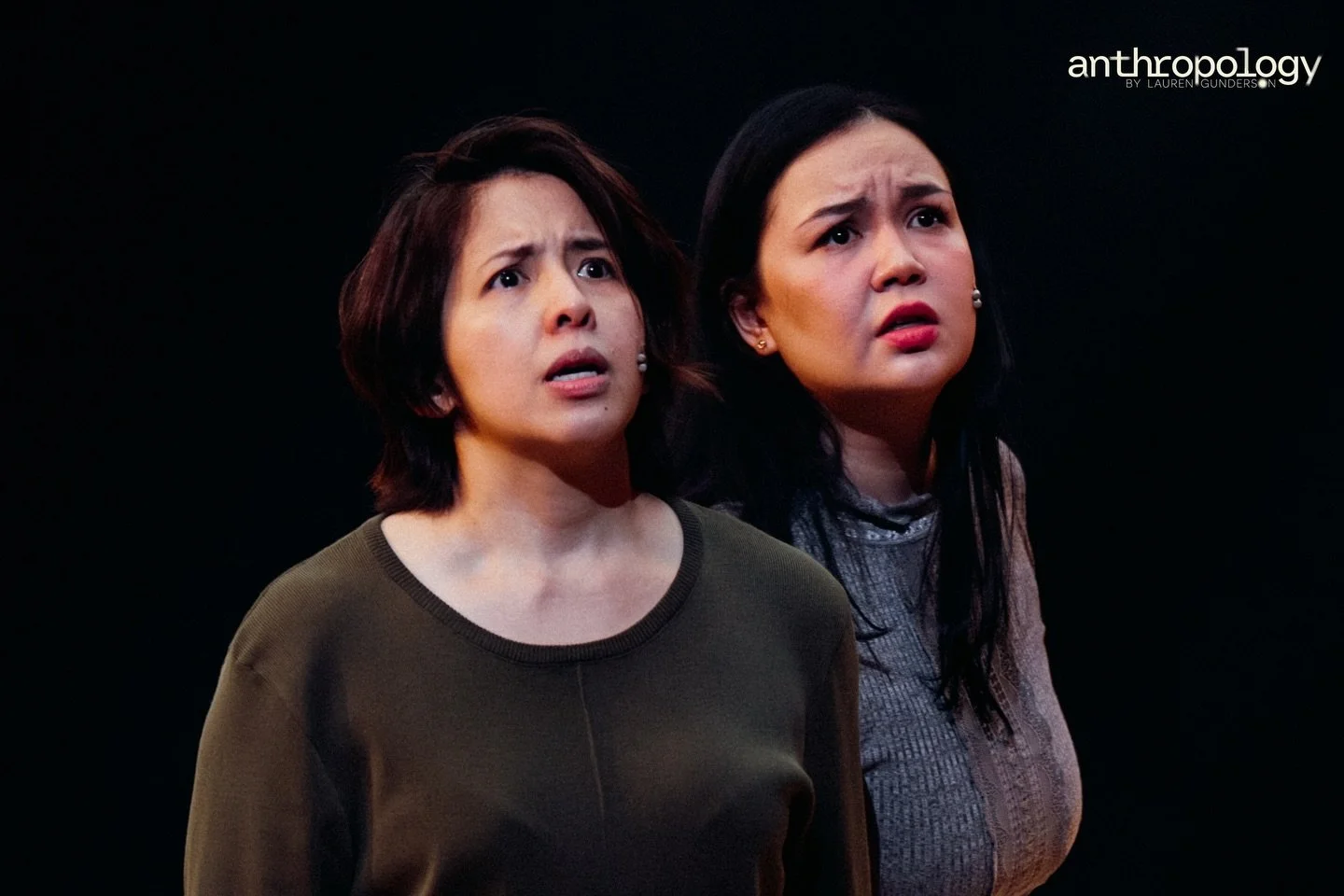
Mika Bradshaw as Raquel | Photo from Barefoot Theatre Collaborative
That distinction matters.
Because what Merril is doing can be seen in two ways. She is either confronting her grief head-on, trying to understand what was left unsaid between her and her sister. Or she is avoiding it entirely, choosing a version of Angie that can respond, that can stay, that does not have to leave again.
The play never forces you to choose one interpretation over the other.
The shape of artificial intimacy
There is a point in the play where the question becomes unavoidable. If something feels real, does that make it real?
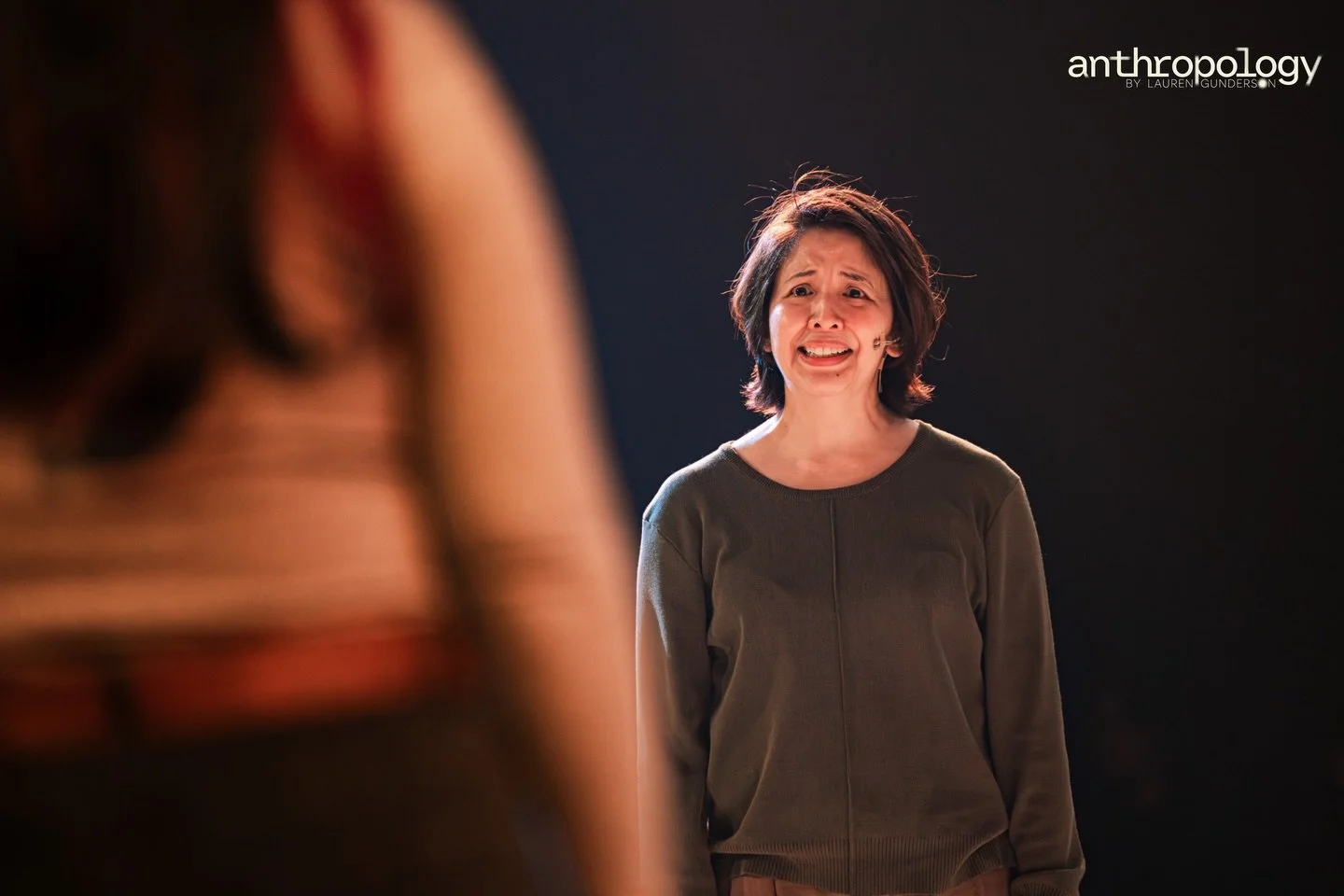
Jenny Jamora as Merril | Photo from Barefoot Theatre Collaborative
During the exclusive interview, Jenny Jamora or Merril puts it plainly, “We believe there's an intimacy being created and is that real intimacy?”
It is the kind of question that does not need a complicated answer. Because the truth is, people already form attachments to things that are not fully real. Messages on a screen. Voices without bodies. Connections that exist somewhere between presence and absence.
In anthropology, that space becomes even more fragile. Merril is not just talking to a machine. She is talking to someone who sounds like her sister, who remembers like her sister, who feels close enough to be mistaken for her sister.
And maybe that is all it takes.
The ethics of holding on
The play quietly opens a door that is hard to close. If technology allows us to recreate the people we have lost, should we?
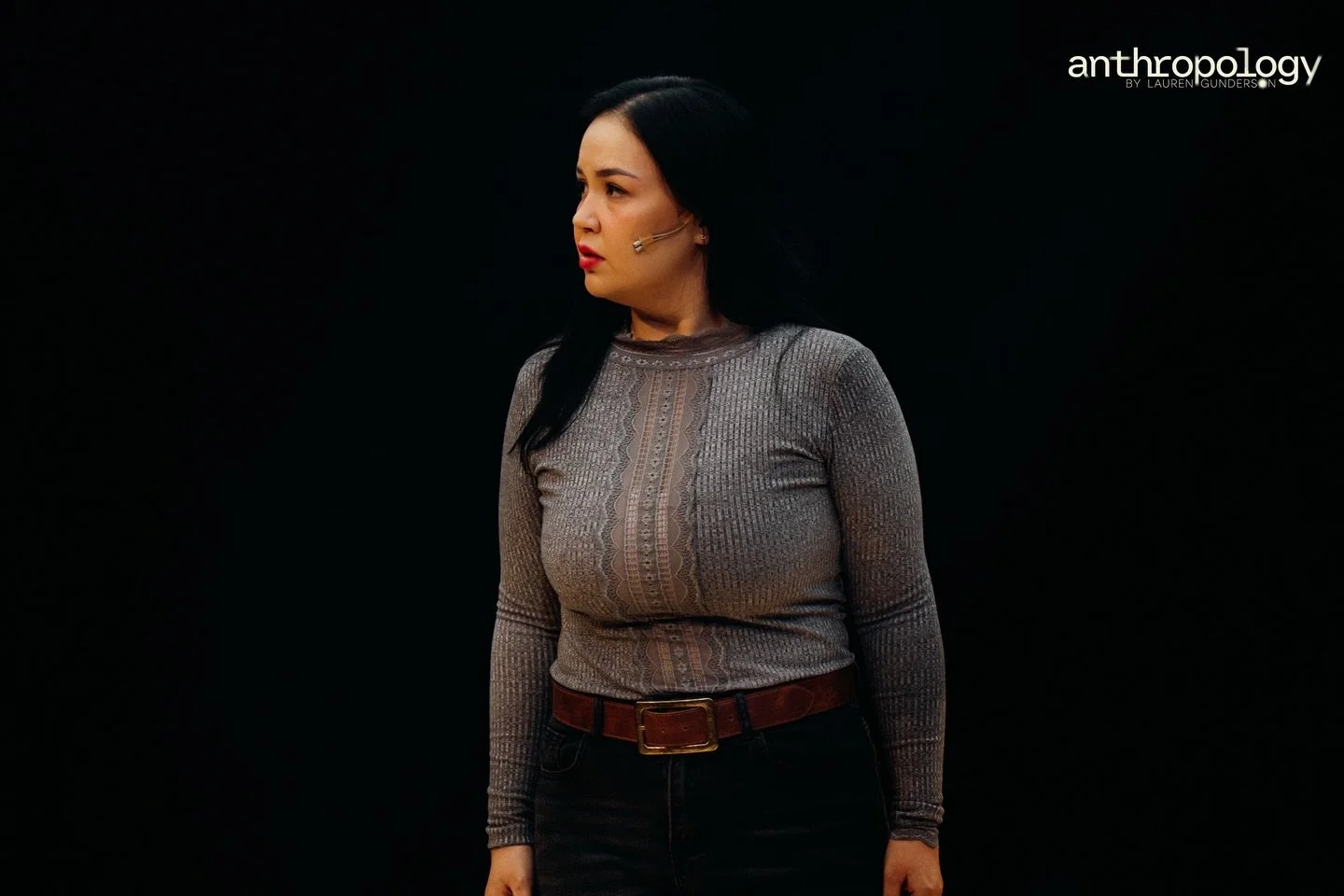
Mikkie Bradshaw-Volante as Raquel | Photo from Barefoot Theatre Collaborative
Mikkie Bradshaw-Volante voices the unease many are still trying to articulate, “Is it ethical to continue to make memories with them?”
It is not just a philosophical question. It is a deeply human one.
Because grief, as painful as it is, serves a purpose. It marks an ending. It forces people to confront the reality of loss. But if that ending becomes optional, if goodbye can be delayed indefinitely, then what happens to the meaning of loss itself?
The play does not attempt to resolve this. It lets the question sit, heavy and unresolved.
Love, guilt, and the things left unsaid
What makes anthropology hit harder is that it is not just about loss. It is about imperfect relationships. Merril and Angie did not have a clean, ideal bond. There were tensions. Missed moments. Things that could have been said but never were.
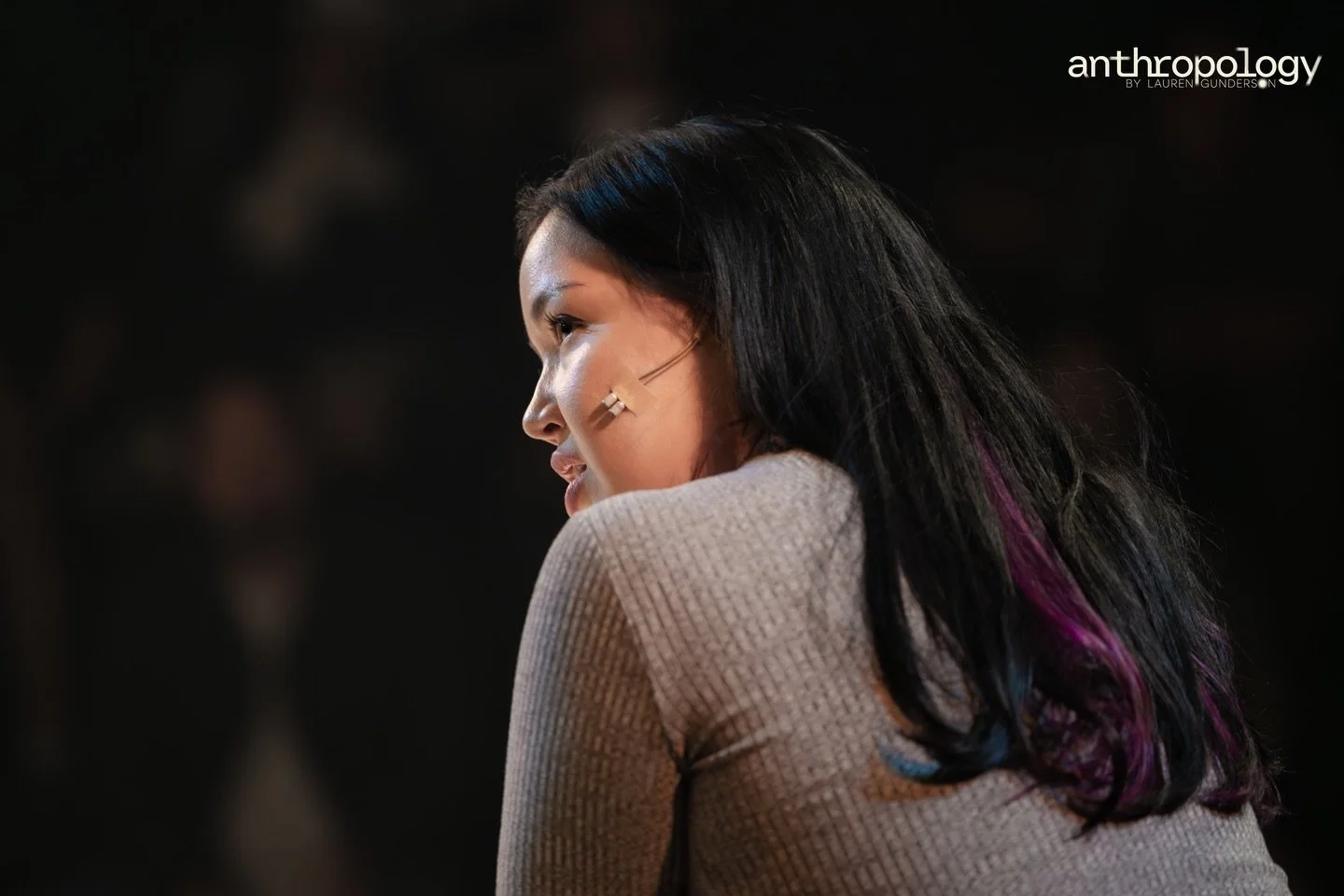
Mikkie Bradshaw-Volante as Raquel | Photo from Barefoot Theatre Collaborative
So when Merril brings Angie back through AI, it is difficult to tell what she is really searching for. Answers? Forgiveness? Or simply another chance?
There is a moment that lingers beneath the surface of the play, when Angie questions Merril’s intentions. And it lands not as an accusation, but as something more painful. Recognition. Because sometimes, love is not enough to erase regret. And sometimes, the version of a person we hold on to is shaped just as much by guilt as it is by affection.
Sitting with the unanswered
What Barefoot Theatre Collaborative achieves in this staging is restraint.
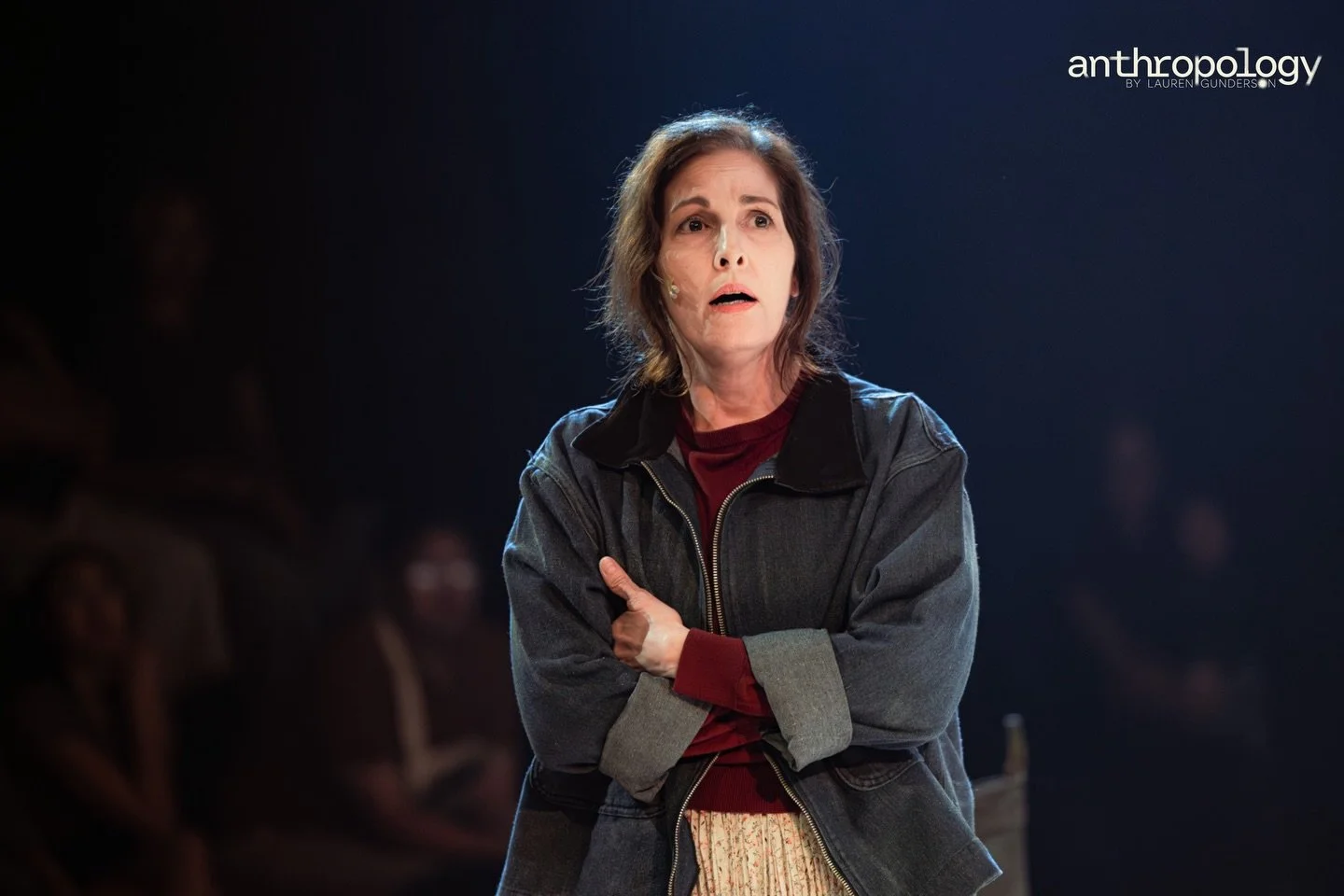
Jackie Lou Blanco as Brin | Photo from Barefoot Theatre Collaborative
The play does not try to overwhelm. It does not try to resolve its own tensions. Instead, it allows silence, pauses, and small emotional shifts to do the work. Even the actors, in describing the play, do not offer certainty. Cruz calls it “complex females amidst complex tech.” It is a simple description, but it holds.
Because that is what the play is. Complex. Uneasy. Unfinished.
What we choose to believe
By the time anthropology ends, there is no clear answer waiting. There is only a feeling.
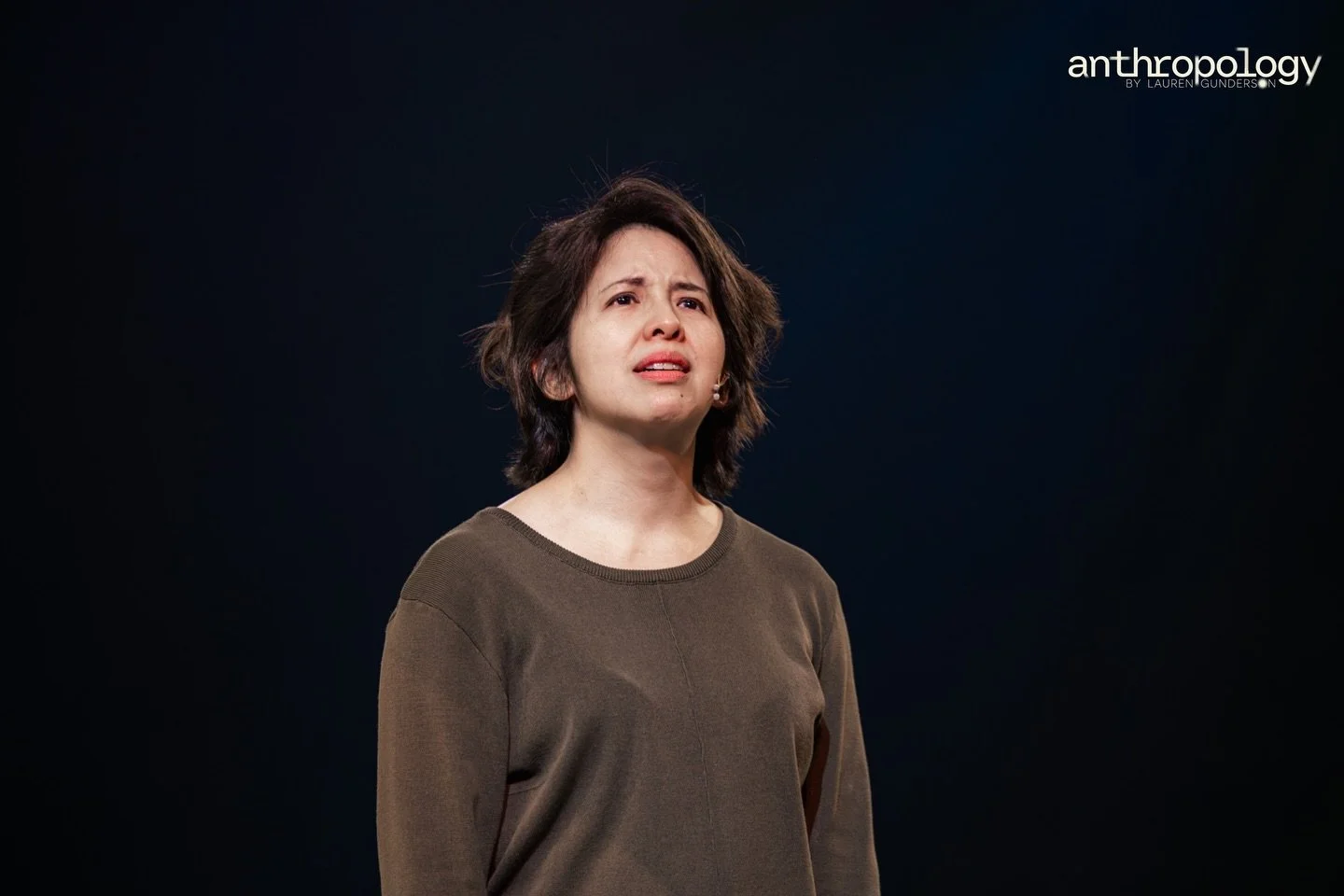
Jenny Jamora as Merril | Photo from Barefoot Theatre Collaborative
A quiet realization that people will go to great lengths to stay connected to those they love. That grief does not always move in a straight line. That sometimes, the line between what is real and what feels real is thinner than we would like to admit.
And maybe that is where the play leaves its deepest mark. Not in proving whether artificial intelligence can truly understand grief, but in asking whether that even matters.
Because if something can respond, can listen, can make you feel less alone, then at some point, the question shifts. Not “is it real?”, but “is it enough?”
The real ending
By the time anthropology ends, nothing is neatly resolved. There is no comfort waiting at the curtain call. Only a question that lingers longer than it should.
If we can recreate the people we’ve lost—hear them, speak to them, feel them close again—then the real danger is not that AI becomes human. It’s that we might stop needing humans to be.