
Windows For Nostalgia: How Almer Moneda Repaints the Filipino Memory
In a time of digital acceleration, Moneda’s works offer a window back to where we began.
Words Randolf Maala-Resueño
Photos courtesy of Almer Moneda
March 13, 2026

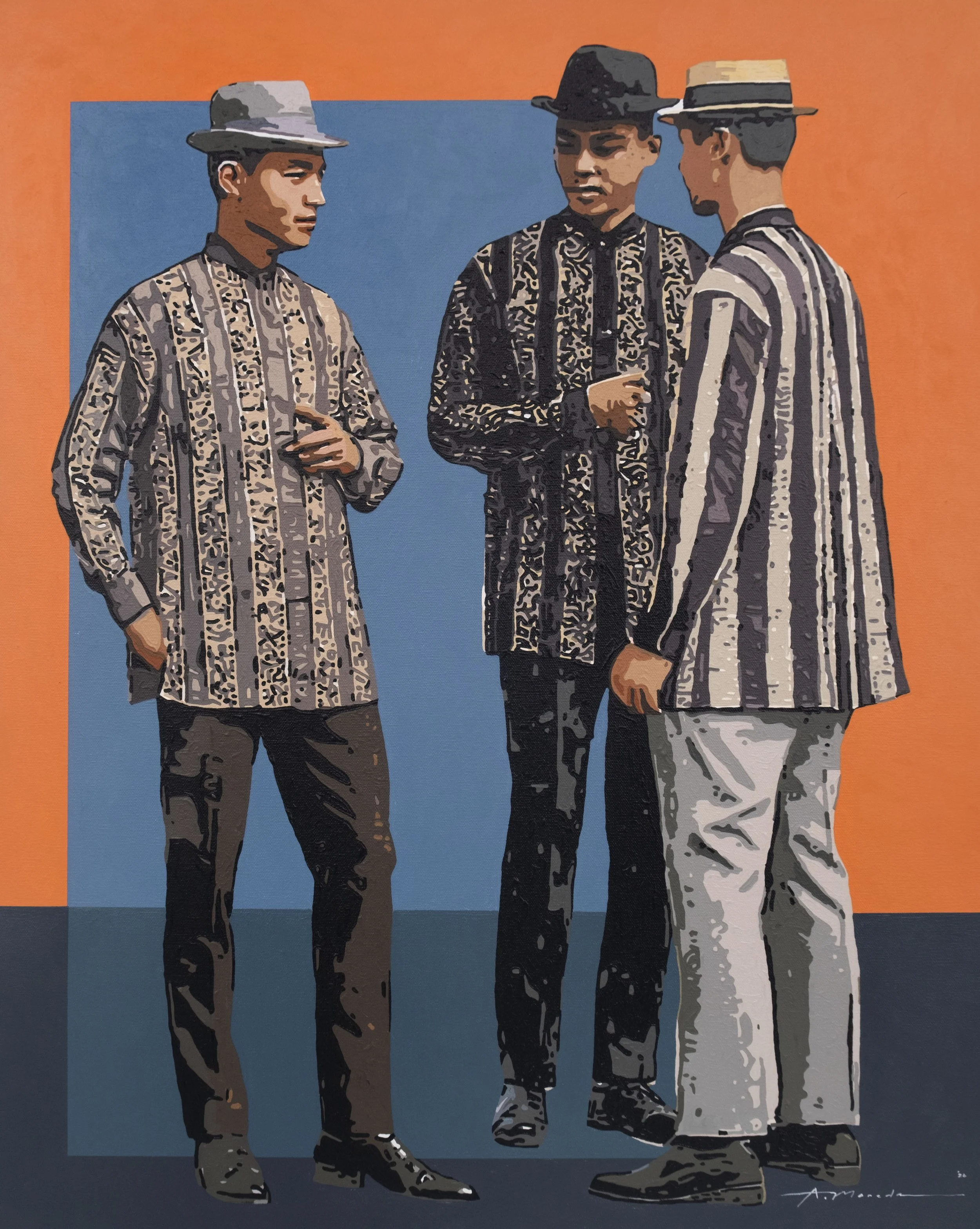
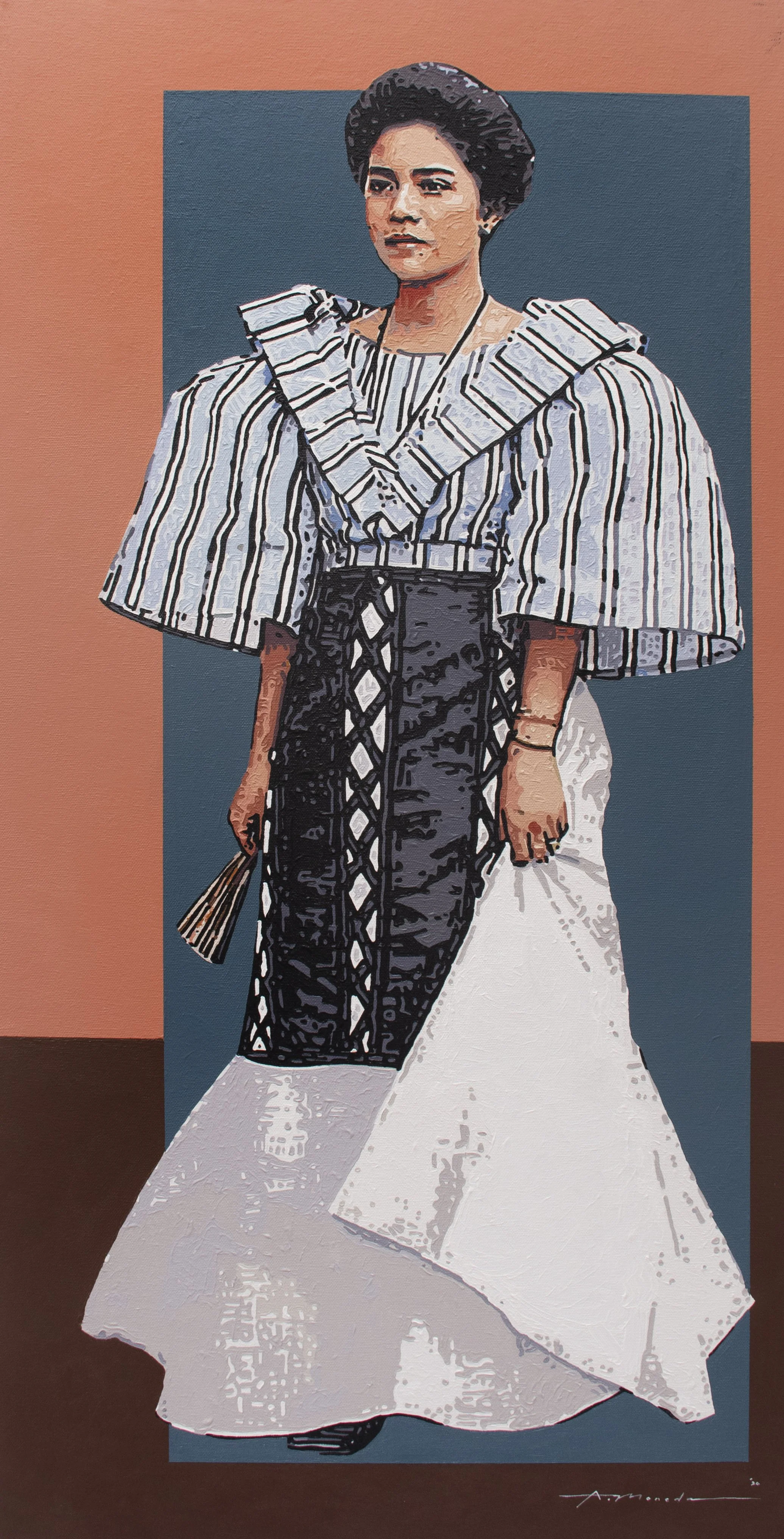
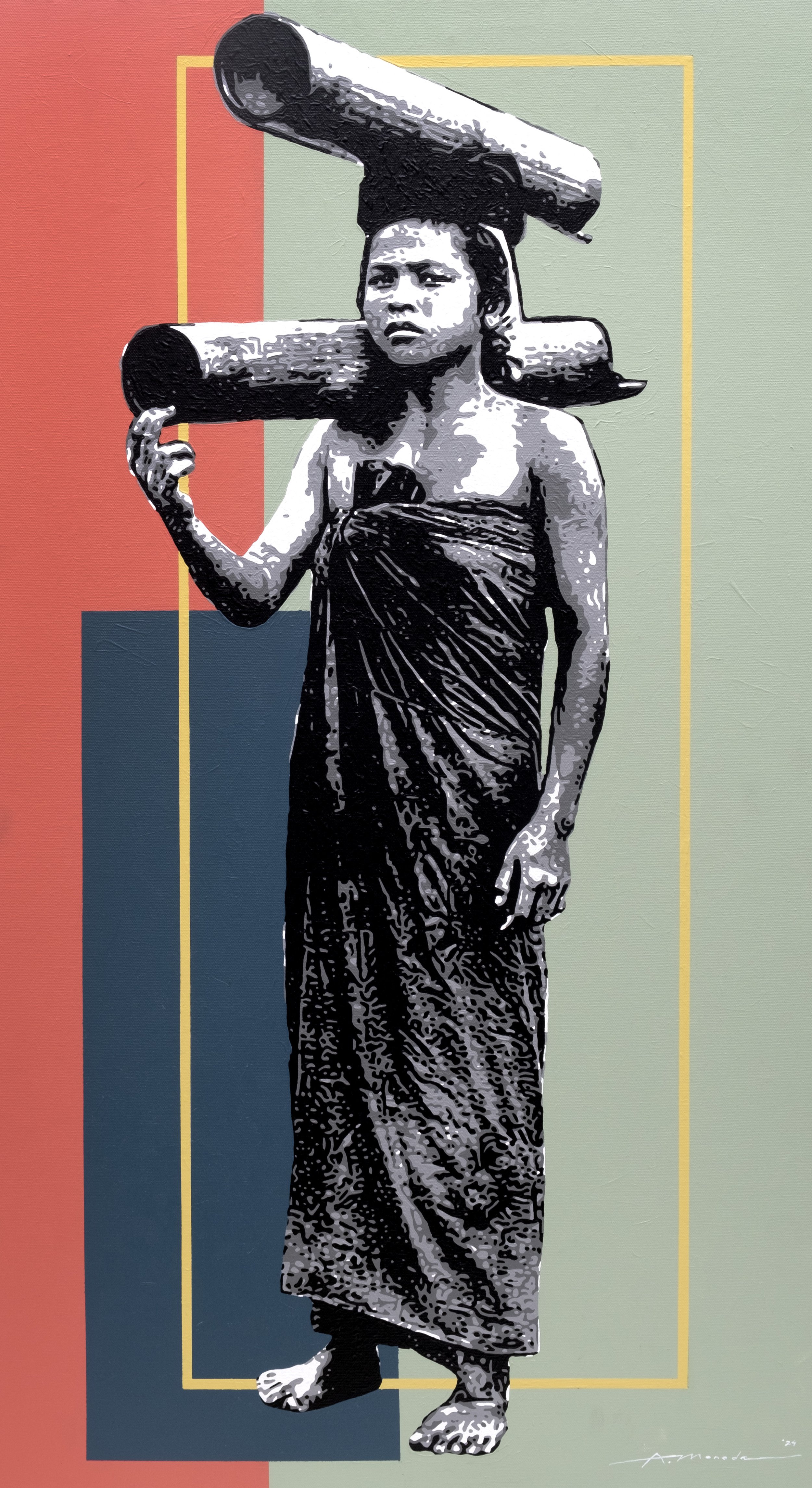
A kalesa hovers in grayscale, suspended against a field of geometric hues. A rice pounder pauses mid-motion beneath a sky that burns orange. In the paintings of Almer Moneda, the past does not fade into sepia. It glows.
At first, his work reads as nostalgia. Old Manila streets. Vintage buses. Labor rendered with dignity. But look longer and the images resist mere longing. The grayscale figures belong to another era, yet they stand before unapologetically contemporary color. The result is not sentimental softness but friction. It is a reconstruction.
For Moneda, nostalgia is an intervention. He retrieves the past and repaints it, repositioning it under new light so it can be seen again.
Ornamental memories of inheritance
Long before his career, there were childhood stories.
“Maraming kwento ‘nong kabataan ko. Kumbaga, kung finocus natin yung nostalgia, nandodoon siya.” (There are many childhood stories. If we focus on nostalgia, it has always been there.)
As a child in Laguna, Moneda listened to his uncle recount tales of old bus routes and leisure spots in Cubao. He remembers stories about the San Ildefonso Bus traveling to Manila, old terminals, and city scenes that sounded almost mythic.
At home, photographs deepened that fascination. His father worked for Laguna-Tayabas Bus Company, and vintage images filled their albums.
“Mga luma, ang gaganda ng itsura. Yung kulay, doon ako na-amaze–sa kulay–kasi di siya nagfa-fade.” (They were old but beautiful. I was amazed by the color because it did not fade.)
He grew up near Paete, Laguna, surrounded by craftsmanship. Relatives carved wood, painted handicrafts, designed ornaments. Brushes and pigments were not foreign objects. They were part of daily life.
Nostalgia, then, was not decorative for Moneda. It was inherited.
Architectural remembering
Moneda trained in drafting, mastering oblique drawings and technical precision. Though he downplays its dominance in his practice, the discipline lingers in his work.
“At some point, merong reflection sa trabaho ko kasi naia-apply ko siya. Nakikita mo sa trabaho ko may guhit guhit, may kulay na linya linya.” (At some point, there is reflection in my work because I apply it. You can see lines, colored lines.)
That structural clarity gives weight to his archival subjects. They are flattened yet firm, almost screen-printed in appearance though meticulously painted by hand. Figures stand isolated against luminous backdrops, as if carefully lifted from history and placed under contemporary light.
He does not copy photographs. He journeys into them. “Parang naglalakbay ako doon sa mga lumang picture na yon sa pamamagitan ng painting ko.” (It is like I am traveling into those old pictures through my painting.)
The act of painting becomes time travel. A journey through borrowed memory.
Chromatic time travel
If black and white signifies yesterday, color signals now.
“Siyempre ‘yung representation nitong monochromatic na black and white is yung nakaraan. Tapos ngayon, yung may kulay, is yung contemporary days ngayon.” (The monochromatic black and white represents the past. The color represents the contemporary days.)
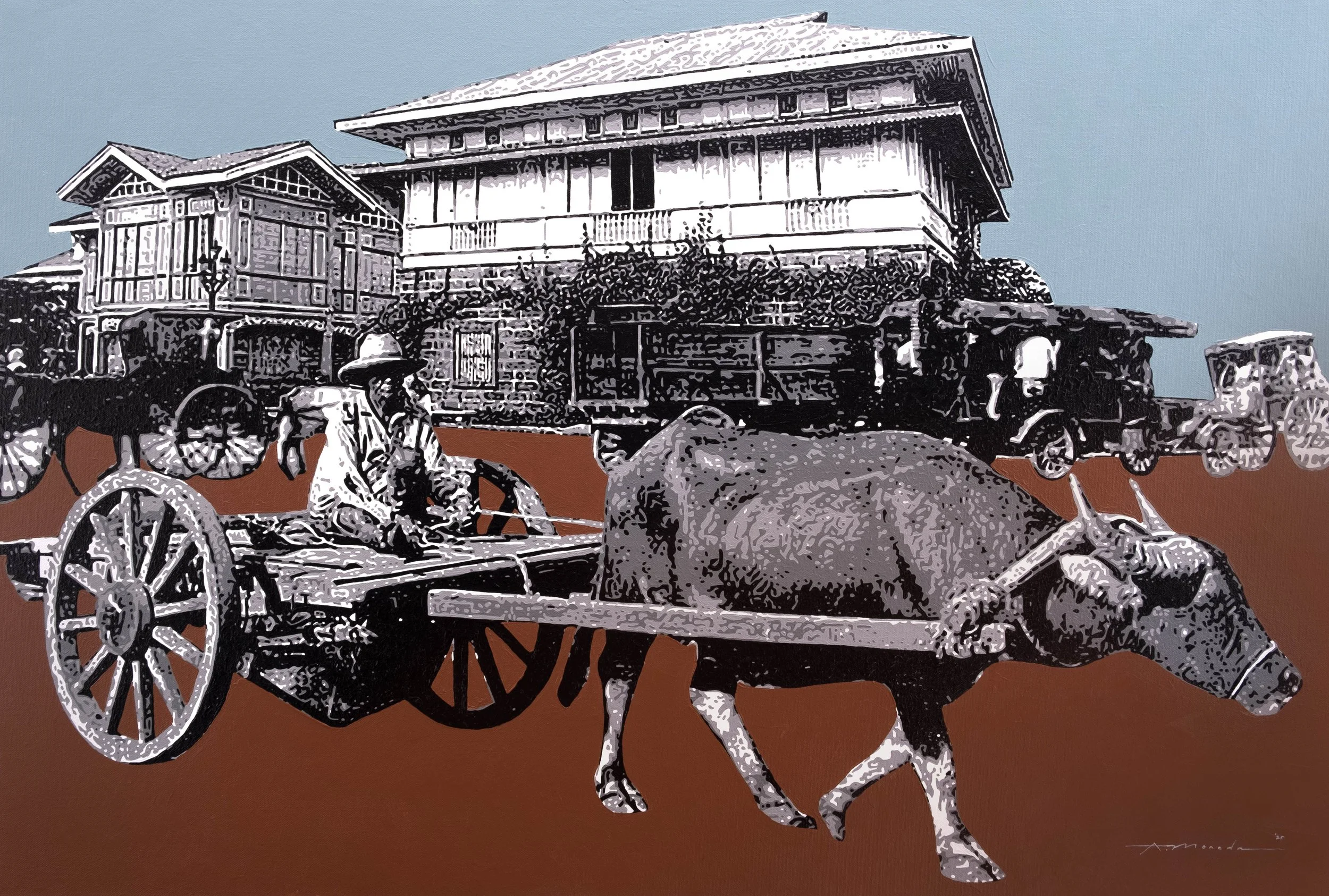
In Moneda’s canvases, color is the bridge–a decorative garnish, a conceptual hinge. Two eras meet in the same frame. The past remains intact yet is interpreted through present sensibility.
His palette choices are deliberate. If he wants to evoke afternoon, he reaches for orange and yellow. Morning may require cooler blues. Sometimes he inverts expectations. A dark blue floor beneath a blurred gray sky to intensify contrast and impact.
Color becomes an emotional temperature. It updates history without rewriting it. Viewers oscillate between documentation and dream; between archive and imagination.
The everyday as monument
Moneda gravitates toward ordinary scenes. Kalesas. Rice pounders. Vendors. He does not search for grand historical spectacle.
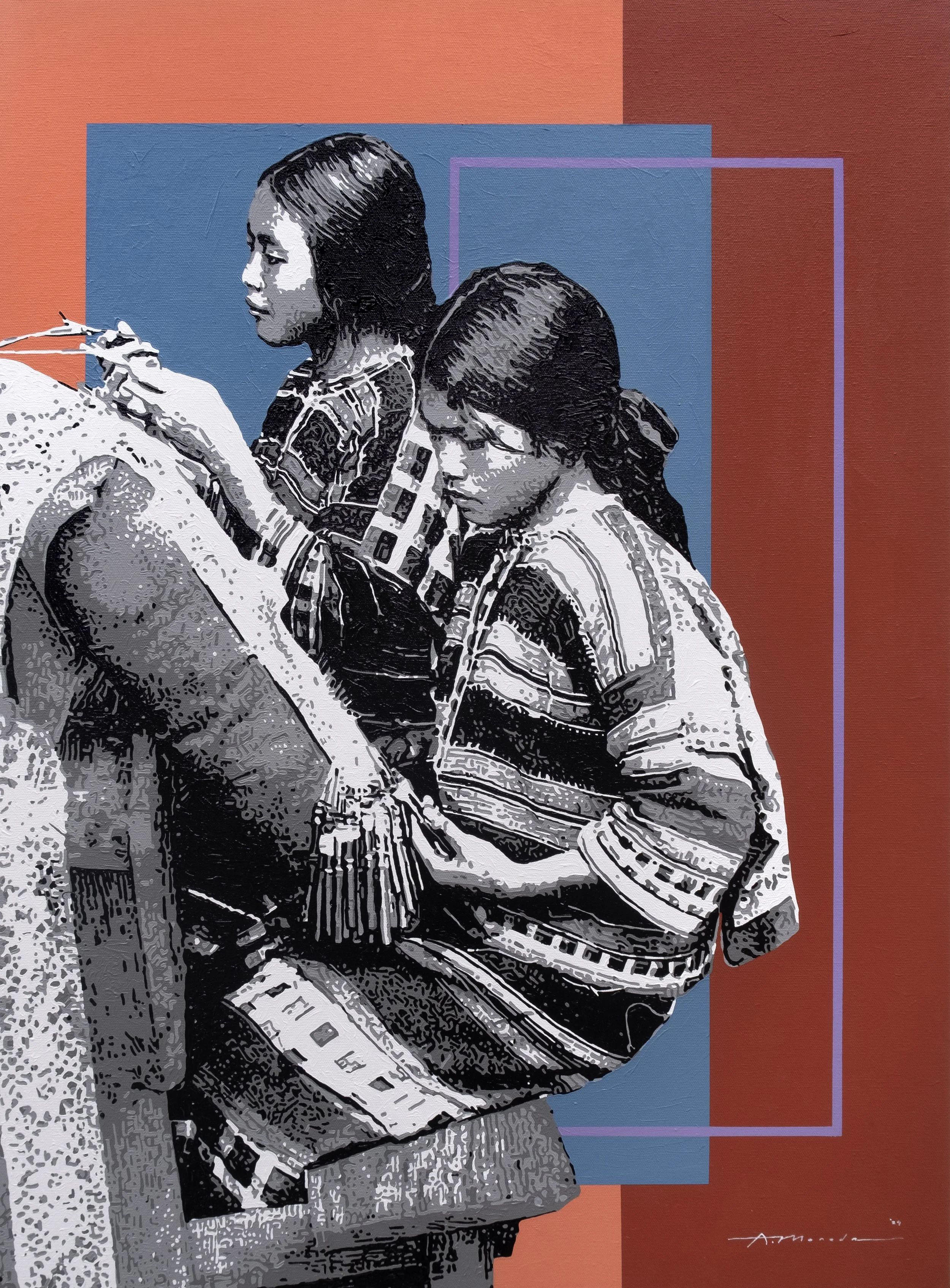
“Minsan kasi yung pinaka-candid na shots, iyon ‘yung parang ‘Oh ang ganda neto ah.’”
(Sometimes the most candid shots are the ones that feel beautiful.)
Born in 1987, he did not live through many of the eras he painted. Much of it came from research and stories. “Mas na-amaze ako na parang hindi ito Pilipinas.” (I was amazed. It felt like it was not the Philippines.)
The clothing, the streets, the absence of modern clutter sparked curiosity. He recalls a slower rhythm of life in Laguna and Quezon.
“Bumagal… napakasimple… walang instant,” he reflected.(Life was slower. It was simple. There was nothing instant.)
In today’s hyper-digital culture, his paintings offer pause.
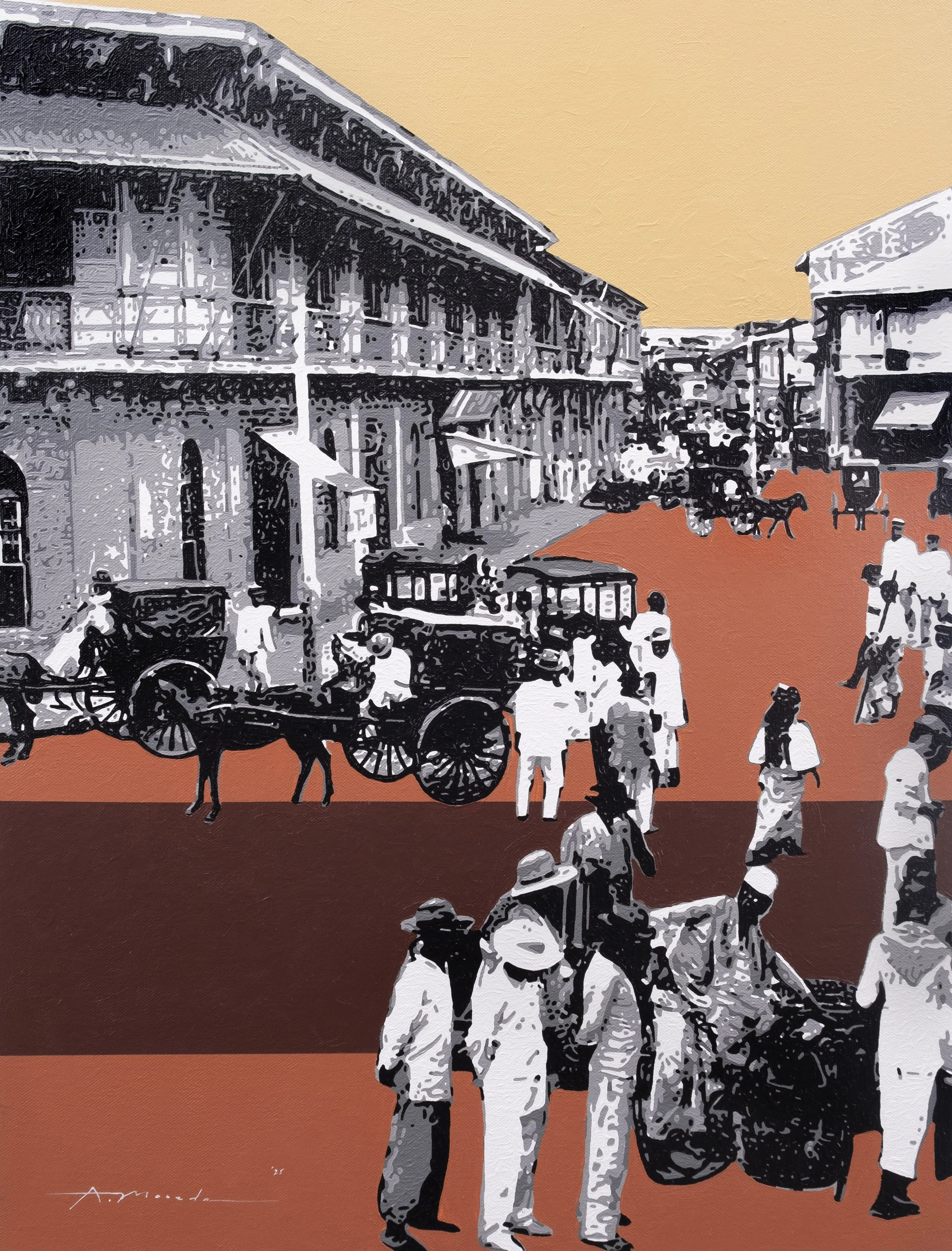
“Hindi ko masabing resistance. Pero masasabi ko na pagbabalik-tanaw… para makapag-pause ka lang.” (I cannot call it resistance. But it is looking back. So you can pause.)
Older generations recognize themselves. Younger viewers encounter origin. Hence, memory multiplies.
Painting against forgetting
For Moneda, responsibility begins with connection. “Ako muna ‘yung nakaka-connect [sa trabaho ko] bago sila.” (I must connect first, with my works, before they do.)
He considers it an obligation to be intentional about what he presents.

“Pag-alaala, paggunita, reconnections.” (Remembrance, reflection, reconnections.)
In a time when, as he notes, many young people live primarily through screens, revisiting the past feels urgent.
“Importante talaga sa panahon ngayon. Kasi masyado na nating nakakalimutan ‘yung ating nakaraan.” (It is important today because we are forgetting our past.)
Ultimately, he imagines his paintings as windows. Through that window, viewers see where they began. “Ito pala ‘yung pinanggalingan ko.” (So this is where I came from.)
In Moneda’s canvases, memory recolored the dust of time, reframed it, and returned to the present. The kalesa glows. The rice pounder stands still yet luminous. The past, suspended against electric hues, refuses to disappear.
Memory, when recolored, is no relic. It is a living surface.