
Where Spring Learns to Bleed
In this fearless revival, Spring Awakening becomes a mirror to modern adolescence and the systems that fail it.
Words Mian Centeno
Photos courtesy of The Sandbox Collective
February 25, 2026
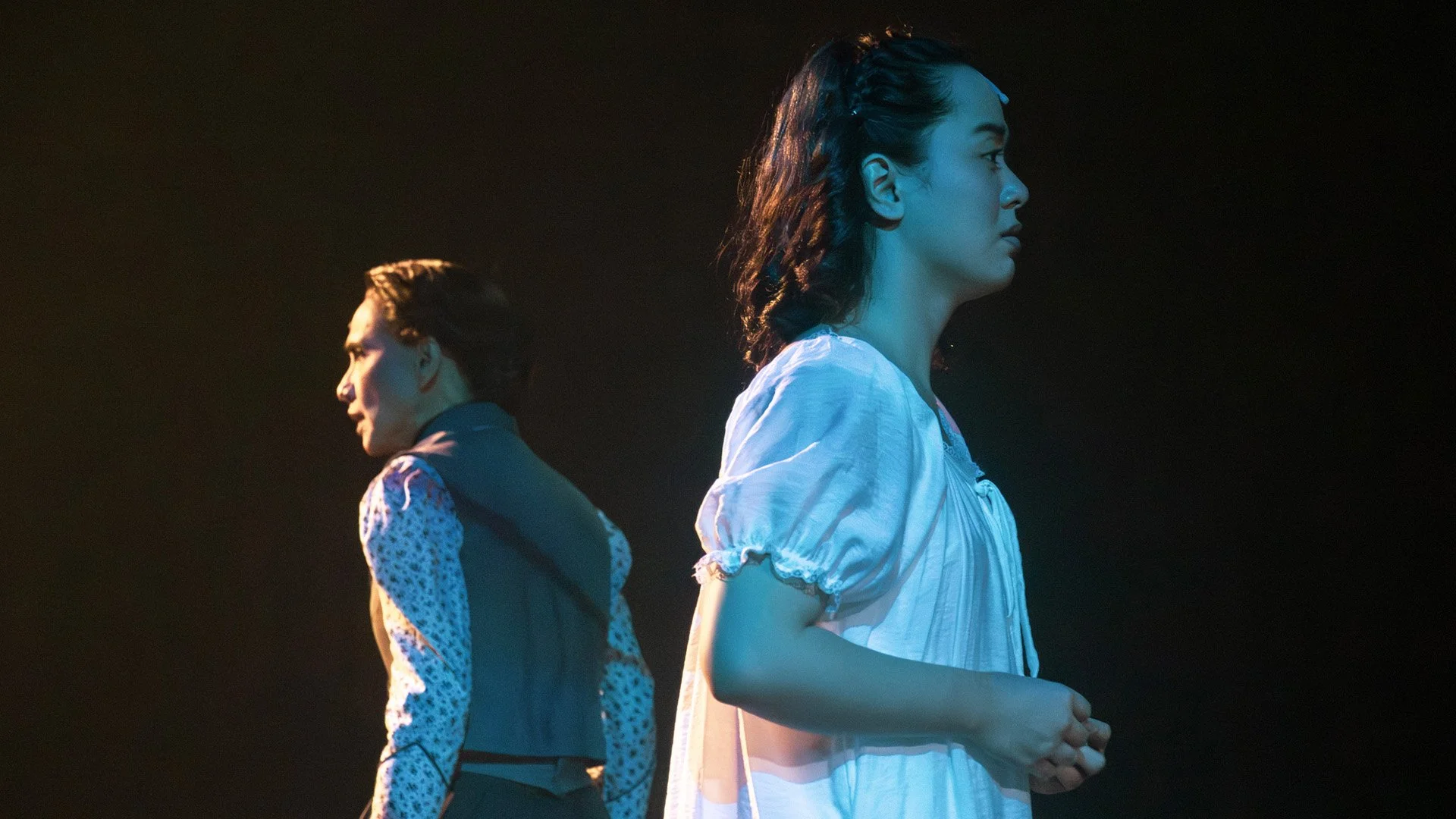
To call Spring Awakening a roller coaster ride of emotions is an understatement. It is a gut punch, a battle cry, and a sharp mirror held up to every teenager—and parent—who has ever felt lost inside a system that refuses to listen.
The Sandbox Collective opens its season at the Black Box at The Proscenium Theater with a version of Spring Awakening that feels frighteningly close to home. Director Andrei Nikolai Pamintuan strips away any sense of period distance, allowing the Tony Award-winning story to breathe in today’s reality.
The show refuses to romanticize adolescence.
The Dark I Know Well
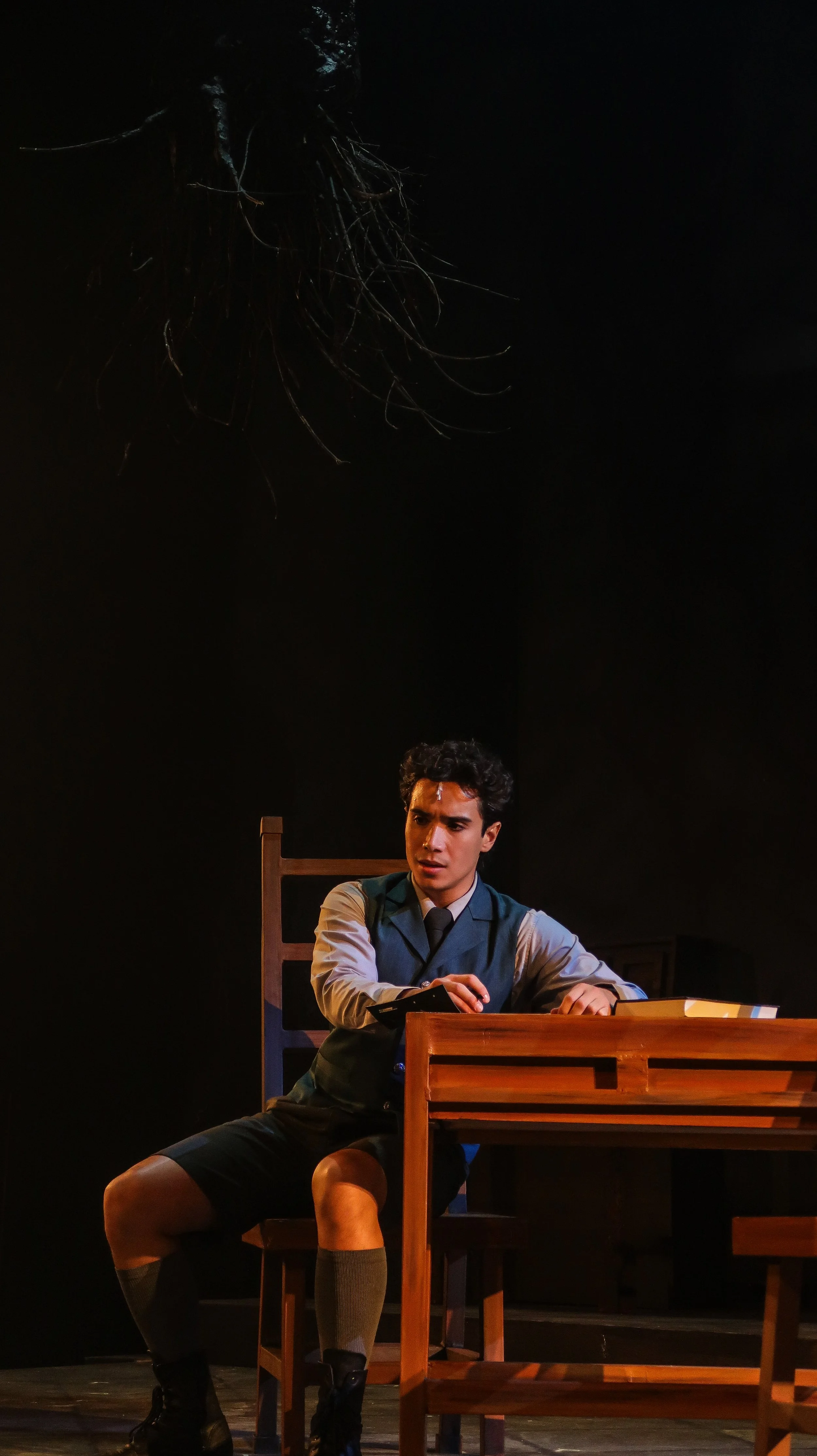
Photo by Sesa Fajardo
This is not just a rebellious coming-of-age story. It is a painfully honest look at teenagers navigating mental health struggles, sexual confusion, academic expectations, and parental authority in a society that confuses silence with protection.
The critique unfolds gradually. Songs like “The Dark I Know Well” and “Don’t Do Sadness/Blue Wind” sit in the discomfort of isolation, revealing how easily a teenager can disappear in plain sight.
Totally F*cked
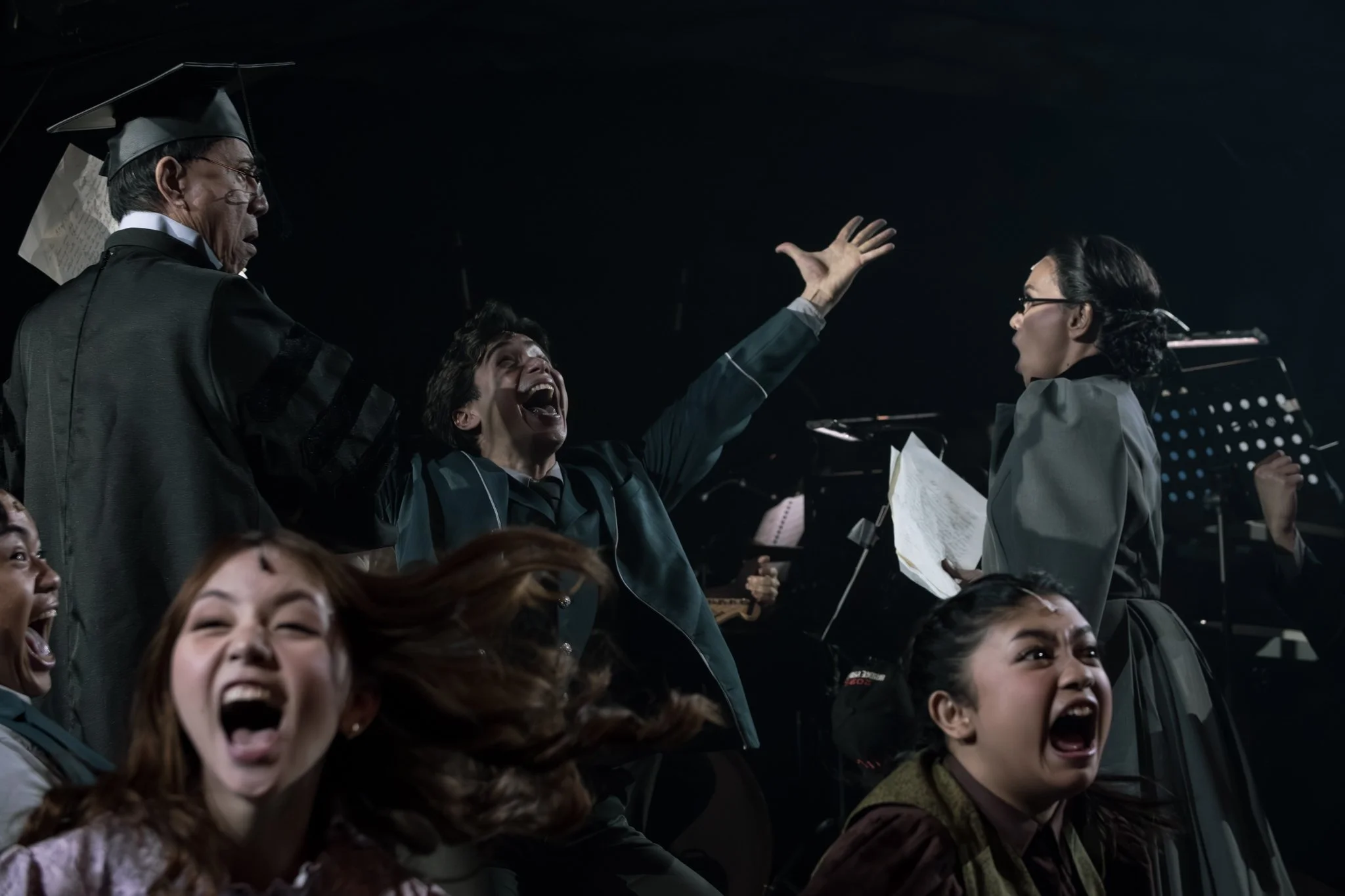
Photo by Loreta Arroyo
Then the anger resurfaces. “Bitch of the Living” and “Totally Fucked” arrive not as rebellion for rebellion’s sake, but as the sound of young voices refusing containment—a deliberate middle finger to a status quo that shoots down dreamers and punishes curiosity.
The show understands that rage is often grief with nowhere to go.
Don’t Do Sadness / Blue Wind
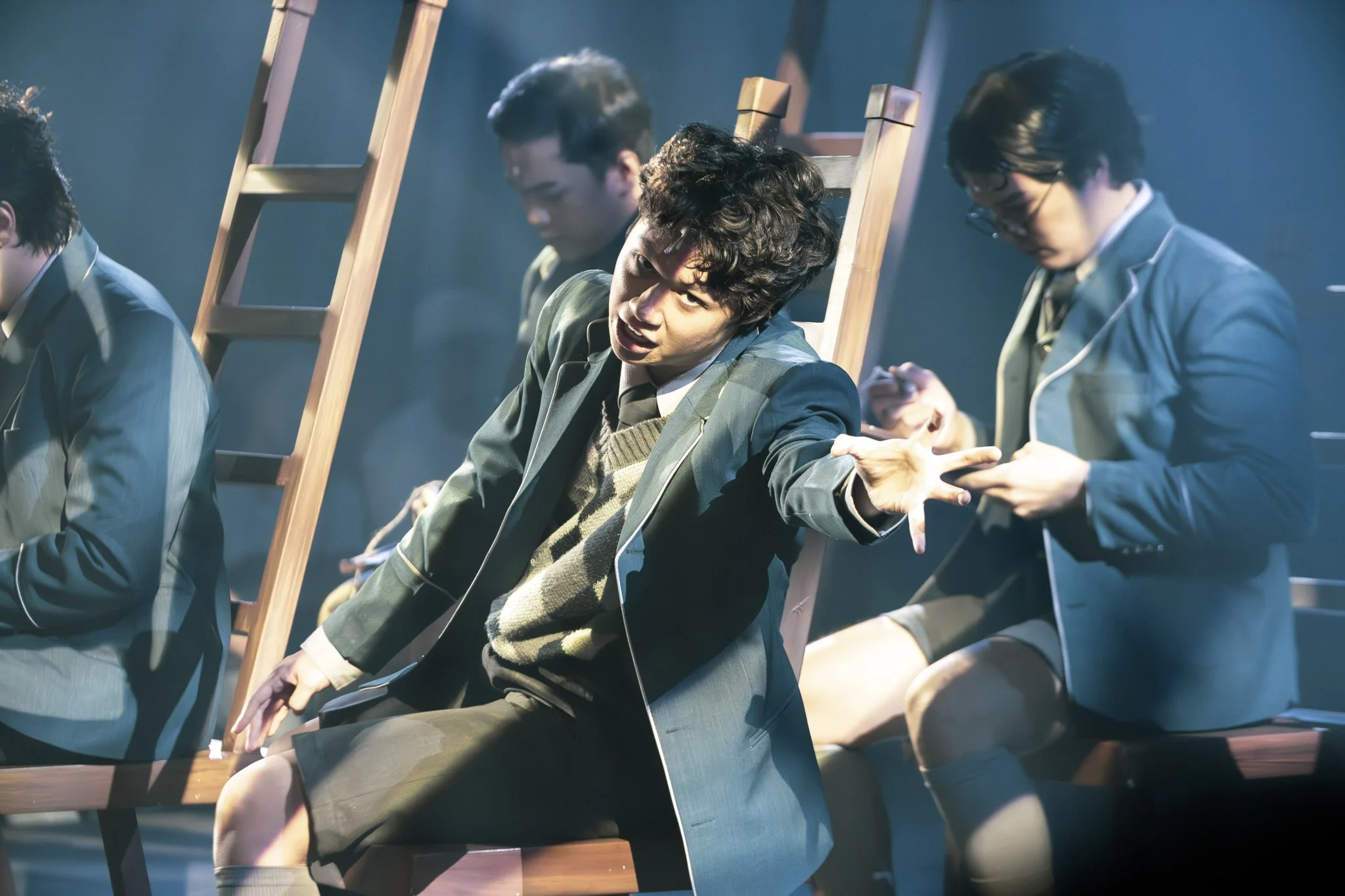
Photo by Loreta Arroyo
Performance-wise, the cast delivers with striking clarity. Nic Chien, as Moritz Stiefel, carries the heaviest burden in the narrative—a boy crushed by academic failure and relentless parental pressure, cornered until suicide feels like his only escape.
Chien plays that pressure outstandingly, allowing it to build subtly so when the breaking point comes, it lands with devastating clarity. The restraint in his unraveling makes the tragedy all the more painful, enough to deserve his own standing ovation.
Left Behind
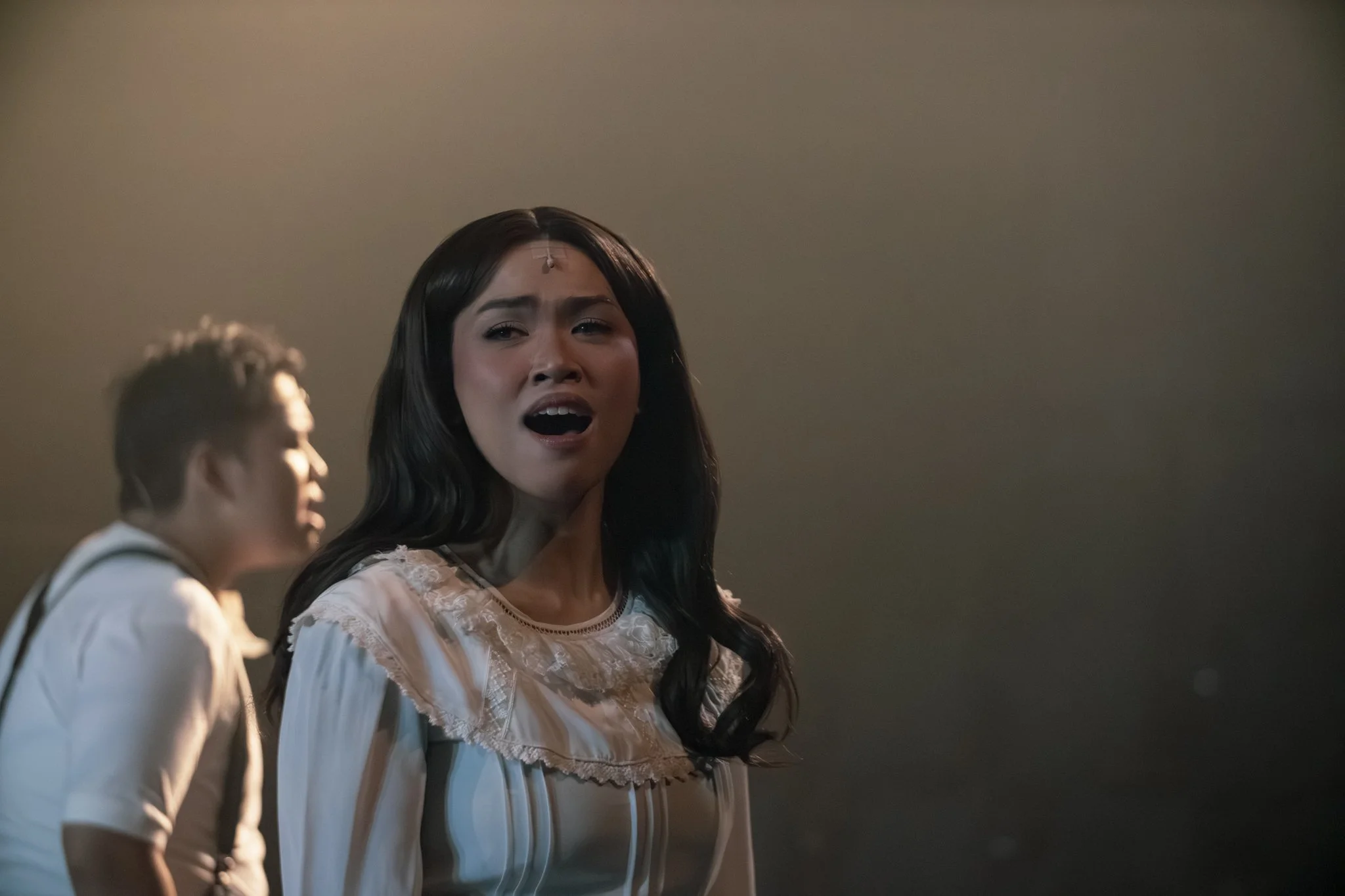
Photo by Loreta Arroyo
Similarly, Angia Laurel’s Martha carries one of the production’s most delicate arcs. She balances the revelation of her character’s abuse with the show’s angst and fleeting moments of youthful brightness, never reducing Martha to a symbol but allowing her to remain achingly human.
Another standout is Ana Abad Santos as Adult Woman, offering a sharply observed portrayal of authority. She shifts between figures with precise control, occasionally drawing unintentional laughter simply by exposing how rigid certainty can border on absurdity.
Alongside her, Audie Gemora’s Adult Man stands firm and imposing. Together, they embody the institutional weight shaping the young characters’ choices, sharpening the contrast against teenage volatility.
The Song of Purple Summer
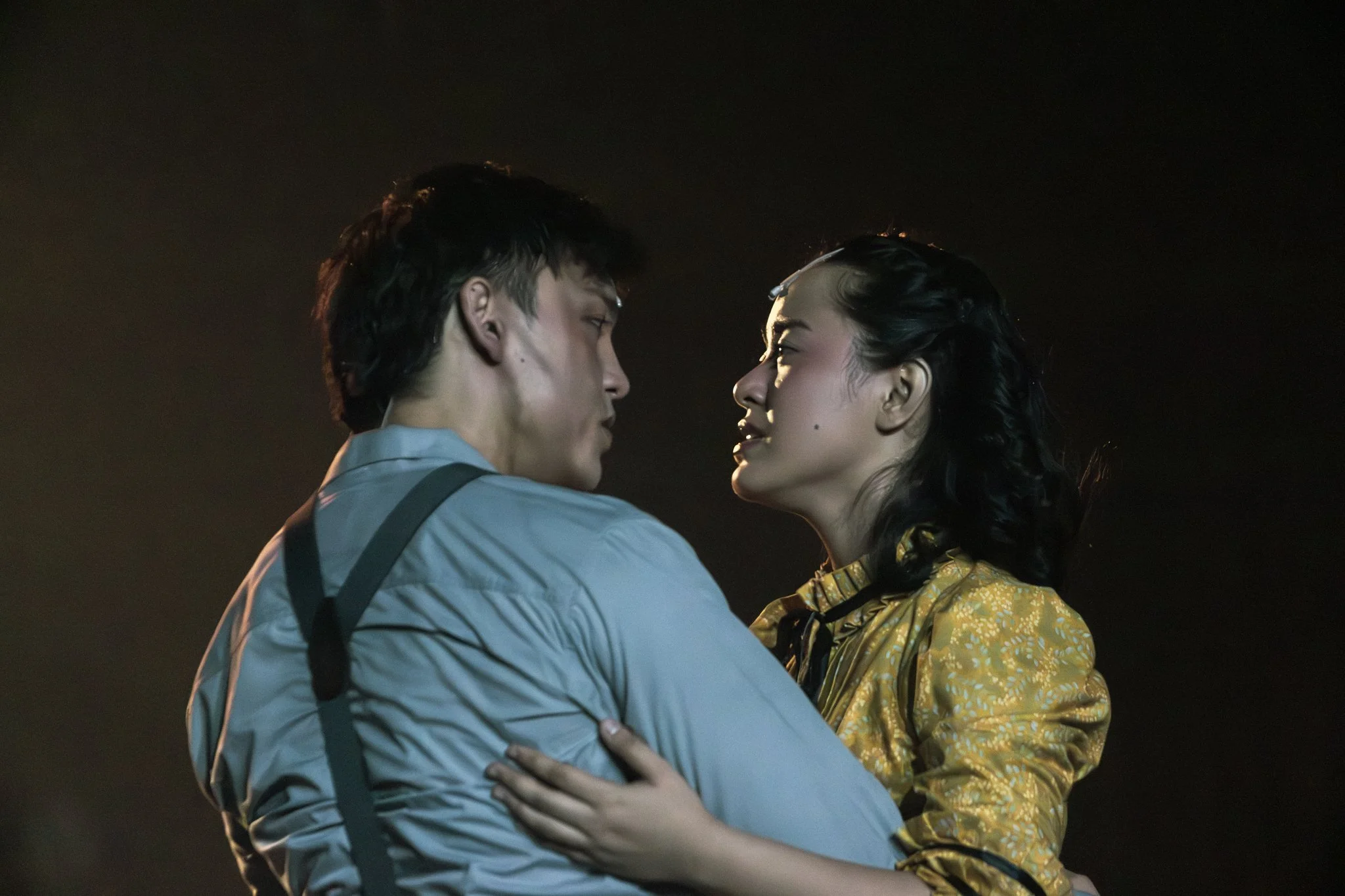
Photo by Loreta Arroyo
As a whole, the production surges with urgency, allowing confessions to land cleanly and anthems to pulse through the audience. The company’s choice to include trigger warnings and provide mental health assistance adds thoughtful care to an already powerful staging, reminding us that difficult theater can still be responsible theater.
Running until March 22, Spring Awakening Manila does more than revisit a celebrated musical. It insists that conversations about mental health, sexuality, and agency cannot remain postponed—and leaves lingering the question: what happens when guidance arrives too late?