Where Art, People, and Minds Intersect
Here at MoCAF, different lives collide in a single space, enjoying art in their own space and connecting with each other.
Words & Photos courtesy of Marc Nathaniel Servo
July 05, 2026
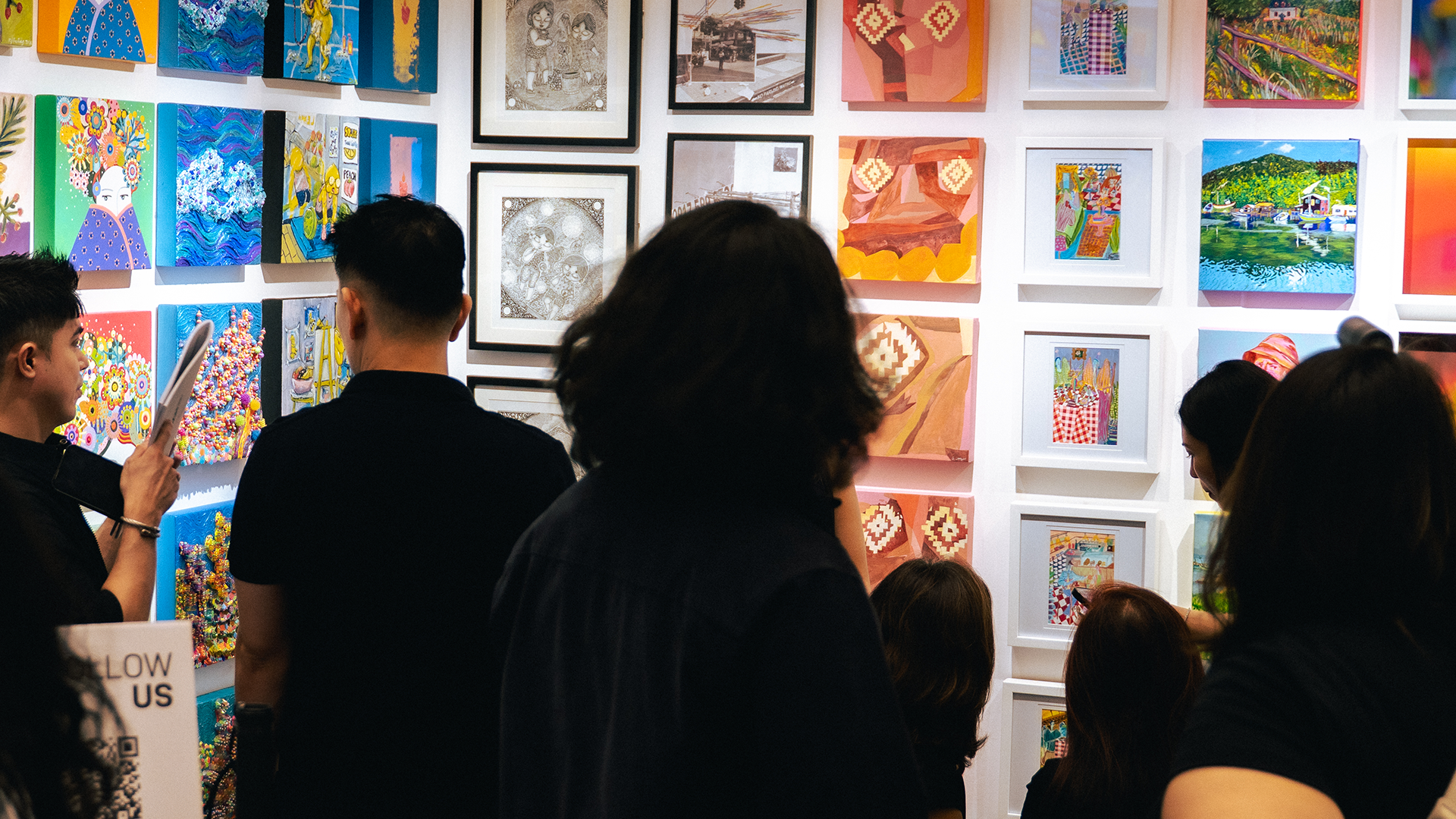
If the MoCAF can be constructed in one word, it will be an intersection.
Within the vast expanse of Marquis Events Place, diverse people meet to reflect life through art. In this space, creativity transforms into a medium that allows minds to connect in spirit and virtue.
Art+ Magazine interviewed six people from different facets of life to realize just how art festivals like MoCAF bring people together, all for the love of arts.
Art for All
In MoCAF, the earnest goal has always been to share the love of art to everyone. It can be seen in how artisan shops in the festival are all about imbuing creativity in lifestyle items, and making the exhibits accessible to the general public.
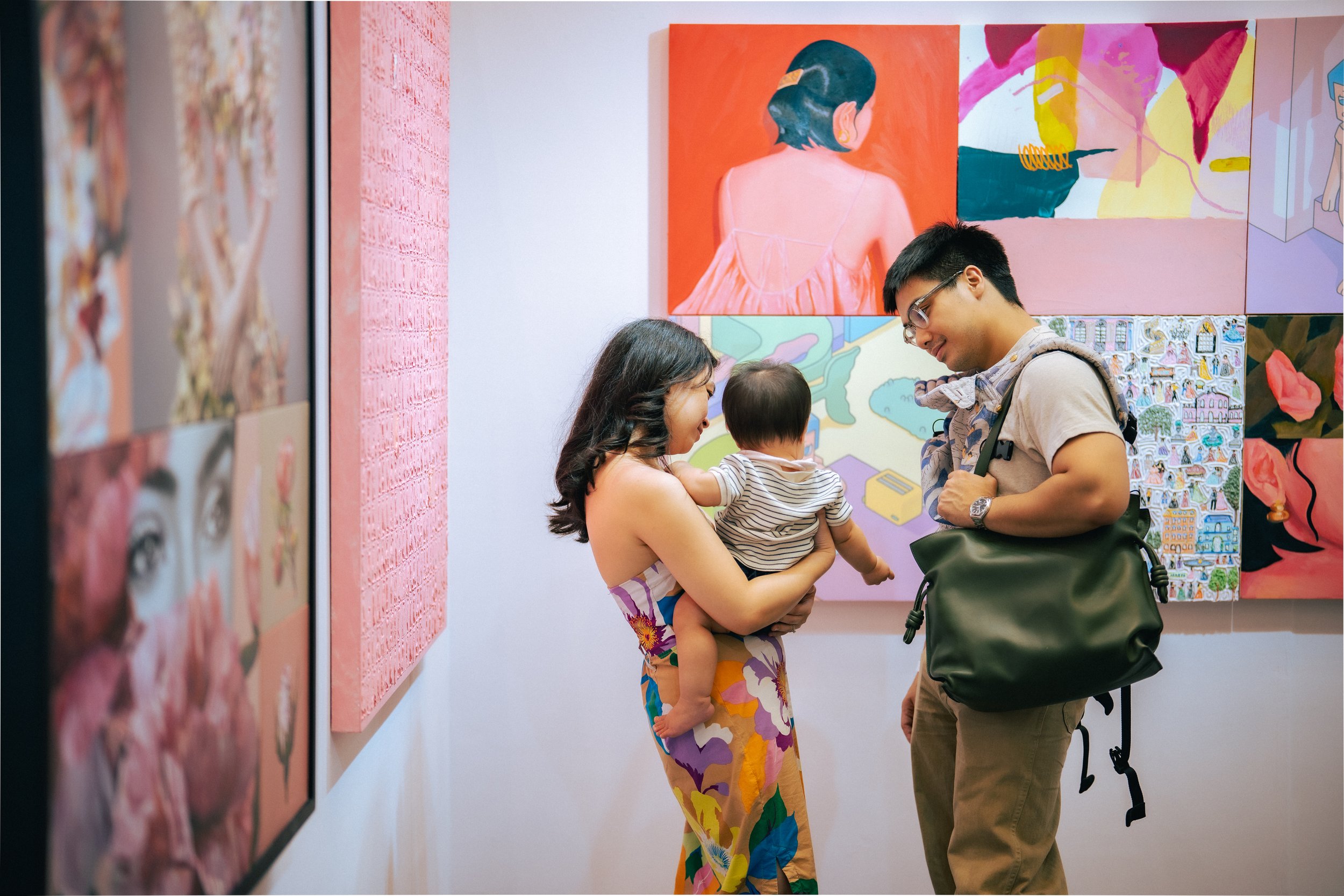
In that way, it makes art less intimidating. For partners Joshua and Shy, this is the selling point of MoCAF, “Hindi siya sobrang pricey, accessible siya. Kaya na-enjoy rin namin na may nakikita kaming mga bata kanina, ‘Uy, [mga] magiging future artists. Sana i-support ka ng magulang mo sa art.’”
By setting the price in the most affordable range, younger audiences are able to check out art and be inspired; planting the seed of creativity in the next generation.
For Catherine Reyes, a language professor from Ateneo de Manila University, this ticket pricing is relevant as she believes that art appreciation is an important skill for young people—sharing how she often urges her students to visit the Ateneo Art Gallery to view artworks.
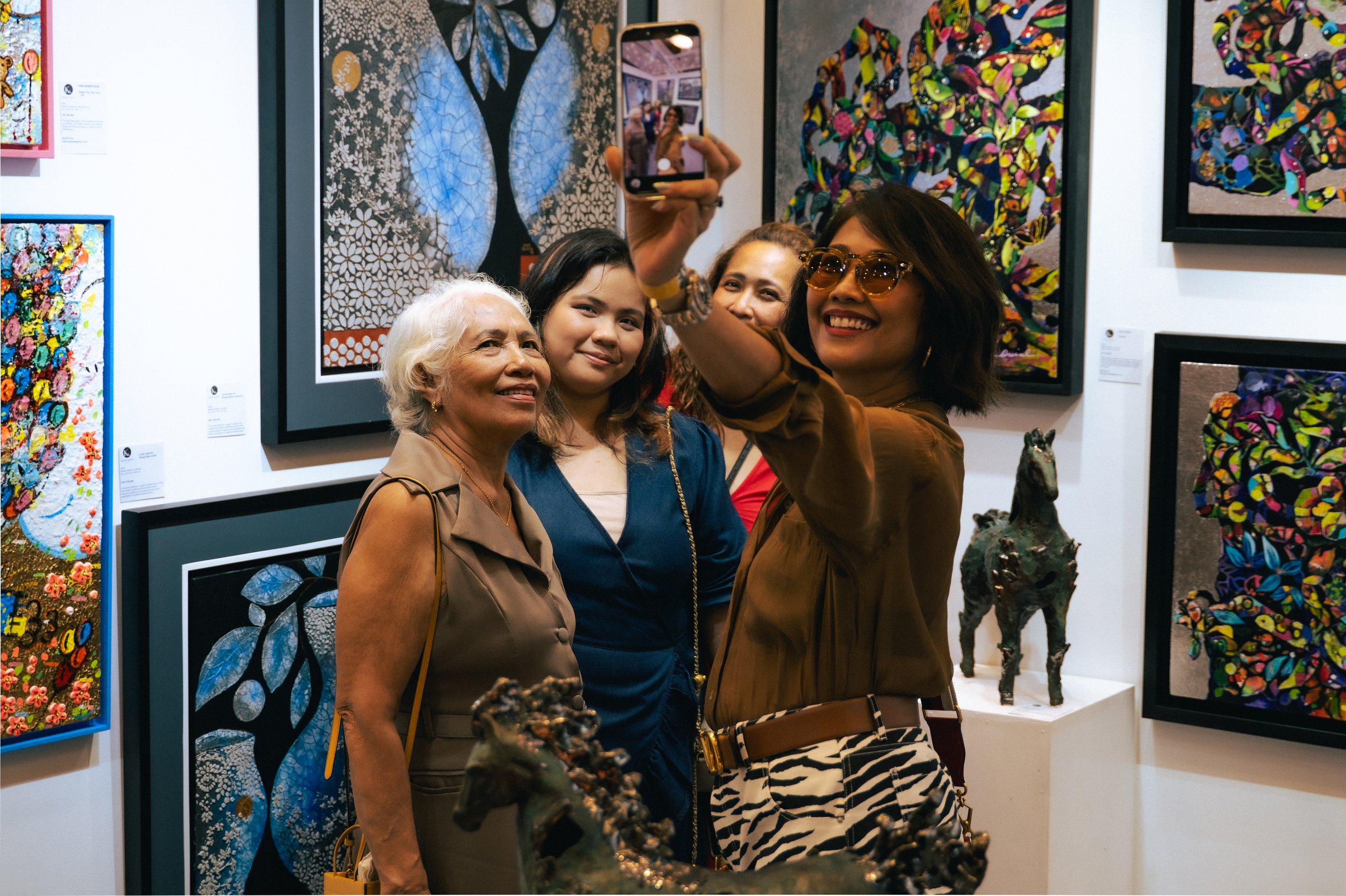
“I think the issue of art fairs is that they can be exclusive in the sense that they can be expensive. Here, it’s good that it’s only PHP 380.00, which makes it easy to access for students, so I think this is sustainable,” she remarked.
Catherine and her friend, Agas Ramirez, an author, enjoyed the festival, highlighting the diverse curation of modern and contemporary artworks, and the flow of the maze-like exhibits that allows people to smoothly view art despite heavy foot traffic.
In his second time at MoCAF, J Studio’s Norman Dreo shared how the essence of MoCAF comes from its simplicity. The festival is easy to access for different kinds of crowds, the booths are well-placed so the foot traffic could reach every gallery equally.
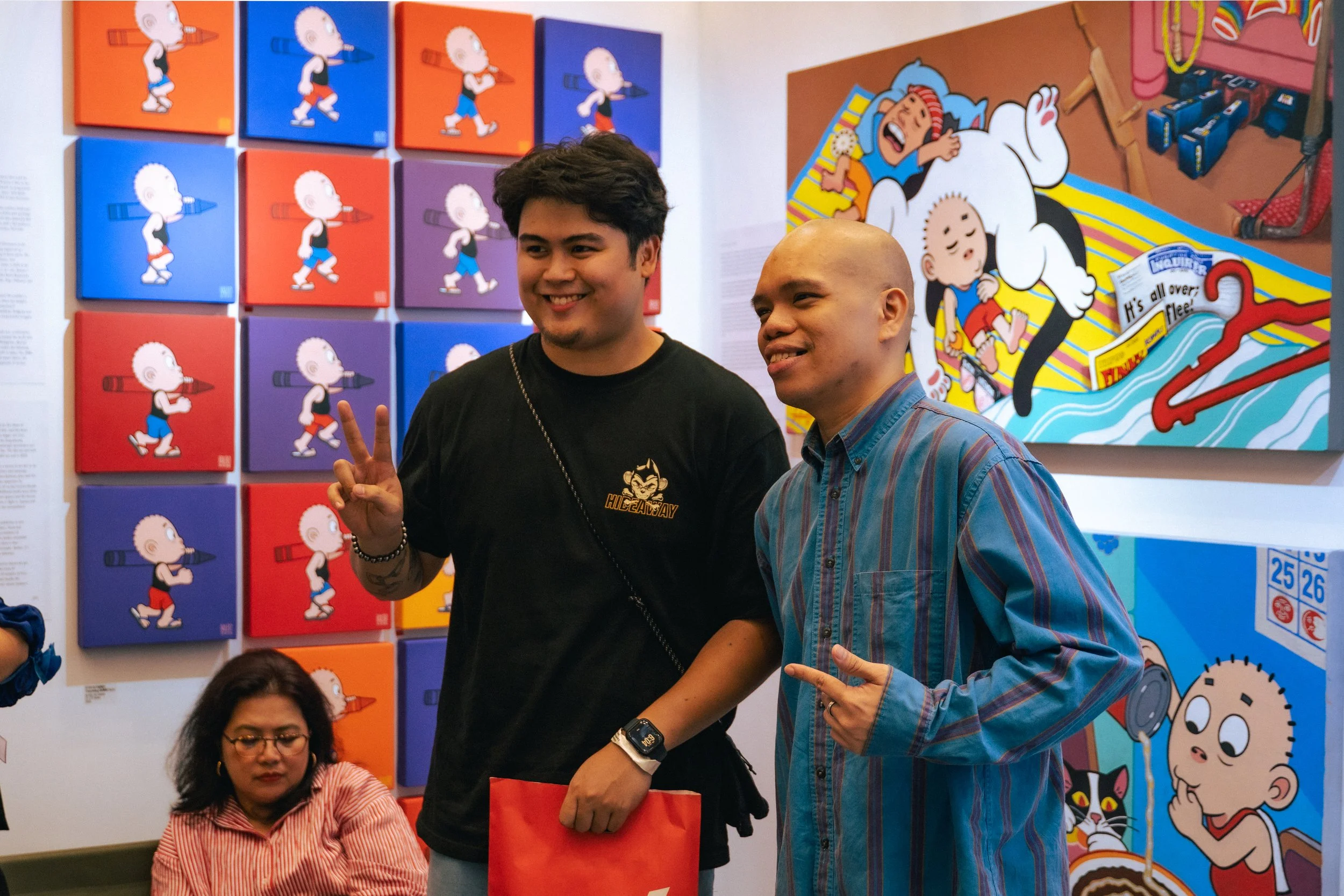
Accessibility as its cornerstone, MoCAF shifted the typical dynamics in art festivals into something truly festive and enjoyable for art lovers.
“I feel that people are really enjoying the fine arts here. Like in other [art festivals], most people are just looking. But here, there’s so many choices that are possible to buy, so people really enjoy shopping. It’s very different,” Tomoko Kogure of Kogure Gallery shared.
Being a part of MoCAF since its conception in 2022, Kogure Gallery witnessed how the festival found its own crowd, evolving into the space it is today—and much like many art festivals do, it provided space for many artists to gain exposure with wider audiences.
Best Bits
Artist Norman Dreo happily shared details about his gigantic art piece “Sagrado Dos,” which tells Philippine Art History through time, and how it shaped the country one stroke at a time. Masters of the craft are juxtaposed with our local history of colonization, revolution, and modernity.
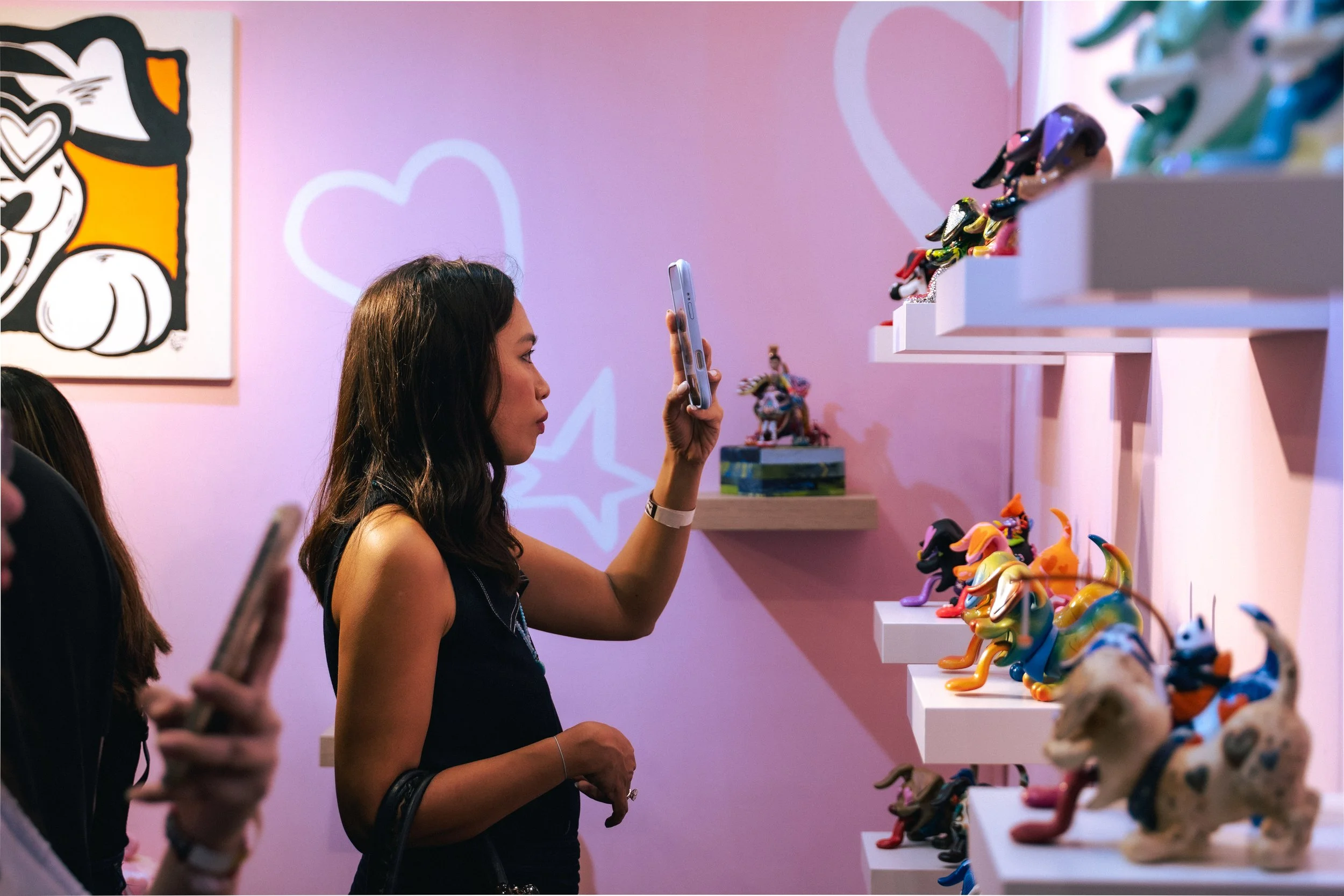
Dreo believes that his 6x12 ft artwork could influence young people to pursue the arts, “We can inspire young people, young students. ‘Yong mga nag-aaspire to be an artist. So, dito, makikita nila how [I] started. Kasi sa mga kwento, everyone start sa simple things, like me. So, siguro, makikita nila this time, it's different from my works before. Doon, makikita nila that art is growing.”
Alongside his other piece, “Flower Festival,” his exhibit became the center of attention, with people taking their time to sift every detail from the piece.
“Oh, we saw this painting that was like a textbook of art history… from Norman Dreo. So it was like, literally this is Philippine art history in one painting. That was so impressive. We just stood there for like 20 minutes, 30 minutes,” Catherine shared when asked of her favorite experience in MoCAF.
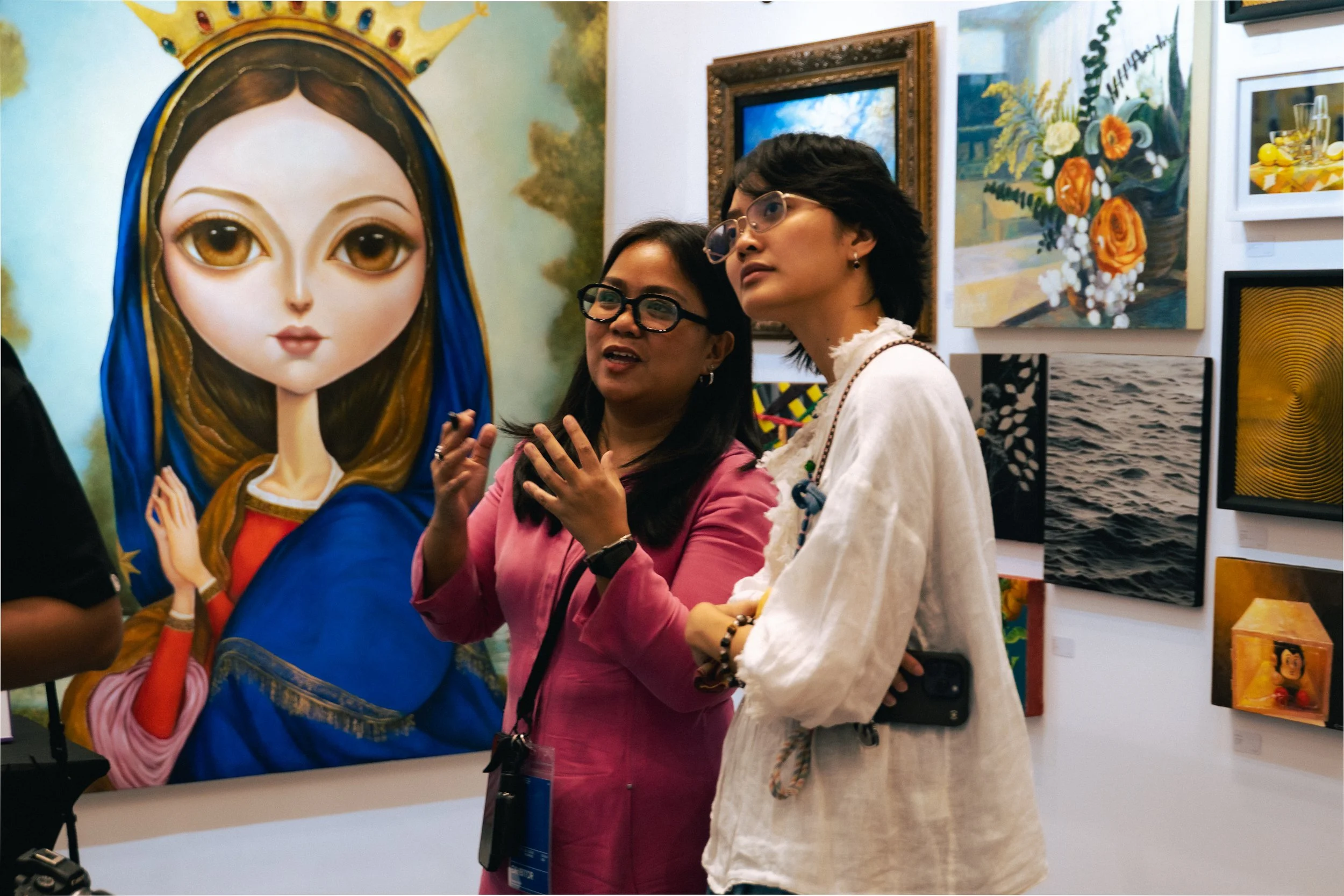
For Agas however, her best experience in the festival is interacting with people, especially exhibitors, sharing how they talked about the works of Atsuko Ishii at Gallery Kogure.
“We were talking to the lady who brought the paintings over, and she told us about the history of the artist and all these things that kind of contribute to how you understand what you’re looking at. It’s not just… [art] doesn’t exist in a vacuum. It’s a lot of like getting out of your head and seeing things and how they come together.”
Tomoko Kogure also shared the importance of exposure for artists, and how art festivals provide that kind of setting for them. She enjoys discussing art with visitors, engaging with them by explaining the story behind the artworks, which made the exhibit more human.
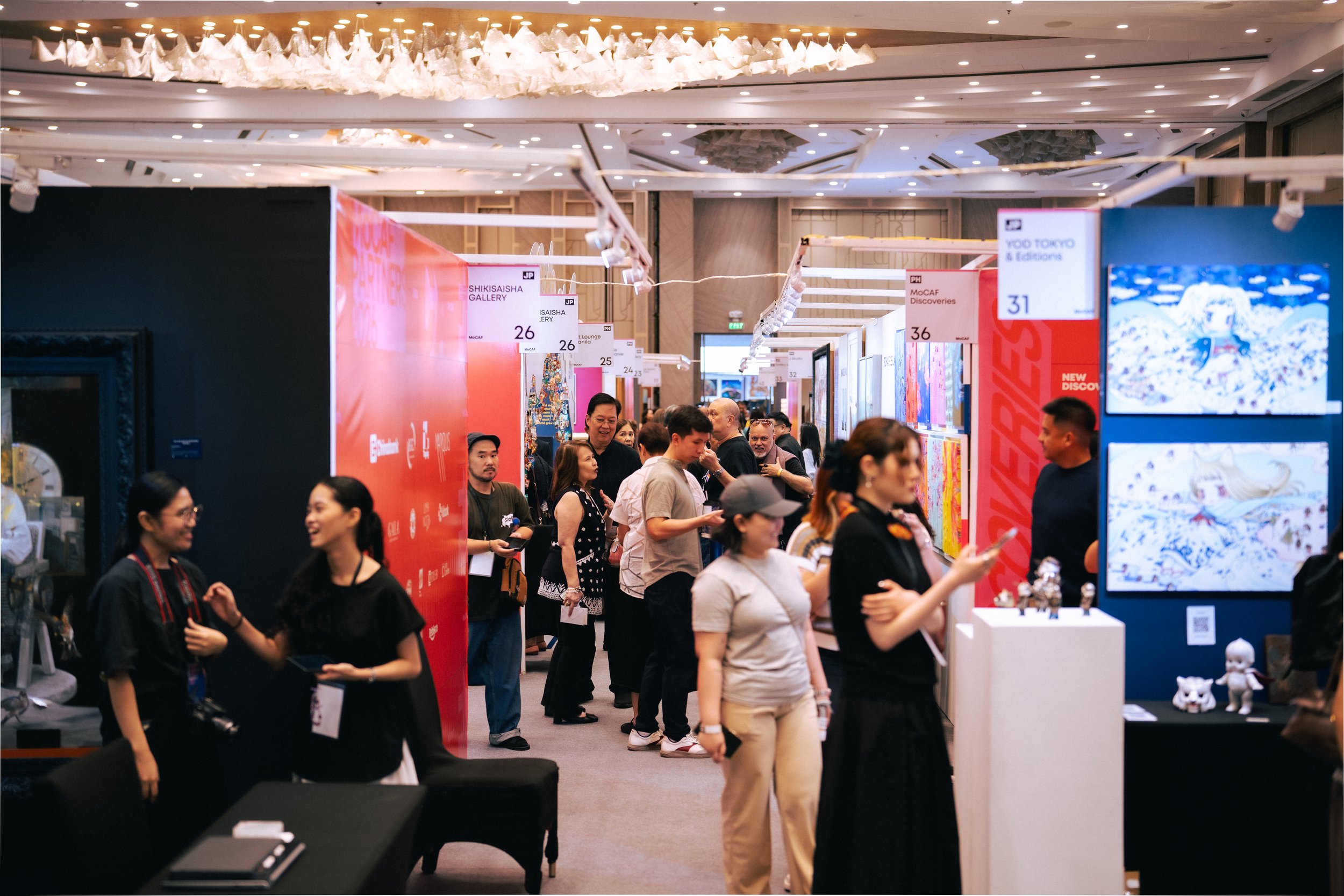
Overall, exposure to different amazing artists in one accessible space teaches audiences to appreciate art, and a reminder that AI can’t replace human touch.
From the conception of each artworks to how they were crafted, the process can’t be replicated artificially—and could only come from the human mind.
In the intersection of arts, MoCAF meets people across all dimensions at their own pace. Accessible, well-thought, and curated, the festival truly serves as a space to platform artists and teach audiences to live and love creatively.