
Walang Aray Returns in Full Color
The latest Walang Aray run doesn’t just revive a hit—it reframes the possibilities of Philippine theater.
Words Mian Centeno
Photo courtesy of PETA Theater
October 22, 2025
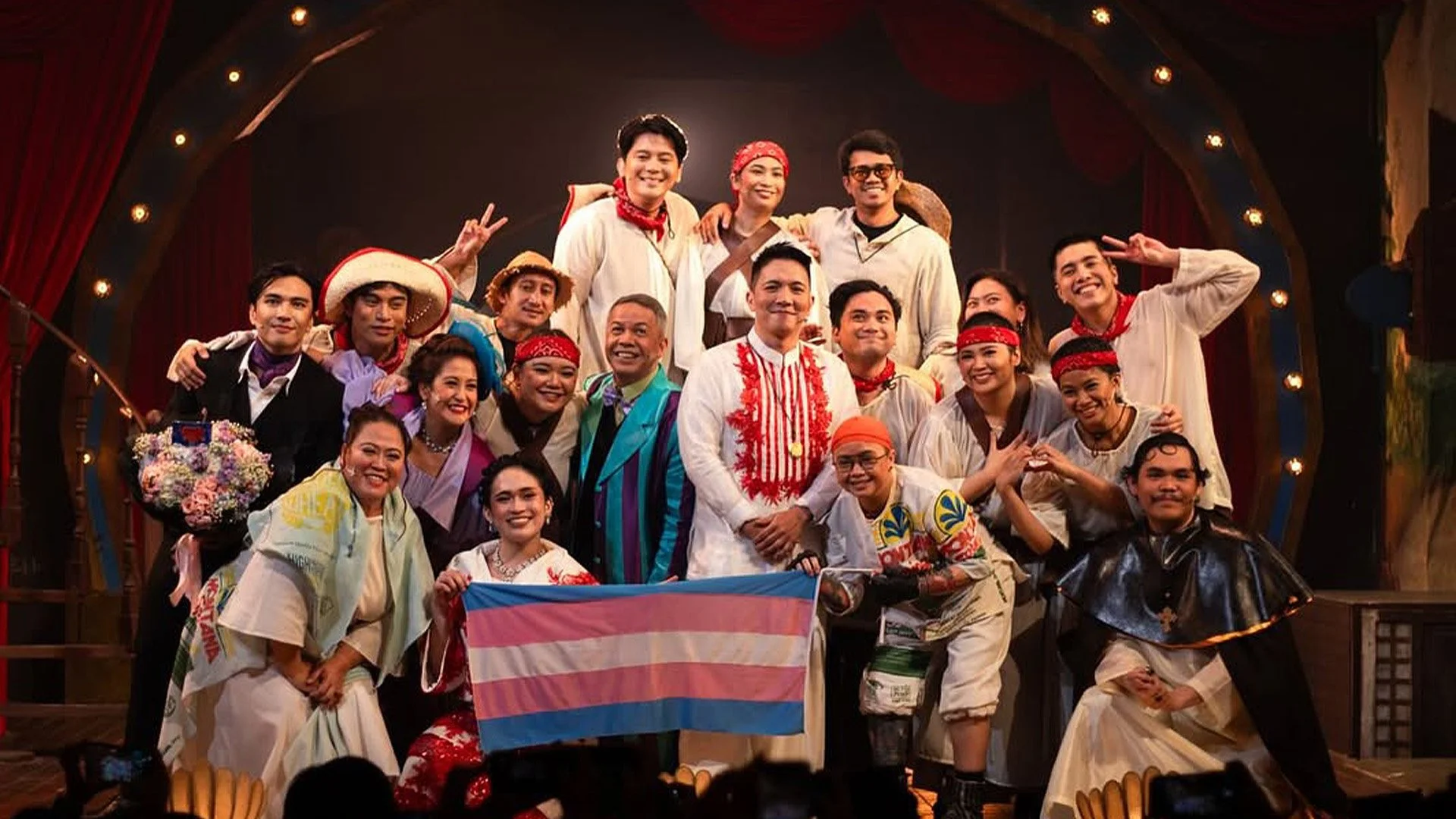
When Walang Aray returned to the PETA Theater Center this year, it revived the captivating storytelling audiences loved about its 2023 run—its sharp humor, vibrant music, and fearless satire. But beyond its charming production and witty comedy, this revival carries a deeper resonance.
At its heart are two trans performers—Lance Reblando and Ice Seguerra—whose casting signals a quiet yet powerful shift toward a more inclusive and progressive Philippine theater.
Rody Vera’s adaptation of Severino Reyes’ Walang Sugat has always been an act of reinvention—a classic sarsuwela reimagined through a modern wit and irreverence. The play tells a story of Julia and Tenyongs, lovers separated by war, politics, and circumstance, set during the Philippine Revolution. Yet, in this retelling, the revolution extends beyond the narrative and unfolds within the casting itself.
As Julia, Reblando embodies a heroine of intelligence and grace. She commands the stage effortlessly with humor and conviction, portraying a woman whose courage lies not in grand declarations but in steadfast selfhood.
The production never calls attention to her identity; it simply exists, naturally woven into the world of the play through talent and charisma. This quiet normalization makes her performance a milestone for representation, a solid proof that the Filipino stage can hold space for trans women as romantic leads.
Ice Seguerra, as the ever-charming Lucas, delivers a similarly grounded and charismatic turn.
His magnetic stage presence and impeccable comedic timing lend the role warmth and wit, proving that inclusivity need not draw attention to itself to be transformative.
Reblando and Seguerra redefined what inclusion can look like in practice: not a deliberate statement, but an organic part of the narrative, reflecting a creative team that understands progress not as tokenism, but as merit and authenticity in equal measure.
The production’s approach carried profound weight in Philippine theater, where LGBTQIA+ visibility has long been pushed to the edges. By giving trans actors prominent roles without framing them as exceptions, Walang Aray achieves something more lasting than applause—a stage as a space of genuine belonging.
The play’s mantra of tumindig at umibig finds expansive dimensions here; standing up becomes a political act and a personal truth embodied by those who bring it to life.
In the end, Walang Aray proves that sometimes progress onstage begins simply—with a woman singing her heart out, a man delivering a punchline, and both being seen for who they are.
This irresistibly Filipino yet quietly poetic revolution reminds us that theater, at its best, mirrors the world not as it is, but as it can be: diverse, and ever capable of change.