Unpacking the Tropics
A World of Islands at the Ateneo Art Gallery examines ecological and diasporic complexities through diverse artistic voices.
Words Jewel Chuaunsu
Photos courtesy of Ateneo Art Gallery
June 14, 2026
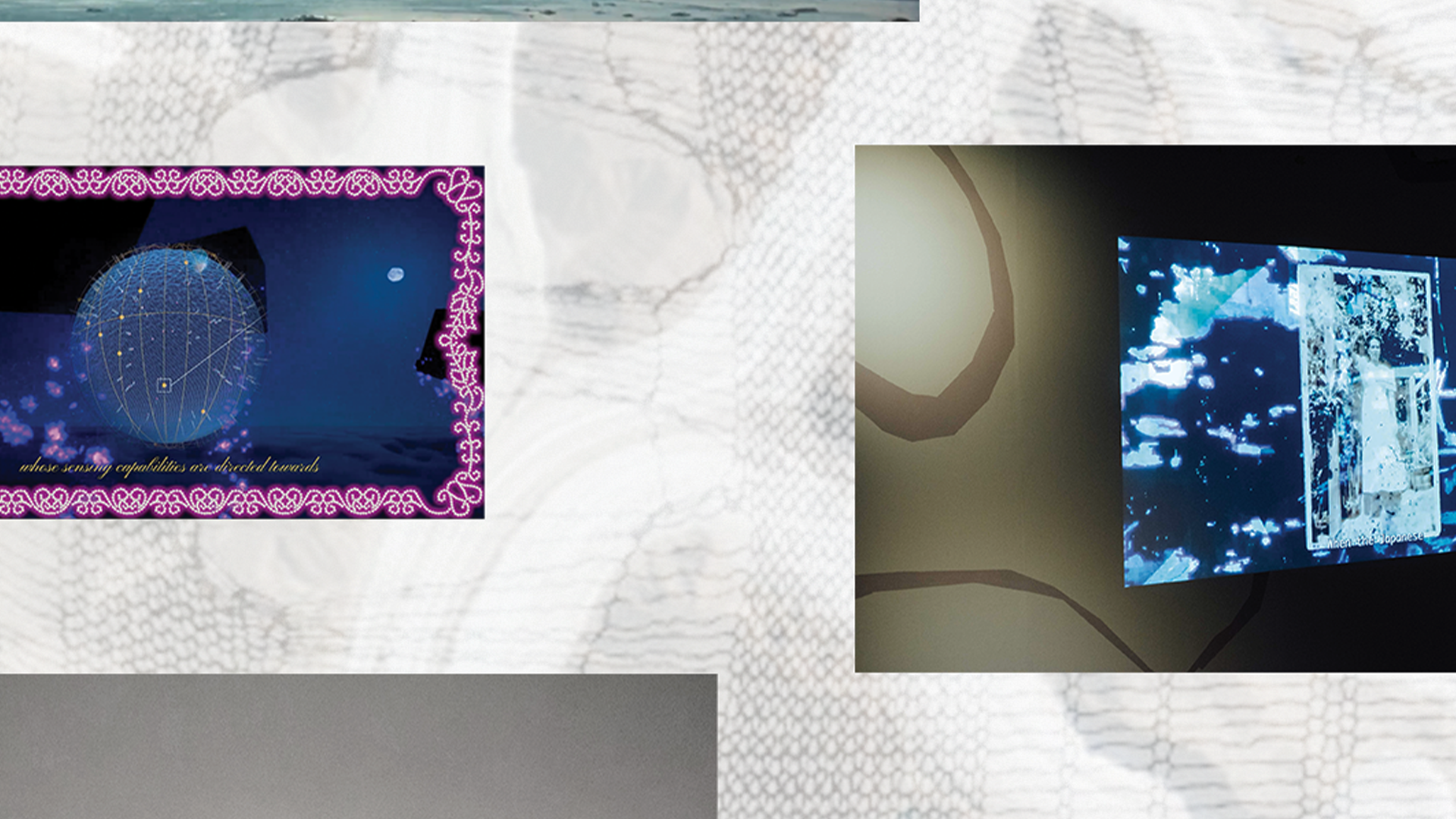
Curated by Ligaya Salazar, A World of Islands: On Palms, Storms & Coconuts emerged from her curatorial research fellowship at Stanley Picker Gallery, Kingston University London. During this period, Salazar immersed herself in research on indigenous materials and their movement across oceans. “I got really stuck on coconuts, on palms and pineapples—particularly how they traveled between the Philippines and Mexico,” she recalled. This fascination became the exhibition’s jumping-off point.
In A World of Islands, Salazar turns her attention to the Philippine archipelago, its people, and their histories of movement across seas and oceans. From this, she considers artists from both the Philippines and the Filipino diaspora who are “engaged with notions of home, belonging, movement, and climate.”
The exhibition was first presented at the Stanley Picker Gallery in 2023, before Salazar was invited to stage a second iteration at the Ateneo Art Gallery. For this presentation, she introduced three new artists, while those from the original exhibition revisited their works. The exhibition now brings together eight artists in total—four based in the Philippines and four from the diaspora.
A World of Islands situates the ‘tropics’ as both a mythological and real place with shared colonial and ecological trauma, and seeks to unpack some of the cliches in the ‘tropical’ narrative.
Derek Tumala
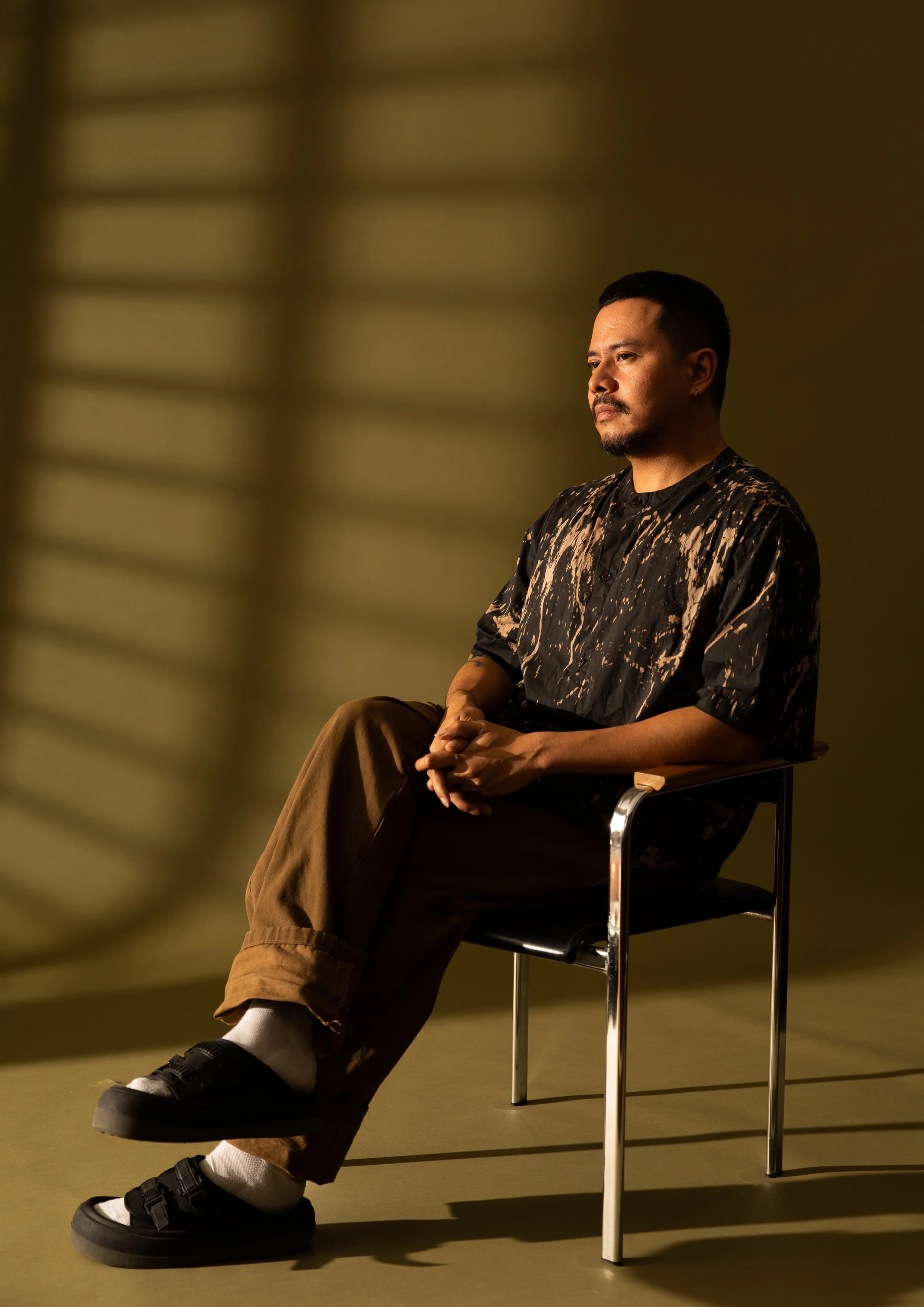
Artist Derek Tumala
The exhibition opens with Vanishing Points (Reprise), a three-channel video by Derek Tumala featuring a 3D model of water based on the artist’s memory. “These waves are actually a 3D animation we built from scratch,” Tumala explains.
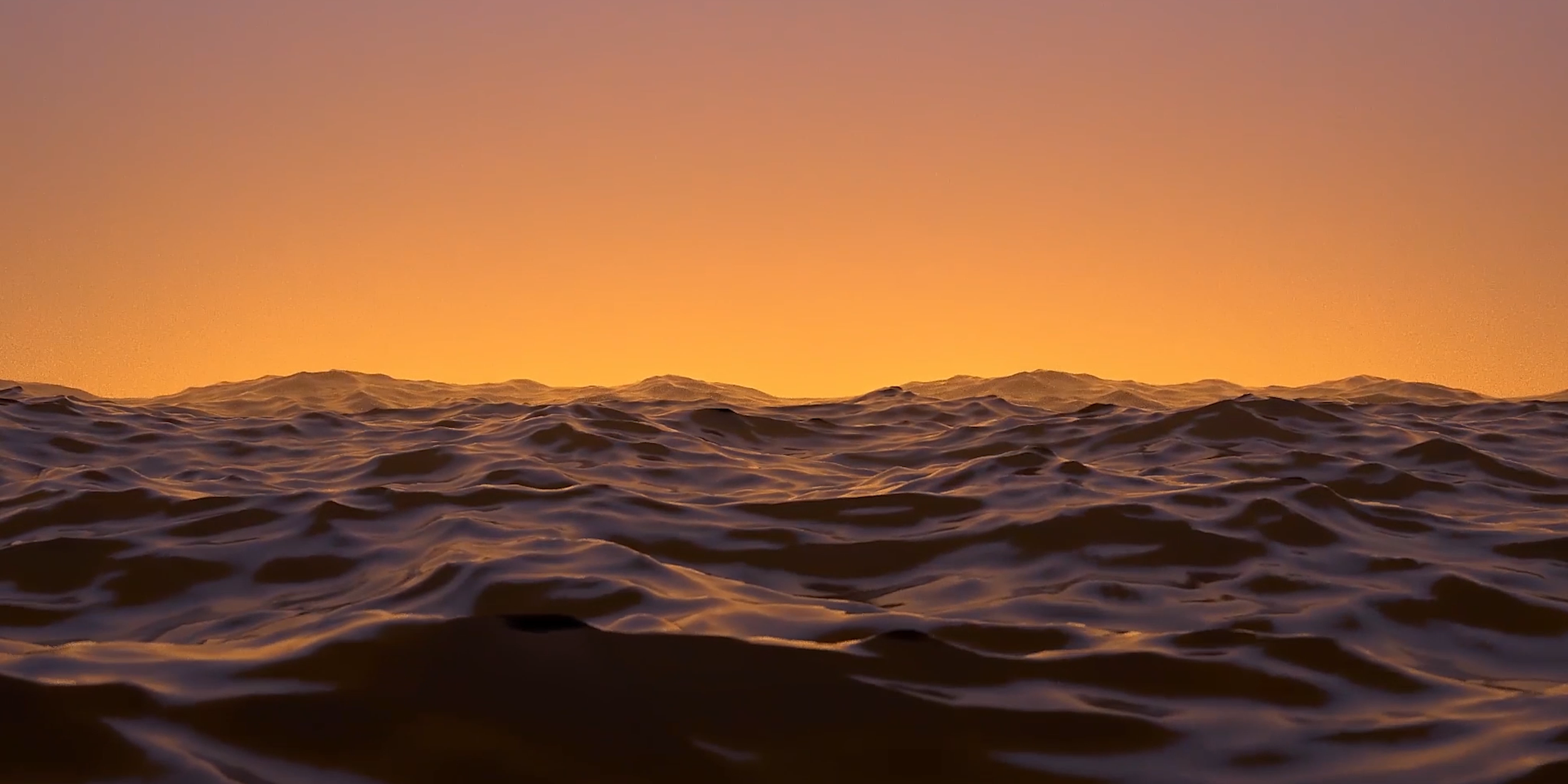
DEREK TUMALA (b. 1986), Still from "Vanishing Point (Reprise)," 2026, 2-channel video installation, 5:00 mins loop, Collection of the Artist. Image courtesy of the Artist.
The video shows a continuous loop of day and night—sunrise and sunset—evoking not only the passage of time but also the persistence of cycles. Subtle coloration is added to suggest an undercurrent of violence or threat within the otherwise tranquil seascape, as the artist reflects on how “danger could be slowly seeping into our psyche.” While the installation creates a meditative atmosphere within the exhibition, it also carries a quiet sense of warning.
Kim Sacay Chin
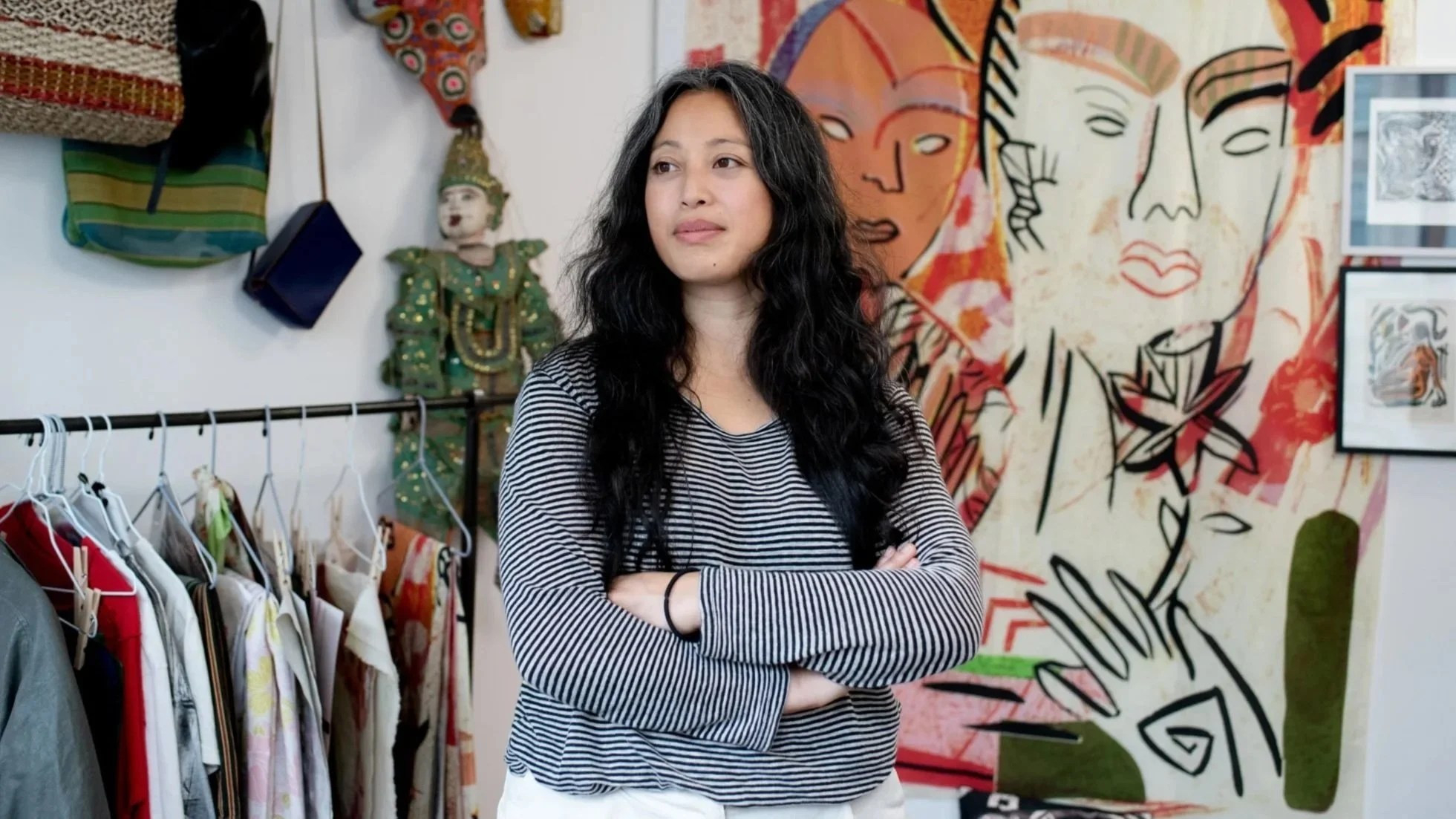
Artist Kim Sacay Chin
Born to a mother from Ormoc, Leyte, Kim Sacay Chin is a London-based artist, textile designer, and community facilitator. In her works for A World of Islands, she uses art-making and a range of visual tools as symbols to find common ground with her mother.
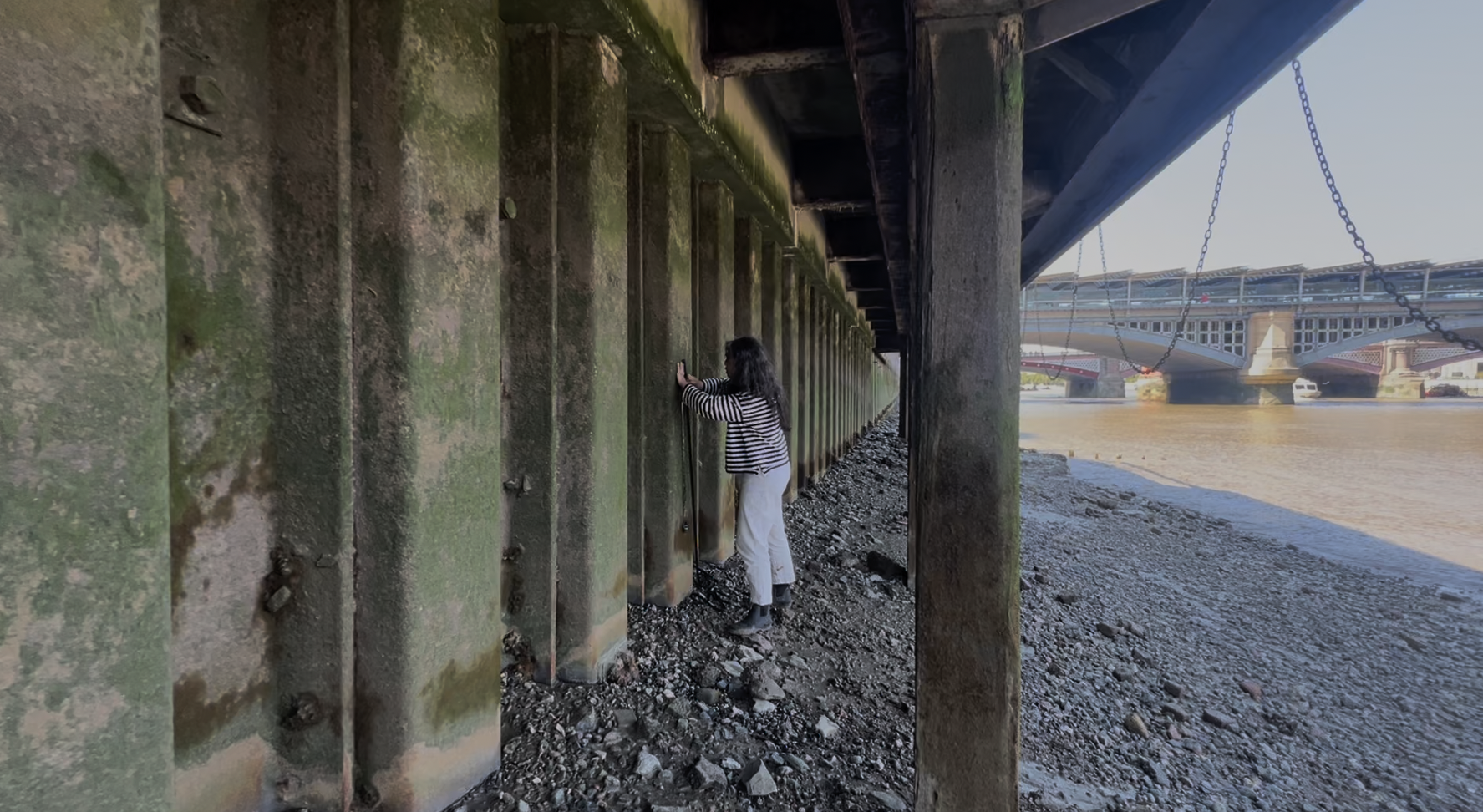
KIM SACAY CHIN (b.1981), Process photo from "Memory Debris | A Tourist in My Mother’s Land," 2025, Video installation. Image courtesy of the Artist
Memory Debris | A Tourist in My Mother’s Land combines footage from a 2024 visit to the Philippines with physically altered film marked by sand, stone, and grit on beaches in the UK and Iceland. These material interventions serve as a metaphor for the accumulation of memory, where deeply buried fragments resurface over time. Water functions as a conduit for the fluidity of memory and the nonlinearity of time.
Ronyel Compra
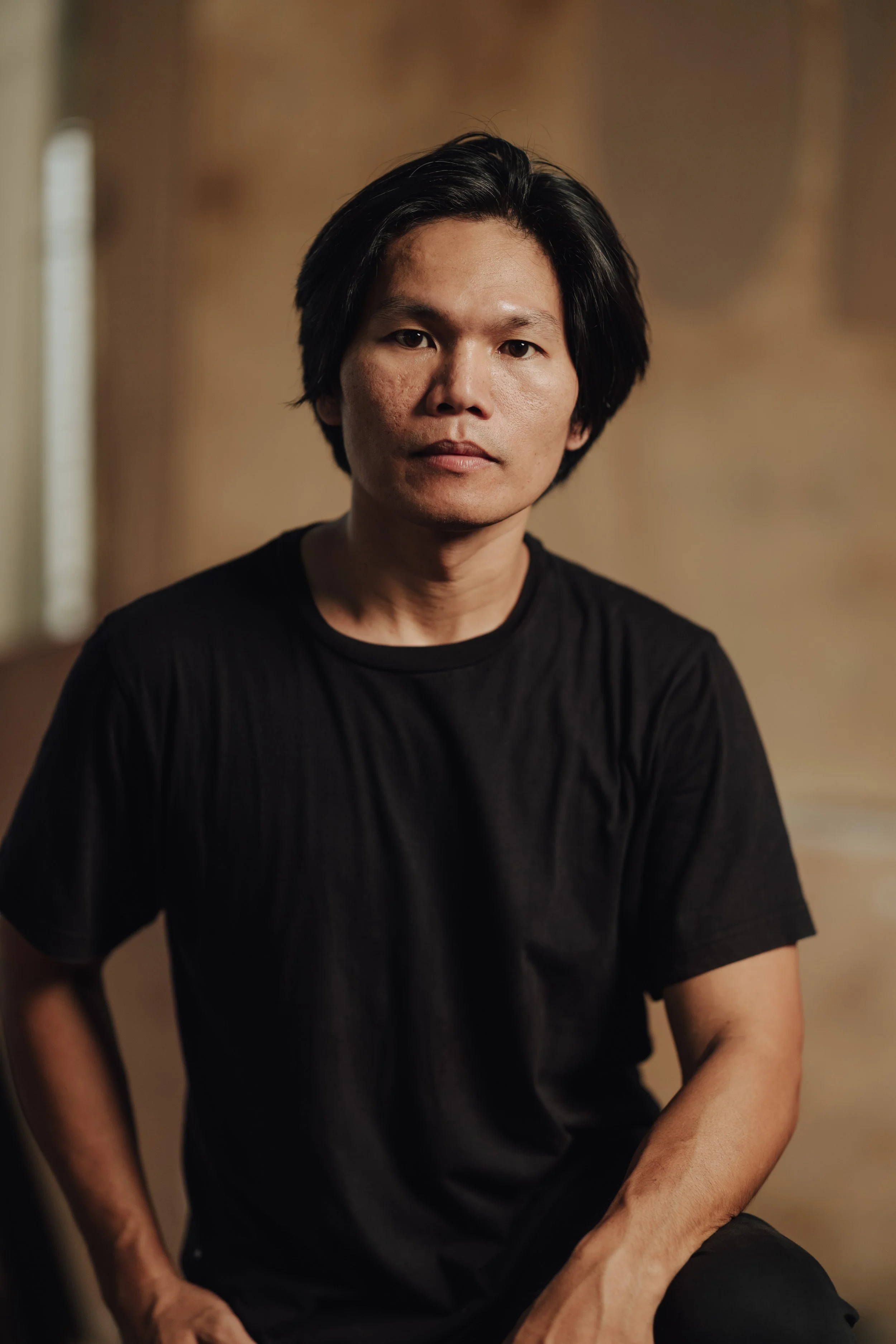
Artist Ronyel Compra
Ronyel Compra’s practice is rooted in place—his hometown of Bogo in northern Cebu—drawing from the materials immediately available to him. Playing in Reverse is composed of molave wood branches felled by storms. On September 30, 2025, Bogo became the epicenter of a magnitude 6.9 earthquake. While the community was still experiencing multiple aftershocks, two strong typhoons, Tino and Uwan, followed in quick succession.
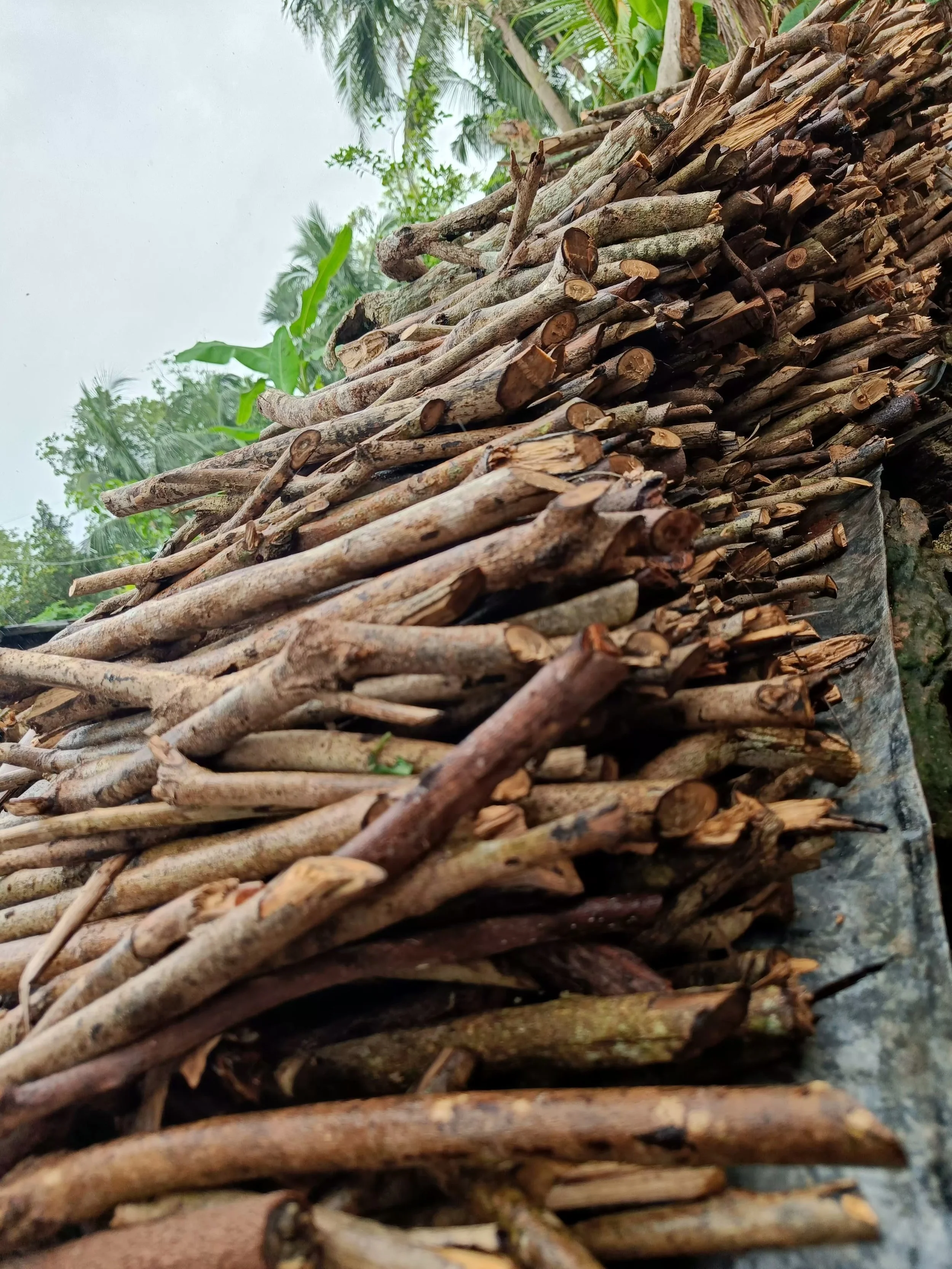
Process photo of Ronyel Compra's "Playing in Reverse," 2025, Molave wood branches, Private Collection. Image courtesy of the Artist.
Compra also incorporates techniques from local crafts and trades into his practice, using them as a means to examine memory and history. In the creation of this work, he collaborated with bangka makers who employed traditional Philippine boat-building methods passed down through generations. These techniques include the use of wooden dowels, particularly in constructing the balangay. Compra references the balangay—an ancient wooden boat excavated in Butuan City—as a historical anchor for the work. These vessels demonstrate that early Filipinos possessed sophisticated shipbuilding and seafaring knowledge, enabling trade with neighboring Asian regions as early as the 10th century.
Carol Anne McChrystal
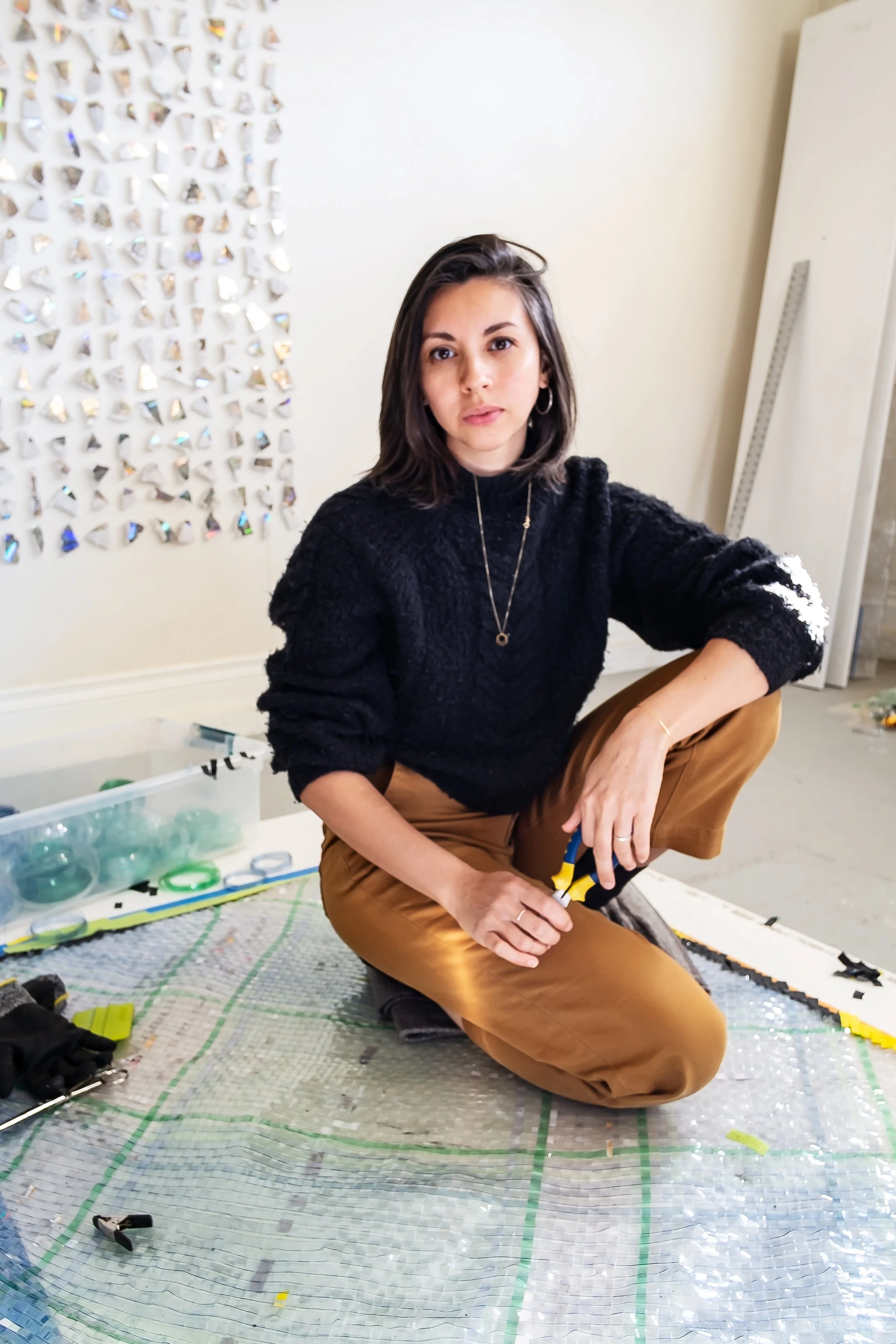
Artist Carol Anne McChrystal
In her Pasalubong series, Carol Anne McChrystal creates sculptures in the form of handwoven mats that pay homage to the traditional weaving practices of her two homelands, Ireland and the Philippines. Inspired by her family’s migration story, she explores how these traditions evolve within diasporic communities. Using discarded plastic waste and local plant materials, McChrystal’s work reflects on the climate crisis, resource extraction, and cultural erosion.
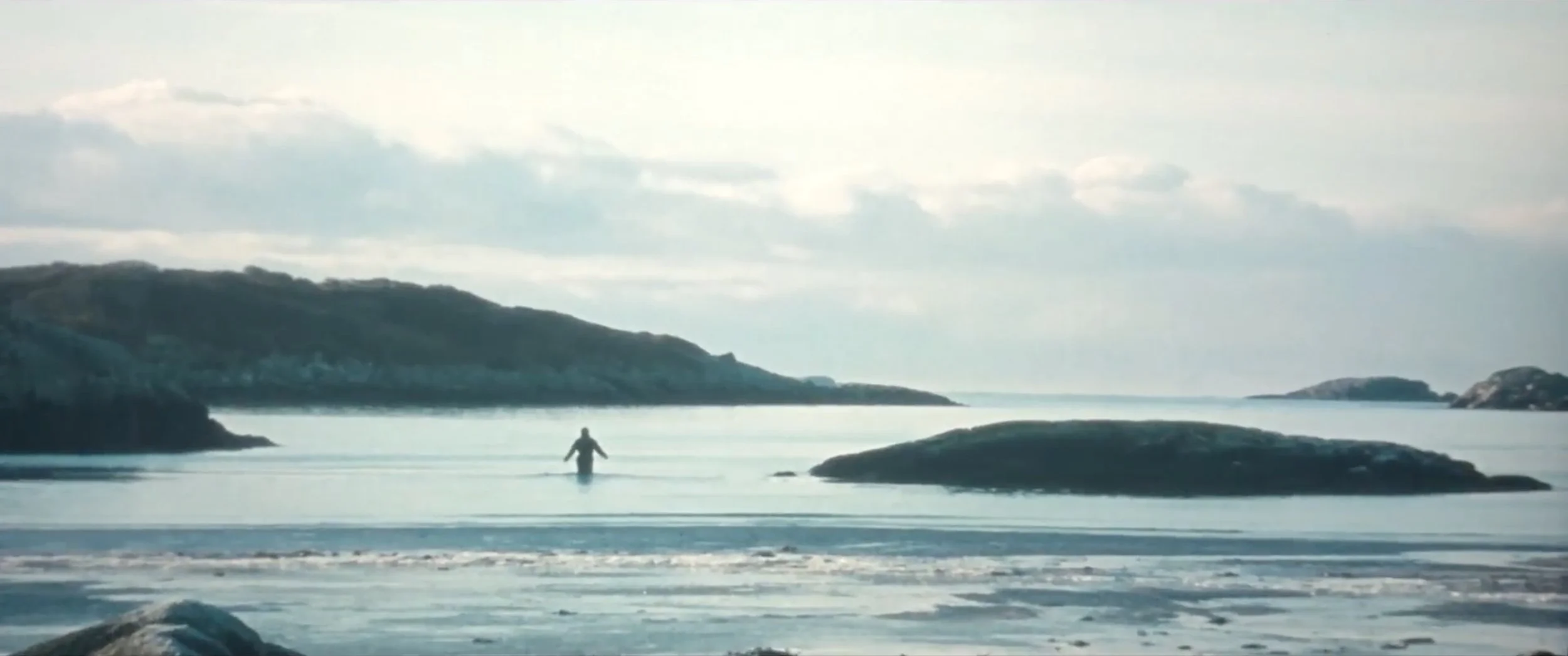
CAROL ANNE MCCHRYSTAL, Still from "Media Arkipelago VI (Established Islands)," 2022, Digital video, 6:00 mins loop. Image courtesy of the Artist.
Stephanie Comilang
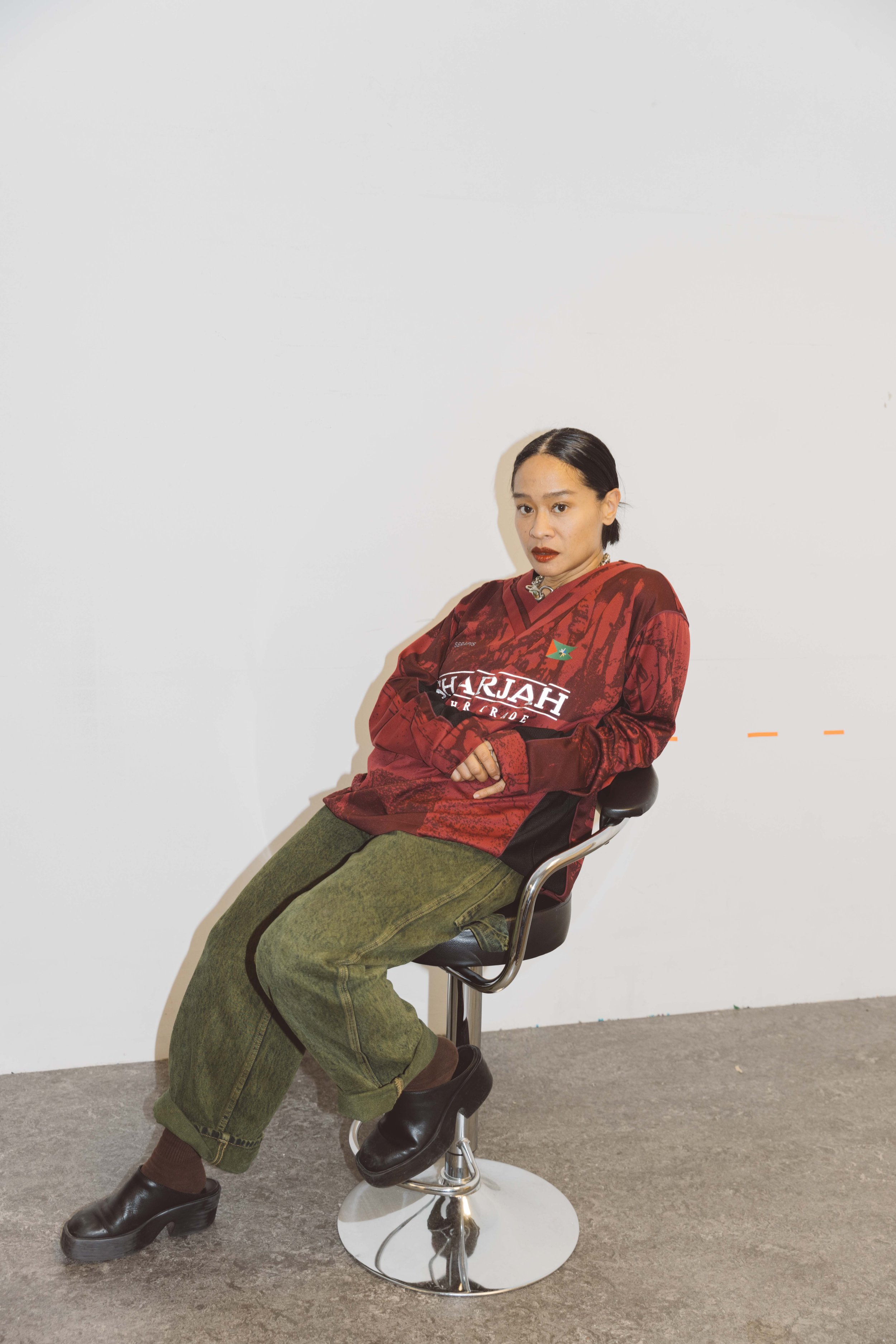
Artist Stephanie Comilang
How To Make a Painting From Memory by Stephanie Comilang connects the Filipino concept of Bayanihan with interviews of Thai female migrants in Berlin, whose memories of their childhood homes are rendered as spirit houses. Representing communal unity, Bayanihan originates from the tradition of collectively moving houses within a community. On the other hand, spirit houses are miniature shrines intended to provide a dwelling for local spirits. Describing her practice as “science fiction documentaries,” Comilang interweaves themes of memory, migration, politics, nature, and ritual.
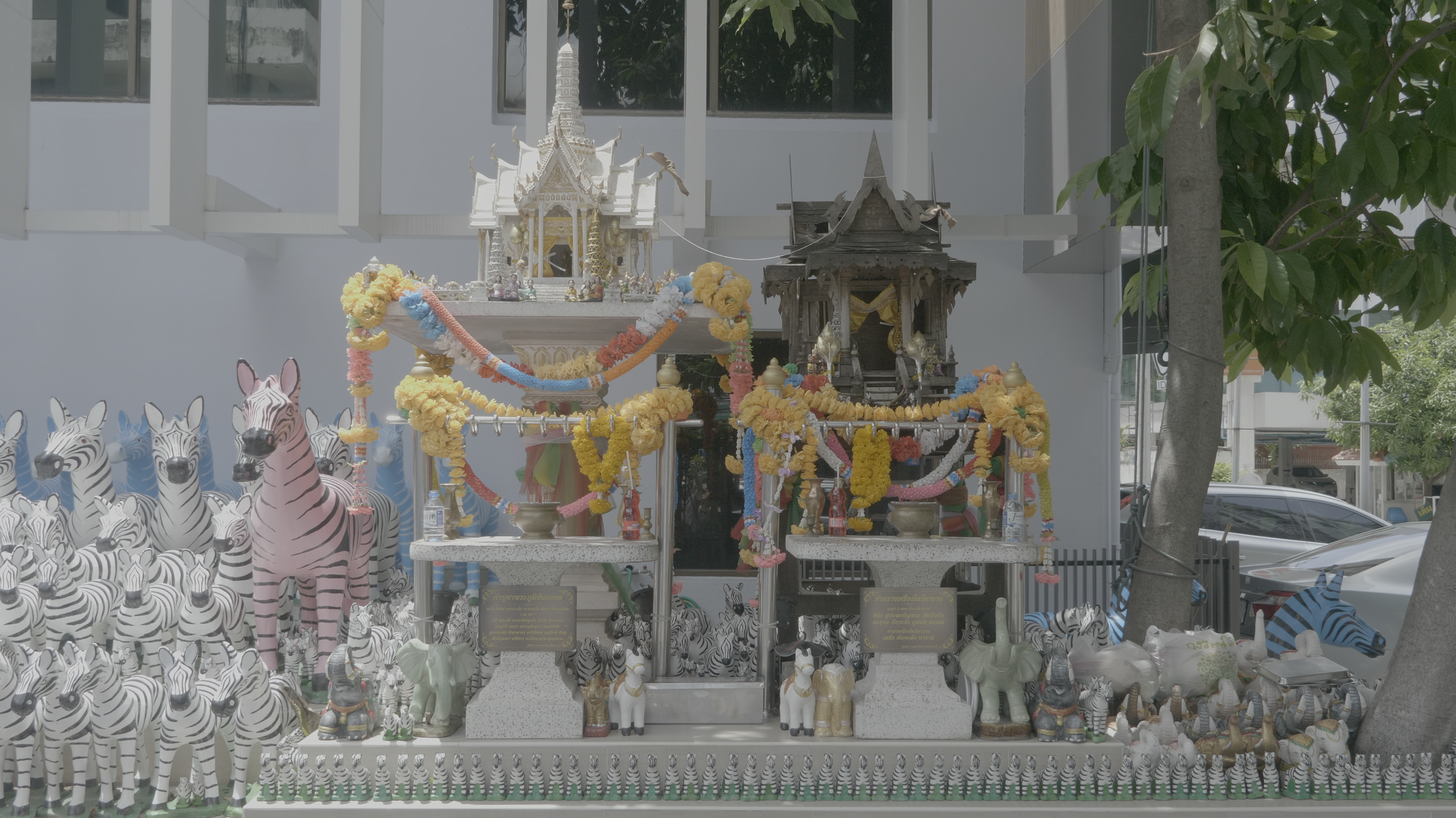
STEPHANIE COMILANG (b.1980), Still from "How To Make A Painting From Memory," 2022, HD video, Courtesy of the Artist and ChertLüdde, Berlin.
Nice Buenaventura
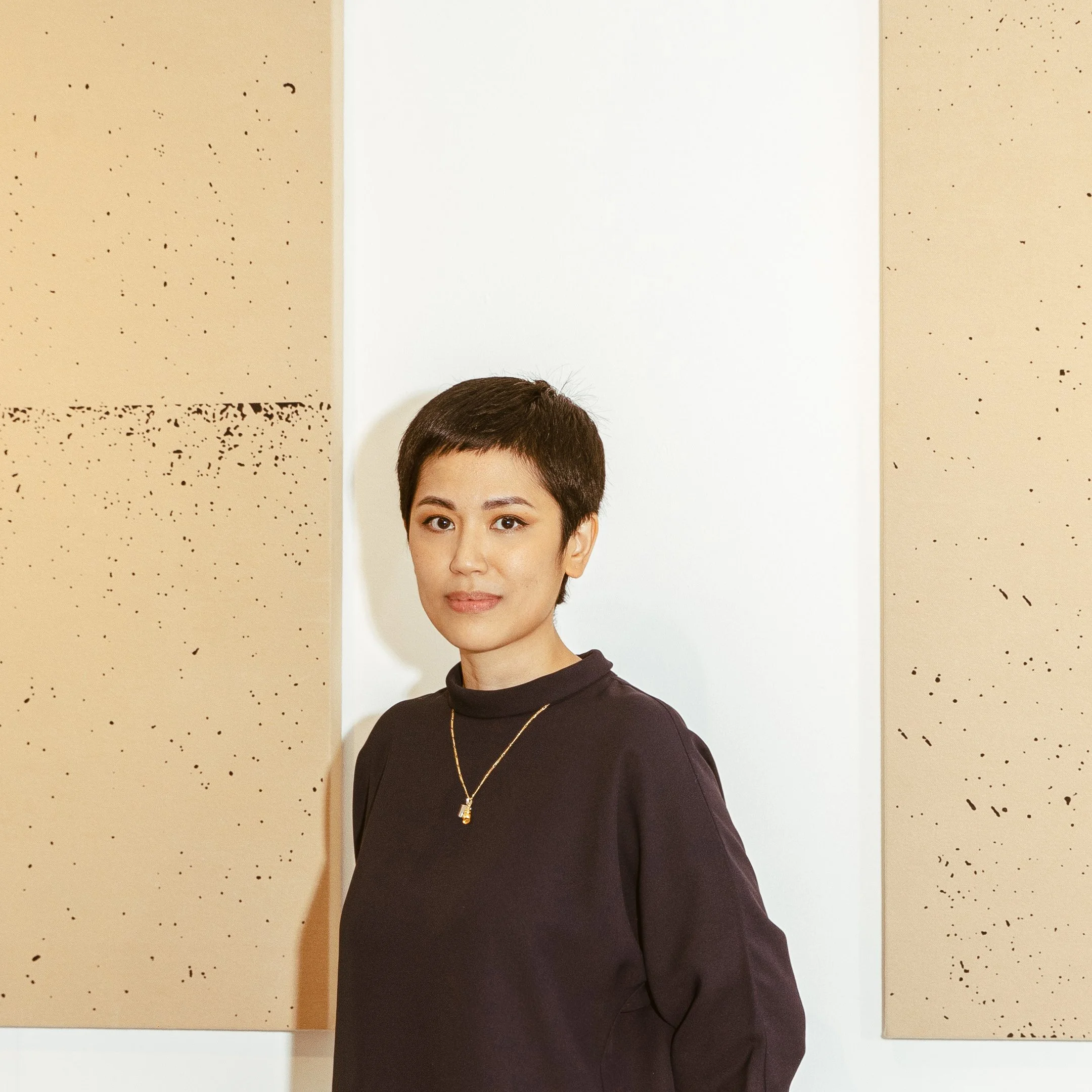
Artist Nice Buenaventura
Nice Buenaventura’s High Tide Atlas evolved from her earlier series, Gaian Assembly. The project originated from photocopied pages of Dean C. Worcester’s The Philippine Islands and Their People. Due to poor reproduction and digitization, the pages were scattered with Xerox specks and scanner dust. When Buenaventura magnified these marks, she noticed they began to resemble islands.
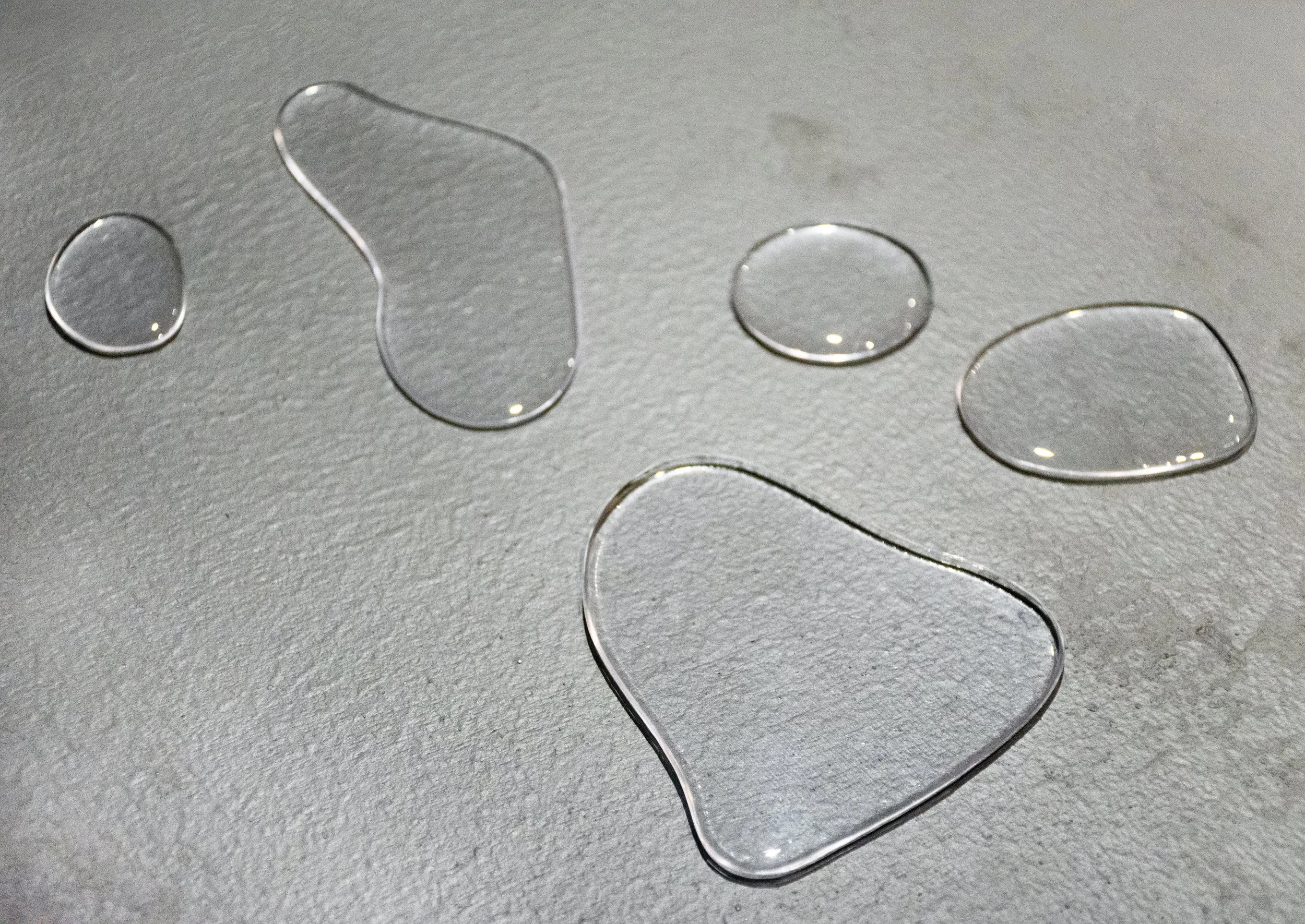
NICE BUENAVENTURA (b. 1984), "High Tide Atlas (Gaian Assembly XVIII) Edition of 2 + 1 AP" (detail), 2026, Vacuum-formed clear trays, water, Collection of the Artist. Courtesy of Ateneo Art Gallery, Ateneo de Manila University
In High Tide Atlas, these “Xerox archipelagoes” are translated into vacuum-formed clear trays filled with water and left to evaporate slowly. The resulting forms evoke puddles or small island barangays submerged during high tide.
Alex Quicho

Artist Alex Quicho
Alex Quicho’s film Alley to Heaven explores a fictional future in which an island in the West Philippine Sea has been overtaken by genetically engineered coral reefs. As a form of reclamation, the Philippines dispatches an eco-cult group—loosely inspired by Father Tropa and his SpaceShip 2000—to transform the island into a climate-resilient sanctuary. Guided by avatars, viewers are led on a tour of this island.
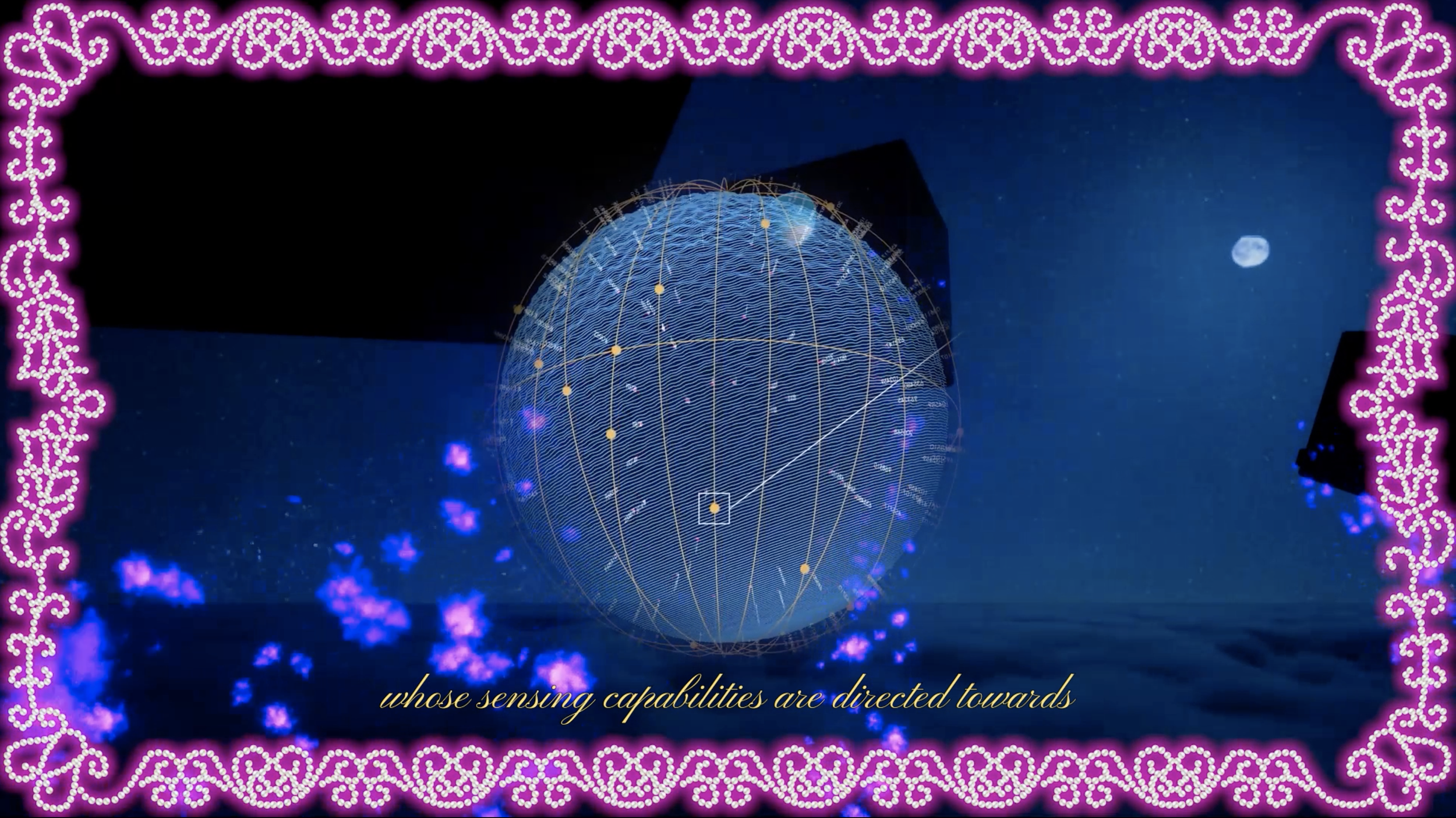
ALEX QUICHO (b. 1990), Still from "Alley to Heaven," 2023, CGI Video, 19:00 mins. Image courtesy of the Artist.
Alley to Heaven is a work of speculative fiction that presents a subtly dystopian vision of the future, while remaining grounded in real-world concerns, including questions of territorial ownership.
Joar Songcuya
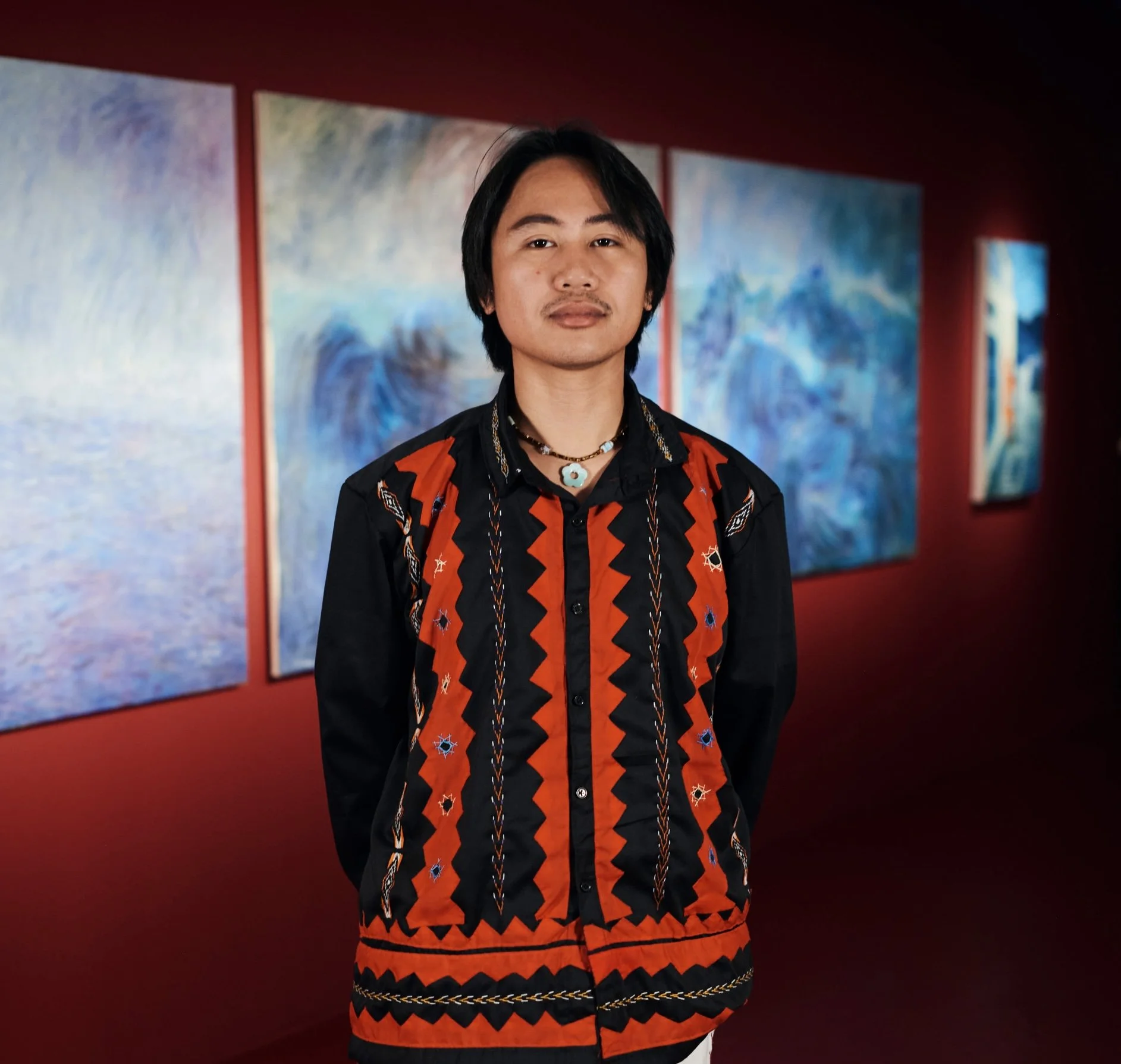
Artist Joar Songcuya
Joar Songcuya is a self-taught painter who spent ten years working as a marine engineer aboard trade ships. His new work, Sa Bug-os Nga Kalibutan sang Napulo Ka Tuig (Around the World in Ten Years) I-VI, captures his seafaring journeys through drawings and paintings on canvas scrolls. Reflecting on daily life at sea, Songcuya’s work depicts the precarities of maritime labor, as well as the broader realities of labor migration and statelessness.
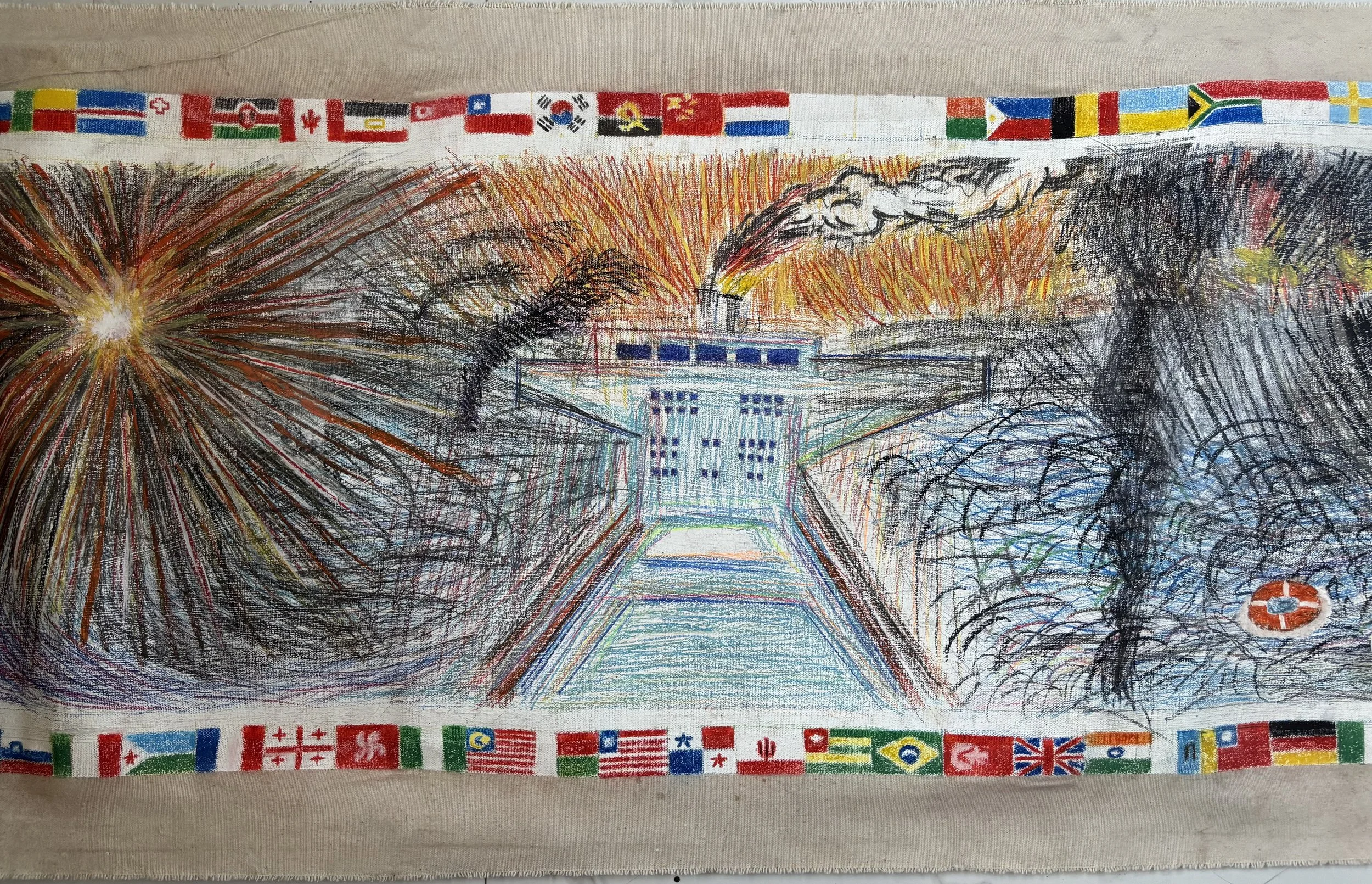
Process photo of Joar Songcuya's (b. 1990), "Sa Bug-os Nga Kalibutan sang Napulo Ka Tuig (Around The World in Ten Years)", 2025, Colored pencil, ink, watercolor, acrylic on canvas, Collection of the Artist. Image courtesy of the Artist.
A World of Islands: On Palms, Storms & Coconuts is on view at Ateneo Art Gallery until May 24, 2026.