UNIS: A Live Feed of Firsts at Otaku Pop Fes 2026
At Otaku Pop Fes 2026, UNIS didn’t just headline—they turned a two-night run into a rolling pop spectacle, all switch-ups, high-gloss energy, and moments built to live far beyond the festival grounds.
Words Bernadette Soriano
Photos Courtesy of Mirrorball Asia
April 28, 2026
There’s a particular rush that belongs to firsts—that heightened, almost overexposed feeling when everything seems to hit a little brighter, louder, faster.
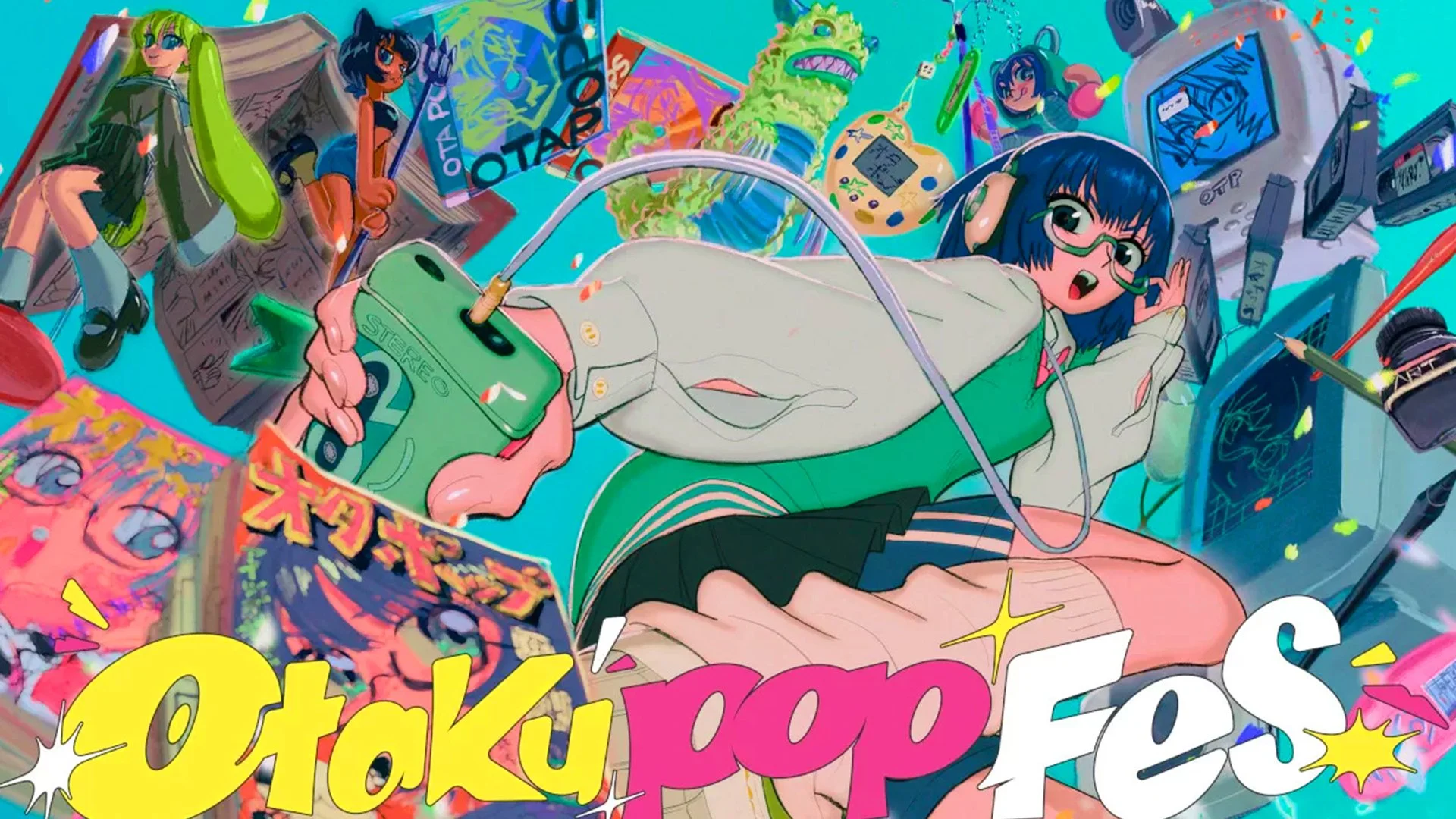
Otaku Pop Fes 2026 had that charge, and UNIS knew exactly how to play inside it.
Across April 25 and 26, the group treated headlining less like a victory lap than a live experiment in momentum, splitting their run into two different setlists that refused the easy route of repetition. Same stage, same festival—completely different energy.
UNIS performed with that increasingly rare mix of lockstep discipline and breezy unpredictability, where razor-tight choreography coexists with an ease that keeps everything feeling loose, bright, and alive. Even at their most controlled, there’s movement spilling over the edges.
That elasticity became especially palpable in the Japanese singles, which landed in Manila with the thrill of something both rare and hyper-current.
Manila got live performances of UNIS’ Japanese singles, including their debut “Moshi Moshi ♡,” produced by shito of HoneyWorks and carrying that bright, candy-toned melodic ease, alongside the more teasing, almost provocatively playful “Shiawase ni Nanka Naranaide ne (mwah…),” produced by KORESAWA, whose title alone, “Don’t You Dare Be Happy,” already hints at the group’s SWICY identity in full effect: sweet on the surface, sharp right underneath it.
Both tracks lean into a kawaii-inflected sensibility that adds a more stylized layer to the group’s identity—sweet in tone, but edged just enough to avoid feeling purely saccharine.
Live, those tracks didn’t feel like side quests into J-pop aesthetics so much as extensions of the group’s broader pan-Asian sound, where kawaii textures, K-pop maximalism, and internet-age hyperpop instincts brush up against each other sans friction.
It was a sweet blend of polish and personality that feels very UNIS right now—sharpened production, distinct creative fingerprints, and a sound that still manages to feel spontaneous in motion.
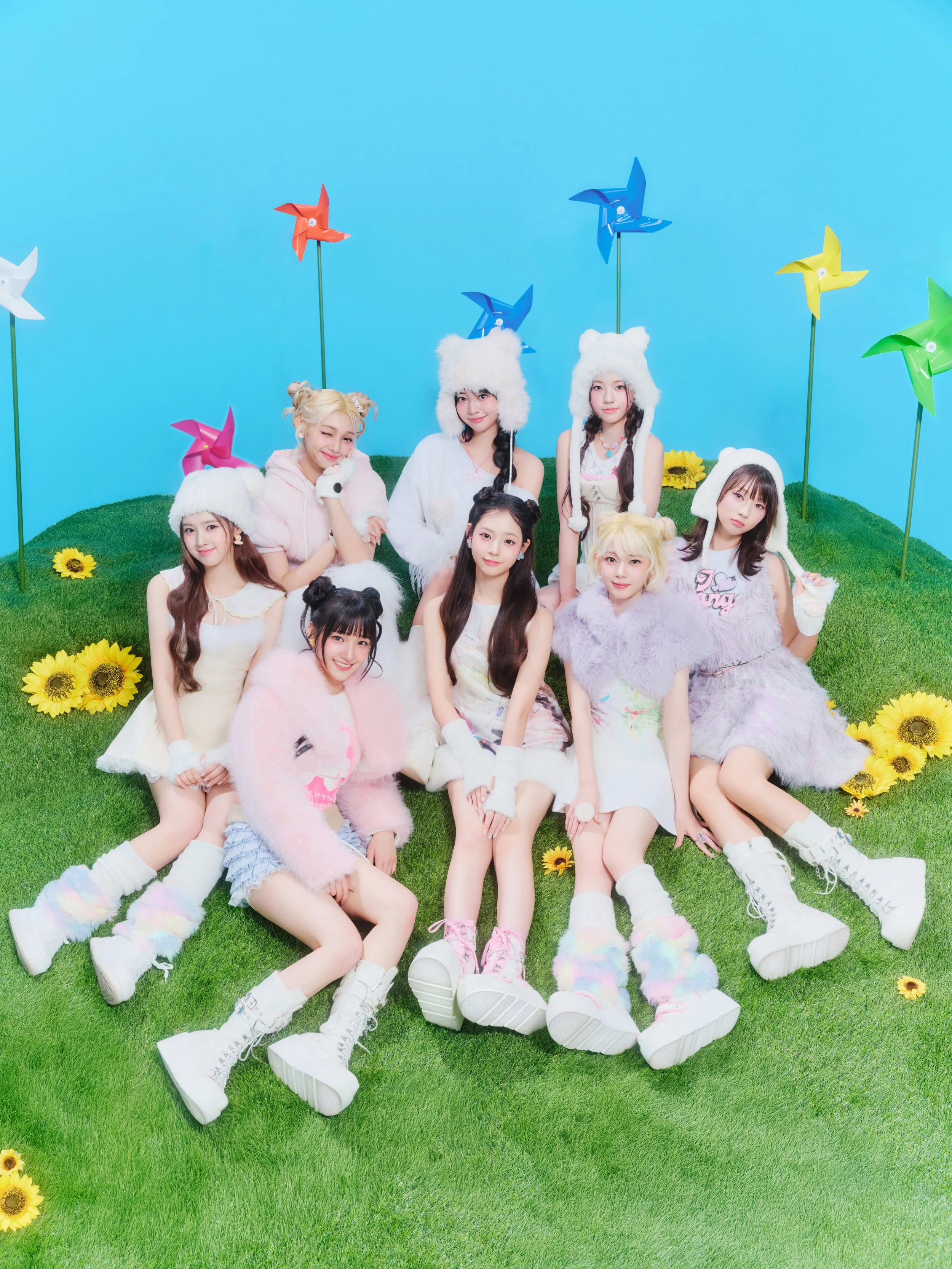
That same sense of fluidity has defined the group from the jump. Formed through the international survival show Universe Ticket, UNIS debuted in March 2024, already built with a global-pop blueprint in place. The lineup, Hyeonju, Nana, Gehlee, Kotoko, Yunha, Elisia, Yoona, and Seowon, feels less like a single origin story and more like a meeting point, bringing together members from South Korea, Japan, and the Philippines into a group identity that naturally resists being boxed in.
Their performances lean into that multiplicity, shifting fluidly between languages and tonal registers, with each member contributing a distinct texture to the whole.
That sense of fluency extends into the Gen Z pop collective’s discography, where Japanese releases arrive alongside English versions, widening accessibility while preserving the tonal nuance of the originals.
Meanwhile, collaborations like “Shaking My Head” with noa introduce another layer of cross-border synergy, and “Pinky Lady,” tied to the film Specials and its high-profile cast starring Snow Man’s Daisuke Sakuma and NCT127’s Yuta Nakamoto, folds the group further into a wider pop-cultural universe where music, film, and idol mythology increasingly overlap and circulate within the same ecosystem.
These threads came together in real time, as the experience moved beyond the stage into fan-facing moments that included digital voice cards carrying personal messages, alongside curated interactions that briefly closed the gap between artist and audience. The result was a sense of immediacy and intimacy that never overstayed its moment, but instead lingered in the shared space it momentarily created.
It reflects how fandom works now: more participatory, more direct, where being there isn’t just about watching a set, but about being part of the exchange as it happens.
In Manila’s live scene, where crowds already move like they’re fluent in K-pop, UNIS steps in with a more elevated presence: variation as strategy, cuteness as a power move, and performances that read like a feed that never stops refreshing in real time.
And for a festival built around firsts, it felt fitting that one of its defining performances carried the thrill of something happening for the first time, even as it kept reshaping itself in front of locals and, just as vividly, in front of the wider world of pop.