
Tracing Essence in the Fold
Featuring works by Shireen Co, Zuh Dai, Arvi Fetalvero, Yandra Po, and Ikea Rizalon, Each, Unfolding at Ysobel Art Gallery creates space for quiet points of connection.
Words Philip Paraan
Photos courtesy of Ysobel Art Gallery
May 29, 2026
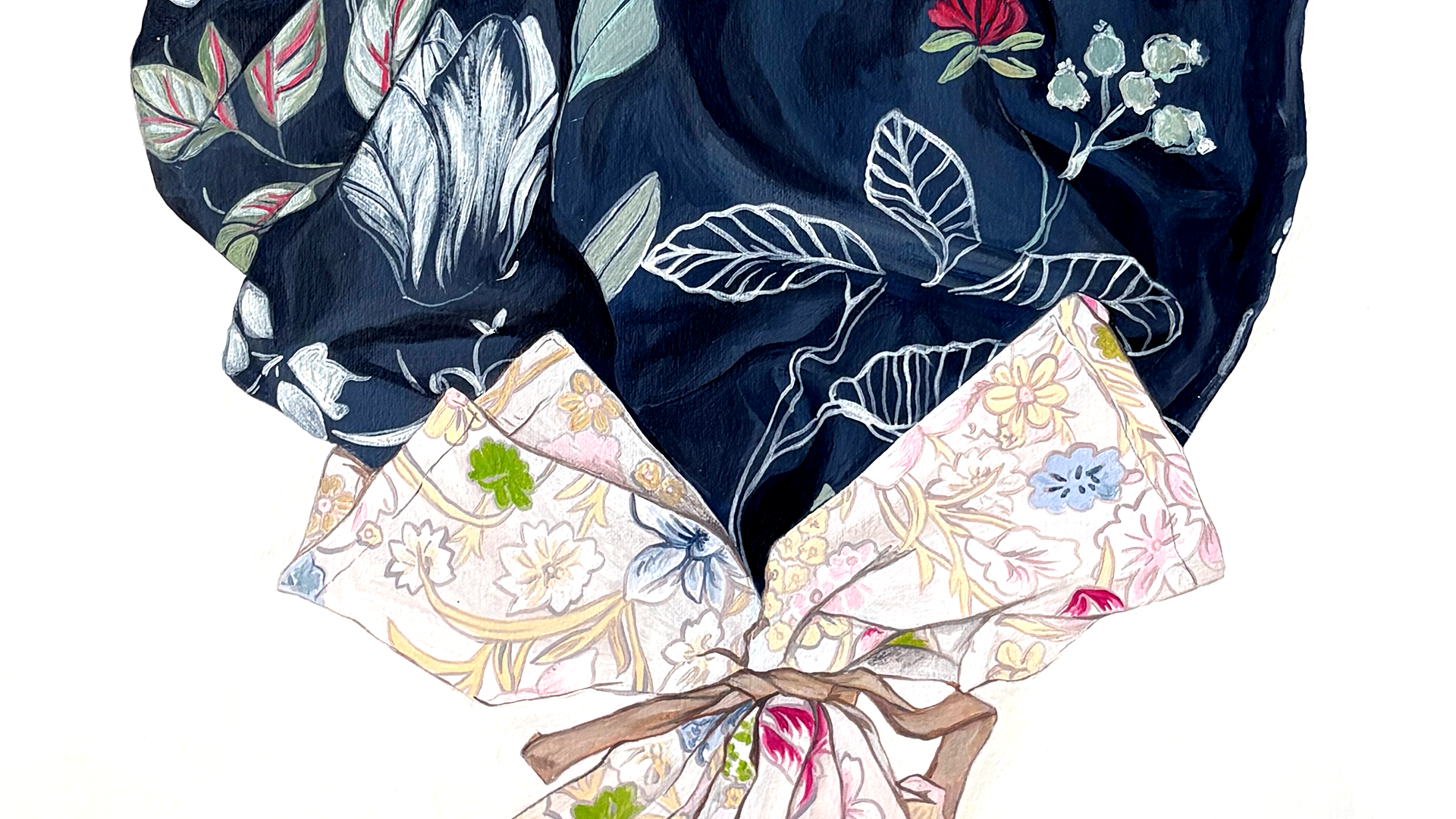
Shireen Co, Gathered II, 24x18 inches, acrylic on canvas
Using imagery and thematic associations tied to feminine tropes, five female artists work across painting, embroidery, textiles, sculpture, and collage to reimagine familiar objects and fragmented forms. Folded fabrics, embroidered surfaces, suspended textiles, fractured landscapes, and warped objects shift from functional utilities into quiet meditations on emotional residue, preservation, and the instability of perception and memory.
Throughout each of these artists’ acts of unfolding, ordinary materials become carriers of personal experience. Rather than offering clear stories or fixed meanings, the exhibition focuses on traces—small emotional remains left behind in objects, surfaces, and gestures.
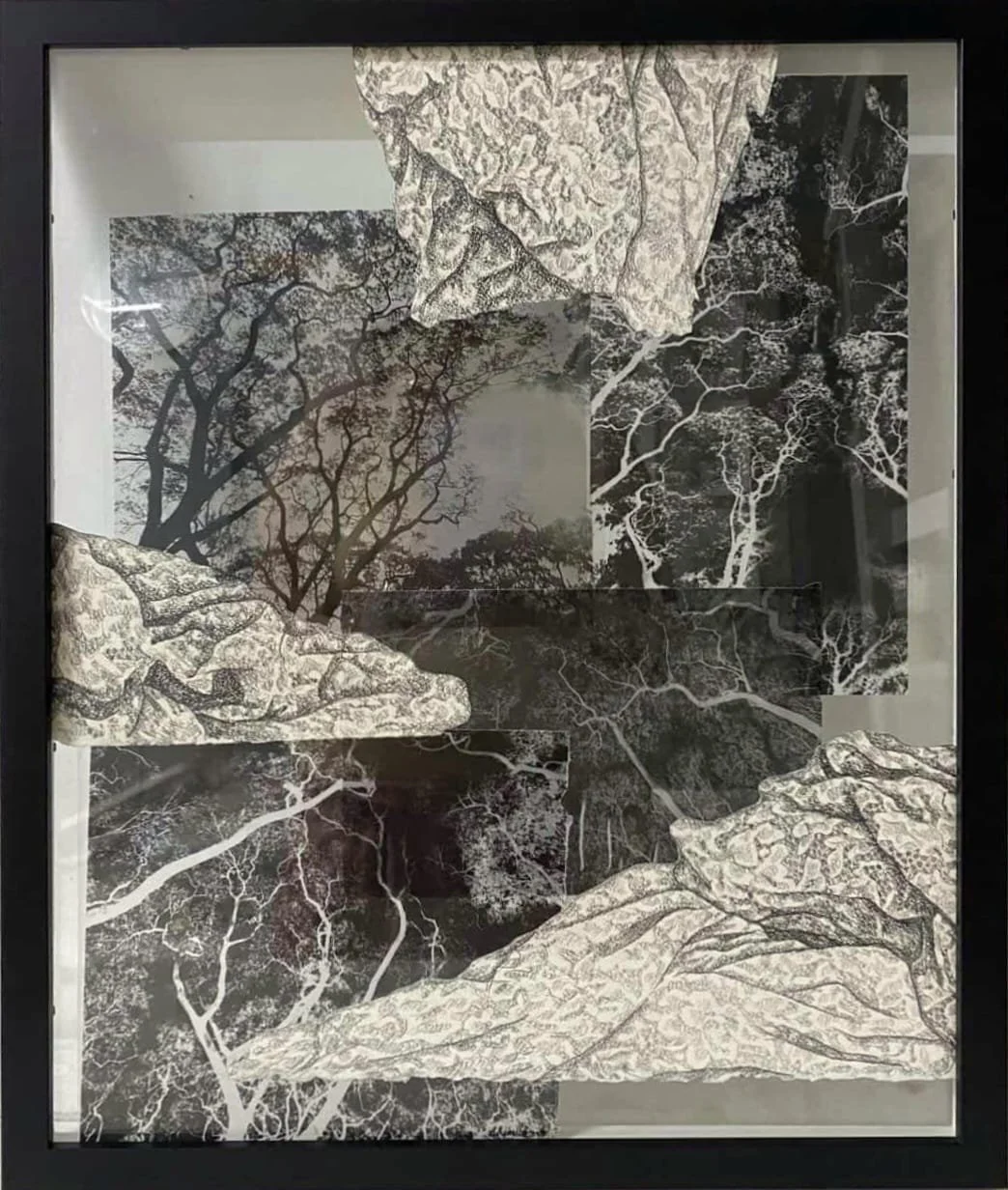
Arvi Fetalvero, Landscape II, 20x16 inches, graphite on paper, collage
Arvi Fetalvero’s monochromatic works, mounted side by side against a white gallery wall, combine photographic imagery of dense branches and root-like forms with torn, layered shapes forming textured collage surfaces and overlapping rectangular interruptions. Her compositions evoke landscapes being excavated, peeled apart, or reconstructed. They also present a tension between dark organic imagery and pale crumpled forms that creates an atmosphere that feels contemplative and internally complex.
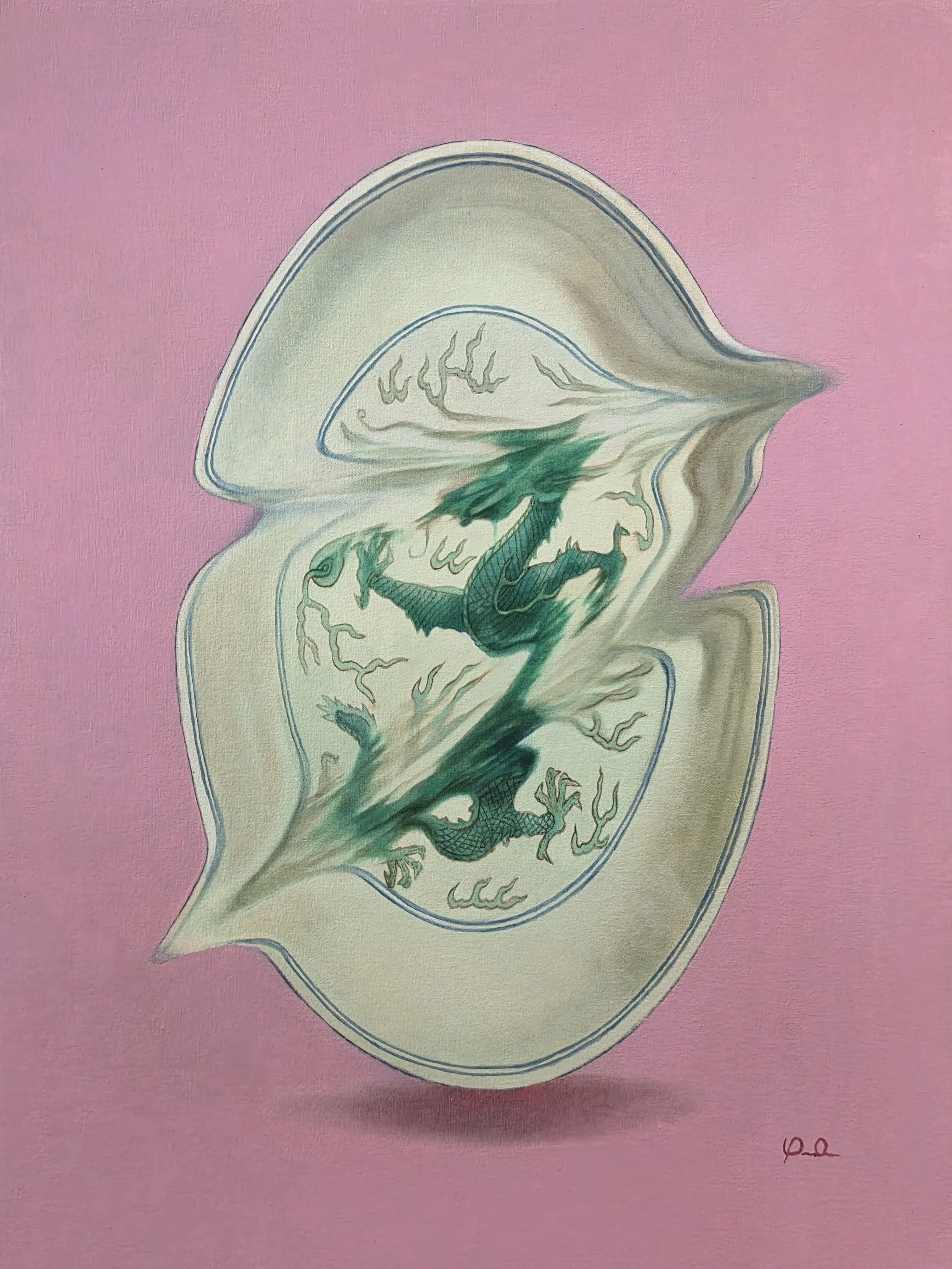
Yandra Po, Sacred Being, 24x18 inches, oil on canvas
This sense of fragmentation carries into Yandra Po’s four small paintings arranged in a precise two-by-two grid. Each canvas presents porcelain ware suspended against a monochrome background, like a domestic specimen preserved in memory. Although orderly in arrangement, the objects themselves appear warped, folded, or subtly split, as though softened by time and recollection. Resembling antique ceramics, yet rendered with surreal distortions, the paintings feel less like still lifes than imperfectly remembered artifacts, where delicacy and alteration co-exist.

Zuh Dai, Baked Chicken, 10x6 inches, Acrylic on thermoformed acrylic glass
A similar instability emerges and is carried into Zuh Dai’s folded handkerchiefs or bandanas, transformed into sculptural forms somewhat resembling abandoned garments left hanging for a while. Illustrated scenes referencing pop and kitschy elements fracture along the creased fabric, turning memory into something folded, obscured, and unstable. Their cast shadows extend the works into ghostly silhouettes suspended between domestic objects, relics, and a clever materially driven work. This dialogue between image and disruption also resonates with Ikea Rizalon’s embroidered paintings, where familiar subjects—a fern in a clay pot or a pair of swans—are interrupted by crude visible stitches. Rather than decorative details, the threads function like glitches, destabilizing the realism of otherwise intimate and recognizable scenes.

Ikea Rizalon, Scene 5 Stillness II, 20x16 inches, hand embroidery and acrylic on canvas
To understand stitching as an artistic intervention, it could be useful to refer to Rozsika Parker’s seminal book The Subversive Stitch where she theorized stitching as a feminist act. She argued that embroidery was historically bound to ideals of femininity, obedience, and domesticity, yet could also function as a space of resistance and self-expression. Rather than treating stitching as passive decoration, Parker reframed it as labor shaped by gender, class, and power.

Ikea Rizalon, Scene 5 Stillness II, 20x16 inches, hand embroidery and acrylic on canvas
Building on this feminist lineage, renowned Filipina artists such as Pacita Abad and Imelda Cajipe Endaya have long employed stitching and textile practices as critical artistic strategies. In their works, stitching becomes an embodied act of repair, resistance, and archiving—making visible feminized labor while binding personal and political concerns into a slow language of care, endurance, and agency.
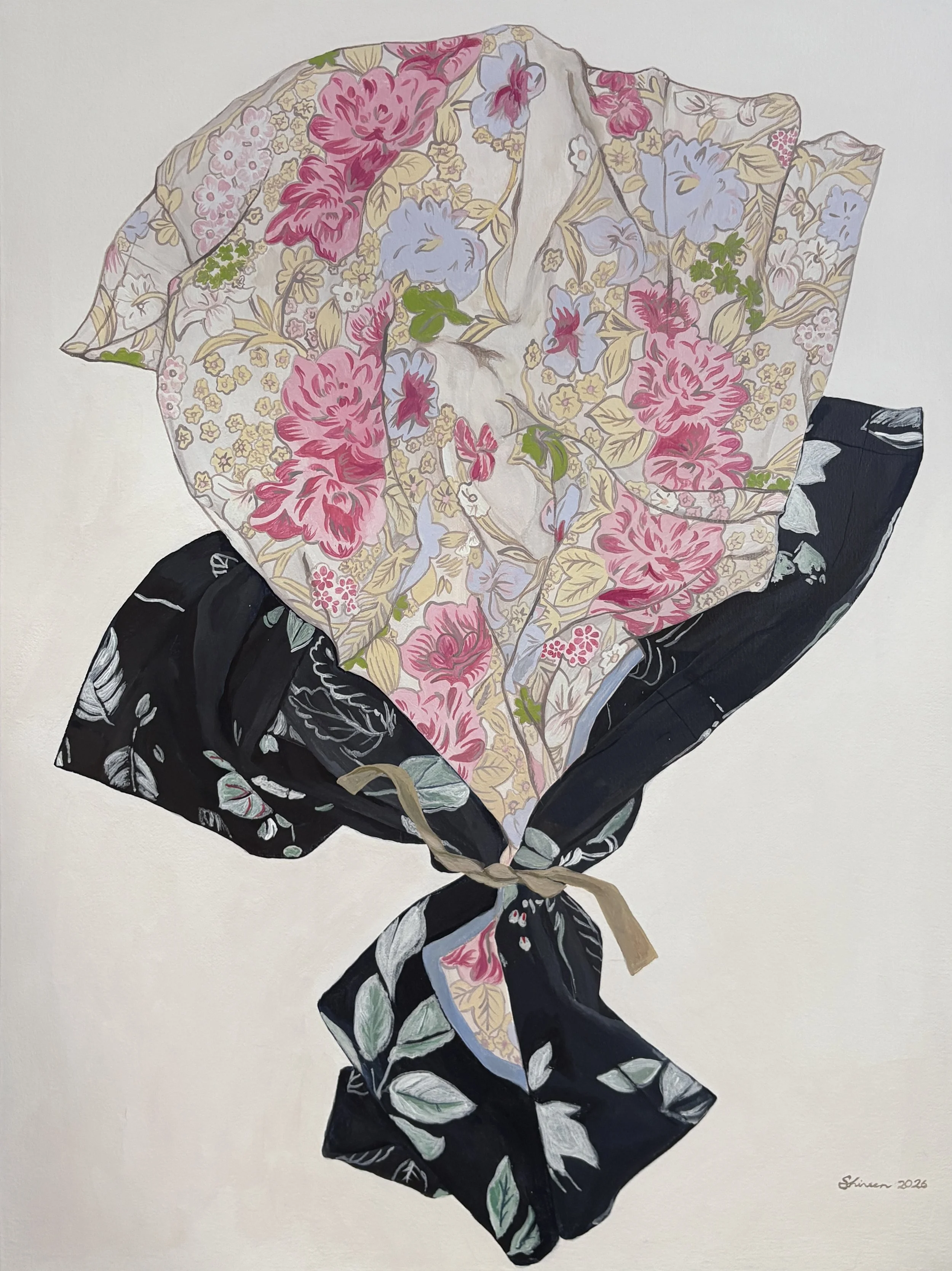
Shireen Co, Gathered I, 24x18 inches, acrylic on canvas
For her part, Shireen Co similarly explores the tension between concealment and exposure through paintings of fabric bundles with floral print patterns. Resembling wrapped bouquets, garments, or hidden possessions, the forms remain intentionally ambiguous. Carefully rendered folds emphasize the texture and weight of cloth, while the tied knots suggest containment and protection, as though something emotional, fragile, or deeply personal has been concealed within the fabric’s surface—as if something deeply personal is being kept inside.
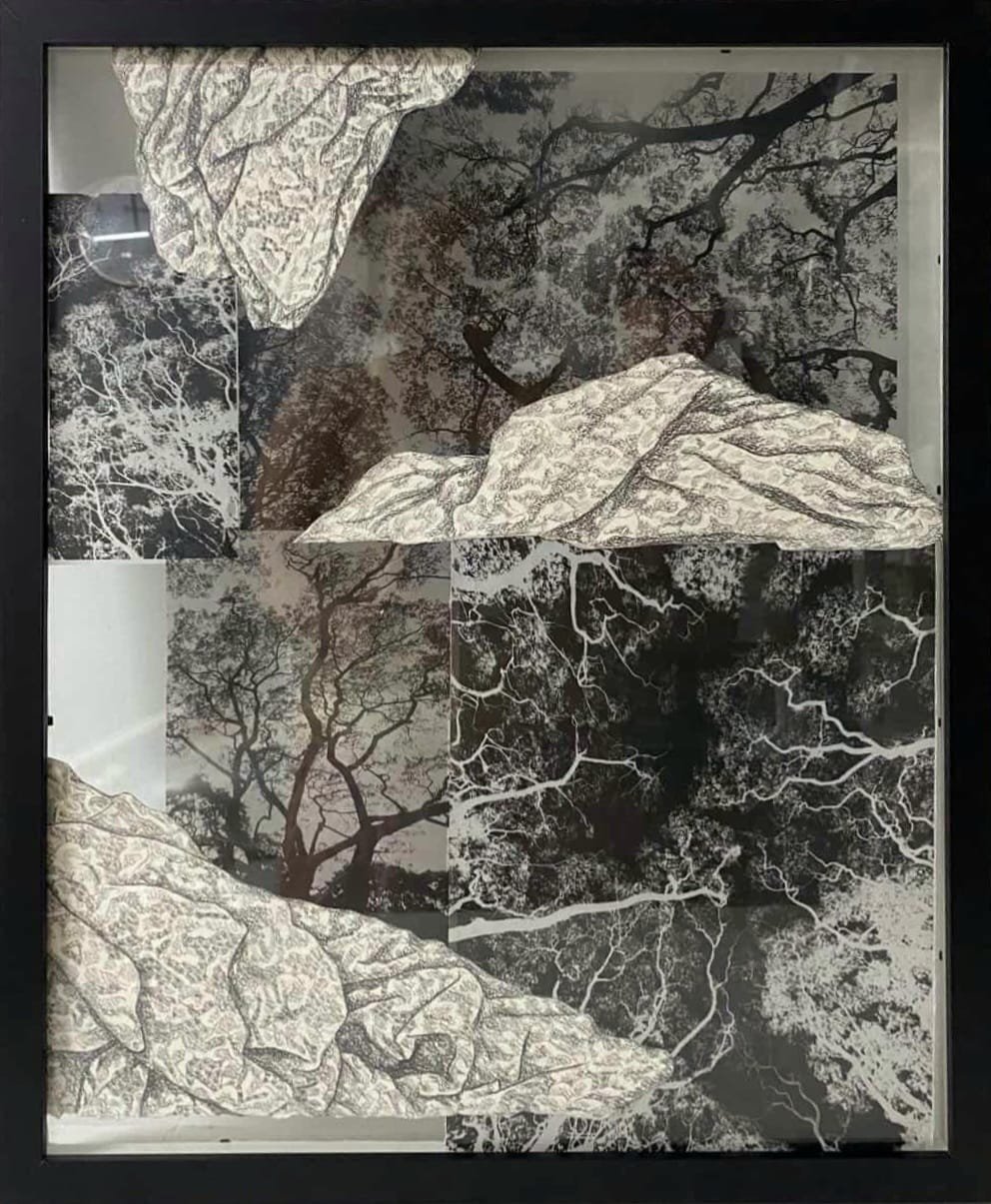
Arvi Fetalvero, Landscape I, 20x16 inches, graphite on paper, collage
Though the artists work across varied styles and differ formally and conceptually, the exhibition maintains a seamless cohesiveness essential to its curatorial framing. Individually, the works stand on their own, yet collectively, they cohere and intersect in ways that deepen and strengthen the exhibition’s central themes and are reinforced by the scale at which they were produced and installed.
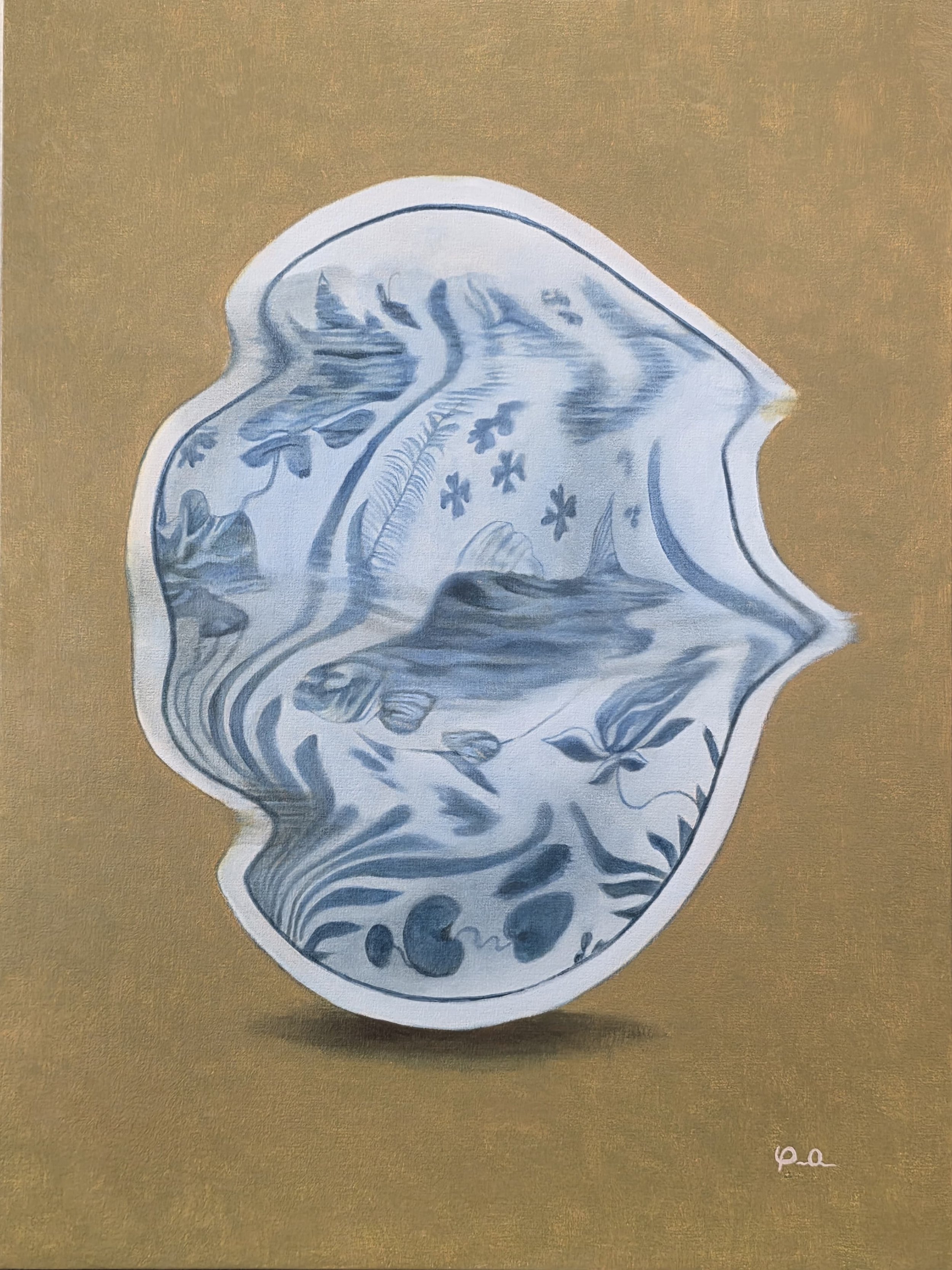
Yandra Po, In Every Season, 24x18 inches, oil on canvas
Artists like Yandra Po, Shireen Co, and at moments, Zuh Dai, work through quiet restraint. Sparse compositions, folded textiles, and concealed forms create tension through stillness, absence, and emotional withholding. In contrast, Arvi Fetalvero and Ikea Rizalon operate through accumulation and rupture: layered collages, dense textures, and aggressive stitching produce instability and visible friction. Together, these opposing approaches shape the exhibition’s rhythm between silence and tension, containment and fragmentation.

Zuh Dai, Never Fully Dressed, 39x26 inches, Acrylic on thermoformed acrylic glass
The exhibition certainly aligns with broader feminist practices that collapse distinctions between craft, sculpture, painting, and domestic labor, treating material fragility not as weakness, but as conceptual force. These are not passive domestic or ordinary objects used merely to frame ideas; rather, they resist simple utility and complicate sentimental readings of domesticity and femininity through critical and open-ended exploration.