
The Filipino Palate Is Primed For Authentic Neapolitan Cuisine. Here’s Why.
The best Italian food outside of Italy is reputedly in Japan, but could it also be in the Philippines?
Words & Photo courtesy of Pao F. Vergara
October 27, 2025
Over the years, Neapolitan restaurants applying authentic Napoli methods in their dishes have cropped up around Manila and likely beyond as well. Many of these, from classics like Bellini’s, A Veneto Ristorante, and Cibo to newcomers like Crosta, Gino’s Brick Oven, and A Mano are found in Metro Manila. But regions outside the capital reputably have still-hidden gems too.
Naples, the southern Italian city from which Neapolitan cuisine is named after, has a striking similarity with many Philippine regions when it comes to two things: Seaside life and warm weather.
The phenomenon of Filipinos falling in love with Italian cuisine actually traces back through the decades.
For one, there’s Filipino spaghetti, our own spin on red sauce pasta, which traces back to postwar Manila and utilizes more accessible ingredients, such as hotdogs and Eden cheese traced to American wartime rations. Meanwhile, our use of ketchup was derived from the Japanese using it in their pasta, all as we turned the knob up on the sauce’s sweetness.
In the 1970s-1980s, a Filipino version of carbonara was born thanks to more Filipinos with disposable income for travel. In the process, we began attempting to recreate at home dishes enjoyed while abroad. Here, we replaced eggs and pancetta with cream and bacon, essentially creating one of today’s Filipino cafe comfort food staples.
There’s nothing wrong with the indigenization or Filipinization of another cuisine’s dishes. If anything, such attempts served as our first forays into the food of other cultures, and this expanded palate can spark curiosity leading us to seek authentic versions of these dishes.
This doesn’t apply only to Neapolitan and broadly, Italian, cuisine but to all international and indigenous cuisines in the Philippines right now.
If anything, this phenomenon shows how the Filipino palate intuitively resonates with the Neapolitan palate as both tongues love savory, sweet, and briny flavor profiles accented by fresh herbs and vegetables, all with a love for earthy drinks (espressos and kapeng barako) and various alcoholics.
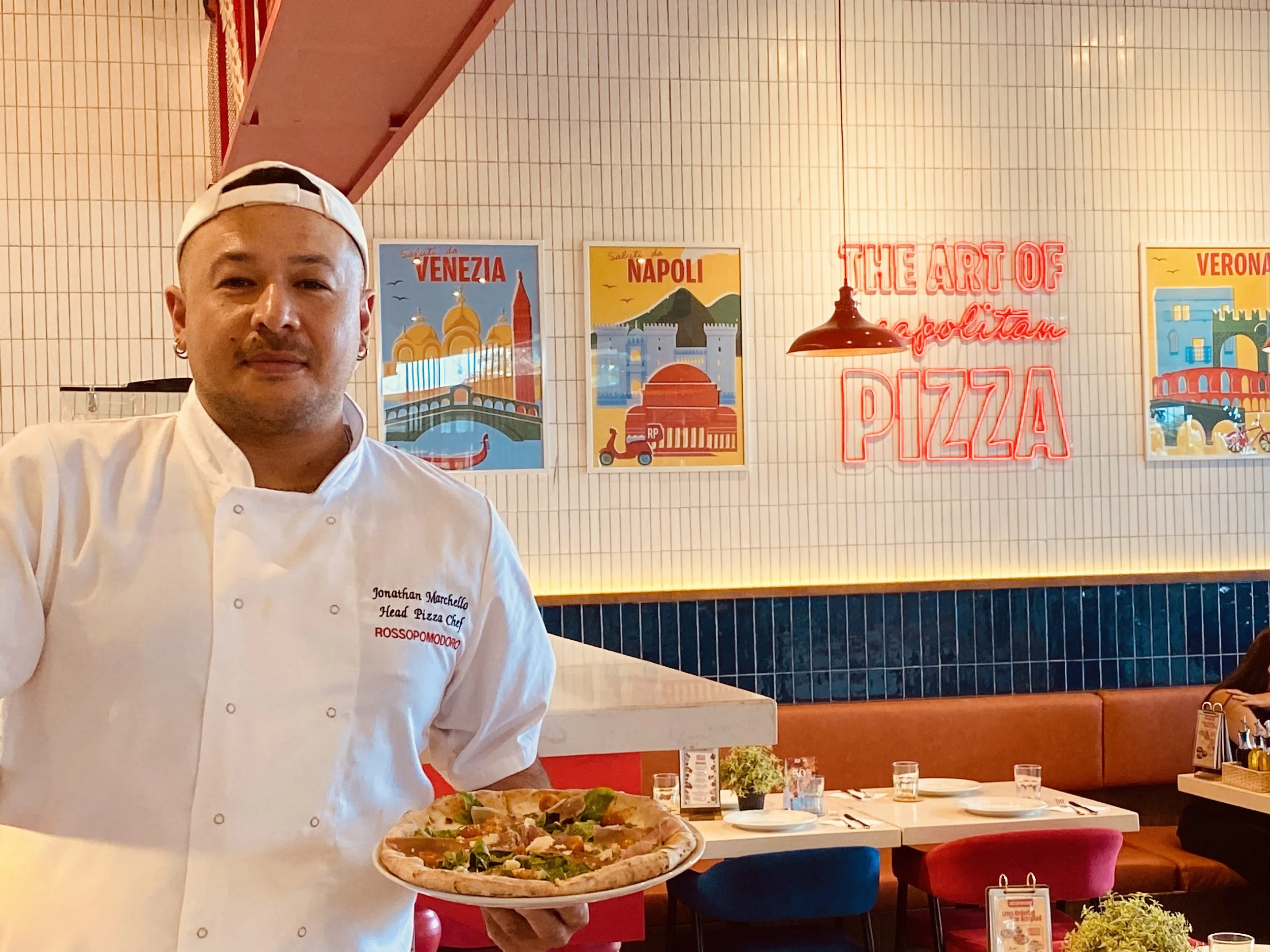
To get a better grasp of the essentials of Neapolitan cooking, Art+ Magazine sat down with Filipino-Italian chef Jonathan Marchello, who expounds on Neapolitan dishes, methods, and processes that shaped Italian cooking. There’s no doubt these can be starting benchmarks for discerning diners hoping to dive into a cuisine that shaped not just a nation, but global tastes as well.
Pride of place
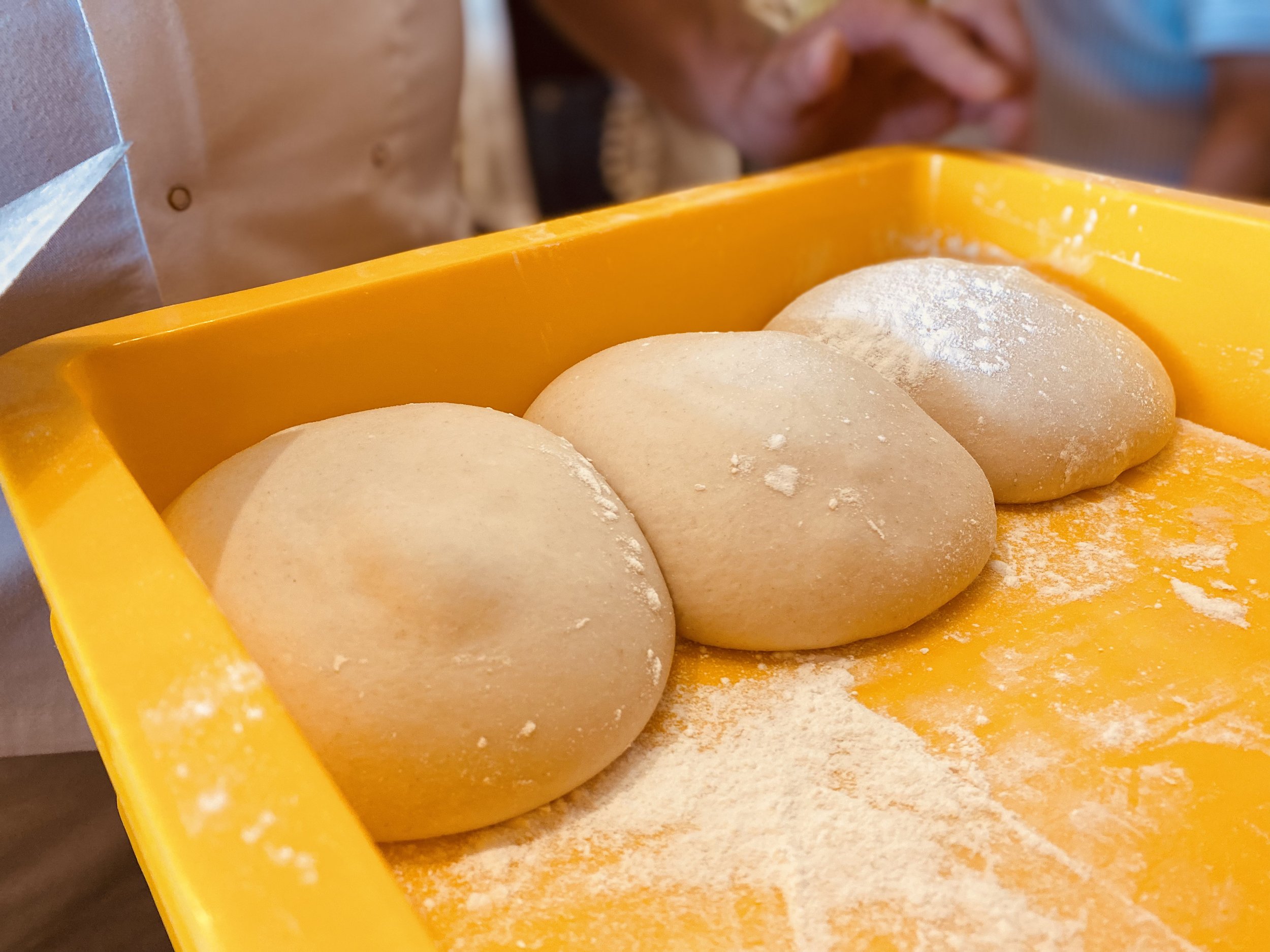
“Neapolitan cuisine is inseparable from Naples’ seaside location and fertile volcanic land,” Marchello shares as he kneads dough, while the staccato of his assistant’s chopping ingredients, as well as heat from the oven rounds this live portrait out. He notes “the abundance of fresh seafood, sun-ripened tomatoes, and locally crafted cheeses” endemic to the Southern Italian coastal city.
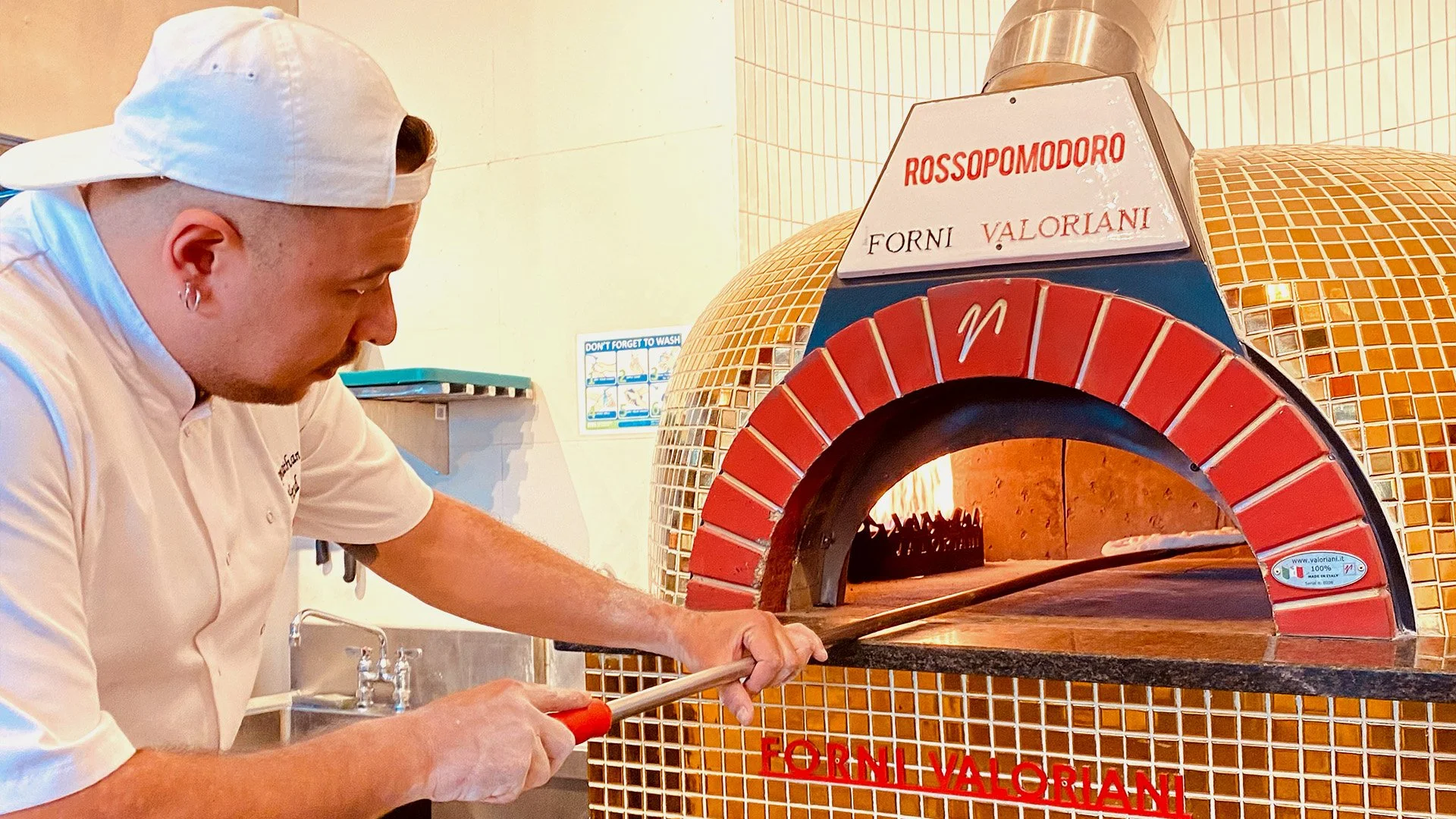
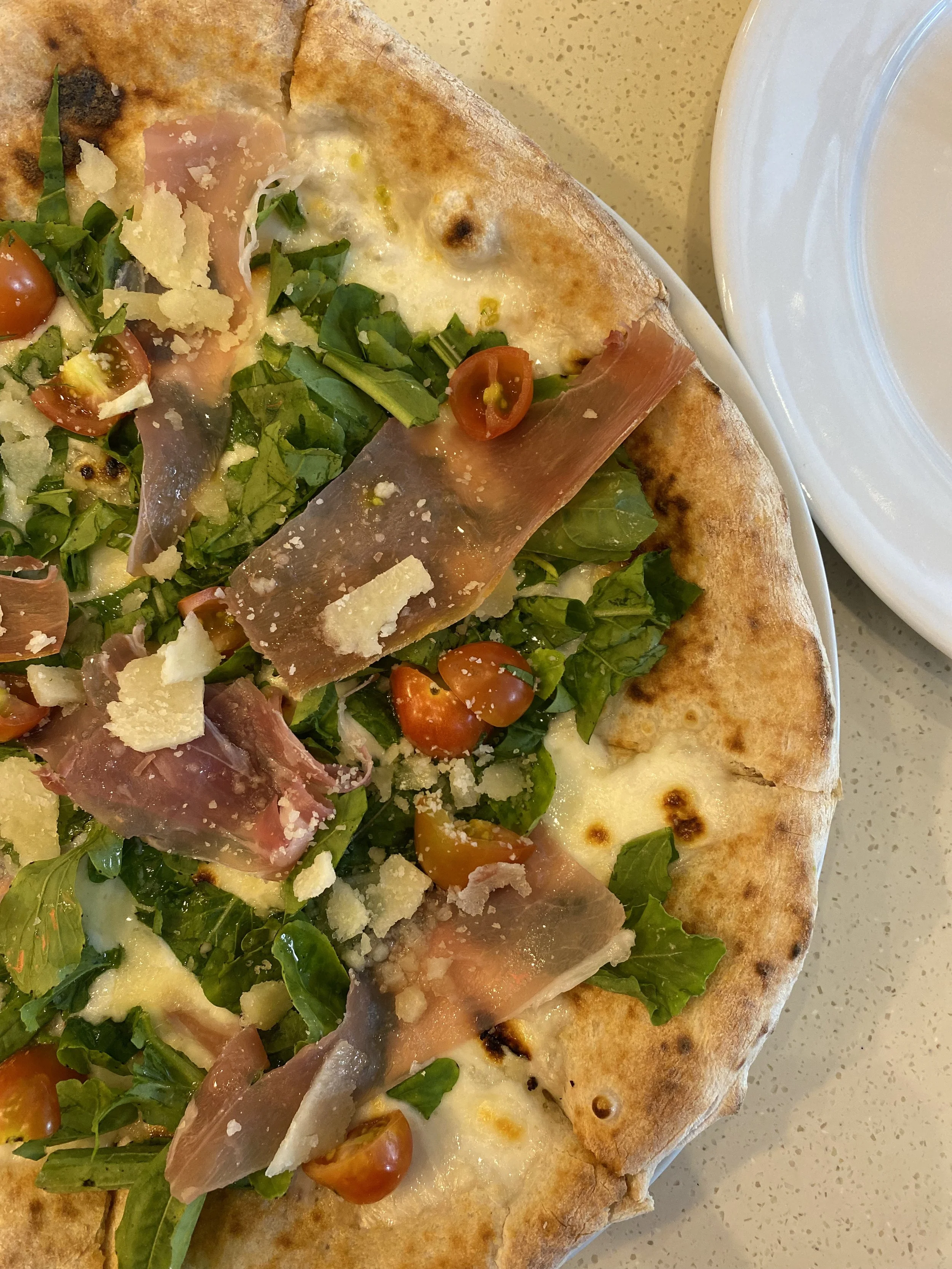
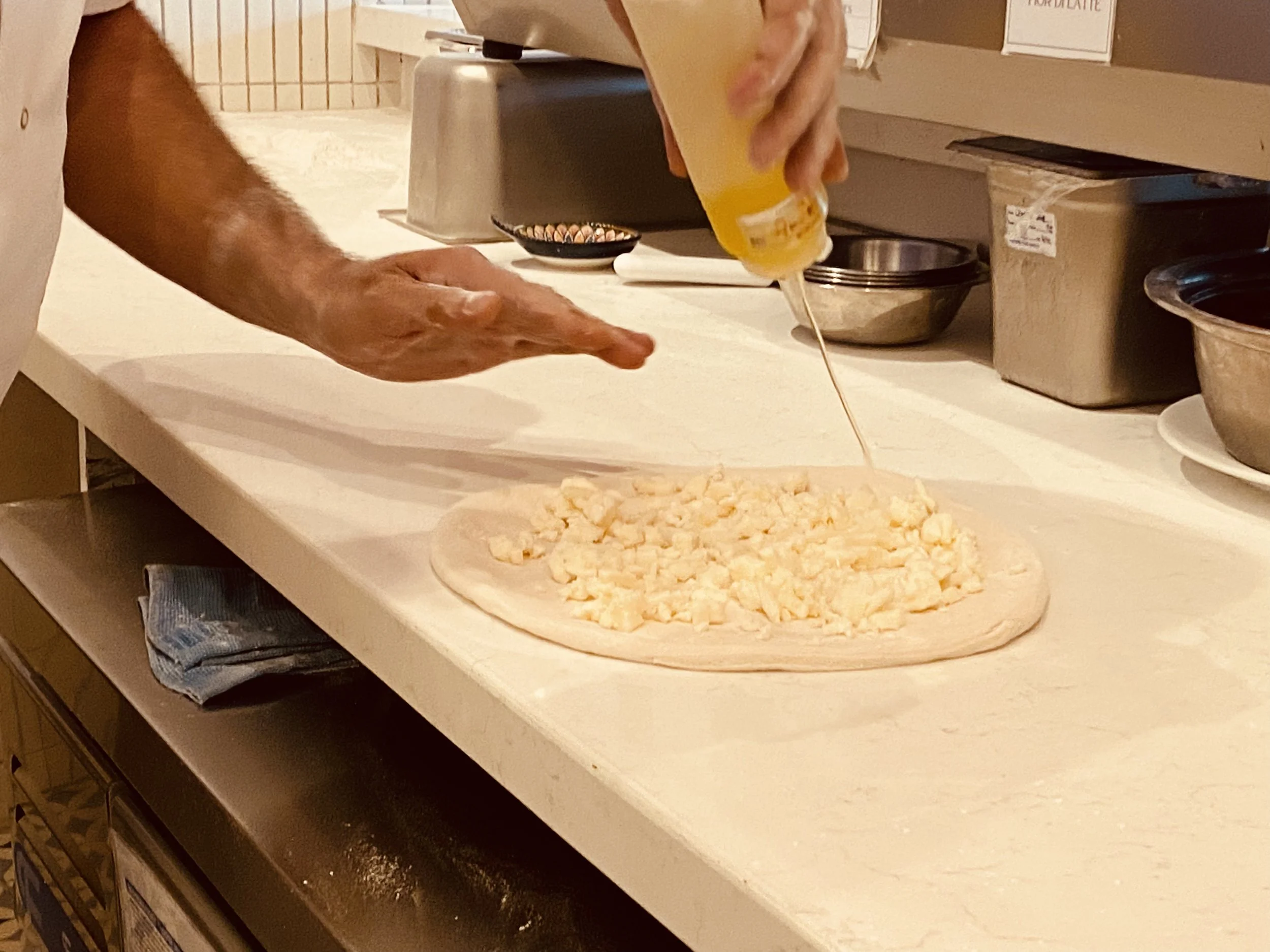
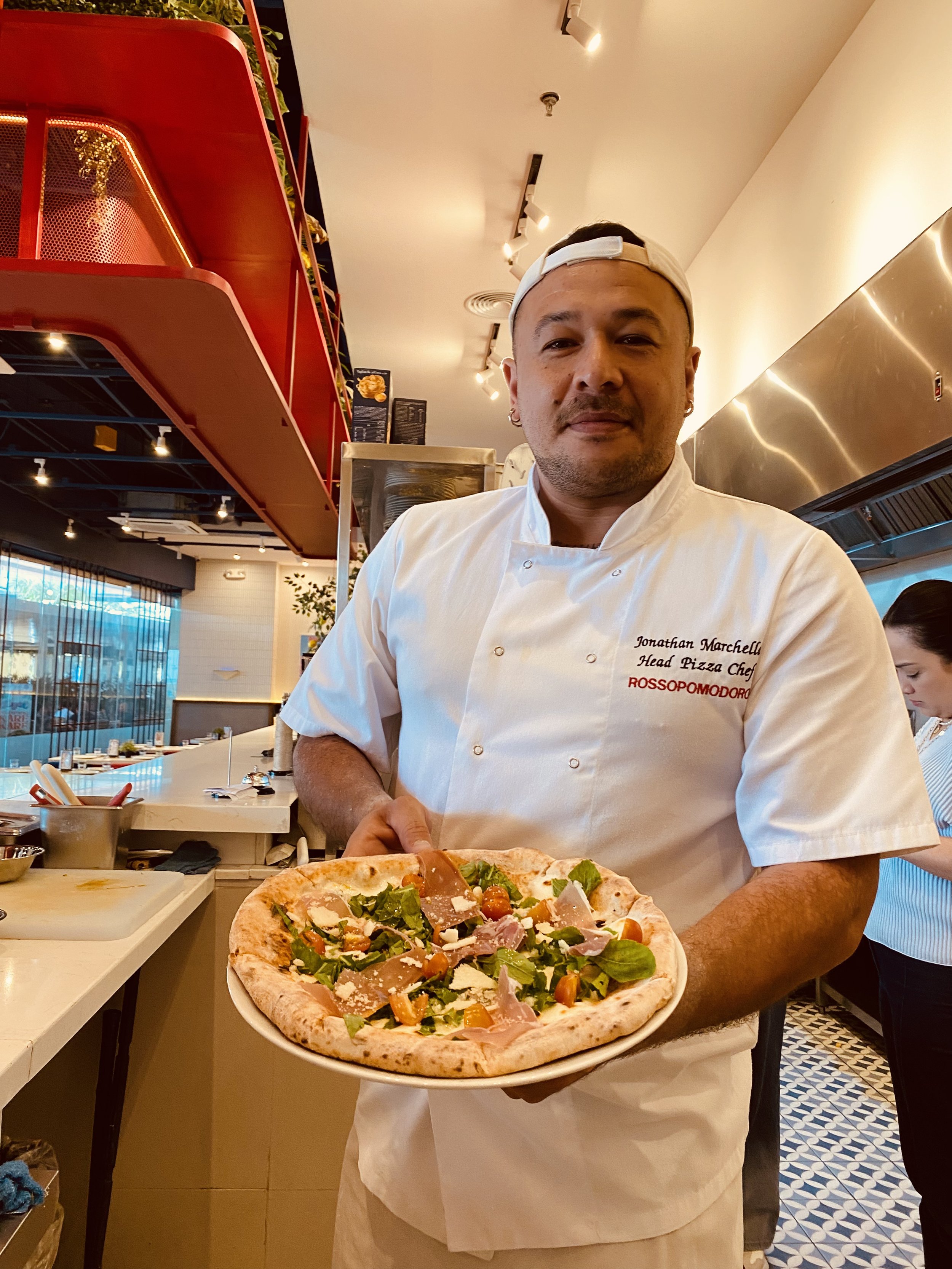
“Neapolitan cooking has shaped not only Italian cuisine but also global food culture,” he shares, loading the flattened dough into the brick oven, pre-heated 30 minutes before the restaurant’s opening. An assistant hands him two bowls and a plate: sorted arugula, fior di latte or the freshest curd in a batch of mozzarella, and cured ham.
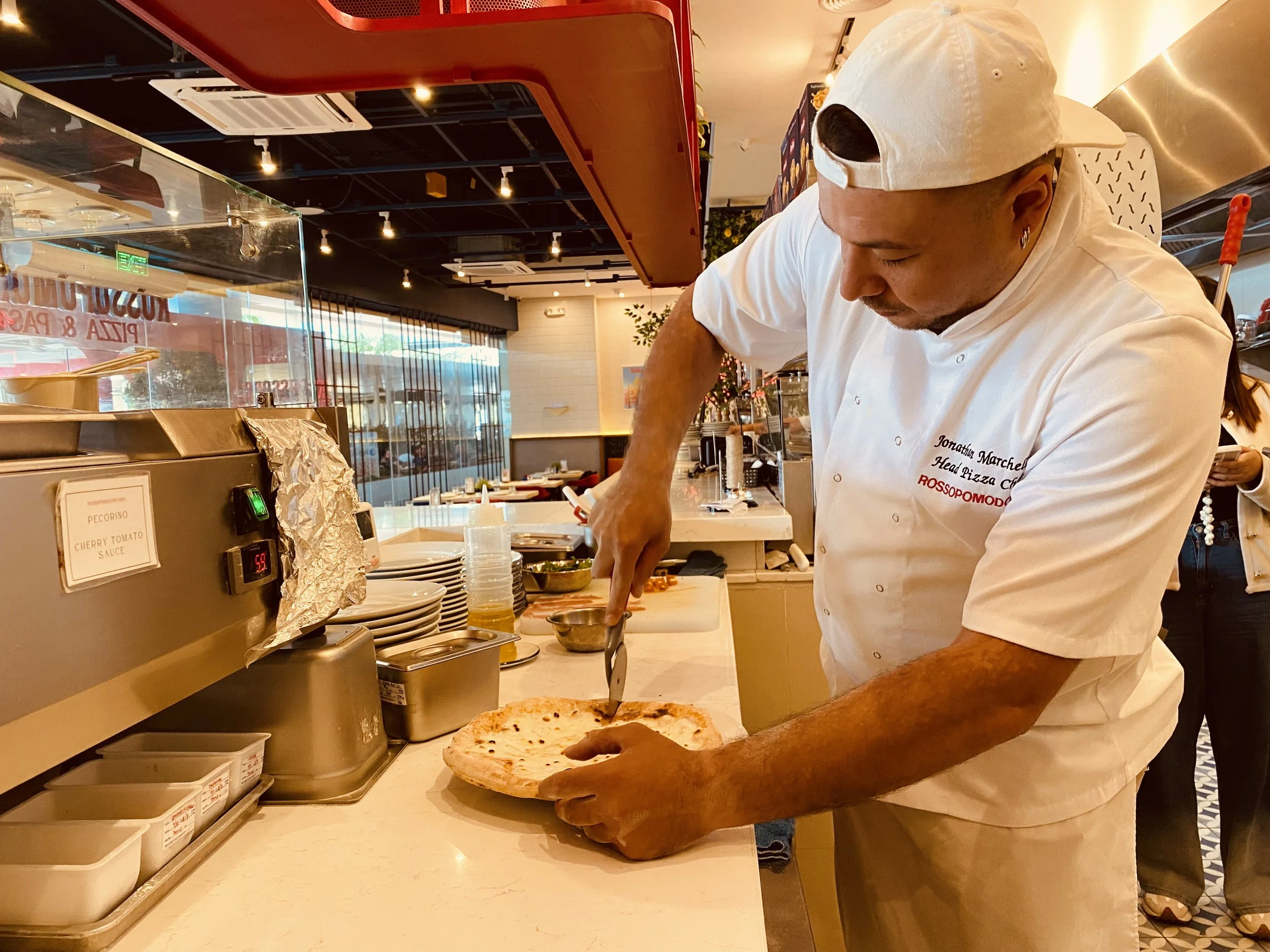
“Pizza, born in Naples, is now one of the most loved dishes in the world,” Marchello beams, now arranging toppings onto the cooked pizza. “Naples was also one of the first places in Italy to embrace the tomato, a fruit imported from South America, which forever changed Italian cooking. Many pasta sauces, bread traditions, and even street foods around Italy carry Neapolitan roots.”
Naples’ climate is very conducive for tomato cultivation, all as fields rich in volcanic nutrients allowed for the flourishing of not just produce but livestock, especially cows, birthing a cheese industry to match its fishing scene.
The pizza ready, he holds it up and poses for a photo.
“500 pizzas, mag-isa ako, Mama Mia!” such is Marchello’s recollection of one of the formative experiences of his culinary career. This was in the early pandemic years, prior to his arrival in the Philippines, and his colleagues called in sick.
Three people were normally needed to work the pizza station in this Neapolitan restaurant in London, and Marchello had no choice but to press on, literally and figuratively.
Four years later and eight time zones away in Pasay City, Metro Manila, Marchello had a full complement working with him. The annual Pyro-Olympics festival, one of the city’s main attractions was happening nearby and the restaurant was expecting a more-than-full house.
From 6:30 to 10:30PM, Marchello and team managed to produce 276 pizzas.
Given the nature of his work, Marchello quips that when outside of the kitchen, and since arriving in the Philippines, he’s taken a liking to Chinese food.
Marchello hails from Genoa in northern Italy, but learned Neapolitan cooking working in his father’s food business for 15 years since turning 15. “Actually, today, almost every Italian chef has to learn the fundamentals of Neapolitan cuisine, every Italian city has embraced the methods over time,” he laughs, showing me a photo of a Naples warehouse full of fior di latte.
He’s 38 years old now and currently the head chef in Rossopomodoro’s Philippine branches. He often visits his maternal relatives in Pampanga, interestingly a Philippine province that also has a large influence in Filipino cuisine, just as Naples has on Italian cuisine.
Pride of process
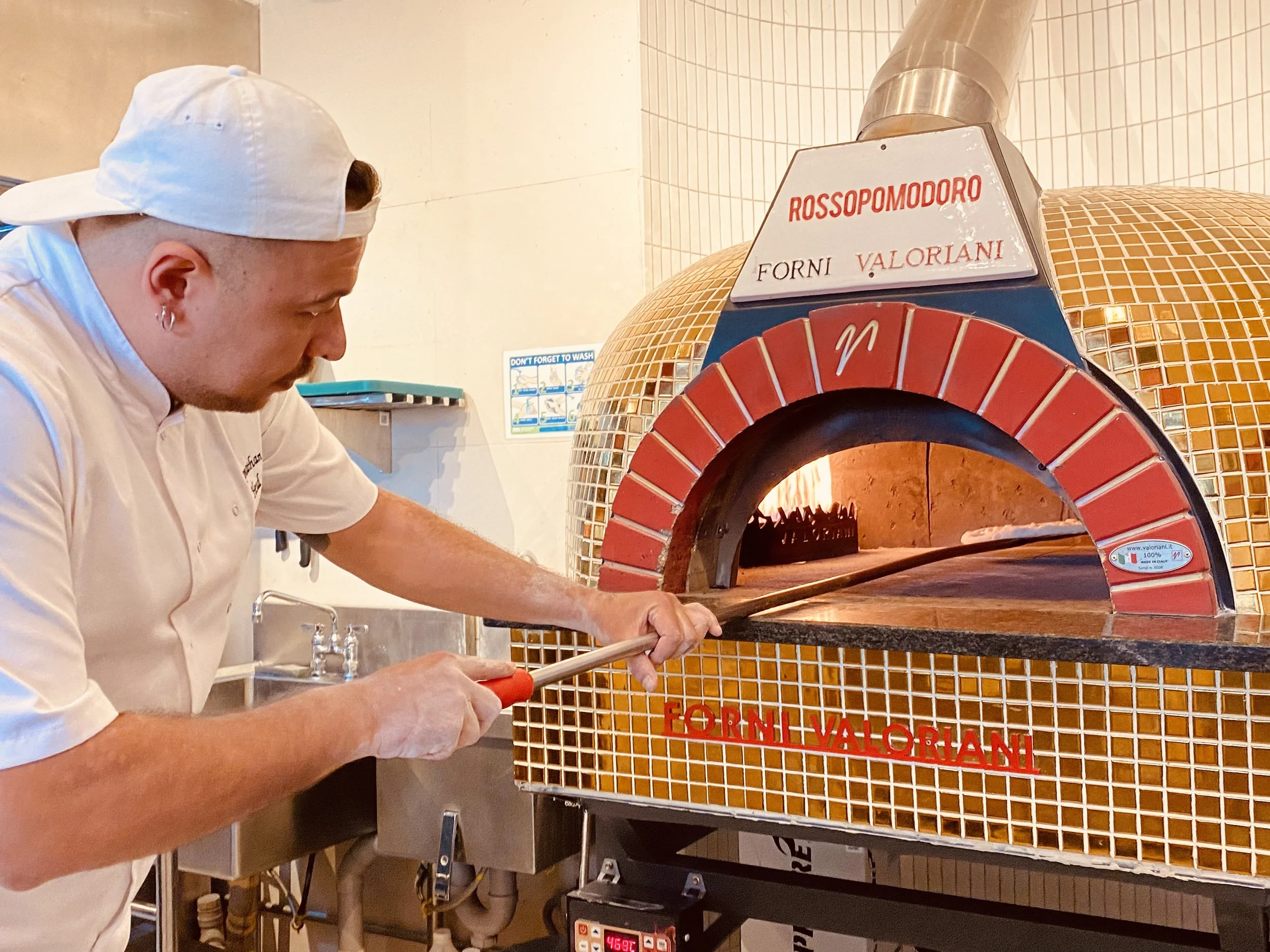
Marchello shares how Neapolitan pizza usually takes just 90 seconds of actual cooking in the oven. This is achieved through preheating to 450 to 500 degrees Celsius. He notes how other places instead use lower temperatures and longer cook times, but this won’t result in “the signature “leopard spots” on the crust—proof of true Neapolitan craftsmanship.”
The most popular history of Pizza Margherita revolves around how this specific creation originated from Naples in the late 1800s, designed to honor a unified Italy’s queen, its three main ingredients representing the tri-color national flag: Summer-red tomatoes, cream of the crop white cheese, and the freshest greens.
Marchello adds that pizza was once considered poor man’s food, and this particular Neapolitan pizza and its being dedicated to the queen elevated the dish.
His current workplace made sure to build brick ovens adhering to traditional methods, which can hold five to six pizzas at a time. To give better attention to each pizza, however, Marchello prefers to cook just two to three pizzas at a time.
There’s also the matter of the dough, which uses the longer, natural double-maturation process, where the dough first sits for 14 hours after handling, and then is kneaded again, and then sits for 7-8 hours before being ready to cook.
Less yeast is also used. While more could speed the maturation up, the right amount creates a taste-enhancing texture.
When it comes to pasta, meanwhile, Marchello shares that in Italy, noodles are shaped, cut, and designed a certain way to better interact with specific sauces. The waiter interrupts us to serve a plate of carbonara, and the noodles aren’t the strand-like cuts most are used to, but rather, straight, short, large cylindrical chunks—ideal for spreading the eggs evenly rather than leaving them concentrated on one part of the plate.
Some of the finest noodles even deploy micro measurements, grooves on each strand barely visible to the naked eye, all this to better absorb the right sauce.
Authentic Napoli cooking also uses the freshest seafood and sundried tomatoes (there are preferred tomato species and variants too, most notably San Marzano), techniques also native to Filipino cooking. Many of us might recall childhoods with various fruits drying on bilao laid under the sun, all as our elders haggled for the day’s freshest catch.
And finally, there’s the cheese. Naples also introduced quattro formaggi or four-cheese pizza, with classic variations almost always using gorgonzola and fior di latte mozzarella, the latter protecting the other three cheeses from the high heat in the oven. The restaurant Marchello currently works in offers a cinque formaggi or five-cheese pizza, like most modern Italian restaurants.
Local origins, global embrace
I finish my red wine, washing down the savory flavors. Almost on-time, the observant waiter delivers the coup de grace: Tiramisu, another Neapolitan contribution. The classic version uses mascarpone cheese, and crushed, espresso-dipped biscuits with a light drizzle of cocoa powder.
Italy uses legal protections on many of its region-specific products to prevent the misuse – and consequent reputational damage – of products by entities outside of Italy. One famous example is how Parmigiano Reggiano is a protected name, forcing mass-production cheesemakers to instead use “parmesan cheese” as a label.
With this in mind, I ask our chef if, given Neapolitan cuisine’s enduring global popularity, it’s okay for anyone to say their cooking is “Napoli.” I share my experiences trying some of the best al dente pasta in Asakusa, Tokyo, and brick oven pizza in Puerto Princesa, Palawan.
There is also Casa Formaggio, a Negros-based pasture with a commissary in Makati, selling fior di latte and other Italian cheeses in batches as small as 200 grams in accessible rates, relative to fine cheeses sold in Manila delis.
Marchello happily responds that he’s tasted pretty solid pizza in the Philippines as well: “If they honor the tradition, authenticity is more than just a recipe. It’s about using the right ingredients, following the correct techniques, and respecting the spirit of Naples. Even in Manila, pizza can taste Neapolitan.”
There’s a break in the current rainy season, and for the first time today, sunlight breaks through the clouds, warming my window-side seat. I shake hands with Marchello, who needs to return to the kitchen. Manila Bay is still obscured by monsoon clouds, but I take the warmth in and think to myself, my oh my, don’t we all share the same sun?